SUBSCRIBE TO OUR FREE NEWSLETTER
Daily news & progressive opinion—funded by the people, not the corporations—delivered straight to your inbox.
5
#000000
#FFFFFF
To donate by check, phone, or other method, see our More Ways to Give page.
Daily news & progressive opinion—funded by the people, not the corporations—delivered straight to your inbox.
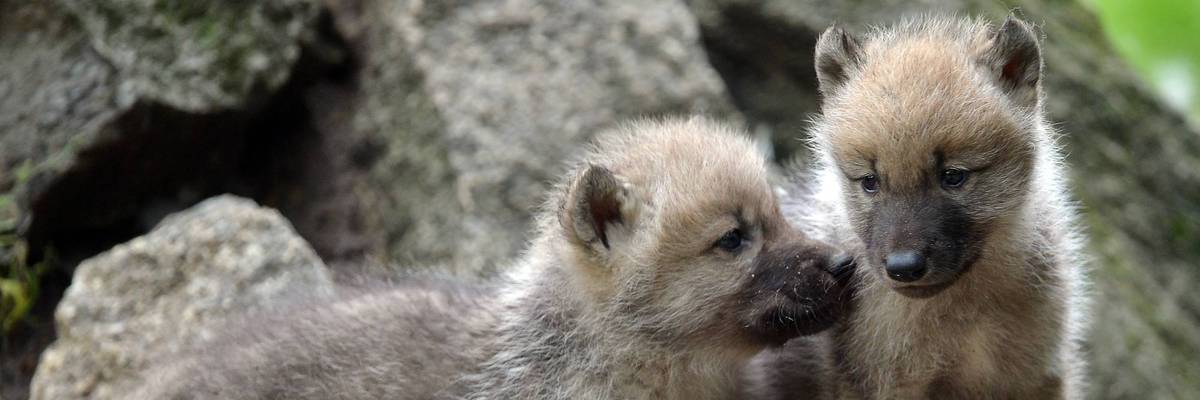
Canadian wolf pups play in their enclosure at the Berlin Zoo in Germany in 2013.
“Let’s call this what it is,” said one conservationist. “It’s a goddamned bounty.”
Idaho lofficials paid hunters $24,000 to kill a dozen newborn wolf pups this spring, including what appears to have been at least one entire litter massacred in or near its den, according to Friday reporting that has sparked outrage among conservationists and wildlife advocates.
The killings—which were first reported by the investigative news site Public Domain—took place in late April in Idaho's northern panhandle. Three hunters received reimbursements of $2,000 per wolf through a state-backed program intended to reduce the Idaho's wolf population in service of the livestock industry and big game hunters.
“It's an abomination,” said Brooks Fahy, executive director of the conservation group Predator Defense. "Let's call this what it is—it's a goddamned bounty."
"What kind of receipts are you going to show for 12 pups who weigh 12 pounds?" she asked. "It's ridiculous on its face, and the state of Idaho should be ashamed.”
The records obtained by Public Domain describe the killings as “still stalk,” suggesting hunters spotted and approached the animals before shooting them. But wolf experts questioned that account, suggesting the hunters may instead have located dens and removed the pups.
In one instance, a full litter was apparently massacred in or near its den. Doug Smith, a biologist who formerly oversaw Yellowstone National Park's wolf program, warned in an interview with The Guardian that killing entire litters can fracture or dissolve packs.
Contrary to popular belief, wolves typically do not protect their young; they usually flee about 50 yards and bark.
“It’s easy to do,” Smith said of taking a whole litter of pups. “If you can’t reach them, you dig them out with a shovel.”
“Wolves breed once a year, so the birth of the pups is a very important thing,” Smith said. “The pack’s life hinges on those pups. They’re the glue that holds the pack together.”
The killings were made possible by Idaho's increasingly permissive wolf management regime. In 2021, Republican lawmakers passed Senate Bill 1211, which established year-round wolf trapping on private property, eliminated limits on the number of wolf tags an individual could purchase, expanded permissible killing methods, and authorized private contractors to kill wolves.
That same year, Idaho wildlife officials signed an agreement with the Foundation for Wildlife Management, which reimburses hunters and trappers for expenses associated with killing wolves. Covered costs include fuel, ammunition, vehicle payments, and outdoor clothing. The program is financed through a combination of public money, hunting license revenue, and private contributions.
The state's 2023 wolf management plan called for reducing the population to approximately 650 animals during the spring, when wolf numbers typically peak. Idaho's estimated population nevertheless remained above 1,100 this year, down from a peak of approximately 1,600 in 2019.
The Idaho controversy comes amid broader concerns about the future of gray wolves in the United States. In September, President Donald Trump signed an executive order directing the Interior Department to consider removing federal Endangered Species Act protections for gray wolves across the continental United States.
Wolves remain federally protected in most of the Lower 48 states, while Idaho, Montana, and Wyoming have authority over their populations.
Those are the only three states that received the nation's lowest grade—a "D"—on the conservationist group Team Wolf's "State Wolf Management Report Card."
Idaho, Montana, Wyoming and Wisconsin all scored a D on humane treatment of wolves.All four are among the worst in the country on animal protection law, Idaho at 48th of fifty.teamwolf.org/report-card
[image or embed]
— wombar.bsky.social (@wombar.bsky.social) November 6, 2026 at 12:27 PM
"Trump says you can go out and kill wolves now—how many people took him at his word?” Fahy told Public Domain. “These are sentient creatures. They’re basically dogs. They form family bonds. They mate for life, pretty much. They have a pack structure that is very similar to our social structure. How could we be so wantonly cruel to something that is so similar to us?”
This country and this world are at a monumental crossroads. US voters have an opportunity to beat back the forces of fascism and confront the billionaires who are rigging the economy, our media system, and our democracy, making it increasingly impossible for ordinary people to get by. We’re not just talking about the election. We’re talking about what must be done once these fascist elements are vanquished from power. We need a bolder set of solutions than what either major party has so far been willing to offer and a working-class movement ready to fight like hell for it. Trump didn't emerge from nowhere. The conditions that fueled MAGA authoritarianism were created by decades of radical neoliberal economic policies and a corrupt political system dominated by corporate interests. They slashed taxes on the super-rich, promising that the benefits would trickle down. They said giveaways to the corporate titans would make life more affordable for the rest of us. It was all bullshit. And when a bitter, betrayed populace searches for someone to blame, right-wing demagogues have little trouble finding scapegoats. People know when they're being lied to, but you won't hear any of this from the corporate media. Only independent journalism—powered and funded by people who believe in building a better world—can deliver truly trustworthy daily news. If you share our vision, please contribute whatever you can to sustain our work. |
Idaho lofficials paid hunters $24,000 to kill a dozen newborn wolf pups this spring, including what appears to have been at least one entire litter massacred in or near its den, according to Friday reporting that has sparked outrage among conservationists and wildlife advocates.
The killings—which were first reported by the investigative news site Public Domain—took place in late April in Idaho's northern panhandle. Three hunters received reimbursements of $2,000 per wolf through a state-backed program intended to reduce the Idaho's wolf population in service of the livestock industry and big game hunters.
“It's an abomination,” said Brooks Fahy, executive director of the conservation group Predator Defense. "Let's call this what it is—it's a goddamned bounty."
"What kind of receipts are you going to show for 12 pups who weigh 12 pounds?" she asked. "It's ridiculous on its face, and the state of Idaho should be ashamed.”
The records obtained by Public Domain describe the killings as “still stalk,” suggesting hunters spotted and approached the animals before shooting them. But wolf experts questioned that account, suggesting the hunters may instead have located dens and removed the pups.
In one instance, a full litter was apparently massacred in or near its den. Doug Smith, a biologist who formerly oversaw Yellowstone National Park's wolf program, warned in an interview with The Guardian that killing entire litters can fracture or dissolve packs.
Contrary to popular belief, wolves typically do not protect their young; they usually flee about 50 yards and bark.
“It’s easy to do,” Smith said of taking a whole litter of pups. “If you can’t reach them, you dig them out with a shovel.”
“Wolves breed once a year, so the birth of the pups is a very important thing,” Smith said. “The pack’s life hinges on those pups. They’re the glue that holds the pack together.”
The killings were made possible by Idaho's increasingly permissive wolf management regime. In 2021, Republican lawmakers passed Senate Bill 1211, which established year-round wolf trapping on private property, eliminated limits on the number of wolf tags an individual could purchase, expanded permissible killing methods, and authorized private contractors to kill wolves.
That same year, Idaho wildlife officials signed an agreement with the Foundation for Wildlife Management, which reimburses hunters and trappers for expenses associated with killing wolves. Covered costs include fuel, ammunition, vehicle payments, and outdoor clothing. The program is financed through a combination of public money, hunting license revenue, and private contributions.
The state's 2023 wolf management plan called for reducing the population to approximately 650 animals during the spring, when wolf numbers typically peak. Idaho's estimated population nevertheless remained above 1,100 this year, down from a peak of approximately 1,600 in 2019.
The Idaho controversy comes amid broader concerns about the future of gray wolves in the United States. In September, President Donald Trump signed an executive order directing the Interior Department to consider removing federal Endangered Species Act protections for gray wolves across the continental United States.
Wolves remain federally protected in most of the Lower 48 states, while Idaho, Montana, and Wyoming have authority over their populations.
Those are the only three states that received the nation's lowest grade—a "D"—on the conservationist group Team Wolf's "State Wolf Management Report Card."
Idaho, Montana, Wyoming and Wisconsin all scored a D on humane treatment of wolves.All four are among the worst in the country on animal protection law, Idaho at 48th of fifty.teamwolf.org/report-card
[image or embed]
— wombar.bsky.social (@wombar.bsky.social) November 6, 2026 at 12:27 PM
"Trump says you can go out and kill wolves now—how many people took him at his word?” Fahy told Public Domain. “These are sentient creatures. They’re basically dogs. They form family bonds. They mate for life, pretty much. They have a pack structure that is very similar to our social structure. How could we be so wantonly cruel to something that is so similar to us?”