SUBSCRIBE TO OUR FREE NEWSLETTER
Daily news & progressive opinion—funded by the people, not the corporations—delivered straight to your inbox.
5
#000000
#FFFFFF
To donate by check, phone, or other method, see our More Ways to Give page.
Daily news & progressive opinion—funded by the people, not the corporations—delivered straight to your inbox.

Armed Israeli soldiers escort Israeli settlers during their tour in the Old City of Hebron, in the occupied West Bank, on May 9, 2026.
"As a community founded on international law, the EU cannot be bystanders in the face of escalating violence and persistent breaches of international law," said one foreign minister.
Weeks after far-right Hungarian Prime Minister Viktor Orbán was voted out of office following 16 years of increasingly Christian nationalist rule, foreign ministers across the European Union agreed to impose new sanctions against Israeli settlers accused of violence against Palestinians—a move Orbán's government had been vehemently against.
"It was high time we move from deadlock to delivery. Extremism and violence carry consequences," said Kaja Kallas, high representative of the EU for foreign affairs.
Haaretz reported that the sanctions approved by the EU Council of Foreign Ministers will impact the Nachala movement and its leader, Daniela Weiss, who has made numerous statements advocating for the ethnic cleansing of Palestinians in Gaza and the West Bank; the Amana and Regavim organizations and their leaders; and the Shomer Yesha group and its former director, Avichai Svisah.
The groups and individuals will reportedly be banned from entering EU countries. They will also face asset freezes and be prohibited from engaging in financial activity in the EU.
Hungary's new prime minister, the socially conservative Peter Magyar, was sworn in to office over the weekend. He has said his government will not block sanctions that a number of other EU countries have been pushing to approve.
The sanctions announced Monday were first proposed in 2024, a year after Israel began its assault on Gaza in retaliation for a Hamas-led attack as it also ramped up attacks in the West Bank.
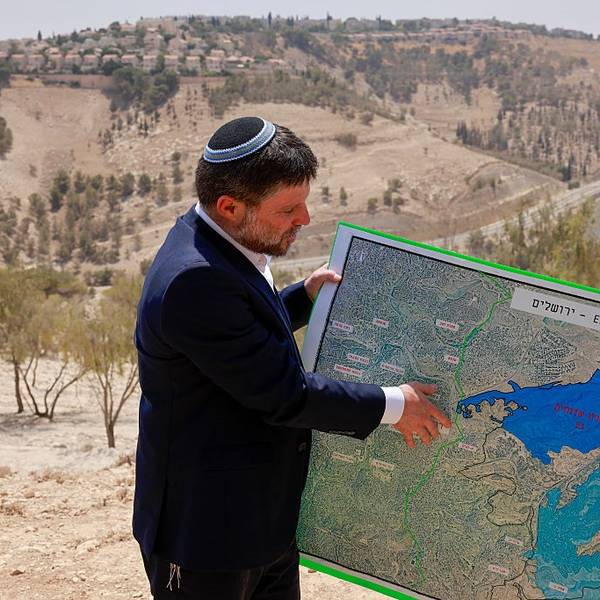
The far-right government of Israeli Prime Minister Benjamin Netanyahu has pushed for further annexation of the West Bank, with the prime minister signing an agreement to develop the E1 settlement last year, clearing the way to link thousands of illegal settlements together and cut off the West Bank from East Jerusalem—making a Palestinian state with the city as its capital impossible.
While the government has taken administrative steps to seize control of the territory, the Israel Defense Forces have increasingly aided settler groups in violent attacks on Palestinian communities. Last year, according to a report by the Israeli anti-settlement group Peace Now, settlers and the IDF razed more than 1,500 Palestinian structures in the West Bank, double the annual average prior to 2023. More than 4,000 Palestinians have been forcibly displaced from their homes in the territory.
One Israeli journalist last month called settler violence in the West Bank "ethnic cleansing" and spoke out against "intimidation tours" in which teenage settlers attack people in Palestinian villages while IDF soldiers either stand by or join in the attacks.
Tom Berendsen, foreign minister of the Netherlands, told reporters after meeting with the other EU officials that the sanctions targeted individuals "for whom a file has been compiled showing they have committed such violence."
Irish Foreign Minister Helen McEntee said in a post on social media that "extremist violence and persistent breaches of international law cannot go unanswered," and noted that Ireland has long pushed for the approval of the new package of sanctions.
Israeli National Security Minister Itamar Ben-Gvir lobbed the familiar accusation of "antisemitism" at the EU foreign ministers and claimed the bloc had ignored attacks against Israel. Ten Hamas leaders were also named as targets of Monday's sanctions.
"The reflexive response that 'the world is against Israel' grows less credible every time allies impose consequences, like this move by the EU to sanction violent settler groups and extremists," said the US-based lobby group J Street, which calls itself "pro-Israel" and "pro-peace."
"This is not about delegitimizing Israel. It’s about what the Netanyahu government is enabling in the West Bank," said J Street, calling on Congress to pass a law to codify similar sanctions, which were canceled by President Donald Trump last year.
Officials in France and Sweden are calling for the EU go further than sanctions on individuals and groups by imposing restrictions on trade with settlements, and human rights groups in recent weeks have demanded a suspension of the EU-Israel Association Agreement to hold Israel accountable for its attacks on Gaza and the West Bank and its passage of a law requiring the death penalty for Palestinians found guilty of violent attacks on Israelis.
"We had discussions on the trade issues, limiting trade with the illegal Israeli settlements," Kallas said after the meeting. "There was a call by many member states to take this forward, so we will continue to work with the commission on presenting proposals."
Dear Common Dreams reader, It’s been nearly 30 years since I co-founded Common Dreams with my late wife, Lina Newhouser. We had the radical notion that journalism should serve the public good, not corporate profits. It was clear to us from the outset what it would take to build such a project. No paid advertisements. No corporate sponsors. No millionaire publisher telling us what to think or do. Many people said we wouldn't last a year, but we proved those doubters wrong. Together with a tremendous team of journalists and dedicated staff, we built an independent media outlet free from the constraints of profits and corporate control. Our mission has always been simple: To inform. To inspire. To ignite change for the common good. Building Common Dreams was not easy. Our survival was never guaranteed. When you take on the most powerful forces—Wall Street greed, fossil fuel industry destruction, Big Tech lobbyists, and uber-rich oligarchs who have spent billions upon billions rigging the economy and democracy in their favor—the only bulwark you have is supporters who believe in your work. But here’s the urgent message from me today. It's never been this bad out there. And it's never been this hard to keep us going. At the very moment Common Dreams is most needed, the threats we face are intensifying. We need your support now more than ever. We don't accept corporate advertising and never will. We don't have a paywall because we don't think people should be blocked from critical news based on their ability to pay. Everything we do is funded by the donations of readers like you. When everyone does the little they can afford, we are strong. But if that support retreats or dries up, so do we. Will you donate now to make sure Common Dreams not only survives but thrives? —Craig Brown, Co-founder |
Weeks after far-right Hungarian Prime Minister Viktor Orbán was voted out of office following 16 years of increasingly Christian nationalist rule, foreign ministers across the European Union agreed to impose new sanctions against Israeli settlers accused of violence against Palestinians—a move Orbán's government had been vehemently against.
"It was high time we move from deadlock to delivery. Extremism and violence carry consequences," said Kaja Kallas, high representative of the EU for foreign affairs.
Haaretz reported that the sanctions approved by the EU Council of Foreign Ministers will impact the Nachala movement and its leader, Daniela Weiss, who has made numerous statements advocating for the ethnic cleansing of Palestinians in Gaza and the West Bank; the Amana and Regavim organizations and their leaders; and the Shomer Yesha group and its former director, Avichai Svisah.
The groups and individuals will reportedly be banned from entering EU countries. They will also face asset freezes and be prohibited from engaging in financial activity in the EU.
Hungary's new prime minister, the socially conservative Peter Magyar, was sworn in to office over the weekend. He has said his government will not block sanctions that a number of other EU countries have been pushing to approve.
The sanctions announced Monday were first proposed in 2024, a year after Israel began its assault on Gaza in retaliation for a Hamas-led attack as it also ramped up attacks in the West Bank.
The far-right government of Israeli Prime Minister Benjamin Netanyahu has pushed for further annexation of the West Bank, with the prime minister signing an agreement to develop the E1 settlement last year, clearing the way to link thousands of illegal settlements together and cut off the West Bank from East Jerusalem—making a Palestinian state with the city as its capital impossible.
While the government has taken administrative steps to seize control of the territory, the Israel Defense Forces have increasingly aided settler groups in violent attacks on Palestinian communities. Last year, according to a report by the Israeli anti-settlement group Peace Now, settlers and the IDF razed more than 1,500 Palestinian structures in the West Bank, double the annual average prior to 2023. More than 4,000 Palestinians have been forcibly displaced from their homes in the territory.
One Israeli journalist last month called settler violence in the West Bank "ethnic cleansing" and spoke out against "intimidation tours" in which teenage settlers attack people in Palestinian villages while IDF soldiers either stand by or join in the attacks.
Tom Berendsen, foreign minister of the Netherlands, told reporters after meeting with the other EU officials that the sanctions targeted individuals "for whom a file has been compiled showing they have committed such violence."
Irish Foreign Minister Helen McEntee said in a post on social media that "extremist violence and persistent breaches of international law cannot go unanswered," and noted that Ireland has long pushed for the approval of the new package of sanctions.
Israeli National Security Minister Itamar Ben-Gvir lobbed the familiar accusation of "antisemitism" at the EU foreign ministers and claimed the bloc had ignored attacks against Israel. Ten Hamas leaders were also named as targets of Monday's sanctions.
"The reflexive response that 'the world is against Israel' grows less credible every time allies impose consequences, like this move by the EU to sanction violent settler groups and extremists," said the US-based lobby group J Street, which calls itself "pro-Israel" and "pro-peace."
"This is not about delegitimizing Israel. It’s about what the Netanyahu government is enabling in the West Bank," said J Street, calling on Congress to pass a law to codify similar sanctions, which were canceled by President Donald Trump last year.
Officials in France and Sweden are calling for the EU go further than sanctions on individuals and groups by imposing restrictions on trade with settlements, and human rights groups in recent weeks have demanded a suspension of the EU-Israel Association Agreement to hold Israel accountable for its attacks on Gaza and the West Bank and its passage of a law requiring the death penalty for Palestinians found guilty of violent attacks on Israelis.
"We had discussions on the trade issues, limiting trade with the illegal Israeli settlements," Kallas said after the meeting. "There was a call by many member states to take this forward, so we will continue to work with the commission on presenting proposals."
Weeks after far-right Hungarian Prime Minister Viktor Orbán was voted out of office following 16 years of increasingly Christian nationalist rule, foreign ministers across the European Union agreed to impose new sanctions against Israeli settlers accused of violence against Palestinians—a move Orbán's government had been vehemently against.
"It was high time we move from deadlock to delivery. Extremism and violence carry consequences," said Kaja Kallas, high representative of the EU for foreign affairs.
Haaretz reported that the sanctions approved by the EU Council of Foreign Ministers will impact the Nachala movement and its leader, Daniela Weiss, who has made numerous statements advocating for the ethnic cleansing of Palestinians in Gaza and the West Bank; the Amana and Regavim organizations and their leaders; and the Shomer Yesha group and its former director, Avichai Svisah.
The groups and individuals will reportedly be banned from entering EU countries. They will also face asset freezes and be prohibited from engaging in financial activity in the EU.
Hungary's new prime minister, the socially conservative Peter Magyar, was sworn in to office over the weekend. He has said his government will not block sanctions that a number of other EU countries have been pushing to approve.
The sanctions announced Monday were first proposed in 2024, a year after Israel began its assault on Gaza in retaliation for a Hamas-led attack as it also ramped up attacks in the West Bank.
The far-right government of Israeli Prime Minister Benjamin Netanyahu has pushed for further annexation of the West Bank, with the prime minister signing an agreement to develop the E1 settlement last year, clearing the way to link thousands of illegal settlements together and cut off the West Bank from East Jerusalem—making a Palestinian state with the city as its capital impossible.
While the government has taken administrative steps to seize control of the territory, the Israel Defense Forces have increasingly aided settler groups in violent attacks on Palestinian communities. Last year, according to a report by the Israeli anti-settlement group Peace Now, settlers and the IDF razed more than 1,500 Palestinian structures in the West Bank, double the annual average prior to 2023. More than 4,000 Palestinians have been forcibly displaced from their homes in the territory.
One Israeli journalist last month called settler violence in the West Bank "ethnic cleansing" and spoke out against "intimidation tours" in which teenage settlers attack people in Palestinian villages while IDF soldiers either stand by or join in the attacks.
Tom Berendsen, foreign minister of the Netherlands, told reporters after meeting with the other EU officials that the sanctions targeted individuals "for whom a file has been compiled showing they have committed such violence."
Irish Foreign Minister Helen McEntee said in a post on social media that "extremist violence and persistent breaches of international law cannot go unanswered," and noted that Ireland has long pushed for the approval of the new package of sanctions.
Israeli National Security Minister Itamar Ben-Gvir lobbed the familiar accusation of "antisemitism" at the EU foreign ministers and claimed the bloc had ignored attacks against Israel. Ten Hamas leaders were also named as targets of Monday's sanctions.
"The reflexive response that 'the world is against Israel' grows less credible every time allies impose consequences, like this move by the EU to sanction violent settler groups and extremists," said the US-based lobby group J Street, which calls itself "pro-Israel" and "pro-peace."
"This is not about delegitimizing Israel. It’s about what the Netanyahu government is enabling in the West Bank," said J Street, calling on Congress to pass a law to codify similar sanctions, which were canceled by President Donald Trump last year.
Officials in France and Sweden are calling for the EU go further than sanctions on individuals and groups by imposing restrictions on trade with settlements, and human rights groups in recent weeks have demanded a suspension of the EU-Israel Association Agreement to hold Israel accountable for its attacks on Gaza and the West Bank and its passage of a law requiring the death penalty for Palestinians found guilty of violent attacks on Israelis.
"We had discussions on the trade issues, limiting trade with the illegal Israeli settlements," Kallas said after the meeting. "There was a call by many member states to take this forward, so we will continue to work with the commission on presenting proposals."