SUBSCRIBE TO OUR FREE NEWSLETTER
Daily news & progressive opinion—funded by the people, not the corporations—delivered straight to your inbox.
5
#000000
#FFFFFF
To donate by check, phone, or other method, see our More Ways to Give page.

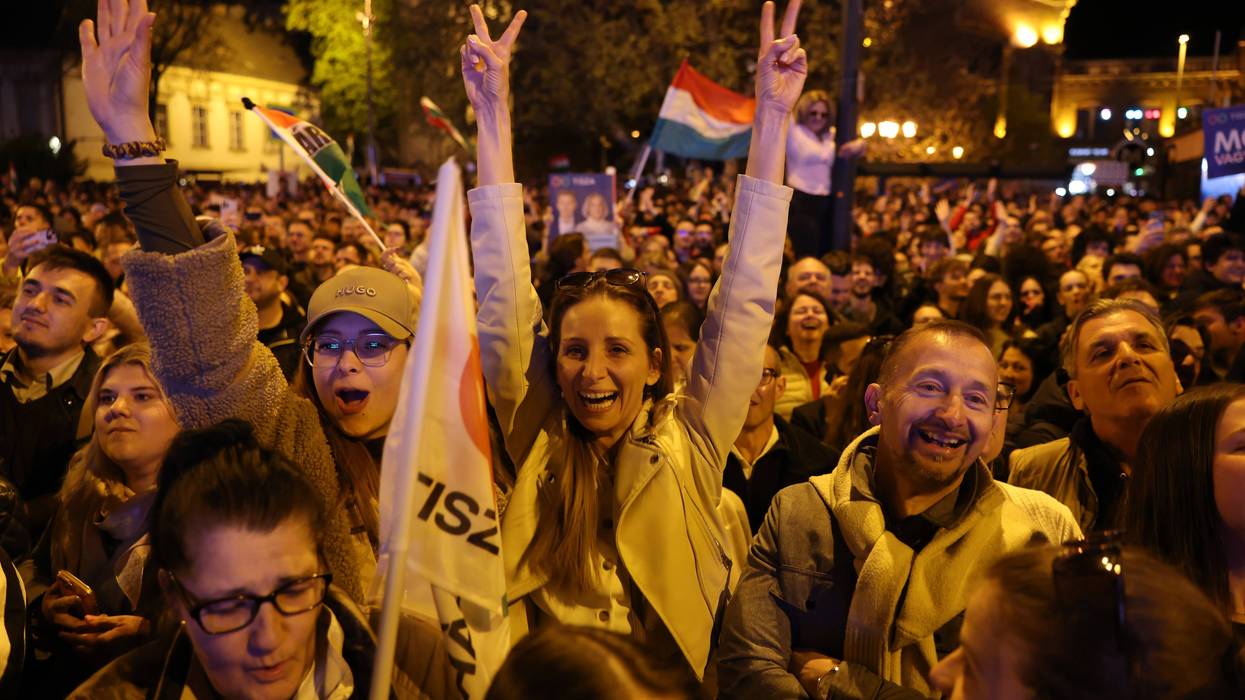
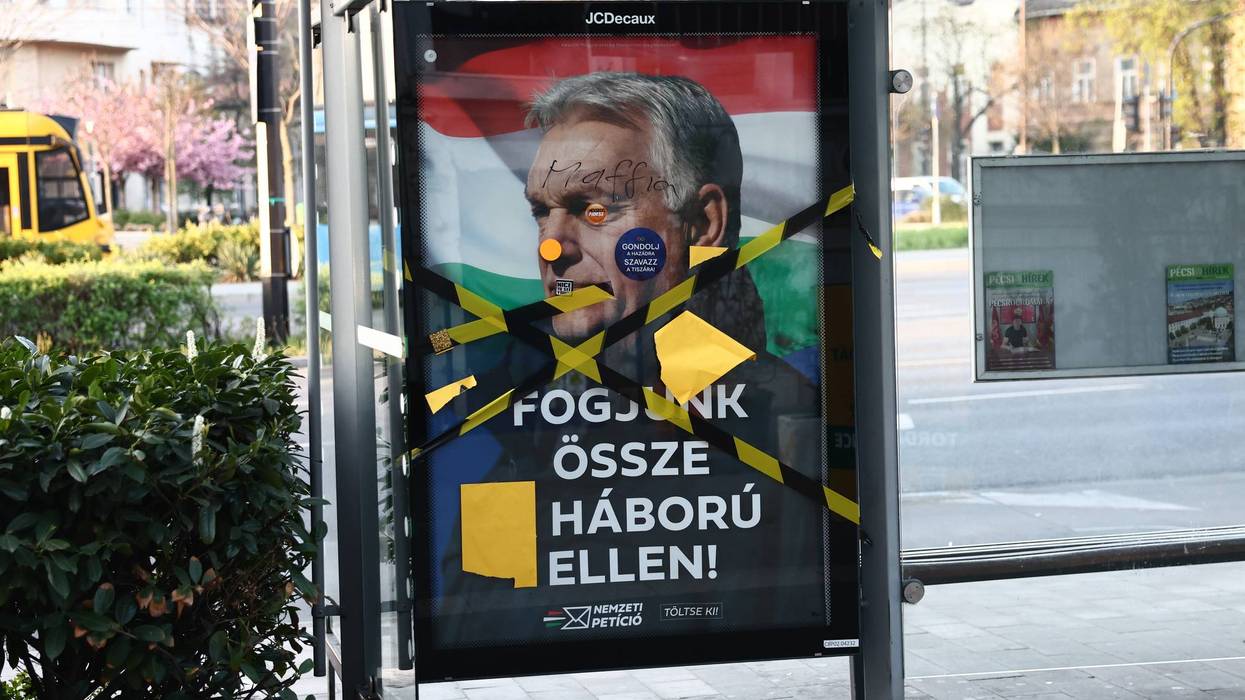
For us fighting democratic backsliding, this is exceedingly consequential. Orbán wrote the authoritarian playbook now being used by Donald Trump and actively exported his approach, even giving Hungarian tax dollars to fund the Conservative Political Action Conference. The people’s playbook used to oust him is a critical case study to learn from—from how the opposition party organized in Orbán’s strongholds, to how they made repression backfire when he overreached, and more.
Informed by talking with people on the ground, I’m writing an outside take of lessons gleaned knowing we’ll need more analyses to make the most of our learning. Already D-HUB, a network of international anti-authoritarian activists, has vowed a more thorough case study after more study and reflection.
Authoritarians create four times as many economic crises—a threat very much in our sightlines in the US.
Orbán’s loss raises a question we all should learn from: How do you beat someone who has spent 16 years rigging the game?
To appreciate what happened Sunday, you have to understand just how thoroughly Orbán had slanted Hungarian political life toward authoritarian rule.
Within months of taking power in 2010, Orbán began systematically dismantling independent journalism. He encouraged his oligarch friends to buy media. He created a new state broadcaster, called MTVA, as a government mouthpiece. And his party created a Media Council—staffed by party loyalists—that issued crushing fines for “unbalanced” news that didn’t toe the party line.
By 2018, more than 470 pro-government outlets had been merged into a single conglomerate called KESMA—the Central European Press and Media Foundation—making the concentration of power official. Orbán’s party and friends eventually controlled roughly 80% of Hungary’s media landscape. “You can’t write anything bad about the government,” one anonymous Hungarian journalist told Al Jazeera.
Then the courts. Orbán passed a new constitution and forced 274 judges and prosecutors into early retirement in the first year alone. The judiciary became almost entirely a political instrument.
Then, most consequentially, he moved to rig elections: The maps were redrawn, and he gained control of independent institutions overseeing elections. Orbán shaped Hungary’s 106 electoral districts with no input from the opposition, concentrating urban voters into large districts while spreading out his rural voters into more districts. The results were staggering: In 2014, Orbán’s ruling party captured 45% of the vote—but 91% of the districts. “Free but not fair,” as the ever insightful John Oliver put it in his review of Orbán’s rule just ahead of the elections. “You are free to vote for anyone you want, whether it’s Orbán or whoever inevitably loses to him.”
Universities are often the birthplace of pro-democracy movements, and grinding them down was essential. The most famous casualty was Central European University, founded by George Soros, which was slandered and pushed out of the country. This was in line with right-wing and antisemitic attacks on anything Soros-related (even though Orbán had once received a Soros-funded scholarship).
And finally, he created imagined enemies of the state. Like every authoritarian, Orbán used divide-and-rule to create people to fear and keep his own growing scandals and corruption off the front page. Like most authoritarians of late, he chose LGBTQ people and immigrants as his primary scapegoats. George Soros, the EU, and Ukrainians were added to the roster of villains.
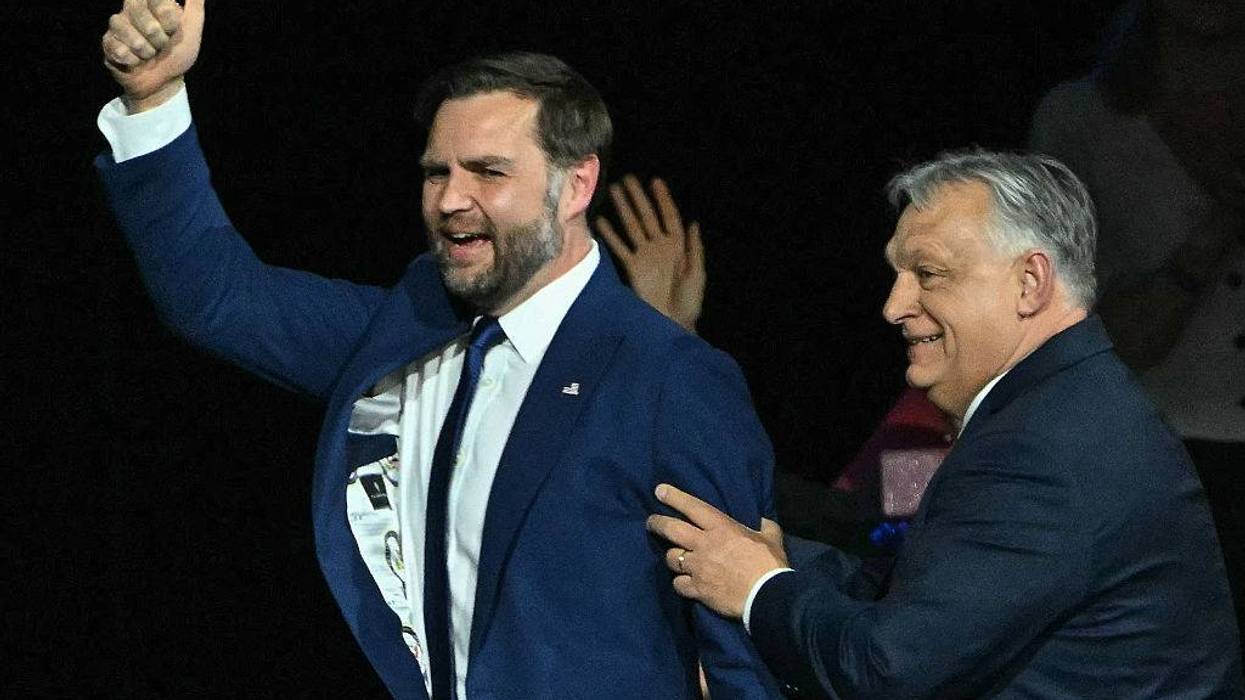
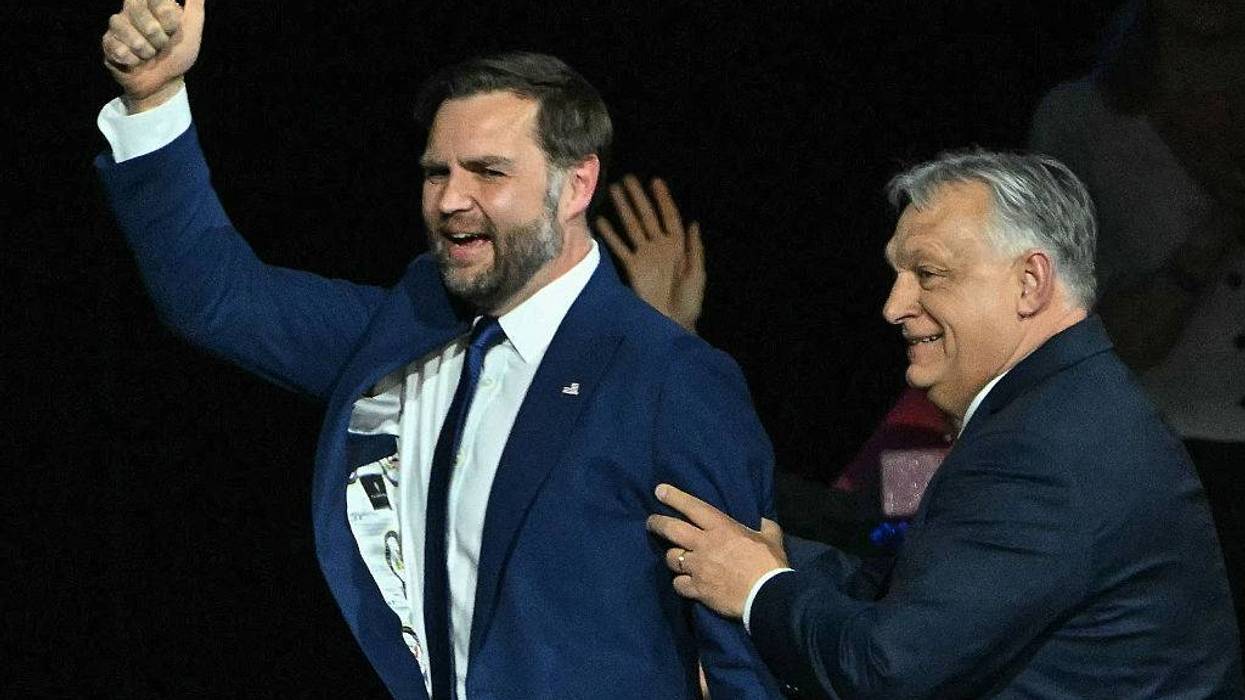
When President Trump sent Vice President JD Vance to campaign for Orbán, Vance followed Orbán’s escalating attacks on EU bureaucrats, who had voiced concerns about how Orbán’s re-election would affect the future of the EU. With no sense of irony, at his campaign stop Vance called the EU bureaucrats “one of the worst examples of foreign election interference that I have ever seen or ever even read about.”
So with that much control, how did Orbán lose? And so badly?
One reason dictatorships can be appealing, at least to some, is that they appear effective. To his supporters, Trump gets things done. While the democratic process is slow and grinding, the dictatorial one is about action. It breaks through red tape and fixes problems.
There’s truth in this, so far as democracy can be messy and dictatorships simple to understand. But it’s also mythical. Because a dictator doesn’t run a country—they order others to run a country.
Whereas power is traditionally seen as flowing downwards, in fact many pillars are required to hold it upright. These are groups and institutions—like media, religious institutions, the business community, civil servants, and security forces—that prop up the regime. In Thailand, where I first learned about this model of the “pillars of support,” it was drawn as an upside-down triangle.
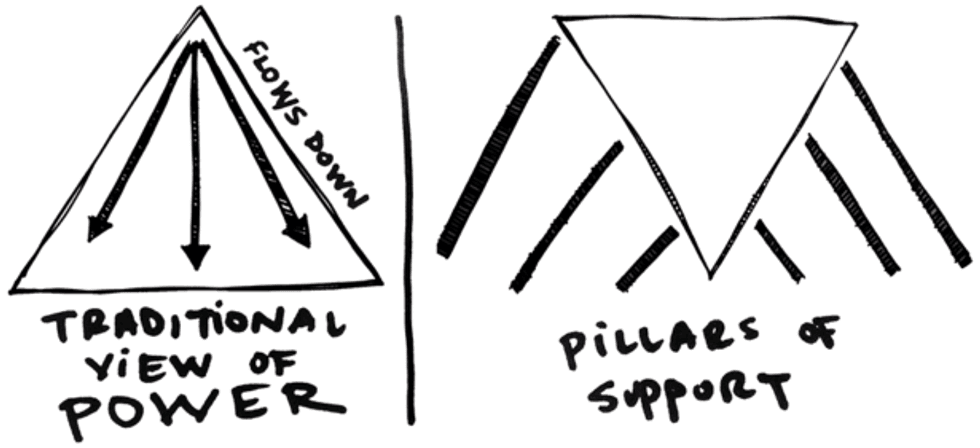
A dictatorship is no exception. By keeping society functioning, these pillars support the regime, even if they may disagree with it in private.
It’s important to recognize that power is never as stable as it seems. It is not the natural state of humans to be dictated to.
As a parent of a 7-year-old, I can attest: Go to any playground and you will see a bunch of kids experimenting with ordering each other around. Kids don’t like being bossed around. So the wise ones learn how to ask, entice, convince. The bullies learn to just use fear.
The problem with ruling with fear is that it requires constant and ongoing pressure. It creates frustration from those who have been slighted, grudges get nursed and a level of control needs to be constantly applied.
Ahead of the election, many (but not all!) of the pillars propping up Orbán began to crack. The economy, the media stranglehold, and the manufactured fear—all began to crumble.
Most activists I talked with described the Hungarian economy as Orbán’s primary vulnerability. Hungary has suffered the worst inflation of any EU country over the past 25 years. Prices rose 57% over that period—nearly double the EU average of 28%. The healthcare system deteriorated badly, with hospitals crumbling and doctors fleeing for better jobs. Hungary ranked last in the EU on household wealth in 2025.
This is common for authoritarians. We know instinctively that authoritarians do not take orders from polls or the number of people in the streets. As Rebecca Solnit beautifully put it, authoritarians view power as a “conquering army that would terrorize and intimidate the populace into subjugation”—as opposed to that of a flower, where “when you treat others well, when you meet their needs, you can enter into relationships that serve you as well as them.”
The outcome is that authoritarians ignore the pleas of the people. According to research from the Varieties of Democracy Institute, authoritarians create four times as many economic crises—a threat very much in our sightlines in the US. They spend 50% less on social protections like healthcare. Unresponsive to the needs of the people, they spend less on education, with students in school for fewer years, receiving lower quality instruction. All this adds up to life expectancies that are 12 years lower and infant mortality rates that are 62.5% higher. And, of course, corruption becomes the standard way of life.
As Hungarians struggled in all of these ways, Orbán’s friends grew rich. Video footage circulated of an estate owned by Orbán’s father with zebras grazing near it. It turned out that the zebras were from a nearby estate owned by Hungary’s richest man, who is also a close friend of Orbán—so they became a potent symbol of elite excess.
Stefania Kapronczay, a Hungarian human rights strategist, identified the core problem Fidesz faced: It thought it had a sales problem when it really had a problem with the product. “Instead of addressing [voters’] demands they resorted to creating enemies and being louder,” she explained. “The economy stalled in the past 4 years. The explanation that it’s somehow Brussels’ fault and soon there will be never-seen-before success rang empty. They also miscalculated how pro-European Hungarians are.”
Unable to campaign on any positive accomplishments, Orbán defaulted to fearmongering. As an analyst wrote in Foreign Policy, Orbán’s campaign was centered on “fantastical claims about Ukraine planning military actions against Hungary,” substituting conspiracy for governance. “After a while voters, especially moderates, become exhausted by constant messages of fear, hatred, and vituperation.”
But conditions alone do not dictate election outcomes. I’ve been running around the US telling the story of Zimbabwe. In the 2002 elections, President Robert Mugabe abducted activists and controlled elections. By the time the 2005 parliamentary election rolled around, a Zimbabwean colleague told me, “We’re already living in hell; it can’t get any worse.” The inflation rate had exceeded 100%. But Mugabe managed to buy and steal the election for his party again. By 2008 the economy had completely bottomed out with an unbelievable inflation rate: over 200 million percent. The colleague told me the same thing, “This time it can’t get any worse.” Still, Mugabe won—this time by attacking and torturing people so extensively that opposition candidate Morgan Tsvangirai withdrew from the race.
My point here is this: It can get a lot worse and that alone won’t change the electoral outcomes. Organizing, not conditions, is most important.
The opposition party candidate who won the campaign, Péter Magyar, is not a left-wing hero. He was a loyal insider until 2024—an Orbán man through and through. He married a government minister.
His break came after a corruption scandal where—you guessed it—Orbán’s party pardoned a convicted accomplice in child sexual abuse.
Magyar went public on Partizán, an independent YouTube channel, revealing the rot at the center of Orbán’s “Christian nationalist” project. “For a long time I believed in an idea, the national, sovereign, civil Hungary,” he wrote. “Today, I had to realize that all of this is really just a political product, a frosting that serves only two purposes, covering up the operation of the power factory and acquiring enormous amounts of wealth.”
The lesson for Democrats—and for any opposition movement—is painfully direct: Running against the other side’s failures, without a clear and compelling alternative vision, leaves persuadable voters with nothing to vote toward.
His credibility as a defector—someone who had seen it from the inside—gave him a voice that no outside opposition figure could replicate.
He was also a masterful communicator. Unlike traditional politicians who attempt to govern at a distance, he regularly walked the country and held rallies in small towns that the opposition party had “sewn up.” For years, he went directly and repeatedly to Orbán strongholds. In the final weeks before the election, he was visiting up to six towns per day.
As Kapronczay observed: “Tisza won because they went all-in: did not stop campaigning, went around the country to meet people and with an amazing political talent reacted to all the mistakes of Fidesz.”
Magyar did not rely on an anti-Orbánism message. He talked regularly about corruption, healthcare, and everyday affordability—things people actually care about. Political analyst Zsuzsanna Végh of the German Marshall Fund described him as “focusing on policy responses, hitting a moderate tone, and giving back agency to voters to decide about their and their country’s future.” A regular campaign slogan was a call for a “humane Hungary.”
And while a bad dictator versus a strong candidate is a good combo, that alone would not suffice to win. Civil society had to play its role.
One of the most important tactical decisions of the opposition party, Tisza, was the creation of Tisza Szigetek, or “Tisza Islands.”
Beginning in mid-2024 after Magyar’s strong showing in European Parliament elections, the party began systematically building local chapters across the country—not just in Budapest’s liberal districts, but in the small towns and rural constituencies where Orbán’s party had historically been uncontested. By January 2025, social media analysis suggested there were 208 “islands” with over 20,000 members.
Inside the new chapters were a mix of brand new activists and experienced civic and political activists who had been working to reform Hungary for years. New and old, all were active supporters. They staffed campaign stalls. They distributed a volunteer-delivered newspaper called Tiszta Hang, or Clear Voice, launched in July 2025, specifically designed to reach rural voters who were only exposed to pro-Orbán media.
That last point matters. The Tisza Islands were not top-down campaign field offices. They functioned with genuine local autonomy. The party even held closed primaries for all 106 of its constituency candidates—an internal democratic process designed to give local members real ownership of who represented them.
Crucially, this meant that by election day, Tisza was able to deploy a breath-taking 50,000 activists as election monitors across the country’s polling stations. I’m hoping Hungarians will write more about this polling operation, to relay both how it was set up and its effectiveness in assuring a wary public that elections would hold. This was an historic, organized, and scaled effort of election protection.
One other piece multiple Hungarian activists have raised with me was the critical role of journalists.
Remember that Orbán controlled 80% of the country’s media. And yet, a handful of outlets—Partizán, Direkt36, Telex, 444, Magyar Hang—managed not only to survive but to land body blows in the final months of the campaign.
Partizán gave Magyar the interview that broke open the sexual abuse pardon scandal. Direkt36 broke the story of attempts by government-connected operatives to infiltrate Tisza’s digital infrastructure. Telex published an interview with a police whistleblower about the government’s attempt to send Hungarian troops to Chad. As Martón Kárpáti, the president of the board of Telex, described it: “This campaign showed the importance of the free media.”
A few people acting courageously opens the doors for more.
A key documentary—A Szavazat Ára, or The Price of the Vote—was released on March 26 by the investigative team at DE! Akcióközösség. Based on a six-month investigation, the film documented Orbán’s party’s systematic operation of vote buying and voter intimidation and coercion in impoverished rural communities. It showed that Orbán’s mayors controlled who got food, housing, and even drugs. Within days, the documentary had been watched 1.3 million times.
This weakened the intimidation network. For the first time, government loyalists felt that they might be exposed. As political scientist Gábor Toka noted, “Intermediaries are [now] far less confident that illegal activities won’t be investigated and punished.”
Ahead of the election, this led Euractic to conclude in a headline: “Hungary’s Independent Media Has Already Won the Election.”
The June 2025 Budapest Pride parade was a classic backfire moment. Orbán had been escalating his war against LGBTQ folks for sometime. LGBTQ rights activists had been pushing back for years. But last summer his party took an extreme step and all but banned the Budapest Pride parade. His party enacted extremely tight rules on when and where and how the parade could proceed, wild police oversight, further restrictions under the pretense of “child protection,” and encouraged local authorities to deny event approvals entirely. It was an overreach, and the Pride parade swelled to massive numbers, with people clearly having fun and boldly proclaiming they would not let the government scare them off.
“The unsuccessful ban on the Pride parade was a clear sign of Fidesz’s inability to regain the political initiative,” wrote Hungarian journalist Pal Daniel Rényi. Ahead of the elections, the people had signaled that they were not going to be cowed. The massive parades exposed the government as out of ideas and increasingly disconnected from the public mood.
This kind of moment has been described by Turkish-American economist and political scientist Timur Kuran as an “unanticipated revolution”—a moment when an otherwise powerful political leader who seems to have full support suddenly has it evaporate.
Backfire happens when the public shakes off its fear, and the rift between the people and the authoritarian is revealed.
Here, then, are eight points about what the defeat of Viktor Orbán offers to people doing the long, unglamorous, essential work of democracy defense.
1. You have to meet people where they actually live. The Tisza Islands model is a direct rebuke to opposition campaigns that organize from the cities outward or from the top downwards. Magyar’s team built physical, relational infrastructure in communities that had been written off—not because they expected to win every seat, but because showing up is the message. The act of going to rural Hungary, of knocking on doors in Fidesz strongholds, communicated something no television ad could: that people in those communities were worth fighting for. Any opposition movement that limits itself to mobilizing its existing base is already half-defeated.
2. Anti is not enough—you need a proposition. Magyar ran on corruption, yes, but he ran for something: affordability, public healthcare, housing, a “humane Hungary.” He hammered relentlessly on what Orbán’s rule had cost ordinary people in their daily lives. The lesson for Democrats—and for any opposition movement—is painfully direct: Running against the other side’s failures, without a clear and compelling alternative vision, leaves persuadable voters with nothing to vote toward.
3. Build for the long game, but deploy at election time. The underground LGBTQ organizing work and the Tisza Islands didn’t spring up in campaign season. They were built over many years, quietly, in communities across the country. Civil society organizations spent that same period building nonpartisan mobilization infrastructure, producing online videos, and recruiting election monitors. The 50,000 activists who showed up as poll watchers on election day didn’t materialize from nowhere—they were organized, trained, and ready. Democracy defense isn’t a sprint. It’s a marathon that occasionally demands a sprint.
4. Investigative journalism is infrastructure. This is perhaps the most striking lesson for movements in countries where independent media has been similarly squeezed. In a media environment where 80% of outlets are government-aligned, a handful of scrappy independent outlets broke stories that changed the trajectory of an election. The lesson isn’t just to support independent journalism (though that matters). It’s that, when coordinated with civil society organizing and election protection, investigative journalism creates a kind of immune system for democracy. When those functions work together, they become more than the sum of their parts.
5. Election protection is a form of power. Hungary’s activists understood something that is increasingly essential in systems where the electoral rules are rigged: You cannot simply outperform the fraud margin and hope for the best. You have to actively contest it. The 50,000 election monitors Tisza deployed were not passive observers—they reduced fear and combated intimidation. The documentary released weeks before the election served a similar function, activating public consciousness about what was happening in those rural constituencies. This combination—exposing the system, then flooding it with watchers—helped neutralize what had historically been a decisive advantage for Fidesz.
6. Plan for backfire. Yes, some moments just arise—in Hungary, wearing zebra costumes; in the US, frog costumes. But other moments are organized, such as the surge of people at the Budapest Pride parade. The folks at HOPE have created a curriculum to learn more about the dynamics of backfire. A key insight: Backfire isn’t automatic. Repression only sparks outrage when it’s seen, understood, and emotionally felt, which means movements have to actively expose injustice, frame it clearly, and help people connect the dots so what power tries to hide becomes impossible to ignore.
7. If you can only do one thing: Act courageously. Much of Orbán’s rule was marked by people publicly kowtowing. Timothy Kuran wrote a book called Private Truths, Public Lies about “preference falsification”—the idea that people fabricate their public preferences to match social pressure. When there’s enough social pressure, people conform—even if privately they disagree. This can generate a collective illusion that the authoritarian has broad support even when he doesn’t—until a sudden tipping point is reached and the whole facade collapses rapidly. Before that tipping point is reached, however, some individuals have to be very brave: acting noncooperatively, voicing dissent, organizing marches and protests, taking public stances, and going into strongholds to convince people they are being cheated. A few people acting courageously opens the doors for more.
8. Don’t let the perfect be the enemy of the winnable. Magyar is not a folk hero. He’s a politician who is, for now, best suited to dismantle Orbán’s authoritarian state. Magyar’s party does promote greater inclusion of women and Romani people in its platform. However, he remains socially conservative, and his history as an Orbán loyalist is more than cause for concern. But after left-wing parties failed to meet the moment, the people saw him as their best chance to defeat Orbán. Movements fighting authoritarianism will always face the tension between holding out for the ideal candidate and unifying behind the one who can actually win.
As with any electoral win, the work is only started. Orbán still controls Hungary’s media. He packed the Constitutional Court. He built an economy of patronage and dependency that reaches into every village. Magyar’s supermajority gives them the constitutional power to undo much of what was done—but the institutions, the oligarchic networks, the culture of intimidation, will not dissolve the day Magyar is inaugurated.
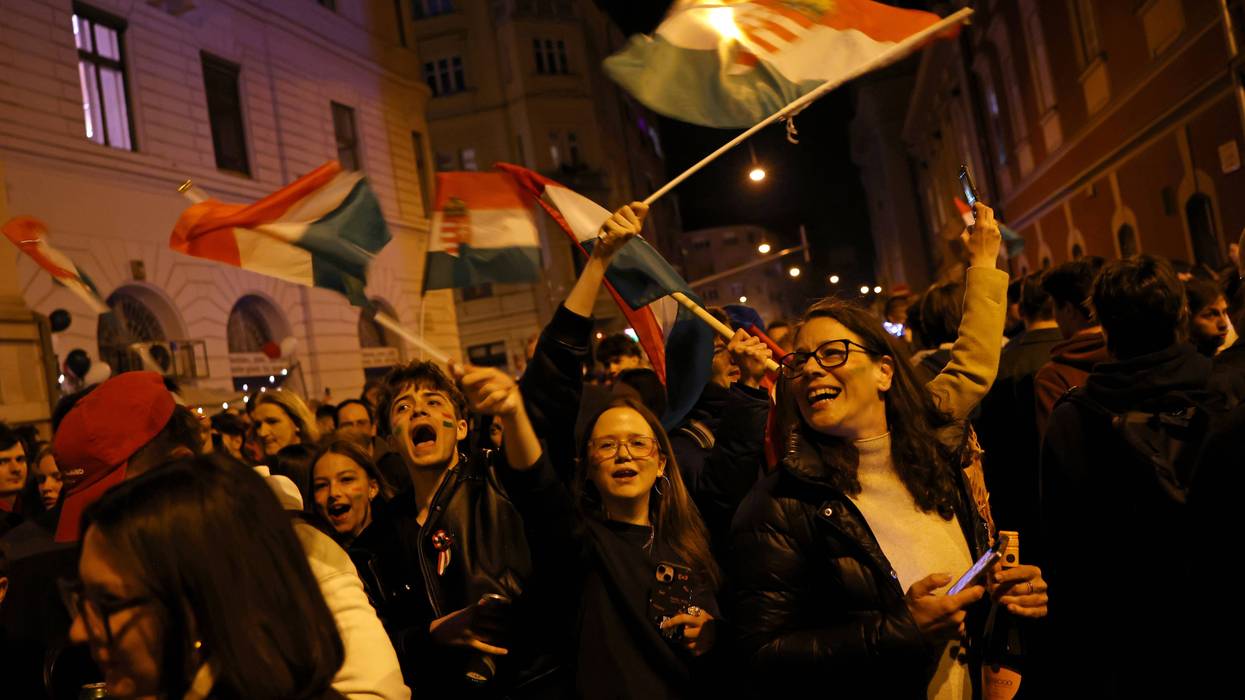
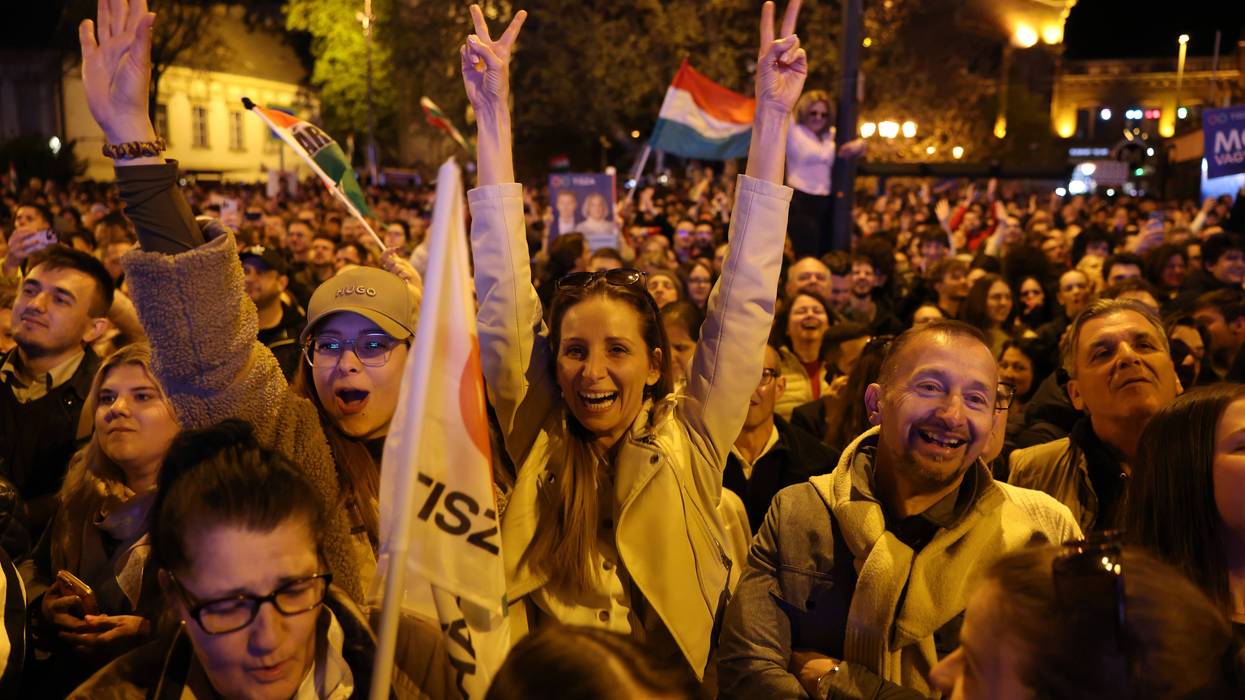
For organizers, this is the sobering coda: Electoral victory is a door, not a destination. But on a Sunday night in Budapest, they earned a moment to celebrate. And we should take a lot of hope from that, too. As US organizer Ash-Lee Henderson noted in her response to Orbán’s loss: “I’m not trying to tell you that Hungary is America. It’s not. I’m telling you, though, that the math is similar everywhere. There are always more of us than there are of them. The question is never whether the people have the power. The question is whether we build something worth moving for.”