SUBSCRIBE TO OUR FREE NEWSLETTER
Daily news & progressive opinion—funded by the people, not the corporations—delivered straight to your inbox.
5
#000000
#FFFFFF
To donate by check, phone, or other method, see our More Ways to Give page.
Daily news & progressive opinion—funded by the people, not the corporations—delivered straight to your inbox.

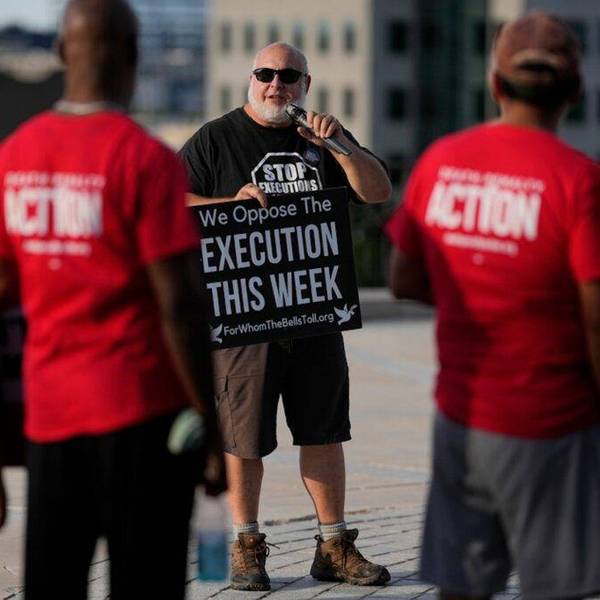
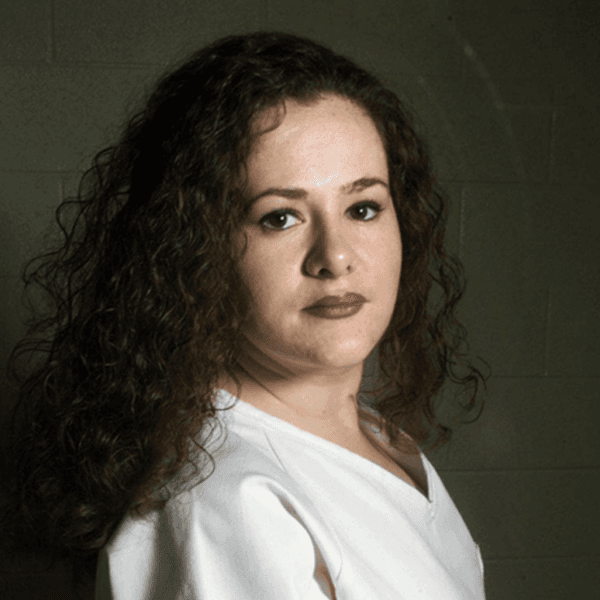
Christa Pike survived two botched execution attempts in Nashville, Tennessee on September 30, 2026.
United Nations High Commissioner for Human Rights Volker Türk also argued that "the death penalty has no place in any society."
United Nations human rights experts on Thursday joined the growing chorus of people around the world outraged by Tennessee's two botched attempts to execute Christa Pike and called on the state to refrain from trying again to kill the 50-year-old woman.
After a last-minute legal battle, the US Supreme Court allowed Tennessee to execute Pike for the 1995 murder of Colleen Slemmer. The state tried to do so at Riverbend Maximum Security Institution in Nashville on Wednesday night—with two injections of pentobarbital, each of which was supposed to be lethal—but she survived and was transported by ambulance to a hospital.
A doctor interviewed by WSMV 4 Nashville's Steve Mehling suggested that an IV could have been placed incorrectly—and, as the journalist summarized: "Pike may suffer from a flurry of long-term effects. This includes skin necrosis, permanent scarring, functional impairment, compartment syndrome, chronic neuropathic pain, and pigmentation change at the injection site."
As of Thursday afternoon, Pike's attorneys said that she was still alive, but in critical condition, "and receiving lifesaving medical care," according to The Washington Post. Republican Gov. Bill Lee, who had previously declined to grant clemency in this case, has since halted executions in Tennessee and ordered an investigation into the state's second botched killing of an inmate this year.
Several UN special rapporteurs and members of the Working Group on Discrimination Against Women and Girls had urged US authorities to commute Pike's sentence last month, saying that her "execution would mark the culmination of a trajectory of severe physical and psychological suffering marked by childhood abuse and nearly three decades of solitary confinement on death row."
After Wednesday's botched attempts, some of the same experts weighed in again: "Christa Pike was denied clemency. One hour before her execution, a court halted it. The Supreme Court then lifted the stay. She was injected twice with lethal drugs and survived. Forcing a person to face death, have it suspended, and then face it again within hours amounts to barbaric and torturous punishment, compounded in this case by decades of psychological torture on death row."
"The state of Tennessee must immediately and irrevocably end this cruelty by commuting Christa Pike's death sentence," said Morris Tidball-Binz, special rapporteur on extrajudicial, summary, or arbitrary executions; Margaret Satterthwaite, special rapporteur on the independence of judges and lawyers; Pau Pérez-Sales, special rapporteur on torture; Mariângela Batista Galvão Simão, special rapporteur on the right to health; Reem Alsalem, special rapporteur on violence against women and girls; and working group members Claudia Flores, Ivana Krstić, Dorothy Estrada-Tanck, and Haina Lu.
United Nations High Commissioner for Human Rights Volker Türk went even further, arguing against capital punishment.
"The case of Christa Pike lays bare multiple reasons why the death penalty should be abolished," said a statement from his office. "The prolonged suffering—physical and mental—arising from multiple failed execution attempts is abhorrent, and cruel. And there are key fair trial questions still unresolved."
Türk is calling on "state authorities not to pursue any further attempt to execute Pike," his office said. "We are also troubled by the increase in the number of executions in the United States. The death penalty has no place in any society."
Dear Common Dreams reader, It’s been nearly 30 years since I co-founded Common Dreams with my late wife, Lina Newhouser. We had the radical notion that journalism should serve the public good, not corporate profits. It was clear to us from the outset what it would take to build such a project. No paid advertisements. No corporate sponsors. No millionaire publisher telling us what to think or do. Many people said we wouldn't last a year, but we proved those doubters wrong. Together with a tremendous team of journalists and dedicated staff, we built an independent media outlet free from the constraints of profits and corporate control. Our mission has always been simple: To inform. To inspire. To ignite change for the common good. Building Common Dreams was not easy. Our survival was never guaranteed. When you take on the most powerful forces—Wall Street greed, fossil fuel industry destruction, Big Tech lobbyists, and uber-rich oligarchs who have spent billions upon billions rigging the economy and democracy in their favor—the only bulwark you have is supporters who believe in your work. But here’s the urgent message from me today. It's never been this bad out there. And it's never been this hard to keep us going. At the very moment Common Dreams is most needed, the threats we face are intensifying. We need your support now more than ever. We don't accept corporate advertising and never will. We don't have a paywall because we don't think people should be blocked from critical news based on their ability to pay. Everything we do is funded by the donations of readers like you. When everyone does the little they can afford, we are strong. But if that support retreats or dries up, so do we. Will you donate now to make sure Common Dreams not only survives but thrives? —Craig Brown, Co-founder |
United Nations human rights experts on Thursday joined the growing chorus of people around the world outraged by Tennessee's two botched attempts to execute Christa Pike and called on the state to refrain from trying again to kill the 50-year-old woman.
After a last-minute legal battle, the US Supreme Court allowed Tennessee to execute Pike for the 1995 murder of Colleen Slemmer. The state tried to do so at Riverbend Maximum Security Institution in Nashville on Wednesday night—with two injections of pentobarbital, each of which was supposed to be lethal—but she survived and was transported by ambulance to a hospital.
A doctor interviewed by WSMV 4 Nashville's Steve Mehling suggested that an IV could have been placed incorrectly—and, as the journalist summarized: "Pike may suffer from a flurry of long-term effects. This includes skin necrosis, permanent scarring, functional impairment, compartment syndrome, chronic neuropathic pain, and pigmentation change at the injection site."
As of Thursday afternoon, Pike's attorneys said that she was still alive, but in critical condition, "and receiving lifesaving medical care," according to The Washington Post. Republican Gov. Bill Lee, who had previously declined to grant clemency in this case, has since halted executions in Tennessee and ordered an investigation into the state's second botched killing of an inmate this year.
Several UN special rapporteurs and members of the Working Group on Discrimination Against Women and Girls had urged US authorities to commute Pike's sentence last month, saying that her "execution would mark the culmination of a trajectory of severe physical and psychological suffering marked by childhood abuse and nearly three decades of solitary confinement on death row."
After Wednesday's botched attempts, some of the same experts weighed in again: "Christa Pike was denied clemency. One hour before her execution, a court halted it. The Supreme Court then lifted the stay. She was injected twice with lethal drugs and survived. Forcing a person to face death, have it suspended, and then face it again within hours amounts to barbaric and torturous punishment, compounded in this case by decades of psychological torture on death row."
"The state of Tennessee must immediately and irrevocably end this cruelty by commuting Christa Pike's death sentence," said Morris Tidball-Binz, special rapporteur on extrajudicial, summary, or arbitrary executions; Margaret Satterthwaite, special rapporteur on the independence of judges and lawyers; Pau Pérez-Sales, special rapporteur on torture; Mariângela Batista Galvão Simão, special rapporteur on the right to health; Reem Alsalem, special rapporteur on violence against women and girls; and working group members Claudia Flores, Ivana Krstić, Dorothy Estrada-Tanck, and Haina Lu.
United Nations High Commissioner for Human Rights Volker Türk went even further, arguing against capital punishment.
"The case of Christa Pike lays bare multiple reasons why the death penalty should be abolished," said a statement from his office. "The prolonged suffering—physical and mental—arising from multiple failed execution attempts is abhorrent, and cruel. And there are key fair trial questions still unresolved."
Türk is calling on "state authorities not to pursue any further attempt to execute Pike," his office said. "We are also troubled by the increase in the number of executions in the United States. The death penalty has no place in any society."
United Nations human rights experts on Thursday joined the growing chorus of people around the world outraged by Tennessee's two botched attempts to execute Christa Pike and called on the state to refrain from trying again to kill the 50-year-old woman.
After a last-minute legal battle, the US Supreme Court allowed Tennessee to execute Pike for the 1995 murder of Colleen Slemmer. The state tried to do so at Riverbend Maximum Security Institution in Nashville on Wednesday night—with two injections of pentobarbital, each of which was supposed to be lethal—but she survived and was transported by ambulance to a hospital.
A doctor interviewed by WSMV 4 Nashville's Steve Mehling suggested that an IV could have been placed incorrectly—and, as the journalist summarized: "Pike may suffer from a flurry of long-term effects. This includes skin necrosis, permanent scarring, functional impairment, compartment syndrome, chronic neuropathic pain, and pigmentation change at the injection site."
As of Thursday afternoon, Pike's attorneys said that she was still alive, but in critical condition, "and receiving lifesaving medical care," according to The Washington Post. Republican Gov. Bill Lee, who had previously declined to grant clemency in this case, has since halted executions in Tennessee and ordered an investigation into the state's second botched killing of an inmate this year.
Several UN special rapporteurs and members of the Working Group on Discrimination Against Women and Girls had urged US authorities to commute Pike's sentence last month, saying that her "execution would mark the culmination of a trajectory of severe physical and psychological suffering marked by childhood abuse and nearly three decades of solitary confinement on death row."
After Wednesday's botched attempts, some of the same experts weighed in again: "Christa Pike was denied clemency. One hour before her execution, a court halted it. The Supreme Court then lifted the stay. She was injected twice with lethal drugs and survived. Forcing a person to face death, have it suspended, and then face it again within hours amounts to barbaric and torturous punishment, compounded in this case by decades of psychological torture on death row."
"The state of Tennessee must immediately and irrevocably end this cruelty by commuting Christa Pike's death sentence," said Morris Tidball-Binz, special rapporteur on extrajudicial, summary, or arbitrary executions; Margaret Satterthwaite, special rapporteur on the independence of judges and lawyers; Pau Pérez-Sales, special rapporteur on torture; Mariângela Batista Galvão Simão, special rapporteur on the right to health; Reem Alsalem, special rapporteur on violence against women and girls; and working group members Claudia Flores, Ivana Krstić, Dorothy Estrada-Tanck, and Haina Lu.
United Nations High Commissioner for Human Rights Volker Türk went even further, arguing against capital punishment.
"The case of Christa Pike lays bare multiple reasons why the death penalty should be abolished," said a statement from his office. "The prolonged suffering—physical and mental—arising from multiple failed execution attempts is abhorrent, and cruel. And there are key fair trial questions still unresolved."
Türk is calling on "state authorities not to pursue any further attempt to execute Pike," his office said. "We are also troubled by the increase in the number of executions in the United States. The death penalty has no place in any society."