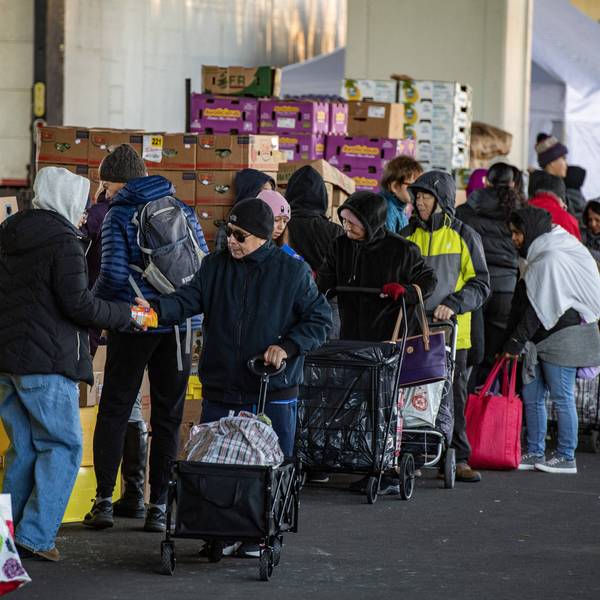
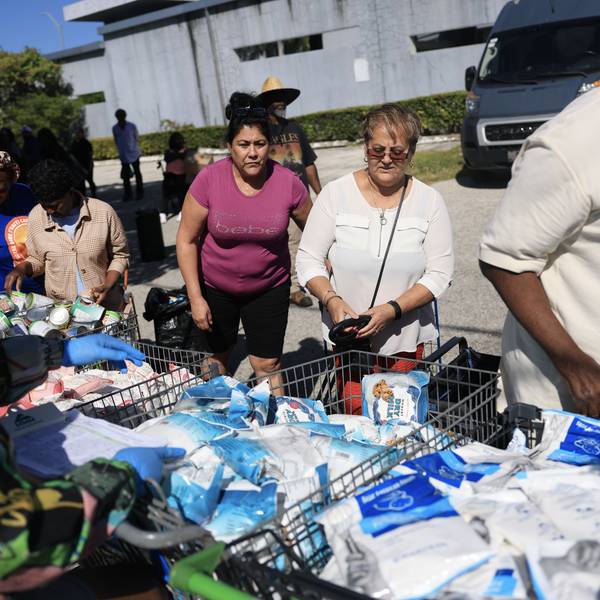
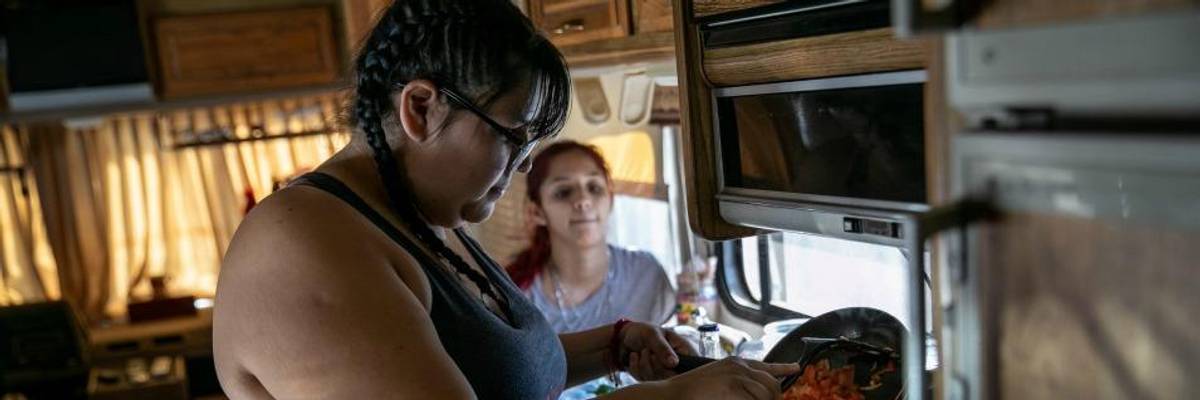
Odelis Navarro cooks breakfast for her family in their RV on October 9, 2020 in Phoenix, Arizona. Since the coronavirus pandemic began, inconsistent work, a string of tragedies, and even family separation have combined to push the family to the brink of homelessness, having narrowly avoided eviction only days before. For millions of families, new federal pandemic assistance, yet to be authorized by Congress, cannot come soon enough. (Photo: John Moore/Getty Images)
As Trump and GOP Refuse Aid Package, Studies Show 8 Million Forced Into Poverty Since McConnell Let Relief Expire
"It's really important that we reinstate some of the lost benefits" that were extended as part of the CARES Act, one researcher said.
The authors of two separate poverty studies out of three top universities said Thursday that their findings make the unmistakable case for more federal economic aid for families struggling to make ends meet during the coronavirus pandemic.
Seven months after Congress passed the CARES Act, which included expanded unemployment benefits and one-time direct payments of $1,200 for many adults and $500 per child, the package's positive impact on poverty levels have already been reversed, according to a study by researchers at Columbia University's Center on Poverty and Social Policy and one out of the University of Chicago and Notre Dame.
While the number of people living in poverty fell by about four million after the CARES Act was passed, the Columbia study found that eight million more Americans are now poor than were in May--signaling that the pandemic has plunged more people into poverty than before the crisis.
The University of Chicago and Notre Dame study found that six million people have fallen into poverty in the past three months. Both reports found that the number of children living in poverty is rising, with 2.5 million more poor children since May.
Washington Post reporter Jeff Stein tweeted that the studies represent just one piece of bad news this week for families struggling with joblessness and the threat of Covid-19, as an agreement between the White House and congressional Democrats and Republicans "remains out of reach."
House Speaker Nancy Pelosi (D-Calif.) spoke with Treasury Secretary Steven Mnuchin on Wednesday about a potential aid package, but the two sides came no closer to reaching a deal. House Democrats want more direct aid for families while Republicans in the Senate proposed a far more meager package last month with payroll assistance. President Donald Trump has shown some support for a means-tested direct payment while the White House has objected to financing a nationwide coronavirus testing strategy as cases surpass 7.9 million.
As Common Dreams has reported, the CARES Act has been recognized as a significant piece of anti-poverty legislation, saving 12 million people from being pushed into poverty when it was passed in March. The Columbia study found that in May, 18 million people were being kept out of poverty thanks to the direct payments and $600 per week enhanced unemployment benefits.
"It wasn't perfect, but hands down it's the most successful thing we've ever done in negating hardship," H. Luke Shaefer, a researcher at the University of Michigan, told the New York Times, which reported that millions of people--including undocumented immigrants and families who don't have large enough incomes to file tax returns--were left out of the package.
A major shortcoming of the CARES Act, Columbia researcher Christopher Wimer told the Times, "was its temporary nature."
The Times also detailed some of the lengths families are going to in order to stretch their dwindling incomes after facing layoffs and being forced to stay home from work to look after their children. A woman in Michigan reported cutting back on her meals in order to keep her children fed, while a mother in California said her family has been eating only cold food like cereal for dinner to save on propane costs and that she attempted to undergo an invasive medical procedure to sell her eggs to a fertility clinic.
The numbers and personal accounts of poverty "are very concerning," Bruce D. Meyer, co-author of the University of Chicago study, told the Times. "It's really important that we reinstate some of the lost benefits."
We are at a crossroads
This country and this world are at a monumental crossroads. In a few short weeks, US voters will have an opportunity to beat back the forces of fascism and confront the billionaires who are rigging the economy, our media system, and our democracy, making it increasingly impossible for ordinary people to get by. We’re not just talking about the election. We’re talking about what must be done once these fascist elements are vanquished from power. We need a bolder set of solutions than what either major party has so far been willing to offer and a working-class movement ready to fight like hell for it. Trump didn't emerge from nowhere. The conditions that fueled MAGA authoritarianism were created by decades of radical neoliberal economic policies and a corrupt political system dominated by corporate interests. They slashed taxes on the super-rich, promising that the benefits would trickle down. They said giveaways to the corporate titans would make life more affordable for the rest of us. It was all bullshit. And when a bitter, betrayed populace searches for someone to blame, right-wing demagogues have little trouble finding scapegoats. People know when they're being lied to, but you won't hear any of this from the corporate media. Only independent journalism—powered and funded by people who believe in building a better world—can deliver truly trustworthy daily news. Our Fall Campaign is underway, and we need your help. To power our newsroom through the rest of the year, we need to raise $125,000 by midnight on October 31. So if you share our vision, please contribute whatever you can to sustain our work. |
The authors of two separate poverty studies out of three top universities said Thursday that their findings make the unmistakable case for more federal economic aid for families struggling to make ends meet during the coronavirus pandemic.
Seven months after Congress passed the CARES Act, which included expanded unemployment benefits and one-time direct payments of $1,200 for many adults and $500 per child, the package's positive impact on poverty levels have already been reversed, according to a study by researchers at Columbia University's Center on Poverty and Social Policy and one out of the University of Chicago and Notre Dame.
While the number of people living in poverty fell by about four million after the CARES Act was passed, the Columbia study found that eight million more Americans are now poor than were in May--signaling that the pandemic has plunged more people into poverty than before the crisis.
The University of Chicago and Notre Dame study found that six million people have fallen into poverty in the past three months. Both reports found that the number of children living in poverty is rising, with 2.5 million more poor children since May.
Washington Post reporter Jeff Stein tweeted that the studies represent just one piece of bad news this week for families struggling with joblessness and the threat of Covid-19, as an agreement between the White House and congressional Democrats and Republicans "remains out of reach."
House Speaker Nancy Pelosi (D-Calif.) spoke with Treasury Secretary Steven Mnuchin on Wednesday about a potential aid package, but the two sides came no closer to reaching a deal. House Democrats want more direct aid for families while Republicans in the Senate proposed a far more meager package last month with payroll assistance. President Donald Trump has shown some support for a means-tested direct payment while the White House has objected to financing a nationwide coronavirus testing strategy as cases surpass 7.9 million.
As Common Dreams has reported, the CARES Act has been recognized as a significant piece of anti-poverty legislation, saving 12 million people from being pushed into poverty when it was passed in March. The Columbia study found that in May, 18 million people were being kept out of poverty thanks to the direct payments and $600 per week enhanced unemployment benefits.
"It wasn't perfect, but hands down it's the most successful thing we've ever done in negating hardship," H. Luke Shaefer, a researcher at the University of Michigan, told the New York Times, which reported that millions of people--including undocumented immigrants and families who don't have large enough incomes to file tax returns--were left out of the package.
A major shortcoming of the CARES Act, Columbia researcher Christopher Wimer told the Times, "was its temporary nature."
The Times also detailed some of the lengths families are going to in order to stretch their dwindling incomes after facing layoffs and being forced to stay home from work to look after their children. A woman in Michigan reported cutting back on her meals in order to keep her children fed, while a mother in California said her family has been eating only cold food like cereal for dinner to save on propane costs and that she attempted to undergo an invasive medical procedure to sell her eggs to a fertility clinic.
The numbers and personal accounts of poverty "are very concerning," Bruce D. Meyer, co-author of the University of Chicago study, told the Times. "It's really important that we reinstate some of the lost benefits."
The authors of two separate poverty studies out of three top universities said Thursday that their findings make the unmistakable case for more federal economic aid for families struggling to make ends meet during the coronavirus pandemic.
Seven months after Congress passed the CARES Act, which included expanded unemployment benefits and one-time direct payments of $1,200 for many adults and $500 per child, the package's positive impact on poverty levels have already been reversed, according to a study by researchers at Columbia University's Center on Poverty and Social Policy and one out of the University of Chicago and Notre Dame.
While the number of people living in poverty fell by about four million after the CARES Act was passed, the Columbia study found that eight million more Americans are now poor than were in May--signaling that the pandemic has plunged more people into poverty than before the crisis.
The University of Chicago and Notre Dame study found that six million people have fallen into poverty in the past three months. Both reports found that the number of children living in poverty is rising, with 2.5 million more poor children since May.
Washington Post reporter Jeff Stein tweeted that the studies represent just one piece of bad news this week for families struggling with joblessness and the threat of Covid-19, as an agreement between the White House and congressional Democrats and Republicans "remains out of reach."
House Speaker Nancy Pelosi (D-Calif.) spoke with Treasury Secretary Steven Mnuchin on Wednesday about a potential aid package, but the two sides came no closer to reaching a deal. House Democrats want more direct aid for families while Republicans in the Senate proposed a far more meager package last month with payroll assistance. President Donald Trump has shown some support for a means-tested direct payment while the White House has objected to financing a nationwide coronavirus testing strategy as cases surpass 7.9 million.
As Common Dreams has reported, the CARES Act has been recognized as a significant piece of anti-poverty legislation, saving 12 million people from being pushed into poverty when it was passed in March. The Columbia study found that in May, 18 million people were being kept out of poverty thanks to the direct payments and $600 per week enhanced unemployment benefits.
"It wasn't perfect, but hands down it's the most successful thing we've ever done in negating hardship," H. Luke Shaefer, a researcher at the University of Michigan, told the New York Times, which reported that millions of people--including undocumented immigrants and families who don't have large enough incomes to file tax returns--were left out of the package.
A major shortcoming of the CARES Act, Columbia researcher Christopher Wimer told the Times, "was its temporary nature."
The Times also detailed some of the lengths families are going to in order to stretch their dwindling incomes after facing layoffs and being forced to stay home from work to look after their children. A woman in Michigan reported cutting back on her meals in order to keep her children fed, while a mother in California said her family has been eating only cold food like cereal for dinner to save on propane costs and that she attempted to undergo an invasive medical procedure to sell her eggs to a fertility clinic.
The numbers and personal accounts of poverty "are very concerning," Bruce D. Meyer, co-author of the University of Chicago study, told the Times. "It's really important that we reinstate some of the lost benefits."