SUBSCRIBE TO OUR FREE NEWSLETTER
Daily news & progressive opinion—funded by the people, not the corporations—delivered straight to your inbox.
5
#000000
#FFFFFF
To donate by check, phone, or other method, see our More Ways to Give page.
Daily news & progressive opinion—funded by the people, not the corporations—delivered straight to your inbox.
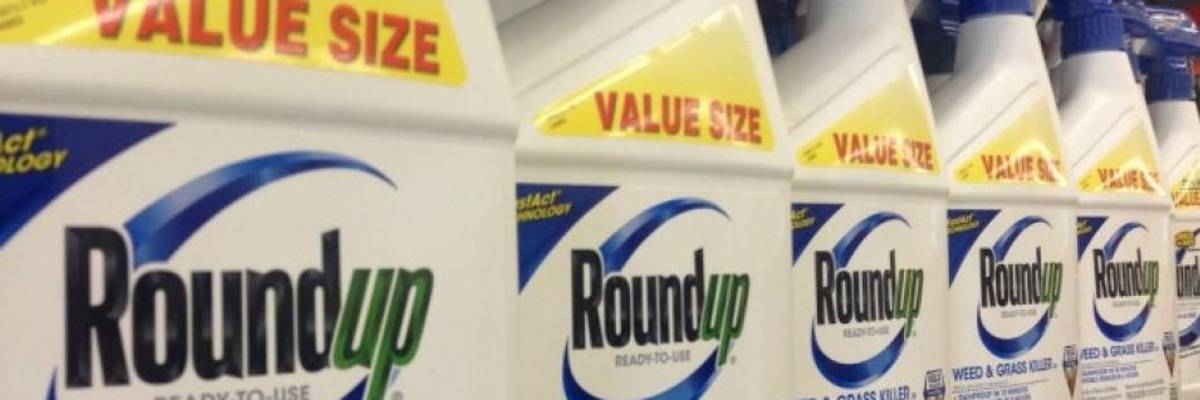
A jury in California has asked a judge to fully uphold their verdict, reached in August, that Monsanto was liable for $289 billion in damages to be paid to a groundskeeper who had developed cancer as a result of exposure to the company's weedkiller. (Photo: Mike Mozart/Flickr/cc)
Learning that a judge may overturn their historic decision to hold the chemical company Monsanto-Bayer accountable for manufacturing cancer-causing weedkillers, several jurors are demanding that their verdict in a case decided in August be upheld.
Gary Kitahata and Robert Howard are among the jurors who unanimously found that Monsanto was liable for $289 million in damages, to be paid to former school groundskeeper Dewayne Johnson, who was diagnosed with terminal cancer after spending years using Monsanto's products at his job.
In two separate letters written in recent days, Kitahata and Howard appealed to California Superior Court Judge Suzanne Bolanos this week after she announced her consideration of a retrial and indicated she might overturn nearly all of the damages the jury awarded to Johnson.
"We hope the judge in this case will not be pressured by Monsanto-Bayer, but will instead respect the jury's decision and rule in favor of public health, not corporate profits." --Katherine Paul, Organic Consumers Association
While Bolanos argued the plaintiff's legal team did not prove Monsanto knew about the dangers of its product, Kitihata told the the San Francisco Chronicle on Monday that the judge "had a chance to raise these questions during trial and even during jury deliberations. I thought it was the jury's role to be the judge of evidence."
Kitihata and the other jurors found that Monsanto owed $250 million to Johnson in punitive damages as well as $31 million for shortening his life expectancy. Bolanos said in a public hearing last Wednesday that she may overturn both sums, leaving Johnson with $8 million. The judge is expected to reach a decision by next Monday.
In a statement to Common Dreams, Katherine Paul, associate director for the Organic Consumers Association, denounced the judge's consideration of a severely reduced verdict for Monsanto's benefit.
"It's unfortunate that the court is willing to consider overturning the verdict of 12 jurors who carefully and thoughtfully made their decision based on factual evidence," Paul said. "We hope the judge in this case will not be pressured by Monsanto-Bayer, but will instead respect the jury's decision and rule in favor of public health, not corporate profits."
After a six-week trial involving testimony from medical and scientific experts, the jury found that Monsanto had sold glyphosate-based products to Johnson's school district even though it knew the chemical could cause cancer.
"You may not have been convinced by the evidence, but we were," Kitahata wrote to Bolanos in his letter. "I urge you to respect and honor our verdict and the six weeks of our lives that we dedicated to this trial."
The possibility that the jury's "unanimous verdict could be summarily overturned demeans our system of justice and shakes my confidence in that system," wrote Howard in his own letter.
Glyphosate was classified by the World Health Organization as a "probably human carcinogen" in 2015, the same year Johnson as diagnosed with an aggressive form of cancer and a year after a previous diagnosis of non-Hodgkins lymphoma.
Johnson's case was just the first to go to trial out of more 4,000 lawsuits against the company, with plaintiffs across the country arguing Monsanto's products contributed significantly to their cancer diagnoses.
Dear Common Dreams reader, It’s been nearly 30 years since I co-founded Common Dreams with my late wife, Lina Newhouser. We had the radical notion that journalism should serve the public good, not corporate profits. It was clear to us from the outset what it would take to build such a project. No paid advertisements. No corporate sponsors. No millionaire publisher telling us what to think or do. Many people said we wouldn't last a year, but we proved those doubters wrong. Together with a tremendous team of journalists and dedicated staff, we built an independent media outlet free from the constraints of profits and corporate control. Our mission has always been simple: To inform. To inspire. To ignite change for the common good. Building Common Dreams was not easy. Our survival was never guaranteed. When you take on the most powerful forces—Wall Street greed, fossil fuel industry destruction, Big Tech lobbyists, and uber-rich oligarchs who have spent billions upon billions rigging the economy and democracy in their favor—the only bulwark you have is supporters who believe in your work. But here’s the urgent message from me today. It's never been this bad out there. And it's never been this hard to keep us going. At the very moment Common Dreams is most needed, the threats we face are intensifying. We need your support now more than ever. We don't accept corporate advertising and never will. We don't have a paywall because we don't think people should be blocked from critical news based on their ability to pay. Everything we do is funded by the donations of readers like you. When everyone does the little they can afford, we are strong. But if that support retreats or dries up, so do we. Will you donate now to make sure Common Dreams not only survives but thrives? —Craig Brown, Co-founder |
Learning that a judge may overturn their historic decision to hold the chemical company Monsanto-Bayer accountable for manufacturing cancer-causing weedkillers, several jurors are demanding that their verdict in a case decided in August be upheld.
Gary Kitahata and Robert Howard are among the jurors who unanimously found that Monsanto was liable for $289 million in damages, to be paid to former school groundskeeper Dewayne Johnson, who was diagnosed with terminal cancer after spending years using Monsanto's products at his job.
In two separate letters written in recent days, Kitahata and Howard appealed to California Superior Court Judge Suzanne Bolanos this week after she announced her consideration of a retrial and indicated she might overturn nearly all of the damages the jury awarded to Johnson.
"We hope the judge in this case will not be pressured by Monsanto-Bayer, but will instead respect the jury's decision and rule in favor of public health, not corporate profits." --Katherine Paul, Organic Consumers Association
While Bolanos argued the plaintiff's legal team did not prove Monsanto knew about the dangers of its product, Kitihata told the the San Francisco Chronicle on Monday that the judge "had a chance to raise these questions during trial and even during jury deliberations. I thought it was the jury's role to be the judge of evidence."
Kitihata and the other jurors found that Monsanto owed $250 million to Johnson in punitive damages as well as $31 million for shortening his life expectancy. Bolanos said in a public hearing last Wednesday that she may overturn both sums, leaving Johnson with $8 million. The judge is expected to reach a decision by next Monday.
In a statement to Common Dreams, Katherine Paul, associate director for the Organic Consumers Association, denounced the judge's consideration of a severely reduced verdict for Monsanto's benefit.
"It's unfortunate that the court is willing to consider overturning the verdict of 12 jurors who carefully and thoughtfully made their decision based on factual evidence," Paul said. "We hope the judge in this case will not be pressured by Monsanto-Bayer, but will instead respect the jury's decision and rule in favor of public health, not corporate profits."
After a six-week trial involving testimony from medical and scientific experts, the jury found that Monsanto had sold glyphosate-based products to Johnson's school district even though it knew the chemical could cause cancer.
"You may not have been convinced by the evidence, but we were," Kitahata wrote to Bolanos in his letter. "I urge you to respect and honor our verdict and the six weeks of our lives that we dedicated to this trial."
The possibility that the jury's "unanimous verdict could be summarily overturned demeans our system of justice and shakes my confidence in that system," wrote Howard in his own letter.
Glyphosate was classified by the World Health Organization as a "probably human carcinogen" in 2015, the same year Johnson as diagnosed with an aggressive form of cancer and a year after a previous diagnosis of non-Hodgkins lymphoma.
Johnson's case was just the first to go to trial out of more 4,000 lawsuits against the company, with plaintiffs across the country arguing Monsanto's products contributed significantly to their cancer diagnoses.
Learning that a judge may overturn their historic decision to hold the chemical company Monsanto-Bayer accountable for manufacturing cancer-causing weedkillers, several jurors are demanding that their verdict in a case decided in August be upheld.
Gary Kitahata and Robert Howard are among the jurors who unanimously found that Monsanto was liable for $289 million in damages, to be paid to former school groundskeeper Dewayne Johnson, who was diagnosed with terminal cancer after spending years using Monsanto's products at his job.
In two separate letters written in recent days, Kitahata and Howard appealed to California Superior Court Judge Suzanne Bolanos this week after she announced her consideration of a retrial and indicated she might overturn nearly all of the damages the jury awarded to Johnson.
"We hope the judge in this case will not be pressured by Monsanto-Bayer, but will instead respect the jury's decision and rule in favor of public health, not corporate profits." --Katherine Paul, Organic Consumers Association
While Bolanos argued the plaintiff's legal team did not prove Monsanto knew about the dangers of its product, Kitihata told the the San Francisco Chronicle on Monday that the judge "had a chance to raise these questions during trial and even during jury deliberations. I thought it was the jury's role to be the judge of evidence."
Kitihata and the other jurors found that Monsanto owed $250 million to Johnson in punitive damages as well as $31 million for shortening his life expectancy. Bolanos said in a public hearing last Wednesday that she may overturn both sums, leaving Johnson with $8 million. The judge is expected to reach a decision by next Monday.
In a statement to Common Dreams, Katherine Paul, associate director for the Organic Consumers Association, denounced the judge's consideration of a severely reduced verdict for Monsanto's benefit.
"It's unfortunate that the court is willing to consider overturning the verdict of 12 jurors who carefully and thoughtfully made their decision based on factual evidence," Paul said. "We hope the judge in this case will not be pressured by Monsanto-Bayer, but will instead respect the jury's decision and rule in favor of public health, not corporate profits."
After a six-week trial involving testimony from medical and scientific experts, the jury found that Monsanto had sold glyphosate-based products to Johnson's school district even though it knew the chemical could cause cancer.
"You may not have been convinced by the evidence, but we were," Kitahata wrote to Bolanos in his letter. "I urge you to respect and honor our verdict and the six weeks of our lives that we dedicated to this trial."
The possibility that the jury's "unanimous verdict could be summarily overturned demeans our system of justice and shakes my confidence in that system," wrote Howard in his own letter.
Glyphosate was classified by the World Health Organization as a "probably human carcinogen" in 2015, the same year Johnson as diagnosed with an aggressive form of cancer and a year after a previous diagnosis of non-Hodgkins lymphoma.
Johnson's case was just the first to go to trial out of more 4,000 lawsuits against the company, with plaintiffs across the country arguing Monsanto's products contributed significantly to their cancer diagnoses.