SUBSCRIBE TO OUR FREE NEWSLETTER
Daily news & progressive opinion—funded by the people, not the corporations—delivered straight to your inbox.
5
#000000
#FFFFFF
To donate by check, phone, or other method, see our More Ways to Give page.
Daily news & progressive opinion—funded by the people, not the corporations—delivered straight to your inbox.

After the greatest comeback in NBA finals history - 29 points! - "the greatest shot in Knicks history" - Anunoby's last-second tip-in - some divine intervention - a Pope Leo jersey - and a smudging to erase the vile Trump stench, the New York Knicks are in sight of their first title in over 50 years. "Bedlam at the Garden!" ESPN exclaimed. And across the city, now a jubilant, unified sea of orange and blue watch parties, viral chants, rare hope against hope. One fan: "The city feels alive. Thank God for the Knicks."
The Knicks had won a remarkable 13 straight playoff games, last losing in April, before the seven-game finals against the San Antonio Spurs; of those, they won the first two, only to fall to Trump Disaster Syndrome - everything he touches dies - in the third. In Wednesday's nail-biter of a Game 4, they began their historic rally in the second half, chipping away at a seemingly hopeless 29-point deficit, gaining ground in the 4th quarter and, with a stunning 1.2 seconds left, taking it 107-106 after OG Anunoby gently tipped in a Jalen Brunson shot that ricocheted short. The epic win leaves the Knicks within one game of a championship they haven't won since 1973, when their city looked like this. Now, residents say, it's "electric."
The Knicks' success has created frenzied joy in a city beset by high prices, traffic snafus and years of sports heartaches - amidst which long-suffering Knicks fans, says one, "have endured, a specific species of human that should be studied." They also present a unified front in a city split between baseball's Yankees and Mets and football's Jets and Giants. New Jersey will host this year's World Cup finals, but its tribute to "the beautiful game," long plagued by scandal and corruption, is already marred by a racist regime hassling, interrogating or barring players, officials, journalists and fans from Somalia, Senegal, Haiti, Iraq, Iran and other dark-skinned locales, with a looming threat of ICE goons in attendance.
In contrast, the come-from-behind Knicks have done what sports at their best should: bring people together. New York's rush hour has become a vast sweep of blue and orange caps, jerseys, hoodies, with a “Please win before I die” t-shirt from Old Jewish Men. Strangers on streets and subways do a peculiarly New York call-and- response: “Let’s go Knicks!” to “Knicks in five!” Bar and neighborhood watch parties pop up, some using bedsheet screens. One was just held at a Brooklyn funeral home - "If things go wrong, there's room for grief" - with a poster board for fans to write the names of those they're missing, "just like the the guy down the street and the lady in the bodega...so people know they're not alone.
The finals have given a boost to legit pan-sports nerd - "New Yorkers can smell a phony" - Mayor Zohran Mamdani. A rabid Arsenals fan, he's heavily promoted the World Cup - choosing Morocco to win in The Guardian's Bracketology game - "The heart wants what it wants" - offering $50 tickets to 1,000 New Yorkers, celebrating the vision of Brazilian, German, Ecuadorians who will "watch together, celebrate together, shout at referees together - respectfully." With the Knicks, he's likewise praised how Knick fever has "lit this city up" and relished his role as head, albeit ambivalent, cheerleader against a common sports foe. Asked in April about a possible win, he said, "As a New Yorker, I can't wait. As the mayor? Absolute chaos."
Again, he's all in. As a candidate, he interviewed Knicks fans and made Go-Knicks videos. During the finals, he's turned up at watch parties, put hand-painted cutouts of former Knicks greats at City Hall, visited a Knicks-hued subway stop, touted the $90 million in revenues from each home game, sported a Knicks jersey under his suit jacket and signed a symbolic executive order repealing bedtimes for kids during the finals. While resale ticket prices to home games have obscenely soared to over $8,000, and many courtside seats are reportedly gifted to local celebrities, Mamdani shelled out $1,000 for a standing room only ticket to the Monday game - unfortunately, the one hijacked by the Narcissist-In-Chief.Like New Yorkers didn't hate him enough already, Trump's random, clueless attendance saw watch parties cancelled, hours-long lines, bags banned, fans and even players (understandable, given most are black) TSA-wanded, and a blocks-wide, NYPD-enforced "frozen zone" that turned the area outside Madison Square Gardens from "a showcase of unbridled humanity to a post-apocalyptic wasteland" - all for him to be thunderously booed as he smirked, saluted and promptly fell asleep until his granddaughter poked him awake. It probably didn't help when those who'd waited in line for hours also got to see fucking Jared Kushner, "patron saint of failing upward," respectfully, infuriatingly escorted in by police.
Before Wednesday's game, a fan thoughtfully burned sage outside the Garden "to remove the sulfuric stench and bad vibes" from Pres. Poopy-Pants' visit. The Knicks also reportedly got help from on high: From the three "Nova Knicks” - Brunson, Hart, Bridges - who graduated from Catholic Villanova, and Pope Leo XIV, who earned a math degree there in 1977. To ensure his blessing, die-hard Knicks fan Spike Lee had earlier worn a custom Knicks jersey - "Pope Leo #14" - he'd had "P🏀PE LE🏀" sign at the Vatican last year. Thus, the surreal 29-point comeback, and "the most iconic shot in the history of New York basketball" - per OG, "right hand from God." The Nation's Dave Zirin: "With the Trump Stench Gone, the Knicks Make History."
- YouTube www.youtube.com
What Ben Stiller courtside called “the most insane comeback I’ve ever seen” left astounded fans and MSG staff roaring, leaping, open-mouthed with joy and shock. Within minutes of the buzzer, thousands of blue-and-orange-bedecked fans had surged into the city streets, chanting "Knicks in five!" and, in a few feral instances, "Fuck you Wemby!" A Knicks robot chased some Spurs fans, cops arrested a few rowdy fans, the Empire State Building glowed in orange and blue. The New Yorker's David Remnick couldn't sleep after "the greatest Knicks win ever" and OG's "most astonishing shot in franchise history"; he got up at 3 a.m. to grimly doomscroll on "the truth machine to see if this had really happened," and finally "realize it was true."
"Curb your enthusiasm," he warned, and yes, Larry David was courtside, thrilled. "At least a little." Remnick noted that Saturday is the fifth game, and anything can still happen. Fandom, he added, "is complicated, also mostly a matter of patience. Real fandom is about endurance and waiting." Likely nothing that MD Ahnaf Hossain, a 23-year-old Knicks fan and TikToker with smart marketing skills, doesn't know. Reveling in a moment of sportsmanship "bringing a type of love we haven’t seen in the city for a long, long time,” he created a hip-hop, Haiku-like anthem to celebrate its unity in toxic, racist, divisive times. “I grew up with Jews, Muslims, Haitians, Pakistanis, Bengalis,” Hossain said. “I just had to bring everyone together.”
His first "pure New York City poetry" came after the Knicks lost the third game. He wrote and recorded, "My mayor Muslim/My bagel’s Jewish/My Christian Dior/Knicks in four." It got over 7 million views. After Wednesday's impossible win, he filmed an updated version: "My mayor still Muslim/My bagel’s still Jewish/The pope’s on our side/Knicks in five." Meanwhile, his mayor, Mamdani, posted his own response to the win: “SPEECHLESS. LFGK,” aka "Let's fucking go Knicks." He also made a brief, giddy video. "The energy in our city is incredible," he said. "Time and again, people have doubted the Knicks. Time and again, the Knicks have proven the doubters wrong... I have just three words for my fellow New Yorkers. Knicks in 5."
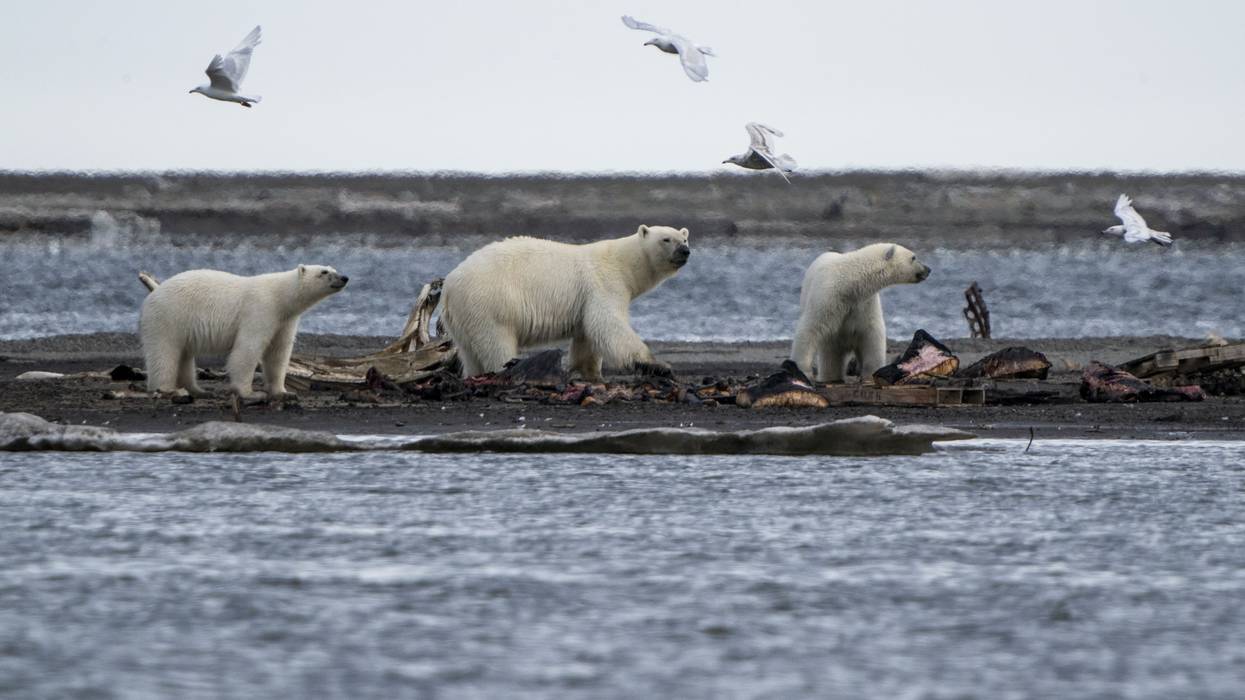
In an embarrassment for President Donald Trump and his "drill, baby, drill" energy policy, Friday's third oil and gas lease sale in Alaska's Arctic National Wildlife Refuge once again drew no bids from Big Oil—but conservationists stressed that fossil fuel expansion still poses a serious threat to the pristine wilderness and its human and animal inhabitants.
The US Department of the Interior’s Bureau of Land Management (BLM) offered 60 tracts on 689,000 acres in the ANWR in northeastern Alaska's Coastal Plain for lease sales. Just two companies—the government-owned Alaska Industrial Development and Export Authority and Hex LLC, an Alaska firm—bought five leases that generated a paltry $3.7 million in total receipts.
“Yet again, no major oil and gas companies showed up to bid, because they know that drilling in the Arctic Refuge is a losing proposition,” said Kristen Moreland, executive director of the Gwich'in Steering Committee, which represents the Gwich'in Indigenous people and opposes drilling.
“We will continue to fight the Trump administration’s leasing program, and work with our friends and allies to protect this sacred and irreplaceable landscape from development of any kind," Moreland added.
The Trump administration had touted fossil fuel lease sales as a way to help pay for tax cuts in the so-called One Big Beautiful Bill Act that mostly benefited corporations and wealthy individuals. The law, which was signed last July by Trump and extends tax cuts the president enacted in 2017, is expected to result in over $5 trillion in lost revenue through 2034, according to an analysis by the Tax Foundation, the world's leading independent tax policy nonprofit.
Despite the underwhelming result, the BLM described Friday's ANWR lease sale as "successful," with agency Director Steve Pearce calling it "another important step toward restoring American Energy Dominance and responsibly developing the vast resources Congress directed us to make available in the Coastal Plain."
Friday's lease sale was the third such auction, the first of which was held in 2021 during Trump's first term and generated just 1% of the administration's projected revenue. The Biden administration—which canceled the leases issued in the 2021 sale—held another lease auction last year because Trump's 2017 tax cut law required two ANWR lease sales within seven years. The 2025 auction drew no bidders.
Green groups and other drilling opponents warned that Friday's flop does not diminish the threat posed by fossil fuel development in ANWR, which is home to the North Slope Iñupiat and the Gwich’in peoples and 270 animal species, including all of the world’s remaining South Beaufort Sea polar bears and the 200,000 porcupine caribou upon which the Gwich'in—who call the area the "sacred place where life begins—rely upon for their survival. The North Slope Iñupiat broadly support drilling and called Friday's lease sale "an important milestone."
"Even though the interest in today’s sale was tepid, the new leasing still poses significant threats to habitat, iconic wildlife, and Indigenous ways of life in one of the nation’s most wild and beautiful landscapes," Earthjustice—one of the groups leading a lawsuit challenging the lease sales—said in a statement. "All of today’s leases are in important polar bear habitat, for example."
Athan Manuel, the Sierra Club's director of lands protection, said that "today's lease sale was another embarrassment and broken promise. The Trump administration has pushed leasing out the Arctic Refuge as the way to finance huge tax cuts, yet today generated $3.7 million for the federal government."
“Let's call that what it is, another scam to trick Americans into giving away our precious natural world," Manuel continued. "It does nothing to change the reality that drilling in the Arctic National Wildlife Refuge remains a risky, controversial, and fundamentally flawed proposition."
"For years, the public was promised that sacrificing the refuge would generate significant economic benefits," Manuel added. "Instead, this leasing program has been plagued by uncertainty while putting one of America's most important public lands at risk."
Autumn Hanna, vice president of the advocacy group Taxpayers for Common Sense, said, "From two previous failed lease sales that delivered less than 1% of promised revenue, taxpayers already know that drilling in the Arctic Refuge is a bad deal."
"Today’s lease sale is yet another reminder that oil and gas development in the refuge is high-risk, low-reward, with zero interest from real industry players," Hanna added. "Americans will not see relief at the pump and, instead, face greater risks from the drilling in a sensitive region.”
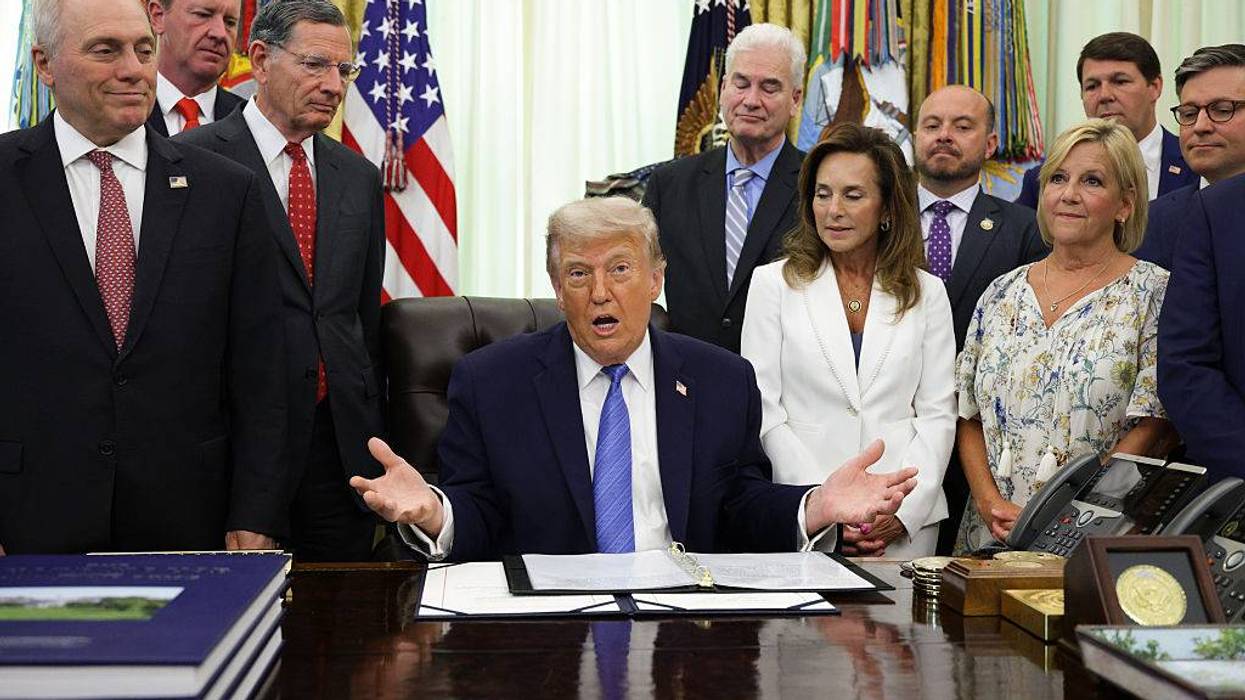
US President Donald Trump's remarks Wednesday expressing "love" for new inflation figures were seen as yet another callous dismissal of the economic pain facing the nation's working class as price hikes driven by the Iran war erase wage gains and make it harder for Americans to afford basic needs.
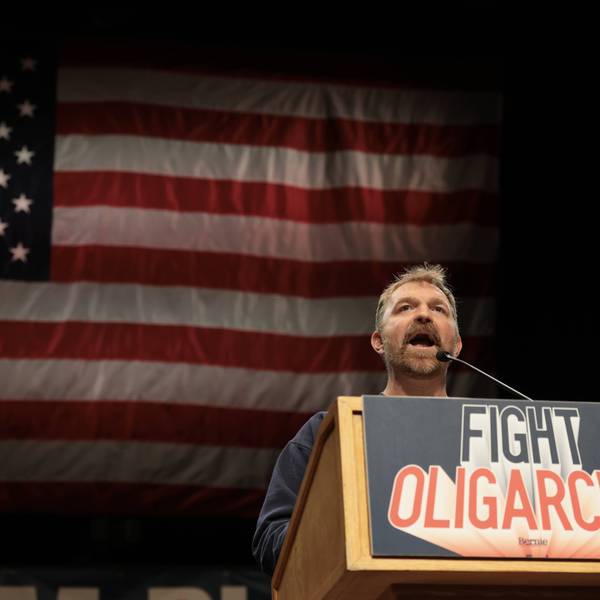
“You know who doesn’t love inflation, Mr. President?” asked Sen. Bernie Sanders (I-Vt.) rhetorically. “Working families struggling to afford gas, groceries, and other necessities because of your disastrous actions.”
Asked about the new inflation numbers in the Oval Office on Wednesday, Trump said, "I love it, the numbers were great."
"I love the inflation," the billionaire president continued, celebrating figures showing that the Consumer Price Index hit a new three-year high last month.
Reporter: Are you concerned, Mr. President, about the latest inflation number which came out this morning?
Trump: No, I love it. I love the inflation. pic.twitter.com/vktX6C9lbk
— Acyn (@Acyn) June 10, 2026
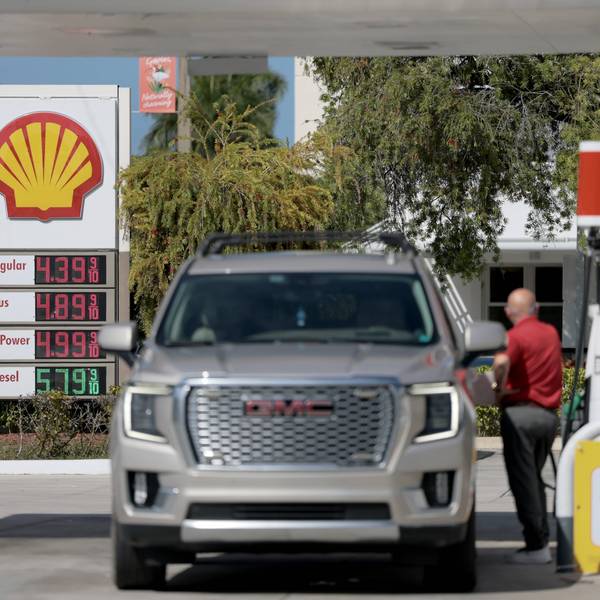
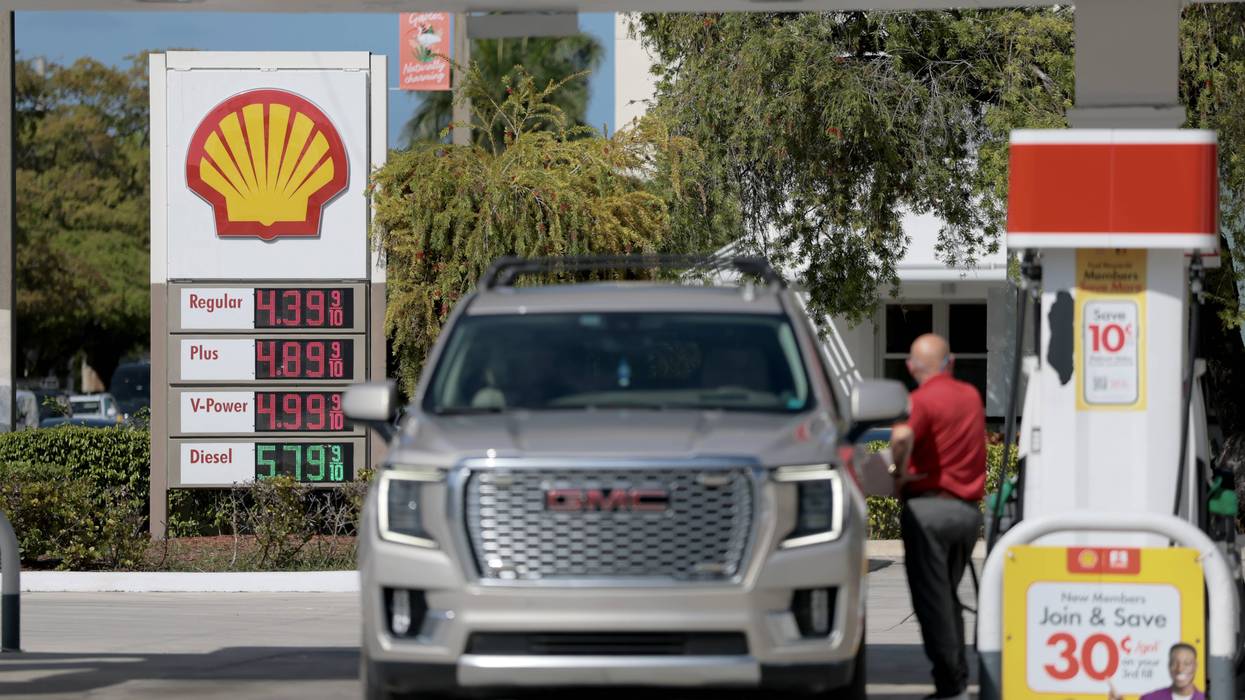
Much of May's inflation was driven by increases in the cost of fuel, which is a direct result of Trump starting an illegal war of choice with Iran in February.
An analysis published by Ben Zipperer, senior economist at the Economic Policy Institute, found that the price increases caused by the Iran war have been so large that they've wiped out any prior gains in real wages during Trump's second term.
Zipperer also warned that "as long as the war continues, there is a heightened threat that price increases will spill over to the broader economy, triggering a more permanent increase in the cost of living and further reductions in real earnings."
Fresh data released Thursday by the BLS signals that inflation isn't slowing down anytime soon. According to the BLS' latest Producer Price Index (PPI) report, wholesale prices in May posted a yearly increase of 6.5%, the fastest rate since November 2022.
Because PPI measures input costs paid by businesses, it is usually predictive of future retail increases as companies pass the cost increases off to consumers.
Rep. Don Beyer (D-Va.) was among the lawmakers highlighting and condemning the president's remarks.
"Trump just said 'I love the inflation,'" Beyer wrote. "I guess he doesn’t care if you're being squeezed by higher costs as long as he and his cronies get richer."
Sen. Elizabeth Warren (D-Mass.) wrote on social media, "So there you have it: President Trump loves that you’re paying higher prices."
Andrew Mamo, a Democratic campaign adviser, said in an interview with The Hill that "every day the president says he loves something Americans clearly hate is a good day for Democrats."
In interviews with The New York Post published on Wednesday, multiple Republican strategists expressed concern not only about the rise in inflation, but Trump's apparently blasé attitude about the impact it's having on Americans' pocketbooks. The president's latest remarks came weeks after he confessed, on camera, that he doesn't "think about Americans' financial situation" as he wages war on Iran.
One former Trump campaign adviser told the Post that comments about "loving" inflation "are simply not productive unless he's looking forward to the impeachments from the Democrats in 2027."
Another GOP strategist told the Post that the clip of Trump saying he loved inflation would be "the centerpiece of a lot of effective ads" targeting Republicans this fall.
GOP strategist John Feehery went on the record to tell the Post that Trump needed to wrap up his war with Iran by early next month or "independents are going to swing hard against the Republicans in the election."

A super political action committee created to support Donald Trump is preparing to hold a big-money fundraiser at the president's Virginia golf course that will charge attendees $1 million each.
As reported by NBC News, MAGA, Inc. will host the $1 million-per-plate event at the Trump National Golf Club Washington DC on the day before the president is set to host Ultimate Fighting Championship (UFC) events at the White House as part of his 80th birthday celebration.
"The fundraiser is at least the sixth such $1 million-per-person event held by Trump-aligned groups for the midterm elections," reported NBC News. "Republicans at nearly all levels hold a significant midterm cash advantage over Democrats, who expect to be outpaced financially in many key House and Senate races."
Lisa Gilbert, co-president of Public Citizen, linked the ritzy fundraiser to Trump's economic policies that have primarily benefited the wealthiest Americans at the expense of the working class.
"The comingling of 250th anniversary events, Trump’s UFC fight, and a $1 million per-plate fundraiser on Trump’s own birthday," Gilbert said, "gives corporate interests and wealthy donors not just an ultimate fight—but the ultimate opportunity to pay tribute to the president. Rather than celebrate our nation’s anniversary in the bipartisan manner directed by Congress, the Trump administration has directed public money and public property to politicized events."
"Major corporations, such as Chevron, Exxon, MasterCard, and many more," Gilbert added, "should be ashamed to be associated with this corrupt spectacle."
The fundraiser comes as a recent study from the Federal Reserve Bank of New York showed food insecurity in the US has reached its highest levels since the Covid-19 pandemic.
The New York Fed researchers said their study found “a remarkable increase in food insecurity, particularly among lower-educated and lower-income households and households with young children,” as well as “a contemporaneous increase in pessimism among the same groups, along with a sharp decline in job-finding expectations.”
The researchers noted that "while many households are doing fine and economic activity overall has been expanding at a solid pace," there are large numbers of people "facing high levels of economic insecurity and financial strain," which has resulted in plunging overall consumer sentiment.
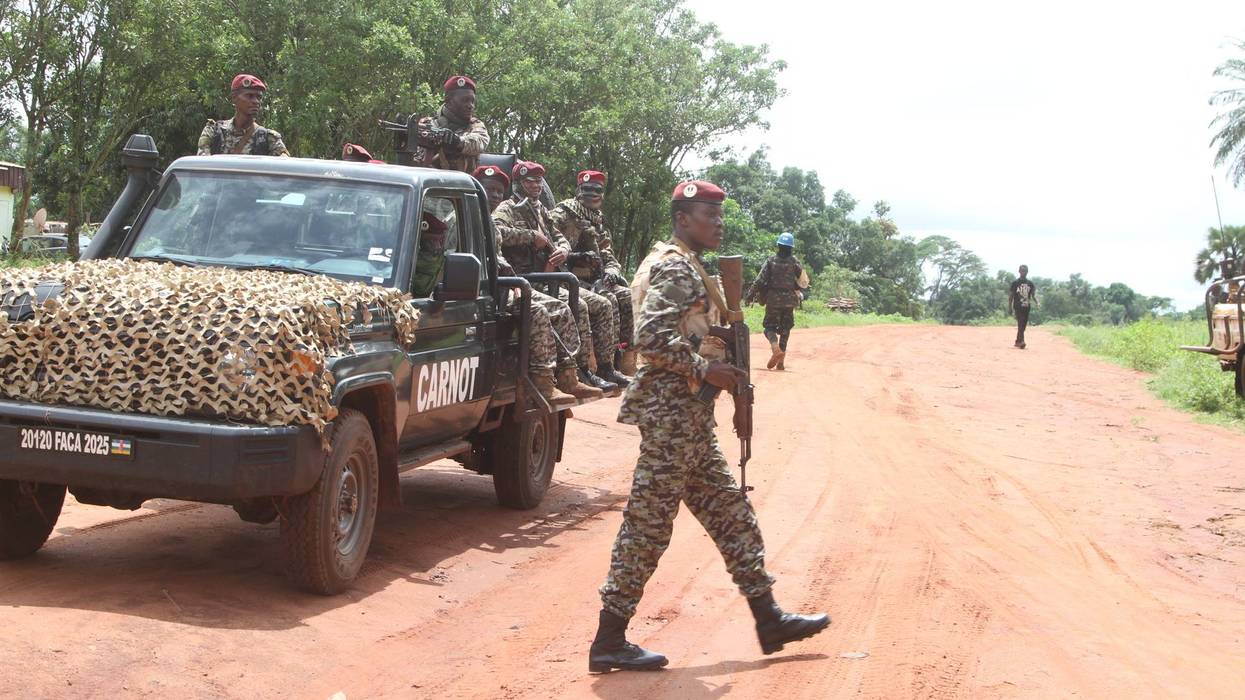
The US government advises Americans not to travel to the Central African Republic "for any reason." But it just deported nearly two dozen people to the war-torn country, including several refugees who fled persecution in other nations.
On Friday morning, Human Rights First's deportation flight tracker reported that a plane used by Immigration and Customs Enforcement (ICE) had landed in Accra, Ghana, after departing from Louisiana the previous day and was believed to be en route to the CAR's capital, Bangui.
Per The New York Times on Thursday, the administration was preparing to deport "at least two Iranian women who had sought refuge in the United States" as well as "migrants from Afghanistan and Syria."
According to their lawyers, several of the migrants had received court orders from judges prohibiting their deportation to their home countries, citing the risk of persecution there.
A lawyer for one of the Iranian women told the Times that neither of them has a criminal record and that they both have been granted court protection due to fear of threats to their freedom or lives if they returned to Iran. One is a Christian convert, and the other is a pro-democracy activist.
According to Reuters, just the activist ended up on the flight from Louisiana. But the Christian woman is still at risk, along with another Iranian national.
Human Rights First's @ICEFlightM is monitoring this egregious situation, and we urge our policy makers to decry this life-threatening flight and other deals that send people seeking safety back to the very harms from which they fled.
https://t.co/ABZZMTQNuS
— Human Rights First (@humanrights1st) June 11, 2026
The burden of proof to receive what is known as a “withholding of removal” status from an immigration judge is even higher than that needed for migrants to qualify for asylum.
Those seeking their deportations to be halted must demonstrate that it’s more likely than not that their life or freedom would be threatened if they returned to a specific country due to their race, religion, nationality, or political or social affiliation.
In order to get around orders protecting these migrants from deportation to their home countries, the administration is instead dumping them in what have been described as "third countries."
The flight departed on Thursday is the first US deportation flight to the CAR, which is one of the poorest countries in the world and is reeling from a civil war that's displaced more than a million people both inside and outside the country.
The country is under the State Department's highest travel advisory, warning US citizens not to go there "due to risk of unrest, crime, kidnapping, landmines, health, and terrorism."
This is the @StateDept travel advisory for the Central African Republic.
The United States—a self-proclaimed nation of refuge—is about to send refugees here. https://t.co/uxfexS5S73 pic.twitter.com/pvYyxIQHdN
— Sarah Pierce (@SarahPierceEsq) June 11, 2026
"People on this flight proved to a judge that they were likely to be persecuted in their home countries," said Aaron Reichlin-Melnick, a senior fellow at the American Immigration Council. "This is profoundly unjust."
Human rights law experts Anjli Parrin and Savi Arvey wrote on Wednesday for Just Security that the administration was putting "lives at risk" by sending these migrants to a dangerous country where they know nobody and where basic healthcare infrastructure hardly exists.
They said the administration's deportation of these migrants "is the latest example of its dangerous and potentially life-threatening strategy: using secretive deals with countries to expel asylum seekers and migrants with no legal or personal connection to the places where they are being sent."
"Since early last year, the US government has signed a growing number of third-country forced transfer agreements with over 30 countries worldwide to expel and deport people to places where they have no legal or personal ties," they said.
"These deportations are often carried out in secrecy and without any semblance of due process," they added. "Individuals are often not given any advance warning or the opportunity to challenge their deportation to a third country—with many only discovering they are being sent to a country they may have never heard of while airborne."
Emily Trostle, a lawyer for the Iranian activist, told Reuters that the migrants facing deportation to the CAR "have absolutely no connection to this place."
“These individuals are being removed from the United States and abandoned in a country where they have no status, no connection, and no support network,” she said. “We fear they will ultimately be forced to return to the countries they originally fled.”
According to Human Rights First's Third Country Deportation Watch, governments around the world have been given $44 million from US taxpayers to receive these migrants. More than 19,000 people, it found, have been deported across 24 countries.
Most of them have been sent to Mexico, but the US has also shipped migrants to some of the poorest, most unstable nations in sub-Saharan Africa, including Eswatini, Equatorial Guinea, and Sierra Leone. Many have faced arbitrary detention and torture or been returned to the country where they fled persecution.
In order to avoid having to allow over 1,000 Afghans who fought alongside US soldiers to settle as refugees in the US as planned, the Trump administration is reportedly trying to ink a deal with the Democratic Republic of the Congo to take them instead, but the plan was stalled amid public backlash, and the administration is seeking other options.
It's hard to fathom how deeply evil this is, and that we have people running our country who get sick pleasure from sending women fleeing violence in Iran to an African country in the middle of a brutal civil war. https://t.co/JaN8z2LFI2
— Chris Murphy 🟧 (@ChrisMurphyCT) June 11, 2026
The Iranian American Legal Defense Fund said on Thursday that the deportation of Iranian nationals was a “potentially fatal action,” as they could face danger in the CAR or be sent back to Iran.
Another person scheduled to be deported to the CAR was an elderly man from Syria, whose immigration attorney, Margaret Stock, told the Times that he had scars all over his body due to torture in his home country.
He is a Sufi Muslim and feared persecution if he returned there, and is in danger of lacking access to care for his diabetes if sent to the CAR. According to Stock, he received an emergency temporary order halting his deportation.
Sen. Chris Murphy (Conn.), the ranking Democrat on the subcommittee in charge of funding for the Department of Homeland Security and its immigration agencies, responded to the Times report on the deportations with outrage.
"It's hard to fathom how deeply evil this is, and that we have people running our country who get sick pleasure from sending women fleeing violence in Iran to an African country in the middle of a brutal civil war," he said.
Reichlin-Melnick agreed: "Evil is the right word for... taking people who are safe in the United States, who have proven to a judge they would be persecuted in their home country, and dumping them in a random country in the middle of a civil war."
"No previous administration would have done this, despite it likely being legal," he added.

US President Donald Trump and Pentagon Secretary Pete Hegseth announced in social media posts late Friday that American forces, in coordination with Venezuelan authorities, killed the alleged leader of the Tren de Aragua gang in a strike on a compound inside Venezuelan territory.
"At my direction, the United States Southern Command delivered a swift and lethal kinetic strike to successfully execute Niño Guerrero, the infamous leader of Tren de Aragua," the president wrote on his Truth Social platform, posting what appears to be footage of the strike. Hegseth later specified that the attack took place inside Venezuela earlier this week and that Héctor Rusthenford Guerrero Flores—known as Niño Guerrero—was "confirmed killed."
The strike that purportedly killed Guerrero, whom the US Justice Department charged last year with multiple crimes including "facilitating acts of terrorism," came in the context of the Trump administration's broader, deadly military campaign in South America and off its coast. Dozens of US bombings of boats in the Caribbean and eastern Pacific Ocean since last September have killed more than 200 people—including possible victims of human trafficking—with the stated goal of stemming the flow of drugs to the US (an objective that experts say has not been achieved).
Leading human rights organizations have characterized the boat bombings as "murder."
Brian Finucane, senior adviser to the US Program at the International Crisis Group, called the strike that allegedly killed Guerrero Flores "more lawless, performative killing by the Trump administration."
"Outside of armed conflict, premeditated killing is referred to as murder," Finucane wrote on social media. "There is no indication this strike occurred in an armed conflict. Including because, as best we can tell, TdA doesn't constitute an 'organized armed group.'"
The government of Venezuela, whose president was kidnapped by US forces earlier this year, issued a statement confirming its involvement in the strike this week.
“During the operation, clashes occurred with members of criminal groups, resulting in the death of Héctor Rusthenford Guerrero Flores, alias ‘Niño Guerrero,’ the leader of one of these criminal organizations,” the statement reads.
It was not immediately clear if others were killed in the military attack.
"We extend our gratitude to the Venezuelan security forces for their support to the successful joint operation against a Tren de Aragua compound that resulted in the death of the narco-terrorist organization’s leader," said Gen. Francis Donovan, the head of the US Southern Command.
The Associated Press noted that "Trump and administration officials have consistently blamed Tren de Aragua for being at the root of the violence and illicit drug dealing that plague some US cities."
"The president spent months repeating the claim—contradicted by a declassified U.S. intelligence assessment—that Tren de Aragua had operated under Venezuelan President Nicolás Maduro’s control," the AP added.
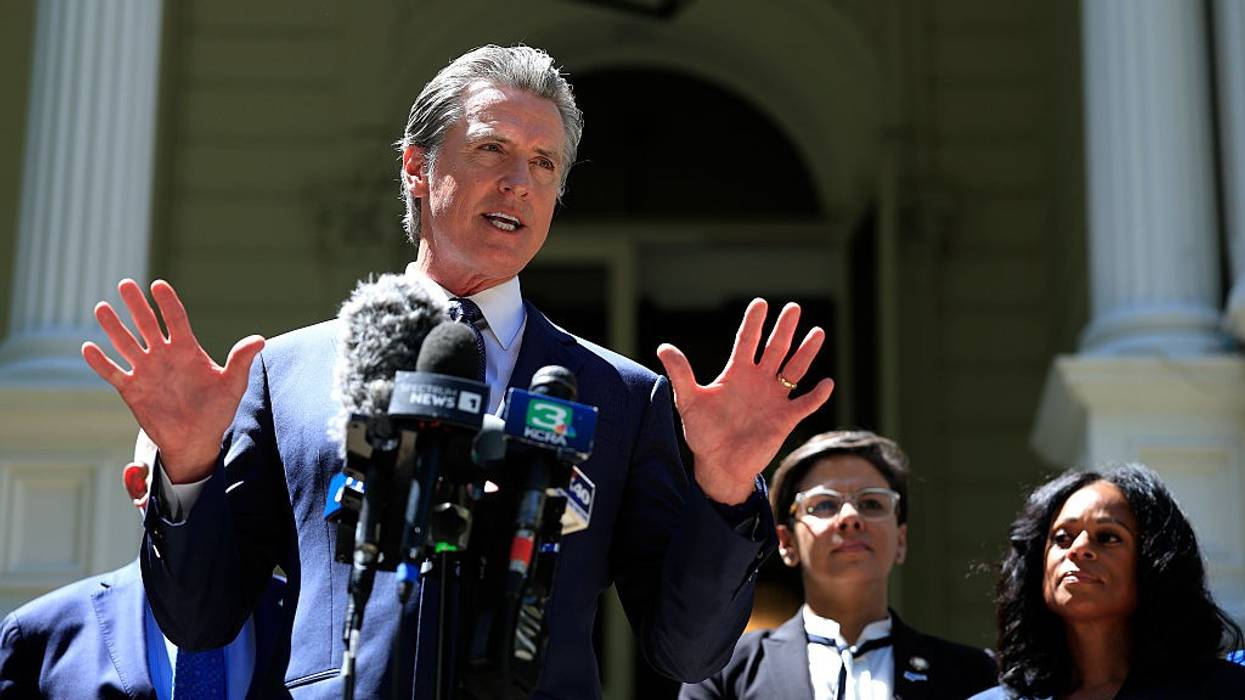
"Donald Trump is simply the most corrupt president in American history. He's turned the levers of government into his own personal power ministry, to reward cronies and to try to jail his opponents."
Democratic California Gov. Gavin Newsom on Monday said the US Department of Justice was investigating both him and his wife in what he described as an abuse of power being carried out on behalf of President Donald Trump.
In a video posted on social media, Newsom claimed federal agents in recent days "have knocked on the doors of family, friends, and former employees, not because they've found a crime" but "because they're simply trying to find one."
Newsom charged that Trump himself was behind the investigation, which he said was being done in response to his prospective 2028 presidential campaign.
"Donald Trump is simply the most corrupt president in American history," Newsom said. "He's turned the levers of government into his own personal power ministry, to reward cronies and to try to jail his opponents. His personal attorney now runs the Department of Justice, which has repeatedly gone after his political enemies."
Newsom then linked the current DOJ investigation into him to federal investigations of New York Attorney General Letitia James, former Federal Reserve Chairman Jerome Powell, and former FBI Director James Comey as yet another politically motivated assault on the rule of law.
"One by one, anyone who has challenged Donald Trump has ended up on his hit list," Newsom explained. "And today, I proudly join that list. After calling for my arrest last year, Donald Trump directed his Department of Justice to investigate me."
The governor said that investigators in recent days had shown particular interest in his wife, documentary filmmaker Jennifer Siebel Newsom.
"If they can't intimidate me, they'll go after the mother of our children," said Newsom. "Donald Trump picked the wrong target. We have nothing to hide."
A source told The New York Times that the investigations into Newsom "were initiated by federal law enforcement officials in California, based on government witnesses offering information there, and were not launched by officials in Washington."
However, Trump has gotten directly involved in multiple DOJ investigations of his political opponents that have led to criminal charges.
Last year, the president inadvertently posted a message on his Truth Social platform that was intended to be a private message to then-Attorney General Pam Bondi, in which he pushed her to move more quickly on indicting Comey, James, and US Sen. Adam Schiff (D-Calif.).
James and Comey would subsequently be hit with criminal charges, although cases against them were dismissed last year by a federal judge. Comey has since been indicted again for posting a purportedly threatening message on social media that some legal experts have described as an "embarrassing" case.
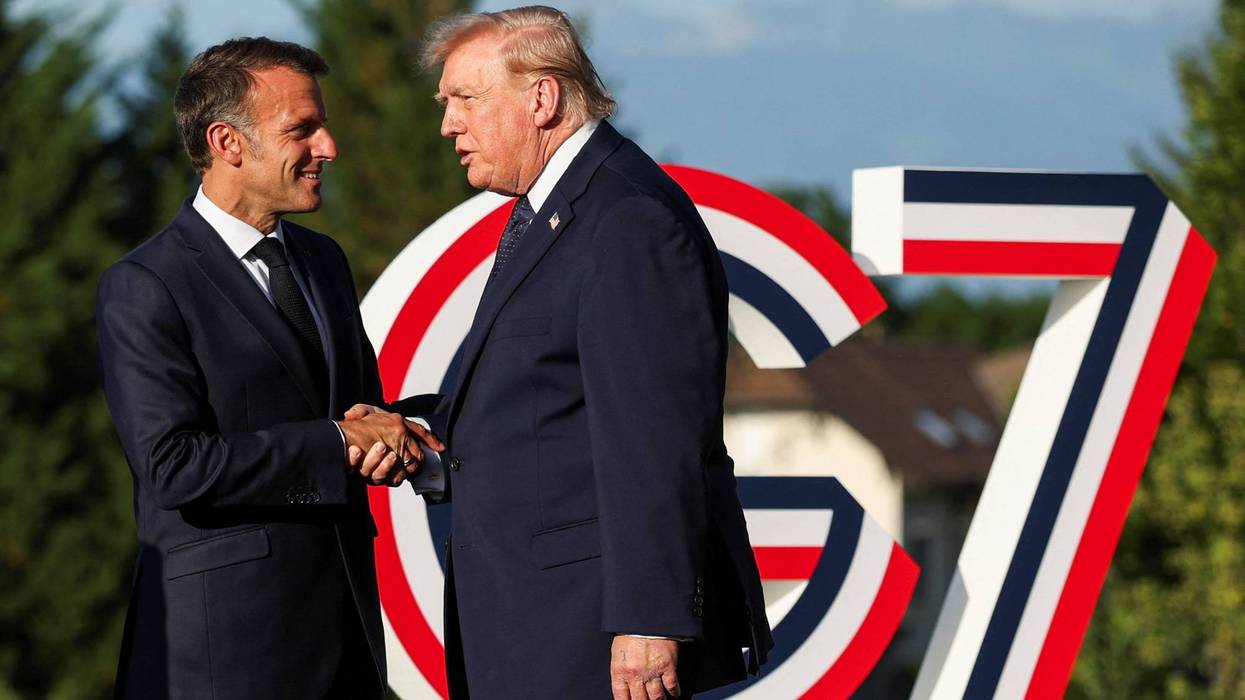
“Conflict devastates countries and costs countless lives, yet for some it is extraordinarily profitable,” said the executive director of Oxfam International.
While much of the world is holding out hope that the US-Israeli war against Iran may finally be reaching an end amid news of a ceasefire agreement, the billionaire owners of some of the world's largest energy companies may not be so thrilled.
A handful of just 41 energy industry barons in Group of Seven (G7) countries collectively increased their wealth by $23.5 billion since the war was launched in late February, according to a report released by Oxfam International on Monday, as the leaders of the world's largest industrialized economies meet in France this week.
The oil shocks resulting from the war have caused fuel prices to spike dramatically, rippling inflation throughout the global economy and straining the pocketbooks of ordinary people around the world. One April report by the United Nations Development Program projected that, as a result of the conflict, an additional 32 million people would be pushed into poverty by the end of the year.
But between March 1 and May 18, owners of the largest oil and energy companies in Canada, France, Germany, Italy, Japan, the US, and the UK were adding $300 million on average per day to their collective wealth, Oxfam found through an analysis of Forbes’ Real-Time Billionaire List.
PRESS RELEASE: G7 energy billionaires pocket $300 million a day since start of unlawful US and Israel war against Iran.
This is equivalent to about $1,000 in the time it takes to blink.
👀https://t.co/UVGHF4a3Tk pic.twitter.com/szSGASCAX8
— Oxfam International Media Team (@newsfromoxfam) June 15, 2026
“Conflict devastates countries and costs countless lives, yet for some it is extraordinarily profitable,” said Oxfam International's executive director Amitabh Behar. “This is a brutal system that redistributes wealth upwards—from workers to shareholders, from the poorest to the richest, from those with the least power to those who already have far too much of it. While families are skipping meals and governments slash life-saving aid, we are witnessing a grotesque billionaire bonanza.”
While their accumulation of wealth cannot solely be attributed to the war, Oxfam noted that the Big Six oil companies—Chevron, Shell, BP, ConocoPhillips, Exxon, and TotalEnergies—are projected to grow their profits this year by 80% above the pre-war forecast, while the average large G7 company in the sample is projected to see just 8% growth.
Global billionaires saw their wealth increase on average by about 0.42% between March and mid-May. During the same period, G7 billionaires in the energy industry grew their riches by 9%, while those in oil and gas specifically became nearly 11% richer.
Oxfam notes that the Iran War has only widened the chasm between the rich and poor that was already gaping, in no small part thanks to nations in the G7.
While billionaire wealth has surged by nearly $10 trillion since 2020, G7 nations, mostly the US under President Donald Trump, have reduced aid to the poorest nations by $48 billion—equivalent to what billionaires in G7 countries accumulated for themselves in just nine days.
Meanwhile, since 2019, the last time France chaired a G7 summit, Oxfam estimated that 44 people per minute have come to be in need of humanitarian aid, based on 2025 data from the United Nations Office for the Coordination of Humanitarian Affairs.
.@Oxfam campaigners posing as #G7 leaders stand around a trash can overflowing with discarded files. The labels read: “gender inequality,” “climate,” and “tax the rich” —critical global issues scrubbed from the agenda to secure President Trump’s attendance at the G7 summit.@AP pic.twitter.com/aE7HkMvKFl
— Oxfam International Media Team (@newsfromoxfam) June 15, 2026
Behar said that in order to secure the participation of the US in this week’s summit, French President Emmanuel Macron has chosen to table any discussions that might offend Trump—including the devastating cost of his war in Iran, Israel’s US-backed wars in Gaza and Lebanon, and anything to do with the climate crisis, which Trump has referred to as "a scam."
"Rather than defending collective governance, Macron and his peers are accommodating its destruction. This will have consequences measured in lives," he said.
Oxfam called for the "G6"—all the Group of Seven member countries, excluding the US—to create a comprehensive plan to protect people from the economic turmoil caused by the war and other spiraling global crises.
“The G6 can’t plead powerlessness,” Behar added. “They can cancel debt. They can tax windfall profits and extreme wealth... They can provide poorer countries with aid. Refusing to act simply because Washington will not join them is not diplomacy—it is cowardice. And it will only accelerate the G6’s slide into global irrelevance.”
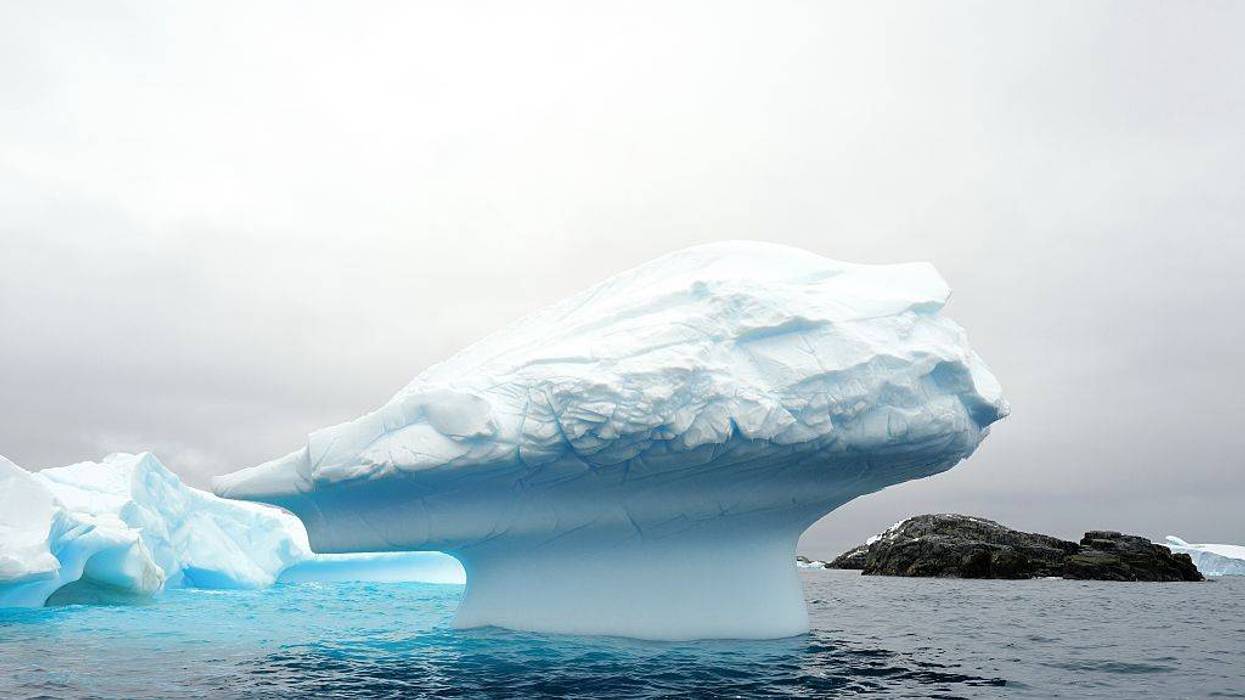
"The temperatures here went very high so everything outside melted,” said one scientist.
Climate scientists are sounding the alarm after an unprecedented heatwave hit Antarctica this month and delivered temperatures 20°C higher than normal.
According to a Friday report in The Guardian, temperatures at Antarctica's Trinity Peninsula this month hit peaks of over 15°C, even though it is the start of winter when ice typically expands on the continent. The prior record June temperature at the peninsula, 13.3°C, was set in 1998.
After weeks of above-average temperatures, scientists noticed that an area of sea ice that typically forms in the region—one roughly the size of France—was missing.
"It’s depressing,” Will Hobbs, an Antarctic sea ice expert at the University of Tasmania, told The Guardian. "It is remarkable that we are in June and there is no sea ice there."
Hobbs also predicted that the loss of sea ice is likely permanent at this point given the trajectory of global temperature changes.
Peter Fretwell, a scientist at the British Antarctic Survey, explained to the newspaper that the loss of sea ice poses a serious threat to penguin populations.
"Sea ice is forming too late and breaking up too early," Fretwell explained. "It leads to reduced breeding success and longer trips to moulting grounds."
In a separate interview with The Guardian last week, Raúl Cordero, a climate professor at the University of Groningen, expressed astonishment at the record-breaking Antarctic heat.
“This is absolutely crazy,” Cordero said. "That is a huge anomaly.”
Luis Muñoz, a Chilean glaciologist, told the newspaper he was shocked to step outside at King George's Island, located just north of Trinity Peninsula, and seeing the ground uncovered by snow.
"The temperatures here went very high so everything outside melted,” Muñoz explained. “Usually there is 20 centimeters of snow and a lot of ice on the ground at this time.”
Taking stock of the bigger picture, the newspaper reported that scientists are now fearful that some of the biggest glaciers in the region of the peninsula have now "past a tipping point" that could "push up global sea levels by four meters."
Such a rise in global sea levels would be unprecedented. Scientists estimate that global sea levels have risen by between 21 and 24 centimeters since 1880.