Iraq War, Based on Lies, Rages On
A devastating report on the U.K.'s eager participation in the invasion and occupation of Iraq was released this week, as corpses are still being pulled from the rubble in the aftermath of Baghdad's largest suicide truck bombing since that ill-fated 2003 invasion began. The document is known as "The Chilcot Report," after its principal investigator and author, Sir John Chilcot. The inquiry was commissioned in 2009 by Britain's then-Prime Minister Gordon Brown. Chilcot released the 6,000-page report Wednesday morning, seven years after the work began.
A devastating report on the U.K.'s eager participation in the invasion and occupation of Iraq was released this week, as corpses are still being pulled from the rubble in the aftermath of Baghdad's largest suicide truck bombing since that ill-fated 2003 invasion began. The document is known as "The Chilcot Report," after its principal investigator and author, Sir John Chilcot. The inquiry was commissioned in 2009 by Britain's then-Prime Minister Gordon Brown. Chilcot released the 6,000-page report Wednesday morning, seven years after the work began. It offers a litany of critiques against former Prime Minister Tony Blair and his Cabinet, exposing the exaggeration of the threat of weapons of mass destruction (WMD), and Blair's unwavering fealty to President George W. Bush. "It is now clear that policy on Iraq was made on the basis of flawed intelligence and assessments. ... They were not challenged," Chilcot writes in his statement that accompanied the report's release.
One memo included in the report, from Blair to Bush in July 2002, months before the invasion, opens with Blair's pledge to Bush, "I will be with you, whatever." Many, including Parliament members from his own Labour Party, are calling for Blair to be tried for war crimes. As the United Kingdom, still consumed by political chaos in the wake of the Brexit vote, reacts to the Chilcot report, people in Baghdad are reeling from Saturday's bombing. The death toll from the attack has climbed to 250. George W. Bush, unapologetically, said through a spokesman that he "continues to believe the whole world is better off without Saddam Hussein in power." He was said to be hosting wounded veterans on his ranch in Texas.
The British military suffered far fewer casualties than the Americans, with 179 killed, compared with 4,502 from U.S. forces (seven of whom were killed in 2016). Trillions of dollars have been spent on the invasion and occupation, and trillions more will be spent on the lifetime of care for the wounded and emotionally damaged veterans. But by far the largest, the most incalculable toll has been paid by the Iraqi people. As this most recent, incredibly massive bombing attests, the war in Iraq has not ended. Several efforts have been made to count the number of war dead, with the low end of those estimates at 160,000-180,000 killed. Some studies have put the number at several times that. The exact number is impossible to determine, but the effect on the people of Iraq has been devastating, and the damage will be felt for generations.
The British pronouncement was clear: "Our armies do not come into your cities and lands as conquerors or enemies, but as liberators." This was not in 2003, though. It was 1917. War raged across Europe, and the British Navy was heavily dependent on oil from Iraq and the Persian Gulf. As the detailed historical annex attached to the Chilcot Report reads, "To secure this oil for Britain, in the spring of 1914 the First Lord of the Admiralty, Winston Churchill, acquired for the British Government a 51 percent share in the Anglo-Persian Oil Company." And thus has the past century of occupation, exploitation, repression, violence and grief been seared into the lives of Iraqis and into the history of Iraq.
This is more than history to Sami Ramadani. He is an Iraqi-born, London-based exile from the Saddam Hussein regime, who has long organized against not only the invasion and occupation of Iraq, but also against the devastating sanctions that preceded it. "Iraq, as a society, as a state, was destroyed in the cruelest of fashions--shock and awe, mass crimes on an untold scale since World War II and the Vietnam War," he told us on the "Democracy Now!" news hour, shortly after the report was released. "It wasn't removing the dictator that was the real objective, but really controlling Iraq. And failing to control it, they eventually destroyed it, just like they are doing in Libya, they are doing in Syria and so on. It fits in within that scale. But the biggest tragedy of all is the loss of life."
Just one year after the invasion, at the Radio and Television Correspondents' Association annual dinner in Washington, D.C., President Bush joked to the hundreds of journalists at the gathering, "Those weapons of mass destruction have got to be here somewhere." Slides of Bush crouched on the floor of the Oval Office, looking for WMDs under the furniture, accompanied his comedy routine. As dead U.S. service members were brought back to Dover Air Force Base, where photographing the body bags was banned, and while Iraqi corpses piled up in streets and morgues, Bush's behavior was unfathomable. War is no joke. In the wake of the Chilcot Report, there should be a serious effort to hold those, like Bush and Blair, accountable for the ongoing death and destruction in Iraq, and beyond.
We are at a crossroads
This country and this world are at a monumental crossroads. In a few short weeks, US voters will have an opportunity to beat back the forces of fascism and confront the billionaires who are rigging the economy, our media system, and our democracy, making it increasingly impossible for ordinary people to get by. We’re not just talking about the election. We’re talking about what must be done once these fascist elements are vanquished from power. We need a bolder set of solutions than what either major party has so far been willing to offer and a working-class movement ready to fight like hell for it. Trump didn't emerge from nowhere. The conditions that fueled MAGA authoritarianism were created by decades of radical neoliberal economic policies and a corrupt political system dominated by corporate interests. They slashed taxes on the super-rich, promising that the benefits would trickle down. They said giveaways to the corporate titans would make life more affordable for the rest of us. It was all bullshit. And when a bitter, betrayed populace searches for someone to blame, right-wing demagogues have little trouble finding scapegoats. People know when they're being lied to, but you won't hear any of this from the corporate media. Only independent journalism—powered and funded by people who believe in building a better world—can deliver truly trustworthy daily news. Our Fall Campaign is underway, and we need your help. To power our newsroom through the rest of the year, we need to raise $125,000 by midnight on October 31. So if you share our vision, please contribute whatever you can to sustain our work. |
A devastating report on the U.K.'s eager participation in the invasion and occupation of Iraq was released this week, as corpses are still being pulled from the rubble in the aftermath of Baghdad's largest suicide truck bombing since that ill-fated 2003 invasion began. The document is known as "The Chilcot Report," after its principal investigator and author, Sir John Chilcot. The inquiry was commissioned in 2009 by Britain's then-Prime Minister Gordon Brown. Chilcot released the 6,000-page report Wednesday morning, seven years after the work began. It offers a litany of critiques against former Prime Minister Tony Blair and his Cabinet, exposing the exaggeration of the threat of weapons of mass destruction (WMD), and Blair's unwavering fealty to President George W. Bush. "It is now clear that policy on Iraq was made on the basis of flawed intelligence and assessments. ... They were not challenged," Chilcot writes in his statement that accompanied the report's release.
One memo included in the report, from Blair to Bush in July 2002, months before the invasion, opens with Blair's pledge to Bush, "I will be with you, whatever." Many, including Parliament members from his own Labour Party, are calling for Blair to be tried for war crimes. As the United Kingdom, still consumed by political chaos in the wake of the Brexit vote, reacts to the Chilcot report, people in Baghdad are reeling from Saturday's bombing. The death toll from the attack has climbed to 250. George W. Bush, unapologetically, said through a spokesman that he "continues to believe the whole world is better off without Saddam Hussein in power." He was said to be hosting wounded veterans on his ranch in Texas.
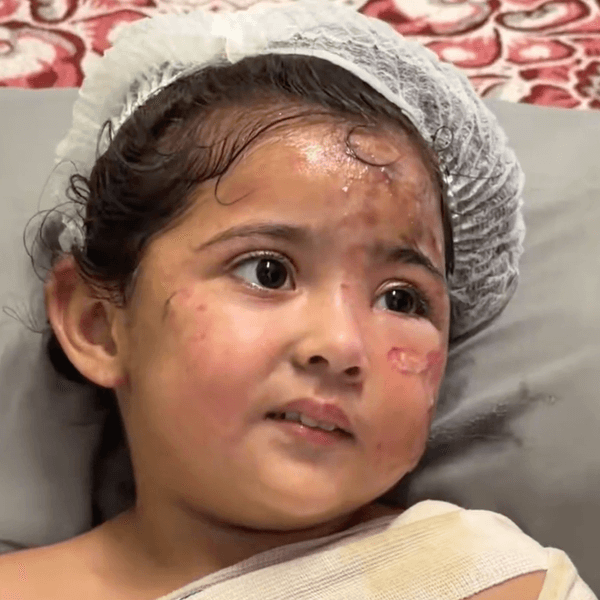
The British military suffered far fewer casualties than the Americans, with 179 killed, compared with 4,502 from U.S. forces (seven of whom were killed in 2016). Trillions of dollars have been spent on the invasion and occupation, and trillions more will be spent on the lifetime of care for the wounded and emotionally damaged veterans. But by far the largest, the most incalculable toll has been paid by the Iraqi people. As this most recent, incredibly massive bombing attests, the war in Iraq has not ended. Several efforts have been made to count the number of war dead, with the low end of those estimates at 160,000-180,000 killed. Some studies have put the number at several times that. The exact number is impossible to determine, but the effect on the people of Iraq has been devastating, and the damage will be felt for generations.
The British pronouncement was clear: "Our armies do not come into your cities and lands as conquerors or enemies, but as liberators." This was not in 2003, though. It was 1917. War raged across Europe, and the British Navy was heavily dependent on oil from Iraq and the Persian Gulf. As the detailed historical annex attached to the Chilcot Report reads, "To secure this oil for Britain, in the spring of 1914 the First Lord of the Admiralty, Winston Churchill, acquired for the British Government a 51 percent share in the Anglo-Persian Oil Company." And thus has the past century of occupation, exploitation, repression, violence and grief been seared into the lives of Iraqis and into the history of Iraq.
This is more than history to Sami Ramadani. He is an Iraqi-born, London-based exile from the Saddam Hussein regime, who has long organized against not only the invasion and occupation of Iraq, but also against the devastating sanctions that preceded it. "Iraq, as a society, as a state, was destroyed in the cruelest of fashions--shock and awe, mass crimes on an untold scale since World War II and the Vietnam War," he told us on the "Democracy Now!" news hour, shortly after the report was released. "It wasn't removing the dictator that was the real objective, but really controlling Iraq. And failing to control it, they eventually destroyed it, just like they are doing in Libya, they are doing in Syria and so on. It fits in within that scale. But the biggest tragedy of all is the loss of life."
Just one year after the invasion, at the Radio and Television Correspondents' Association annual dinner in Washington, D.C., President Bush joked to the hundreds of journalists at the gathering, "Those weapons of mass destruction have got to be here somewhere." Slides of Bush crouched on the floor of the Oval Office, looking for WMDs under the furniture, accompanied his comedy routine. As dead U.S. service members were brought back to Dover Air Force Base, where photographing the body bags was banned, and while Iraqi corpses piled up in streets and morgues, Bush's behavior was unfathomable. War is no joke. In the wake of the Chilcot Report, there should be a serious effort to hold those, like Bush and Blair, accountable for the ongoing death and destruction in Iraq, and beyond.
A devastating report on the U.K.'s eager participation in the invasion and occupation of Iraq was released this week, as corpses are still being pulled from the rubble in the aftermath of Baghdad's largest suicide truck bombing since that ill-fated 2003 invasion began. The document is known as "The Chilcot Report," after its principal investigator and author, Sir John Chilcot. The inquiry was commissioned in 2009 by Britain's then-Prime Minister Gordon Brown. Chilcot released the 6,000-page report Wednesday morning, seven years after the work began. It offers a litany of critiques against former Prime Minister Tony Blair and his Cabinet, exposing the exaggeration of the threat of weapons of mass destruction (WMD), and Blair's unwavering fealty to President George W. Bush. "It is now clear that policy on Iraq was made on the basis of flawed intelligence and assessments. ... They were not challenged," Chilcot writes in his statement that accompanied the report's release.
One memo included in the report, from Blair to Bush in July 2002, months before the invasion, opens with Blair's pledge to Bush, "I will be with you, whatever." Many, including Parliament members from his own Labour Party, are calling for Blair to be tried for war crimes. As the United Kingdom, still consumed by political chaos in the wake of the Brexit vote, reacts to the Chilcot report, people in Baghdad are reeling from Saturday's bombing. The death toll from the attack has climbed to 250. George W. Bush, unapologetically, said through a spokesman that he "continues to believe the whole world is better off without Saddam Hussein in power." He was said to be hosting wounded veterans on his ranch in Texas.
The British military suffered far fewer casualties than the Americans, with 179 killed, compared with 4,502 from U.S. forces (seven of whom were killed in 2016). Trillions of dollars have been spent on the invasion and occupation, and trillions more will be spent on the lifetime of care for the wounded and emotionally damaged veterans. But by far the largest, the most incalculable toll has been paid by the Iraqi people. As this most recent, incredibly massive bombing attests, the war in Iraq has not ended. Several efforts have been made to count the number of war dead, with the low end of those estimates at 160,000-180,000 killed. Some studies have put the number at several times that. The exact number is impossible to determine, but the effect on the people of Iraq has been devastating, and the damage will be felt for generations.
The British pronouncement was clear: "Our armies do not come into your cities and lands as conquerors or enemies, but as liberators." This was not in 2003, though. It was 1917. War raged across Europe, and the British Navy was heavily dependent on oil from Iraq and the Persian Gulf. As the detailed historical annex attached to the Chilcot Report reads, "To secure this oil for Britain, in the spring of 1914 the First Lord of the Admiralty, Winston Churchill, acquired for the British Government a 51 percent share in the Anglo-Persian Oil Company." And thus has the past century of occupation, exploitation, repression, violence and grief been seared into the lives of Iraqis and into the history of Iraq.
This is more than history to Sami Ramadani. He is an Iraqi-born, London-based exile from the Saddam Hussein regime, who has long organized against not only the invasion and occupation of Iraq, but also against the devastating sanctions that preceded it. "Iraq, as a society, as a state, was destroyed in the cruelest of fashions--shock and awe, mass crimes on an untold scale since World War II and the Vietnam War," he told us on the "Democracy Now!" news hour, shortly after the report was released. "It wasn't removing the dictator that was the real objective, but really controlling Iraq. And failing to control it, they eventually destroyed it, just like they are doing in Libya, they are doing in Syria and so on. It fits in within that scale. But the biggest tragedy of all is the loss of life."
Just one year after the invasion, at the Radio and Television Correspondents' Association annual dinner in Washington, D.C., President Bush joked to the hundreds of journalists at the gathering, "Those weapons of mass destruction have got to be here somewhere." Slides of Bush crouched on the floor of the Oval Office, looking for WMDs under the furniture, accompanied his comedy routine. As dead U.S. service members were brought back to Dover Air Force Base, where photographing the body bags was banned, and while Iraqi corpses piled up in streets and morgues, Bush's behavior was unfathomable. War is no joke. In the wake of the Chilcot Report, there should be a serious effort to hold those, like Bush and Blair, accountable for the ongoing death and destruction in Iraq, and beyond.