SUBSCRIBE TO OUR FREE NEWSLETTER
Daily news & progressive opinion—funded by the people, not the corporations—delivered straight to your inbox.
5
#000000
#FFFFFF
To donate by check, phone, or other method, see our More Ways to Give page.

Apologies for invoking the awful noise that never stops. But a month before mid-terms, a fascist feckless clown show run by the dumbest people ever churns on with lies, bribes, cruelty, crude racism; their flailing leader grows daily more perilous; and fiery patriots remind us we cannot grow weary. Oddly, we find solace in Lindsey Graham's 2016 prophesy to the GOP: "If we (choose) Trump, we will get destroyed, and we will deserve it." God: "And in the fullness of time...."
Because we are well and truly beyond the looking glass, an actual, NYTPitchbot-likeTimes headline just posited that "some conservatives are having second thoughts" about Trump even as he continues obliterating every institution of democratic governance, bars press outlets, ignores court rulings, betrays allies, courts autocrats, spews profanities online and at rallies, turns the election into a reality show and the Oval Office into a bordello, and shovels over $1.8 billion into junk vanity projects as his approval plunges to 26% on the economy and his brain dissolves into mashed potatoes. "Second thoughts?"
Decades ago, Robert Reich warned an American economy moving increasingly overseas through the 1970s was creating a two-tired society of a few rich winners and too many left-behind Americans whose anger, resentment and historic racism could be easily manipulated by a savvy carnival barker hungry for power - especially with a right-wing SCOTUS willing to give him almost total immunity for his boundless crimes. The grim result: What Timothy Snyder calls unprecedented "superpower suicide," wherein a major country quickly crashes and burns due to incompetence at all the "basic instruments of state power."
Now, facing "the mid-term music," the GOP flounders through "a five-alarm fire," pulling out lies, bribes, denial. They "must WIN" by using "every tool" - vote early, absentee, in person, by mail (or ICE thugs). Rick Wilson: "Oh, NOW mail-in ballots AREN'T a scam? Sweaty Don is nervous." They hype a duplicitous White House App: "365 Days of Wins." Trump offers a stream of paltry bribes: $90 to 20 million seniors to offset higher Medicare costs he caused, $500 to a million "excess" Obamacare fees, $5,000 to every American adult if Republicans win, conjuring a shameless Oprah-like spectacle: "You get a car, and you get a car..."
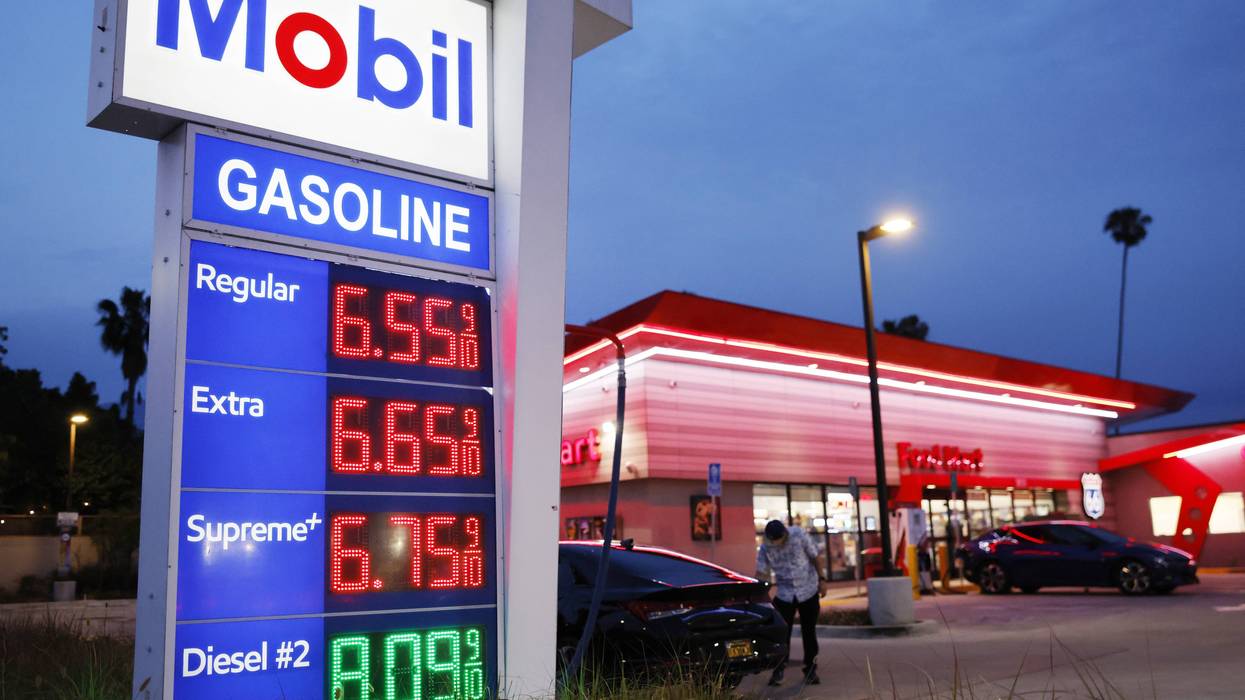
The alleged master of the Art of the Deal grows cringey and desperate, as do his boasts. At a recent rally: "I know more about inflation, I know more about everything than anyone in this room, anybody anywhere in the world." Of his two-day "emotional support" debacle of a Texas convention, he claimed 107 million views compared to the NFL's 25 million; the reality was his 3.3 million vs. their 25 million views, with even Ken Paxton secretly complaining, "It dropped our numbers." One viral meme tells the tale: A sign with sky-high gas prices, an angry MAGA voter, and the text, "Turns out my truck doesn't run on liberal tears."
In 2015, Trump packed a rally in Mobile ALA with over 30,000 fans; last week, at its high school gym with mostly empty upper sections, people began streaming out as Trump bragged the economy is "booming," with new plants and factories "everywhere." "Just close your eyes and pretend I’m on the ballot," he pleaded, evidently unaware of the losing message amidst cratering jobs and wages numbers. Seeking safe harbor, his campaign itinerary in "a red-state October blitz" is playing out almost entirely in deep-red states he once won by double digits: Texas, Oklahoma, Alabama, Ohio, Nebraska, Kansas.
In Ohio this weekend, he raved Democrats' "transgender for everybody" policies would “mutilize your children," he has "record-winning numbers," "Talafreako" (in Texas, not Ohio) is a "vaygan" who "eats a piece of lettuce all day long" but he's now "gone full on eating meat" to get elected so he goes to barbecues where he's "throwing up all the time." He rambled, ranted, cursed, flaunted "the utter disdain for the office he holds and the people hes supoosed to serve." NYTPitchbot: "Whether it’s Obama saying 'Yes We Can” or Donald Trump saying 'We're gonna shove it up their ass,' both presidents adopted divisive slogans."
Beyond the rallies, the carnage persists. Millions have lost SNAP benefits. Many thousands, caught in our immigration atrocities, endure "quiet reckonings with what the country has become.” The Atlantic profiled the Ohio truck driver who hit and killed Haitian student Pierre Damas Bel in an apparent suicide; he is haunted by a young man who “would have been a model citizen,” who had to charge his own ankle monitor, who "was hurting - we did not do right by him.” War agit-prop still spews. So does cultural appropriation: Park rangers blast regime theft of Smokey the Bear, a forest fire refugee: "Only you can prevent fascist liars." "Zoologically-deficient hacks" have also dropped AI slop of USA-themed penguins in Greenland, where they don't live; some suggest they "shouldn’t have dismantled the Department of Education so quickly."
Surreal dissonance flourishes. Because they are "committed to leading the world in Gold Standard Science," other regime goons are bravely charging ahead to "MAKE AMERICA HEALTHY, SAFE, AND BEAUTIFUL" with an executive order to "ELIMINATE FOREIGN, INVASIVE TICKS AND MOSQUITOES" to "restore enjoyment of the great outdoors" through "safe and effective technology-enabled methods," thus rebuilding "public trust in science." Too little, too late? Regardless, their effort aligns nicely with Press Barbie's move to Fox News, per The Borowitz Report, "as a stepping-stone" to acquiring the requisite “warrior ethos" to become Secretary of Defense.
That profound disconnect is, of course, alive and festering in the increasingly, disastrously incoherent child king somehow still babbling about "the golden age of America” and "the hottest country anywhere in the world." As a public service, Aaron Rupar, who has borne witness to years of Trump insanity, urges we read the transcript of his recent Time interview to grasp "the grave cognitive impairment" of "random brain firings" like, "I just got a tariff from Lindsey Graham" and "100 million people watched the midterm convention." The consensus of those who did: "He’s like a criminally inclined rutabaga with some language skills" and "He looks like an attendant just asked him if he wants pudding or Jello and he’s mad 'cause he has no idea what those are."
Sunday night, Indivisible hosted a "Hands Off Our Vote" event in New York to prep for Oct. 17's No Kings and the election. Despite our fatigue - from lying, thieving, genocidal rants, fucking ballrooms - a fiery Mark Ruffalo vowed to "Hulk-out" to convey his rage. "We are so tired, but we can't give up now," he said. "They want to keep us afraid. Their only weapon is our fear. But we're inevitable." He recalled meeting with activist Harry Belafonte a few years ago and asking, "How are we going to know what to do? When are we going to know when it's our calling? And he said, 'Brother, you’ll know. And then you go. You show up.’“
Robert De Niro, furious, tireless, out of fucks to give, raged at policies that are crazy, cruel an, increasingly unpopular with voters. "Power...to...the...people," he intoned. "It isn't just a slogan. It's the founding principle of our nation." So what do those now unduly empowered do? he asked. "They try to take our votes away. Are you kidding me?" (Ghost of Travis Bickle) "Hands Off Our Vote. Lemme put it another way - keep your fucking hands off our vote." He led the crowd in an explosive call-and-response to "spineless officials, the Supreme Court, masked ICE thugs," finally "that coward, that fucking piece of shit Donald Trump when he tries to take our voice and power away, what do we tell him?" To each, he seethed, "Keep your fucking hands off our vote!" Take back the House, the Senate, our country, he urged.. Show up.
- YouTube www.youtube.com
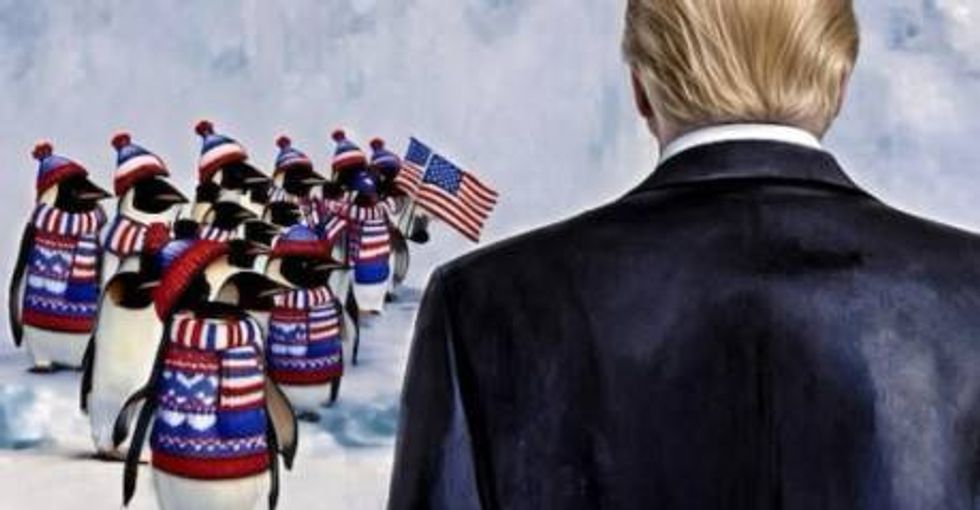 Trump's middle-school level AI images feature headless penguins in Greenland, where they don't live. Truth Social post
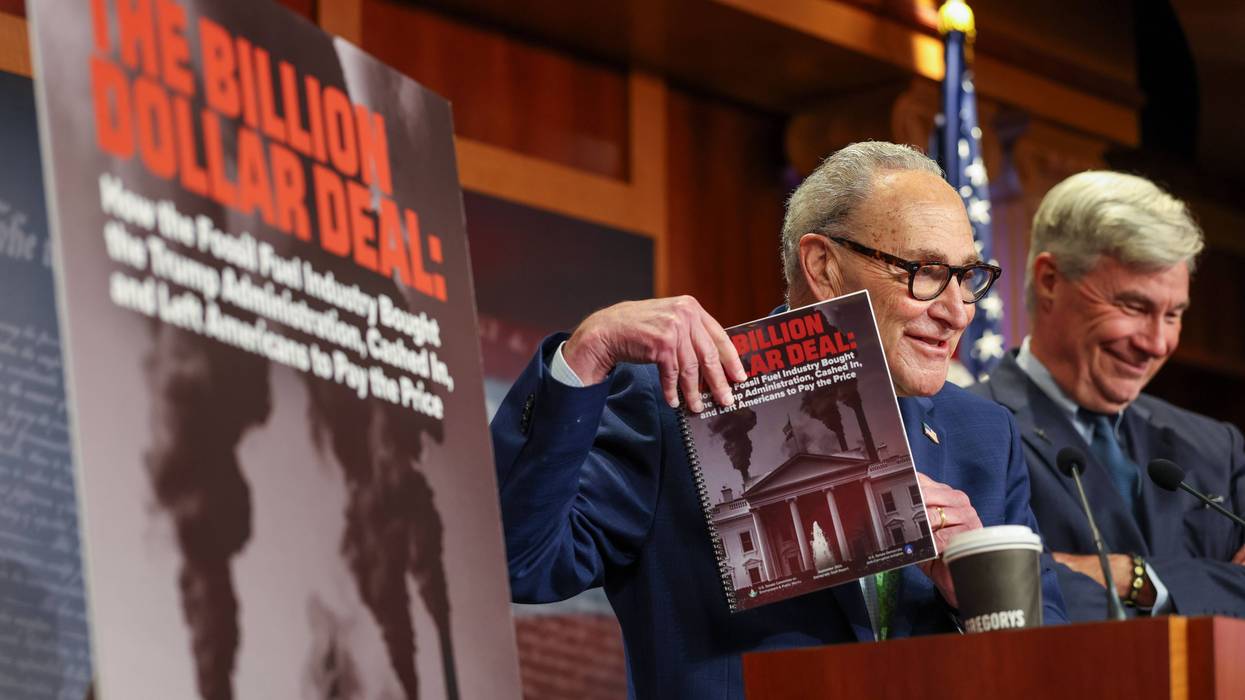
While running for president in 2024, Donald Trump told oil and gas executives that he would pursue their policy priorities if the industry raised $1 billion for his campaign—and after returning to office last year, the Republican did just that, enriching those invested in fossil fuels, including himself, at the expense of the public and planet.
That's according to "The Billion Dollar Deal: How the Fossil Fuel Industry Bought the Trump Administration, Cashed In, and Left Americans to Pay the Price," a report released Thursday by US Senate Minority Leader Chuck Schumer (D-NY) and Committee on Environment and Public Works Ranking Member Sheldon Whitehouse (D-RI).
"The fossil fuel industry and their allies bought their way into the Trump White House with hundreds of millions of dollars in political donations, after Trump promised fossil fuel bigwigs at a Mar-a-Lago fundraiser that he’d do anything and everything they wanted, for the right price," Whitehouse said in a statement.
"Now, their minions run the government from the inside, driving up energy bills to deliver payouts to the donors that put Trump back in office," he continued. "Our new report exposes this old-fashioned corruption, by a thuggish government and a desperate industry, that is squeezing every last dollar out of Americans' pocketbooks while they still can."
The report is based on 19 investigations into Environmental Protection Agency (EPA) regulatory rollbacks, 13 probes of nine other agencies, and 13 investigations into 88 separate polluters. Investigators from Schumer's Anti-Corruption Working Group examined campaign finance filings, corporate earnings, and investor communications.
The document details how, in the aftermath of Trump's quid pro quo offer at the Mar-a-Lago fundraiser in 2024, fossil fuel executives, along with their corporate political action committees (PACs) and dark money groups, contributed an estimated $201 million to support Trump and allied Republican lawmakers—plus $19 million toward the inaugural fund.
"These figures capture only traceable donations," the report emphasizes. "Other substantial sums flowed to candidate Trump through 501(c)(4) organizations that are not legally required to disclose their contributors. Dark money groups—nonprofits and shell companies that do not reveal their donors—contributed over $1.9 billion into the 2024 elections, up from $1 billion in 2020."
The report names key figures from "the fossil fuel donor class" and includes their estimated contribution to Trump's latest election:
There's also former Liberty Energy CEO Chris Wright, who is now Trump's energy secretary and gave an estimated $795,000. According to the report, "Lobbyists say that many CEOs now keep Secretary Wright's personal phone number on speed dial."
Wright is among at least a dozen former oil executives and lobbyists Trump installed at the EPA and departments of Energy, the Interior, and Justice to systematically dismantle "the regulatory architecture built over decades to protect American families from pollution and climate change," the publication points out. "Those captured agencies delivered for the fossil fuel industry."
The report calls out not only Wright but also Trump's other "polluter worker bees," including EPA Administrator Lee Zeldin, Interior Secretary Doug Burgum, and various other officials at their agencies who have ties to polluting industries.
It also calls out the GOP-controlled Congress, which last year sent to Trump's desk the One Big Beautiful Bill Act, a law that includes "tens of billions in new and expanded direct subsidies to fossil fuel companies through tax breaks, royalty cuts, a suspension of the charge on methane pollution, and other giveaways. Combined with the subsidies already on the books, independent analysts estimate the industry will collect some $190 billion in tax breaks and subsidies over the next 10 years."
"The costs of these gifts to the fossil fuel industry fall on everyone else," the report stresses. "Climate-related disasters cost the United States at least $115 billion in direct damages in 2025 alone. Each year, the damages to public health from fossil fuel air pollution run at about $820 billion, or $2,500 per American, and contribute to approximately 91,000 premature deaths and 216,000 new cases of childhood asthma. Homeowners’ insurance has become unaffordable or unavailable across many parts of the country. These are just some of the existing costs associated with fossil fuel production and combustion."
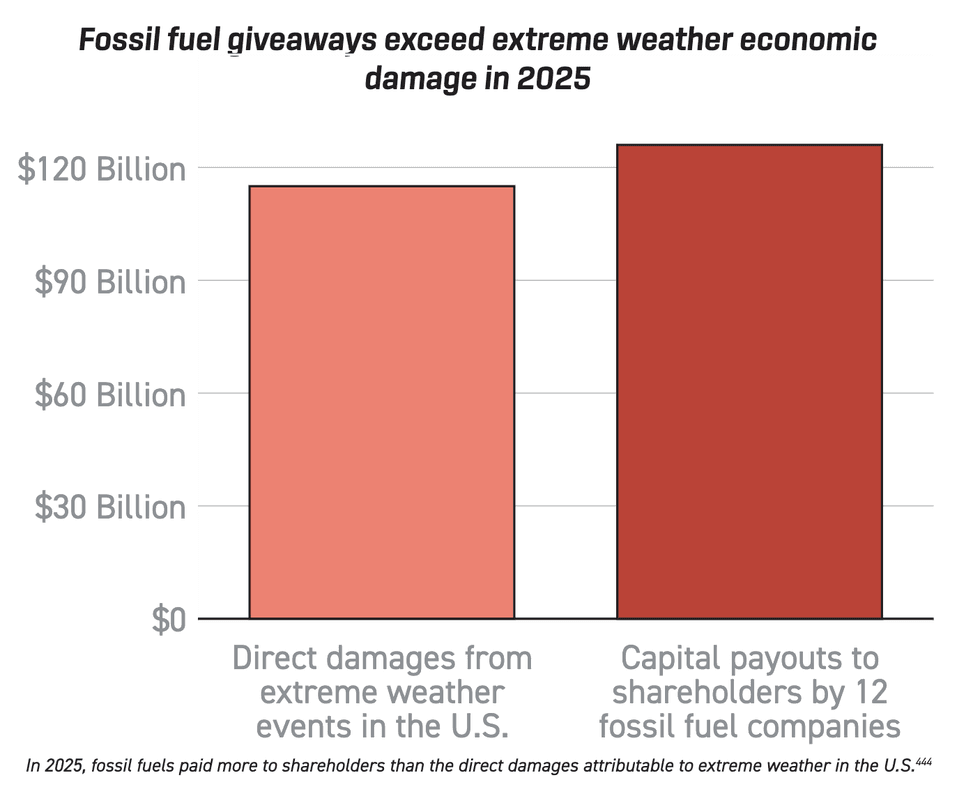
"The Trump administration's regulatory rollbacks will drive them higher, as air and water pollution as well as climate change will all get worse," the document warns, as the fossil fuel-driven climate emergency worsens, with deadly consequences worldwide.
The report notes that "canceled and delayed wind and solar projects are also raising electricity prices for consumers in multiple states, sending billions to fossil fuel plants. And the EPA itself has estimated that the elimination of tailpipe emission standards will cost Americans a minimum of $580 billion in added fuel costs alone over the next three decades. Hundreds of thousands of jobs are being lost as the United States cedes its industrial competitiveness in clean energy technologies to China and Europe."
Trump also partnered with Israel to launch an illegal war on Iran—which has responded by restricting ship traffic through the the Strait of Hormuz, sending global fuel prices soaring. The publication highlights that "the 100 biggest oil and gas companies collectively earned an extra $30 million per hour in the first month of the Iran conflict alone—amounting to $23 billion in windfall profits—with $234 billion projected by year's end if oil prices remain near $100 a barrel."
"As the Trump administration's war in Iran drives up gas prices—with analysts warning crude prices could reach $200—American
consumers pay directly for the chaos that Big Oil's political investments helped purchase," the report warns. Brown University's Costs of War Project estimates the higher diesel and gasoline prices have so far cost Americans $115.7 billion, or $883 per household.
Trump's war is also filling his own pockets. CNBC estimated earlier this month that the president has made up to $4.4 million from his investments in fossil fuel companies—and as Common Dreams reported earlier this week, he continues to make related trades.
"Donald Trump will always choose self-enrichment over helping American families, and as this report reveals, his fossil fuel corruption is costing Americans billions," said Schumer. "Instead of using the presidency to address the affordability crisis, lower costs, and protect Americans' health and safety, Trump has used his power to deliver for his billionaire buddies in the fossil fuel industry. The message from this administration is clear: Big Oil gets the profits, and American families get the bill."
Released less than six weeks away from the midterm elections, Senate Democrats' report not only lays out a range of issues, but offers some fixes, including demands to tax the windfall profits of Big Oil, as well as legislation that would "shine a light behind the dark money front groups and shell organizations that fossil fuel interests use to hide their spending."
The report also calls for making polluters pay for planet-heating emissions and empowering lawsuits to hold them accountable. It further advocates for ending fossil fuel subsidies and directing that money to clean energy, consumer relief, and infrastructure resilience.
"The Trump administration is pumping public money into the fossil fuel industry and stripping public protections to pad the profits of some of the wealthiest corporations in the nation," David Arkush, director of Public Citizen's Climate Program, said in response to the report. "The campaign contributions to Donald Trump by Big Oil have paid dividends and have allowed the fossil fuel industry to continue to pollute our communities."
"This administration has ceded our nation's clean energy future to dirty energy and is doing its best to sacrifice the economy, public health, and the environment to Big Oil's profits," he added. "Every American family struggling with high costs is suffering because of the corrupt relationship between Donald Trump and the fossil fuel industry."

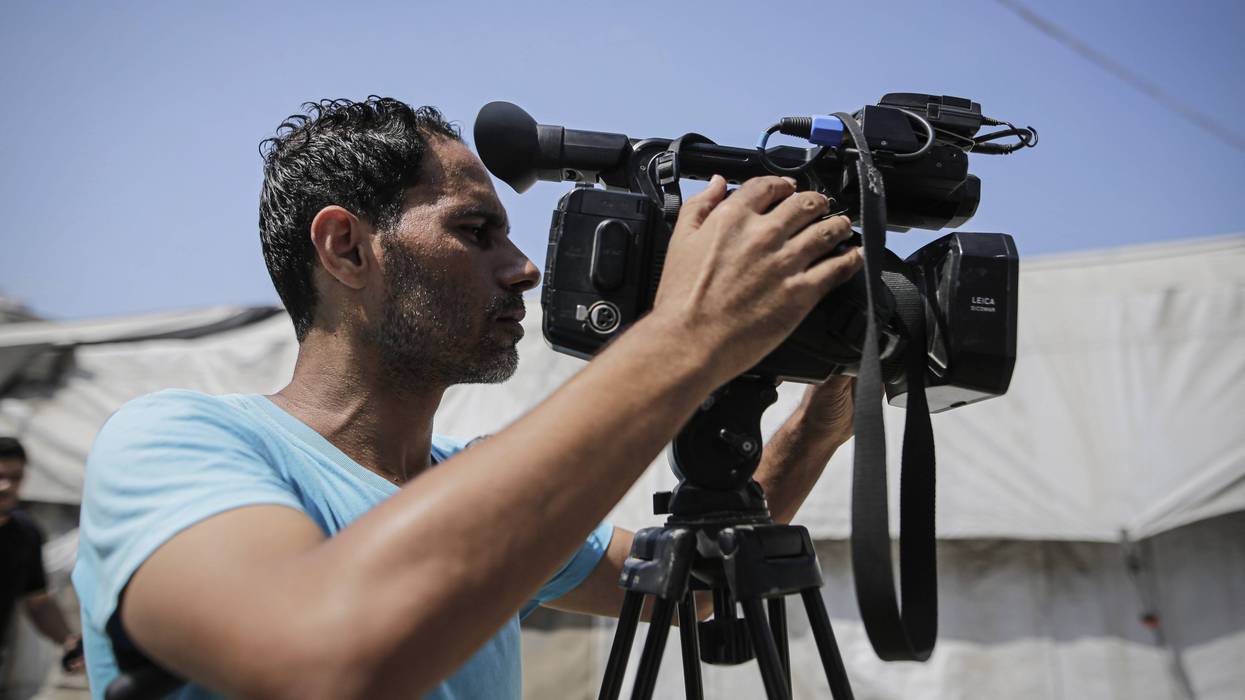
Israeli officials and Western supporters have trumpeted the IDF's list as a counter to findings by groups like International Federation of Journalists, which has described Israel's nearly-three-year-old-war in Gaza as “the deadliest period in the history of journalism" and cataloged at least 240 journalists and media workers killed.
Reporters Without Borders (RSF) has found dozens of cases in which it concluded journalists were targeted deliberately because of their reporting and filed multiple complaints with the International Criminal Court (ICC) alleging war crimes against the press.
The database, which the IDF refers to as the "Press Files," says "that claim does not tell the full story" and states that "individuals presented as innocent journalists were, in fact, militants in the military wings of Hamas, Palestinian Islamic Jihad (PIJ) and other terrorist organizations."
The IDF claims the list was the product of an “in-depth investigation” consisting of open-source information, documents recovered by Israeli forces in Gaza, interrogations of alleged Palestinian militants, and intelligence gathered during military operations.
But as Shehada explained in a thread posted to social media on Sunday, "In the overwhelming majority of those listed, the IDF presents ZERO credible evidence. In most of them, their pages are literally blank."
In 59 cases, Shehada found that the IDF did not provide any evidence for its claim that a journalist was a member of Hamas or PIJ other than that the claim was "based on multiple intelligence sources."
Shehada said this amounted to essentially saying "trust me, bro," which is especially insufficient given the numerous instances in which the IDF has been found to have misled the public about its responsibility for certain attacks, like the killing of 5-year-old Hind Rajab in 2024.
In another 42 cases, Shehada found, the IDF provided only decontextualized "snippets" of files, which were "undated and unspecified." Without more information, Shehada said, this is "not... evidence of anything."
"Those snippets could be taken from random files; they could be outdated or fabricated," Shehada said, pointing to previous cases in which purported Hamas intelligence circulated by Israeli sources was later revealed to be misleadingly presented as fabricated.
Shehada pointed to specific cases in which Israel's allegations against specific journalists have been undermined by the underlying evidence.
Israel claimed that Al Jazeera reporter Ismail al-Ghoul, whom the IDF killed in July 2024, was an operative with Hamas' elite Nukhba wing and released a supposed Hamas personnel document as proof.
But as Reporters Without Borders has previously explained, the document says al-Ghoul, born in 1997, received a military rank in 2007, when he was 10, while elsewhere saying he joined in 2014. It also identifies him as an engineer, contradicting the IDF’s description of him as a Nukhba fighter. Israeli troops also detained al-Ghoul at al-Shifa hospital months before he was killed but released him after 12 hours.
The case of Anas al-Sharif, another Al Jazeera journalist killed in 2025, is similar. As Shehada documented for +972 magazine last year, al-Sharif was seriously injured in 2017, listed in a military context in 2019, but described as “suspended” and “unassigned” by 2023—while another document nevertheless portrays him as an elite Nukhba fighter. He was also reportedly detained and released by Israeli forces during the 2024 al-Shifa raid.
In other cases, the IDF's evidence outright debunks the military's own claims. For instance, Israel labeled photojournalist Hassan Aslih—killed by an airstrike at Nasser Hospital in Khan Yunis in May 2025—as a "military operative." But the 2019 Hamas document provided as evidence for this lists him as a "photographer" involved with "media services."
While the document, if authentic, does establish a relationship between Aslih and Hamas' Qassam Brigades at least six years before his death, this does not make him a legitimate target under international humanitarian law, which distinguishes between those who have a “continuous combat function" and those who provide political or other indirect forms of support, like media coverage.
Shehada found at least seven cases in which the only evidence provided by the IDF was photos of slain journalists holding guns. In another 12 cases, the IDF provided undated photos of journalists allegedly taking part in Hamas or PIJ military activities.
Shehada noted that many prominent Israeli journalists also have past military service, such as Axios correspondent Barak Ravid, who was an IDF reservist until 2023. "Does that make him a 'legitimate target'? or a non-civilian forever?" Shehada asked.
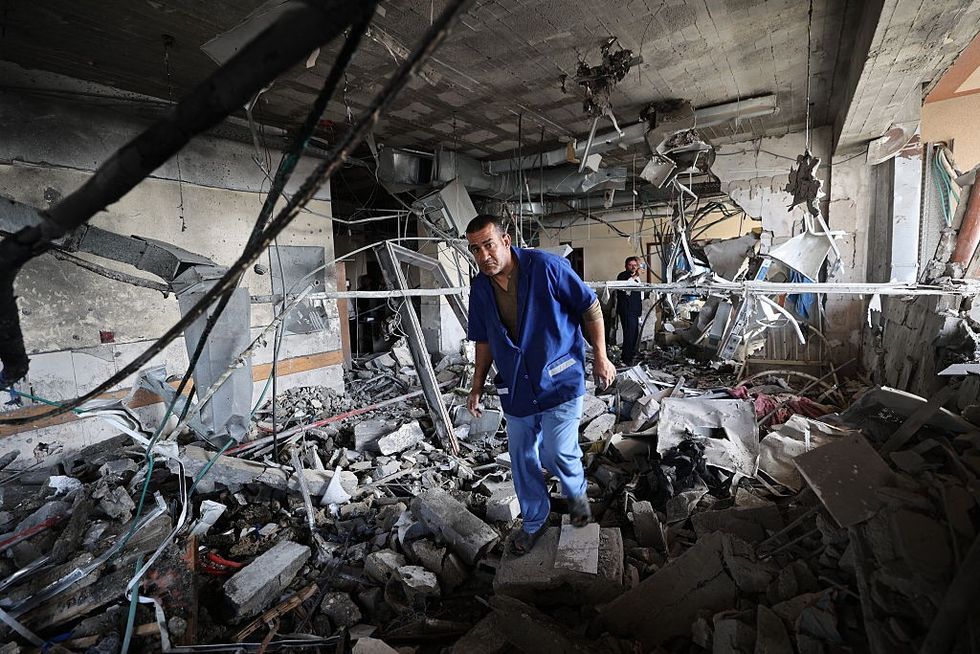 Palestinian hospital staff inspect the destruction inside Nasser hospital in Khan Yunis in the southern Gaza Strip, following an Israeli strike early on May 13, 2025 in which Palestinian journalist Hassan Aslih was killed along with several others. (Photo by Eyad Baba/AFP)
The distinction between past military affiliation and active combatant status has been a repeated source of dispute for press freedom groups that have attempted to tally the number of journalists killed.
Last month, the Committee to Protect Journalists (CPJ) completed a sweeping review of 229 deaths after Hamas and PIJ published obituaries identifying some people listed as journalists as members of armed groups.
CPJ ultimately removed 22 people from its list, including some it found had participated in combat—but retained others despite militant obituaries, gun photos, or past organizational ties when the evidence did not establish active combatant status.
The "Press Files" database contains 49 cases in which the main piece of evidence is one of these obituaries. Among them are people who CPJ examined and concluded were not active combatants, such as photojournalist Amr Abu Odeh—a 26-year-old freelance photographer for the Anadolu Agency and Reuters—whom the IDF database labels a Hamas "squad commander."
CPJ examined photos of Odeh wearing a military uniform, which came from a 2021 military training course with Gaza's Ministry of the Interior. The group noted that "No armed factions in Gaza have claimed Abu Odeh as being affiliated with them, and the IDF has not alleged he was involved in combat."
"In multiple cases, despite obituaries by Hamas/PIJ, the Committee to Protect Journalists investigated thoroughly and concluded those journalists were NOT engaged in any militant activity during the genocide," Shehada wrote. "They may have in the past. That doesn't make them combatants forever."
He added that the flimsiness of the IDF's evidence was more striking given the sophistication of the intelligence unit it uses to "dig up dirt" on journalists to provide post hoc justification for their killings, which has been referred to internally as the "Legitimization Cell," which was revealed in a +972 investigation.
"If that's all they can provide as "evidence" (e.g. blank pages, random snippets, outdated docs) despite having formidable resources," Shehada wrote, "then it's a vindication of Gaza's journalists!"
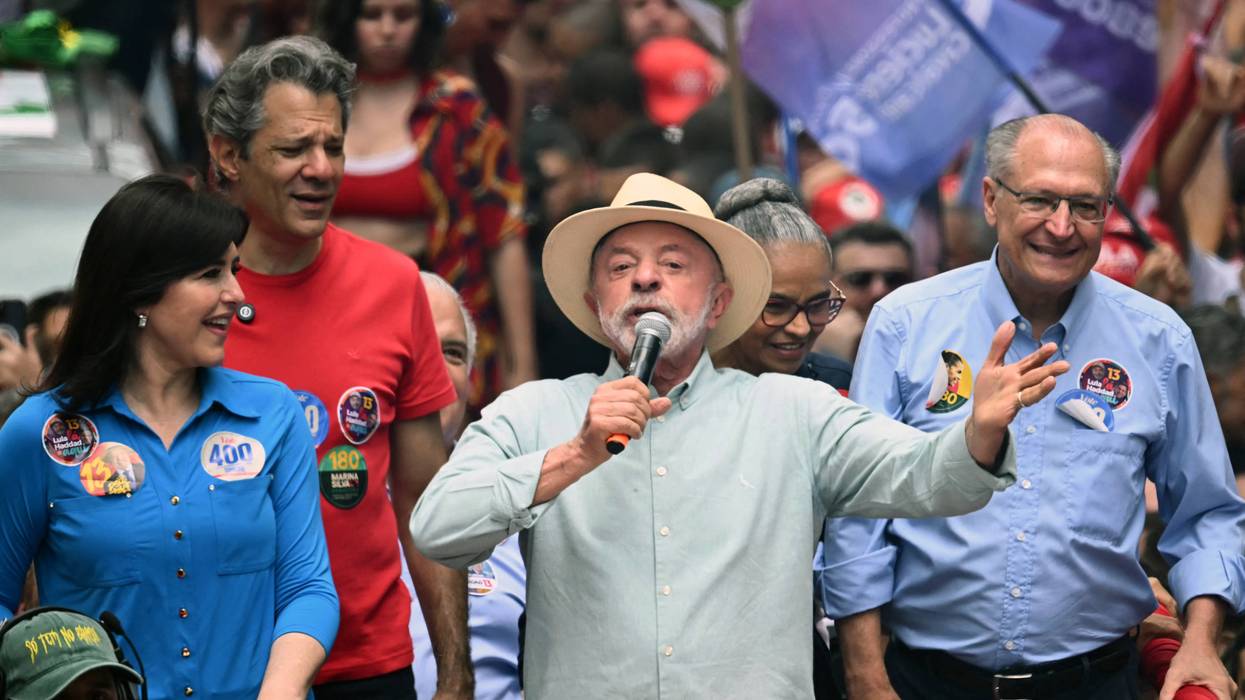
In a petition filed to Brazil's Superior Electoral Court, Lula's campaign said taking such an action just days before Brazilians vote "projects instability over the electoral environment," something it said was part of a larger "infrastructure of external intervention in the Brazilian electoral process.”
In recent days, Brazil's intelligence agency said it confirmed the existence of interference by the US in Brazil's election to support Sen. Flavio Bolsonaro, the son of former far-right President Jair Bolsonaro—who is currently serving a 27-year prison sentence under house arrest for orchestrating a coup attempt in 2022.
"Although Trump has not formally endorsed him, Bolsonaro is undoubtedly Washington’s preferred candidate," explained Nick Cleveland-Stout, a research associate at the Quincy Institute for Responsible Statecraft, on Friday. "Often at the request of the Bolsonaro family, the US has engaged in a pressure campaign to weaken the Lula government, sparking fears of further interference."
Trump responded with hostility to the prosecution of the disgraced ex-president—imposing tariffs of up to 50% on Brazilian imports in retaliation, sanctioning the Supreme Court justice overseeing the case, and threatening to use American "military might" against Brazil.
He's also designated two Brazilian crime groups as "narcoterrorist" organizations, invoking a similar pretext Trump used to justify his invasion of Venezuela to kidnap its leader Nicolás Maduro in January.
As the election has approached, Trump has appeared to put his thumb on the scale in an effort to stop Lula from achieving what would be an unprecedented fourth term.
In July, the US consulate in São Paulo invited right-wing pro-Bolsonaro social media influencers to a closed-door roundtable meeting to discuss “freedom of expression and the digital environment.”
The Guardian reported on Thursday that the State Department was also diverting $1 million from its human rights fund to oppose "judicial overreach and censorship" by Brazil’s Supreme Court, an apparent reference to the court's actions against Bolsonaro and his allies.
The Brazilian government has denied visas to two State Department officials whom it said were seeking to discuss "election integrity," which it perceived as an effort to “undermine the electoral system.”
Trump and his allies have previously spread baseless conspiracy theories to cast doubt upon Lula's victory in 2022, which helped to fuel the failed coup. They've done the same with the victories of other left-wing candidates in Latin American elections—including Bolivia's Evo Morales in 2019 and Guatemala's Bernardo Arévalo in 2023.
Lula's campaign said the sudden US suspension of consular services was "yet another extremely serious development in the interference in Brazilian elections by the US government," alleging that it was "coordinated, by all indications, directly by the brothers Flávio and Eduardo Bolsonaro.”
The filing noted that even “the legislative branch of the foreign state itself… recognizes the pattern of external pressure." It pointed to a letter sent earlier this week by Democratic US Sens. Jeanne Shaheen (NH), Peter Welch (Vt.), and Tim Kaine (Va.) to Secretary of State Marco Rubio, which said that "the administration’s most recent actions point toward an effort to interfere with, and potentially undermine, Brazil’s general election in October."
 A man wearing a mask depicting US President Donald Trump attends a rally of Brazilian right-wing presidential candidate Flavio Bolsonaro in Goiania, Brazil, on September 27, 2026. (Photo by Sergio Lima/AFP via Getty Images)
The first round of Brazil's election will begin on Sunday. Should neither candidate receive 50% of the vote, a runoff between the top two candidates will be held on October 25. Several major polls show Lula with a narrow first-round lead entering Sunday, although others have the race effectively tied or Bolsonaro slightly ahead.
But Lula has also seized upon Trump's meddling to portray Bolsonaro as a tool of foreign powers, drawing on a history of US-backed coups and election interference that have undermined Brazilian democracy.
“Flávio Bolsonaro is Trump’s candidate and what Trump wants is to colonize Brazil, take our riches, steal our future and leave us in the dust," said a campaign ad that began airing last week.
The Trump administration, for its part, has continued to double down on public overtures toward imperialist ambition. On Thursday, an official US State Department social media account reposted a video created in August glorifying the 19th-century Monroe Doctrine and declaring that "American dominance in the Western Hemisphere will never be questioned again."
Dov H. Levin, a political scientist at the University of Hong Kong who recently published research on the effects of foreign election interference, told the Brazilian newspaper Folha de S. Paulo that, if too overt, Trump's intervention could backfire.
"There are cases of failure," he said, "and cases where the reaction provoked by the intervention harms precisely the side it intended to help."