SUBSCRIBE TO OUR FREE NEWSLETTER
Daily news & progressive opinion—funded by the people, not the corporations—delivered straight to your inbox.
5
#000000
#FFFFFF
To donate by check, phone, or other method, see our More Ways to Give page.
Daily news & progressive opinion—funded by the people, not the corporations—delivered straight to your inbox.
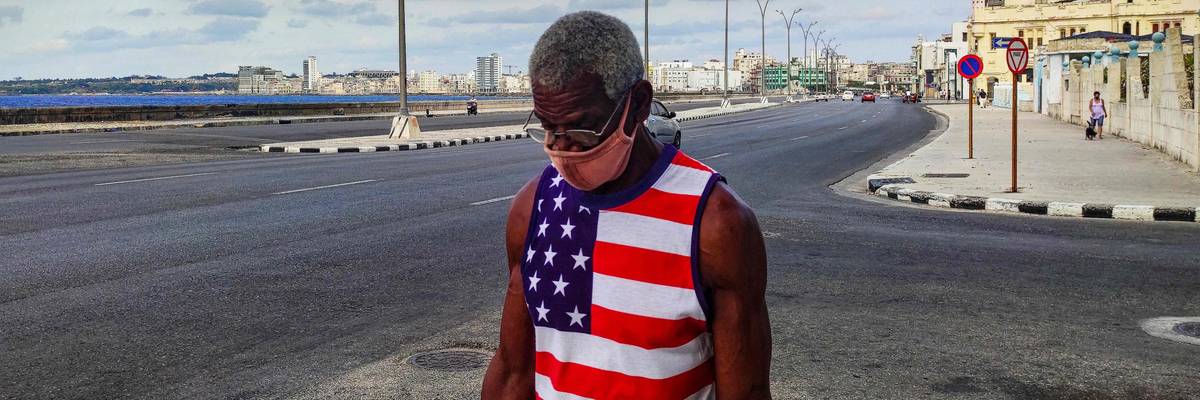
A man wearing a vest depicting the US flag walks along a street in Havana, on June 8, 2021. (Photo: Yamil Lage/AFP via Getty Images)
Silvia from Miami, Eduardo from Hialeah, Abel from Lakeland. The names pour in on the donations page for "Syringes to Cuba" as Carlos Lazo promotes the campaign on his popular Facebook livestream.
An energetic Cuban American high school teacher in Seattle, Lazo created a group called Puentes de Amor, Bridges of Love, to unite Cuban Americans who want to lift the searing U.S. blockade that is immiserating their loved ones on the island.
Cuba's economic situation is dire. The economy shrank by 11 percent last year--a result of the pandemic and the tightening of the embargo under former President Trump.
The Syringes to Cuba initiative was started by the Saving Lives Campaign and Global Health Partners to help Cuba vaccinate its people against COVID-19. The campaign has raised over $350,000 and ordered 4 million syringes.
Cuba's economic situation is dire. The economy shrank by 11 percent last year--a result of the pandemic and the tightening of the embargo under former President Trump. Trump added over 200 restrictive measures, including limiting remittances Cuban Americans can send to their families, restricting U.S. flights, and prohibiting cruise ships from docking in Cuban ports.
As a final stab, Trump took the completely bogus step of adding Cuba to the U.S. list of "state sponsors of terrorism," which discourages investments and limits the entry of foreign currency.
As a candidate, Joe Biden pledged to "promptly reverse the failed Trump policies that have inflicted harm on the Cuban people and done nothing to advance democracy and human rights." Since then, however, Biden has not moved an inch.
In April, Press Secretary Jen Psaki callously claimed that changing U.S. policy towards Cuba was not a priority. On May 25, the State Department even announced that it would continue Trump's determination that Cuba does not cooperate with U.S. anti-terrorism efforts.
On June 23, the UN General Assembly will hold its yearly vote calling for the U.S. to lift its embargo on Cuba. Every year since 1992, the world's nations overwhelmingly reject the embargo.
In 2016, the Obama administration broke with 25 years of U.S. opposition to the UN resolution by abstaining. A new lobby group, ACERE (Alliance for Cuba Engagement and Respect), with the support of over 100 organizations, is calling on Biden not to oppose this year's resolution.
Instead, they say, Biden should announce measures to provide relief and a return to diplomacy.
A push for action has also come from the grassroots, through creative and growing anti-blockade car and bicycle caravans held on the last Sunday of every month. The largest of the nation's caravans winds through the heart of the pro-blockade world: Miami.
In the May 30 Miami caravan, over 200 people participated, most of them Cuban Americans. "We've had 10 of these caravans so far," said organizer Jorge Medina. "Each one is bigger than the last and the energy is fantastic."
Congress has been pushing Biden as well. This March, 80 representatives, led by Rep. Bobby Rush (D-IL), sent Biden a letter urging him to reverse Trump's draconian policies and return to the diplomatic path.
On May 21, Senators Jerry Moran (R-KS), Amy Klobuchar (D-MN), and Patrick Leahy (D-VT) introduced the bipartisan Freedom to Export to Cuba Act that would eliminate legal barriers to Americans doing business in Cuba, a popular idea with farm and business groups interested in trade and export opportunities.
Biden ignores the crisis in Cuba at his own peril.
The dire food and medicine shortages caused by the pandemic and the blockade may well spark a migration crisis. Cuba expert Bill LeoGrande predicts "a mass exodus of desperate people" if Biden doesn't act soon.
Biden would do well to heed the warning and, with the stroke of a pen, lift trade and travel restrictions and allow unrestricted remittances. This would infuse money into Cuba's economy, alleviate needless suffering, and fulfill Biden's promise to put human rights at the center of his foreign policy.
Dear Common Dreams reader, It’s been nearly 30 years since I co-founded Common Dreams with my late wife, Lina Newhouser. We had the radical notion that journalism should serve the public good, not corporate profits. It was clear to us from the outset what it would take to build such a project. No paid advertisements. No corporate sponsors. No millionaire publisher telling us what to think or do. Many people said we wouldn't last a year, but we proved those doubters wrong. Together with a tremendous team of journalists and dedicated staff, we built an independent media outlet free from the constraints of profits and corporate control. Our mission has always been simple: To inform. To inspire. To ignite change for the common good. Building Common Dreams was not easy. Our survival was never guaranteed. When you take on the most powerful forces—Wall Street greed, fossil fuel industry destruction, Big Tech lobbyists, and uber-rich oligarchs who have spent billions upon billions rigging the economy and democracy in their favor—the only bulwark you have is supporters who believe in your work. But here’s the urgent message from me today. It's never been this bad out there. And it's never been this hard to keep us going. At the very moment Common Dreams is most needed, the threats we face are intensifying. We need your support now more than ever. We don't accept corporate advertising and never will. We don't have a paywall because we don't think people should be blocked from critical news based on their ability to pay. Everything we do is funded by the donations of readers like you. When everyone does the little they can afford, we are strong. But if that support retreats or dries up, so do we. Will you donate now to make sure Common Dreams not only survives but thrives? —Craig Brown, Co-founder |
Silvia from Miami, Eduardo from Hialeah, Abel from Lakeland. The names pour in on the donations page for "Syringes to Cuba" as Carlos Lazo promotes the campaign on his popular Facebook livestream.
An energetic Cuban American high school teacher in Seattle, Lazo created a group called Puentes de Amor, Bridges of Love, to unite Cuban Americans who want to lift the searing U.S. blockade that is immiserating their loved ones on the island.
Cuba's economic situation is dire. The economy shrank by 11 percent last year--a result of the pandemic and the tightening of the embargo under former President Trump.
The Syringes to Cuba initiative was started by the Saving Lives Campaign and Global Health Partners to help Cuba vaccinate its people against COVID-19. The campaign has raised over $350,000 and ordered 4 million syringes.
Cuba's economic situation is dire. The economy shrank by 11 percent last year--a result of the pandemic and the tightening of the embargo under former President Trump. Trump added over 200 restrictive measures, including limiting remittances Cuban Americans can send to their families, restricting U.S. flights, and prohibiting cruise ships from docking in Cuban ports.
As a final stab, Trump took the completely bogus step of adding Cuba to the U.S. list of "state sponsors of terrorism," which discourages investments and limits the entry of foreign currency.
As a candidate, Joe Biden pledged to "promptly reverse the failed Trump policies that have inflicted harm on the Cuban people and done nothing to advance democracy and human rights." Since then, however, Biden has not moved an inch.
In April, Press Secretary Jen Psaki callously claimed that changing U.S. policy towards Cuba was not a priority. On May 25, the State Department even announced that it would continue Trump's determination that Cuba does not cooperate with U.S. anti-terrorism efforts.
On June 23, the UN General Assembly will hold its yearly vote calling for the U.S. to lift its embargo on Cuba. Every year since 1992, the world's nations overwhelmingly reject the embargo.
In 2016, the Obama administration broke with 25 years of U.S. opposition to the UN resolution by abstaining. A new lobby group, ACERE (Alliance for Cuba Engagement and Respect), with the support of over 100 organizations, is calling on Biden not to oppose this year's resolution.
Instead, they say, Biden should announce measures to provide relief and a return to diplomacy.
A push for action has also come from the grassroots, through creative and growing anti-blockade car and bicycle caravans held on the last Sunday of every month. The largest of the nation's caravans winds through the heart of the pro-blockade world: Miami.
In the May 30 Miami caravan, over 200 people participated, most of them Cuban Americans. "We've had 10 of these caravans so far," said organizer Jorge Medina. "Each one is bigger than the last and the energy is fantastic."
Congress has been pushing Biden as well. This March, 80 representatives, led by Rep. Bobby Rush (D-IL), sent Biden a letter urging him to reverse Trump's draconian policies and return to the diplomatic path.
On May 21, Senators Jerry Moran (R-KS), Amy Klobuchar (D-MN), and Patrick Leahy (D-VT) introduced the bipartisan Freedom to Export to Cuba Act that would eliminate legal barriers to Americans doing business in Cuba, a popular idea with farm and business groups interested in trade and export opportunities.
Biden ignores the crisis in Cuba at his own peril.
The dire food and medicine shortages caused by the pandemic and the blockade may well spark a migration crisis. Cuba expert Bill LeoGrande predicts "a mass exodus of desperate people" if Biden doesn't act soon.
Biden would do well to heed the warning and, with the stroke of a pen, lift trade and travel restrictions and allow unrestricted remittances. This would infuse money into Cuba's economy, alleviate needless suffering, and fulfill Biden's promise to put human rights at the center of his foreign policy.
Silvia from Miami, Eduardo from Hialeah, Abel from Lakeland. The names pour in on the donations page for "Syringes to Cuba" as Carlos Lazo promotes the campaign on his popular Facebook livestream.
An energetic Cuban American high school teacher in Seattle, Lazo created a group called Puentes de Amor, Bridges of Love, to unite Cuban Americans who want to lift the searing U.S. blockade that is immiserating their loved ones on the island.
Cuba's economic situation is dire. The economy shrank by 11 percent last year--a result of the pandemic and the tightening of the embargo under former President Trump.
The Syringes to Cuba initiative was started by the Saving Lives Campaign and Global Health Partners to help Cuba vaccinate its people against COVID-19. The campaign has raised over $350,000 and ordered 4 million syringes.
Cuba's economic situation is dire. The economy shrank by 11 percent last year--a result of the pandemic and the tightening of the embargo under former President Trump. Trump added over 200 restrictive measures, including limiting remittances Cuban Americans can send to their families, restricting U.S. flights, and prohibiting cruise ships from docking in Cuban ports.
As a final stab, Trump took the completely bogus step of adding Cuba to the U.S. list of "state sponsors of terrorism," which discourages investments and limits the entry of foreign currency.
As a candidate, Joe Biden pledged to "promptly reverse the failed Trump policies that have inflicted harm on the Cuban people and done nothing to advance democracy and human rights." Since then, however, Biden has not moved an inch.
In April, Press Secretary Jen Psaki callously claimed that changing U.S. policy towards Cuba was not a priority. On May 25, the State Department even announced that it would continue Trump's determination that Cuba does not cooperate with U.S. anti-terrorism efforts.
On June 23, the UN General Assembly will hold its yearly vote calling for the U.S. to lift its embargo on Cuba. Every year since 1992, the world's nations overwhelmingly reject the embargo.
In 2016, the Obama administration broke with 25 years of U.S. opposition to the UN resolution by abstaining. A new lobby group, ACERE (Alliance for Cuba Engagement and Respect), with the support of over 100 organizations, is calling on Biden not to oppose this year's resolution.
Instead, they say, Biden should announce measures to provide relief and a return to diplomacy.
A push for action has also come from the grassroots, through creative and growing anti-blockade car and bicycle caravans held on the last Sunday of every month. The largest of the nation's caravans winds through the heart of the pro-blockade world: Miami.
In the May 30 Miami caravan, over 200 people participated, most of them Cuban Americans. "We've had 10 of these caravans so far," said organizer Jorge Medina. "Each one is bigger than the last and the energy is fantastic."
Congress has been pushing Biden as well. This March, 80 representatives, led by Rep. Bobby Rush (D-IL), sent Biden a letter urging him to reverse Trump's draconian policies and return to the diplomatic path.
On May 21, Senators Jerry Moran (R-KS), Amy Klobuchar (D-MN), and Patrick Leahy (D-VT) introduced the bipartisan Freedom to Export to Cuba Act that would eliminate legal barriers to Americans doing business in Cuba, a popular idea with farm and business groups interested in trade and export opportunities.
Biden ignores the crisis in Cuba at his own peril.
The dire food and medicine shortages caused by the pandemic and the blockade may well spark a migration crisis. Cuba expert Bill LeoGrande predicts "a mass exodus of desperate people" if Biden doesn't act soon.
Biden would do well to heed the warning and, with the stroke of a pen, lift trade and travel restrictions and allow unrestricted remittances. This would infuse money into Cuba's economy, alleviate needless suffering, and fulfill Biden's promise to put human rights at the center of his foreign policy.