SUBSCRIBE TO OUR FREE NEWSLETTER
Daily news & progressive opinion—funded by the people, not the corporations—delivered straight to your inbox.
5
#000000
#FFFFFF
To donate by check, phone, or other method, see our More Ways to Give page.
Daily news & progressive opinion—funded by the people, not the corporations—delivered straight to your inbox.
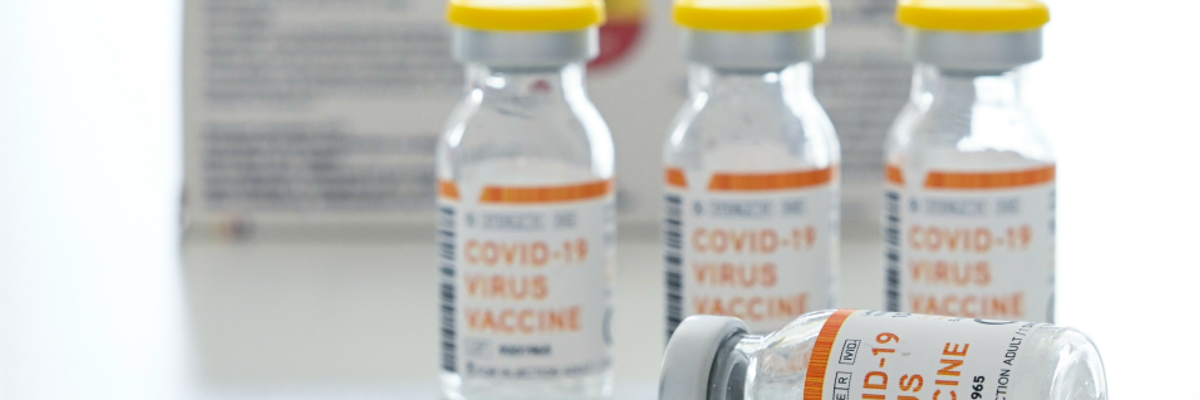
Bottles of a trial Covid-19 vaccine on a table in a lab in Brussels on June 18, 2020. (Photo: Vincent Kalut/Photonews via Getty Images)
After getting vaccinated, I eagerly returned to some parts of normal life, expecting the essential workers I interacted with would be already vaccinated. After all, they became eligible for the vaccine before I did, and our county has one of the highest rates of vaccinations in the country.
I was surprised when a few people told me they weren't vaccinated. They wanted to get vaccinated, and planned to, but they couldn't afford to risk feeling sick from side effects for two days while they had to work.
We need to provide multilingual vaccine information, make sure vaccination sites are accessible for people with disabilities, or offer in-home vaccination and mobile vaccine clinics.
It's sad and ironic that the very people who most need vaccines because of their jobs can't get them because they can't take time off work.
It turns out the few people I met in this predicament are not alone. People without college degrees are less likely to be vaccinated than people with college degrees, even after accounting for their political party or race.
Vaccination rates also correspond to income: the more you make, the more likely you are to be vaccinated. Among people who say they are willing to get the vaccine, about three-quarters of people with household income under $25,000 have received at least one dose, compared to 93 percent of people with household income of $200,000 or more.
All in all, 30 million Americans want to get vaccinated but so far have been unable. They gave several reasons: some don't have transportation to a vaccination site, others have work or family obligations, and some face disabilities, language barriers, or other difficulties.
How do we help everyone who wants a vaccine to get one?
The people I know who got vaccinated early spent a lot of time searching for appointments online and sometimes found them in far-off towns they had to drive to. Later, our county offered online registration and emailed invitations to make an appointment at a central, drive-thru site.
Either way, you didn't get much choice about where or when you'd be vaccinated. You needed to speak English and have internet access. Often, you needed a car. And you needed the flexibility to take an appointment whenever you could get one.
Then you have to buckle up for potential side effects after your shot. Some people have no side effects, but it's common to have a day or two of flu-like symptoms. They're manageable, but you may need to take a sick day--and a quarter of the U.S. civilian workforce doesn't get paid sick leave.
I've heard friends who have been comfortably middle class their entire lives say things like, "It's better to have two days of side effects now than be on a ventilator later." That's true--but our society often forces low-income people to sacrifice long-term needs in favor of short-term survival.
The next step in the vaccine rollout must be expanding accessibility.
Fortunately, it's getting easier to get an appointment in most places. With the expansion of walk-in appointments, you have more say over where and when you get the shot. But we should do more.
For example, we need to provide multilingual vaccine information, make sure vaccination sites are accessible for people with disabilities, or offer in-home vaccination and mobile vaccine clinics.
Employers can help too. They can arrange on-site vaccination for employees or help with transportation. They should also offer paid time off to get vaccinated and recover from side effects.
The bigger picture is that we need to work toward a less unequal society overall. The gap between vaccine haves and have-nots is a small part of a much larger problem, which has been made worse by the pandemic. We can and should do better.
Dear Common Dreams reader, It’s been nearly 30 years since I co-founded Common Dreams with my late wife, Lina Newhouser. We had the radical notion that journalism should serve the public good, not corporate profits. It was clear to us from the outset what it would take to build such a project. No paid advertisements. No corporate sponsors. No millionaire publisher telling us what to think or do. Many people said we wouldn't last a year, but we proved those doubters wrong. Together with a tremendous team of journalists and dedicated staff, we built an independent media outlet free from the constraints of profits and corporate control. Our mission has always been simple: To inform. To inspire. To ignite change for the common good. Building Common Dreams was not easy. Our survival was never guaranteed. When you take on the most powerful forces—Wall Street greed, fossil fuel industry destruction, Big Tech lobbyists, and uber-rich oligarchs who have spent billions upon billions rigging the economy and democracy in their favor—the only bulwark you have is supporters who believe in your work. But here’s the urgent message from me today. It's never been this bad out there. And it's never been this hard to keep us going. At the very moment Common Dreams is most needed, the threats we face are intensifying. We need your support now more than ever. We don't accept corporate advertising and never will. We don't have a paywall because we don't think people should be blocked from critical news based on their ability to pay. Everything we do is funded by the donations of readers like you. When everyone does the little they can afford, we are strong. But if that support retreats or dries up, so do we. Will you donate now to make sure Common Dreams not only survives but thrives? —Craig Brown, Co-founder |
After getting vaccinated, I eagerly returned to some parts of normal life, expecting the essential workers I interacted with would be already vaccinated. After all, they became eligible for the vaccine before I did, and our county has one of the highest rates of vaccinations in the country.
I was surprised when a few people told me they weren't vaccinated. They wanted to get vaccinated, and planned to, but they couldn't afford to risk feeling sick from side effects for two days while they had to work.
We need to provide multilingual vaccine information, make sure vaccination sites are accessible for people with disabilities, or offer in-home vaccination and mobile vaccine clinics.
It's sad and ironic that the very people who most need vaccines because of their jobs can't get them because they can't take time off work.
It turns out the few people I met in this predicament are not alone. People without college degrees are less likely to be vaccinated than people with college degrees, even after accounting for their political party or race.
Vaccination rates also correspond to income: the more you make, the more likely you are to be vaccinated. Among people who say they are willing to get the vaccine, about three-quarters of people with household income under $25,000 have received at least one dose, compared to 93 percent of people with household income of $200,000 or more.
All in all, 30 million Americans want to get vaccinated but so far have been unable. They gave several reasons: some don't have transportation to a vaccination site, others have work or family obligations, and some face disabilities, language barriers, or other difficulties.
How do we help everyone who wants a vaccine to get one?
The people I know who got vaccinated early spent a lot of time searching for appointments online and sometimes found them in far-off towns they had to drive to. Later, our county offered online registration and emailed invitations to make an appointment at a central, drive-thru site.
Either way, you didn't get much choice about where or when you'd be vaccinated. You needed to speak English and have internet access. Often, you needed a car. And you needed the flexibility to take an appointment whenever you could get one.
Then you have to buckle up for potential side effects after your shot. Some people have no side effects, but it's common to have a day or two of flu-like symptoms. They're manageable, but you may need to take a sick day--and a quarter of the U.S. civilian workforce doesn't get paid sick leave.
I've heard friends who have been comfortably middle class their entire lives say things like, "It's better to have two days of side effects now than be on a ventilator later." That's true--but our society often forces low-income people to sacrifice long-term needs in favor of short-term survival.
The next step in the vaccine rollout must be expanding accessibility.
Fortunately, it's getting easier to get an appointment in most places. With the expansion of walk-in appointments, you have more say over where and when you get the shot. But we should do more.
For example, we need to provide multilingual vaccine information, make sure vaccination sites are accessible for people with disabilities, or offer in-home vaccination and mobile vaccine clinics.
Employers can help too. They can arrange on-site vaccination for employees or help with transportation. They should also offer paid time off to get vaccinated and recover from side effects.
The bigger picture is that we need to work toward a less unequal society overall. The gap between vaccine haves and have-nots is a small part of a much larger problem, which has been made worse by the pandemic. We can and should do better.
After getting vaccinated, I eagerly returned to some parts of normal life, expecting the essential workers I interacted with would be already vaccinated. After all, they became eligible for the vaccine before I did, and our county has one of the highest rates of vaccinations in the country.
I was surprised when a few people told me they weren't vaccinated. They wanted to get vaccinated, and planned to, but they couldn't afford to risk feeling sick from side effects for two days while they had to work.
We need to provide multilingual vaccine information, make sure vaccination sites are accessible for people with disabilities, or offer in-home vaccination and mobile vaccine clinics.
It's sad and ironic that the very people who most need vaccines because of their jobs can't get them because they can't take time off work.
It turns out the few people I met in this predicament are not alone. People without college degrees are less likely to be vaccinated than people with college degrees, even after accounting for their political party or race.
Vaccination rates also correspond to income: the more you make, the more likely you are to be vaccinated. Among people who say they are willing to get the vaccine, about three-quarters of people with household income under $25,000 have received at least one dose, compared to 93 percent of people with household income of $200,000 or more.
All in all, 30 million Americans want to get vaccinated but so far have been unable. They gave several reasons: some don't have transportation to a vaccination site, others have work or family obligations, and some face disabilities, language barriers, or other difficulties.
How do we help everyone who wants a vaccine to get one?
The people I know who got vaccinated early spent a lot of time searching for appointments online and sometimes found them in far-off towns they had to drive to. Later, our county offered online registration and emailed invitations to make an appointment at a central, drive-thru site.
Either way, you didn't get much choice about where or when you'd be vaccinated. You needed to speak English and have internet access. Often, you needed a car. And you needed the flexibility to take an appointment whenever you could get one.
Then you have to buckle up for potential side effects after your shot. Some people have no side effects, but it's common to have a day or two of flu-like symptoms. They're manageable, but you may need to take a sick day--and a quarter of the U.S. civilian workforce doesn't get paid sick leave.
I've heard friends who have been comfortably middle class their entire lives say things like, "It's better to have two days of side effects now than be on a ventilator later." That's true--but our society often forces low-income people to sacrifice long-term needs in favor of short-term survival.
The next step in the vaccine rollout must be expanding accessibility.
Fortunately, it's getting easier to get an appointment in most places. With the expansion of walk-in appointments, you have more say over where and when you get the shot. But we should do more.
For example, we need to provide multilingual vaccine information, make sure vaccination sites are accessible for people with disabilities, or offer in-home vaccination and mobile vaccine clinics.
Employers can help too. They can arrange on-site vaccination for employees or help with transportation. They should also offer paid time off to get vaccinated and recover from side effects.
The bigger picture is that we need to work toward a less unequal society overall. The gap between vaccine haves and have-nots is a small part of a much larger problem, which has been made worse by the pandemic. We can and should do better.