SUBSCRIBE TO OUR FREE NEWSLETTER
Daily news & progressive opinion—funded by the people, not the corporations—delivered straight to your inbox.
5
#000000
#FFFFFF
To donate by check, phone, or other method, see our More Ways to Give page.
Daily news & progressive opinion—funded by the people, not the corporations—delivered straight to your inbox.
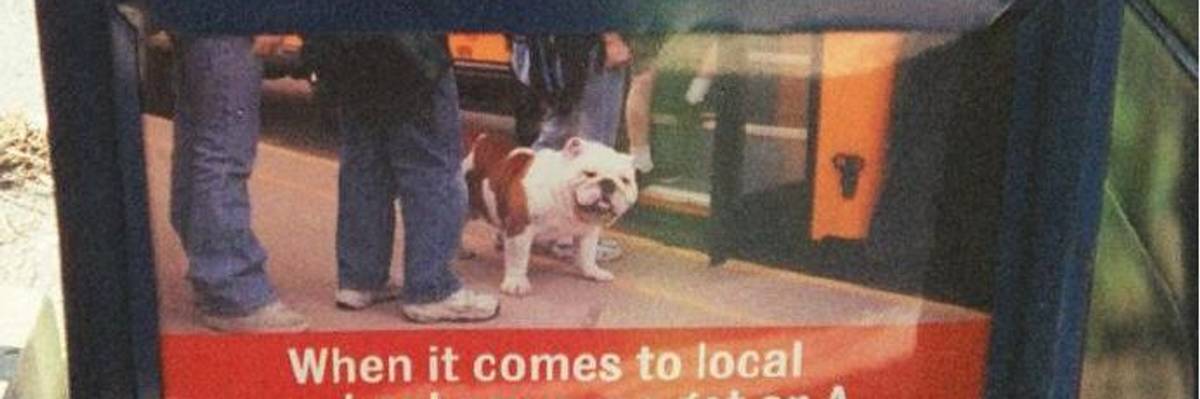
A St. Paul Pioneer Press for sale in 2006. (Photo: mwms1916/flickr/cc)
A two-panel cartoon I recently saw showed a character with a sign saying: "First they came for the reporters." In the next panel, his sign says: "We don't know what happened after that."
It was, of course, a retort to Donald Trump's campaign to demonize the news media as "the enemy of the people." But when it comes to America's once-proud newspapers, their worst enemy isn't Trump -- nor is it the rising cost of newsprint or the "free" digital news on websites.
Rather, the demise of the real news reporting by our city and regional papers is a product of their profiteering owners.
Not the families and companies that built and nurtured true journalism, but the new breed of fast-buck hucksters who've scooped up hundreds of America's newspapers from the bargain bins of media sell-offs.
These hedge-fund scavengers know nothing about journalism and care less. They're ruthless Wall Street profiteers out to grab big bucks fast.
They slash journalistic and production staff, void employee benefits, shrivel the paper's size and news content, sell the presses and other assets, and triple the price of their inferior product -- and then declare bankruptcy, shut down the paper, and auction off the bones before moving on to plunder another town's paper.
By 2014, America's two largest media chains -- GateHouse and Digital First -- weren't venerable publishers with any commitment to truth or civic responsibility. Instead, their managers believe that good journalism is measured by the personal profit they can squeeze from it.
As revealed last year in an American Prospect article, GateHouse executives demanded that its papers cut $27 million from their operating expenses. Thousands of newspaper employees suffered in large part because one employee -- the hedge fund's CEO -- had extracted $54 million in personal pay from the conglomerate, including an $11 million bonus.
The core idea of the "civic commons" is that we are a self-governing people, capable of creating and sustaining a society based on common good. A noble aspiration!
But achieving it requires a basic level of community-wide communication -- a reliable resource that digs out and shares truths so people know enough about what's going on to be self-governing. This is the role Americans have long expected their local and regional newspapers to play -- papers that are not merely in our communities, but of, by, and for them.
Of course, being profit-seeking entities, papers have commonly (and often infamously) fallen far short of their noble democratic purpose. Overall, though, a town's daily (or, better yet, two or more dailies) makes for a more robust civic life by devoting journalistic resources to truth telling.
Local ownership matters, as some 1,500 of our towns have learned after Wall Street demigods have swept in without warning to seize their paper, gut its journalistic mission, and devour its assets.
For example, Digital First, a huge private-equity profiteer, snatched the St. Paul Pioneer Press and, demanding a ridiculous 25 percent profit margin from its purchase, stripped the newsroom staff from a high of 225 journalists to 25!
As the Prospect's Robert Kuttner reported, these tyrannical private equity firms produce nothing but profits for faraway speculators.
He notes that the blandly named entities only exist "thanks to three loopholes in the law." The first lets them operate in the dark; the second provides an unlimited tax deduction for the massive amounts of money they borrow to buy up newspapers; and the third allows them to profit by intentionally bankrupting the paper they take over.
Our right to a free press is meaningless if Wall Street thieves destroy our communities' presses. The good news is that many enterprising people are devising ways to rescue their newspapers. For more information, go to dfmworkers.org.
Dear Common Dreams reader, It’s been nearly 30 years since I co-founded Common Dreams with my late wife, Lina Newhouser. We had the radical notion that journalism should serve the public good, not corporate profits. It was clear to us from the outset what it would take to build such a project. No paid advertisements. No corporate sponsors. No millionaire publisher telling us what to think or do. Many people said we wouldn't last a year, but we proved those doubters wrong. Together with a tremendous team of journalists and dedicated staff, we built an independent media outlet free from the constraints of profits and corporate control. Our mission has always been simple: To inform. To inspire. To ignite change for the common good. Building Common Dreams was not easy. Our survival was never guaranteed. When you take on the most powerful forces—Wall Street greed, fossil fuel industry destruction, Big Tech lobbyists, and uber-rich oligarchs who have spent billions upon billions rigging the economy and democracy in their favor—the only bulwark you have is supporters who believe in your work. But here’s the urgent message from me today. It's never been this bad out there. And it's never been this hard to keep us going. At the very moment Common Dreams is most needed, the threats we face are intensifying. We need your support now more than ever. We don't accept corporate advertising and never will. We don't have a paywall because we don't think people should be blocked from critical news based on their ability to pay. Everything we do is funded by the donations of readers like you. When everyone does the little they can afford, we are strong. But if that support retreats or dries up, so do we. Will you donate now to make sure Common Dreams not only survives but thrives? —Craig Brown, Co-founder |
A two-panel cartoon I recently saw showed a character with a sign saying: "First they came for the reporters." In the next panel, his sign says: "We don't know what happened after that."
It was, of course, a retort to Donald Trump's campaign to demonize the news media as "the enemy of the people." But when it comes to America's once-proud newspapers, their worst enemy isn't Trump -- nor is it the rising cost of newsprint or the "free" digital news on websites.
Rather, the demise of the real news reporting by our city and regional papers is a product of their profiteering owners.
Not the families and companies that built and nurtured true journalism, but the new breed of fast-buck hucksters who've scooped up hundreds of America's newspapers from the bargain bins of media sell-offs.
These hedge-fund scavengers know nothing about journalism and care less. They're ruthless Wall Street profiteers out to grab big bucks fast.
They slash journalistic and production staff, void employee benefits, shrivel the paper's size and news content, sell the presses and other assets, and triple the price of their inferior product -- and then declare bankruptcy, shut down the paper, and auction off the bones before moving on to plunder another town's paper.
By 2014, America's two largest media chains -- GateHouse and Digital First -- weren't venerable publishers with any commitment to truth or civic responsibility. Instead, their managers believe that good journalism is measured by the personal profit they can squeeze from it.
As revealed last year in an American Prospect article, GateHouse executives demanded that its papers cut $27 million from their operating expenses. Thousands of newspaper employees suffered in large part because one employee -- the hedge fund's CEO -- had extracted $54 million in personal pay from the conglomerate, including an $11 million bonus.
The core idea of the "civic commons" is that we are a self-governing people, capable of creating and sustaining a society based on common good. A noble aspiration!
But achieving it requires a basic level of community-wide communication -- a reliable resource that digs out and shares truths so people know enough about what's going on to be self-governing. This is the role Americans have long expected their local and regional newspapers to play -- papers that are not merely in our communities, but of, by, and for them.
Of course, being profit-seeking entities, papers have commonly (and often infamously) fallen far short of their noble democratic purpose. Overall, though, a town's daily (or, better yet, two or more dailies) makes for a more robust civic life by devoting journalistic resources to truth telling.
Local ownership matters, as some 1,500 of our towns have learned after Wall Street demigods have swept in without warning to seize their paper, gut its journalistic mission, and devour its assets.
For example, Digital First, a huge private-equity profiteer, snatched the St. Paul Pioneer Press and, demanding a ridiculous 25 percent profit margin from its purchase, stripped the newsroom staff from a high of 225 journalists to 25!
As the Prospect's Robert Kuttner reported, these tyrannical private equity firms produce nothing but profits for faraway speculators.
He notes that the blandly named entities only exist "thanks to three loopholes in the law." The first lets them operate in the dark; the second provides an unlimited tax deduction for the massive amounts of money they borrow to buy up newspapers; and the third allows them to profit by intentionally bankrupting the paper they take over.
Our right to a free press is meaningless if Wall Street thieves destroy our communities' presses. The good news is that many enterprising people are devising ways to rescue their newspapers. For more information, go to dfmworkers.org.
A two-panel cartoon I recently saw showed a character with a sign saying: "First they came for the reporters." In the next panel, his sign says: "We don't know what happened after that."
It was, of course, a retort to Donald Trump's campaign to demonize the news media as "the enemy of the people." But when it comes to America's once-proud newspapers, their worst enemy isn't Trump -- nor is it the rising cost of newsprint or the "free" digital news on websites.
Rather, the demise of the real news reporting by our city and regional papers is a product of their profiteering owners.
Not the families and companies that built and nurtured true journalism, but the new breed of fast-buck hucksters who've scooped up hundreds of America's newspapers from the bargain bins of media sell-offs.
These hedge-fund scavengers know nothing about journalism and care less. They're ruthless Wall Street profiteers out to grab big bucks fast.
They slash journalistic and production staff, void employee benefits, shrivel the paper's size and news content, sell the presses and other assets, and triple the price of their inferior product -- and then declare bankruptcy, shut down the paper, and auction off the bones before moving on to plunder another town's paper.
By 2014, America's two largest media chains -- GateHouse and Digital First -- weren't venerable publishers with any commitment to truth or civic responsibility. Instead, their managers believe that good journalism is measured by the personal profit they can squeeze from it.
As revealed last year in an American Prospect article, GateHouse executives demanded that its papers cut $27 million from their operating expenses. Thousands of newspaper employees suffered in large part because one employee -- the hedge fund's CEO -- had extracted $54 million in personal pay from the conglomerate, including an $11 million bonus.
The core idea of the "civic commons" is that we are a self-governing people, capable of creating and sustaining a society based on common good. A noble aspiration!
But achieving it requires a basic level of community-wide communication -- a reliable resource that digs out and shares truths so people know enough about what's going on to be self-governing. This is the role Americans have long expected their local and regional newspapers to play -- papers that are not merely in our communities, but of, by, and for them.
Of course, being profit-seeking entities, papers have commonly (and often infamously) fallen far short of their noble democratic purpose. Overall, though, a town's daily (or, better yet, two or more dailies) makes for a more robust civic life by devoting journalistic resources to truth telling.
Local ownership matters, as some 1,500 of our towns have learned after Wall Street demigods have swept in without warning to seize their paper, gut its journalistic mission, and devour its assets.
For example, Digital First, a huge private-equity profiteer, snatched the St. Paul Pioneer Press and, demanding a ridiculous 25 percent profit margin from its purchase, stripped the newsroom staff from a high of 225 journalists to 25!
As the Prospect's Robert Kuttner reported, these tyrannical private equity firms produce nothing but profits for faraway speculators.
He notes that the blandly named entities only exist "thanks to three loopholes in the law." The first lets them operate in the dark; the second provides an unlimited tax deduction for the massive amounts of money they borrow to buy up newspapers; and the third allows them to profit by intentionally bankrupting the paper they take over.
Our right to a free press is meaningless if Wall Street thieves destroy our communities' presses. The good news is that many enterprising people are devising ways to rescue their newspapers. For more information, go to dfmworkers.org.