SUBSCRIBE TO OUR FREE NEWSLETTER
Daily news & progressive opinion—funded by the people, not the corporations—delivered straight to your inbox.
5
#000000
#FFFFFF
To donate by check, phone, or other method, see our More Ways to Give page.
The IOC has met the crescendoing challenge with a preposterous lack of action. The sports behemoth is floundering because it was built on a bedrock of contradiction: the quixotic idea that the Olympic Games transcend politics. In reality, the IOC is a political organization, marinating in politics, on a politicized global terrain.
It's quixotic to claim that the Olympic Games transcend politics. In reality, the IOC is a political organization, marinating in politics, on a politicized global terrain.
For two decades IOC President Avery Brundage trumpeted the official line that "we actively combat the introduction of politics into the Olympic movement and are adamant against the use of the Olympic Games as a tool or as a weapon by any organization." But the brand of apoliticism peddled by the IOC has long been eminently political.South Africa's apartheid system led the IOC to withdraw the country's invitation to the 1964 Tokyo Games and to ultimately expel South Africa from the Olympic Movement. In the 1990s the IOC began working with the United Nations to institute an "Olympic Truce" before each Games--whereby countries agree to cease fire during the actual Olympics--an intervention into geopolitics that is unanimously supported and routinely ignored. The IOC awarded the 2008 Summer Olympics to Beijing in the hope it would give China a democratic jumpstart. The supranational hegemon has even hosted meetings between the National Olympic Committees from Israel and Palestine in order to further cooperation in sport. Clearly, the convenient crutch of apoliticism is anachronistic, part of a formulaic charade designed to dodge controversy.
Firecracker sportswriter Dave Zirin recently called the IOC "a corporate piranha masquerading as Nemo the Clown Fish, tearing countries to pieces under a miasma of soft-headed hooey." By "soft-headed hooey" he means the lofty principles enshrined in the Olympic Charter, including the declaration that one of the "fundamental principles of Olympism" is the promotion of "a peaceful society concerned with the preservation of human dignity." The Charter explicitly states "Any form of discrimination with regard to a country or a person on grounds of race, religion, politics, gender or otherwise is incompatible with belonging to the Olympic Movement." The IOC's self-appointed role is "to act against any form of discrimination affecting the Olympic Movement."
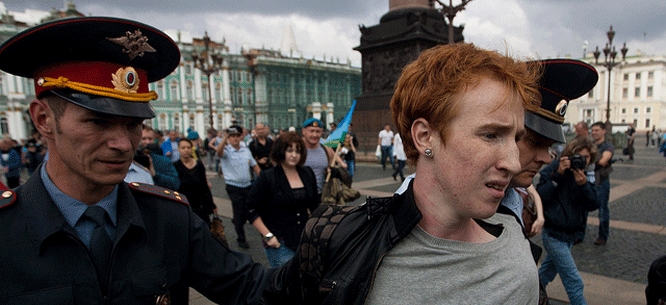
And yet, the IOC's response thus far has been shameful mix of foot-dragging and wishful gullibility. First, it meekly asserted it had "received assurances from the highest level of government in Russia" that the anti-gay law would not be brandished against Olympic athletes and fans. In response, Vitaly Mutko, Russia's Minister of Sports, vowed that, in fact, no one was above the law. Monday he received backing from the Interior Ministry, which stated the law will indeed be enforced during the Games. This is no obscure bureaucratic proclamation--the Interior Ministry oversees the Russian police force. Shockingly, the IOC told Gay Star News earlier this week that athletes who challenged that law--by, say, donning a rainbow pin in Sochi--risked disqualification or withdrawal from the Games thanks to Rule 50 of its Olympic Charter, which states "No kind of demonstration or political, religious or racial propaganda is permitted in any Olympic sites, venues or other areas." Apparently anti-gay propaganda trumps dissent, even if it aligns with the principles of the IOC Charter.
The IOC's inaction is rippling with hypocrisy. Normally we wouldn't expect much to change, and many Olympic-watchers say we should expect the continuation of the IOC's selective morality. After all in 2011, when asked for comment on the death of Osama bin Laden, current IOC President Jacques Rogge remarked, "What happened to Mr. Bin Laden is a political issue on which I do not wish to comment." Rogge has faithfully represented the IOC's desire to sidestep politics.
However, Rogge is stepping down from the presidency, injecting a wildcard into the process. In less than a month the Olympic Movement will hold its 125th IOC Session in Buenos Aires, Argentina where it will elect a new leader. While five of the six candidates promise to continue the party line, Richard Carrion of Puerto Rico has strongly criticized Russia's anti-gay law. He said, "I strongly believe in equal rights, including the right to practice sport, for every human regardless of race, nationality, gender or sexual orientation." Furthermore, he stated, "Looking ahead, a condition to getting the Olympic Games in the future should be to make sure the city does not have laws that discriminate against people in any way, consistent with the Olympic Charter." This is the sort of leadership the IOC desperately needs.
Should the IOC continue on its path of inaction, it risks mainstreaming the dire appraisal of its fiercest critics. But the upcoming election creates a glimmer of possibility that the 2014 Sochi Olympics could help the IOC begin to tether its noble principles to the ground. It's time "to act against any form of discrimination affecting the Olympic Movement."
The IOC has met the crescendoing challenge with a preposterous lack of action. The sports behemoth is floundering because it was built on a bedrock of contradiction: the quixotic idea that the Olympic Games transcend politics. In reality, the IOC is a political organization, marinating in politics, on a politicized global terrain.
It's quixotic to claim that the Olympic Games transcend politics. In reality, the IOC is a political organization, marinating in politics, on a politicized global terrain.
For two decades IOC President Avery Brundage trumpeted the official line that "we actively combat the introduction of politics into the Olympic movement and are adamant against the use of the Olympic Games as a tool or as a weapon by any organization." But the brand of apoliticism peddled by the IOC has long been eminently political.South Africa's apartheid system led the IOC to withdraw the country's invitation to the 1964 Tokyo Games and to ultimately expel South Africa from the Olympic Movement. In the 1990s the IOC began working with the United Nations to institute an "Olympic Truce" before each Games--whereby countries agree to cease fire during the actual Olympics--an intervention into geopolitics that is unanimously supported and routinely ignored. The IOC awarded the 2008 Summer Olympics to Beijing in the hope it would give China a democratic jumpstart. The supranational hegemon has even hosted meetings between the National Olympic Committees from Israel and Palestine in order to further cooperation in sport. Clearly, the convenient crutch of apoliticism is anachronistic, part of a formulaic charade designed to dodge controversy.
Firecracker sportswriter Dave Zirin recently called the IOC "a corporate piranha masquerading as Nemo the Clown Fish, tearing countries to pieces under a miasma of soft-headed hooey." By "soft-headed hooey" he means the lofty principles enshrined in the Olympic Charter, including the declaration that one of the "fundamental principles of Olympism" is the promotion of "a peaceful society concerned with the preservation of human dignity." The Charter explicitly states "Any form of discrimination with regard to a country or a person on grounds of race, religion, politics, gender or otherwise is incompatible with belonging to the Olympic Movement." The IOC's self-appointed role is "to act against any form of discrimination affecting the Olympic Movement."
And yet, the IOC's response thus far has been shameful mix of foot-dragging and wishful gullibility. First, it meekly asserted it had "received assurances from the highest level of government in Russia" that the anti-gay law would not be brandished against Olympic athletes and fans. In response, Vitaly Mutko, Russia's Minister of Sports, vowed that, in fact, no one was above the law. Monday he received backing from the Interior Ministry, which stated the law will indeed be enforced during the Games. This is no obscure bureaucratic proclamation--the Interior Ministry oversees the Russian police force. Shockingly, the IOC told Gay Star News earlier this week that athletes who challenged that law--by, say, donning a rainbow pin in Sochi--risked disqualification or withdrawal from the Games thanks to Rule 50 of its Olympic Charter, which states "No kind of demonstration or political, religious or racial propaganda is permitted in any Olympic sites, venues or other areas." Apparently anti-gay propaganda trumps dissent, even if it aligns with the principles of the IOC Charter.
The IOC's inaction is rippling with hypocrisy. Normally we wouldn't expect much to change, and many Olympic-watchers say we should expect the continuation of the IOC's selective morality. After all in 2011, when asked for comment on the death of Osama bin Laden, current IOC President Jacques Rogge remarked, "What happened to Mr. Bin Laden is a political issue on which I do not wish to comment." Rogge has faithfully represented the IOC's desire to sidestep politics.
However, Rogge is stepping down from the presidency, injecting a wildcard into the process. In less than a month the Olympic Movement will hold its 125th IOC Session in Buenos Aires, Argentina where it will elect a new leader. While five of the six candidates promise to continue the party line, Richard Carrion of Puerto Rico has strongly criticized Russia's anti-gay law. He said, "I strongly believe in equal rights, including the right to practice sport, for every human regardless of race, nationality, gender or sexual orientation." Furthermore, he stated, "Looking ahead, a condition to getting the Olympic Games in the future should be to make sure the city does not have laws that discriminate against people in any way, consistent with the Olympic Charter." This is the sort of leadership the IOC desperately needs.
Should the IOC continue on its path of inaction, it risks mainstreaming the dire appraisal of its fiercest critics. But the upcoming election creates a glimmer of possibility that the 2014 Sochi Olympics could help the IOC begin to tether its noble principles to the ground. It's time "to act against any form of discrimination affecting the Olympic Movement."
The IOC has met the crescendoing challenge with a preposterous lack of action. The sports behemoth is floundering because it was built on a bedrock of contradiction: the quixotic idea that the Olympic Games transcend politics. In reality, the IOC is a political organization, marinating in politics, on a politicized global terrain.
It's quixotic to claim that the Olympic Games transcend politics. In reality, the IOC is a political organization, marinating in politics, on a politicized global terrain.
For two decades IOC President Avery Brundage trumpeted the official line that "we actively combat the introduction of politics into the Olympic movement and are adamant against the use of the Olympic Games as a tool or as a weapon by any organization." But the brand of apoliticism peddled by the IOC has long been eminently political.South Africa's apartheid system led the IOC to withdraw the country's invitation to the 1964 Tokyo Games and to ultimately expel South Africa from the Olympic Movement. In the 1990s the IOC began working with the United Nations to institute an "Olympic Truce" before each Games--whereby countries agree to cease fire during the actual Olympics--an intervention into geopolitics that is unanimously supported and routinely ignored. The IOC awarded the 2008 Summer Olympics to Beijing in the hope it would give China a democratic jumpstart. The supranational hegemon has even hosted meetings between the National Olympic Committees from Israel and Palestine in order to further cooperation in sport. Clearly, the convenient crutch of apoliticism is anachronistic, part of a formulaic charade designed to dodge controversy.
Firecracker sportswriter Dave Zirin recently called the IOC "a corporate piranha masquerading as Nemo the Clown Fish, tearing countries to pieces under a miasma of soft-headed hooey." By "soft-headed hooey" he means the lofty principles enshrined in the Olympic Charter, including the declaration that one of the "fundamental principles of Olympism" is the promotion of "a peaceful society concerned with the preservation of human dignity." The Charter explicitly states "Any form of discrimination with regard to a country or a person on grounds of race, religion, politics, gender or otherwise is incompatible with belonging to the Olympic Movement." The IOC's self-appointed role is "to act against any form of discrimination affecting the Olympic Movement."
And yet, the IOC's response thus far has been shameful mix of foot-dragging and wishful gullibility. First, it meekly asserted it had "received assurances from the highest level of government in Russia" that the anti-gay law would not be brandished against Olympic athletes and fans. In response, Vitaly Mutko, Russia's Minister of Sports, vowed that, in fact, no one was above the law. Monday he received backing from the Interior Ministry, which stated the law will indeed be enforced during the Games. This is no obscure bureaucratic proclamation--the Interior Ministry oversees the Russian police force. Shockingly, the IOC told Gay Star News earlier this week that athletes who challenged that law--by, say, donning a rainbow pin in Sochi--risked disqualification or withdrawal from the Games thanks to Rule 50 of its Olympic Charter, which states "No kind of demonstration or political, religious or racial propaganda is permitted in any Olympic sites, venues or other areas." Apparently anti-gay propaganda trumps dissent, even if it aligns with the principles of the IOC Charter.
The IOC's inaction is rippling with hypocrisy. Normally we wouldn't expect much to change, and many Olympic-watchers say we should expect the continuation of the IOC's selective morality. After all in 2011, when asked for comment on the death of Osama bin Laden, current IOC President Jacques Rogge remarked, "What happened to Mr. Bin Laden is a political issue on which I do not wish to comment." Rogge has faithfully represented the IOC's desire to sidestep politics.
However, Rogge is stepping down from the presidency, injecting a wildcard into the process. In less than a month the Olympic Movement will hold its 125th IOC Session in Buenos Aires, Argentina where it will elect a new leader. While five of the six candidates promise to continue the party line, Richard Carrion of Puerto Rico has strongly criticized Russia's anti-gay law. He said, "I strongly believe in equal rights, including the right to practice sport, for every human regardless of race, nationality, gender or sexual orientation." Furthermore, he stated, "Looking ahead, a condition to getting the Olympic Games in the future should be to make sure the city does not have laws that discriminate against people in any way, consistent with the Olympic Charter." This is the sort of leadership the IOC desperately needs.
Should the IOC continue on its path of inaction, it risks mainstreaming the dire appraisal of its fiercest critics. But the upcoming election creates a glimmer of possibility that the 2014 Sochi Olympics could help the IOC begin to tether its noble principles to the ground. It's time "to act against any form of discrimination affecting the Olympic Movement."