
SUBSCRIBE TO OUR FREE NEWSLETTER
Daily news & progressive opinion—funded by the people, not the corporations—delivered straight to your inbox.
5
#000000
#FFFFFF
To donate by check, phone, or other method, see our More Ways to Give page.


Daily news & progressive opinion—funded by the people, not the corporations—delivered straight to your inbox.
"We will soon find out," said Sen. Bernie Sanders.
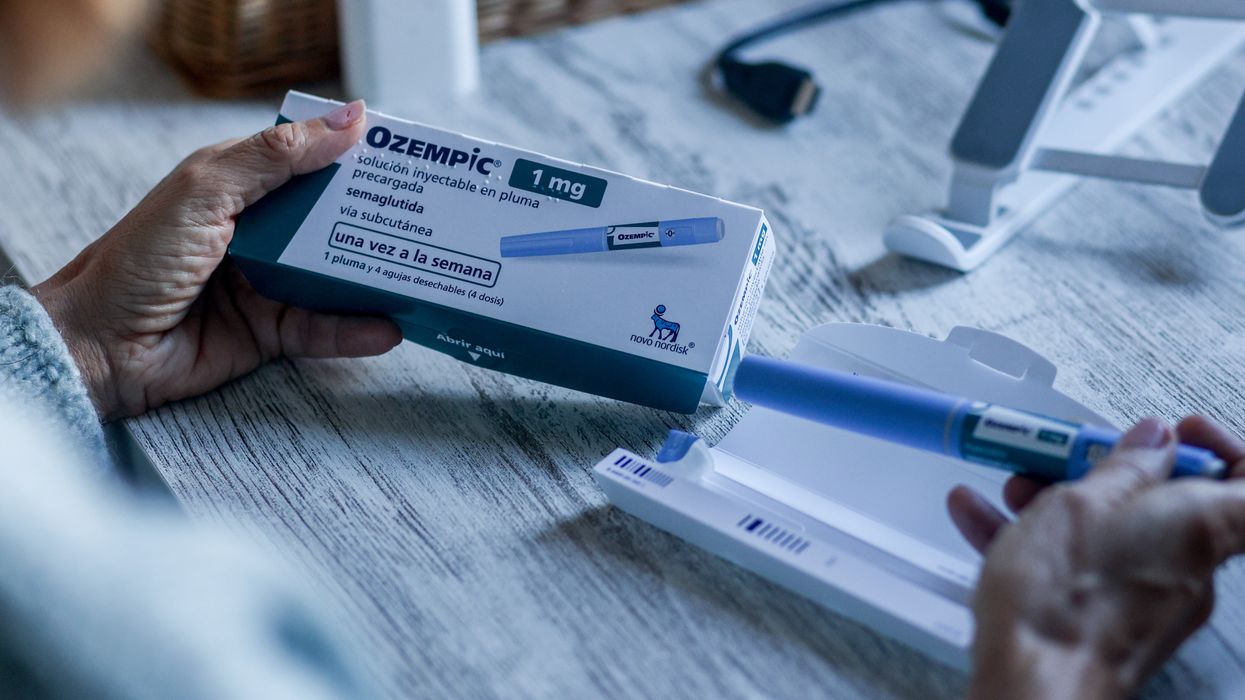
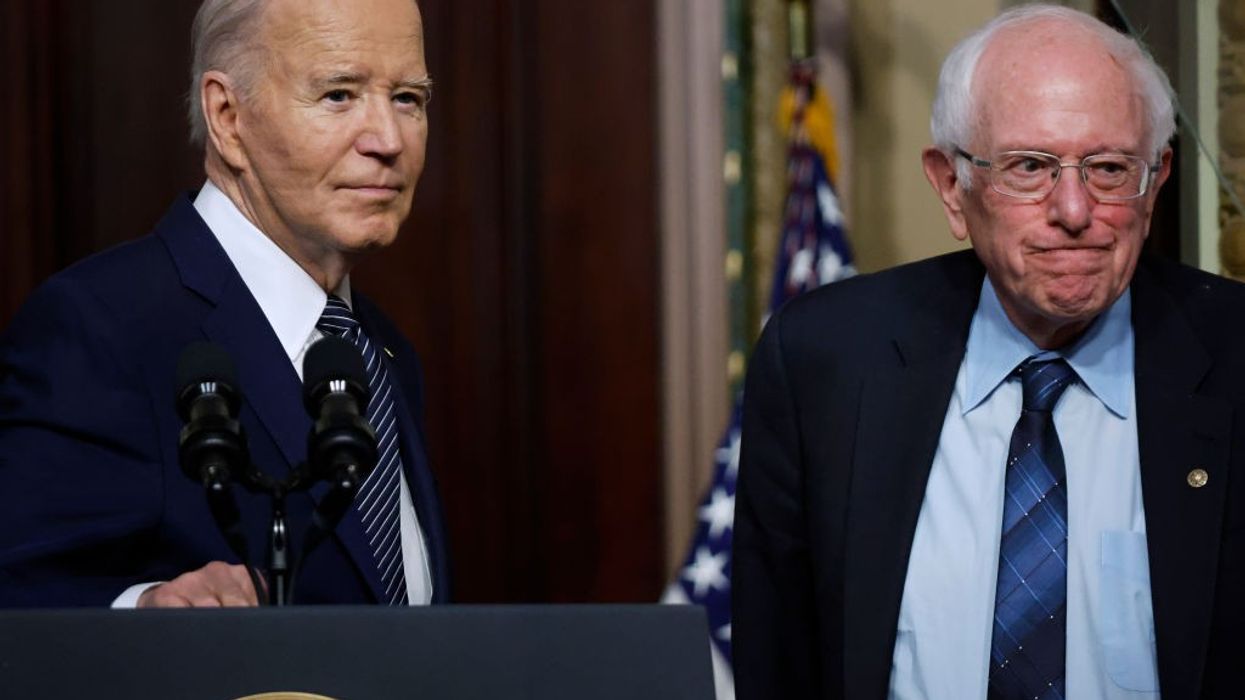
U.S. Sen. Bernie Sanders welcomed news Friday that the Biden administration included the expensive and increasingly popular drugs Ozempic and Wegovy on a slate of 15 medications that will soon be subject to price negotiations.
That is, if President-elect Donald Trump allows the Medicare price-negotiation program to continue.
"Will Trump make sure that all Americans—not just those on Medicare—pay no more than people in other countries for Ozempic and Wegovy?" Sanders (I-Vt.), ranking member of the Senate Committee on Health, Education, Labor, and Pensions (HELP), asked in a statement Friday, pointing to the president-elect's previous criticism of Big Pharma. "Or will Trump back down on his commitment and continue to allow the pharmaceutical industry to get away with murder by taking away the government's power to negotiate prices?"
"We will soon find out," said Sanders, who has publicly grilled pharmaceutical giant Novo Nordisk's CEO over the exorbitant prices of the obesity and diabetes drugs Ozempic and Wegovy.
Reuters reported that shortly following the 2024 election, the pharmaceutical industry began pushing Trump's team to weaken the price negotiation program, which was put in place by the Inflation Reduction Act.
"Pharma expects to piggyback on Republican moves to scrap some of the energy and green subsidy provisions in the legislation," Reuters reported.
The drug industry is reportedly not lobbying senators to block the confirmation of Robert F. Kennedy Jr., Trump's pick to lead the Department of Health and Human Services (HHS). If confirmed, Kennedy would oversee the price-negotiation program.
"The Trump administration could go in one of three directions with the Medicare negotiations program: stay the course, water it down, or repeal it altogether," KFF senior vice president Tricia Neuman wrote Friday. "There are potential tradeoffs with each, but the first would be most popular."
"We must keep pushing to expand the wildly popular Medicare negotiation program. Patients fought extremely hard for the passage of these reforms."
HHS said Friday that the 15 newly selected drugs—which add to the 10 medications that have already faced price negotiations—"accounted for about $41 billion in total gross covered prescription drug costs under Medicare Part D."
"When combined with the total gross covered prescription drug costs under Medicare Part D of the 10 drugs selected for the first cycle of negotiations over that same time period, this represents over a third of total gross covered prescription drug costs under Medicare Part D," the agency said.
If the Trump administration allows negotiations on the 15 drugs to proceed, the new prices would take effect in 2027.
"For the last twenty years, drug corporations have rigged the system in their favor—hiking prices at will and leaving millions of patients at their mercy," said Merith Basey, executive director of Patients for Affordable Drugs. "Thanks to the 2022 prescription drug law, last year Medicare negotiated a better deal on 10 of some of the most expensive and most commonly used drugs covered by the program."
"Today's announcement of 15 additional high-cost drugs builds on that historic progress and will lower costs for millions more patients in 2027," Basey added. "But let's be clear: We must keep pushing to expand the wildly popular Medicare negotiation program. Patients fought extremely hard for the passage of these reforms and they continue to vigorously defend them against pharma's attacks—because nobody should have to choose between life-saving drugs and their basic needs."
During a hearing, Sen. Bernie Sanders told the pharmaceutical giant's CEO to "stop ripping us off."
Sen. Bernie Sanders on Tuesday rejected the pharmaceutical Novo Nordisk's justifications for the high prices of two increasingly popular obesity and diabetes medications in the United States, telling the company's CEO to "stop ripping us off."
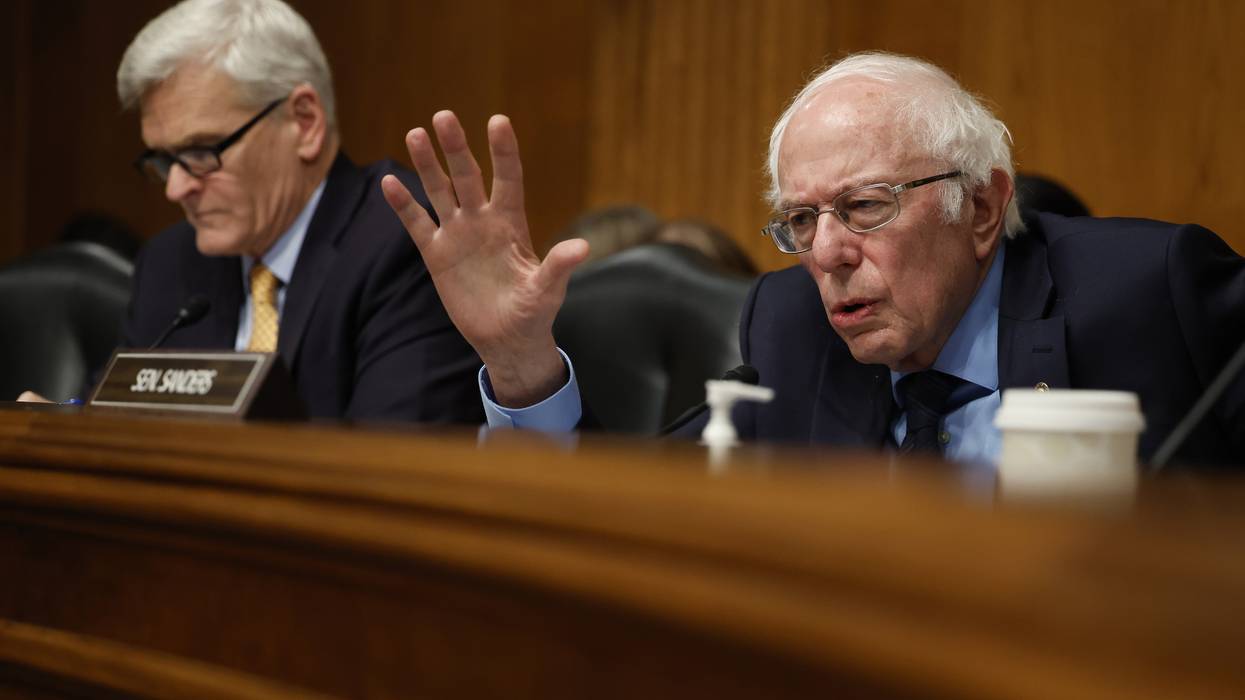
Sanders' (I-Vt.) remarks came during a Senate Health, Education, Labor, and Pensions (HELP) Committee hearing featuring testimony from Lars Fruergaard Jørgensen, the chief executive of the Danish pharmaceutical giant Novo Nordisk.
"The United States is Novo Nordisk's cash cow for Ozempic and Wegovy," said Sanders, noting that the company has made $50 billion in sales of the two drugs since 2018—a majority of them in the U.S., where the company charges significantly higher prices than in Denmark, Germany, and other rich countries.
The senator rejected Jørgensen's efforts in his written testimony to explain away the high prices for the two medications. The executive pointed to the "complexity" of the U.S. healthcare system and rebates to pharmacy benefit managers (PBMs), among other factors, to justify the current list prices of Ozempic and Wegovy—$969 a month and $1,349 a month, respectively, in the U.S.
Sanders observed that "even factoring in all of the rebates that PBMs receive, the net price for Ozempic is still nearly $600—over nine times as much as it costs in Germany."
"And the estimated net price of Wegovy," the senator added, "is over $800—nearly four and a half times as much as it costs in Denmark."
Watch the full hearing:
Ahead of Tuesday's hearing, Sanders released a report countering Jørgensen's insistence that cutting the list prices of Ozempic and Wegovy would lead to PBMs "dropping" the medications from their formularies, resulting in less access to the drugs.
"Three major PBMs that help determine drug coverage for most of the nation—Cigna Group/Express Scripts, CVS Health/Caremark, UnitedHealth Group/Optum Rx—confirmed to Chair Sanders that a list price reduction would not negatively impact formulary placement for Ozempic and Wegovy, and affirmed that lower list prices would, in fact, make the drugs more widely available to patients in need," Sanders' office said.
The report also disputes Novo Nordisk's claim that price cuts would undermine the company's ability to "invest in new and innovative drug research and development efforts"—a claim that pharmaceutical firms often use to justify high prices.
"Since launching Ozempic in 2018, Novo Nordisk has spent twice as much on stock buybacks and dividends ($44 billion) as it has on research and development ($21 billion), according to financial filings," the report notes. "Novo Nordisk has also lavished cash and perks on healthcare providers, sending doctors on trips to Alaska, Hawaii, and Florida, and paying for nearly 1.7 million meals and snacks for doctors and other healthcare providers to promote Ozempic and Wegovy, federal records show."
"Right now, rationing is a painful reality for American patients dealing with issues related to diabetes and obesity."
During Tuesday's hearing, Jørgensen said he would be willing to do "anything that will help patients get access to affordable medicine" but did not specifically pledge to reduce the prices of Ozempic and Wegovy. Jørgensen told the Senate committee that PBMs' vows not to reduce access to the drugs in the case of price cuts was "new information to me."
The consumer advocacy group Public Citizensaid following the Senate hearing that Medicare would save $14 billion on Ozempic and Wegovy if the Biden administration used its existing legal authority to approve generic competition for the two medications.
"Novo today appeared unable, or unwilling, to articulate a credible response [to] why it charges Americans more than people in other wealthy countries," said Peter Maybarduk, director of Public Citizen's Access to Medicines program. "The federal government must open generic competition with Ozempic and Wegovy."
"Right now, rationing is a painful reality for American patients dealing with issues related to diabetes and obesity," he continued. "The federal government has an obligation to serve these patients' health needs. In doing so, we can also improve Medicare's financial health. As Sen. Sanders has cautioned, Novo Nordisk's price gouging practices would impose unmanageable costs on Medicare if its drugs were made available to all seniors who might benefit from them."
"Why? Excessive corporate greed," said Sen. Bernie Sanders.
U.S. Sen. Bernie Sanders called out the pharmaceutical giant Novo Nordisk on Tuesday for charging American patients more than $900 a month for the increasingly popular diabetes drug Ozempic, even though generic manufacturers are willing to sell the medication for significantly less.
During a panel discussion with experts, Sanders (I-Vt.) said he and his staff have been in contact with the top executives of major drug makers who say they could sell a generic version of Ozempic for less than $100 a month—and still turn a profit. A recent study found that the drug can be manufactured for less than $5 a month.
"Novo Nordisk, which has made nearly $50 billion in sales off of Ozempic and Wegovy, charges Americans almost $1,000 a month—the highest prices in the world," Sanders, the chair of the Senate Health, Education, Labor, and Pensions (HELP) Committee, said Tuesday. "Why? Excessive corporate greed."
Ozempic and Wegovy are part of a class of treatments known as GLP-1s. Wegovy, a weight-loss drug that Novo Nordisk sells for $1,349 a month in the U.S., contains the same active ingredient as Ozempic, which is approved only for people with Type 2 diabetes.
The drugs' growing popularity in the U.S. has drawn greater scrutiny to Novo Nordisk's pricing. Sanders' office noted Tuesday that the company's price tag for Wegovy is $186 in Denmark, $140 in Germany, and $92 in the United Kingdom.
Novo Nordisk's high prices for the drugs in the U.S. could have far-reaching impacts on the nation's healthcare system. A group of economists wrote in a recent op-ed for The New York Times earlier this year that "under reasonable assumptions and at current prices, making this class of drugs available to all obese Americans could eventually cost over $1 trillion per year," which is "almost as much as the government spends on the entire Medicare program and almost one-fifth of the entire amount America spends on healthcare."
Sanders warned Tuesday that if the prices of Ozempic and Wegovy aren't reined in, Medicare premiums could surge.
"Our healthcare system, I think most people understand, is in crisis," Sanders said during the panel discussion. "The business model of the pharmaceutical industry is unsustainable."
Over the course of our investigation into the outrageous cost of Ozempic and Wegovy in the U.S., I spoke with the CEOs of major generic pharmaceutical companies who confirmed:
They can sell a generic version of Ozempic for $100/mo. https://t.co/XDHdBRPIcM
— Bernie Sanders (@SenSanders) September 17, 2024
Peter Maybarduk, director of the Access to Medicines Program at Public Citizen, said in a statement Tuesday that "all we need to make Ozempic for $100 a reality is to overcome Novo's patent monopoly, which the government has the power to do any time."
"States and clinicians are asking the feds for help," said Maybarduk. "We estimate taking action on Novo's patents could save Medicare more than $14 billion in the first two years of competition, while making diabetes and obesity drugs affordable."
Last month, Public Citizen delivered a petition to U.S. Health and Human Services Secretary Xavier Becerra urging him to use existing law to "authorize generic competitors to Ozempic and Wegovy."
"Novo Nordisk’s outrageous pricing of [Ozempic and Wegovy] threatens to break the coffers of federal health programs," the group wrote. "Pursuant to 28 U.S.C. § 1498, the administration should authorize use of any and all patents necessary to allow manufacturers to produce generic alternatives to these treatments on behalf of the United States government, which can be used to supply Medicare, Medicaid, and other federal health programs. This will facilitate competition and make the treatments more affordable and accessible for patients."
The CEO of Novo Nordisk, which has spent aggressively on lobbying this year, is scheduled to testify before the Senate HELP Committee next week.
"Too often, because manufacturers are pricing out my patients, I have to resort to treatment options that are less effective and less safe," one doctor said.
As the U.S. Senate prepares for a hearing on Novo Nordisk overcharging Americans for Ozempic and Wegovy, Sen. Bernie Sanders on Monday released a letter from 253 health professionals asking Congress to take on the "exorbitant prices set by manufacturers" for non-insulin diabetes and weight loss medications.
The clinicians wrote that drugs including "semaglutide (marketed by Novo Nordisk as Ozempic for diabetes and Wegovy for weight loss) and... tirzapetide (marketed by Eli Lilly as Mounjaro for diabetes and Zepbound for weight loss) have been revolutionary in the management of chronic conditions of diabetes and obesity."
"However, even the most transformative medications cannot help our patients if they cannot afford them," states the letter, which is addressed to Sanders (I-Vt.), chair of the Senate Committee on Health, Education, Labor, and Pensions (HELP), and Sen. Bill Cassidy (R-La.), the panel's ranking member.
"If Novo Nordisk does not end its greed and substantially reduce the price of these drugs, we must do everything we can to end it for them."
"Studies have shown that semaglutide can be manufactured for as little as nearly $5 per month, substantially lower than the current U.S. list price of $968 for Ozempic or $1,349 per month for Wegovy," the letter notes. "In contrast, Novo Nordisk has set the price of Wegovy at $92 in the United Kingdom and $186 in Denmark, clearly demonstrating that these drugs are being priced unfairly for our U.S. patients."
The health providers stressed that "for patients, these are not one-off prices they shoulder, but potentially lifelong costs they will need to consider. For obesity, the drugs work while patients take them, but once off treatment, studies have found that patients regain the weight."
"Patients in the U.S. face multiple hurdles in accessing the drugs, which we as prescribers do our best to help them navigate," they explained, detailing issues faced by people who have private insurance, Medicare and Medicaid coverage, and no insurance. "Lack of coverage, supply shortages, and the unreasonable sticker prices of these medications are pushing patients to consider alternative options, which are often unsafe."
"We want our patients to be able to access medications that can improve their health and quality of life, but we do not want to rob the American taxpayers to line the pockets of the pharmaceutical manufacturers," the clinicians concluded. "Senators, we are asking you to do everything in your power to bring down the price of these novel diabetes and obesity drugs. Our patients deserve to have the best options available to them at a fair price."
Echoing the letter in a Monday statement, Dr. Kasia Lipska, a practicing endocrinologist and diabetes researcher at the Yale School of Medicine in Connecticut, said that "the exorbitant prices that manufacturers are asking my patients to pay for these novel diabetes and obesity medications are simply unacceptable."
"Too often, because manufacturers are pricing out my patients, I have to resort to treatment options that are less effective and less safe," Lipska continued. "These are life-changing treatments that should be available to my patients and everyone who needs them, not just those who can afford to pay."
Dr. Elizabeth Dewey, another letter signatory who practices family medicine in Greensboro, North Carolina, said that in her state, "we have been struggling all year with lack of coverage for weight loss medications."
"When our state plan and large employers dropped coverage for weight loss medications earlier this year, patients were left without treatment," Dewey explained. "Those who wanted to continue on the medications could pay cash. But for most patients, paying hundreds of dollars without insurance coverage is not affordable. Even with drug company coupons or discounts on certain doses, these treatments are still unattainable for most of my patients."
Sanders, who launched a probe into Denmark-based Novo Nordisk back in April, welcomed the letter, saying that "doctors across this country are sick and tired of seeing their patients ripped off by giant pharmaceutical companies."
"There is no rational reason, other than greed, for Novo Nordisk to charge Americans with Type 2 diabetes $969 a month for Ozempic, while this same exact drug can be purchased for just $155 in Canada and just $59 in Germany," he argued. "Novo Nordisk also charges Americans with obesity $1,349 a month for Wegovy, while this same exact product can be purchased for just $140 in Germany."
"Doctors agree," he added. "If Novo Nordisk does not end its greed and substantially reduce the price of these drugs, we must do everything we can to end it for them."
The Senate HELP Committee hearing on Capitol Hill is scheduled for 10:00 am on Tuesday, September 24.
Past administrations "have been intimidated and deterred from challenging Big Pharma's monopoly power," an expert said. "Today, however, President Biden and Sen. Bernie Sanders call Big Pharma's bullying bluff."
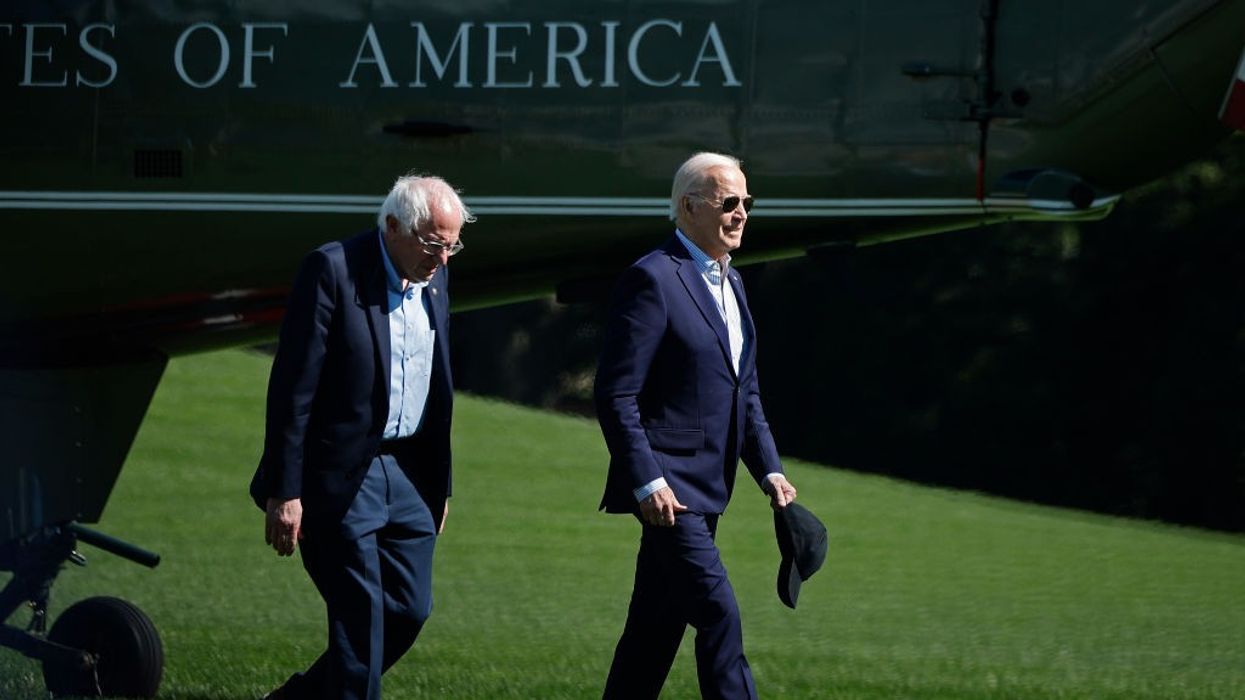
President Joe Biden and Sen. Bernie Sanders on Tuesday called for prescription drug companies to lower prices and stop "ripping off" Americans.
The message from Biden and Sanders (I-Vt.) came in a joint op-ed in USA Today in which they laid out the reforms they've already pushed through, called out two pharmaceutical companies in particular for the "unconscionably" high prices they charge to Americans, and vowed to take governmental action to end the "corporate greed."
"There is no rational reason why Americans, for decades, have been forced to pay, by far, the highest prices in the world for the prescription drugs they need," Biden and Sanders wrote. "There is no rational reason why, for decades, 1 out of 4 Americans have been unable to afford the medicine their doctors prescribe.
"And it is most certainly not Americans' patriotic duty to pay high drug prices at home so others abroad can enjoy the fair prices that every American is entitled to," they added.
Consumer rights groups celebrated the strong position that the president and the senator took.
"For decades, presidential administrations on a bipartisan basis have been intimidated and deterred from challenging Big Pharma's monopoly power," Robert Weissman, president of Public Citizen, an advocacy group, said in a statement. "Today, however, President Biden and Sen. Bernie Sanders call Big Pharma's bullying bluff."
Pharmaceutical companies can make whatever excuses they want for their sky-high drug prices — we know it’s bullshit. And Biden and Bernie just called them on it.
If Big Pharma won’t quell its own greed, it’s up to the government to do it for them.https://t.co/YiodsDIoQI
— Public Citizen (@Public_Citizen) July 2, 2024
Some progress has been made on prescription drug prices in the last four years, Biden and Sanders noted in their op-ed.
The Inflation Reduction Act, which they helped enact, established a price ceiling of $35 per month for insulin for senior citizens. And, starting in 2025, no senior citizen will have to pay more than $2,000 in prescription drug prices in a given year—a reform Biden and Sanders said they'd like to see apply to all Americans. Medicare can now also negotiate with pharmaceutical companies to lower prices, as other countries do.
Yet the problem of high drug prices remains, and Sanders has made solving it a priority, focusing on it as chair of the Senate Health, Education, Labor, and Pensions (HELP) Committee. Last year, he wrote an op-ed in Fox News, calling the opposition to pharmaceutical company profiteering an issue on which Americans of all political stripes "could not be more united." He also released a report showing that medications made using publicly funded research were then being priced exorbitantly by private firms.
The Vermont Independent has also repeatedly grilled pharmaceutical executives in hearings over the last two years, but they have generally not committed to lowering prices, though some companies did institute caps on out-of-pocket expenses on inhalers.
In April, Sanders and Biden teamed up for an event at the White House to discuss the need to lower prescription drug prices.
"I'm proud that my administration is taking on Big Pharma in the most significant ways ever," Biden said at the event. "And I wouldn't have done it without Bernie... Bernie was the one who was leading the way for decades."
Tuesday's op-ed marks the continuation of their partnership on the issue, with Biden effectively endorsing Sanders' drug pricing agenda, particularly for obesity and diabetes medications. HELP launched an investigation into Novo Nordisk's pricing of Ozempic and Wegovy in April, and the Danish multinational was the primary example of wrongdoing chosen by Biden and Sanders in their op-ed.
Ozempic and Wegovy are up to six times more expensive in the U.S. than in peer countries, Biden and Sanders wrote.
"In 2023, for example, Novo Nordisk made over $12 billion in profits, in part by charging Americans over $1,000 a month for a prescription drug that can be profitably manufactured for less than $5. That is not making a reasonable return on investment. That is price gouging. That is corporate greed."
Sanders recently succeeded in pressuring Novo Nordisk CEO Lars Fruergaard Jørgensen to agree to testify in front of HELP in September.
Biden and Sanders noted that even just within obesity and diabetes care, the problem goes beyond Novo Nordisk: Eli Lilly's Mounjaro, a comparable weight-loss drug, is also overpriced. They argued that if the prices of such drugs are not lowered, they could bankrupt the U.S. healthcare system.
Biden then repeated the message through his own channels.
"If Big Pharma refuses to lower prescription drug prices and end their greed, we will do everything within our power to end it for them," Biden wrote on social media following the publication of the op-ed. "Bernie Sanders and I will not rest until every American can afford the prescriptions they need to lead healthy, happy, and productive lives."
Though the timing may be incidental, Biden's cooperation with Sanders, a leading progressive, comes during a week in which he needs to rally his base—a task Sanders is known to excel at. Biden faces widespread pressure to step aside from the presidential race following a subpar debate performance on Thursday night.
While progressives have been sharply critical of Biden on a range of issues, it's not clear whether his potential replacements at the top of the Democratic ticket would be so willing to team up with Sanders and call out corporate greed.
"Bernie Sanders and Joe Biden just co-authored a piece laying into big pharmaceutical companies for overcharging Americans on obesity drugs," Matt Stoller, a progressive commentator and research director of the American Economic Liberties Project, wrote on social media. "I realize Biden is senile, but would his replacements do anything like this? Most wouldn't."
"The committee looks forward to Mr. Jørgensen answering a very simple question: Why does he think it's acceptable to charge Americans up to 10 or 15 times more for Ozempic and Wegovy than people in Europe and other major countries?" said Sen. Bernie Sanders.
In his latest move aimed at holding the Danish pharmaceutical giant Novo Nordisk accountable for the high price of its weight loss medications, U.S. Sen. Bernie Sanders on Monday announced the CEO of the company will soon testify before the Senate committee he chairs.
Lars Jørgensen is scheduled to appear before the Senate Health, Education, Labor, and Pensions (HELP) Committee on September 24 to discuss what Sanders called "the outrageously high prices that Novo Nordisk charges Americans for their blockbuster drugs, Ozempic and Wegovy."
As Common Dreams reported last month, Americans pay hundreds of dollars more for the two drugs, which treat Type 2 Diabetes and weight management, than people in other wealthy countries with government-funded healthcare programs.
"Novo Nordisk currently charges Americans with Type 2 diabetes $969 a month for Ozempic, while this same exact drug can be purchased for just $155 in Canada, $122 in Denmark, and just $59 in Germany," said Sanders (I-Vt.). "Incredibly, Novo Nordisk also charges Americans with obesity $1,349 a month for Wegovy, while this same exact product can be purchased for just $186 in Denmark, $140 in Germany, and $92 in the United Kingdom."
"Wegovy is a 'game changer' weight loss drug. That doesn't mean much to the millions of people who can't afford it."
"The committee looks forward to Mr. Jørgensen answering a very simple question: Why does he think it's acceptable to charge Americans up to 10 or 15 times more for Ozempic and Wegovy than people in Europe and other major countries?" said the senator.
Sanders had been planning to hold a vote on subpoenaing Jørgensen before he indicated he would be open to testifying before the committee earlier this month.
In April, the North Carolina state health plan, used by 20,000 teachers and other state employees, announced it would discontinue coverage for Wegovy and similar medications because the price "would require them to double insurance premiums."
Earlier this month, Blue Cross Blue Shield of Michigan, the state's largest insurer, also said it would end coverage of glucagon-like peptide-1 (GLP-1) obesity drugs—a decision that could impact roughly 10,000 people in the state who use the medications.
"Wegovy is a 'game changer' weight loss drug," said Sanders at the time. "That doesn't mean much to the millions of people who can't afford it."
"There is no rational reason, other than greed, for Novo Nordisk to charge Americans struggling with obesity $1,349 for Wegovy when this exact same product can be purchased for just $186 in Denmark," said the senator.
Releasing the U.S. Senate Health, Education, Labor, and Pensions Committee's findings on the prices of weight loss drugs in the United States, Sen. Bernie Sanders on Wednesday ramped up pressure on a Danish pharmaceutical company to lower the "outrageously high" prices of Ozempic and Wegovy, warning that the current pricing could bankrupt the country's healthcare system.
As chairman of the Senate HELP Committee, Sanders (I-Vt.) is leading an investigation into Novo Nordisk's weight loss drug pricing, and the report published Wednesday is the result of modeling his staff completed to show how the medications' exorbitant prices could impact prescription drug pricing across the United States.
The committee found that if half of all U.S. adults with obesity took Wegovy and other diabetes drugs that have recently been approved for weight loss, it could cost $411 billion per year. In 2022, Americans spent $406 billion on all retail prescription drugs.
Medicare and Medicaid would spend an estimated $166 billion per year on the medications if half of the programs' patients used them, rivaling the $175 billion the programs spent on prescription drugs in 2022.
"Today's report makes it crystal clear: The outrageously high price of Wegovy and other weight loss drugs have the potential to bankrupt Medicare and our entire health care system," said Sanders.
The projected costs are a far cry from what patients in Denmark and other European countries would pay for the same drugs.
Americans currently pay $969 per month for Ozempic and $1,349 per month for Wegovy. While the two drugs have the same active ingredient, the former is typically used to treat Type 2 diabetes and the latter is for weight loss and management.
Ozempic costs just $155 in Canada, $71 in France and $59 in Germany. Danish patients pay just $186 per month for Wegovy, while the medication costs $137 in Germany and $92 in the U.K.
Sanders' report says that Novo Nordisk's prices are "especially egregious" considering the fact that the company could make a profit off manufacturing them for less than $5 per month.
"The unjustifiably high prices of these weight loss drugs could also cause a massive spike in prescription drug spending that could lead to an historic increase in premiums for Medicare and everyone who has health insurance," said the senator. "There is no rational reason, other than greed, for Novo Nordisk to charge Americans struggling with obesity $1,349 for Wegovy when this same exact product can be purchased for just $186 in Denmark."
The report cites the North Carolina state health plan's decision last month to end coverage for Wegovy and similar medications.
The plan administrators "estimated that continuing coverage for Wegovy at its current price would require them to double insurance premiums. Faced with impossible choices, the health plan eliminated coverage," reads the report.
The reason nearly 20,000 teachers and other state employees in North Carolina lost access to the drugs, the report emphasizes, "was not because there were not enough drugs to meet demand, but because Novo Nordisk refused to lower prices to make those drugs widely available."
Thirty-five state Medicaid programs do not cover the medications at all, the HELP Committee noted, due to the price.
"As important as these drugs are, they will not do any good for the millions of patients who cannot afford them," reads the report. "Further, if the prices for these products are not substantially reduced, they have the potential to bankrupt Medicare, Medicaid, and our entire healthcare system."
The committee found that if Novo Nordisk made the U.S. price of Wegovy equal to what Danish patients pay, the healthcare system could pay for new weight loss drugs for 100% of adults with obesity annually for less than what it costs to cover just 25% of those patients at the current drug prices.
The healthcare system would save up to $317 billion per year, according to the committee's modeling.
The report was released days after Sanders appealed to the Danish government in the pages of one of the country's largest newspapers, Politiken, calling on officials to force Novo Nordisk to lower U.S. prices.
"As many Danes may know, I have long admired the welfare system that has been built up in Denmark," wrote Sanders. "When I was a candidate for the presidency, I often pointed out that the United States could learn a lot from Denmark in terms of access to healthcare and education, as well as respect for the environment and workers' rights. There is a reason why Denmark is considered one of the happiest places on Earth in international surveys. The Danish people should be proud of what you have managed to achieve."
"So now I want to appeal to the people of Denmark and the charitable foundation that owns this hugely profitable company," he continued. "Help the American people do something about the epidemic of obesity and diabetes we are facing."
Pelle Dragsted, a member of Danish Parliament for the Red-Green Alliance and a democratic socialist, applauded Sanders' op-ed.
"Healthcare is a human right," said Dragsted on Monday. "Having an illness should never be the ruin of anyone. Our message to Novo Nordisk is clear: Choose basic decency and social responsibility over profit—lower your prices in the U.S."
The Senate Health, Education, Labor, and Pensions Committee chair said that the popular medications "will not do any good for the millions of patients who cannot afford them."
U.S. Sen. Bernie Sanders on Wednesday opened an investigation into an "outrageously overpriced" medication manufactured by a Denmark-based company whose value by market capitalization is larger than the Scandinavian country's gross domestic product.
Sanders (I-Vt.), who chairs the Senate Health, Education, Labor, and Pensions (HELP) Committee, sent a letter to Lars Fruergaard Jørgensen, CEO of Novo Nordisk. The company makes semaglutide, a glucagon-like peptide-1 (GLP-1) agonist used to treat Type 2 diabetes under the brand name Ozempic and, when sold as Wegovy, to treat obesity in adults with at least one weight-related comorbidity.
"The scientists at Novo Nordisk deserve great credit for developing these drugs that have the potential to be a game-changer for millions of Americans struggling with Type 2 diabetes and obesity," Sanders acknowledged. "As important as these drugs are, they will not do any good for the millions of patients who cannot afford them."
"Further, if the prices for these products are not substantially reduced they also have the potential to bankrupt Medicare, Medicaid, and our entire healthcare system," he added.
Sanders continued:
Today, Novo Nordisk is charging patients in the United States up to 15 times more for Ozempic and Wegovy than it charges patients in Canada, Europe, or Japan. For example, your company charges $969 in the United States for one month of Ozempic but just $155 in Canada and just $59 in Germany. Further, Novo Nordisk charges Americans $1,349 for one month Wegovy but just $140 in Germany and just $92 in the United Kingdom.
"Meanwhile," the senator noted, "researchers at Yale University estimate that both of these drugs can be profitably manufactured for less than $5 a month."
"The result of these astronomically high prices is that Ozempic and Wegovy are out of reach for millions of Americans who need them," Sanders said. "Unfortunately, Novo Nordisk's pricing has turned drugs that could improve people's lives into luxury goods, all while Novo Nordisk made over $12 billion in profits last year—up 76% from 2021. That is unacceptable."
As of March 2024, Novo Nordisk was Europe's most highly valued company by market capitalization. Its $554 billion market cap is significantly higher than Denmark's annual gross domestic product of approximately $410 billion, according to International Monetary Fund figures.
Sanders also pointed out that Novo Nordisk is charging different prices for Ozempic and Wegovy, even though they're "the exact same drug."
"Novo Nordisk charges Americans with obesity nearly $400 more every month than those with Type 2 diabetes for the same product provided in similar doses," he wrote.
"The unjustifiably high prices of Ozempic and Wegovy are already straining the budgets of Medicare and Medicaid and severely limiting access for patients who need these drugs," the letter says. "Last year, researchers at Vanderbilt University's Department of Health Policy and the University of Chicago's Department of Medicine estimated in the New England Journal of Medicine that it would cost Medicare over $150 billion a year to cover Wegovy and other similar weight loss drugs."
"To put this in perspective, the cost of all retail prescription drugs covered by Medicare in 2022 was less than $130 billion," Sanders added.
"As chairman of the committee, I am asking Novo Nordisk to substantially reduce the price of Ozempic and Wegovy so that these important drugs can be available to Americans with Type 2 diabetes and obesity," he wrote.
Existing law empowers the government to step in to lower drug prices in service of the public interest. Under the Bayh-Dole Act of 1980—legislation meant to promote the commercialization and public availability of government-funded inventions—federal agencies reserve the right to "march in" and authorize price-lowering generic alternatives to patented medications developed with public funding.
However, U.S. administrations—including President Joe Biden's—have been loath to exercise "march-in" rights.
Under pressure from the public and lawmakers led by Sanders, Novo Nordisk last year announced that it would cut prices by up to 75% for some of its insulin products.
Responding to Wednesday's letter, Pharmaceutical Research and Manufacturers of America—Big Pharma's leading lobbyist—accused Sanders of "attacking an innovative company to advance a political agenda instead of addressing the real cause of affordability challenges."
Noting Novo Nordisk's bigger-than-Denmark market cap, Warren Gunnels, the HELP Committee's majority staff director, wrote on social media that the company "made over $12 billion in profits last year by, among other things, charging Americans $969 for Ozempic while it can be purchased for $59 in Germany and costs $5 to make."
"Our political agenda is to end this greed," he added. "Guilty. As. Charged."