

SUBSCRIBE TO OUR FREE NEWSLETTER
Daily news & progressive opinion—funded by the people, not the corporations—delivered straight to your inbox.
5
#000000
#FFFFFF
To donate by check, phone, or other method, see our More Ways to Give page.
Daily news & progressive opinion—funded by the people, not the corporations—delivered straight to your inbox.
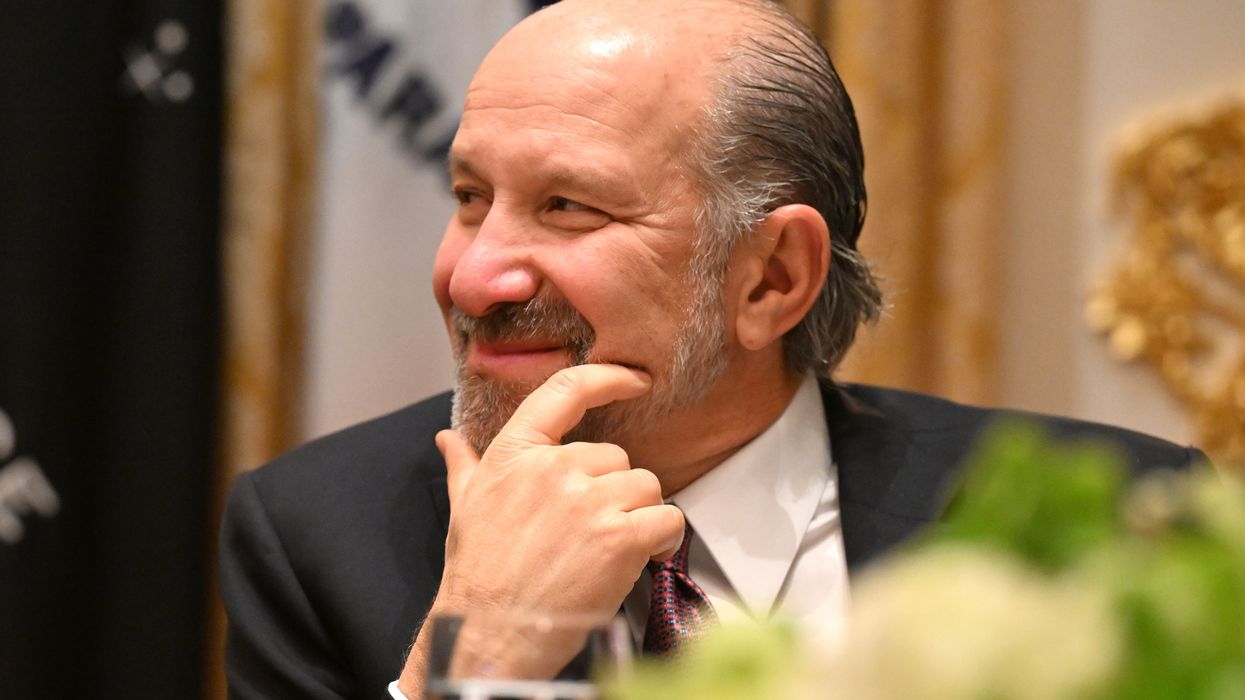
"Data centers don't use water," laughed Howard Lutnick during an interview. In fact, across seven states, they rely on about 3.4 trillion gallons of it per year.
President Donald Trump's commerce secretary, Howard Lutnick, told a brazen lie on Wednesday while trying to defend the administration's support for rapid data center expansion amid growing public backlash from voters concerned about their extreme electricity and water use.
Asked on CNBC's "SquawkBox" about how politicians in both parties were responding to voter outrage, Lutnick laughed the concerns off.
"One of my favorite things is when people talk about data centers using water," Lutnick chuckled. "The number one product in America that uses water is cattle."
"I mean, data centers don't use water," Lutnick continued. "This is propaganda by our adversaries to try to slow us down."
Lutnick is correct that beef cattle production—which uses about 6 trillion gallons per year, according to the US Department of Agriculture—involves much greater amounts of water consumption than data centers.
But the contention that data centers "don't use water" is egregiously false. A report out Tuesday from the Pacific Institute, a nonprofit water policy research organization, found that data centers in the US directly use anywhere from 270 to 3.9 million gallons of water per day.
About 74% of that water, which is withdrawn from local sources near the data center, is consumed rather than returned to the same watershed, the report found.
The Lawrence Berkeley National Laboratory estimated that in 2023, US data centers directly consumed about 17 billion gallons of water. Since then, data center capacity in the US has more than doubled, according to the commercial real estate firm CBRE.
Water directly consumed by data centers also only represents a fraction of their overall demand. Most of the water being used is not directly pumped into the centers to cool servers, but is used for the power generation that supplies the centers.
A report out last month from the corporate sustainability organization Ceres found that across the seven US states that host about half of all US data centers—Virginia, Texas, California, Illinois, Georgia, Ohio, and Arizona—the facilities depend on 3.4 trillion gallons of freshwater for electricity generation per year.
Lutnick's comparison of national water use between data centers and cattle farming also overlooks that the effects are often concentrated heavily in the areas where data centers are located.
In Newton County, Georgia, for instance, families told The New York Times that shortly after Meta broke ground on a $750 million data center project in 2018, their taps began to run dry, and water rates soared. According to Meta's environmental data, the center withdrew about 146 megaliters, or 38.6 million gallons, of water in 2024.
In Fayette County, Georgia, residents complained of low water pressure only to find that a QTS data center had covertly used about 29 million gallons of water without paying for it, far exceeding the amount agreed upon during the planning process. The company was ultimately required to pay back nearly $150,000.
In New Carlisle, Indiana, about a dozen residents reported that their wells had gone dry during the construction of Amazon Web Services' massive data center campus. One resident told the Indy Star that she'd gone 18 months without running water and had to bathe using bottled water from the store.
Lutnick's claim doesn't just contradict the facts, but his own statements from just over a year ago on Fox News, as MeidasTouch senior digital editor Acyn Torabi noted.
Attempting to promote data centers as a vehicle for job growth, the secretary emphasized that "these AI things suck water" and that they will "need a plumber."
The Trump administration has made the rapid expansion of data centers central to its "AI Action Plan." But Trump and his team have struggled to sell the vision to voters, including in their own party.
A national survey by the Annenberg Public Policy Center last month found that 61% of voters oppose the construction of new data centers in their area. That included 69% of Democrats, but also 54% of Republicans, and 53% of independents.
Critics described Lutnick's dismissive remarks about voters' concerns as a sign of how out of touch the administration was with the public on this issue and how much their data center PR push is failing.
Rep. Seth Magaziner (D-RI) said it showed that "our government is being run by morons."
"These seeming conflicts raise serious questions about whether these federal employees are beholden to the American people or to the interests of private for-profit corporations," said one of the authors.
More than 1-in-4 senior appointees in President Donald Trump’s Department of Commerce have significant “conflicts of interest,” according to a report published on Wednesday, pointing to the same sort of corporate capture that is rampant across the administration.
The watchdog group Public Citizen reviewed financial disclosure forms for 112 senior officials in the department, which is dedicated to overseeing industry and economic growth. It found that at least 30 of them have substantial ties to the very industries that the department is tasked with regulating.
It’s a pattern seen across the Trump administration, where fossil fuel lobbyists and insiders dominate the Energy and Interior departments, as well as the Environmental Protection Agency.
But as the new report, written by journalist Zach Everson and researcher Douglas S. Pasternak, explains, the Commerce Department is “unique in its active engagement in the economy to benefit particular companies, including those for whom its current officials once worked.”
“The conflicts of interest identified in this report put Americans at risk,” said Pasternak, the research director for Public Citizen’s Trump Accountability Project.
The entanglements start at the top, with the billionaire Commerce Secretary Howard Lutnick, who has ties to more than 800 different businesses from his decades as the CEO of the Wall Street financial services firm Cantor Fitzgerald, with interests spanning finance, real estate, crypto, AI, tech, satellites, energy, and gaming—many of which could be affected by Commerce policy.
While Lutnick promised to sell his business interests within 90 days of being confirmed at the department, he missed that deadline by more than four months. And instead of putting his financial stake into a blind trust, he sold his interest in the fund to trusts benefiting his four children.
As Commerce Secretary, Lutnick has engaged in actions that the report says "have a clear conflict with his family’s financial interests and appear to violate ethical norms for government employees."
In particular, it highlights his role in pushing for the dramatic expansion of artificial intelligence data centers across the US, and pressured other governments, including that of the United Arab Emirates, to invest in them.
At the same time, his former company, Newmark, where his son now sits on the board of directors, has facilitated more than $25 billion in AI-data center deals.
Similarly, Commerce invested over $1.6 billion in the mineral company USA Rare Earth Inc. while Cantor was leading the company's private fundraising.
Lutnick has also been at the center of the Trump administration's efforts to promote cryptocurrency and develop regulatory policy around it. This could impact the blockchain platform Tether, which hosts the world's largest stablecoin, for which Cantor acts as the primary custodian for more than $180 billion worth of reserves.
Beyond Lutnick, the department is crawling with ex-industry employees, lobbyists, and corporate lawyers now embedded in the regulation of their former clients.
Joyce Meyer, formerly a top lobbyist for the life insurance industry, now serves as undersecretary for economic affairs, where she oversees the Bureau of Economic Analysis and the US Census Bureau, which produce economic reports that shape federal tax, interest, and spending policy.
The current undersecretary for industry and security, Jeffrey Kessler—who oversees export controls on technology, software, commodities, and other equipment—previously worked as an attorney for the law firm WilmerHale, where he represented dozens of clients across industries he now regulates, including Boeing, Meta, and Eli Lilly.
One of the people in charge of regulating the sale of defense technology abroad, Joe Bartlett, who serves as deputy undersecretary at the Bureau of Industry and Security, came from one of the US military’s biggest drone makers, Skydio, which is subject to BIS export controls.
The report also identifies multiple other employees who have worked for weather data companies that have pushed to privatize forecasts now provided for free by the National Oceanic and Atmospheric Administration.
"It is unclear if these officials are serving the American public as their positions require or attempting to enrich their former employers or potential future employers, and ultimately themselves," Pasternak said. "These seeming conflicts raise serious questions about whether these federal employees are beholden to the American people or to the interests of private for-profit corporations.”
Everson added that the department "is meant to work in the interest of the people, not in the interest of a few select billionaires.”
He said, "Political appointees within the Trump administration need to be subject to standards of ethical and financial conduct which prevent them from using their positions of power to skim off the top.”
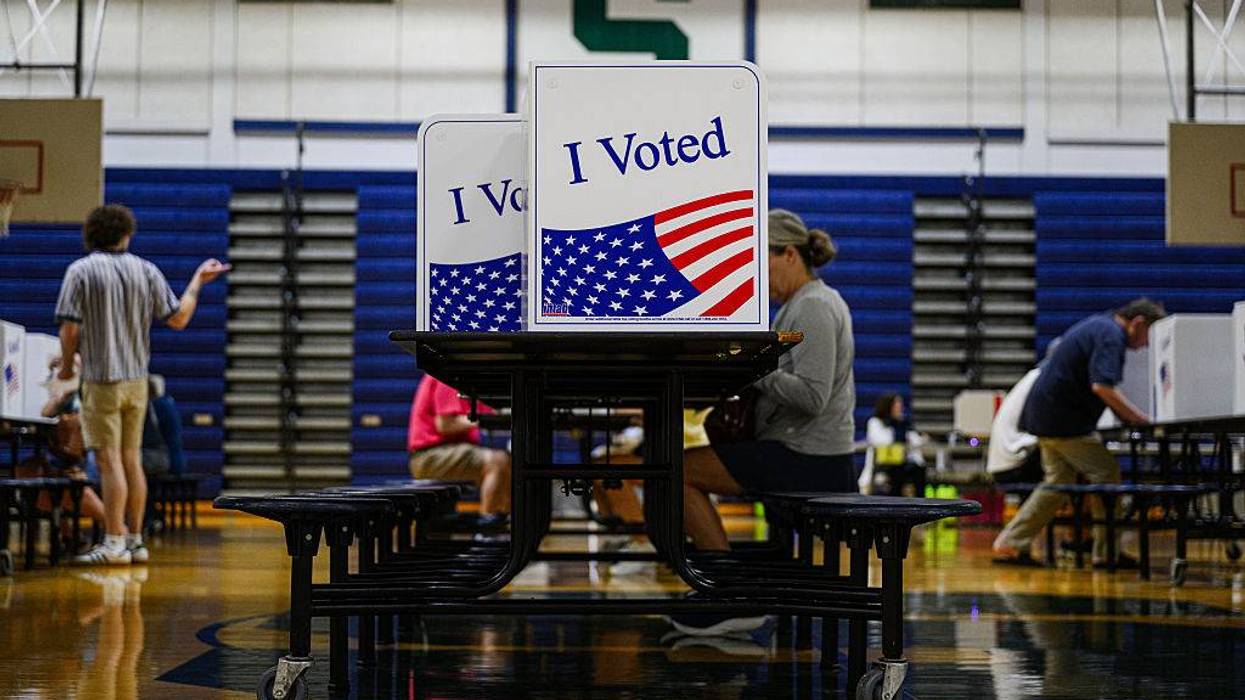
The voting machines ban was part of a broader effort aimed at letting the federal government "take control over elections from US states," reported Reuters.
A group of Trump administration officials last year pushed a plan to ban half of voting machines currently used in the US based on disproven conspiracy theories about the 2020 election being stolen by former President Joe Biden.
According to a Friday report from Reuters, Trump adviser Kurt Olsen asked the US Department of Commerce to declare components of machines produced by Dominion Voting Systems to be national security risks.
Reuters' sources said that Olsen's idea came as part of a brainstorming session "about how the federal government could take control over elections from US states, an idea publicly aired by Trump."
Some officials at the Commerce Department began exploring legal justifications that could be used to ban half of all voting machines, but the effort ended because "Olsen and other administration staffers working with him failed to provide evidence to justify such a move," Reuters reported.
In place of the Dominion voting machines, Olsen pushed a scheme to force all affected states to hand count ballots, a process that some election experts say would be both more time consuming and prone to error.
Alex Halderman, a University of Michigan computer science professor, told Reuters that "changing to hand counting would be chaotic,” adding that "it might facilitate cheating.”
Olsen, a former Trump campaign lawyer who tried to overturn the results of the 2020 election, was hired by the White House last year to investigate that very same election, which Trump lost to Biden by 4.5 percentage points in the popular vote and by 74 votes in the US electoral college.
The report on the election machine-banning effort comes as Trump has pushed an unprecedented mid-decade gerrymandering scheme, which has resulted in an electoral map that elections analyst G. Elliot Morris projects could result in Republicans maintaining control of the US House of Representatives while losing the nationwide popular vote by three points.
Democrats have accused the president of pushing to rig the 2026 midterm elections.
The president also issued an executive order that places new restrictions on mail-in voting, which the president has falsely claimed was used by Democrats to steal the 2020 election from him.
Additionally, Trump and allies such as right-wing podcaster Steve Bannin have suggested deploying federal immigration agents to polling places in November, a move that critics contend would be an unprecedented and unconstitutional federal voter intimidation campaign.
"Never in modern US history has the office intersected so broadly and deeply with the financial interests of the commerce secretary’s own family," according to the New York Times.
A group of Democratic lawmakers has called for the Commerce Department to investigate whether its billionaire secretary, Howard Lutnick, is improperly boosting artificial intelligence data centers that "stand to enrich his entire family."
The group of 25 House and Senate Democrats, led by Sen. Elizabeth Warren (D-Mass.) and Rep. Madeleine Dean (D-Pa.), sent a letter on Thursday urging the department's acting inspector general, Duane Townsend, to review whether Lutnick violated any part of the ethics agreement he signed following his nomination.
That agreement required him to divest his stake in the financial services firm Cantor Fitzgerald, which he had owned and led for decades. Cantor owns the Newmark Group, a real estate broker that facilitates leases for AI data centers.
Lutnick stepped down from his position as CEO in February, handing his financial stake in the company to his adult sons, Brandon and Kyle.
Though the transfer of his stake was supposed to happen in May, records show he did not do so until October, after receiving an ethics waiver from the Trump administration that allowed him to continue working on matters that could affect the company.
The lawmakers described some of these potential conflicts in the letter, many of which were revealed by a New York Times investigation last month:
Multiple press reports indicate that, in his capacity as head of the Commerce Department, Secretary Lutnick has helped boost AI data centers in ways that will likely enrich his own family. He has made public appearances promoting data center projects—including at least one that his family's company has worked on.
Furthermore, Secretary Lutnick has reportedly pressured foreign governments to invest in the US data center industry. For example, as part of a recent AI chips export deal with the United Arab Emirates (UAE), Secretary Lutnick reportedly pushed the UAE to "build data centers in America,” in exchange for the United States loosening export control restrictions on certain advanced chips. The Trump administration ultimately approved this deal, under which the Lutnick-backed Newmark Group is primed to profit from that Emirati investment.
Similarly, as part of another trade deal, Secretary Lutnick reportedly pushed South Korea to invest hundreds of billions of dollars in the United States. One startup vying for some of South Korea's investment has paid the Lutnick family's companies millions in fees to help it secure financing and land for its new data center.
Though businesspeople have often occupied the role of Commerce Secretary, the Times reported last month that "never in modern US history has the office intersected so broadly and deeply with the financial interests of the commerce secretary’s own family, according to interviews with ethics lawyers and historians."
According to the company's most recent quarterly earnings report, Newmark has completed more than $25 billion in data center deals over the past 12 months, resulting in its most lucrative year in the firm's history.
Citing evidence that the construction of AI data centers considerably spikes energy costs for consumers, the lawmakers said, "There is substantial public interest in ensuring that Secretary Lutnick is not violating federal ethics law to propel data centers that will be profitable for his family while making life more expensive for working Americans."

Campaign Legal Center wants ethics officials to probe the "apparently flagrant violation of federal law."
The nonpartisan legal group on Friday filed a complaint with the Office of Government Ethics and the designated agency ethics official at the U.S. Department of Commerce, urging them to investigate comments U.S. Commerce Secretary Howard Lutnick made on Fox News earlier this week when he exhorted viewers to "buy Tesla," speaking of the stock of billionaire Elon Musk's electric vehicle company.
Campaign Legal Center (CLC) wants officials to look into whether Lutnick's comments on Fox News—which the group called an "apparently flagrant violation of federal law"—did violate the federal ban on government officials using their public positions for private enrichment.
According to the complaint, executive branch employees "may not use their public office for their own private gain; [or] for the endorsement of any product, service, or enterprise."
Other critics responded to the billionaire commerce secretary's comments on Fox by pointing out that, as one watchdog leader put it, "he conveniently forgot to mention his family business empire holds nearly $840 million in the company."
Elon Musk, the CEO of Tesla and also the largest shareholder, has been deputized by U.S. President Donald Trump to help oversee efforts to cut federal programs and personnel and is playing a core role in his administration.
"The president's Cabinet members take an oath to serve the American people, and with that oath comes the ability and privilege to exercise a vast amount of power," said Kedric Payne, vice president, general counsel, and senior director of ethics at Campaign Legal Center in a statement on Thursday.
"The Office of Government Ethics and Commerce ethics officials should hold Lutnick accountable and reassure the public that their officials will face consequences if they use their public office to enrich themselves or their allies," said Payne.
Lutnick made the comments when he was speaking on Fox News' "Jesse Watters Primetime" on Wednesday.
"Buy Tesla. It's unbelievable that this guy's stock is this cheap. It'll never be this cheap again... Who wouldn't invest in Elon Musk?" he told viewers.
Earlier this month, Trump hosted a Tesla car show at the White House. His and Lutnick's stunts come as the company faces protests over Musk's work for the administration and falling stock prices.
Tesla stock has tumbled since it reached a post-election high in December 2024. Axios reported Thursday that shares have fallen 42% so far this year. Axios also reported that Tesla shares fell on Thursday after Lutnick made his comments on Fox News.

One critic noted that the billionaire commerce secretary "conveniently forgot to mention his family business empire holds nearly $840 million in the company" led by government-gutting Elon Musk.
"Buy Tesla. It's unbelievable that this guy's stock is this cheap. It'll never be this cheap again... Who wouldn't invest in Elon Musk?"
That's what U.S. President Donald Trump's billionaire commerce secretary, Howard Lutnick, told viewers of Fox News' "Jesse Watters Primetime" on Wednesday—comments that watchdog groups swiftly condemned as unethical and illegal.
In addition to serving as CEO of companies including electric vehicle maker Tesla, Musk heads Trump's Department of Government Efficiency, which is leading the administration's sweeping attack on the federal bureaucracy. Musk is also the richest person on Earth, with an estimated net worth of $310-327.5 billion, some of which he put toward electing the Republican president
Earlier this month, Trump hosted a Tesla car show at the White House. His and Lutnick's stunts come as the company faces protests over Musk's work for the administration. Axios reported that "Tesla shares were down about 1.7% in premarket trading Thursday to $231.75. The stock is down 5% in the last five days, 35% in the last month, and 42% so far this year."
The commerce secretary not only urged Fox's audience to invest in Tesla, he also heaped praise on Musk, calling him "probably the best entrepreneur, the best technologist, the best leader of any set of companies in America."
Responding to Lutnick's remarks in a Thursday statement, Kedric Payne, vice president, general counsel, and senior director for ethics at Campaign Legal Center, said that "the president's Cabinet members take an oath to serve the American people, and with that oath comes the ability and privilege to exercise a vast amount of power."
"Such power is intended to promote the public interest," Payne continued, stressing that officials like the commerce leader are "legally barred" from promoting their personal business interests. "Secretary Lutnick's actions violate the ethics rules that were enacted to hold public officials accountable to the American people. His statement is part of a pattern of behavior showing that Trump's indifference to ethics is trickling down to his most senior officials."
"The American people deserve a government that prioritizes public good," he added. "Most people will conclude that promoting a stock is not tied to any public good and ethics laws agree. The Office of Government Ethics and Commerce ethics officials should hold Lutnick accountable and reassure the public that their officials will face consequences if they use their public office to enrich themselves or their allies."
Tony Carrk, executive director of the watchdog Accountable.US, not only criticized Lutnick's remarks but also highlighted how the Cabinet member could benefit from them, declaring that "this is what abuse of power for personal and family gain looks like."
"When the billionaire commerce secretary used the Trump administration bully pulpit to try to rocket Tesla stock value, he conveniently forgot to mention his family business empire holds nearly $840 million in the company," Carrk explained. "While Secretary Lutnick is busy making TV appearances in a government capacity to potentially enrich his family business and his close ally Elon Musk, the rollercoaster Trump tariff policies he helped orchestrate are doing little to lower costs for working people—in fact quite the opposite."
Asked about Lutnick's comments on Thursday, White House Press Secretary Karoline Leavitt said, "I think the commerce secretary was reiterating that the president supports an American-made company like Tesla, who produces a very good product for the American people, which was beloved by the American people, particularly Democrats, until Elon Musk decided to vote for Donald Trump."
"And now we have seen despicable and unacceptable violence taking place across our country at Telsa dealerships, against workers, employees, and also innocent Americans who drive these vehicles," she added. "It's actually a scary time in our country because of this political violence from the left, and the White House and the president's entire administration condemn it wholeheartedly."
As outrage over the Trump administration's promotion of Musk's company mounted on Thursday, the National Highway Traffic Safety Administration
recalled more than 46,000 of Tesla's Cybertrucks—or nearly all of them on U.S. roads—due to concerns about an exterior panel that can detach while driving, creating safety problems.

"Any attack on the Postal Service would be part of the billionaire oligarch coup," said the president of the American Postal Workers Union.
President Donald Trump's reported plan to terminate every member of the U.S. Postal Service Board of Governors and bring the independent and highly popular USPS under his administration's control drew immediate outrage from the world's largest postal union, which said the floated takeover would be illegal and destructive to public mail operations.
"Any attack on the Postal Service would be part of the billionaire oligarch coup, directed not just at the postal workers our union represents, but the millions of Americans who rely on the critical public service our members provide every single day," said Mark Dimondstein, president of the American Postal Workers Union (APWU), which represents hundreds of thousands of current and retired postal workers.
The union leader's statement came after The Washington Post reported Thursday that Trump is preparing to "dissolve the leadership of the U.S. Postal Service and absorb the independent mail agency into his administration, potentially throwing the 250-year-old mail provider and trillions of dollars of e-commerce transactions into turmoil."
"Trump is expected to issue an executive order as soon as this week to fire the members of the Postal Service's governing board and place the agency under the control of the Commerce Department and Secretary Howard Lutnick," the Post reported, citing unnamed sources.
Lutnick, who was confirmed by the U.S. Senate earlier this week, is a billionaire with glaring conflicts of interest.
The Post noted that Trump has spoken publicly about the possibility of privatizing the USPS, which is currently led by Louis DeJoy. On Tuesday, DeJoy—who was initially nominated for the post by Trump and has worked to gut the Postal Service from within during his tenure—asked the USPS board to begin the process of finding his successor.
The new reporting prompted warnings that Trump, who lied relentlessly about mail-in voting in the run-up to and aftermath of the 2020 election, wants to disrupt ballot deliveries by bringing the USPS under his control.
"Trump's reported outrage that the Postal Service was able to successfully deliver Americans' mail-in ballots in 2020 is exceptionally alarming when considering the same man who helped incite an insurrection based on evidence-free election denialism now wants to be in control of millions of absentee ballots," said Tony Carrk, executive director of the watchdog group Accountable.US.
"President Trump wants to consolidate power further and control access to your mail, all while making his wealthy donors richer in the process," Carrk added. "All eyes should be on conservative senators who represent rural communities who will bear the brunt of postal privatization."
trump wants to be able to tell the USPS not to deliver ballots to blue states www.washingtonpost.com/business/202...
[image or embed]
— jamelle (@jamellebouie.net) February 20, 2025 at 9:47 PM
Rep. Gerry Connolly (D-Va.), the top Democrat on the House Oversight Committee, said in a statement Thursday that privatizing the USPS would be "an attack on Americans' access to critical information, benefits, and lifesaving medical care."
"It is clear that Trump and his cronies value lining their own pockets more than the lives and connection of the American public," said Connolly.
According to the Post, the USPS board was "planning to fight Trump's order" and held an "emergency meeting" Thursday at which the board "retained outside counsel and gave instructions to sue the White House if the president were to remove members of the board or attempt to alter the agency's independent status."
"Two of the group's GOP members—Derek Kan, a former Trump administration official, and Mike Duncan, a former chair of the Republican National Committee—were not in attendance," the Post reported.
Dimondstein voiced support for the postal board's plan to fight any Trump takeover attempt, saying the union backs all "efforts to defend our national treasure."
"If this reporting is true, it would be an outrageous, unlawful attack on a storied national treasure, enshrined in the Constitution and created by Congress to serve every American home and business equally," said Dimondstein. "The law created the postal board of Governors, and empowers it and it alone to hire and fire the postmaster general. Any effort by the administration to remove the board or fire postal executives is clearly illegal."
"The Postal Service is owned by the people, for the benefit of the people. Postal workers are dedicated to our mission to serve, no matter who sits in the White House or in Congress," the union leader added. "Postal workers and our unions will join with the public to fight for the vibrant, independent, and public Postal Service we all deserve."

"One reason why we do not have universal healthcare? It was more politically expedient to make it an employer-linked perk," said one policy expert. "We're still paying for that decision today."
A new Biden administration policy that will reserve federal manufacturing funds for companies that help their employees access childcare will only perpetuate a system in which far too many U.S. families struggle to find care, one expert on the crisis said Monday.
The Commerce Department on Tuesday unveiled a new rule tied to the CHIPS and Science Act, which includes $39 billion in federal subsidies to invest in semiconductor manufacturing.
That money would only be available to companies that help their employees access childcare in a number of potential ways, including building childcare centers exclusively for workers' families near factories, paying existing care providers to make space for the children of employers, or subsidizing childcare costs.
Commerce Secretary Gina Raimondo assured the public that the policy will ensure the semiconductor industry can "expand the labor force" and recruit more women, but childcare policy expert Elliot Haspel raised a number of questions about the plan, including whether the Biden administration is aware of the current shortage of childcare workers in the U.S. and the shortage of available spaces for children and daycare centers that it's caused.
"Do any of these companies need to ensure [childcare] educators get a competitive wage?" asked Haspel. "What happens if their workers just end up on waiting lists? Doesn't feel fully thought out."
"Making childcare a job-linked benefit means that when you lose your job, you lose your childcare and your kid loses a caregiver."
As The New York Times reported Monday, nearly 58,000 childcare jobs have been lost since the coronavirus pandemic began, forcing centers to reduce their capacity. The shortage of childcare workers has been linked to chronically low pay in the industry, with the Bureau of Labor Statistics estimating that employees make an average of $27,680 per year or $13.31 per hour.
A Household Pulse Survey taken by the U.S. Census Bureau in January 2022 found that 1 in 4 families with children under the age of five were unable to secure childcare, and a study by the Bipartisan Policy Center in 2020 found a shortage of three million open childcare slots across 35 states. Nationwide, the average time a family spends on waiting lists for childcare is 18 months. Once families do secure a spot, more than half spend at least 20% of their income on childcare, according to the First Five Years Fund.
Haspel, the author of Crawling Behind: America's Child Care Crisis and How to Fix It, expressed appreciation for the administration's call for employers to provide on-site childcare, which he said "helps parents and is good for businesses."
However, he warned, tying childcare to employment instead of treating it as a public good like K-12 education risks leaving millions of struggling families out and causing the childcare crisis to snowball into an even bigger problem, just as the U.S. healthcare system has since the for-profit insurance system was established after World War II.
"One reason why we do not have universal healthcare? It was more politically expedient to make it an employer-linked perk," said Haspel. "The idea caught on, and the train left the station. We're still paying for that decision today."
As Haspel explained at Early Learning Nation in November:
While no longer widely remarked upon, in 1945 President Truman proposed a national health insurance program that would have been folded into the Social Security system. The proposal would have created a comprehensive, universal, single-payer system akin to the U.K.'s National Health Service which emerged in the same post-war period.
Truman's proposal set off a vicious debate (including lots of accusations about socialism, and the American Medical Association launching a multi-million-dollar campaign to oppose it)...
Of course, we know the end of this story. By 1958, 75% of Americans had an employer-sponsored plan. This choice had consequences. The entrenchment of health insurance as a private job-linked issue has led to a dysfunctional, unpopular, expensive, ineffective healthcare system—and one which has proven almost impossible to overhaul. People don't like the system but are used to the linkage, and the health insurance lobby is a mightily powerful opponent.
The Biden administration is unveiling its CHIPS-linked childcare scheme more than a year after right-wing Sens. Joe Manchin (D-W.Va.) and Kyrsten Sinema (I-Ariz.) opposed a number of proposals to invest in the economic well-being of U.S. families, including through subsidized childcare.
As the Times reported, Raimondo told staffers after the Democratic Party's failure to pass childcare legislation as part of the Inflation Reduction Act last summer, “If Congress wasn't going to do what they should have done, we're going to do it in implementation" of bills that President Joe Biden did sign into law.
"Something is not always better than nothing," tweeted Haspel. "I'm as upset as anyone that real childcare reform died thanks to unified opposition from the GOP and then Joe Manchin. But we must fight for a system that works rather than accept a fatally flawed premise."
Establishing a system in which childcare is linked to employment raises questions about what will happen to a worker's children if they lose their job or if a company changes its benefits, he added.
"You don't want these things bundled with employment for the obvious reason that people want these services to be continuous as they move from job to job," Matt Bruenig of the People's Policy Project concurred.
To solve the childcare crisis, said Haspel, the care of children must be treated as a public good—one that's paid for through fair taxation of corporations.
"Employers SHOULD have skin in the game for childcare," he added, but the way to ensure they do is not through "an ad hoc move."
"Levy taxes and use those dollars to build a system that works for everyone!" he said.
He compared the Biden administration's plan to one in which companies would be required to ensure their employees' children have access to elementary education, if the federal government didn't provide public schools.
"The question isn't 'on site childcare or no'," said Haspel, "it's whether we support on-site childcare as part of a comprehensive, publicly-funded childcare system that provides options for all parents, or simply as a discrete perk for a given number of employees working at a given site until they leave/are fired from their job or the company decides they don't want to run a center anymore."