

SUBSCRIBE TO OUR FREE NEWSLETTER
Daily news & progressive opinion—funded by the people, not the corporations—delivered straight to your inbox.
5
#000000
#FFFFFF
To donate by check, phone, or other method, see our More Ways to Give page.
Daily news & progressive opinion—funded by the people, not the corporations—delivered straight to your inbox.

"The fact that Trump immediately resorts to new threats is further proof that stronger EU-Canada cooperation is both wise and necessary," said a Belgian member of the European Parliament.
In the wake of President Donald Trump's threats of annexation and economic warfare, Canada is distancing itself from the United States and moving toward a first-of-its-kind "associate membership" with the European Union. Trump suggested on Wednesday that this could be a "hostile act."
European Commission President Ursula von der Leyen first introduced the idea earlier that day of Canada deepening its ties with the EU economic bloc during a meeting of the European Parliament in Strasbourg, France.
"Democracies have the freedom to choose with whom to work," Von der Leyen said, suggesting that an "Alliance for the Future" between the EU and Canada would expand cooperation on technology, economic security, and military industry, among other critical areas.
She described such cooperation as a necessity in an "openly hostile world."
This was, in part, a not-so-subtle dig at Trump, who has antagonized Canada during his second term by slapping 50% tariffs on roughly $20 billion of Canadian imports and repeatedly floating the idea of making it the "51st state."
Europe, too, has been targeted by Trump's trade war, while the president has repeatedly threatened the sovereignty of Greenland, an autonomous territory of Denmark, by suggesting the United States could take control of it—including by military force.
An "associate membership" in the EU for a non-European nation has no formal basis in EU statute. One EU diplomat told Reuters that "nobody really knows what it means."
However, Trump described it as an unmistakable slight and issued more threats.
"I think it’s laughable, the whole thing with Canada," he told reporters on Wednesday. "Canada’s been a terrible trade partner."
If the two reached an agreement, Trump said he may retaliate further, heightening the tariffs that have led to sharp declines in European exports to the US and driven up costs for American consumers, especially low-income households.
"If they do that, if I think it’s at all a hostile act, I will put very serious tariffs or stop trading with Europe on many things," Trump said. "So if they do that, if Europe does that with a bad intention, if it’s a good intention, that’s fine.”
"If it’s a bad intention, we’ll put very heavy tariffs on Europe," he reiterated.
Speaking at the European Parliament on Thursday, Canadian Prime Minister Mark Carney—whose compatriots are now more inclined to view the US as an "enemy" than an "ally," according to a recent poll—said of Von der Leyen's proposal, "We welcome this ambition."
While he did not discuss the specifics of becoming an associate member, he agreed that Canada's relationship with the EU should move beyond the current Canada-European Union Comprehensive Economic and Trade Agreement (CETA).
"Canada and Europe should secure our strategic autonomy through deep cooperation in the full range of strategic capabilities, including critical minerals, defense industrial capacity, AI and compute, energy security, space, and payments," he said.
Carney stressed that the act was not one of hostility toward the United States and that he did not seek to form "a third bloc in order to become a great-power rival." But he also seemed to draw a contrast with Trump's bellicosity.
"We do not seek power to dominate others," he said. "On the contrary, we are pursuing resilience so that no one can control our open markets, impair our sovereignty, threaten our territorial integrity, or undermine our freedoms, our democracies, our rule of law."
Trump has not yet specified what tariff rate he'd seek to impose against Europe or what would signify that the alliance with Canada had a "bad intention."
But Kathleen Van Brempt, a Belgian social-democratic politician and member of the European Parliament, said that "the fact that Trump immediately resorts to new threats is further proof that stronger EU-Canada cooperation is both wise and necessary."
"He does not find the idea ridiculous; he fears it because it would weaken his divide-and-conquer tactics and his ability to wield illegal tariffs as political and economic weapons," she wrote on social media.
"He might not react when you lift a finger," she added. "But he will understand when you raise a fist."
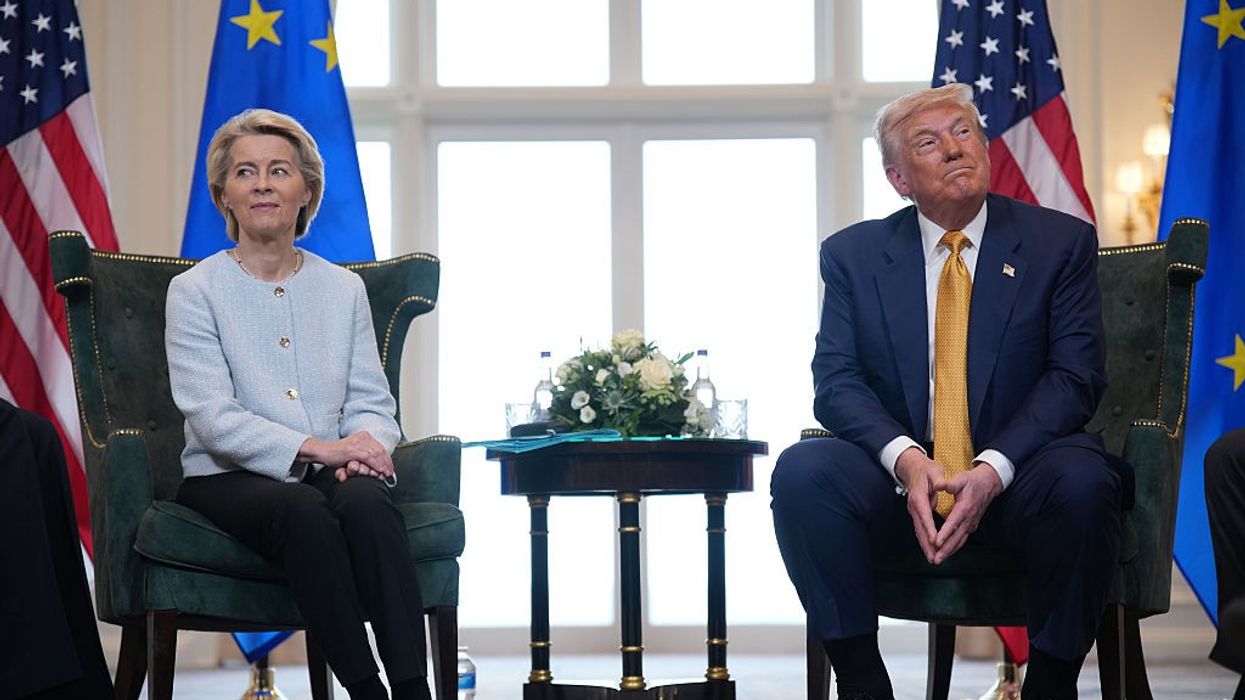
Europe should be making no concessions of any kind whatsoever to Trump. European countries are capable of weathering the storm.
The European Union and the U.S. administration have reached a deal on international trade. Is it a fair deal for both sides? Also, what do Europeans think of President Donald Trump? And what about France’s decision to recognize a Palestinian state? What does it actually mean?
Political scientist, political economist, author, and journalist C.J. Polychroniou tackles these questions in an interview with the French-Greek independent journalist Alexandra Boutri.
Alexandra Boutri: A new trade agreement has been reached between the United States and E.U. What’s your take on this deal?
C.J. Polychroniou: It’s an awful deal for the Europeans and a huge win for the Trump administration. The deal imposes a 15% tariff on all E.U. goods to the U.S. and compels the E.U. to boost its investment in the U.S. by $600 billion and also to buy $750 billion in U.S. energy products. With this awful deal, the Europeans have shown yet again that they lack a backbone to stand up to Trump’s bullying and intimidation tactics. In a way, the deal also reinforces the long-held view that Europe is essentially a vassal of the United States. Indeed, it is shocking to see E.U. officials trying to convince the public that the deal is a good one because it avoids trade chaos. The reality, however, is that the continent will now be even more dependent on the U.S. than ever before because it will become E.U.’s new Russia for gas.
But allow me to add something else to the question of the lack of a backbone on the part of Europe when it comes to dealing with Trump and the United States in general. Trump is also trying to push Europeans to adopt a more aggressive stance on immigration, and let’s not forget that the Dublin system has already turned Europe into a “fortress.” Trump said that immigration is “killing Europe” and urged European leaders to “stop the horrible invasion that’s happening to Europe.” This is white-nationalist doomerism, but it's hardly breaking news that Trump is a racist with strong fascist impulses. Trumpism is a racist, neofascistic political movement led naturally by a despicable human being, a self-aggrandizing bombastic buffoon. Yet, virtually no one among Europe’s political leaders took issue with him over his racist comments. To sum it up, my own thinking on the matter of E.U.-U.S. relations at the present juncture is that Europe should be making no concessions of any kind whatsoever to Trump. European countries are capable of weathering the storm. Trump truly needed badly a trade deal with the E.U., as the U.S. economy is more fragile than most people think. Instead, however, the E.U. simply succumbed to Trump's bullying without even putting up a fight.
Alexandra Boutri: Trump’s visit to Scotland was met with protests and demonstrations in Edinburgh and Aberdeen. Would you say that Trump is unpopular in Europe?
C.J. Polychroniou: Oh, absolutely. He is extremely unpopular in most major European countries, including Scotland and England. Most Europeans see him as an enemy. Yet it is disheartening to watch Europe’s leaders bending over backward to appease Donald Trump, as they did with this awful trade deal and with a plan to increase military spending at the level that Trump wanted. E.U. citizens are totally opposed to increased military spending. A recent Eurobarometer poll showed that less than 25% of E.U. citizens want more money spent on military purposes. Only in some countries close to Russia, like Estonia, Finland, and Lithuania, was there support for more defense spending.
Alexandra Boutri: What do you make of French President Emmanuel Macron’s announcement that France will recognize a Palestinian state?
C.J. Polychroniou: It’s further indication that Israel has become a pariah state over the Gaza genocide. Of course, Israeli officials continue to deny that Israel is committing genocide in Gaza. Israel even denies causing mass starvation in Gaza. The whole world is lying about Gaza--except Israeli Prime Minister Benjamin Netanyahu, his far-right ministers, and the Israel Defense Forces, “the most (im)moral army in the world.” But you know the story: Anyone who criticizes Israel is an antisemite. Jews who do so are “self-hating” Jews. Like Noam Chomsky, who was one of the first in the U.S. to face this accusation, or Daniel Blatman, the Israeli Holocaust historian and head of the Institute for Contemporary Jewry at the Hebrew University of Jerusalem who dares to speak of an Israeli genocide in Gaza. Of course, there is antisemitism in the world, just like there is Islamophobia. But it’s a vile form of propaganda to conflate criticism of Israel with antisemitism.
As far as Macron’s decision to recognize a Palestinian state is concerned, it’s supposed to be sending a message to Israel that its actions in Gaza are reprehensible and that it is now paying a political price. The irony here is that France and most other European countries are fully complicit in the crimes committed by the Netanyahu government in Gaza and even in the West Bank. Israel would not have been in a position to commit war crimes and genocide against the Palestinian people if it weren’t for the political, economic, and military support that it keeps receiving from the U.S. and other major Western countries like Germany, France, and the U.K.
At any rate, let’s not forget that the overwhelming majorly of the U.N. member states (more than 140 countries) already recognize a Palestinian state, including a dozen or so in Europe. But what is the world doing to stop the Israeli genocide? Italy’s foreign minister, Antonio Tajani, said just a few days ago that “we can no longer accept massacres and famine.” So, what is the Italian government doing about it? Has it imposed any sanctions against Israel? Has it severed its diplomatic relations with the Netanyahu government? Nothing of the sort. In fact, Italy’s prime minister, Giorgia Meloni, found it necessary to criticize France’s decision to recognize a Palestinian state.
Western hypocrisy knows no limits. It is indeed off the mark to speak of a “moral collapse” of Western powers on account of Gaza. There has always been a moral void at the heart of the Western political establishment. To be sure, the Western legacy of colonialism by European powers continues to this day. Moreover, if the intent of Macron’s decision to recognize a Palestinian state is in order to rekindle interest in the long-defunct two-state solution, I fear that the French president is out of touch with current political developments. Israel is ramping up settlement and annexation in the West Bank. The “Greater Israel” plan is what has been happening on the ground for many years now, and the two-state solution is dead as a doornail.
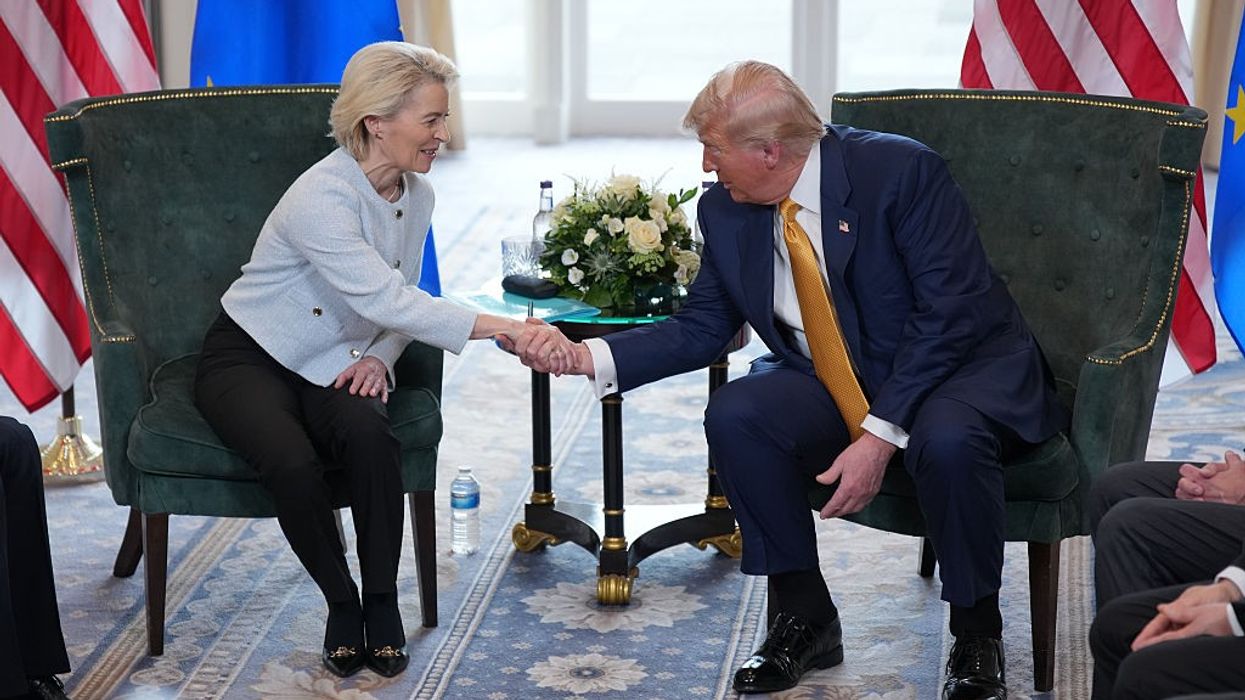
"Von der Leyen has just handed Trump the biggest victory he could hope for," said one critic. "We will all pay the price because in the process, she has strengthened him and his fascist project. Deeply depressing."
The leadership of the European Union on Sunday struck a deal with U.S. President Donald Trump that will leave tariffs significantly higher for many of the bloc's exports—including cars, pharmaceuticals, and semiconductors—and at 50% for steel and aluminum.
News of the deal was met with sharp criticism, including from some European officials. François Bayrou, France's prime minister, wrote on social media that "it is a dark day when an alliance of free peoples, gathered to affirm their values and defend their interests, resolves to submission."
Nick Dearden, director of the United Kingdom-based advocacy group Global Justice Now, warned that European Commission President Ursula von der Leyen "has just handed Trump the biggest victory he could hope for."
"We will all pay the price because in the process, she has strengthened him and his fascist project. Deeply depressing," Dearden wrote, arguing that the deal "simply empowers the bully" and likely won't last.
In her statement announcing the agreement with Trump, von der Leyen suggested the deal would avert further escalations from the U.S. president and bring "stability" to markets unsettled by his erratic threats.
"Today with this deal, we are creating more predictability for our businesses," she said. "In these turbulent times, this is necessary for our companies to be able to plan and invest."
The sweeping 15% tariff on E.U. products entering the U.S. is half the rate that the president threatened to impose earlier this month, but it is far higher than the estimated 1.5% rate prior to Trump's second White House term. The E.U. is the United States' largest trading partner.
Cailin Birch, global economist at the London-based Economist Intelligence Unit, told CNBC that while the deal represents "a climb down from a much worse place," the 15% tariff "is still a big escalation from where we were pre-Trump 2.0."
Wolfgang Niedermark, a board member of the Federation of German Industries, called the deal "an inadequate compromise" that "will have a huge negative impact on Germany's export-oriented industry."
Trump and his team wasted no time bragging in bombastic terms about the agreement. Trump called it "probably the biggest deal ever reached in any capacity, trade or beyond trade," while the president's deputy chief of staff gushed that it is "impossible to overstate what a staggering achievement President Trump delivered for America today."
" Stephen Miller is boasting about Trump hitting us with a HUGE tax increase," responded economist Dean Baker, alluding to the fact that tariffs are often passed to consumers in the form of higher prices.
As part of the agreement, the E.U. pledged to buy $750 billion worth of U.S. energy over three years—including LNG and oil.
Andreas Sieber, associate director of policy and campaigns at 350.org, said in a statement Monday that "it's deeply shortsighted to see the E.U. strike a so-called 'deal' with the U.S. that locks us into expensive, polluting gas."
"Fossil gas is not only worse for the climate than coal, it comes at a higher cost," said Sieber. "This risks locking Europe into decades of fossil fuel dependence, volatile energy bills, and accelerating the wildfires and flooding already wreaking havoc across the continent. While Trump celebrates this as a win, communities on both sides of the Atlantic are suffering with deadly climate impacts."
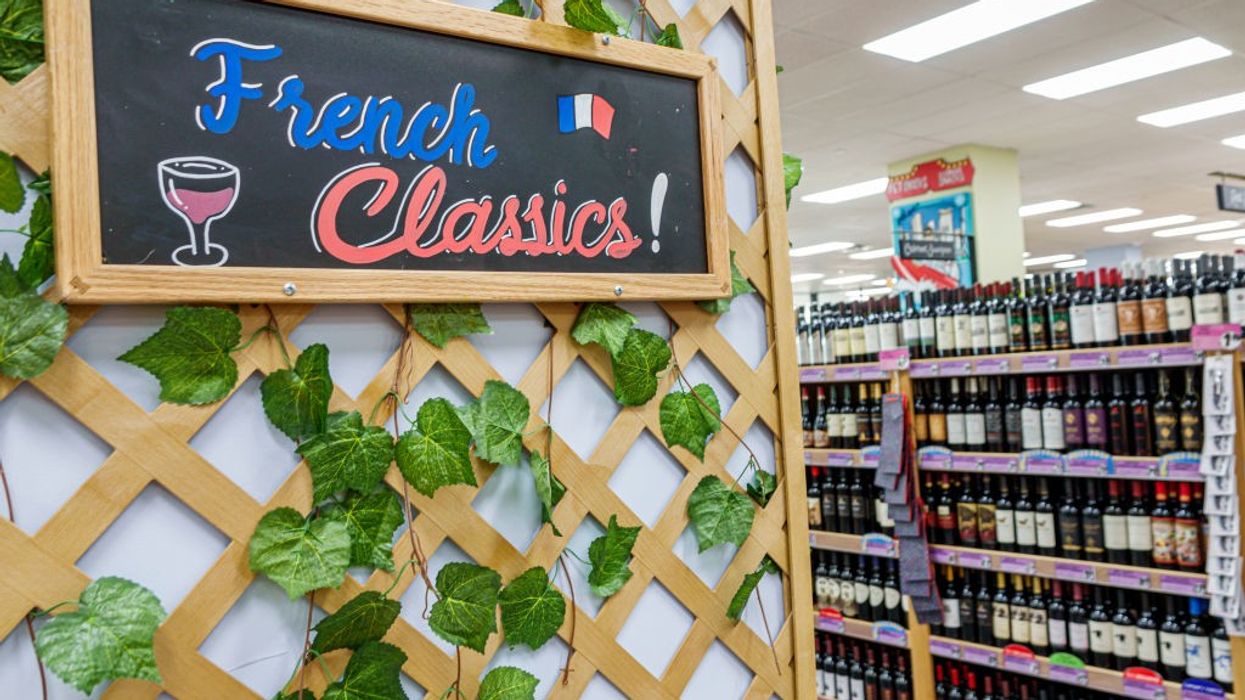
"This is how trade wars escalate," said one observer. "Eventually you forget who fired the first shot, but the losers are consumers on both sides."
U.S. President Donald Trump on Thursday threatened to slap a 200% tariff on many alcohol products made in the European Union in retaliation for a 50% levy on American whiskey and bourbon recently announced by the 27-nation bloc's executive commission.
"The European Union, one of the most hostile and abusive taxing and tariffing authorities in the World, which was formed for the sole purpose of taking advantage of the United States, has just put a nasty 50% Tariff on Whisky," Trump wrote on his Truth Social platform. "If this tariff is not removed immediately, the U.S. will shortly place a 200% tariff on all wines, champagnes, and alcoholic products coming out of France and other E.U.-represented countries."
"This will be great for the wine and champagne businesses in the U.S.," added Trump, who owns a Virginia winery. Only sparkling wine from grapes grown in France's Champagne region can be called champagne under a law protecting the product origin designation.
European Commission President Ursula von der Leyen said Thursday that "we deeply regret this measure."
"Tariffs are taxes, they are bad for business and worse for consumers," she added. "They are disrupting supply chains. They bring uncertainty for the economy."
The European Commission's move to reimpose a 50% tariffs on U.S.-made whiskey and bourbon starting April 1 was itself part of the bloc's response to Trump's 25% levy on steel and aluminum imported from the E.U., which took effect on Wednesday. Trump has also unleashed a barrage of tariffs on some of the U.S.' main trading partners including Canada, China, and Mexico, and is threatening even broader tariffs if countries don't lower trade barriers by April 2.
French Foreign Trade Minister Laurent Saint-Martin struck a defiant tone Thursday, accusing Trump of "escalating the trade war he chose to unleash."
"We will not give in to threats and will always protect our sectors," he added.
The Distilled Spirits Council of the United States, an alcohol industry lobby, urged Trump "to secure a spirits agreement with the E.U. to get us back to zero-for-zero tariffs, which will create U.S. jobs and increase manufacturing and exports for the American hospitality sector."
"We want toasts not tariffs," the lobby added.
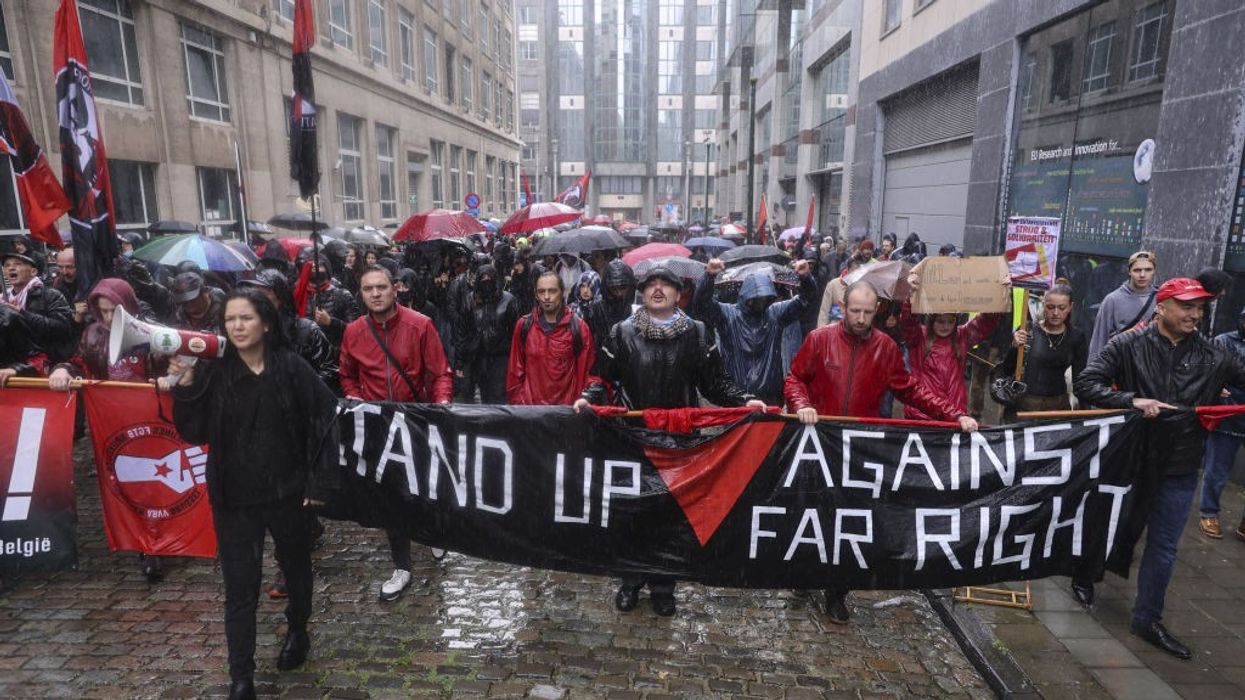
"It's important to show that we're in solidarity with everyone, whatever their nationality, whatever they earn, whatever they do," said a member of the Anti-Fascist Coordination of Belgium.
Thousands of people came together in Brussels on Sunday to march against the far-right parties' recent gains in the European Union elections—the second such protest in the Belgian capital since the results were announced earlier this month.
Sunday's march was organized by the Anti-Fascist Coordination of Belgium. The Brussels Times reported that "some 20 social movements and organizations are part of the CAB, including Young FGTB, Ades network, the Anti-Fascist Front of Liège, MOC Brussels, ASBL Garance, Ecolo J, and Mrax."
The organizers aimed to offer a "popular response and a contrasting social agenda" to the E.U.'s far-right movement, which they said "exacerbates social degradation" and promotes "absolutely disastrous policies" targeting democratic rights, the LGTBQ+ community, migrants, women, and workers.
"It will never be the far right that calls for taxing the richest, increasing the number of social housing, or implementing an ecological transition rooted in a logic of social justice, which is necessary for our common future."
"The far right will never demand higher wages for all," the organizers said. "It will never be the far right that calls for taxing the richest, increasing the number of social housing, or implementing an ecological transition rooted in a logic of social justice, which is necessary for our common future."
CAB member Sixtine Van Outryve told Euronews that "this march is important today to show a message of hope in the face of the messages of despair that the far right wants to bring us."
"It's important to show that we're in solidarity with everyone, whatever their nationality, whatever they earn, whatever they do," she said. "We stand together and we want a society that doesn't divide us. A society that doesn't exclude, a society that isn't racist or sexist."
"Many of us were shocked by the election results, showing far-right breakthroughs at the European level," Van Outryve added, expressing concern about the "alarming" normalization of far-right discourse.
The right-wing surge in the 27-member bloc's elections was widely anticipated, as key figures from across the continent and beyond collectively campaigned against migrants, feminism, socialism, LGBTQ+ rights, and the United Nations.
Parties that did well in the E.U. contests included Italian Prime Minister Giorgia Meloni's Brothers of Italy, Germany's Alternative für Deutschland, and Marine le Pen's National Rally in France, where President Emmanuel Macron responded to the results by calling snap national elections scheduled for June 30 and July 7.
As The Guardian reported earlier this month, "A surge in support for far-right parties in France, Germany, and Austria was tempered by strong support for centrist and left-wing groups in other countries."
The mixed results mean Ursula von der Leyen—who is tied to Germany's center-right Christian Democratic Union and the European People's Party—is expected to secure a second five-year term as president of the European Commission.
The Sunday march preceded a Monday evening meeting for heads of state and government to begin discussing who will fill that role and other top E.U. posts. In addition to the commission spot, The Guardian noted, "leaders will also decide on successors to Charles Michel, the president of the European Council, and Josep Borrell, the E.U.'s top diplomat."
"Consensus is also firming around Portugal's Socialist former Prime Minister António Costa to take over from Michel in chairing E.U. Council meetings," according to the British newspaper. "Estonia's prime minister, Kaja Kallas, is a favorite to take over from Borrell."
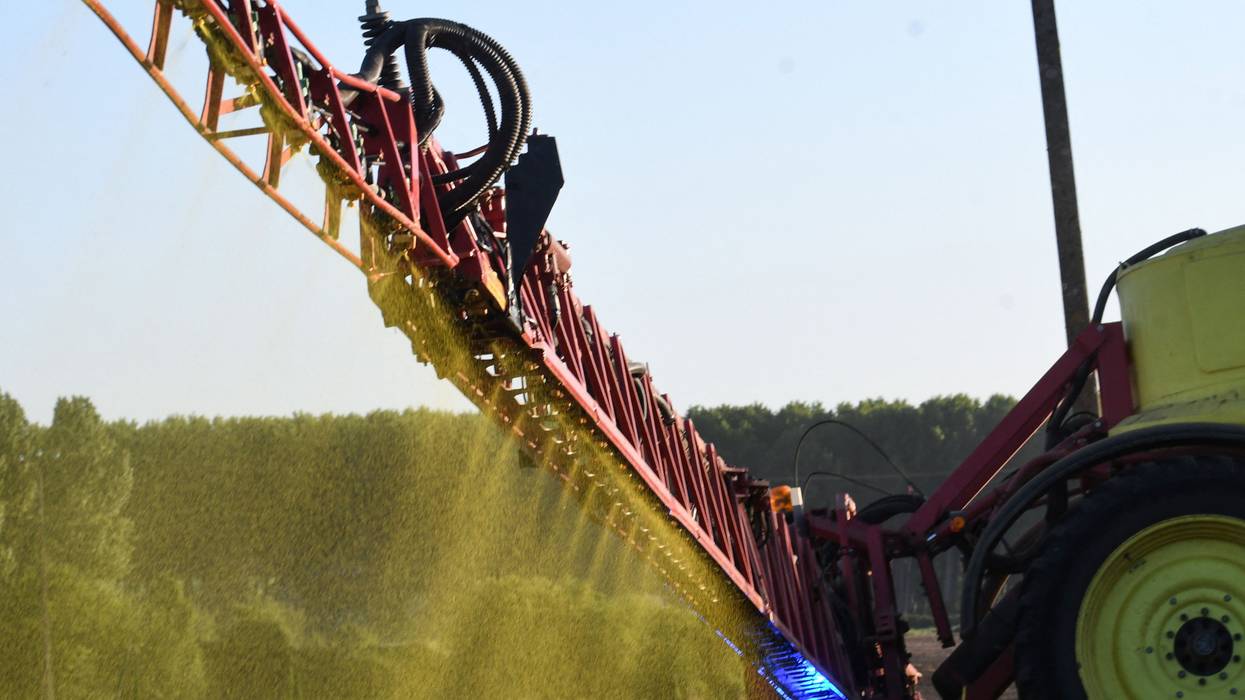
"Those most vulnerable, including children, farmers, and farming communities, will continue to pay the price for the E.U.'s inaction," said one advocate.
With agricultural business owners continuing protests across France, Greece, Spain, and other European countries, European Commission President Ursula von der Leyen angered public health and biodiversity groups Tuesday as she announced the body would withdraw its proposed law to sharply cut the amount of chemical pesticides used in the European Union—a capitulation, said one journalist, to "landowners."
Brussels-based Arthur Neslen, who has reported for The Guardian and Politico, called von der Leyen's announcement "shocking, cowardly, and dishonest" as she withdrew the Sustainable Use Regulation (SUR).
The proposal was first introduced in 2022 and was aimed at slashing pesticide use in half by 2030 and banning pesticide products in areas including urban green spaces and protected sites under the Natura 2000 program, as well as promoting the use of sustainable alternatives.
With farmers staging protests across the E.U. in recent days, complaining over the high cost of maintaining agricultural businesses in Europe, von der Leyen said the SUR had become "polarizing."
Last week, the commission provoked an outcry from environmental advocates when it announced it would allow farmers to delay implementation of a rule requiring them to set aside some of their land to promote biodiversity.
Now, said critics on Tuesday, the commission's decision regarding SUR would further contribute to biodiversity loss as well as water and soil pollution and potential health impacts for people and wildlife.
Reducing European farmers' "dependency on pesticides is not only short-sighted, but a major disservice to public health," said Anne Stauffer, deputy director of the Health and Environment Alliance. "Those most vulnerable, including children, farmers, and farming communities, will continue to pay the price for the E.U.'s inaction."
Grace O'Sullivan, a member of European Parliament representing Ireland, noted that pesticides will continue to be permitted "in nature reserves, city parks, even playgrounds."
In her speech, von der Leyen said farmers "deserve to be listened to" as they face drought and other effects of the climate crisis, higher costs of living, and other factors that make agriculture more expensive.
"Only if our farmers can live off the land will they invest in the future. And only if we achieve our climate and environmental goals together, will farmers be able to continue to make a living," the commission president said.
Friends of the Earth said the "translation" of von der Leyen's comments was "farmers will keep on being poisoned and nature degraded, while the pesticide industry reaps massive profits."
"We cannot afford to leave the pesticide issue unresolved," the group said. "We need real solutions now to support farmers in transitioning away from toxic chemicals."
The Pesticide Action Network (PAN) said the commission's decision—which still has to be ratified by the College of Commissioners in the coming weeks—was made to benefit large "agribusiness interests" and not people struggling to run small farms.
"The European Commission just took a decision that is harmful to farmers and their families, as the first victims of pesticide use," said Martin Dermine, PAN Europe executive director. "Pesticide pollution is a huge problem that has to be tackled. It pollutes our waters, harms our health, and destroys the biodiversity that we depend on. It destroys fertile soil and endangers food production in the long run. We have to move towards a healthy and sustainable form of agriculture quickly, doing nothing is not an option in the light of the biodiversity crisis we're in."
"Thousands of scientists and millions of citizens have urged E.U. politicians to take urgent action," he added. "Not answering citizens' demands goes against democracy and only favors agribusiness."

Officials in Europe, Canada, and the U.S. have attempted to "backtrack" on the widespread unconditional support that's been expressed in the last week for Israel's assault on Gaza.
The United Nations special rapporteur on the occupied Palestinian territories expressed concern on Sunday that the international body has so far not publicly advocated for an immediate cease-fire in Gaza, as rhetoric from the United States and other influential countries has offered tacit approval of an Israeli air campaign in the blockaded enclave where at least 2,670 Palestinians, including more than 700 children, have now been killed.
Francesca Albanese, who has served as the special rapporteur since 2022, told Al Jazeera that Israel must account for exactly "how the dismantlement of Hamas is happening" as it intensifies what it claims is a war targeting Hamas to retaliate for the group's surprise attack on October 7.
The Israel Defense Forces (IDF) have spent the last week bombing residential buildings, schools housing refugees, healthcare facilities, and at least one convoy of people traveling through Gaza after Israel ordered one million people to leave the northern part of the enclave within 24 hours in order to "save their lives" from continued strikes.
The Palestinian Ministry of Health said Sunday that at least 50 entire families in Gaza have been wiped out from the civil registry, with all their members killed in air strikes and shelling.
"I don't have any sign that [a cease-fire] is being considered even at the U.N. secretary-general level," Albanese told Al Jazeera. "It troubles me because, on one hand, you have Israeli officials saying they want to eliminate Hamas. But what we see on the ground is thousands of people including children being killed and injured."
U.N. Secretary-General António Guterres has called for "international humanitarian law and human rights law" to be upheld, but has not called for a cessation of the strikes in Gaza.
On social media, Albanese said that "there can be no more delay" of a public call by Guterres for a cease-fire, and that atrocities like the mass displacement and killing of civilians "must not only be punished but also prevented."
The U.N. Security Council was discussing calls for a humanitarian cease-fire "behind closed doors" in New York on Saturday, the Vatican News reported, and other officials over the weekend signaled a retreat from the rhetoric of U.S. President Joe Biden and a number of other Western leaders last week.
Biden and the leaders of the U.K., France, Italy, and Germany said in a joint statement last week that they supported Israel's right "to defend itself" without demanding the country act within the bounds of international law as it unleashed its air campaign and called up 300,000 reservists for a likely ground assault.
Speaking to PBS Newshour Saturday, U.S. Defense Secretary Lloyd Austin said, "Hamas is not the Palestinian people... so I do not think that the people should pay the price" for Hamas' killing of at least 1,300 people, including nearly 300 soldiers.
The European Council also released its first joint statement on the crisis Sunday, saying Israel has the right to self-defense while respecting "humanitarian and international law" and ensuring "the protection of all civilians at all times."
The council said it would hold a meeting on Tuesday "to get a grip on the response to the war between Israel and Hamas," Irish Times correspondent Naomi O'Leary reported, as European officials, diplomats, and members of the European Parliament have grown concerned about European Commission President Ursula von der Leyen's stated support for what human rights experts have condemned as Israel's "collective punishment" of Palestinians in Gaza.
In Canada, Prime Minister Justin Trudeau also said Saturday night that he was "deeply concerned by the dire humanitarian situation in the Gaza Strip" as people remained without access to electricity, food, and water.
Al Jazeera journalist Sana Saeed noted that Trudeau was one of the leaders who just days ago was "cheering on Israel's 'right to defend itself,' refusing to condemn the assault on Gaza and loss of Palestinian life" even as the Israeli defense minister called all two million residents of Gaza "human animals" as he announced a "complete siege" on the enclave.
"As the Israeli genocide of Palestinians becomes clearer and harder to defend to the public at large, expect more about-faces, backtracking, and softening of stances of people who have cheered this on," said Saeed.
But such comments are mere "posturing," she added, when they are not accompanied by clear calls for a cease-fire to prevent further loss of civilian lives.
"Note how any liberals (U.S., Canada, Europe) who are now discussing 'minimizing harm' and the 'humanitarian crisis' make zero demands of a cease-fire, zero calls for even restraint by Israel," said Saeed. "Nothing."
Rights activist and photographer Patience Zalanga suggested some officials are "being hit with the reality that there are more people who aggressively oppose the genocide of Palestinians than they realized," as thousands of Americans—and tens of thousands of people worldwide—have joined protests in recent days to demand a cease-fire in Gaza.
"The United States government does not care any more or less for Palestinians," said Zalanga. "But what they do care about is how bad this looks. And it's only getting worse."

"Big Oil interests have contaminated our climate for decades," said Democratic U.S. Sen. Ed Markey. "They shouldn't be able to control our climate negotiations for a livable future."
The ongoing campaign to oust Sultan Ahmed al-Jaber from his role as president-designate of COP28 picked up steam Tuesday when more than 130 lawmakers on both sides of the Atlantic published a letter calling for the oil boss to be replaced as chair of the annual United Nations climate summit, set to take place this fall in the United Arab Emirates.
The host nation's move "to name as president of COP28 the chief executive of one of the world's largest oil and gas companies—a company that has recently announced plans to add 7.6 billion barrels of oil to its production in the coming years, representing the fifth largest increase in the world—risks undermining the negotiations," says the letter signed by 133 members of the United States Congress and the European Parliament.
"For billions of people, the outcome of COP28 and ensuing international climate negotiations will make the difference between life and death, chaos and solidarity."
"Different leadership is necessary to help ensure that COP28 is a serious and productive climate summit," the transatlantic group of policymakers told U.S. President Joe Biden, European Commission President Ursula von der Leyen, U.N. Secretary-General António Guterres, and Simon Stiell, executive secretary of the United Nations Framework Convention on Climate Change (UNFCCC).
Notably, Biden's top climate diplomat, John Kerry, has faced criticism for celebrating al-Jaber's selection. More than two dozen progressive members of Congress have pushed Kerry to advocate for the designation of a new COP28 president who doesn't have ties to the industry most responsible for fueling the climate emergency.
In addition to urging the four addressees of the new letter to "engage in diplomatic efforts" to pressure the UAE to withdraw its appointment of al-Jaber—head of the country's Abu Dhabi National Oil Company—as president-designate of COP28, signatories implored the executive leaders of the U.S. and the European Union as well as UNFCCC leadership to "take immediate steps to limit the influence of polluting industries, particularly major fossil fuel industry players whose business strategies lie at clear odds with the central goals of the Paris agreement," at all U.N. climate talks.
"Current rules," the lawmakers wrote, "permit private sector polluters to exert undue influence on UNFCCC processes." They continued:
We request that you institute new policies for corporate participation at COPs and UNFCCC processes more broadly, including requiring participating companies to submit an audited corporate political influencing statement that discloses climate-related lobbying, campaign contributions, and funding of trade associations and organizations active on energy and climate issues. These statements should be reviewed, publicly disclosed, and scrutinized prior to any engagement in UNFCCC climate policymaking processes.
The UNFCCC should also consider additional measures to establish a robust accountability framework to protect against undue influence of corporate actors with proven vested interests that contradict the goals of the Paris Agreement; such a framework was proposed last year with broad-based international support from over 450 organizations around the world and five UNFCCC constituencies representing thousands of organizations and millions of people. These reforms would bring much-needed transparency to corporate climate-related political influencing activities around the world, and would help restore public faith that the COP process is not being abused by companies as an opportunity to greenwash.
The demand to crack down on corporations' open corruption of international climate meetings comes as government representatives prepare to gather in Germany next month for the U.N.'s Bonn Climate Change Conference—a crucial precursor to COP28, which is scheduled to begin in late November in Dubai.
"It is essential that we seize the opportunity to take actionable steps to address and protect climate policy from polluting interference by adopting concrete rules that limit the influence of the fossil fuel industry and its lobbyists in the UNFCCC decision-making process," says the letter. It was endorsed by Kick Big Polluters Out, a global network of more than 450 organizations led by Corporate Accountability and Corporate Europe Observatory, which made a similar appeal to Guterres in January.
" Big Oil interests have contaminated our climate for decades—they shouldn't be able to control our climate negotiations for a livable future," U.S. Sen. Ed Markey (D-Mass.) said in a statement. "As leaders from around the world come together to envision a world that promotes clean energy and climate justice, not pollution and profiteering, we must shut the door on the fossil fuel industry and keep COP28 free from their influence." Markey was one of six Senate Democrats to sign the letter. He was joined by Sen. Bernie Sanders (I-Vt.), 27 House Democrats, and 99 European MPs.
The ongoing failure to confront the fossil fuel industry and other highly polluting sectors has yielded life-threatening results so far, as the lawmakers explained in their letter:
Last year, many of us attended or followed COP27 in Sharm-al-Sheikh, Egypt. While we applaud the United Nations for bringing tens of thousands of delegates together, leading to a historic agreement that will help developing countries deal with losses and damages from the impacts of climate change, the conference ultimately failed to secure consensus from Parties to cut greenhouse gases in line with the agreed global goals.
It did not escape our attention that at least 636 lobbyists from the oil and gas industries registered to attend last year's COP—an increase of more than 25% over the previous year. When the number of attendees representing polluting corporate actors, which have a vested financial interest in maintaining the status quo, is larger than the delegations of nearly every country in attendance, it is easy to see how their presence could obstruct climate action.
There is no time to waste in sharply cutting carbon pollution on a global scale. The latest Intergovernmental Panel on Climate Change (IPCC) Report states that, to limit warming to 1.5 °C, global emissions must halve by 2030. The planet has already warmed over 1.2°C, and our ability to reach the 1.5 °C goal is moving fast out of reach, with the IPCC pegging the current probability at just 38%. Maintaining the status quo would lead to a catastrophic 2.8°C temperature rise by the end of the century.
"In this moment of great urgency, we must unblock the barriers that have kept us from advancing strong global collaboration to address climate change," the lawmakers wrote. "One of the largest barriers to strong climate action has been and remains the political influence and obstruction of the fossil fuel industry and other major polluting industries. We have seen their negative influence in our home institutions; oil companies and their industry cheerleaders have spent billions of dollars lobbying both the European Parliament, other European institutions and member states, and the U.S. Congress in order to obstruct or water down climate policy for years."
"Since at least the 1960s, the fossil fuel industry has known about the dangers of climate change posed by its products and, rather than supporting a transition to a clean energy future, has instead chosen to promote climate denial and spend millions of dollars to spread disinformation," they continued. "Over a half-century later, not one of 39 major global oil and gas companies, with collective market capitalization of $3.7 trillion, has adopted a business strategy that would limit warming to safe levels. Several independent analyses agree that the sector is still not taking meaningful action to avoid the worst impacts of the crisis."
"The fossil industry must give way if there is to be any chance of survival for humanity and this planet."
"Even more outrageous, the global oil and gas industry is expanding amid blockbuster profits to the tune of $4 trillion last year," they added. "The sector has poured $160 billion into exploration for new fossil reserves since 2020, even as the IEA has stated that no new fossil fuel projects are compatible with limiting warming to 1.5°C. In short, in the words of U.N. Secretary-General António Guterres, 'We seem trapped in a world where fossil fuel producers and financiers have humanity by the throat.' It is time to alter this dangerous course."
E.U. lawmaker Manon Aubrey, who co-organized the letter alongside her U.S. counterpart, Sen. Sheldon Whitehouse (D-R.I.), said that "for billions of people, the outcome of COP28 and ensuing international climate negotiations will make the difference between life and death, chaos and solidarity."
" Corporate greed and lobbyists' lies have led us into this climate crisis," said Aubrey. "We must prevent private commercial interests from interfering in politics and regain ownership of our future."
Aubrey's colleague, Michael Bloss, likewise stressed that "to make progress on climate protection, we need to limit the power of the fossil lobby."
"Instead of letting the fox guard the henhouse, the fossil lobby must be expelled from the conference," said Bloss. "Oil states and fossil industries have always prevented anything that could mean an end to coal, oil, and gas, and put the brakes on global climate protection for destructive profits. The fossil industry must give way if there is to be any chance of survival for humanity and this planet."
Pascoe Sabido, co-coordinator for Kick Big Polluters Out, said that "these upcoming U.N. climate talks are our best chance at tackling the problem head-on, with hundreds of decision-makers on both sides of the Atlantic and both sides of the aisle backing our call for a conflict-of-interest policy."
"So far, the U.S. and E.U. have proven to be major blockers, siding with the fossil fuel industry," Sabido added. "If they want to walk the talk of being a climate leader, it's time to switch sides and back a policy not just at the U.N. but also at home."