

SUBSCRIBE TO OUR FREE NEWSLETTER
Daily news & progressive opinion—funded by the people, not the corporations—delivered straight to your inbox.
5
#000000
#FFFFFF
To donate by check, phone, or other method, see our More Ways to Give page.
Daily news & progressive opinion—funded by the people, not the corporations—delivered straight to your inbox.
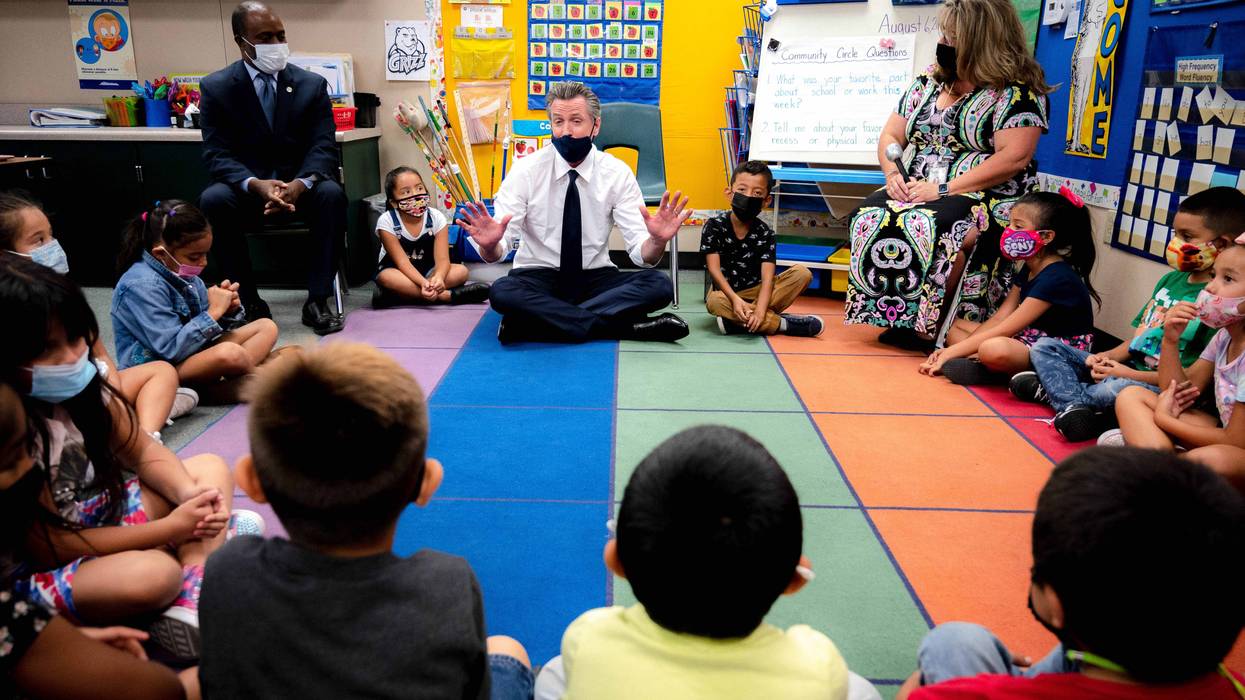
Funding childcare is the difference between realized dreams and delayed futures.
As California's final state budget has been signed and Gov. Gavin Newsom prepares to leave office, we can’t help but look at the impact of childcare funding on families. To build a future, we must look at the present and past.
Ours is a tale of two families. We are both mothers and parent leaders with Parent Voices—Carmen in Marin and Marilynda in Los Angeles. This year, we both attended the 30th annual Parent Voices CA Stand for Children Day, where we joined hundreds of parents, children, and childcare providers to say something simple and urgent: Children matter. Together, we testified at the State Capitol until the final lap to the signing of the final state budget—to remind lawmakers: Superheroes Choose Kids, Not Billionaires!
We are similar in so many ways, but when it comes to access to childcare, we learned there is a disconnect in state policy across counties.
Imagine a state where every child has access to care from birth, where no parent has to choose between working and staying home, and where no child spends years on a waiting list.
I, Marilynda, was living in a homeless shelter when I was pregnant with my first child. I was fortunate to get off the waiting list for a childcare voucher. Because of that, I was able to get through graduate school, work, hold an internship, and earn my Master of Social Work. My daughter, Serenity, is learning, socializing, and growing, and we wouldn’t be where we are without that childcare.
I, Carmen, saw my oldest son age out of eligibility for a childcare voucher after more than 10 years stuck on the childcare waitlist. Years later, my two daughters gained access to childcare when Newsom added new childcare spaces, and today they are thriving. But now, my youngest son, Dyson, is stuck on the waitlist because the state has not expanded childcare since 2023. I don’t have reliable care for him; I can’t work more hours because I can’t leave him, which hurts my ability to provide for my family.
Our stories make it clear: Funding childcare is the difference between realized dreams and delayed futures. No childcare means lost wages for many California families.
Newsom once recognized that waiting is a policy failure. He made a promise to expand childcare, and that promise gave families hope. But then the promise was delayed. Newsom's May revision of the state budget did not provide enough to reach 200,000 new childcare spaces. It will leave more than 77,000 families remaining on what is now known as the "No Hope” childcare waitlist.
So, we advocated. We put pressure on Gov. Newsom to get closer to fulfilling his promise to childcare. He announced 130,000 childcare spaces, much closer to the 200,000 than originally proposed.
Compromises were made. But more must be done when there are thousands of eligible children stuck on the “No Hope” waitlist.
We teach our kids to keep their word. Why should we expect anything less from our governor?
At the same time, childcare educators will receive a 2% cost of living adjustment while TK-12 teachers get 4.31%. The first five years of a child's development are among the most critical, yet the educators who show up for those years are already the lowest paid and getting less than half the investment. That’s a reminder that childcare providers continue to be disrespected in budget decisions.
We have to ask a hard question: What kind of world are we building for our children?
Imagine if the billions lost to incarceration and tax cuts for corporations were invested in universal childcare instead.
Implementing universal childcare and properly supporting the industry is the solution to the affordability crisis. It unlocks opportunities for parents like us to work, pursue education, pay bills, and afford essentials like gas and food. If care becomes available for every family, the future will brighten for all families.
Imagine a state where every child has access to care from birth, where no parent has to choose between working and staying home, and where no child spends years on a waiting list.
This is not out of reach. It is about priorities.
The State has the money. But the commitment to invest in childcare has fallen short.
Will the next governor get closer to fulfilling the promise to fund childcare for all families?
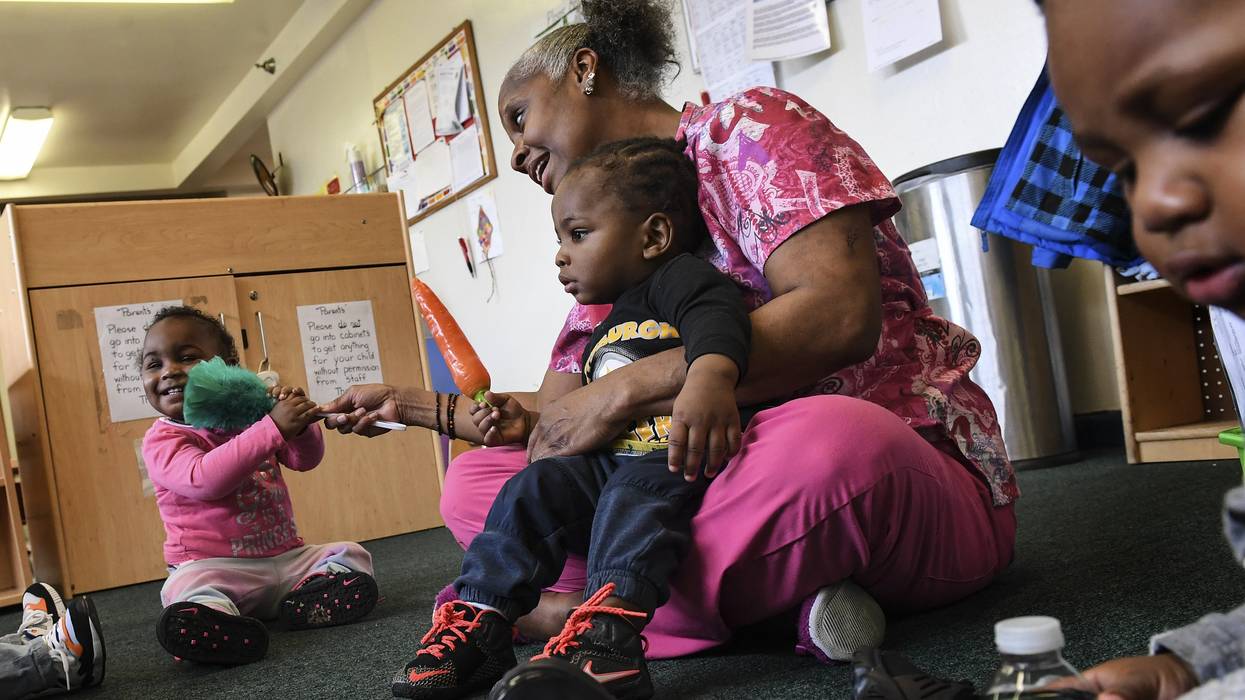
Children are getting more expensive for parents even as investment in future workers is becoming less cost-effective for employers. What should be done about it?
The Trump administration has suspended over $10 billion of federal childcare funds for five Democratic-led states over alleged fraud. So what if childcare in the United States is already outrageously expensive, much higher than in other developed countries? And why is it that childcare in the US is so expensive?
Socialist and feminist economist Nancy Folbre sheds light on these questions in the interview that follows by pointing out the various changes that have taken place over time in the organization of social reproduction and argues, in turn, that universal childcare, an idea that is becoming increasingly popular with voters across many parts of the United States, is very much needed.
Nancy Folbre is professor emerita of economics and director of the Program on Gender and Care Work at the Political Economy Research Institute (PERI) at the University of Massachusetts Amherst.
C. J. Polychroniou: You’ve written widely about the rising price of parenting. Despite concerns about a national birthrate that is now below replacement level, there seems to be relatively little public effort to increase economic support for parents and children in this country. Why?
Nancy Folbre: The undeclared wars the Trump administration is conducting include a brazen process of reducing public support for the next generation. This process began last spring when billionaire Elon Musk spearheaded budget cuts and layoffs in programs benefiting children and began dismantling the Department of Education. It escalated in the first week of 2026 when the administration used accusations of fraud from a partisan video of childcare centers in Minnesota as an excuse to freeze federal childcare funds to five Democratic states.
The strategy is transparent: Tar all social spending with a sticky claim of fraud and abuse. This includes spending on parents and children, already hurt by cuts to Medicaid, the Affordable Care Act, and the Supplemental Nutritional Assistance Program. These cuts have reduced the affordability of family care for all but the affluent, making a mockery of the Trump administration’s promises of prosperity for all.
An understanding of the deeper forces driving this strategy requires a deep dive into historical changes in the organization of our social reproduction.
A similar logic applies in a different direction to investments in us and our children—why risk them if they are not cost-effective? Robots may soon be cheaper, and they never go on strike OR vote.
Children are getting more expensive for parents even as investment in future workers is becoming less cost-effective for employers. Economic pressures became evident centuries ago when child labor was outlawed and technological change increased the demand for skilled labor. This shift in demand helped incentivize investments in public health and education that were financed by higher taxes. The need for future workers—and soldiers—also intensified the need for wages sufficient to support at least a modicum of family care.
While employers constantly sought ways to reduce labor costs, their need for an ample supply of skilled labor at least partially aligned their incentives with those of workers themselves through support for the so-called welfare state (better termed a “social investment” state) that helped develop and maintain the capabilities of the working population.
Fast forward to the present. The huge amounts of money being invested in artificial intelligence represent a new bet on reducing labor costs both directly (through reduced employment and wages) and indirectly (through reduced investment in health, education, and social services).
A recent Wall Street Journal headline put it this way: “AI Job Losses Are Coming, Tech Execs Say. The Question: Who’s Most at Risk?” The answer: most of us—because general artificial intelligence (AI) is likely to reduce private incentives to invest in humans rather than data centers. Elon Musk, who spearheaded efforts to cut federal spending in early 2025, is happily promoting Tesla’s new Optimus robot.
C. J. Polychroniou: You seem to be suggesting that class conflict affects public policies, which affect demographic outcomes (and vice versa). How do most economists think about these issues?
Nancy Folbre: Mainstream economists seldom pay much attention to collective identities or interests such as those based on class, gender, citizenship, or parenthood. Their general confidence in the efficiency of market forces makes them hopeful that that the labor market will adjust to changing prices—that new jobs will replace those rendered obsolete. However, college-educated, entry-level workers in the US are already experiencing diminished job prospects. Some economists predict that the “adjustment costs” will be high—a polite way of saying that the younger generation is in for an unpleasant economic shock.
Some ideological adjustment is also underway. The theory of “human capital” successfully promoted the view that the labor market would reward the skills represented by a college degree, reinforcing the claim that employees are generally paid according to the value of what they produce. The very term “human capital” suggests that there is no real distinction between capitalists and workers—everyone can be a capitalist by investing in their own earning power.
This utopian fantasy has long been countered by evidence that the environment people grow up in—including many factors well beyond their own control—shapes their economic trajectory. The fantasy is countered even more powerfully by evidence that the returns to a college education are now declining for individuals coming from low-income families. The surge of investment in AI raises the distinct possibility that the supply of “human capital” is likely to further exceed the demand for it, threatening downward mobility for a segment of the paid labor force once considered relatively secure.
Of course, even conservative economists recognize that a good education—from preschool to college--does more than merely increase lifetime earnings. It enhances the skills that people need to manage their own lives—skills like troubleshooting phones, making good decisions about what to buy, how to save, how to vote, and how to parent. Well-educated people live longer—and not just because they tend to earn more money.
But these benefits are not as profitable as increased productivity for a private firm.
Because they have characteristics of a public good, their economic contribution is difficult to measure, much less privately capture. Policies such as universal childcare, paid family or sick leave, and options to engage in employment from home yield significant economic returns, but these are not channeled directly to those who pay for them.
Standard economics textbooks note that firms have economic incentives to pollute the environment if this increases profitability, even if future inhabitants of the planet will pay a high price. A similar logic applies in a different direction to investments in us and our children—why risk them if they are not cost-effective? Robots may soon be cheaper, and they never go on strike OR vote.
C. J. Polychroniou: It sounds like you’re arguing that the theory of “human capital” no longer holds much water. But there are some economists out there who have articulated larger criticisms of capitalist institutions in general. How do these criticisms connect the rising private cost of children, fertility decline, and the possible obsolescence of the white-collar labor force?
Nancy Folbre: Kind of a long story, but I’ll keep it short! Economists like myself, influenced by socialist and feminist ideas, highlight the institutional arrangements that shape the distribution of the costs of raising children and the reproduction of human society itself. In many precapitalist societies, parents enjoyed at least partial payback for the costs of childrearing, as adult children contributed to family income and the support of their elders. Capitalist institutions encouraged labor mobility and reliance on individual earnings, weakening such family and community-based transfers.
Democratic engagement and bargaining over the role of the state gradually led to a different system of intergenerational transfers, taxing employers and the working-age population to help finance public education for the young and pensions and healthcare for the elderly.
This institutional compromise helped stabilize the process of “social reproduction” but also led to unequal distribution of its costs. It allowed employers to keep their contributions to the production of the next generation relatively low. It delivered fewer benefits to parents (those devoting time and money to producing new workers and taxpayers) than to non-parents. It also reinforced a gender division of labor that imposed a disproportionate share of the private costs of family care on women.
We can’t continue to treat care as a kind of expensive hobby rather than a productive contribution to our collective future.
These inequalities amplified increases in the private cost of raising children (for mothers in particular), encouraging efforts to limit family size. New technologies, increased demand for skills, and opportunities for employment outside the home also played an obvious role.
Until recently, fertility decline was considered an economic boon, allowing more women to enter paid employment and promoting the growth of Gross Domestic Product. As is now widely recognized, however, below-replacement fertility poses problems of its own. When women bear less than about 2.1 children over their lifetime, they don’t generate enough surviving children to “replace” their biological parents.
If this rate persists, the size of the youngest generation declines steadily over time, increasing the share of the elderly population relative to the employment-age, tax-paying population. The economic burden of increased old-age dependency increases political conflict over who should pay the costs—and can intensify the economic stresses of caring for younger dependents as well.
Reduction in the size of the global population offers some potential benefits, given current threats to the global environment (not to mention the dicey future of decent jobs). But if we prove unable to get back up to replacement levels of fertility at some point in the future, we will render ourselves extinct. I’d call that a pretty acute crisis of social reproduction.
C. J. Polychroniou: How can we avert such a crisis? Are you suggesting that we adopt pronatalist policies? How do responses in other countries differ from those in the US?
Nancy Folbre: No. We’re not in a state of demographic emergency and we don’t need to encourage a higher birth rate. Much of the global population is suffering from lack of decent employment. And the number of children in the US harmed by poverty makes investment in child health and education a much higher priority than increasing births here.
However, investments in child “quality” can help stabilize and strengthen private commitments. Many other countries are implementing policies designed to make family care more affordable. As is well-known, most affluent European countries have put such policies in place. South Korea began providing universal childcare services in 2013 and is now increasing parental leave allowances. Canada is a more nearby example, with its rollout of a new federal childcare system that will offer universal childcare services at a private cost of $10 a day. Within the US, both New Mexico and New York City are setting an example with new initiatives.
The US as a whole is lagging beyond for several reasons. Racial and ethnic divisions, regional differences, and exceptionally high levels of earnings inequality have weakened the solidarity needed to build a “pro-care” coalition. Imperialist rhetoric and illegal military actions have literally bloodied the water.
As I argue in my forthcoming book, Making Care Work, we need to do a better job explaining the public benefits of investment in human capabilities, including the care of people experiencing illness, frailty, or disability. We can’t continue to treat care as a kind of expensive hobby rather than a productive contribution to our collective future.
Let’s talk about how to move forward in another interview—I think that a universal basic income will be part of the solution, even though it will face vehement opposition. Will employers invest in our kids? Only if we can make them.
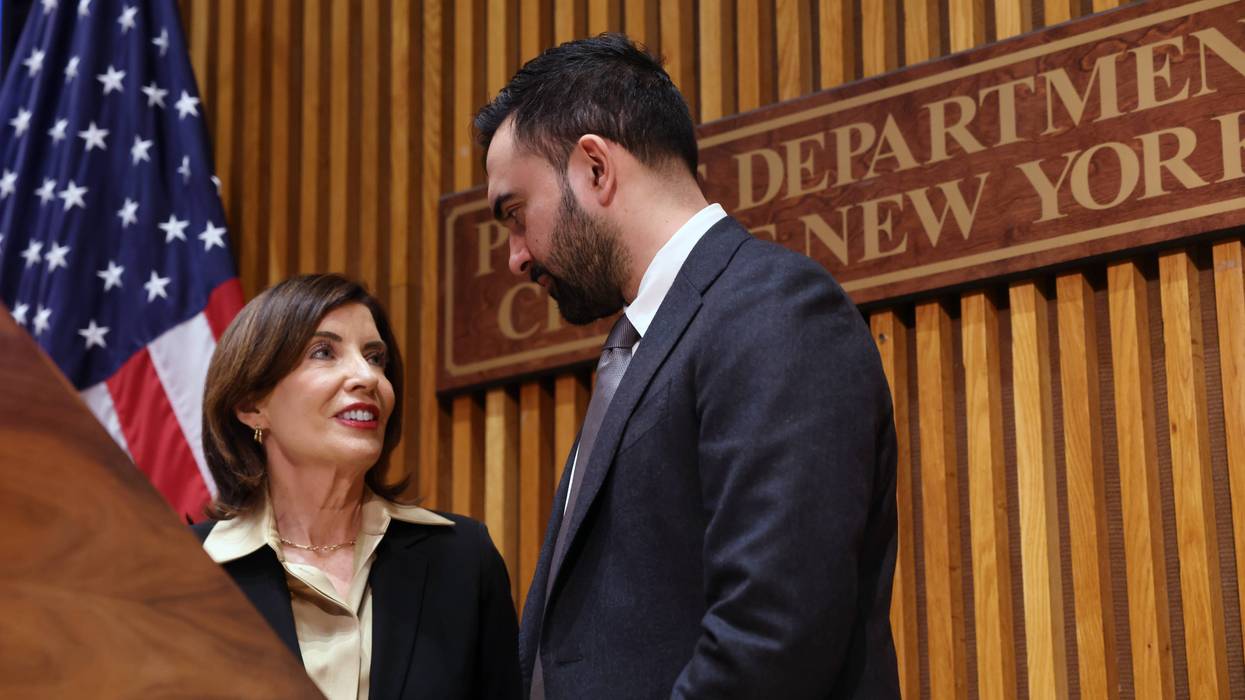
"New York just got a lot more livable for thousands of families."
Thousands of parents in New York City will have access to free childcare after Gov. Kathy Hochul joined forces with Mayor Zohran Mamdani on Thursday to roll out the first steps of his campaign promise to make childcare universal throughout the city.
The governor announced $1.7 billion in this year's budget that will seek to create childcare access for 100,000 more children, part of a plan to spend $4.5 billion on childcare across the state during this fiscal year.
She said she is committed to “fully fund the first two years of the city’s implementation" of Mamdani's program, which he hopes will one day provide free childcare to kids between 6 weeks and 5 years old.
According to the childcare marketplace website TrustedCare, the average cost of daycare for children in New York City ranges from $2,000 to $4,200 per month, depending on the child's age and schedule.
"This is something every family can agree on," Hochul said at a press conference Thursday at a YMCA in the Flatbush neighborhood of Brooklyn. "The cost of childcare is too damn high."
The governor and mayor will begin by increasing funding for the city's existing 3K program, created under former Mayor Bill de Blasio, which extended free pre-K, which was already available to all 4-year-olds, to 3-year-olds when spots are available. Hochul said she and Mamdani will seek to "fix" the program and make it truly universal.
After initially promising to make it available to all 3-year-olds, Mamdani's predecessor, former Mayor Eric Adams, instead slashed funding for it and other early childhood education programs, which children's advocates said drove kids out of the public school system and left many unable to find seats in nearby areas.
"We stand here today because of the young New Yorkers who were no longer willing to accept that the joy of beginning a family had to be paired with the heartbreak of moving away from a city that they have always loved," Mamdani said.
In addition to making that program universal, Hochul and Mamdani are rolling out a program offering childcare for 2-year-olds, known as "2 Care," which will first be available in "high-need areas" before being rolled out to all parents by 2029.
Mamdani has estimated that the plan to make pre-K fully universal will cost about $6 billion per year, with funding made more challenging by the fact that President Donald Trump recently cut off federal childcare subsidies to states, including $3 billion to New York, amid a manufactured panic about rampant fraud. Hochul has said the state is mulling its legal options to fight the funding freeze.
In the meantime, she plans to spend $73 million in the first year to cover the cost and creation of 2 Care, and $425 million in the second year as more children enroll.
While the source of the funds was not immediately clear, Hochul has said that money for the initial phase of the rollout will come from revenue already allocated by the legislature and not from any tax hikes in the coming year.
"We’re barely six months away from people dismissing Zohran Mamdani for running on universal childcare," said Rebecca Katz, an adviser to the new mayor's campaign. "And now here we are. Incredible. New York just got a lot more livable for thousands of families."
Some New Yorkers who supported Mamdani's campaign expressed excitement on social media about having one of their highest costs lifted.
"Universal 3K is the major reason we could afford to stay in our apartment in NYC," said Jordan Zakarin, a producer at the labor-focused media company More Perfect Union. "Making care free for 2-year-olds will be a game-changer for so many families and keep so many of them in NYC."
Andrei Berman, a father of three children, said that "this will save me 40 grand and eliminate my biggest expense a year early."
The high cost of childcare is an issue that has brought Mamdani, a self-described democratic socialist, together with the centrist Hochul. The endorsement of New York's "first mom governor," a leading Democratic power-broker in the state and the country, proved a critical stepping stone for Mamdani on his unlikely ascent to the city's highest office last year.
"To the cynics who insist that politics is too broken to deliver meaningful change, to those who think that the promises of a campaign cannot survive once confronted with the realities of government, today is your answer," Mamdani said. "This is a day that so many believed would never come, but it is a day that working people across our city have delivered through the sheer power of their hard work and their unwavering belief that a better future was within their grasp."
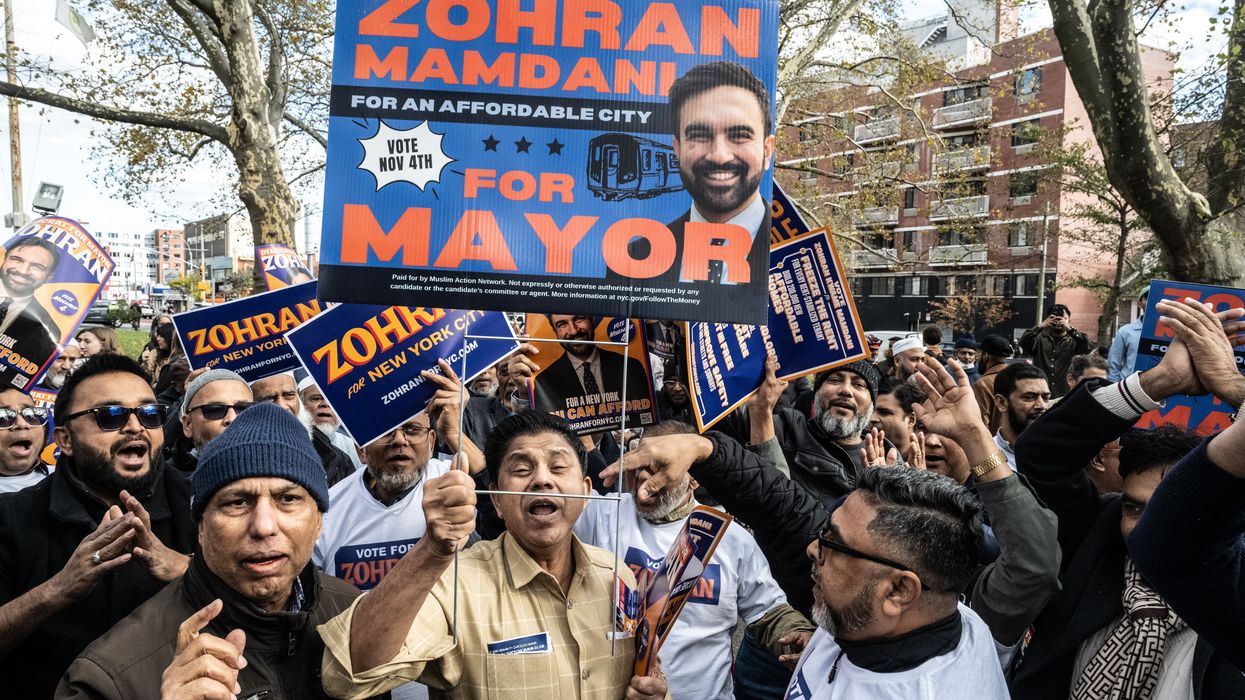
It would be nice if all revolutions came this cheap.
Here’s something for New York City residents to consider as they vote for Mayor, and for observers outside New York to consider as they watch the vote count: for the most part, Zohran Mamdani’s plans for the city are surprisingly affordable. Despite the frantic tone of mainstream media coverage (and the revolutionary overtones of the phrase “democratic socialist”) most of Mamdani’s agenda could be accomplished at minimal cost to the city. The only exception is his plan for free universal childcare—whose costs may have been overstated by his own campaign.
Grocery Store Pilot Program
Mamdani has proposed opening five city-owned grocery stores in the city, at a cost of $60 million. These stores would use city-owned property, which means they wouldn’t have to pay rent, and would sell the food at operating cost without making a profit.
Would it work? Military commissaries are successful. So is Costco, which operates a trimmed-down, “bare bones” store model. Cities have already opened public grocery stores, although their problems and needs differ from those of a city like New York.
Something needs to be done. The city has recognized that there is a grocery store shortage, and city residents pay a higher percentage of their income for food than the typical American. The corporate takeover of supermarkets has jacked up prices for everyone, and that problem is even more acute in places like New York City.
Are city-run grocery stores the solution? Mamdani’s plan is a pilot program, which means it’s an experiment. It seems like a useful one. In the worst-case scenario, tens of thousands of city residents will have affordable groceries while the pilot is underway. For many of them, it will be the first time in years. And if it works, it could change life for millions of New Yorkers.
As for cost, $60 million is a tiny fraction of the city’s budget. Furthermore, New Yorkers—like the rest of us—are already paying an “invisible tax” on food, as consolidation and corporatization of the grocery business increases prices for everyone.
“Free, fast bus service”
First, it’s important to recognize that 48 percent of the city’s bus riders board without paying their fares, according to the Transit Authority. Or, to put that another way: the city’s bus system is already half “free.” We’re just talking about the other half.
Some opponents have argued that free buses will attract “undesirable” elements. The most generous interpretation of that iffy phrase means “poorer or more criminally inclined types.” But they’re the ones riding the buses for free right now! They’re also disproportionately represented among today’s passengers, since law-abiding people who can’t afford the fare are forced to walk.
As for expense, the New York Times estimates that it would cost $600 million in lost fares to make the buses free. The Times also argues that the cost could rise to $800 million in lost fares if more people choose to ride the free buses. But that logic is flawed. Since those new passengers wouldn’t have been there unless the ride was free, no revenue has been lost. (If ridership increases for other reasons there would be lost revenue, but the direct cost of operating the buses would remain essentially unchanged.)
$600 million is a large number to most of us, of course. But it’s roughly one-half of one percent of New York City’s 2026 budget, for something that makes life more affordable for millions of New York City residents. And the increased ridership will make the “fast” part more popular, laying the political groundwork for more dedicated bus lanes.
Rent Freeze
Mamdani is proposing a freeze on rents, which would apply to roughly 30 percent of the city’s rental units. That would not cost the city anything, although a case could be made that it could reduce high-end spending in the city. That’s highly speculative, however.
What we do know is that cash-strapped lower- and middle-income New Yorkers would have more money to spend for the necessities of life—and maybe even a small pleasure or two. That will provide an immediate boost to the city’s economy.
Free Universal Childcare
This is the expensive part of the program. The Mamdani campaign estimates that the free childcare program will cost $6 billion. Another group, the Fiscal Policy Institute, estimates that it would cost a much lower $2.5 billion. Either way, however, there’s no denying that it’s a lot of money.
New Mexico recently passed a highly popular referendum that will provide free and universal childcare to the state’s residents, but that state had a ready-made revenue stream from the royalties fossil-fuel companies pay the state for drilling on state land.
New York, of course, must look elsewhere. There’s no space here to review Mamdani’s revenue proposal in detail but it would cover the cost of the childcare program if passed, with another $4 billion left over. As many observers have pointed out, any increase to the state tax would have to be passed in Albany.
It’s possible that the state legislature will pass the tax hike, but there are ways to handle the shortfall even if it doesn’t. Mamdani’s plan also raises $4 billion from a city tax increase on annual income over $1 million (which, if passed, would still leave most of those affected paying less than they did before Trump’s tax cut). It would also raise approximately $1 billion (estimated) from procurement reform and improved collections. That’s $5 billion, which is less than the Mamdani team estimates its childcare plan would cost but double the Fiscal Policy Institute’s estimate.
If the higher estimate is correct, there are a number of intermediate steps that could be taken until full funding became available. They could begin with a needs-based program, for example, or they could limit the age range the plan covers.
The bottom line? Mamdani’s plans are surprisingly affordable. Every revolution should come this cheap.

"I’m running because Mainers deserve a fighter who won’t cave to Donald Trump. Jared Golden said Trump is ‘OK’ and that we’ll be ‘just fine’ but Mainers are being hurt by his policies."
Maine Auditor Matt Dunlap on Monday launched a Democratic primary campaign against US Rep. Jared Golden, citing the incumbent congressman's frequent siding with President Donald Trump and Republicans and promising a "People's Agenda" that centers working-class needs.
"I’m running because Mainers deserve a fighter who won’t cave to Donald Trump," Dunlap, who is also a former Maine secretary of state, said in a statement announcing his candidacy. "Jared Golden said Trump is ‘OK’ and that we’ll be ‘just fine’ but Mainers are being hurt by his policies."
"Golden has repeatedly sided with Trump, even when it means that healthcare costs will skyrocket for thousands of Mainers," Dunlap added. "When I’m in Congress, I’ll stand up for Maine, and I’ll fight for affordable healthcare, a lower cost of living, and higher wages for hardworking people.”
Dunlap's platform—which includes Medicare for All and universal childcare—stands in stark contrast with Golden's record as the sole House Democrat to vote against unemployment benefits, child tax credits, and affordable healthcare in the American Rescue Plan pandemic relief package signed by former President Joe Biden in 2021.
Golden was also the only House Democrat who voted for Republicans' government funding bill last month, blaming "hardball politics driven by the demands far-left groups" for the ongoing government shutdown.
Taking aim at both Golden and former Gov. Paul LePage, the likely Republican nominee, Dunlap said in his first campaign ad that "we can do better than bad and worse."
The ad also highlights Dunlap's purported accessibility, a sore spot among voters who accuse Golden of dodging his constituents by refusing to hold town hall meetings.
Dunlap faces a steep uphill battle in a district that Trump won by 9.6% in 2024.
“If Matt Dunlap thinks this district will choose him over Paul LePage, he’s got another thing coming,” Golden said in response to Monday's announcement.
LePage campaign spokesperson Brent Littlefield welcomed Dunlap's entry into the race, saying the progressive candidate "sees what we see, Jared Golden is hiding."
"From Aroostook to Oxford and every county in between, Maine people say they never see Jared Golden in their towns or communities," he added.
Dunlap already has a history of clashing with Trump. During his first term, the president appointed the then-secretary of state to a bipartisan panel tasked with investigating alleged voter fraud. Dunlap sued the commission to obtain files he said were being withheld from him. A judge ruled in his favor; Trump subsequently shut down the commission.