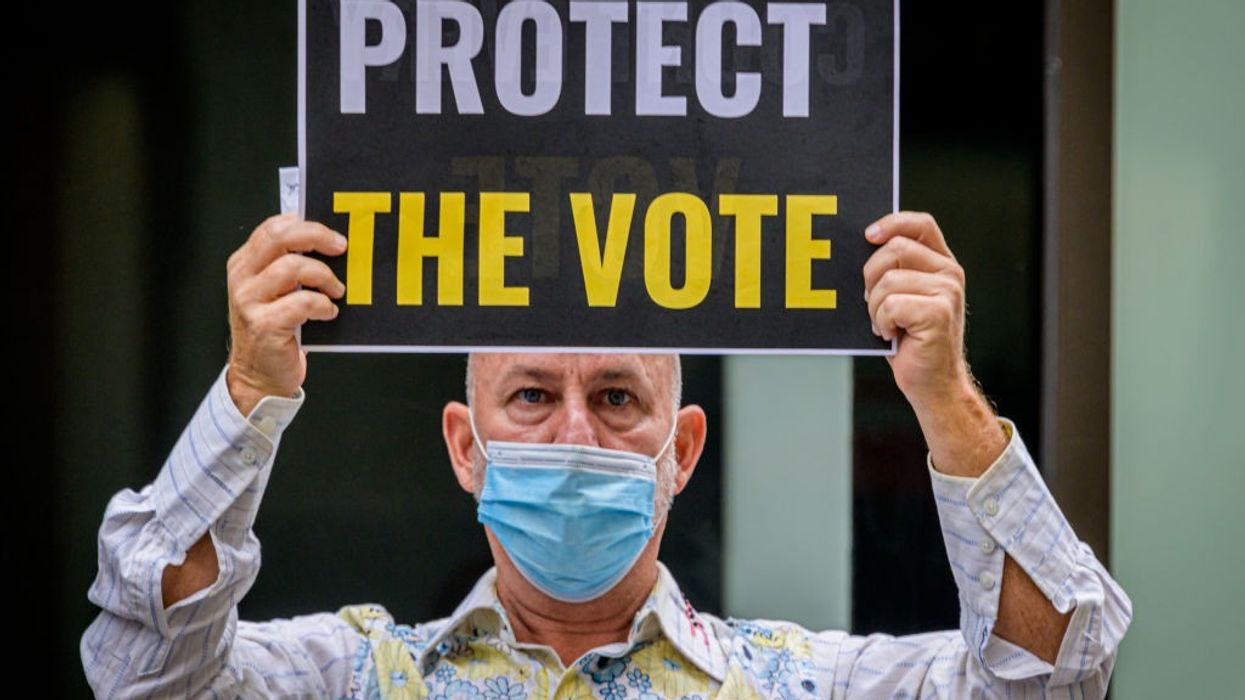
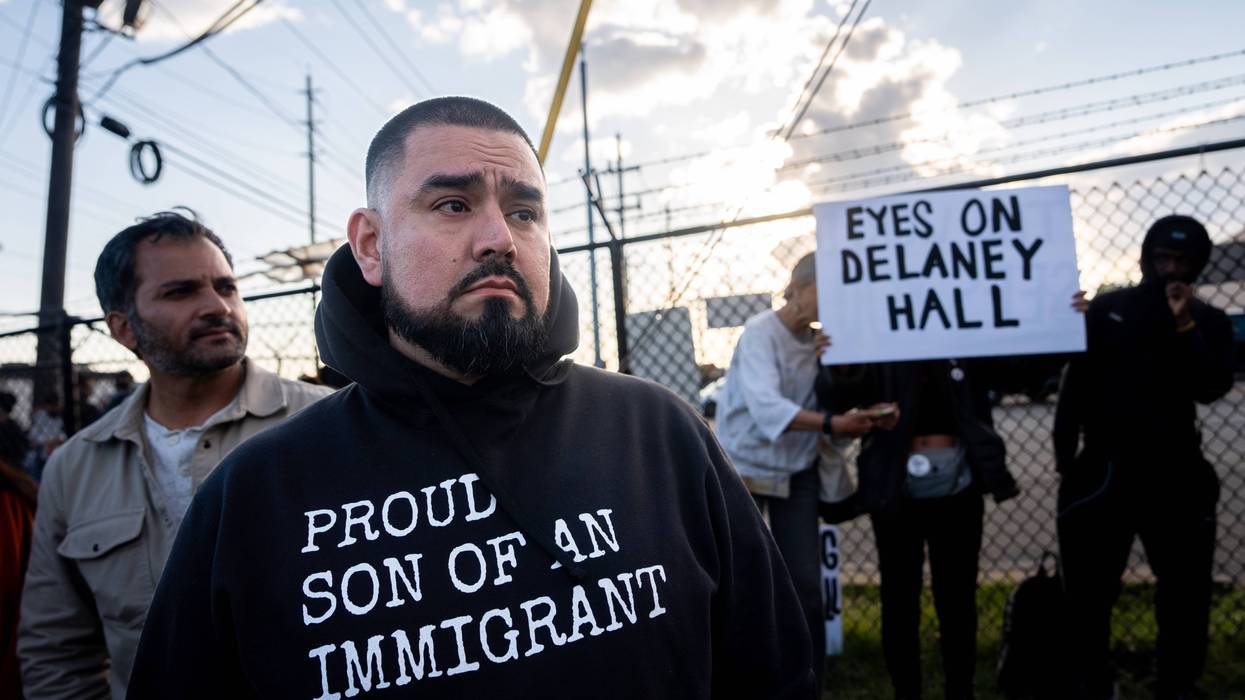
To be clear, the Michigan Eight are not being charged with property damage or vandalism. Instead, they are facing charges of conspiracy to transmit a threat, conspiracy to tamper with a witness, and destruction of property to prevent seizure. Less than a week after the raids against the Michigan Eight, 15 individuals were similarly indicted in Minnesota on various conspiracy charges for their participation in community activism and mutual aid in the context of Immigration and Custom Enforcement’s (ICE) Operation Metro Surge that saw 2,000 ICE agents deployed in Minnesota, leading to over 3,000 arrests, two protesters shot by ICE agents, and one individual dead in ICE custody. The conspiracy charges faced by the Michigan Eight and the Minnesota 15 carry a maximum sentence of 5-20 years and, when there are multiple counts of it, defendants face potentially decades in prison. A week after the Minnesota 15 indictments, anti-ICE protesters were sentenced to between 30 and 100 years in prison after being convicted of various conspiracy charges related to protest activity at the Prairieland Detention Center in Alvarado, Texas.
These are just three out of several other recent cases involving social movements and conspiracy charges. What links them is not the recurrence of some crime called “conspiracy,” but the conversion of ordinary political association into proof of unlawful intent. Conspiracy charges are among the most common charges brought against social movements precisely because they represent an extremely broad, far-reaching, and powerful tool of the state. You do not need to have taken any action, nor do you need to know the other alleged co-conspirators to be found guilty. Federal prosecutors simply have to establish that at least one alleged conspirator has taken an overt (legal or illegal) act toward the alleged plan. Needless to say, virtually anything can be claimed to be an overt act.
The only conspiracy related to the Michigan Eight or the Minnesota 15 is the one that has been constructed by the federal government.
Aside from formal charges of conspiracy, there is also the more diffuse concept of conspiracy that the prosecution in these cases use more generally to paint activists as dangerous, terroristic individuals engaged in a plot against the state. For example, during the detention hearing on June 12, 2026, for four of the Michigan Eight, one of the federal prosecutors, Margaret M. Smith, assistant United States attorney at the Department of Justice, made several references to the defendants being part of a revolution and a “revolution organization.” This language, as we shall see, has a long association with conspiracy charges. It does more than just describe the alleged beliefs of defendants. It represents the bridge by which belief, affiliation, and collective organization can be made to stand in for actual evidence of particular criminal acts.
But what does the nebulous concept of conspiracy mean and why does the government keep using it and who is it meant to target? The late Michael Parenti once noted that “conspiracy means to collude together in secrecy for what are potentially illegal or immoral ends and [the ruling elites] do this all the time and they talk about the necessity of it and they even give it a name, they call it national security.” Indeed, the only conspiracy related to the Michigan Eight or the Minnesota 15 is the one that has been constructed by the federal government. In fact, across more than a century of American history, the recurring pattern that has shaped the state’s response to dissent and protest has been the tendency to treat collective organization itself as a crime. The First Amendment may protect the freedom of speech and assembly as the very conditions of democratic politics, but conspiracy charges have long made these supposed rights conditional.
The Long History of Conspiracy Charges
The state has a long history of using the concept and charge of conspiracy as a weapon against social movements that have sought to expand democratic freedoms. We must therefore place the particular case of the Michigan Eight and the Minnesota 15 in a longer history that involves the Haymarket Trial (1886-1887), the Espionage Act (1917), the Smith Act (1940), the Anti-Riot Act (1968), RICO (1970), and more contemporary post-9/11 developments such as the Patriot Act (2001). These historical moments represent the cumulative expansion in what the state can make conspiracy mean: from attributing responsibility for an unidentified act to an entire radical milieu, to treating speech as dangerous, group membership as suspicious, mundane logistical organization as evidence of criminal intent, and decentralized movements as racketeering enterprises. While, in case of the Michigan Eight, the targets are Palestine solidarity activists, and while in the case of the Minnesota 15, the targets are anti-ICE organizers, the tools that have been assembled and are still being expanded and perfected can and will be applied to other groups. What is at stake here is no less than ability to collectively organize to create a better and more just world and to resist oppression.
In 1941, the legal scholar Albert J. Harno wrote that, due to its “elasticity” and “vague boundaries,” the concept of conspiracy “presents serious potential dangers of abuse.” Only, there is nothing “potential” about its dangers. From some of its earliest applications right to the last two weeks, the charge of conspiracy has been the bane of organized labor and other broad social movements that the state has sought to repress. One facet of the seemingly endless elasticity of the concept of conspiracy relates to the category of unindicted conspirators. In the case of the Michigan Eight and the Minnesota 15, this term is constantly invoked in the indictments. Aside from the fact that unindicted conspirators cannot testify on behalf of the defense, prosecutors can introduce the out-of-court statements of unindicted conspirators in court as evidence against the defendants without these statements considered hearsay. Prosecutors can thus introduce texts, emails, phone calls, et cetera, involving unindicted conspirators as evidence against the defendants even if the defendants were not a direct party to these communications. Moreover, the shadow of not knowing whether one is or is not an unindicted conspirator introduces even more fear into social movements. This uncertainty is a feature of conspiracy law and one of its political effects, thus extending the coercive reach of an indictment beyond the courtroom.
Conspiracy and Labor Repression
Nineteenth-century labor cases show where this logic first acquired its legal form and political function. Labor Studies scholar Risa Lieberwitz notes that the charge of conspiracy has historically “provided a powerful weapon against groups advocating political and social change [and] the labor movement [in particular] was the target of many criminal conspiracy prosecutions during the 19th century, beginning with the Philadelphia Cordwainers’ Case of 1806, which was both the first criminal conspiracy trial in the United States, and the first recorded labor case.” If the Cordwainers’ Case demonstrated that workers coming together to demand higher wages could be a criminal conspiracy, the trial of the Haymarket Eight showed how conspiracy could make an entire political milieu culpable for an act that the state could not directly attribute to any one defendant.
On May 4, 1886, a bomb was thrown during a labor demonstration at Haymarket Square in Chicago. Till this day, no one can say for certain who threw that bomb. During the trial, prosecutors could not prove who threw it nor prove that the defendants had planned the bombing. They could not even, in some cases, prove that they had been present when the bomb was thrown. What they could prove was that the Haymarket Eight had given speeches, written articles, edited newspapers, belonged to radical organizations, and broadly advocated for a social revolution.
The concept of conspiracy was what allowed the prosecution to transform this into evidence of collective responsibility for the bombing. The prosecution did not need to identify the bomber; it only needed to argue that the Haymarket Eight had been part of a conspiracy to create the conditions in which such a bombing became likely. In other words, the defendants were guilty of belonging to and contributing to a radical workers’ milieu that the state had defined as dangerous. Haymarket helped established what would become a recurring pattern where membership in particular groups (whether well-defined or as vague as “antifa”) and speech (like posting messages on social media) and acts (like organizing a meeting or using the internet) can become evidence of a conspiracy.
Conspiracy, Speech, and Political Organizations
Haymarket thus supplied the basic argument that the state would repeatedly adapt: When direct proof of individual action was absent, prosecutors could substitute much fuzzier ideas. World War I expanded this basic framework under the sign of national security. The federal government used the Espionage Act of 1917 against socialists, labor organizers, anti-war activists, and others who opposed conscription or otherwise criticized the war. During this time, the Department of Justice conducted a series of mass raids and arrests, collectively known as the Palmer Raids (1919–1920), in more than 30 cities and towns, targeting thousands of individuals, particularly Italian-American and Jewish-American socialists, the so-called “hyphenated Americans” that President Woodrow Wilson railed against, warning that “any man who carries a hyphen about with him carries a dagger that he is ready to plunge into the vitals of this Republic whenever he gets ready.”
In Schenck v. United States (1919), the Supreme Court unanimously held that the First Amendment did not protect Charles Schenck, who had distributed anti-draft and anti-war flyers to draft-age men, from prosecution under the Espionage Act precisely because, as Justice Oliver Wendell Holmes Jr. concluded, "The words used are used in such circumstances and are of such a nature as to create a clear and present danger that they will bring about the substantive evils that Congress has a right to prevent.” In other words, the Supreme Court ruled that otherwise lawful speech could be punished if it was thought likely to obstruct or encourage resistance to government aims.
In Brandenburg v. Ohio (1969), the Supreme Court did not expressly overrule Schenck v. United States, but it effectively superseded Schenck's clear-and-present-danger standard and, on the surface, introduced a more expansive interpretation of the First Amendment, holding that advocacy of illegal action cannot be punished unless it is “directed towards inciting or producing imminent lawless action and is likely to incite or produce such action.” Yet, the so-called Brandenburg test still reveals the subjective nature of, well, law in general, its interpretation, and its enforcement. In this case, the key subjective terms are “imminent” and “likely.” Whether an action is imminent and whether speech is likely to produce an action requires a level of guesswork that is wholly reminiscent of the trial of the Haymarket Eight.
Described as a “prison for ideas” by the National Committee to Win Amnesty for the Smith Act Victims in 1954, the Smith Act of 1940 would extend this logic within the context of the Cold War. Among other things, the Smith Act criminalized “knowingly or willingly advocate, abet, advise, or teach the duty, necessity, desirability, or propriety of overthrowing any government in the United States by force or violence.” In the late 1940s and 1950s, communists in particular were prosecuted under the law, not because they had launched an armed insurrection, or even taken material steps toward an armed insurrection, but because they belonged to organizations that taught Marxist theory and advocated for communist revolution.
Like their predecessors in 1886 who did not have to prove that the Haymarket Eight had thrown the bomb, prosecutors in these cases did not have to prove that communists had entered into an agreement to commit a crime (the most basic definition of conspiracy), but that the Communist Party itself was a criminal enterprise. The state did not need to demonstrate that any communists had agreed to carry out a specific unlawful act in the near future. Instead, their membership in the party and their ideological beliefs were sufficient proof of criminal liability. Charisse Burden-Stelly summarizes it well, writing that “membership in the CPUSA automatically meant conspiracy of insurrection.”
Conspiracy and Protest
In the context of popular protests and anti-war mobilization, the Anti-Riot Act of 1968 made it a federal offense to cross state lines or use interstate facilities with the intent to incite, organize, or encourage a riot. If the Smith Act treated membership as evidence of insurrectionary conspiracy, the Anti-Riot Act adapted the same logic to the mass movements of the 1960s by treating travel, communication, planning, and assembly as evidence of an intention to produce disorder. The Chicago Seven would be the first to be prosecuted under the Anti-Riot Act and charged with conspiracy to incite a riot and crossing state lines with intent to incite a riot. Again, we see the danger in the elasticity of the key terms of the act that allowed the federal government to frame lawful activities taken to organize a protest, in this case at the Democratic National Convention in Chicago, as evidence of unlawful intent, namely, to incite a riot.
On February 18, 1970, seven defendants were acquitted on conspiracy charges, two were acquitted on all charges, and the remaining five were convicted of travelling across state lines with intent to incite a riot and sentenced to five years in prison. Over two years later, those convictions would be overturned by an appeals court panel that found numerous errors made by the judge. Yet, the damage to the defendants’ lives and to the broader public had been done. Even when defendants are acquitted or have their convictions overturned, conspiracy charges succeed in the ideological work for which they are perhaps best designed, leaving behind a public narrative in which dissent and protest are not cornerstones of democracy, but dangerous, hidden plots conducted by shadowy figures.
Even unsuccessful prosecutions impose a real material and mental cost on defendants and, more generally, they impose a heavy cost on the public at large, forcing all of us to consider whether participation in collective protest or forms of dissent may expose us to repression.
The Racketeer Influenced and Corrupt Organization (RICO) Act of 1970 would give an even more expansive tool for prosecutors to bind heterogeneous individuals and acts under the label of a single, criminal enterprise. RICO has increasingly been used by federal and state prosecutors to target labor unions and broad social movements. The statute’s breadth gives prosecutors considerable flexibility in defining a criminal enterprise and explaining how otherwise separate acts fit together.
In September 2023, Georgia prosecutors brought a sweeping state RICO indictment against dozens of activists associated with opposition to the Atlanta Public Safety Training Center, commonly known as Cop City. The indictment alleged that a broad protest movement constituted a criminal enterprise and cited a wide range of activities, including alleged acts of property destruction, distribution of literature, mutual aid, reimbursements, fundraising, communications among activists, and protests and demonstrations.
Prosecutors used the flimsiest of evidence to rope even more people into this “conspiracy” as “co-conspirators.” Signing a petition was enough to get a visit by the police and having mud on one’s shoes in a forest was taken as evidence of participation in alleged acts of property damage at a construction site. The significance of the Stop Cop City case lies less in the specific allegations, but in the indictment’s construction of a broad social movement as a unified, organized criminal enterprise. Social movements are almost by definition heterogenous and decentralized. They always comprise individuals with different goals, tactics, and levels of commitment.
The dismissal of the RICO charges against the defendants in December 2025 does not make this case any less troubling (the state could refile charges or repeal the dismissal). On the contrary, the dismissal sharpens the stakes of indictments like this. While the dismissal shows how weak the charges were in the first place, the state successfully punished the defendants. Even unsuccessful prosecutions impose a real material and mental cost on defendants and, more generally, they impose a heavy cost on the public at large, forcing all of us to consider whether participation in collective protest or forms of dissent may expose us to repression. From this perspective, it does not matter much that a court may eventually reject prosecutorial overreach when the threat of prosecution may shape the way we behave.
Responding to Repression with Trust and Solidarity
One lesson that we can learn from the historical continuity between each of these episodes is that movements for economic and racial justice, movements against wars and imperialism, and anti-fascism as a concept (through the targeting of “antifa”) have all been described, in different moments, as threats to public order. In each case, the state and its prosecutors have been able to portray individuals participating in these movements as public enemies. The language of conspiracy is especially useful in this process because it turns ordinary features of collective life into suspicion. Each of these historical cases has contributed to the ever-expanding use of conspiracy charges in state repression of social movements. Across these cases, the object of prosecution moves further and further away from identifiable unlawful acts to the social relations that make collective action possible. This past should inform our understanding of the recent cases and remind us not to take at face value the charges against the Michigan Eight and the Minnesota 15.
Like the cases from the past, the present charges are an attack on political speech and, more broadly, all those who seek to collectively work toward a more just and freer future. Isaac Sant, one of the Minnesota 15, has noted that what they are facing is “not a normal criminal trial; this is a political case, this is political repression against organizers.” The long history of conspiracy charges and state repression suggests that political repression cannot be defeated alone in the courtroom. This is because conspiracy cases do not just target the named defendants; the broader targets are concepts like trust, collective organization, and solidarity, that is to say the very bases of social movements.
Like previous generations of workers faced with political repression, we must seize the current crises as an opportunity to revitalize the labor movement from the ground up. That revitalization is not going to come from union leadership, but from you and other rank-and-file worker-organizers. As the veteran labor organizer Daniel Gross recently noted, in Unions of Our Own (2026), “A truly just society with reliable economic security, where we can live freely on a healthy planet, simply cannot happen without organized workers and liberatory unions.”
This moment threatens our very ability to collectively organize for a better world at the same time as it represents an opportunity for workers everywhere to double down on collective organization, whether it is to keep our fellow workers safe from abductions; to organize toward divestment from companies profiting from war and genocide; or to fight the daily struggles of autonomy, respect, and dignity on the shop floor. In all cases, every victory, big or small, is not a concession, but a privilege that workers have wrested from state and capital. The stakes of not meeting this moment could not be heavier.
Correction: The piece has been updated to reflect the fact that Brandenburg v. Ohio superseded, rather than overruled, Schenck v. United States.





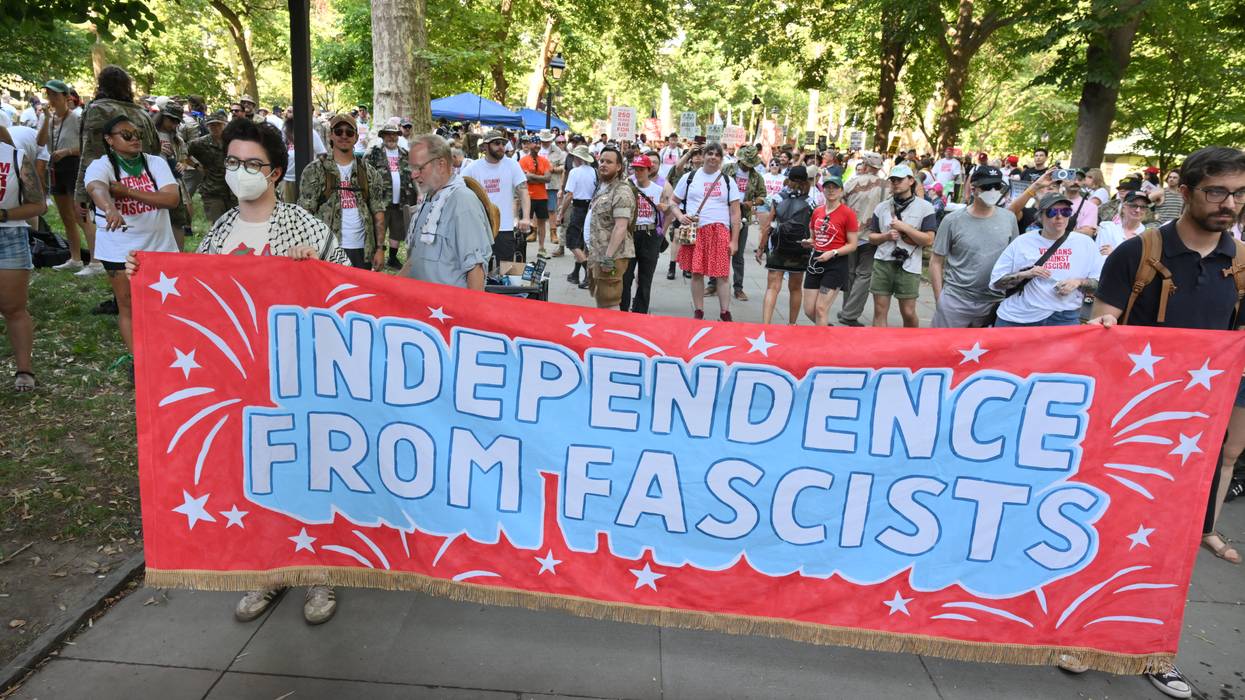
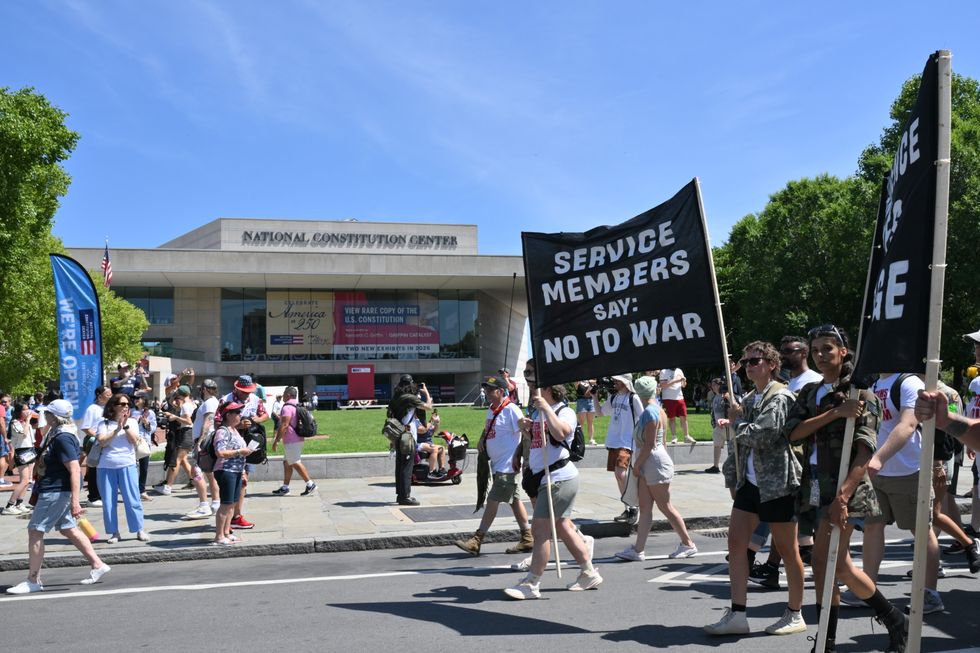 Hundreds of vets and military families marched through Philadelphia on the 250th anniversary of the United States, along with the People’s Parade, calling for common sense reforms on July 4, 2026 in Philadelphia, Pennsylvania. (Photo by Lisa Lake/Getty Images for About Face: Veterans Against The War)