

SUBSCRIBE TO OUR FREE NEWSLETTER
Daily news & progressive opinion—funded by the people, not the corporations—delivered straight to your inbox.
5
#000000
#FFFFFF
To donate by check, phone, or other method, see our More Ways to Give page.
Daily news & progressive opinion—funded by the people, not the corporations—delivered straight to your inbox.

"The war enriches shareholders as it impoverishes citizens," said a campaigner with 350.org.
France-based TotalEnergies on Wednesday became the latest fossil fuel giant to report massive profits juiced by the US-Israeli war on Iran, which has sent global oil prices surging and jacked up costs for consumers.
TotalEnergies announced in its first-quarter earnings report that it would increase returns to shareholders through a higher dividend and stock buybacks after seeing $5.8 billion in profits and $8.6 billion in cash flow during the first three months of 2026. The company attributed its profit growth to its "ability to capture price upside," corporate-speak for cashing in as consumers face rising energy costs.
“While families watch their bills skyrocket, TotalEnergies posts some of its best financial results without even paying its fair share of taxes," said Fanny Petitbon, France country manager at the environmental group 350.org. "We are witnessing an obscene transfer of wealth: The war enriches shareholders as it impoverishes citizens."
"We demand that France stop yielding to oil lobbyists and introduce, without delay, a permanent and ambitious tax on fossil fuel profits," Petitbon added. "Every day of inaction is a deliberate political choice in favor of shareholders and against citizens.”
TotalEnergies' report came a day after the British oil giant BP reported that its profits more than doubled compared to the first quarter of last year.
In an analysis released over the weekend, Oxfam projected that six of the world's largest fossil fuel companies—including BP and TotalEnergies—will rake in $2,967 in profits per second this year, an increase of roughly $37 million per day compared to last year.
"Families around the world continue to be pushed into energy poverty as geopolitical instability, the impacts of escalating violence in the Middle East that has already taken many lives, and the sharp increase in the wealth of the super-rich in contrast to everyone else are leaving ordinary people struggling to make ends meet," said Oxfam.
350.org warned earlier this week that energy market disruptions caused by the US-Israeli war on Iran could hit households, businesses, and governments around the world with more than $1 trillion in extra costs.
“It is a staggering injustice that fossil fuel corporations are once again posting record-breaking profits while families struggle to keep the lights on," said Rukiya Khamis, 350.org's East Africa country manager. "Right now, power is concentrated in the hands of those who thrive on crisis and scarcity."
"It’s time to end our forced dependence on fossil fuels, tax the profiteers who benefit from our hardship, and redirect that wealth into building a fair, clean energy system," Khamis said. "We aren’t just asking for a lower bill; we are demanding a system that values human dignity over corporate greed."
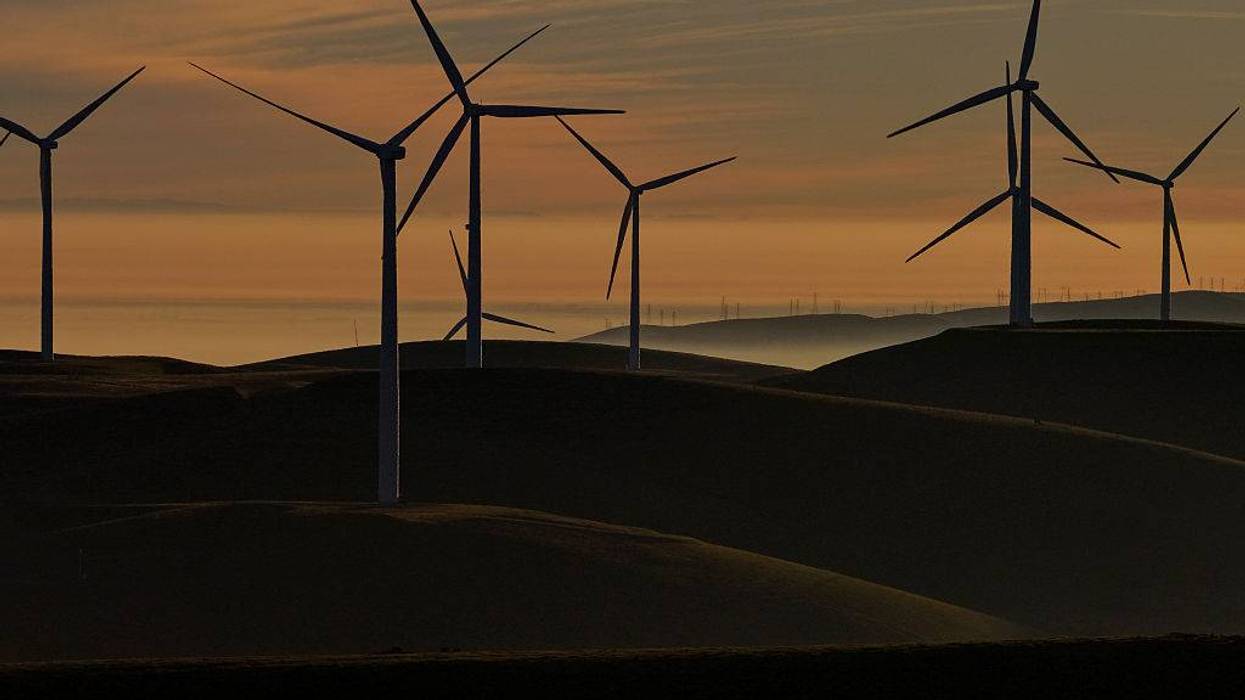
"The most corrupt presidency ever—and it's not even close," said one critic.
Critics slammed the Trump administration on Monday after it announced a deal to pay almost $1 billion to a French energy company to cancel its plans to construct wind farms across the eastern US.
As reported by The New York Times, French firm TotalEnergies has agreed to forfeit its leases in federal waters off the coasts of New York and North Carolina, and will instead invest the money it received from the Trump administration into oil and gas projects in the US, "including a facility in Texas that would export liquefied natural gas to global markets."
TotalEnergies paid nearly $928 million for the rights to access federal waters during former President Joe Biden's administration.
The Times described the agreement as "an extraordinary transfer of taxpayer dollars to a foreign company for the purposes of boosting the production of fossil fuels, a main driver of climate change, while throttling offshore wind power."
Patrick Pouyanné, the chief executive of TotalEnergies, said that the firm decided to abandon its US wind farm plans due to "practical" considerations, while emphasizing that the firm wasn't giving up on wind power all together.
"When the Trump administration came to power and began setting US energy policy, we said that we’ll have to reconsider, clearly, these offshore wind project developments," explained Pouyanné, adding that "we continue to invest in onshore solar, onshore wind, batteries."
Many critics expressed disbelief that the Trump administration would go to such extraordinary lengths to kill a clean energy project, especially after the president sent oil and gasoline prices soaring earlier this month when he launched an unprovoked and unconstitutional war with Iran.
"Let’s call this what it is: a taxpayer-funded bribe to kill homegrown clean energy and hand the money straight to oil and gas executives," wrote climate advocacy organization Evergreen Action in a social media post. "Trump is once again making Americans pay more for energy so his Big Oil donors can rake in even more profits."
Melanie D'Arrigo, executive director of the Campaign for New York Health, expressed a similar sentiment.
"$1 billion of our tax dollars to kill a clean energy program that creates jobs, just so Trump's Big Oil donors can make more profit," D'Arrigo wrote. "The most corrupt presidency ever—and it's not even close."
Matt Gertz, senior fellow at press watchdog Media Matters for America, argued that the agreement was a corrupt bargain aimed at hurting the president's political foes, including the Democratic leaders of New York and North Carolina.
"Climate/renewables arguments aside, this is the president's administration paying a foreign company to invest in states where Republicans are in charge rather than ones where Democrats are in charge," Gertz wrote, "using tax dollars to punish people who didn't vote for his party."
US Sen. Lisa Blunt Rochester (D-Del.) said that the deal to kill the planned wind farms was yet another example of the Trump administration making life in the US less affordable.
"This administration just spent $1 BILLION of your money to make sure wind farms don't get built," Blunt Rochester wrote. "You''ll have them to thank for higher electric bills each month."
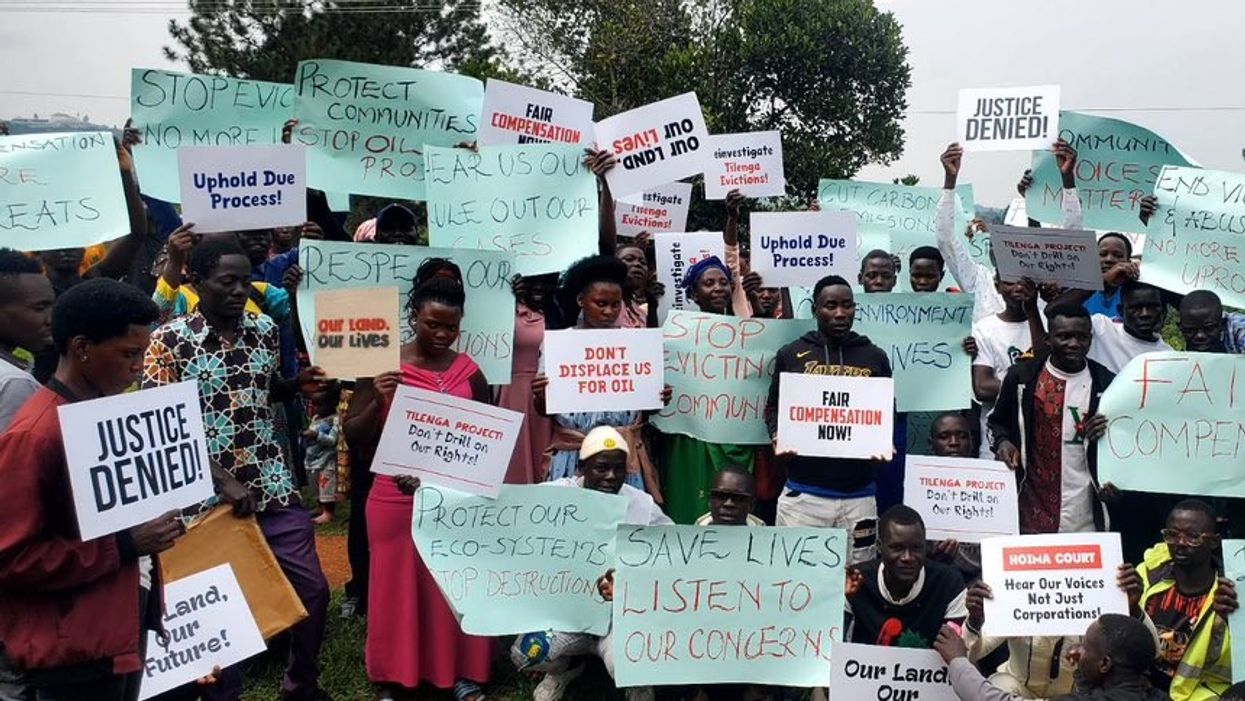
"The arrest of climate activists against EACOP is a blatant move to silence crucial advocates for change," said Fridays for Future Uganda.
Police and soldiers from Uganda's U.S.-trained army cracked down on demonstrators at two Monday protests against the East African Crude Oil Pipeline, continuing the globally condemned oppression of EACOP opponents.
In the capital city of Kampala, where protesters tried to march on Parliament and the Chinese Embassy "there are 21 people arrested, they included 19 males and two females," defense attorney Samuel Wanda told Agence France-Presse. They were taken to the city's central police station and charging details were not yet available. Eight protesters would be directly impacted by the project.
As AFP noted, the China National Offshore Oil Corporation has an 8% stake in EACOP, which is set to carry crude nearly 900 miles from Uganda's Lake Albert oilfields to the port of Tanga in Tanzania. Ugandan and Tanzanian state-owned companies each have a 15% stake, and the remaining 62% is controlled by the France-based multinational TotalEnergies.
"The arrest of Stop EACOP activists in Kampala today is an attack on democracy and the right to protest," said climate campaigner and environmental consultant Ashley Kitisya on social media. "We condemn this crackdown and call for the immediate release of all detained activists. Peaceful voices demanding justice must not be silenced. #StopEACOP."
Fridays for Future Uganda declared that "the arrest of climate activists against EACOP is a blatant move to silence crucial advocates for change."
"Many affected are misled and unaware of the true risks," the youth-led group added. "We must oppose this injustice and demand EACOP’s immediate halt to protect people and the environment."
Hundreds of peaceful pipeline opponents—including breastfeeding mothers—also gathered in Hoima City, according to the Kampala-based Monitor. They were at a Kitara Secondary School (SS) and planned to demonstrate at regional EACOP offices but "were surrounded by heavily armed police" and Uganda Peoples' Defence Forces (UPDF) soldiers "who foiled the protest."
As the outlet noted last year, declassified U.S. State Department data shows that from 2019-21, Uganda received $8.5 million in military training assistance from the United States, and from 2012-16, the African country got grants for equipment worth $21.9 million .
On Monday, Christopher Opio told Hoima Resident City Commissioner Badru Mugabi that the project affected persons (PAPs) he represents had not received a government response to an April petition "so, we decided to say we can again put our concerns in writing. Today, we were taking our petition to the offices of EACOP, and Petroleum Authority of Uganda (PAU) peacefully."
As the Monitor detailed:
Mugabi responded saying: "If you have a court case and the court has not heard you, please come to our offices. We shall put these courts to order, or we shall appeal to their supervisors. But walking to these offices will not change the status quo legally."
Later, Mugabi selected a few PAPs' representatives and escorted them to deliver their petition to the offices of EACOP and PAU while the rest of the aggrieved locals were left at Kitara SS under tight security.
In a series of social media posts, the StopEACOP campaign called out law enforcement for blocking the peaceful protest in Hoima, highlighting the threats and intimidation faced by PAPs and local climate activists.
Despite the oppression in Uganda, protests are planned in Tanzania on Thursday, according to the global climate organization 350.org.
"The EACOP project threatens local communities, water resources, biodiversity, and efforts to curb climate change while providing little to benefit ordinary Ugandan and Tanzanian people," the group said Monday. "Already, tens of thousands of people along the pipeline's route and near its associated oil drilling sites have been forcibly displaced, losing their land, livelihoods, and traditional ways of life. Many have been relocated to inadequate homes on infertile land, making it impossible to grow crops or sustain their families. Others have received inadequate compensation or none at all, leaving them unable to rebuild their lives."
"Additionally, community members and activists face escalating threats, including violence, intimidation, arrests, harassment, and even abductions for resisting the project," 350 added. "Impacted communities and land, human rights, and environmental defenders in the project's host countries are taking to the streets to demand an end to EACOP and justice for the harm that has already been caused."
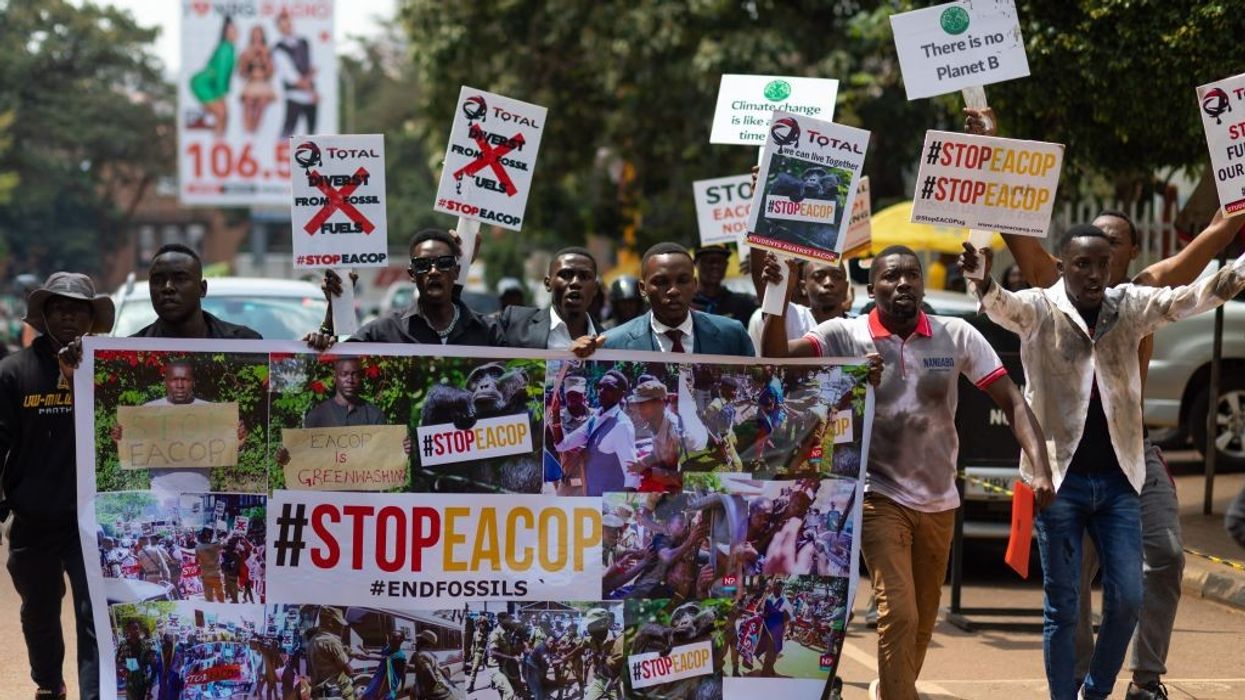
"Speaking up for frontline communities should never lead to this," the #StopEACOP movement said following the release of Stephen Kwikiriza, who was held for a week for opposing the TotalEnergies/CNOOC-led project.
Opponents of a highly controversial oil pipeline under construction in East Africa on Monday demanded an investigation into the Ugandan army's treatment of an environmental activist who was hospitalized after allegedly being severely beaten while he was detained last week.
Stephen Kwikiriza, an activist with the Kampala-based Environmental Governance Institute (EGI), was found dumped on the side of a highway about five hours' drive from the Ugandan capital Sunday night following a weeklong detention by the country's army.
"Unfortunately, he is in poor condition after enduring severe beatings, mistreatment, and abuse throughout the week," EGI said, according to Al Jazeera. "Doctors are conducting various examinations."
Like other climate and environmental campaigners in the movement to stop the East African Crude Oil Pipeline (EACOP), Kwikiriza is believed to have been targeted for his activism against the project, which is being built by the French fossil fuel giant TotalEnergies in partnership with the China National Offshore Oil Corporation (CNOOC), the Uganda National Oil Company, and others.
The Paris-based International Federation for Human Rights (FIDH) said Kwikiriza was apparently abducted by Ugandan army officers in civilian clothes in what the group called a "particularly worrying escalation of repression."
FIDH said 11 activists have been "kidnapped, arbitrarily arrested, detained, or subjected to different forms of harassment by the Ugandan authorities between May 27 and June 5, 2024," part of what critics call a government campaign targeting StopEACOP campaigners that goes back years.
"Speaking up for frontline communities should never lead to this," the StopEACOP movement
said on social media following Kwikiriza's release. "We urge human rights organizations to hold Ugandan authorities accountable and ensure human rights and environmental defenders can work safely."
"We also ask TotalEnergies and CNOOC to investigate the injustices done in their names as alleged," the coalition added. "You can still make profits without harming communities or enabling human rights violations."
A senior Ugandan military official told Agence France-Presse that Kwikiriza "was taken into custody for questioning regarding his illegal activities, including mobilizing fellow activists to oppose the oil pipeline."
In a statement to
Reuters, TotalEnergies said Monday that the company "does not tolerate any threat or attack against those who peacefully defend and promote human rights."
If completed, the $3.5 billion, nearly 900-mile EACOP project is expected to transport up to 230,000 barrels of crude oil per day from fields in the Lake Albert region of western Uganda through the world's longest electrically heated pipeline to the Tanzanian port city of Tanga on the Indian Ocean.
A July 2023 report by Human Rights Watch (HRW) detailed how EACOP has devastated the lives and livelihoods of tens of thousands of people in its path while exacerbating the climate emergency.
"The Ugandan government needs to end its harassment of opponents of oil development in the country, such as the East African Crude Oil Pipeline Project, which has already devastated thousands of people's livelihoods in Uganda and, if completed, will displace thousands of people and contribute to the global climate crisis," HRW senior environmental rights advocate Myrto Tilianaki said in a statement issued during Kwikiriza's detention.
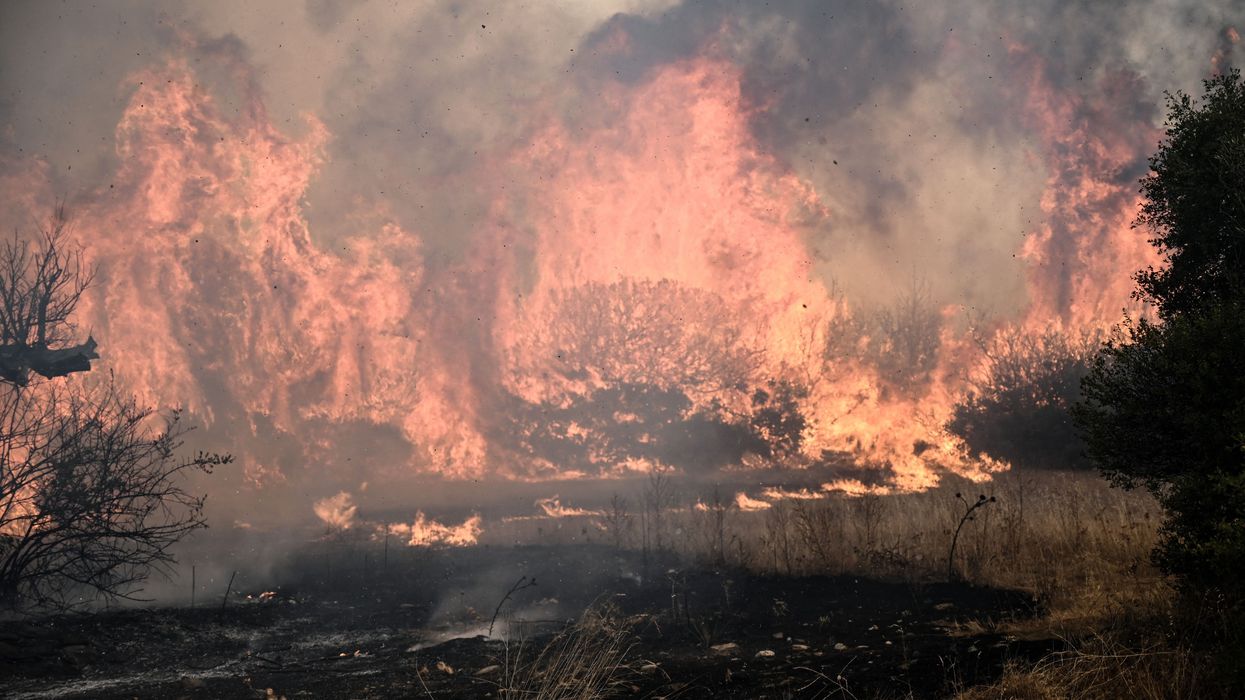
"Heat isn't a new phenomenon," said Global Witness. "But as the planet gets hotter because of human-caused emissions, scientists are detecting more heat-related deaths."
A new report released Wednesday details how the emissions of just five big fossil fuel companies could lead to 11.5 million premature deaths by 2100 as continued oil and gas extraction and consumption heats the planet and sparks extreme heatwaves across the globe.
The analysis by Global Witness focused on the emissions of Shell, TotalEnergies, ExxonMobil, BP, and Chevron—all of which have "defied calls from scientists to rapidly reduce emissions and continue to increase oil and gas production."
ExxonMobil and Chevron have announced investments of more than $100 billion in new oil and gas reserves in recent months, even as the companies eye 2050 as the year they'll reach net zero emissions. The United Nations' Global Stocktake last September showed the five companies targeted in the report "are forecast to spend a staggering $3.1 trillion by 2050, on both existing and new oil and gas extraction"—despite the fact that the U.N. and the International Energy Agency have both warned that no new extraction is compatible with limiting global temperature rise to 1.5°C.
Global Witness cross-referenced the oil companies' plans with research out of Columbia University, which estimated that every 1 million metric tonnes of carbon dioxide emitted in 2020 will cause 226 excess heat-related deaths over the next 80 years.
The analysis "suggests that these five companies will dig up oil and gas, which when burned, will add 51 billion tonnes of carbon dioxide emissions to the atmosphere between now and 2050," said Global Witness. "Using Columbia's mortality cost of carbon methodology, we calculate that emissions from the supermajors' oil and gas would kill an additional 11.5 million people due to heat by 2100."
Global Witness focused on heat-related deaths specifically; a study by Greenpeace Southeast Asia and the Center for Research on Energy and Clean Air in 2020 found that air pollution from fossil fuel combustion was responsible for 4.5 million premature deaths worldwide each year.
Global Witness notes that the deaths of at least 61,000 people were linked to "searing heat across Europe" in 2022, and recent heatwaves have proven deadly in the United States, China, and South America in the past two years.
"Heat isn't a new phenomenon," said Global Witness. "But as the planet gets hotter because of human-caused emissions, scientists are detecting more heat-related deaths."
Extreme heat puts people—particularly children, elderly people, pregnant people, and outdoor workers—at risk for heat stroke, heart attacks, and exhaustion.
"Behind these figures are people," noted the group, pointing to the deaths of 72-year-old Gwendolyn Osborne in Chicago during a record-breaking heatwave in 2022 and of a 13-year-old girl who suffered deadly heat stroke in Japan last summer. "These are just a few stories from the massive and growing wave of heat-caused deaths around the world. Unless the supermajors change course quickly, the death toll will be comparable to some of history's most brutal wars."
The companies have an opportunity to save millions of lives, Global Witness noted, as the Columbia research found that with dramatically reduced emissions, the death toll from the oil giants' emissions would be cut by more than half.
Global Witness included in its analysis the companies' scope 3 emissions, which are produced when people and entities use the firms' products.
When approached by the organization, TotalEnergies objected to the inclusion of scope 3 emissions, saying fossil fuel companies are only responsible for scope 1 (the direct emissions from their facilities) and 2 (emissions from the company's use of electricity, heat, and other utilities).
The companies' net zero pledges for 2050 pertain only to scopes 1 and 2.
Global Witness compared TotalEnergies's claim to those of drug dealers who say "they aren't to blame for drug addictions" or arms dealers who "claim that they don't kill people—that they're simply supplying people with products they want."
"Oil and gas companies are solely responsible for digging up these fossil fuels, and they're doing it eyes wide open in the face of a mountain of evidence documenting the suffering and death that fossil fuels cause, while failing to make even the most basic investments in green energy," said the group.
The analysis came as The Guardian reported on consumer advocacy group Public Citizen's campaign to hold fossil fuel companies legally liable for people's deaths from extreme temperatures, climate-related hunger and disease, flooding, and wildfires.
Public Citizen has been holding events at Yale, Harvard, and New York University to discuss the idea with legal experts, and has reportedly gained some traction.
"Once I read it, I thought that it was more compelling than I had guessed it would be," former Department of Justice prosecutor Cindy Cho told The Guardian of Public Citizen's proposal. "I think that prosecutors should actively consider pursuing the theory, especially if they walk into the investigation with an understanding of the intense challenges."
Global Citizen compared the millions of deaths the oil firms are projected to cause to a chemical spill.
"When a company spills lethal chemicals into a river, and harms people, we hold it legally responsible," said the group. "The American chemical company DuPont has paid out hundreds of millions of dollars for polluting drinking water with chemicals. Will this responsibility extend to carbon emissions, which we can increasingly link to the deaths of millions of people? Certainly, it's an argument the supermajors and their legal teams will be extremely concerned about."
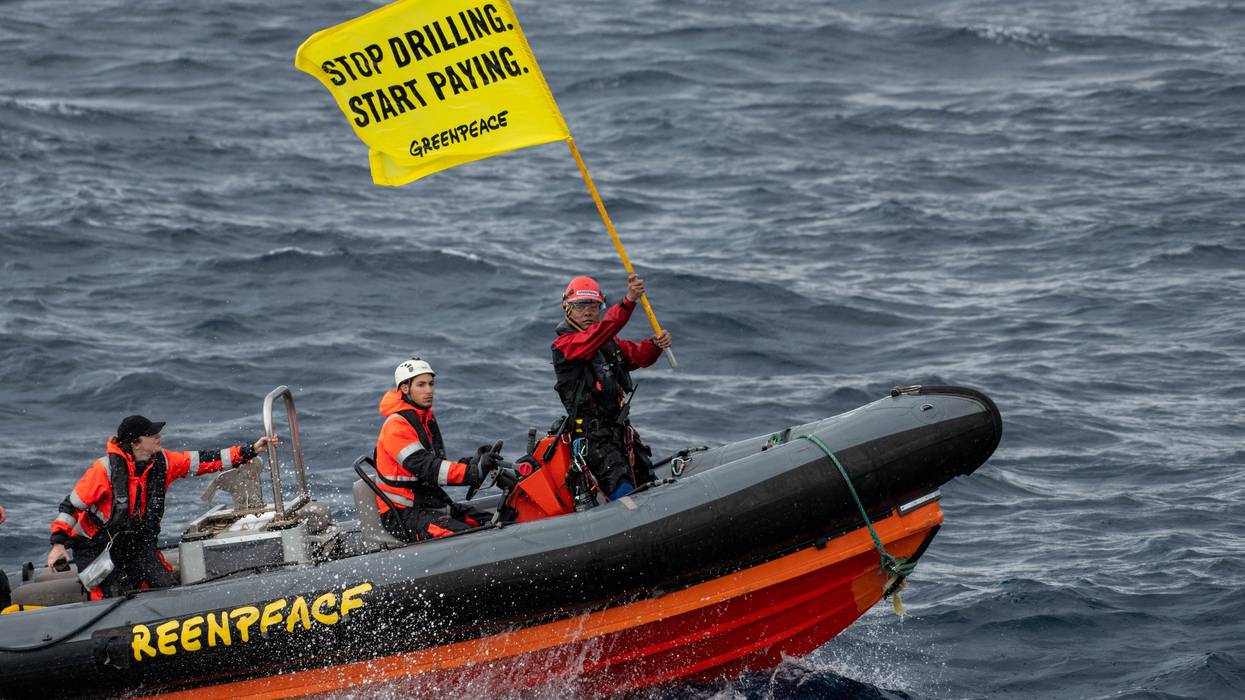
"It has become clear: Eni is trying to silence anyone who dares to speak up and denounce the company's contribution to the fueling of the climate crisis," says Chiara Campione of Greenpeace Italy.
Greenpeace Italy revealed Wednesday that the Italian multinational energy company Eni is threatening a libel suit against it over reports the organization published about oil and gas companies.
Greenpeace said the potential lawsuit is related to a report on temperature-related premature deaths that may be caused by emissions from oil and gas companies like Eni and a report on the concept of "climate homicide."
"We face yet another act of intimidation by Eni; it seems that threatening defamation lawsuits is the new sport which the company has decided to pursue most enthusiastically. But we won't be silenced," said Chiara Campione of Greenpeace Italy. "This new potential defamation lawsuit follows a similar case initiated by Eni against Greenpeace Italia only a few months ago."
OOOPS ENI DID IT AGAIN!
It seems that threatening defamation lawsuits is the new sport which the company has decided to pursue most enthusiastically. https://t.co/zZjhRdCa0f
— Chiara Campione (@ChiaraCampione) March 13, 2024
Eni was given an opportunity to respond to the findings of the Greenpeace reports, but the group said Eni offered "no substantive rebuttal" and threatened legal action. The organization claimed other oil and gas companies mentioned in these reports have not threatened legal action.
Greenpeace Italy and the climate advocacy group ReCommon are currently suing Eni over its alleged contributions to the climate crisis. The first hearing for that case occurred last month.
"It has become clear: Eni is trying to silence anyone who dares to speak up and denounce the company's contribution to the fueling of the climate crisis," Campione said.
The multinational oil giant Shell sued Greenpeace in November for alleged damages related to Greenpeace activists boarding one of the company's oil platforms. Shell is trying to get as much as $8.6 million in damages, which Greenpeace says would greatly threaten its ability to campaign.
The French multinational oil and gas company TotalEnergies is also suing Greenpeace France over a report that claimed it underestimated its 2019 greenhouse gas emissions.
Greenpeace said Wednesday that these companies are trying to "stop Greenpeace and other organizations from denouncing the damage the fossil fuel industry is causing to people and the planet."
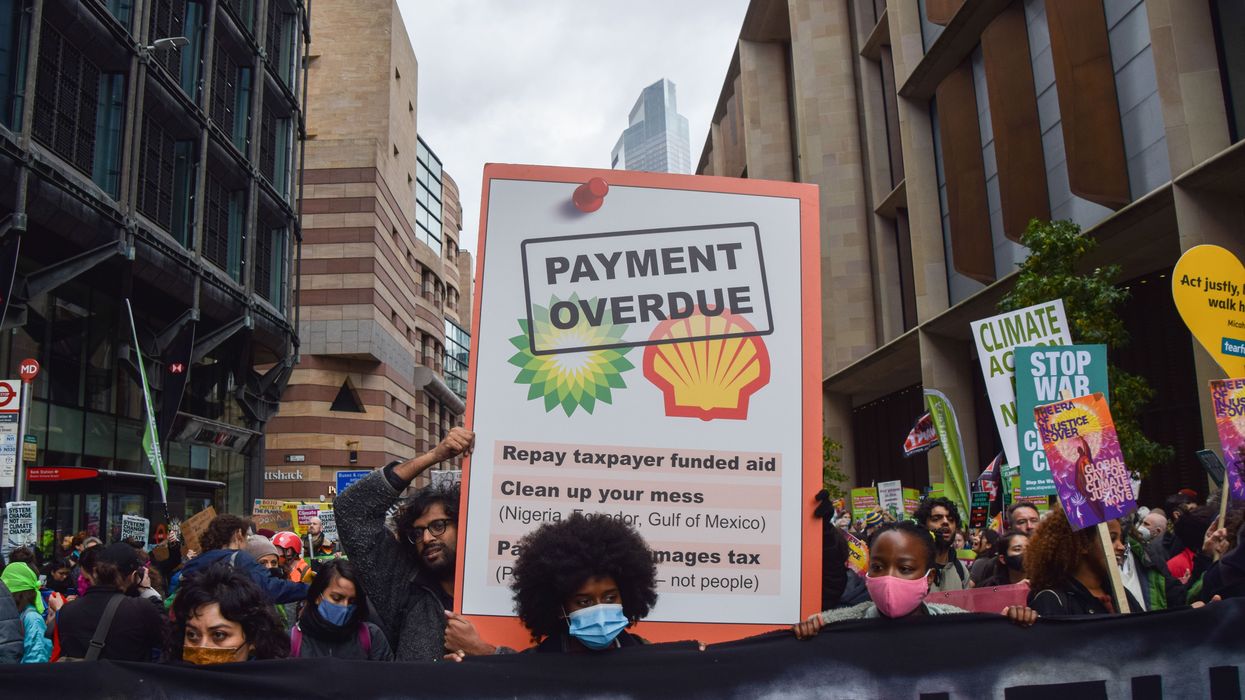
Fossil fuel companies must be made to pay for both the damage they cause and the pathway out of the climate crisis.
As international oil companies’ announcements of their annual profits roll in, executives may already be looking back fondly at 2023 while planning their next private-island holiday or real estate purchase. Yet for billions of us, one of the most lucrative years on record for oil and gas companies will be remembered as the hottest year on record, punctuated by extreme weather events and the ever-spiraling cost of living.
Growing up between two countries, Senegal and the Gambia, I did not need to be an activist or climate scientist to have first-hand knowledge of these crises. Detrimental impacts are felt in all sectors of these countries’ economies, with irregular rains causing farmers indescribable anguish as they lose their livestock and as grasslands turn into drylands. The climate crisis is a leading driver of desertification—a rapidly growing threat to water and food sovereignty—which pushes proud and self-sustaining communities into poverty. As a last resort, some are even pushed out of their homes and consider migration, risking their lives and adding to social and political tensions both at home and abroad.
The answer to climate change-fueled extreme weather events is two-fold: Avoid further emissions of planet-heating gases and invest in local solutions. The annual profits of just six major oil and gas companies—BP, Chevron, Equinor, Exxonmobil, Shell, and Total—which together scooped up almost $140 billion, are made from our collective loss. Not only does their business cause destructive climate change, but their profits do little to address these impacts. These companies must be made to pay for both the damage they cause and the pathway out of the climate crisis.
We must mark a turning point in expectations from the world’s largest polluting sectors, not least the fossil fuel industry, to pay towards the costs of climate action in developing countries.
Is it right for just a single company to earn off pollution in one year as much as it would cost for Senegal to address land degradation impacts for decades, not to mention a host of other climate disasters? Anyone who isn’t getting to line their pockets will say no. Despite the “economic wins” of these international oil companies, there is another more critical story to tell. Ordinary people everywhere are being penalized for the financial gains of oil and gas and their backers—from soaring energy bills to climate-related loss and damage. Their profits are our loss.
The oil and gas industry’s cumulative profits for 2023 far exceed the economic cost of weather and climate events for the same year, and payouts are similarly expected to crush record levels as just the six companies mentioned above have already distributed over $127 billion to their shareholders. This surpasses a global goal of $100 billion in climate finance to which rich governments have committed. Some of these costs—like the loss of loved ones, memories, cultural assets, connection to home, and ancestral ties that bind communities together—cannot be measured.
Polluters will never voluntarily stop drilling and start paying for the energy transition and the climate impacts they have caused. The fossil fuel industry knew of its climate impacts for decades, but has deliberately hidden or ignored the truth, discredited scientific evidence, and has broken countless laws in pursuit of its dirty business and enormous profits. Furthermore, the industry’s profits are overwhelmingly invested in new fossil fuel projects and in maximizing shareholder profits, instead of a shift to renewable energy sources.
Governments must step up to provide accountability and deliver justice. They need to help communities around the globe and deliver a rapid and just phaseout of all fossil fuels, as well as levy taxes on the fossil fuel industry for the costs associated with surviving the climate crisis. As a start, introducing a permanent excess profits tax on oil and gas producers and redirecting subsidies could generate substantial finance for climate action.
Both the oil and gas giants and the climate crisis that they’ve caused are global. Our solutions should be, too. Global events such as COP29 must also deliver an ambitious needs-based global finance goal supported by rich countries, going beyond the previous $100 billion goal. We must mark a turning point in expectations from the world’s largest polluting sectors, not least the fossil fuel industry, to pay towards the costs of climate action in developing countries.
In 2023, hundreds of thousands of people took action worldwide—from Nairobi to Norway, from the Philippines to New York—and called for a fast and fair fossil fuel phaseout. 2024 will be the year when the oil and gas industry starts losing and we all start winning, and the climate movement intends to be there to stand with those most impacted.
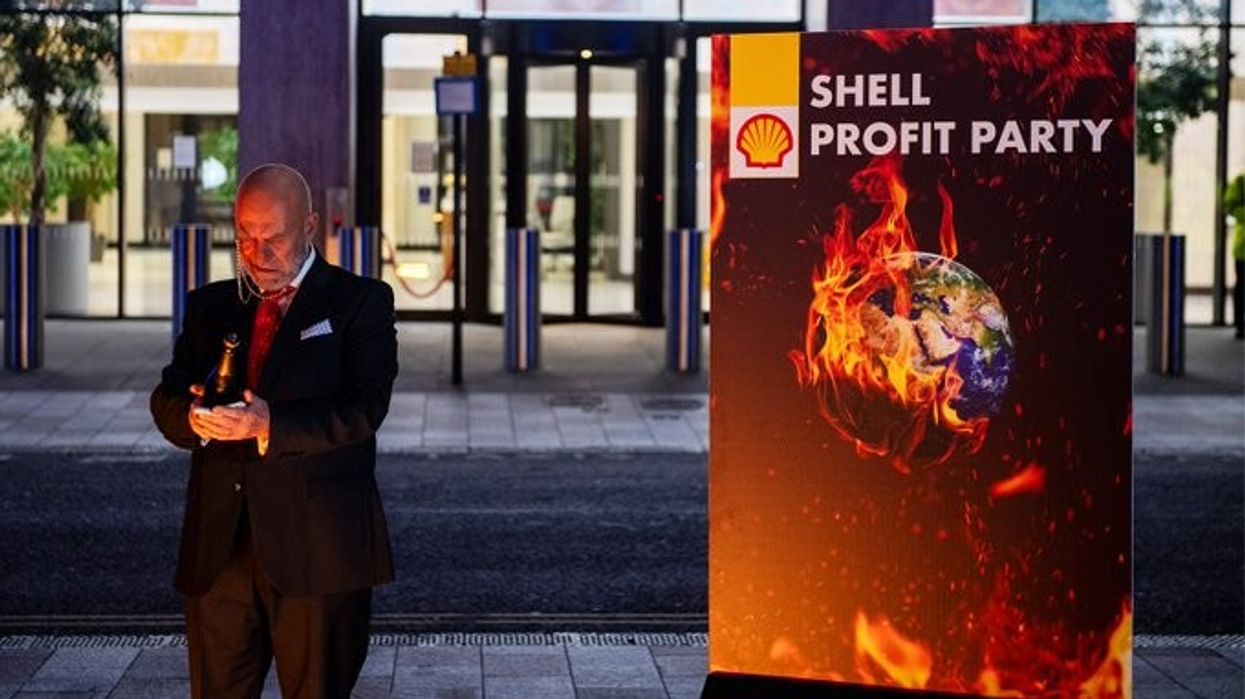
"They have amassed untold wealth off the back of death, destruction, and spiraling energy prices," a Global Witness investigator said of a new analysis.
As Russia's invasion of Ukraine approaches its second anniversary, one group has clearly benefited: the five biggest U.S. and European oil and gas companies.
BP, Chevron, ExxonMobil, Shell, and TotalEnergies have made more than a quarter of a trillion dollars in profits since the war began, according to an analysis published by Global Witness on Monday.
"This analysis shows that regardless of what happens on the front lines, the fossil fuel majors are the main winners of the war in Ukraine," Global Witness senior fossil fuels investigator Patrick Galey said in a statement. "They have amassed untold wealth off the back of death, destruction, and spiraling energy prices."
Big Oil's profits were fueled in part by high wholesale gas prices, which were already elevated before Russia invaded Ukraine on February 24, 2022 and skyrocketed afterward. All five companies covered by the analysis reported record profits for 2022.
This bonanza came as the conflict killed more than 10,000 Ukrainian civilians.
"Russia's invasion of Ukraine has been devastating for millions of people, from ordinary Ukrainians living under the shadow of war, to the households across Europe struggling to heat their homes," Galey said.
During 2022, U.S. President Joe Biden accused Big Oil of "war profiteering."
Global Witness calculated that BP and Shell have raked in enough since the war began—at £75 billion—to pay all British household electricity bills through July 2025. Chevron and ExxonMobil have made a combined $136 billion while Total has netted $50.4 billion.
These massive profits also come as the climate crisis, driven primarily by the burning of fossil fuels, continues to escalate. 2023 was the hottest year on record, and likely the hottest in 125,000 years. Yet instead of using their record profits to invest in renewable energy technology, the five major oil companies have cut back on their climate initiatives and handed massive payouts to shareholders.
"This is yet another way in which the fossil fuel industry is failing customers and the planet."
Of the more than $280 billion the five companies have brought in since the war began, they returned what Global Witness said was an "unprecedented" $200 billion to shareholders. At the same time, Shell rescinded a promise to curb oil production by 2030 and said it would fire around 200 people employed by its green jobs division. BP, meanwhile, slashed its emissions reduction target from 35-40% of 2019 levels by 2030 to 20-30%.
The money paid to shareholders is also money that could have been paid to help communities adapt to the climate crisis or recover from the damage it has already caused. The $111 billion that the five companies paid to shareholders in 2023 alone is 158 times more than the money pledged to climate-vulnerable nations at COP28, and the €15 billion that TotalEnergies rewarded shareholders with was more than the €10 billion that France needed to recover from droughts and storms in 2022.
Galey said the companies were now "spending their gains on investor handouts and ever more oil and gas production, which Europe doesn't need and the climate cannot take."
"This is yet another way in which the fossil fuel industry is failing customers and the planet," Galey said.

"As Africans, we need to show TotalEnergies the red card," said one climate campaigner.
As the African Cup of Nations soccer tournament gets set to kick off in Côte d'Ivoire this weekend, Greenpeace on Friday satirically skewered French oil giant TotalEnergies, the event's main sponsor, for "greenwashing" its harmful impacts on the people of Africa and the global climate.
In a cheeky three-minute parody video, Zimbabwean comedian Munashe Chirisa and British writer and performer Jolyon Rubinstein play Total executives "wilfully exploiting AFCON's millions of global viewers to boost its image, while continuing to profit from climate-wrecking fossil fuel extraction across the continent."
"The beautiful game is a chance to show how much we care about Africa, its coastlines, vast forests, and savannas, which sneakily might be hiding some oil we can suck back to Europe," the pair banter. "I mean, if it wasn't for the oil fields we plunder across your splendid continent, we wouldn't have made $6 million every 90 minutes."
"While you Africans have been going through a cost-of-living crisis, we have just recorded our most profitable year yet," they note. "Ka-ching!"
"So what if our industry produces enough oil to fill a stadium every three hours and 37 minutes," they ask. "We spend a tiny percentage of our budget sponsoring AFCON to keep you Africans happy whilst we blow the big bucks on planning massive carbon bombs that will blow up the continent."
The comedians continue: "Yes, the science says we need to stop all new drilling, but our shareholders say 'fuck that, fuck all of that.' Which is why we're the company with the most new oil and gas explorations on the whole African continent."
"You think you've seen droughts, famines, and forced migration? You ain't seen nothin' yet," they promise. "We're committed to turbocharging the climate crisis."
While Africa produces the world's lowest per-capita carbon emissions, the continent is suffering disproportionately during the worsening planetary emergency, with 17 of the 20 countries most threatened by global heating located on the continent of nearly 1.5 billion people.
"It's time to kick TotalEnergies out of our stadiums. Our passion for football runs deep, but so does our love for a clean, healthy Africa."
"Fossil fuels—the lifeblood of climate-wrecking companies like TotalEnergies—are poisoning the lungs of African athletes and soccer fans," Greenpeace Africa oil and gas campaigner Thandile Chinyavanhu said in a statement.
"Science says we must transition away from fossil fuels to clean energy. But Total continues to displace communities for new oil drilling, and spew toxins before shipping massive profits back to Europe," she continued. "Total is turning AFCON from a celebration of African unity into a grotesque greenwashing stunt."
"It's time to kick TotalEnergies out of our stadiums," Chinyavanhu added. "Our passion for football runs deep, but so does our love for a clean, healthy Africa."
Samm Farai Monro, co-founder of the group Kick Polluters Out and creative director of the Magamba Network, a Zimbabwe-based civil society organization, said that "TotalEnergies is guilty of foul play. They like to portray a clean, green image of themselves with their sponsorship of AFCON. But the reality is very different."
"At a time when scientists are telling us to stop any new fossil fuels projects, Total is developing more oil and gas resources in Africa than any other company," Farai Monro added. "As Africans, we need to show TotalEnergies the red card. We love football. We hate pollution!"
Greenpeace accuses Total of "a wave of destruction across the African continent," including the East African Crude Oil Pipeline (EACOP), which, if completed, will transport up to 230,000 barrels a day of crude oil nearly 900 miles from fields in the Lake Albert region of western Uganda to the Tanzanian port city of Tanga on the Indian Ocean.
In addition to exacerbating the climate emergency, EACOP and the related Tilegna oil field development would displace around 100,000 Ugandans and Tanzanians, according to a Human Rights Watch report published last year.

"Drug dealers don't fix drug addictions, and petrostates won't fix the climate crisis," one campaigner said.
Azerbaijan, the country slated to host the next United Nations Climate Change Conference, has plans to increase its gas production by a third during the next 10 years.
The findings, released by Global Witness Monday, build on concerns about how effectively an Azerbaijan-hosted COP29 will tackle the climate crisis, given the country's reliance on fossil fuels and its decision to appoint a former state oil company executive as president of the conference.
"Drug dealers don't fix drug addictions, and petrostates won't fix the climate crisis," Dominic Eagleton, senior campaigner at Global Witness, said in a statement. "As we hurtle towards climate collapse, we're now being asked to put our future in the hands of Azerbaijan, a petrostate that's propped up by oil supermajors and is massively increasing its gas production."
"We need climate policymaking to be run by climate leaders, not countries with a vested interest in keeping the world hooked on oil and gas."
Global Witness' analysis was based on data from business intelligence agency Rystad Energy. According to the data, fossil fuel companies including BP, TotalEnergies, Iran's national oil company, and Russia's largest private oil company Lukoil will invest $41.4 billion in Azerbaijani gas over the next decade, with just those four companies alone spending $16.8 billion. The full $41.1 billion would be enough to install more than 1,170 offshore wind turbines.
At the same time, fossil fuel companies will extract 411 billion cubic meters (bcm) from Azerbaijan's gas fields over the next 10 years, which would release 781 million metric tons of carbon dioxide into the atmosphere. That's more than double what the United Kingdom burns in a year.
All told, Azerbaijan's gas fields are slated to increase their output by a third from 37 bcm in 2024 to 49 bcm in 2033. Yet scientists have warned that the next decade is crucial for rapidly reducing fossil-fuel use in order to preserve the goal of limiting global heating to 1.5°C above preindustrial levels. The most recent report from the Intergovernmental Panel on Climate Change says that, to preserve a 50% shot at the 1.5°C target, greenhouse gas emissions must fall by 43% of 2019 levels by 2030 and 60% by 2035.
The news from Azerbaijan comes after climate campaigners said the outcome of COP28, hosted by the United Arab Emirates and presided over by the head of the country's state oil company, resulted in a deal full of loopholes for the fossil fuel industry that stopped short of promising to phase out fossil fuels.
"What a sick joke," climate system science expert Paul Beckwith posted on social media in response to the Global Witness data. "COP29 is already a farce like COP28."
Eagleton added: "We need climate policymaking to be run by climate leaders, not countries with a vested interest in keeping the world hooked on oil and gas."
There are also human rights concerns related to Azerbaijan's fossil fuels. Global Witness told The Guardian that just two BP-operated oil and gas projects had earned the country more than four times what it spent on the military since 2020. Some have said that Azerbaijan's fossil fuel earnings are being used to fund its military campaign to reincorporate the separatist Nagorno-Karabakh region. A September invasion forced more than half of the territory's population to flee into Armenia along a single road, in an exodus visible from space, as the "PBS NewsHour" reported at the time. The Azerbaijani government is also generally known for being corrupt and repressive, according to Global Witness.
Despite this, the European Union has looked to Azerbaijan as a substitute for Russian gas following its invasion of Ukraine. European Commission President Ursula von der Leyen signed a deal with Azerbaijan's Ilham Aliyev in 2023 to double the country's gas exports to Europe by 2027. In December, Aliyev said the country was "confidently moving toward the goal," according to The Guardian.
At the same time, Azerbaijani fossil fuels are also helping to finance Russia's war in Ukraine through the company Lukoil, which owns a 19.99% stake in the country's Shah Deniz field as well as a share of the pipeline that moves gas from the field to Europe, Global Witness said.