
SUBSCRIBE TO OUR FREE NEWSLETTER
Daily news & progressive opinion—funded by the people, not the corporations—delivered straight to your inbox.
5
#000000
#FFFFFF
To donate by check, phone, or other method, see our More Ways to Give page.


Daily news & progressive opinion—funded by the people, not the corporations—delivered straight to your inbox.
"To allow a handful of monopoly-aspiring gatekeepers to control access to the internet is a direct threat to our democracy," said Michael Copps, a Common Cause special adviser and former FCC commissioner.
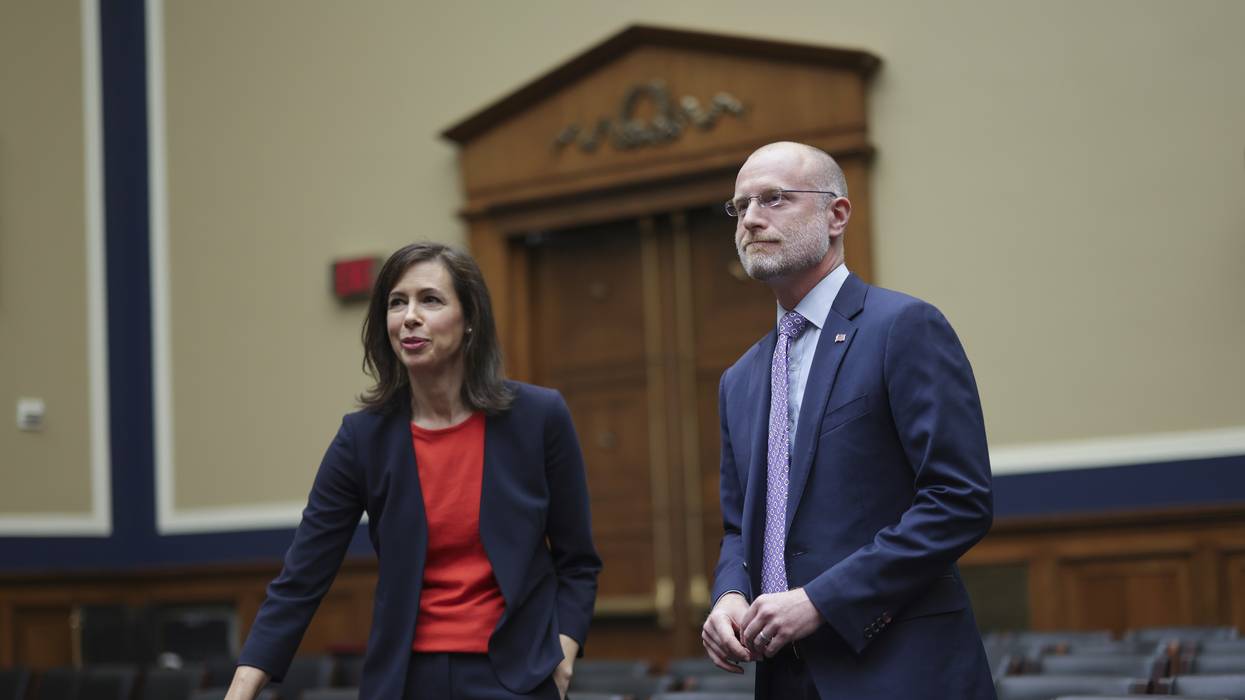
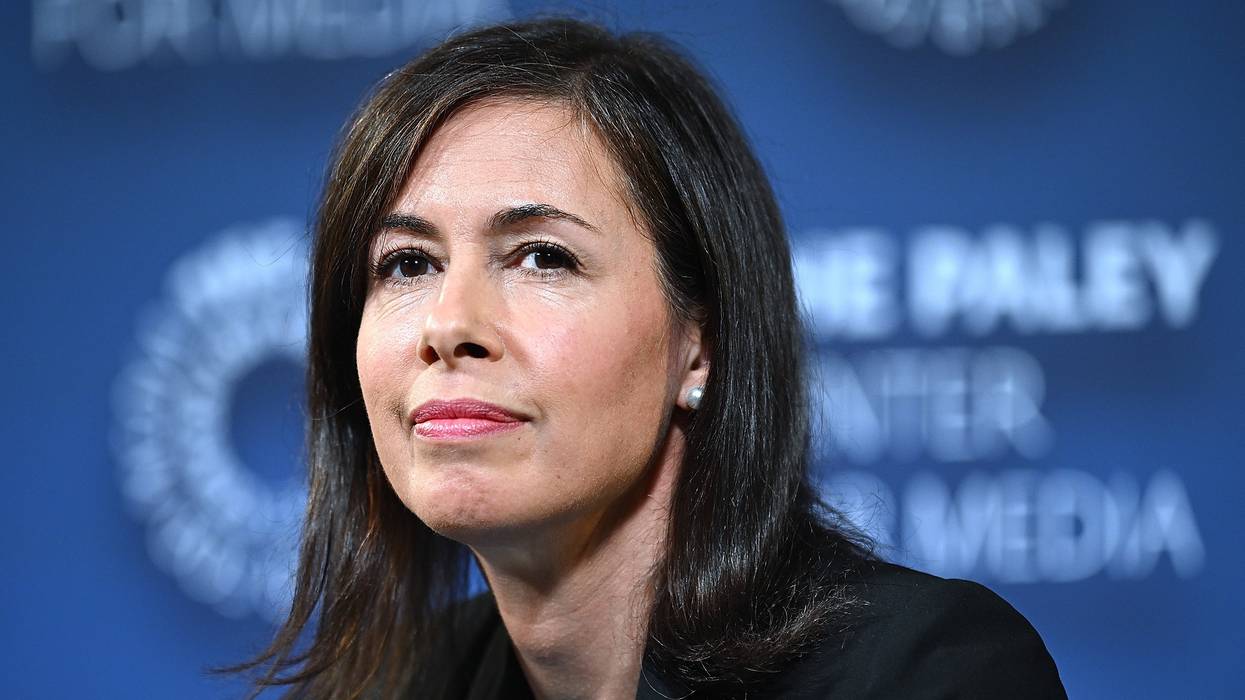
Open internet advocates across the United States celebrated on Tuesday as Federal Communications Commission Chair Jessica Rosenworcel announced her highly anticipated proposal to reestablish FCC oversight of broadband and restore net neutrality rules.
"We thank the FCC for moving swiftly to begin the process of reinstating net neutrality regulations," said ACLU senior policy counsel Jenna Leventoff. "The internet is our nation's primary marketplace of ideas—and it's critical that access to that marketplace is not controlled by the profit-seeking whims of powerful telecommunications giants."
Rosenworcel—appointed to lead the commission by President Joe Biden—discussed the history of net neutrality and her new plan to treat broadband as a public utility in a speech at the National Press Club in Washington, D.C., which came on the heels of the U.S. Senate's recent confirmation of Anna Gomez to a long-vacant FCC seat.
Back in 2005, "the agency made clear that when it came to net neutrality, consumers should expect that their broadband providers would not block, throttle, or engage in paid prioritization of lawful internet traffic," she recalled. "In other words, your broadband provider had no business cutting off access to websites, slowing down internet services, and censoring online speech."
"Giant corporations and their lobbyists... will try every trick to block or delay the agency from restoring net neutrality."
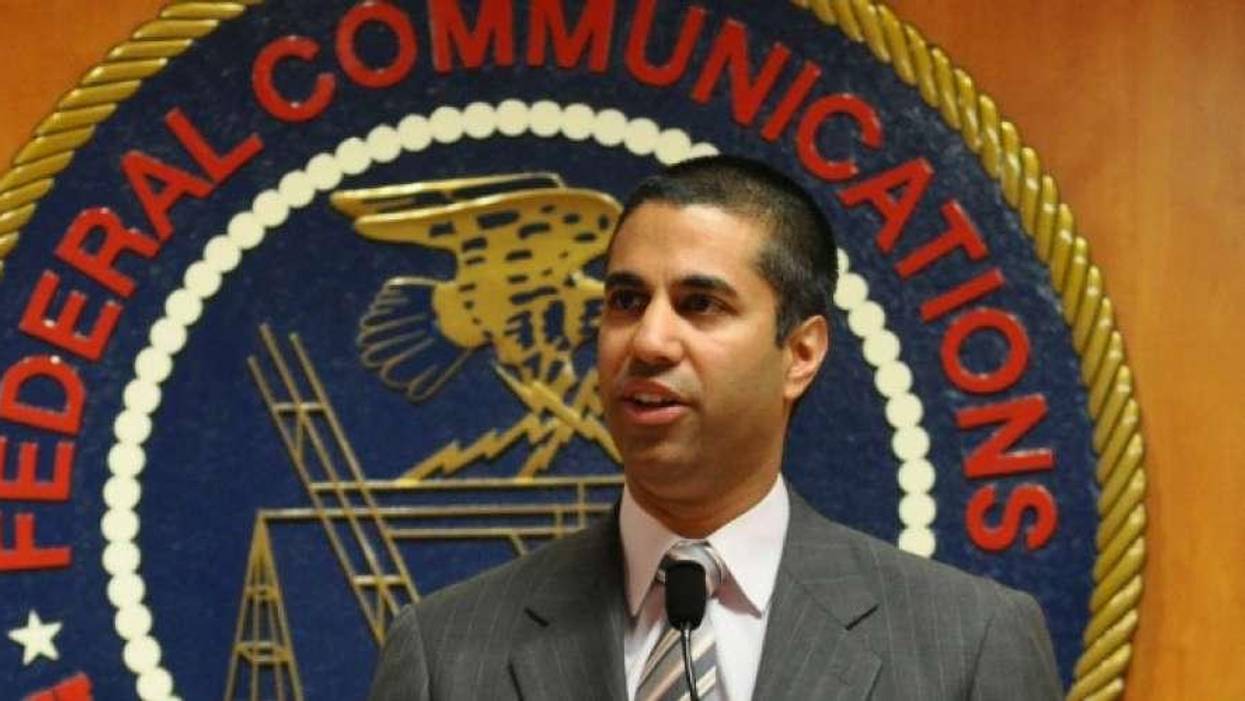
After a decade of policymaking and litigation, net neutrality rules were finalized in 2015. However, a few years later—under former FCC Chair Ajit Pai, an appointee of ex-President Donald Trump—the commission caved to industry pressure and repealed them.
"The public backlash was overwhelming. People lit up our phone lines, clogged our email inboxes, and jammed our online comment system to express their disapproval," noted Rosenworcel, who was a commissioner at the time and opposed the repeal. "So today we begin a process to make this right."
The chair is proposing to reclassify broadband under Title II of the Communications Act, which "is the part of the law that gives the FCC clear authority to serve as a watchdog over the communications marketplace and look out for the public interest," she explained. "Title II took on special importance in the net neutrality debate because the courts have ruled that the FCC has clear authority to enforce open internet policies if broadband internet is classified as a Title II service."
"On issue after issue, reclassifying broadband as a Title II service would help the FCC serve the public interest more efficiently and effectively," she pointed out, detailing how it relates to public safety, national security, cybersecurity, network resilience and reliability, privacy, broadband deployment, and robotexts.
"Giant corporations and their lobbyists blocked President Biden from filling the final FCC seat for more than two years, and they will try every trick to block or delay the agency from restoring net neutrality now," Demand Progress communications director Maria Langholz warned Tuesday. "The commission must remain resolute and fully restore free and open internet protections to ensure broadband service providers like Comcast and Verizon treat all content equally."
"Americans' internet experience should not be at the whims of corporate executives whose primary concerns are the pockets of their stakeholders and the corporations' bottom line," she added, also applauding the chair.
Free Press co-CEO Jessica J. González similarly praised Rosenworcel and stressed that "without Title II, broadband users are left vulnerable to discrimination, content throttling, dwindling competition, extortionate and monopolistic prices, billing fraud, and other shady behavior."
"As this proceeding gets under way, we will hear all manner of lies from the lobbyists and lawyers representing big phone and cable companies," she predicted. "They'll say anything and everything to avoid being held accountable. But broadband providers and their spin doctors are deeply out of touch with people across the political spectrum, who are fed up with high prices and unreliable services. These people demand a referee on the field to call fouls and issue penalties when broadband companies are being unfair."
Like Rosenworcel, in her Tuesday speech, González also highlighted that "one thing we learned from the Covid-19 pandemic is that broadband is essential infrastructure—it enables us to access education, employment, healthcare, and more."
That "more" includes civic engagement, as leaders at Common Cause noted Tuesday. Ishan Mehta, who directs the group's Media and Democracy Program, said that "the internet has fundamentally changed how people are civically engaged and is critical to participating in society today. It is the primary communications platform, a virtual public square, and has been a powerful organizing tool, allowing social justice movements to gain momentum and widespread support."
After the Trump-era repeal, Mehta explained, "we saw broadband providers throttle popular video streaming services, degrade video quality, forcing customers to pay higher prices for improved quality, offer service plans that favor their own services over competitors, and make hollow, voluntary, and unenforceable promises not to disconnect their customers during the pandemic."
Given how broadband providers have behaved, Michael Copps, a Common Cause special adviser and former FCC commissioner, said that "to allow a handful of monopoly-aspiring gatekeepers to control access to the internet is a direct threat to our democracy."
Rosenworcel's speech came a day after U.S. Sens. Ed Markey (D-Mass.) and Ron Wyden (D-Ore.) led over two dozen of their colleagues in sending a letter calling for the restoration of net neutrality protections. The pair said in a statement Tuesday that "broadband is not a luxury. It is an essential utility and it is imperative that the FCC's authority reflects the necessary nature of the internet in Americans' lives today."
"We need net neutrality so that small businesses are not shoved into online slow lanes, so that powerful social media companies cannot stifle competition, and so that users can always freely speak their minds on social media and advocate for the issues that are most important to them," they said. "We applaud Chairwoman Rosenworcel for her leadership and look forward to working with the FCC to ensure a just broadband future for everyone."
"The FCC has a mandate to increase the diversity of local-media ownership and to ensure broadband access is affordable, open and reliable for all," said one advocate. "We need all five FCC commissioners as soon as possible to fully move this work forward."
Eager to end more than two years of deadlock at the Federal Communications Commission, digital rights advocates on Monday expressed relief at U.S. President Joe Biden nomination of former FCC legal adviser Anna Gomez and called on the U.S. Senate to confirm her appointment as quickly as possible.
"Finally!" tweeted media and technology advocacy group Free Press when the nomination was announced. "The agency has been deadlocked since January 2021 and this delay has harmed millions of people."
Gomez currently serves as a senior adviser for international information and communications policy at the State Department and worked for more than a decade at the FCC as a senior legal adviser to then-Chairman William Kennard.
She also worked in leadership roles at the National Telecommunications and Information Administration, whose work addresses broadband and internet policy.
The American Prospect's David Dayen noted that he recently wrote about Gomez's career, detailing her work within the telecom industry—which the FCC regulates—as well as her work in government.
"Gomez has plenty in her background to interest industry," wrote Dayen. "She was the vice president of government affairs (a nice term for lobbyist) at Sprint Nextel. She was an associate early in her career at corporate law firm Arnold & Porter, and more recently she spent several years as a partner at Wiley Rein, the biggest and most influential law firm that represents clients at the FCC."
Communications on unmanned aerial systems, or drones, were a large focus of her work at Wiley Rein, Dayen reported.
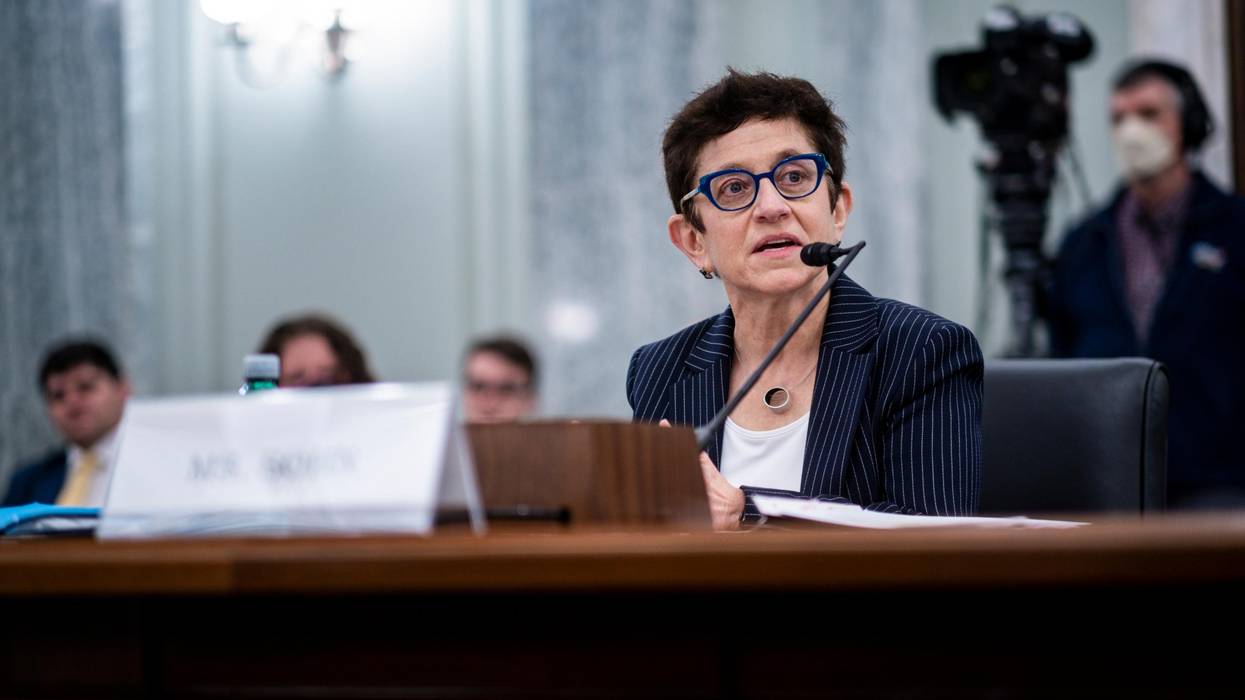
Gomez's nomination comes two months after longtime public advocate Gigi Sohn withdrew her nomination, which had been championed by progressives, after months of attacks by the telecom lobby.
More than 60 digital rights groups wrote to Biden after Sohn's withdrawal, calling for another nominee who would fight forcefully at the commission for net neutrality rules, the rights of low-income and rural communities, and privacy rights.
"We're now approaching two-and-a-half years without a fully functional Federal Communications Commission. Never before has the American public had to wait so long for a commissioner's seat to be filled," Jessica Gonzalez, co-CEO of Free Press, which signed the letter, said on Monday after Gomez's nomination was announced. "In addition to her corporate experience—which has often entailed working for competitive carriers instead of incumbents—Gomez has a long track record of public service, including high-ranking positions at the FCC and Commerce Department. She is eminently qualified for this role at the FCC."
Dayen noted that some of Gomez's positions on communications issues have not been publicized, including her views on congressional rules that punish internet service providers (ISPs) for underinvestment in low-income communities and on net neutrality rules, which prevent ISPs from creating internet "fast lanes" for companies that can pay for them and throttling other content by slowing down speeds.
"We expect Gomez to help restore the proper legal framework for broadband and the net neutrality protections that the FCC repealed during the Trump administration," said Gonzalez. "In poll after poll, people in the United States of all political stripes say they want enforceable rules for an open internet. We're confident that Gomez will give weight to this overwhelming public support and be responsive to public input on the full range of issues before the agency."
The 2-2 deadlock at the FCC has made it impossible for the commission to stop ISPs from "digitally redlining" low-income communities with slower service for the same rates as wealthier customers, as Common Cause said last October, and to restore net neutrality rules.
"The FCC has a mandate to increase the diversity of local-media ownership and to ensure broadband access is affordable, open and reliable for all," said Gonzalez. "We need all five FCC commissioners as soon as possible to fully move this work forward."
"Any further delay means big companies will have an easier time engaging in unjust, unreasonable, and discriminatory actions, because they know this vital watchdog agency isn't operating with the majority it needs," she added. "If these leaders want to improve the lives of internet users, cellphone customers, TV watchers, and radio listeners—meaning everyone—they need to speed up confirmation before the clock runs out at the FCC."
The president is under pressure to choose a candidate who "is free of industry conflicts of interest, someone who will prioritize net neutrality, privacy, network competition, broadband maps, and the digital divide."
More than five dozen advocacy organizations on Friday implored U.S. President Joe Biden to swiftly select a Federal Communications Commission candidate who will serve the public interest, not the telecommunications industry.
The coalition's letter stresses that a fifth commissioner is urgently needed to end the current 2-2 deadlock and enable the FCC to "increase digital equity and media diversity, bolster online privacy and safety protection, and reassert its rightful authority over broadband to ensure everyone in the United States has access to this essential service."
The message to Biden comes after Gigi Sohn removed herself from consideration last week, citing the "legions of cable and media industry lobbyists, their bought-and-paid-for surrogates, and dark money political groups with bottomless pockets" who distorted her "over 30-year history as a consumer advocate into an absurd caricature of blatant lies."
"We call on you to immediately put forth a new nominee—specifically, one who has a history of advocacy for the public interest and is free of industry conflicts of interest."
Sohn, the new letter states, "was eminently qualified to serve as a commissioner. But after 16 months of organized and well-funded attacks by dark-money groups—which were carried out by lobbyists, enabled by complicit elected leaders, and amplified in partisan media—Sohn made the understandable decision to withdraw from consideration."
Organizations behind the letter—including Common Cause, Demand Progress Education Fund, Electronic Frontier Foundation, Fight for the Future, Free Press Action, Our Revolution, Public Knowledge, Revolving Door Project, and RootsAction.org—were outraged over both the telecom industry smear campaign against Sohn and top Democrats' refusal to fiercely defend the nomination. Her withdrawal has sparked fears that Biden will choose an industry-friendly candidate.
"Now, we call on you to immediately put forth a new nominee—specifically, one who has a history of advocacy for the public interest and is free of industry conflicts of interest; demonstrates a clear commitment to championing the rights of low-income families and communities of color; and supports Title II oversight and laws that ensure the FCC the authority to prevent unjust discrimination and promote affordable access," the coalition wrote to Biden.
"We ask you to actively press the Democratic majority in the Senate to swiftly confirm your nominee," the groups added. "We cannot permit senators to prevent forward progress any longer at the behest of the very corporations the FCC is meant to regulate."
Free Press Action president and co-CEO Craig Aaron similarly argued in a Common Dreams opinion piece last week:
We must oppose and reject any return to business as usual that furthers industry capture of the FCC.
Instead, we need to demand an independent candidate with public-interest bona fides and a clear commitment to racial justice and civil rights. They must show they're willing to stand up to lies. They must be unequivocal in their support for restoring the FCC's authority, and making sure that the internet is open, affordable, available, and reliable for everyone. They must demonstrate a commitment to engaging the public, not just meeting with lobbyists.
Sohn's defeat also "has implications that go far beyond the FCC," Aaron noted. "The Republicans and their Democratic enablers are setting out markers for who's allowed to serve in government."
"They made clear that public servants will be pilloried while ex-corporate lobbyists sail through," he wrote. "Women and LGBTQIA+ folks—Sohn would have been the first lesbian to serve as an FCC commissioner—will be slandered. Tweeting about police violence can be disqualifying (in the Senate, retweets do equal endorsements). Questioning the propriety of Fox News—even as it's being exposed for aiding and abetting election lies and insurrection—is unacceptable. A basic understanding of U.S. history and racism may be disqualifying."
Sohn "deserved better," Aaron tweeted. "But I hope we—and the White House and Democratic Party, especially—can learn so it doesn't happen again."
"I could not have imagined that legions of cable and media industry lobbyists, their bought-and-paid-for surrogates, and dark money political groups with bottomless pockets would distort my over 30-year history as a consumer advocate into an absurd caricature of blatant lies."
"I could not have imagined that legions of cable and media industry lobbyists, their bought-and-paid-for surrogates, and dark money political groups with bottomless pockets would distort my over 30-year history as a consumer advocate into an absurd caricature of blatant lies," Sohn said in a statement. "The unrelenting, dishonest, and cruel attacks on my character and my career as an advocate for the public interest have taken an enormous toll on me and my family."
While her announcement came just after U.S. Sen. Joe Manchin (D-W.Va.), a frequent obstacle to his own party's priorities, confirmed Tuesday that he would not support the nomination, Sohn's lengthy statement—shared with The Washington Post—signaled that she decided to bow out after speaking with her family on Monday.
According to Sohn:
Unfortunately, the American people are the real losers here. The FCC deadlock, now over two years long, will remain so for a long time. As someone who has advocated for my entire career for affordable, accessible broadband for every American, it is ironic that the 2-2 FCC will remain sidelined at the most consequential opportunity for broadband in our lifetimes. This means that your broadband will be more expensive for lack of competition, minority, and underrepresented voices will be marginalized, and your private information will continue to be used and sold at the whim of your broadband provider. It means that the FCC will not have a majority to adopt strong rules which ensure that everyone has nondiscriminatory access to broadband, regardless of who they are or where they live, and that low-income students will continue to be forced to do their school work sitting outside of Taco Bell because universal service funds can't be used for broadband in their homes. And it means that many rural Americans will continue the long wait for broadband because the FCC can't fix its Universal Service programs.
It is a sad day for our country and our democracy when dominant industries, with assistance from unlimited dark money, get to choose their regulators. And with the help of their friends in the Senate, the powerful cable and media companies have done just that.
After thanking Biden—who first nominated her to the post in October 2021 and has stood by the choice—as well as the hundreds of organizations and advocates who have supported her throughout the process, Sohn said that "I hope the president swiftly nominates an individual who puts the American people first over all other interests. The country deserves nothing less."
During a media briefing Tuesday afternoon, White House Press Secretary Karine Jean-Pierre praised Sohn.
"We appreciate Gigi Sohn's candidacy for this important role. She would have brought tremendous intellect and experience, which is why the president nominated her in the first place. We also appreciate her dedication to public service, her talent, and her years of work as one of the nation's leading public advocates on behalf of American consumers and competition," said Jean-Pierre, who declined to comment on what's next.
"The abject failure of Democratic leaders to stand up and advocate for their own nominee means that these companies will likely only double down on the kinds of deceitful and dirty tactics they deployed against Sohn."
Meanwhile, advocacy groups that rallied behind Sohn not only expressed disappointment that she won't be on the FCC but also took aim at Democratic leadership for failing to adequately stand up for her in the face of dishonest attacks.
"Gigi would have provided the final key vote needed to move forward on major White House priorities including net neutrality, digital discrimination, privacy, network competition, broadband maps, and the digital divide," said Demand Progress communications director Maria Langholz. "Sohn's nomination was marred by right-wing extremist attacks that centered on misinformation and politics of division and hate rather than her record and role at the FCC. While it would be easiest to blame the right-wing for her nomination failing, there was missing urgency and commitment from Democrats in the White House and Senate."
"With Sohn now out of consideration, we expect the White House to provide a strong nomination in the immediate future," Langholz added. "The American people cannot afford to have this stalemate at the FCC any longer. President Biden must expeditiously move forward a nominee who will be a champion on net neutrality and privacy, and avoid delivering big telecommunications companies a victory in the form of an industry-friendly pick."
Free Press president and co-CEO Craig Aaron similarly said that "they're probably celebrating at Comcast and Fox today, and their lobbyists deserve most of the credit for concocting lies to derail her nomination. Republicans who willfully spread those lies must be thrilled, too. But they're not the only ones to blame: The failure of Democratic leaders to stand up to industry-orchestrated smears cost the agency—and the nation—a true public servant."
"The abject failure of Democratic leaders to stand up and advocate for their own nominee means that these companies will likely only double down on the kinds of deceitful and dirty tactics they deployed against Sohn," he warned. "We're angry about how Sohn was treated, and we're disturbed that Democratic leaders by and large failed to speak out against the lies, bigotry, and innuendo surrounding her nomination. But the answer here is not going back to the way things used to be at the FCC, when the industry got to hand-pick commissioners. Going backward would be a terrible mistake."
"There will be temptation in the weeks ahead to put forward an industry-friendly nominee to avoid a larger political fight. That's how the agency has worked in the past," Aaron added. "But the public—now more than ever—needs an independent voice at this crucial agency, one who won't cave to the industries they are supposed to regulate. Though Gigi Sohn deserved much, much better, we can only hope this moment will finally serve as a wake-up call to the Biden administration and the Democratic Party."
"Democrats promised to restore net neutrality and FCC oversight of telecom monopolies, and instead they caved to corporate interests and homophobic smears."
Fight for the Future director Evan Greer also expressed concern that the development will be followed by an industry-backed pick.
"Let's be perfectly clear: Democrats promised to restore net neutrality and FCC oversight of telecom monopolies, and instead they caved to corporate interests and homophobic smears. The same telecom companies that were caught red-handed funding a flood of fraudulent comments to the FCC and paying for misleading robocalls to senior citizens to kill net neutrality rules now will seemingly get to pick their own regulator, just as they did with Ajit Pai," Greer said, referring to a former FCC chair.
Internet service providers (ISPs) "are under immense pressure to censor legitimate content, including websites with accurate information about abortion care and LGBTQ issues, with state legislatures passing bills demanding ISPs block entire websites," she noted. "Meanwhile, lack of FCC oversight has enabled collection and sale of cel phone location data that puts vulnerable communities at risk of stalking, harassment, and surveillance. A fully staffed FCC could address these issues. Biden's deadlocked FCC is utterly impotent. And marginalized communities will pay the price for Democrats' incompetence and cowardice."
As for Biden's next nominee, Greer said that "we will fight tooth and nail to ensure that they don't pick another Ajit Pai clone. We demand an FCC commissioner that will fight for the public interest, and one that has no ties to the telecom industry that the agency is supposed to regulate."
This post has been updated with comment from Fight for the Future.
Under a proposal that the Republican-controlled Federal Communications Commission (FCC) is slated to finalize Thursday, two House Democrats are "deeply concerned" that consumers would have to pay a $225 fee to get agency staff's help resolving complaints about communications companies' shady business practices.
In a letter (pdf) sent to Trump-appointed FCC Chairman Ajit Pai on Tuesday, Democratic Reps. Frank Pallone (N.J.) and Mike Doyle (Penn.), high-ranking members of the House Committee on Energy and Commerce, expressed concern that the proposal "would eliminate the agency's traditional rule of helping consumers in the informal complaint process" by directing staff "to simply pass consumers' informal complaints on to the company."
"Historically, FCC staff has reviewed responses to informal complaints and, where merited, urged companies to address any service problems," wrote the congressmen. "We have all heard countless stories of consumers complaining to the FCC about waiting months to have an erroneous charge removed from their bill or for a refund for a service they never ordered or about accessibility services that are not working. Oftentimes these issues are corrected for consumers as a result of the FCC's advocacy on their behalf."
Pallone and Doyle worry that if the proposal passes, as Gizmodo put it, "customers will either be at the mercy of their service providers--which are hated by consumers specifically because of their terrible customer service--or pony up $225" to file a formal complaint. Although, as The Verge noted, "the fee for a formal complaint isn't new," the lawmakers believe the optional and "complicated formal legal process" soon could be the only way to get help from agency staff.
"Too often, consumers wronged by communications companies face unending corporate bureaucracy insetad of quick, meaningful resolutions," the letter concluded. "At a time when consumers are highly dissatisfied with their communications companies, this abrupt change in policy troubles us."
An FCC fact sheet claims (pdf) the proposal "streamlines and consolidates procedural rules governing formal complaints," and that "wording revisions" to the two sections that address informal complaints "do not alter the substance of the rule."
"The item would not change the commission's handling of informal complaints," an agency spokesperson told CNET and The Verge. "The Democrats' letter is based on a fundamental misunderstanding of the draft order."
While FCC Chief of Staff Matthew Berry turned to Twitter to dismiss The Verge--which updated its story with the FCC comment--and Gizmodo's reports as "fake news," and shared the current consumer guide (pdf) for filing an informal complaint, Mathew Ingram of the Columbia Journalism review responded:
Doyle, for his part, reiterated his worries about the proposal on Wednesday morning: