

SUBSCRIBE TO OUR FREE NEWSLETTER
Daily news & progressive opinion—funded by the people, not the corporations—delivered straight to your inbox.
5
#000000
#FFFFFF
To donate by check, phone, or other method, see our More Ways to Give page.
Daily news & progressive opinion—funded by the people, not the corporations—delivered straight to your inbox.
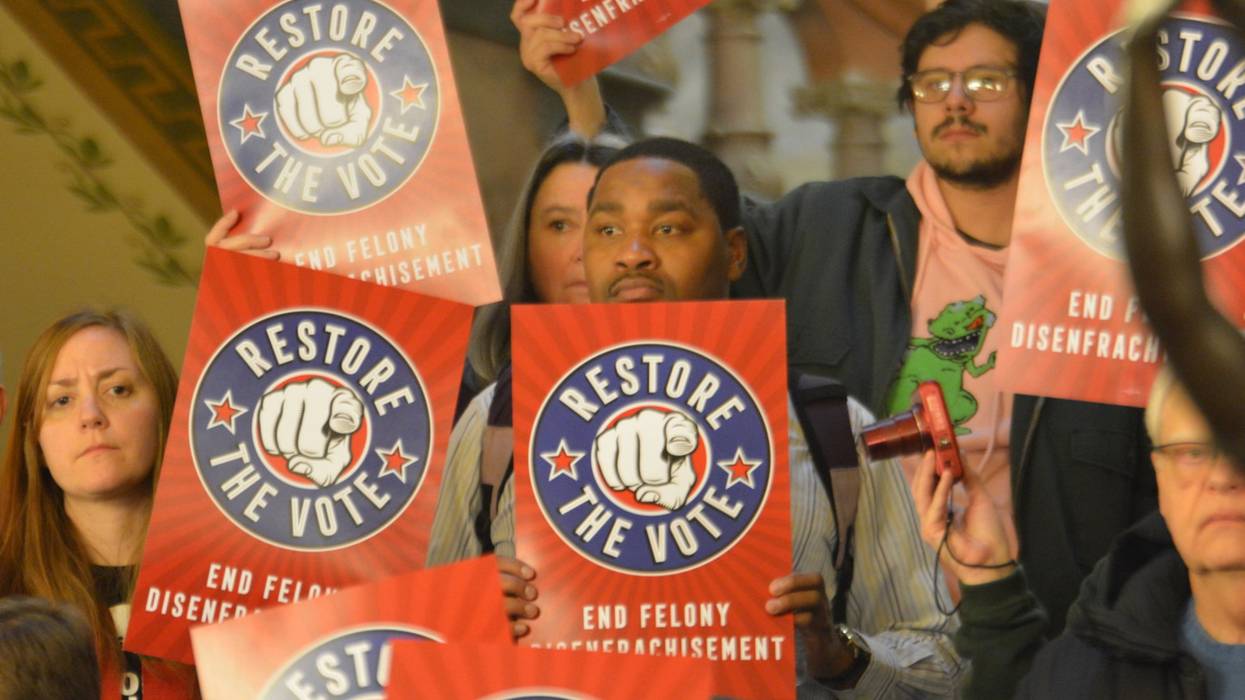
"Mississippi stands as an outlier among its sister states, bucking a clear national trend in our nation against permanent disenfranchisement."
A U.S. federal appellate court on Friday ruled that a Jim Crow-era Mississippi law permanently disenfranchising people with certain felony convictions is unconstitutional.
In a decision that can be appealed to the full U.S. 5th Circuit Court of Appeals, a three-judge panel of the tribunal ruled 2-1 that Section 241 of Mississippi's 1890 Constitution "violates the Eighth Amendment's prohibition on cruel and unusual punishment and the 14th Amendment's guarantee of equal protection under the law."
Last August, the 5th Circuit affirmed Section 241 ,with dissenting Judge James E. Graves Jr., a Black Mississippian, lamenting that when his colleagues were "handed an opportunity to right a 130-year-old wrong, the majority instead upholds it."
The U.S. Supreme Court declined to hear an appeal of the ruling, prompting a scathing dissent from liberal Justice Ketanji Brown Jackson.
"In the last 50 years, a national consensus has emerged among the state legislatures against permanently disenfranchising those who have satisfied their judicially imposed sentences and thus repaid their debts to society," Friday's ruling states. "Mississippi stands as an outlier among its sister states, bucking a clear national trend in our nation against permanent disenfranchisement."
Friday's ruling is the result of a 2018 lawsuit filed by the Southern Poverty Law Center and ACLU on behalf of plaintiffs including Dennis Hopkins, who has been disenfranchised since 1998 due to a grand larceny conviction.
"In school, they teach our kids that everybody's vote counts, but no matter how I've lived for the past 20 years, I don't count, not my values or my experience," Hopkins said when the suit was filed. "I have paid Mississippi what I owe it in full, but I still can't cast my vote for my children's future."
Section 241 "mandates permanent, lifetime disenfranchisement of a person convicted of a crime of any one of 'murder, rape, bribery, theft, arson, obtaining money or goods under false pretense, perjury, forgery, embezzlement, or bigamy,'" according to the ruling.
As the NAACP Legal Defense Fund (LDF) notes, "Section 241 permanently disenfranchises people convicted of 10 specific crimes, eight of which were chosen by all-white delegates in 1890 and based on their belief that Black people were more likely than white people to be convicted of those crimes."
There are currently more than 20 crimes that disenfranchise Mississippians from voting. The state—which according to the Sentencing Project is one of only 12 with lifetime disenfranchisement—added 11 more offenses to the ban list in 2005.
In contrast, everyone age 18 and up—including currently incarcerated individuals—has the right to vote in Maine and Vermont.
While Black Mississippians are 36% of Mississippi's voting-age population, they make up 59% of its disenfranchised people.
"Section 241 is Jim Crow law, which created a deliberate and invidious scheme to disenfranchise Black people," said LDF assistant counsel Patricia Okonta.
"Today, Black Mississippians continue to be disproportionately harmed by this provision," Okonta added. "While the state is home to the highest percentage of Black Americans of any state in the country, it has not elected a Black person to statewide office since 1890."
According to the Felony Murder Elimination Project, a California-based advocacy group:
Over 215,000 people in Mississippi were disenfranchised as of 2019, representing almost 10% of the entire state population. Of this total, only 7% are incarcerated. The remaining 93% are living in the community either under probation or parole supervision, or have completed their criminal sentence. The number of African American residents disenfranchised in Mississippi numbered 127,130 in 2016 or nearly 16% of the Black electorate.
"No one disputes that Mississippi's felon disenfranchisement law was enacted more than 100 years ago for the announced purpose of maintaining white supremacy and blocking Black citizens from voting," ACLU national legal director David Cole said in a statement.
"Racially motivated laws don't become valid over time," Cole added. "It's just as unconstitutional today as it was when it was enacted. That such a law remains on the books today is a stain on the state's law books, and plainly unconstitutional."
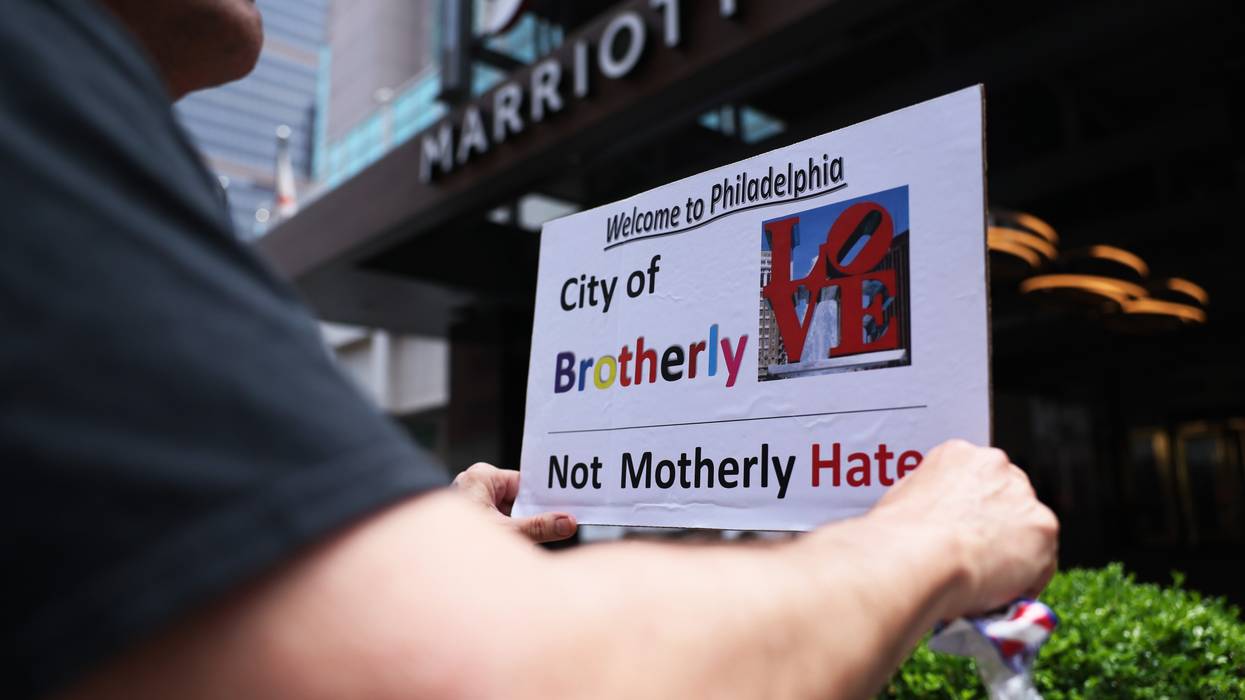
"Moms for Liberty is linked with the Proud Boys, a chapter quotes Hitler, they are behind book bans, they are funded by right-wing groups and... ABC News calls them 'joyful warriors,'" wrote one observer. "The whiteness of it all is exhausting."
ABC News this week joined other U.S. corporate media outlets in being accused of "normalizing" Moms for Liberty after publishing what one critic called a "puff piece" on the right-wing group that's behind a wave of school book bans and is linked to the neofascist Proud Boys and the Qanon conspiracy theory.
On Saturday, ABC News published an article by Brittany Shepherd titled "Moms for Liberty Are Fired Up in Philadelphia" as the self-described "parental rights" organization held its annual conference in Pennsylvania's largest city, where crowds of protesters turned out to denounce the group's bigotry.
"Did ABC let Moms for Liberty write this puff piece themselves?"
"They call themselves joyful warriors—but this group of conservative moms are mad," Shepherd wrote in her lede.
Author and Daily Beast columnist Wajahat Ali called the article "shameful."
"Moms for Liberty is linked with the Proud Boys, a chapter quotes Hitler, they are behind book bans, they are funded by right-wing groups and... ABC News calls them 'joyful warriors,'" Ali tweeted. "The whiteness of it all is exhausting."
Historian Kevin Kruse wondered, "Did ABC let Moms for Liberty write this puff piece themselves?"
Brandon Wolf, press secretary for the LGBTQ+ advocacy group Equality Florida, noted that a Moms for Liberty chapter in Indiana included a quote from Adolf Hitler in its inaugural newsletter. The chapter chairperson subsequently apologized.
Founded in Florida in 2021 to oppose Covid-19 lockdowns and mandates, Moms for Liberty quickly gained a reputation for its anti-LGBTQ views and its harassment of school officials in service of the organization's far-right agenda.
The group—which says it has more than 115,000 members in 245 chapters in 45 states—wants to erase mention of LGBTQ+ rights, systemic racism, diversity, and other "woke" topics from school curricula.
Moms for Liberty—many of whose chapters are linked to extremist groups like the Proud Boys and Three Percenters as well as the Qanon conspiracy theory—has spearheaded a successful movement to ban books, especially ones with LGBTQ+ and racial themes, from school libraries across the nation.
The American Library Association said earlier this year that it had recorded 1,269 demands to censor books from various groups and individuals in 2022, compared to 729 challenges counted in 2021.
In her article, Shepherd wrote how the Moms for Liberty conference "showcases how local issues like education can have tremendous, galvanizing national influence, as Gov. Ron DeSantis, former President Donald Trump, and former U.N. ambassador Nikki Haley tried to woo nearly 700 attendees."
The article continued:
Several key breakout sessions at the center of the group's mission, such as "Protecting Kids from Gender Ideology" and "Getting Flipped School Boards To Take Action" were kept behind closed doors, with media access barred. But still, the enthusiasm at open events was palpable, nearly bouncing off the ballroom walls.
The piece does note that Moms for Liberty is designated an extremist group by the Southern Poverty Law Center for spreading "hateful imagery and rhetoric against the LGBTQ community."
However, two paragraphs later Shepherd wrote that "Republicans will need this group to make up any lost ground" from last year's midterm elections.
In a Friday interview by MSNBC's Nicolle Wallace, extremism expert Kristofer Goldsmith urged viewers to spread the world about who Moms for Liberty are and what they stand for.
"We are talking book burning. We're talking about racism and we're talking about persecuting the LGBTQ community. These are the Proud Boys with a wig and lipstick," Goldsmith said. "That is all that they are. And because of the words 'Moms for Liberty,' not a lot of people are going to understand that."
"So folks watching this need to be evangelists, right?" he added. "You need to get out online and talk to your friends about what Moms for Liberty is, and help them understand that they are a pipeline into the most radical of extremism in this country."

As Banned Books Week began Monday in the United States, a leading advocacy group published an updated report warning of a surge in right-wing efforts to censor and ban titles--many of them related to the struggles of marginalized peoples--in American schools.
"More books banned. More districts. More states. More students losing access to literature. 'More' is the operative word for this report on school book bans," begins the update to PEN America's Banned in the USA: Rising School Book Bans Threaten Free Expression and Students' First Amendment Rights, which was published in April and covered the first nine months of the 2021-22 scholastic year.
"This is a concerted, organized, well-resourced push at censorship," PEN America chief executive Suzanne Nossel told The New York Times, adding that the effort "is ideologically motivated and politically expedient, and it needs to be understood as such in order to be confronted and addressed properly."
The revised report--which shares the Banned in the USA title with the first music album to ever carry a parental advisory sticker--notes that PEN America's Index of School Book Bans now lists at least 2,532 instances of 1,648 titles being banned. That's up from 1,586 banning incidents involving 1,145 books reported in the April publication.
The bans occurred in 138 school districts across 32 states. In 96% of cases, bans were enacted without following the best practice guidelines for challenging controversial titles outlined by the American Library Association and the National Coalition Against Censorship.
More than 40% of the banned books in the report deal with LGBTQ+ themes, while 21% "directly address issues of race and racism," 22% "contain sexual content," and 10% are "related to rights and activism," according to PEN America.
PEN America identified at least 50 national, state, and local groups pushing to ban or restrict books in U.S. schools.
The largest of these groups, the right-wing Moms for Liberty, has over 200 local chapters and has gained notoriety for its anti-LGBTQ+ advocacy, for vehemently opposing Covid-19 mask mandates in schools, and for spreading the baseless claim that one local school district was placing litter boxes in bathrooms for students who identify as cats.
Another right-wing group named in the report, MassResistance, is a Southern Poverty Law Center-designated hate group that claims the January 6, 2021 attack on the U.S. Capitol was "clearly a setup" and that there is a "Black Lives Matter and LGBT assault" on American schools.
The group also called parents who opposed its book-banning efforts "groomers," a slur conflating the LGBTQ+ community with pedophilia.
Related Content

"Book challenges impede free expression rights, which must be the bedrock of public schools in an open, inclusive, and democratic society," PEN America said in the updated report. "These bans pose a dangerous precedent to those in and out of schools, intersecting with other movements to block or curtail the advances in civil rights for historically marginalized people."
"Against the backdrop of other efforts to roll back civil liberties and erode democratic norms," the group added, "the dynamics surrounding school book bans are a canary in the coal mine for the future of American democracy, public education, and free expression. We should heed this warning."
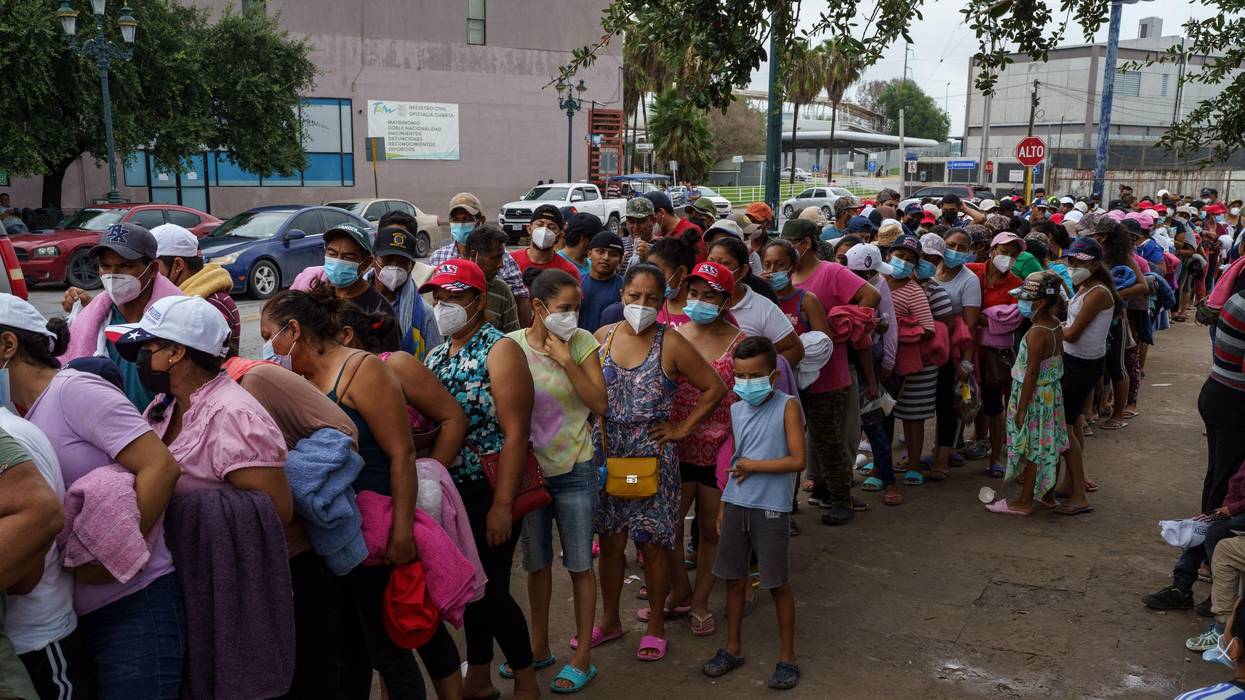
Rallies and marches were held in Mexican border cities Sunday and Monday to protest the continuation of Title 42, the highly controversial anti-migrant rule still in place following a right-wing judge's injunction against the Biden administration's plan to end what one critic called a "cruel, racist, and xenophobic" policy.
"For us, Title 42 ends the dream of many, because in all immigrants' dreams, asylum is a right, and Title 42 takes that right away from us," a demonstrator named Edward told Democracy Now! at a Tijuana protest on Monday.
Vanessa, another protester, told the program: "We've been here for almost a year in Tijuana. We've been in a shelter for five months, and we've been in a rented apartment for five more months, and it has been very difficult. I hope they give us support and let us enter the U.S. And we hope things there will be different, because here in Tijuana there is also a lot of danger."
Title 42 is a provision of the Public Health Safety Act first invoked by the Trump administration at the onset of the Covid-19 pandemic in March 2020 which has been used to remove nearly two million asylum-seekers--the majority of them during the tenure of President Joe Biden.
Tweeting Common Dreams coverage of the judge's injunction, Rep. Pramila Jayapal (D-Wash.) noted Monday that "today, Title 42, the racist and xenophobic public health law that's blocked millions of refugees and asylum-seekers from entering the country, was supposed to end. We must fight this ruling and restore our country as a beacon of hope."
Echoing Jayapal, Amnesty International USA Americas advocacy director Amy Fischer said in a statement that "Friday's decision to block the termination of Title 42 is devastating for the tens of thousands of asylum-seekers at our border in need of protection. This outcome follows the dangerous pattern of some states using the U.S. legal system to prevent the [Biden] administration from ending xenophobic, anti-immigrant policies."
"Every day that Title 42 remains in place is another day that the United States continues to put politics over humanity," she continued, adding that congressional lawmakers "should redirect their efforts toward repairing and rebuilding the broken asylum system--not reinforce hateful legislation by leveraging public health and safety funds."
"Members of Congress must have the moral courage to oppose any amendments or legislation meant to keep this unlawful, hateful policy in place and block access to asylum," Fischer stressed.
In his injunction last week, U.S. District Judge Robert Summerhays--an appointee of then-President Donald Trump and a member of the right-wing Federalist Society--sided with 24 Republican-controlled states that argued the Biden administration's decision to terminate Title 42 violates the Administrative Procedures Act because it "failed to consider the effects of a Title 42 termination on immigration enforcement and the states."
Immigrant rights advocates argue that Title 42 forces people legally seeking asylum in the United States to face grave dangers in Mexican border cities, where Human Rights First has identified nearly 10,000 violent attacks on migrants, including kidnappings, torture, and rapes.
Activists vowed to keep fighting against the policy.
"This ruling is devastating for countless asylum-seekers and their families who will continue to be denied their due process and sent back to face violence, harm, and privation without ever having a chance to present their asylum case," Efren C. Olivares, deputy legal director for immigrant justice at the Southern Poverty Law Center, said in a statement.
"While the ruling is a setback to the Biden administration's promise to rebuild our asylum system, they must fight on to keep these commitments," he added. "We also will continue to fight for a fair and humane asylum process for all those who seek protection."

Bolstering the case for federal legislation to safeguard the franchise from Republicans' ongoing voter suppression efforts across the country, GOP Georgia Gov. Brian Kemp on Thursday signed into law a sweeping, unpopular bill overhauling the state's elections that critics have called "a vicious attack on voting rights."
Kemp's move came after less than two hours after Georgia's Republican lawmakers gave final approval to Senate Bill 202, which has been criticized by voting rights advocates within and beyond the Peach State. President Joe Biden said Thursday that GOP attempts to restrict voting are "sick" and "un-American."
After Kemp signed the bill, he claimed at a news conference that the measure was "another step toward ensuring our elections are secure, accessible, and fair." By contrast, rights advocates lambasted the governor and state lawmakers for rapidly enacting the "extraordinarily dangerous" legislation.
"If Republicans thought this was 'the right thing to do'--they wouldn't have done it this way," said Aunna Dennis, executive director of Common Cause Georgia. "If they thought S.B. 202 was 'good public policy'--they wouldn't have rammed it through the General Assembly in only six hours. If they thought S.B. 202 was 'in the public interest'--they would have made sure the public had a chance to learn about it."
"Instead, both House and Senate leadership forced the 'omnibus' anti-voter bill through to the governor's desk in just hours, on completely party-line votes," she continued, warning that the legislation "will amplify partisan interests and cement partisan control over our elections infrastructure."
Kemp, who is up for reelection next year, "will be an obvious beneficiary" of the new changes to Georgia's election laws, Dennis added. Describing the measure as "an insult" to state voters, she said that by pushing it through so quickly, "Republicans in Georgia's House and Senate showed us exactly how little they value our votes."
Nancy Abudu, deputy legal director for the SPLC Action Fund, described the legislation as "a codification of the dangerous and deadly Big Lie of 2020," referencing the myths about voter fraud that former President Donald Trump and other Republican politicians and commentators circulated before and after last year's general election.
"Cowering to extremists and disseminators of disinformation about our elections has been the overall policy agenda of Georgia's leaders this legislative session. Dozens of frivolous court cases in Georgia failed last year that this legislation is based on," Abudu added. "Thousands of voters have made it clear that the types of provisions in S.B. 202 are unacceptable and will disproportionately harm historically disenfranchised communities, young voters, and voters with disabilities."
The Washington Post reports the bill will "impose new identification requirements for those casting ballots by mail; curtail the use of drop boxes for absentee ballots; allow challenges to voting eligibility; make it a crime for third-party groups to hand out food and water to voters standing in line; block the use of mobile voting vans, as Fulton County did last year after purchasing two vehicles at a cost of more than $700,000; and prevent local governments from directly accepting grants from the private sector."
As the newspaper notes:
The 95-page bill also strips authority from the secretary of state, making him a nonvoting member of the State Elections Board, and allows lawmakers to initiate takeovers of local election boards--measures that critics said could allow partisan appointees to slow down or block election certification or target heavily Democratic jurisdictions, many of which are in the Atlanta area and are home to the state's highest concentrations of Black and Brown voters.
"It can't be a coincidence that the counties mentioned as candidates for state takeover have significant populations of Black and Brown voters," said Dennis.
Nse Ufot, CEO of the New Georgia Project Action Fund, which works to increase civic participation of underrepresented and underserved communities of color, called the law "egregious."
"Let's call S.B. 202 for what it is: a blatant and intentional strike on Black, Brown, and new voters," Ufot said. "S.B. 202 means that we can no longer host 'Souls To The Polls' events during runoffs, or so much as give our fellow community members water as they wait for hours to cast their ballot."
Slamming Georgia Republicans for advancing the bill "behind closed doors and amidst a cloud of secrecy," Ufot declared that "this is not how democracy works. Lawmakers are elected to represent us, yet they are doing everything they can to take away our votes without our consent."
"Make no mistake: Republicans are using Georgia as a testing ground for their latest voter suppression experiments," she added. "To Gov. Kemp, to all Republican lawmakers who have pushed through these bills, and to all companies who have bankrolled them with financial support while profiting from our dollars: shame on you."
"It's time you do your jobs and represent the voters you were elected to represent. It's time you make your priorities our priorities: healthcare, justice, and progress for all people living in Georgia," she said. "And to members of Congress, may this be your cue to immediately restore the Voting Rights Advancement Act and pass the For The People Act. You have a duty to the American people to uphold the cornerstone of our democracy. Anything less just won't do."
Wade Henderson, interim president and CEO of the Leadership Conference on Civil and Human Rights, also responded to Kemp's move with a call for federal action.
"Instead of celebrating the record voter turnout during the 2020 election amid a pandemic, Georgia lawmakers have gone to extreme efforts to deny access to the ballot," said Henderson. "Unfortunately, this bill is not an anomaly--across the country, over 250 state bills have been introduced to disenfranchise voters, many measures aimed squarely at communities of color."
"For the sake of our democracy, this has to stop," he said. "Voters, and not officials, must decide our elections. Congress must pass H.R. 4, the John Lewis Voting Rights Advancement Act, and put an end to these brazen attempts to silence our voices. Congress must ensure the freedom to vote for all Americans, regardless of who we are, where we live, or how we vote."

Voting rights advocates and experts are raising alarm about a surprise "voter suppression bill" introduced by Georgia's GOP legislators on Thursday in the wake of the state's residents helping return the White House and U.S. Senate to Democratic control with the November presidential election and a pair of runoffs in January.
"Georgia Republican lawmakers are brazenly trying to silence voters through House Bill 531, which includes deliberate restrictions on early voting, absentee voting, and ballot drop boxes," declared Aklima Khondoker, Georgia state director of All Voting Is Local Action, a campaign of the Leadership Conference on Civil and Human Rights.
"This is a desperate attempt to solidify their own power by silencing others," Khondoker said in a statement Friday. "Despite a global pandemic and repressive legislative attempts to block access to the ballot, record numbers of Georgians voted in 2020 using every method available, and now that accessibility is under attack."
"This bill targets all Georgians, and particularly punishes low-income voters, people in rural communities, the elderly, and religious communities of color," she added. "It's critical that lawmakers reject this alarming legislation that aggressively limits voting in communities that have long suffered diminished access to the ballot.
The text of the 48-page omnibus bill, filed by state Rep. Barry Fleming (R-Harlem), was made public on Thursday shortly before the Georgia House's Special Committee on Election Integrity's 3 pm hearing on the measure. In response, Common Cause Georgia executive director Aunna Dennis charged that "the Georgia Legislature's practice of leaving the public out of 'the people's business' reached a new low."
The bill would limit access to secure ballot drop boxes, reduce the time frame that voters can request and return absentee ballots, require voters to submit a copy of their photo identification or state ID number to vote absentee, and prohibit government agencies from sending out ballot applications. It would also restrict early voting to 9 am to 5 pm on Monday through Friday and eliminate early voting on Sundays, when Black churches hold "Souls to the Polls" events.
Ari Berman reported for Mother Jones that the bill "limits the weekend early-voting period to only one Saturday before the election. Fleming claimed the provision will provide 'uniformity' in voting hours across the state, but in practice it will take away voting opportunities for large, heavily Democratic counties in Atlanta, like DeKalb and Fulton, which held early voting on multiple weekends in the runup to the 2020 election when many Black voters turned out."
"By aiming at our ability to cast ballots, Georgia's legislators are striking at the very core of our government."
--Aunna Dennis, Common Cause Georgia
As Dennis noted: "This is the same voting system that a Republican-led legislature and a Republican governor established 15 years ago. The voting system that produced results in November that were upheld by multiple audits, multiple recounts, and dozens of court cases."
"Now our Republican legislators want to slash away at their own system, without any public input. This bill is Jim Crow with a suit and tie," she asserted. "Georgia's voters deserve better than to be shut out of legislators' discussions--particularly when those discussions involve new barriers to voting."
Dennis blasted GOP legislators for serving their party interests or political donors rather than the people of Georgia with what she described as an attack on democracy--warning that "by aiming at our ability to cast ballots, Georgia's legislators are striking at the very core of our government."
GOP members of the Georgia House aren't the only ones under fire, explained Berman, author of Give Us the Ballot: The Modern Struggle for Voting Rights in America:
Georgia Senate Republicans have introduced their own bills to restrict voting access, including ending no-excuse absentee voting--which 1.3 million voters used in 2020--and adding voter ID requirements for mail-in ballots. The bills were passed by subcommittees of the Senate Ethics Committee at 7 am on Wednesday morning with no public livestream, which also prompted an outcry from Democratic members who argued that Republicans were passing the bills with little public scrutiny.
"Clearly we are trying to hide something from the public, the people we answer to," state Sen. Elena Parent, a Democrat from Atlanta, told the Associated Press. "This gamesmanship is unacceptable."
In a joint letter (pdf) Friday to the Special Committee on Election Integrity, the NAACP Legal Defense and Educational Fund and the SPLC Action Fund took Georgia lawmakers to task for yet another measure that would "create unnecessary barriers and burdens on voters that disproportionately impact racial minority, low-income, elderly, rural, disabled and/or student voters--rather than foster ways to expand political participation on the heels of ever-grown participation by Georgians in elections."
While the GOP's voter suppression efforts in Georgia have garnered national attention because of the state's significance to federal elections--not to mention former President Donald Trump's attempts to pressure Republican state leaders to "find" votes to reverse his loss, moves that have led to a criminal probe by a local prosecutor--measures designed to limit ballot access are far from restricted to the Peach State.
As Common Dreams reported in early February, just over a month into the new year, Republicans in over two dozen states have already introduced more than 100 bills to restrict voting access, according to an analysis conducted by the Brennan Center for Justice at New York University Law School.
"Democrats have a clear choice," Berman said at the time, referring to members of Congress. "They can get rid of the filibuster to pass the John Lewis Voting Rights Act and the For the People Act to stop GOP voter suppression, or they can allow the GOP to undermine democracy for the next decade."
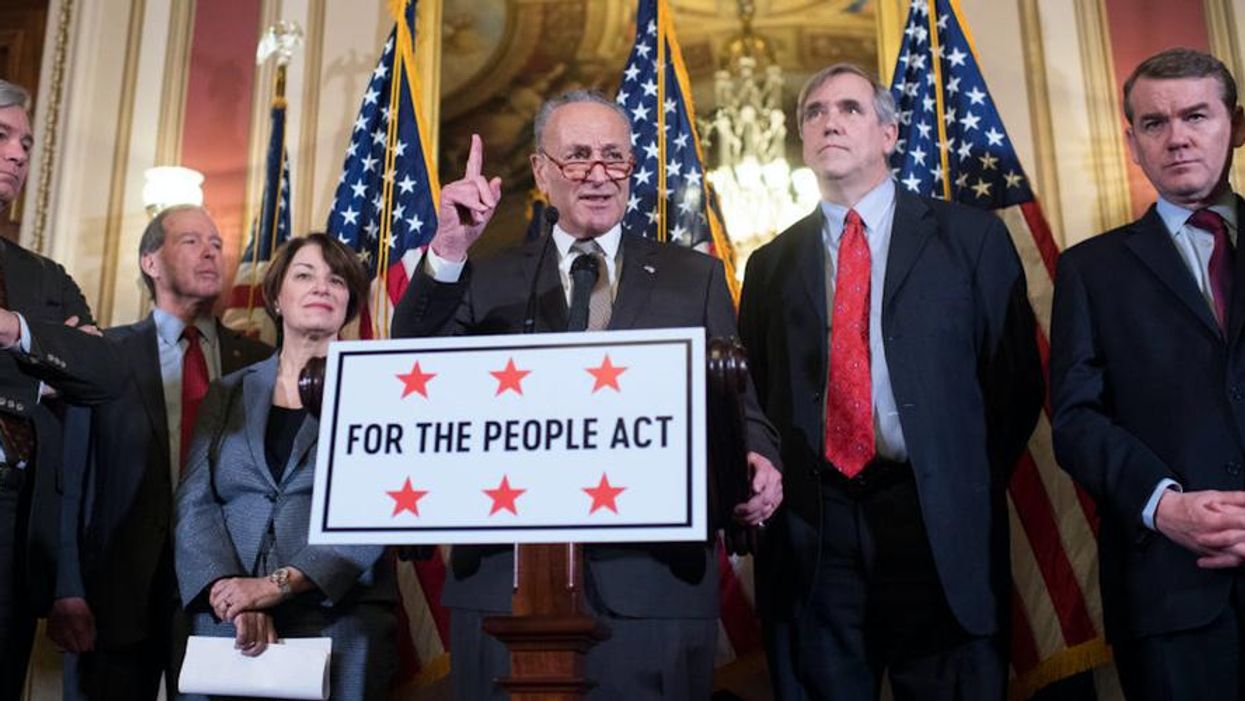
After decades of erosion by corporate and plutocratic interests and the battering ram that was the Donald Trump presidency, a new poll Friday suggests the democratic ideals enshrined in the landmark For the People Act enjoy broad support across the political spectrum.
"The most important parts give candidates a realistic chance to fund campaigns with small contributions only. That could liberate Congress from special interest funding."
--Lawrence Lessig,
Harvard Law School
Originally passed by the House of Representatives in 2019 but torpedoed by the Republican-controlled Senate, the For the People Act (pdf) would expand voting rights including for former felons, curtail partisan gerrymandering, strengthen ethics rules, limit money in politics and implement the DISCLOSE Act, and make Washington, D.C. a state--among other reforms.
The new survey, conducted by the left-leaning think tank Data for Progress and the advocacy group Equal Citizens, found a majority of self-described Democrats, Republicans, and independents support the For the People Act. Respondents were given the following information:
The For the People Act has been introduced in Congress. Supporters of the bill say it would limit the influence of big money in politics by empowering small donors, make voting easier and more secure, end gerrymandering, and give the public more information about who is lobbying our government. Opponents say it would be an overreach by the federal government and that states should control their own elections. Do you support or oppose the For The People Act?
Two-thirds, or 67%, of respondents answered affirmatively, including 77% of Democratic voters, 56% of Republicans, and 68% of independents. More than one-third (35%) of Democratic voters and 25% of Republicans "strongly support" the bill, while only 4% of Democrats and 11% of Republicans said they "strongly oppose" it.
The original For the People Act was written by the late Rep. John Lewis (D-Ga.) and Rep. John Sarbanes (D-Md.). Senate Majority Leader Chuck Schumer (D-N.Y.), Sen. Amy Klobuchar (D-Minn.), and Sen. Jeff Merkley (D-Ore.) said it will be the very first bill they introduce in the current congressional session.
"From a violent insurrection at the Capitol to the countless attempts to silence the vote of millions of Americans, attacks on our democracy have come in many forms," said Schumer on Tuesday. "Senate Democrats are committed to advancing real solutions and fighting to uphold the core tenets of our constitution, which is why we are announcing today that the first bill of the new Congress will be the For the People Act."
Despite controlling both chambers of Congress, based on current rules at least 10 Senate Republicans will need to support holding a vote for the bill in order to avoid a filibuster. A flood of progressive voices and groups, including Justice Democrats and the Sunrise Movement, have recently urged Senate Democrats to eliminate the filibuster, which could be accomplished by a simple majority vote.
Lawrence Lessig, a professor at Harvard Law School and expert on campaign finance, calls the For the People Act "an incredibly important piece of comprehensive democracy reform."
"In my view, the most important parts give candidates a realistic chance to fund campaigns with small contributions only," Lessig told OpenSecrets. "That could liberate Congress from special interest funding."
In addition to broad popular support, the For the People Act is backed by some 180 progressive groups who have formed the Declaration for American Democracy coalition.
Members of the coalition include: the American Federation of Teachers, CodePink, Color of Change, Common Cause, Demand Progress, Greenpeace, Indivisible, the League of Conservation Voters, March for Our Lives, Planned Parenthood Action Fund, Progressive Democrats of America, Public Citizen, the Service Employees International Union, and the Southern Poverty Law Center.

Human rights advocates in Texas on Tuesday had a resounding message for President Donald Trump as he headed to the southern border in what critics say is a desperate bid to deflect attention from his culpability in last week's deadly U.S. Capitol invasion and his impending impeachment: You're not welcome here.
As the chorus of calls for Trump's removal or impeachment intensifies in the wake of the January 6 mob assault on the Capitol, Trump flew to Texas to tout his pet project, the barely built wall along the Mexican border that has cost U.S. taxpayers--and not Mexico, as the president incessantly promised--billions of dollars.
"Our community will not be used as a prop to distract the public from the accountability Trump is trying to avoid."
--Juanita Valdez-Cox, LUPE
Instead of attempting to defuse tensions even after the FBI warned Monday that pro-Trump militants are planning possible attacks across the nation in the coming days, the president while traveling from Washington, D.C. to Texas called his speech preceding the Capitol attack "totally appropriate."
The House Democrats' article of impeachment against Trump, however, alleges his remarks amount to "incitement of insurrection."
The Capitol attack and its aftermath were very much on the minds of Texans as Trump headed--apparently without notifying local officials--to the symbolically charged town of Alamo, which is named after the site of the famous last stand of mostly illegal U.S. immigrants routed by Mexican forces at San Antonio de Bexar, Mexico in 1836.
But also on the minds of many were matters much closer to home, including some of the Trump administration's most egregious human rights violations: the imprisonment of refugees and other migrants in concentration camps, the torturous seizure of children (hundreds of whom remain separated) from their parents, the devastating and dangerous "remain in Mexico" asylum policy, and other racist and xenophobic policies and actions.
Reflecting resistance to these longstanding administration misdeeds, reaction to recent developments in Washington, and fears that Trump's visit could spark further right-wing blooshed, immigrant and human rights advocates told Trump in no uncertain terms how they felt about his visit.
"After stoking mob violence at the Capitol, he has chosen our community to continue spewing his violence-inciting lies," Daniel Diaz, mobilizing director of la Union del Pueblo Entero (LUPE), wrote in a petition.
"We cannot allow Trump to bring his racist mob violence to the Rio Grande Valley," added Diaz. "Local officials must denounce his visit, call on him to cancel, and refuse to coordinate his visit with [U.S. Department of Homeland Security.] Should any violence occur on Tuesday, all public officials who did nothing to stop this visit will be responsible."
Fernando Garcia of the Border Network for Human Rights--which will lead a peaceful march to protest Trump's visit to Alamo--was even more blunt:
Trump has blood on his hands, and he is not welcome at the border... His policies and rhetoric are also responsible for the white supremacist attack at an El Paso Walmart in 2019 that claimed the lives of 23 people, and the astounding violence inflicted on peaceful Black Lives Matter activists by the police last year at nationwide protests following the murder of George Floyd, Breonna Taylor, and many other Black and Brown people at the hands of law enforcement.
Rather than spend his last days in the Oval Office addressing the pressing Covid-19 pandemic and ensuring an orderly transition, Trump is doubling down on his xenophobic, white supremacist agenda...
Trump does not and has never represented our communities. His presence at the borderland is a provocation, and an act of violence in and of itself. Border communities are calling for the dismantlement of the wall of shame, racism, and white supremacy. The wall and all it represents have no place in our society, and Trump must be held accountable.
In a tweet, the ACLU called Trump's visit "a slap in the face for our communities" that "should be a wake-up call for President-elect [Joe] Biden to prioritize reckoning with Trump's legacy of ruthless border policy."
LUPE executive director Juanita Valdez-Cox asserted that "our community will not be used as a prop to distract the public from the accountability Trump is trying to avoid," adding that the president must not be permitted to "return to his tired playbook of demonizing border communities and putting their constituents at risk."

For many Black Americans, Wednesday's deadly mob insurrection in Washington, D.C. and the manner in which it was managed by police was yet the latest affirmation of the double standards inherent in a nation built upon a foundation of slavery--in the case of the U.S. Capitol literally so--and enduring racial oppression.
"We must acknowledge the profound inequity of a broken system that allows peaceful protesters to get tear-gassed for a photo op, while domestic terrorists who storm the Capitol in a violent coup attempt get to roam the streets freely."
--Rep. Barbara Lee
Incited by calls from President Donald Trump and his leading accolytes to "take back our country" in a "trial by combat," hundreds of die-hard loyalists--almost all of them white--violently attacked the beating heart of American democracy while lawmakers attempted to perform their crucial duty.
Some of the police officers stood aside and even opened the gates so the insurrectionists, some reportedly armed with guns and bombs, could rush in. Others scaled walls and surged past overwhelmed officers to join the marauding MAGA mob inside. Many of the attackers appeared unopposed as they ransacked and looted the place while lawmakers and staff fled for their lives.
When police finally regained control of the building, some of them laughed and posed for selfies with the seditious invaders. Another officer held hands with a trespasser to help her down the Capitol steps.
The contrast between Wednesday's attempted coup against the United States government and police treatment of Black Lives Matter protests in Washington, D.C. and around the country in recent years is, as numerous observers have noted, "black and white."
"It's definitely a difference," Lecia Brooks, chief of staff at the Southern Poverty Law Center, told The Globe and Mail. "It is a starkly different picture when the protesters are white. This is white privilege. These Trump supporters can walk boldly in to take over the... Capitol."
When racial justice advocates peacefully protested in Washington last summer for Black lives cut short by police and white supremacist violence, the response from law enforcement was swift and brutal.
Although the protesters were a block away from the White House and did not attempt to breach its grounds, thousands of heavily armed federal and local law enforcement officers, backed by military air support and surveillance, were deployed to brutally disperse them so that Trump could make his way to a nearby church to pose for a photo with a Bible.
It was a scene repeated around the nation during Black Lives Matter protests in recent years. Indigenous, anti-war, and other protesters have experienced similarly horrific violence. But Blacks have borne the brunt of such brutality ever since they started standing up for their lives, their dignity, and their equality.
"White privilege is on display like never before in the U.S. Capitol," noted author and scholar Ibram X. Kendi. "If these people were Black... well, we all know what would be happening right now to them."
In an interview with MSNBC on Wednesday, newly sworn-in Rep. Cori Bush (D-Mo.) agreed, saying that "had it been people who look like me, had it been the same amount of people, but had they been Black and Brown, we wouldn't have made it up those steps. We wouldn't have made it to be able to get into the door and bust windows and go put our feet up on the desks of Congress members."
"It was white privilege, and it was the call of our president and it was encouraged by our Republican colleagues," said Bush, who on Wednesday said she would introduce a resolution calling for the expulsion of GOP lawmakers whom she accused of inciting the violence.
Condemning Wednesday's attack as "domestic terrorism at its worst," human rights advocate Martin Luther King III--whose father was assassinated for championing Black lives and opposing what he called the "evil triplets" of racism, militarism, and materialism--told 9 News Australia that the police reaction to the Trumpist "treason" was "white privilege on steroids."
"If you look at how Black Lives Matter demonstrations--peaceful demonstrations--have been handled, and how these individuals were able to get into the Capitol... and offices of Congress members, this is perplexing," said King. "And it's all because the president called for it. Under a different set of circumstances, he would be prosecuted to the full extent of the law."

An historic Black church in Washington, D.C. on Monday sued the Proud Boys, the right-wing hate group whose leader acknowledged burning a Black Lives Matter sign at the house of worship during a violent December 2020 rally in support of President Donald Trump.
The lawsuit (pdf), filed by the Lawyers' Committee for Civil Rights Under Law; Washington Lawyers' Committee for Civil Rights and Urban Affairs; and the law firm of Paul, Weiss, Rifkind, Wharton & Garrison LLP on behalf of the Metropolitan African Methodist Episcopal Church against Proud Boys Interntational, LLC, accuses members of the group of "engaging in acts of terror and vandalizing church property in an effort to intimidate the church and silence its support for racial justice."
On December 12, 2020, hundreds of Proud Boys from across the country descended on the nation's capital, where they confronted and attacked counterprotesters in the streets. At least four people were stabbed during the clashes, which some critics linked to Trump's September presidential debate directive to the Proud Boys to "stand back and stand by."
According to the lawsuit, members of the Proud Boys had prepared for violence ahead of the December gathering, exhorting each other to "buy ammo [and] clean your guns." One Proud Boy wrote that "tonight we keep our enemies awake, tonight we become nightmares."
Designated a hate group by the Southern Poverty Law Center, the all-male Proud Boys are known for their white nationalist, Islamophobic, and misogynistic rhetoric, as well as their presence at the deadly 2017 "Unite the Right" rally in Charlottesville, Virginia.
Speaking against the advice of his attorney, Proud Boys leader Enrique Tarrio repeatedly claimed to have burned Metropolitan AME's Black Lives Matter sign during the December demonstration.
"Let me make this simple," Tarrio told the Washington Post last month. "I did it."
"I have nothing to hide," he said, explaining that he believes Black Lives Matter--the nonviolent movement for racial justice--"has terrorized the citizens of this country."
"In the burning of the BLM sign, I was the one that lit it on fire," Tarrio said on a far-right podcast last month, according to The Independent. "I was the person that went ahead and put the lighter to it and engulfed it in flames, and I am damn proud that I did."
Washington, D.C. police and the FBI are investigating the buring of Black Lives Matter banners at Metropolitan AME and Asbury United Methodist Church--also on December 12--as possible hate crimes, although Tarrio claims he was unaware the churches are predominantly Black.
Karl Racine, the D.C. attorney general, said in a letter to U.S. Attorney for the Disrict of Columbia Michael Sherwin that the Proud Boys' actions on December 12 were meant to "terrorize Black people," and that they "violated D.C. law and were hate crimes."
"They harmed people of color, and every person who lives and works in our city who believes in fairness, justice, and racial equity," asserted Racine.
Kristen Clarke, president and executive director of the Lawyers' Committee for Civil Rights Under Law, said in a statement that "white supremacists like the Proud Boys would rather see the country burn than to see it united together under justice and freedom for all."
"Black churches and other religious institutions have a long and ugly history of being targeted by white supremacists in racist and violent attacks meant to intimidate and create fear," added Clarke. "Our lawsuit aims to hold those who engage in such action accountable. We are proud to represent Metropolitan AME, which has a long history of standing against bigotry and hate and whose courage and determination to fight back is a beacon of hope for the community."
In a Washington Post op-ed following the vandalism, Metropolitan AME pastor Rev. William H. Lamar IV said he was "deeply disturbed" by the incident.
"But I am more disturbed by the continued mythology of imperial America," he wrote. "This mythology supports those who commit violence against human beings for political ends, deny citizens their right to vote, denigrate sacred spaces, and claim as their own whatever they survey."
"It mattered not that the land was ours," added Lamar. "It mattered not that the sign was ours. The mythology that motivated the perpetrators... was the underbelly of the American narrative--that white men can employ violence to take what they want and do what they want and call that criminality justice, freedom, and liberty."
The lawsuit states that Metropolitan AME is seeking "compensatory, consequential, and punitive damages," as well as "injunctive relief."
The suit states that the Proud Boys are planning to return to Washington, D.C. for rallies on January 6 and January 20 "to continue their conspiracy to engage in violent and destructive acts against their 'enemies,' including racial justice activists and supporters of the Black Lives Matter movement."
The lawsuit further states that Tarrio said Proud Boys members would dress "incognito" instead of in the black and yellow attire mandated by the group's bylaws, that they would "spread across downtown D.C. in smaller teams" to "conceal intentions" and "pose as a friend" in order to "stir up waters to catch fish" and "keep others in suspended terror."
However, Tarrio's attendance at Wednesday's rally was thrown into question following his arrest Monday evening upon arrival in the capital. According to D.C. police, Tarrio--who lives in Miami--faces misdemeanor property destruction and firearms charges for burning the church banner and for having banned high-capacity gun magazines in his possession when he was apprehended.
(Note: This article has been updated to include news of Enrique Tarrio's arrest.)