

SUBSCRIBE TO OUR FREE NEWSLETTER
Daily news & progressive opinion—funded by the people, not the corporations—delivered straight to your inbox.
5
#000000
#FFFFFF
To donate by check, phone, or other method, see our More Ways to Give page.
Daily news & progressive opinion—funded by the people, not the corporations—delivered straight to your inbox.
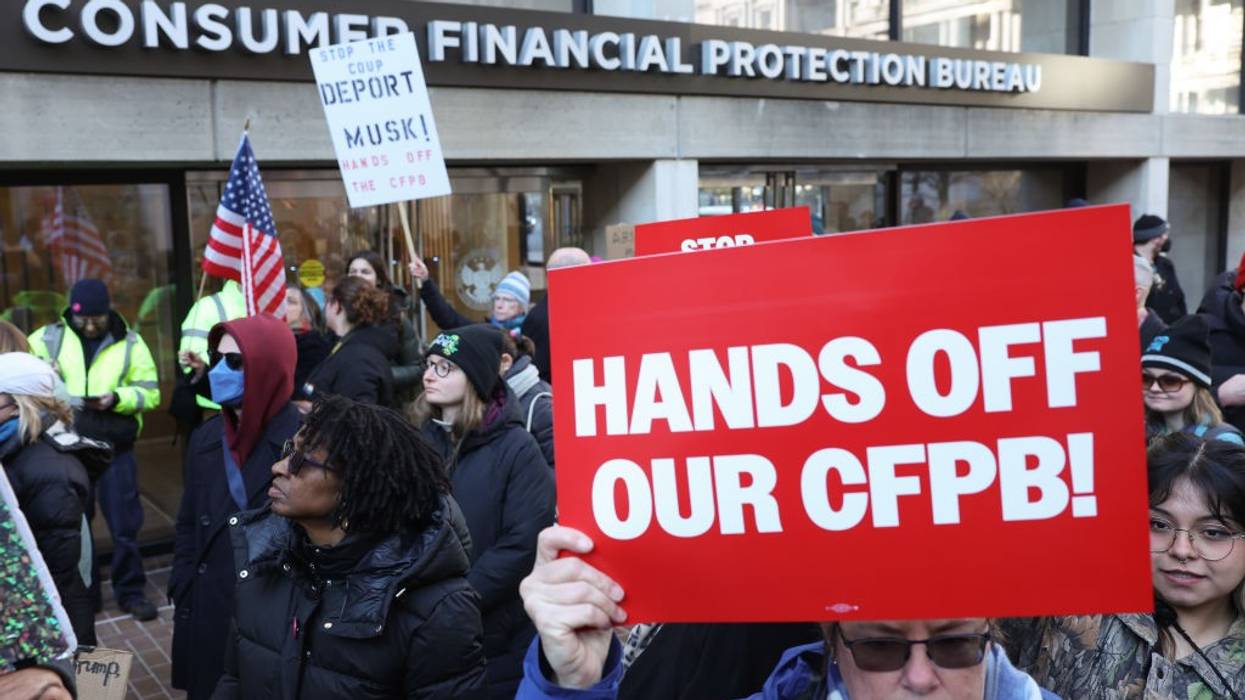
Congress can’t allow the White House to eliminate an agency that’s helped millions of Americans, with billions of dollars returned to them by scams, fraudsters, and megabanks that prey on low-income citizens.
Over the past year, the Trump administration has sought to gut the Consumer Financial Protection Bureau through cuts and layoffs, and by hamstringing its enforcement powers, claiming the agency is hurting large banks through overregulation. Acting CFPB Director Russ Vought has sought to reduce the agency's staff by 90% and to freeze spending since February.
A group of 21 states, plus the District of Columbia, sued the Trump administration in December to stop it from defunding the CFPB. The administration responded by telling the court that the government is legally barred from seeking new funding from the Federal Reserve, the bureau’s primary source of money, alluding to the fact that the agency will eventually go broke later this year. The next step in the case will be the DC Court of Appeals to hear arguments in late February.
The CFPB's enforcement actions, like the 22 pending cases against banks, highlight its vital role in safeguarding consumers from unfair practices, which the current threats jeopardize.
So, what does this mean for the country? The CFPB's weakening could leave consumers vulnerable to predatory practices, unfair fees, and fraud, risking their financial stability.
The Biden administration's pressure on banks and financial institutions on the issue led them to agree to refund more than $240 million to customers, a win secured by actual, formal regulation. Trump and Vought have rolled that back, too.
The CFPB’s Small Dollar Rule was created to curb abusive payday lending practices, especially repeated debit attempts that drain bank accounts and trigger cascading overdraft and Non-Sufficient Funds (NSF) fees. That goal is sound and worthy. The problem is not the rule’s intent, but how it operates alongside bank fee structures and in a financial marketplace devoid of smart, progressive-minded credit options.
The small dollar rule makes automatic repayments—which help keep the cost of borrowing to the bare minimum—incredibly tricky to execute. After two consecutive failed payment attempts, covered lenders generally cannot try again unless the borrower specifically authorizes another attempt, which can leave payments stalled when ordinary life disruptions intervene. Regulators have warned that charging multiple NSF fees tied to re-presented transactions can harm consumers. This is true not just because a single missed payment can still trigger NSF fee collection and financial harm, undermining a rule meant to protect borrowers acting in good faith. It’s also because lenders are now further limiting credit to the most high-risk borrowers, including gig economy workers, who are also those most in need of emergency credit, forcing them to borrow via ultra-expensive bank and credit union overdrafts and NSFs. And when payments are not made, inevitably, borrowers’ personal credit ratings take a hit. Of course, this affects poor people and those with bad credit harder than anyone else.
Trump and Vought's shuttering of the CFPB without fixing this situation, including by pushing banks hard to provide credit to consumers at lower cost and even by standing up a viable alternative to current credit options through something like Postal Banking, would make the problem of high-interest debt worse for Americans. Moreover, because Trump and Vought refuse to act against extortionate overdraft and NSF fees, as the Biden administration did, they’re exposing consumers to high-cost debt, where they effectively borrow from the bank, too. The Biden administration's pressure on banks and financial institutions on the issue led them to agree to refund more than $240 million to customers, a win secured by actual, formal regulation. Trump and Vought have rolled that back, too.
The CFPB has largely helped people when they have problems with a financial institution, product, or transaction by allowing customers to submit complaints, which the agency then works on their behalf. Since its inception, 98% of the 9 million total complaints have received “timely responses” from the institutions or companies to which customers reported them to the CFPB. Of all the complaints, almost 400,000 were submitted by US military members, and nearly 200,000 were submitted by seniors.
The results have been staggering. CFPB data as of December, 2024 shows a whopping $21 billion has been returned to more than 205 million Americans who were financially harmed by institutions. In addition, over $5 billion in civil penalties have been imposed on guilty banks and individuals.
Congress can’t allow the White House to eliminate an agency that’s helped millions of Americans, with billions of dollars returned to them by scams, fraudsters, and megabanks that prey on low-income citizens. And if the Trump administration is determined to do so, it’s time for congressional Democrats to focus on developing credit alternatives that can allow consumers to escape some of the financial madness.
"A Trump denial is not a fact," said one media critic.
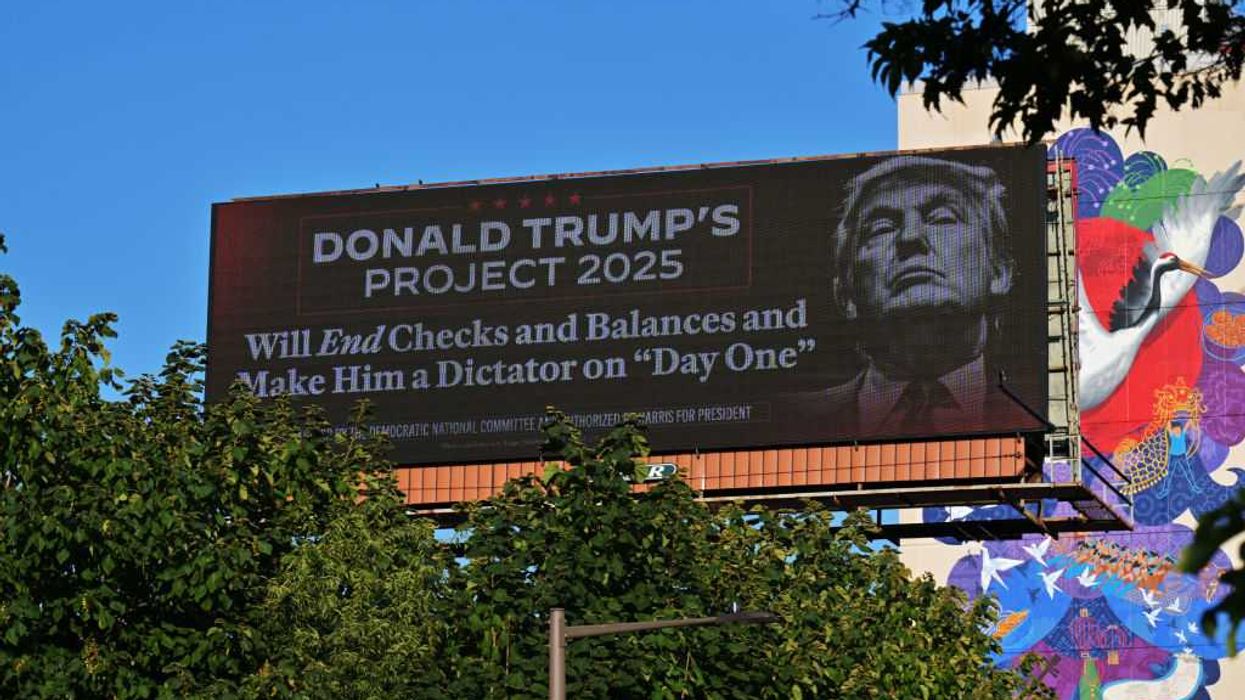
As President Donald Trump openly embraces Project 2025, mainstream media outlets are facing criticism for their role in helping him downplay his ties to the wildly unpopular far-right governing playbook in the lead-up to his reelection last year.
After she became the Democratic nominee in July, former Vice President Kamala Harris made the Heritage Foundation's over 900-page manifesto for “the next conservative president” central to her case against Trump during the 2024 election, often referring to it as "Trump's Project 2025."
She and other Democrats warned that if he retook power, he would swiftly enact many of its most extreme and unpopular proposals and dramatically expand executive power while doing it.
Among those proposals were steep cuts to social safety net programs like Medicaid and the Supplemental Nutrition Assistance Program (SNAP), the "mass deportations" of millions of immigrants, the elimination of the Department of Education, new restrictions on abortions, the gutting of climate protections, and the replacement of career civil servants with political appointees, among many others.
Democrats amplified the plan's danger at the Democratic National Convention and in campaign ads, and Trump began to distance himself from the platform. Despite the fact that as many as 140 people who'd worked in his first administration—including Paul Dans, Heritage's director of Project 2025—had a hand in its creation, Trump said: "I know nothing about Project 2025. I have no idea who is behind it."
This was demonstrably untrue, even at the time. Media Matters for America dug up a clip from as far back as May 2023 of Dans stating that "President Trump's very bought in with this," speaking of the program.
Project 2025 was almost inconceivably unpopular. An NBC News poll from September 2024 showed that while 57% of registered voters viewed the plan negatively, just 4% viewed it positively.
But in the critical months leading up to the election, many media outlets took Trump's denial at face value, publishing fact checks and other commentary that painted Democrats' warnings about his connection to the plan as alarmist or misleading.
Responding to a social media post in July stating that "Trump has made his authoritarian intentions quite clear with his Project 2025 plan," a fact check by USA Today rated the statement "false," because, as the headline said, "Project 2025 is an effort by the Heritage Foundation, not Donald Trump."
In September, after Harris confronted Trump about Project 2025 at the first and only debate between the two, the paper published another fact-check with the headline: "Harris repeats claim that Project 2025 is Trump's plan. That's still not right."
In response to Harris' claim during the debate that Project 2025 was "a detailed and dangerous plan... that the former president intends on implementing if he were elected,” Washington Post fact-checker Glenn Kessler, whose coverage received a fair bit of criticism during the 2024 cycle, reported in bold text that "Project 2025 is not an official campaign document."
A CNN fact check of the Harris campaign's social media in September remarked that one account "frequently invokes Project 2025," before caveating that "Project 2025 is not Trump’s initiative, and he has said he disagrees with some of its proposals."
In an October interview on CBS's "Face the Nation," anchor Norah O'Donnell, Harris attempted to warn about Project 2025, before O'Donnell responded: "You know that Donald Trump has disavowed Project 2025. He says that is not his campaign plan."
After nine months back in power, the website Project 2025 Tracker estimates that Trump has already implemented approximately 48% of the objectives outlined in the policy document.
In addition to his key campaign promises many of his second administration's policies are highly specific to Project 2025, such as his pledge to abolish the Federal Emergency Management Agency (FEMA), his efforts to privatize the National Weather Service (NWS), his reconfiguration of Title X funding to promote pregnancy, and his elimination of the Office for Civil Rights and Civil Liberties.
Trump is no longer hiding his connection to Project 2025, having brought in many of its hiring picks and authors to staff his administration almost immediately after his victory last November.
This week, he began to boast about it openly. As his Office of Management and Budget (OMB) director, Russ Vought, one of Project 2025's architects, began using the current government shutdown to unilaterally cut off funding to infrastructure projects in blue states and cities, Trump lauded him as "he of PROJECT 2025 Fame."
"This was always the plan," Harris responded on social media.
While many commentators expressed outrage that Trump blatantly lied about his connections to Project 2025, others dredged up old clips of newspapers and anchors taking him at his word.
"All those 2024 media fact checks that said, 'Donald Trump and the Trump campaign deny any connection to Project 2025' look pretty ridiculous right now," said MeidasTouch editor-in-chief Ron Filipkowski. "A Trump denial is not a fact. You just used his lies to 'debunk' a reality that was obvious to anyone paying attention."
Mehdi Hasan, the founder of the independent media company Zeteo, highlighted the CBS interview, saying Trump's embrace of Project 2025 was "embarrassing not just for Norah O'Donnell but a whole host of leading American anchors and reporters who echoed Trump’s false denials."
"Nothing showed the difference between mainstream and independent media better than the response to Trump’s obvious lie about not knowing anything about Project 2025," said David Pepper, author of the book Saving Democracy: A User's Manual. "Most mainstream media started fact-checking those who claimed a connection to be somehow false. Others 'both sides'ed' it. Far more in independent media called it out as a whopping lie."
"This is just the latest broken promise from Republicans, who have used their short time in power to already cater to special interests over hardworking Americans," said one watchdog leader.
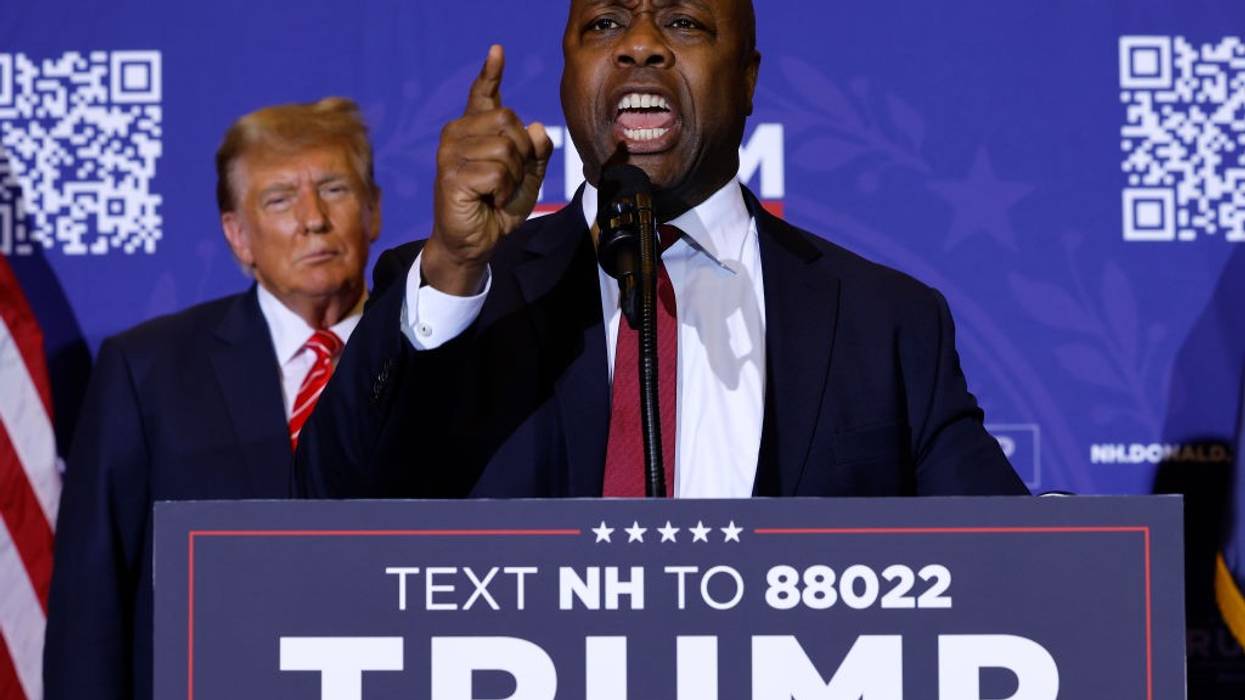
A U.S. watchdog group on Tuesday slammed Republicans in Congress for trying to kill the Consumer Financial Protection Bureau's overdraft rule as U.S. President Donald Trump and billionaire Elon Musk target the CFPB as a whole.
The Accountable.US statement came in response to Senate Banking Committee Chair Tim Scott (R-S.C.) and House Financial Services Committee Chair French Hill (R-Ark.) recently introducing a Congressional Review Act (CRA) resolution to overturn the rule that capped most overdraft fees at $5, which was finalized in December, near the end of the former President Joe Biden's term.
"Overdraft fees affect a huge portion of American families with 17% of households with checking accounts paying overdraft or [nonsufficient funds] fees in 2023," Accountable.US noted. "This action would open the door for $35 overdraft fees—a decision that would cost American households an average of $225 each year."
The watchdog's executive director, Tony Carrk, declared that "undoing the CFPB's overdraft fee rule is a gift to big banks and a gut punch to the wallets of millions of Americans across the country."
"Deceitful and excessive overdraft fees cost Americans billions of dollars every year, but the Trump administration and Republicans in Congress don't seem to care any longer about lowering costs for Americans now that they're in charge," he continued. "This is just the latest broken promise from Republicans, who have used their short time in power to already cater to special interests over hardworking Americans."
When the Republican chairs introduced their CRA resolution last week, Scott called the Biden-era CFPB rule an example of the "pursuit of political headlines over sound policies," and Hill described it "midnight rulemaking" and "another form of government price controls that hurt consumers who deserve financial protections and greater choice."
Meanwhile, when the CFPB finalized the rule, the agency said that it "took action to close an outdated overdraft loophole that exempted overdraft loans from lending laws." At the time, the bureau was still directed by Biden appointee Rohit Chopra, who highlighted that large banks' exploitation of the loophole had "drained billions of dollars from Americans' deposit accounts."
The rule "was scheduled to become effective in October," but "because of acting Director Russ Vought's unlawful order stalling all CFPB work, the effective date has been suspended," The American Prospect reported Monday. "If Congress passes the CRA resolution, the overdraft rule could not come back in any 'substantially similar' form. So it matters if congressional Republicans decide to support allowing banks to impose additional junk fees worth billions of dollars."
The outlet also pointed out that "because CRA resolutions cannot be stopped by a filibuster, they represent some of the most likely legislative actions of the early Trump term," given Republicans' narrow majorities in Congress."
It's not just the rule that's in jeopardy; the entire agency is at risk. Trump and Musk, the leader of the president's Department of Government Efficiency (DOGE)—though perhaps not on paper—are working to gut the federal workforce and slash spending, and they have the CFPB in their crosshairs.
An agreement reached Friday in federal court halted mass firings at the CFPB and barred the bureau and its temporary leader, Vought—who also leads the Office of Management and Budget—from purging data or defunding the agency while the case moves forward. However, Trump and Musk are expected to continue their effort.
"The same billionaires trying to kill the CFPB are the ones who profit off predatory loans, sky-high fees, and financial scams that target young people," Corryn G. Freeman, executive director of the youth-focused Future Coalition, said Monday. "The CFPB should be strengthened, not eliminated. If Musk and his allies succeed in gutting this agency, it will be open season on young consumers with no one left to protect them."
"The richest man in the world wants to shut down an agency that keeps people like him from ripping off the rest of us."
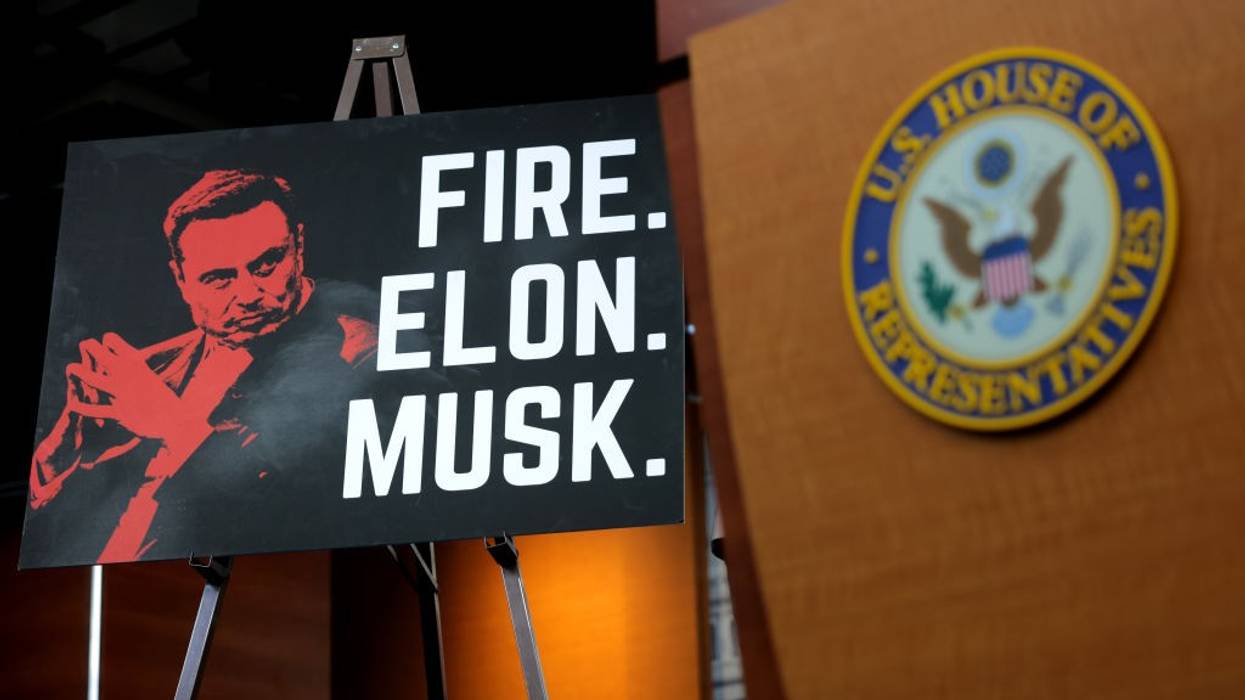
Defenders of a Consumer Financial Protection Bureau that has returned tens of billions of dollars to duped and defrauded U.S. consumers expressed outrage overnight and into Saturday after the independent agency was declared deceased by billionaire Elon Musk and its operations were handed over to the chief architect of the far-right Project 2025 Russell Vought.
Vought, who earlier this week was confirmed as head of the Office of Management and Budget by Senate Republicans, was named acting director of the CFPB by President Donald Trump, according to various reports.
The appointment of the far-right ideologue came less than a day after reports emerged that members of the Musk-led Department of Government Efficiency (DOGE) were granted access to key CFPB systems and Musk himself posted to his online social media X that the agency should "RIP," suggesting it was in the process of being dismantled or, in his mind, already killed.
"Since its creation, the Bureau has returned $21 billion to people's wallets by fighting against illegal financial charges, junk fees, debts, and fraud," said Mike Calhoun, president of the nonpartisan Center for Responsible Lending, in a statement on Saturday. Now, when people are already struggling to pay higher prices for necessities like eggs and milk, the Trump administration appears to have decided to deepen the pain by directly taking aim at the agency that helps keep our money safe."
"When people are already struggling to pay higher prices for necessities like eggs and milk, the Trump administration appears to have decided to deepen the pain by directly taking aim at the agency that helps keep our money safe."
"'Let them eat debt' is not a strategy for making America great again," Calhoun added, "and weakening the CFPB certainly isn't the way to keep working families, our financial markets, or our economy strong."
Stacy Mitchell, co-director of the Institute for Local Self-Reliance, which challenges corporate encroachment on the common good, said, "Obviously this isn't about 'efficiency.' It's about dismantling law enforcement that protects Americans from corporate power."
Congressional Democrats also reacted with contempt to Musk's message and the news that the agency's systems—like those of other agencies DOGE has put its hands on—were under threat.
"Here is the richest man in the world bragging about eliminating an agency that has delivered $21 billion back to working-class families since its inception," said Democrats on the House Committee on Financial Services, led by Ranking Member Maxine Waters of California. "Even most Republicans want the CFPB to continue protecting them from being ripped off by abusive big banks and predatory lenders."
"Here are the FACTS: 81% of voters, both Republicans and Democrats, support the CFPB and want the agency to continue its work," said Rep. Juan Vargas (D-Calif.), also a member of the committee. "Even so, Trump has moved to freeze the CFPB to take money out of YOUR pocket to line those of his billionaire friends."
In a letter sent to the CFPB on Friday—addressed to the previous acting director, Treasury Secretary Scott Bessent, whose first act of business was reportedly to order a halt of "all meaningful work"—Waters, Vargas, and 79 other Democratic members of the House said they were "deeply alarmed and troubled that you appear to be launching the Trump Administration's plan to contravene the will of Congress and unlawfully 'delete' this popular consumer watchdog that enjoys the broad bipartisan support of four out of five Americans."
According to the letter:
... we understand that you have ordered staff to halt all meaningful work of the CFPB, including ordering staff to stop investigating violations of consumer financial protection laws or settling enforcement actions, basically letting bad actors off the hook. We also understand that you have arbitrarily ordered the suspension of all CFPB rules that have yet to take effect, which would delay billions of dollars in savings and credit opportunities for consumers, if not rob them entirely.
We urge you to immediately rescind what appears to be an illegal stop work order and allow the public servants at the CFPB to get back to work for the American people as required by law.
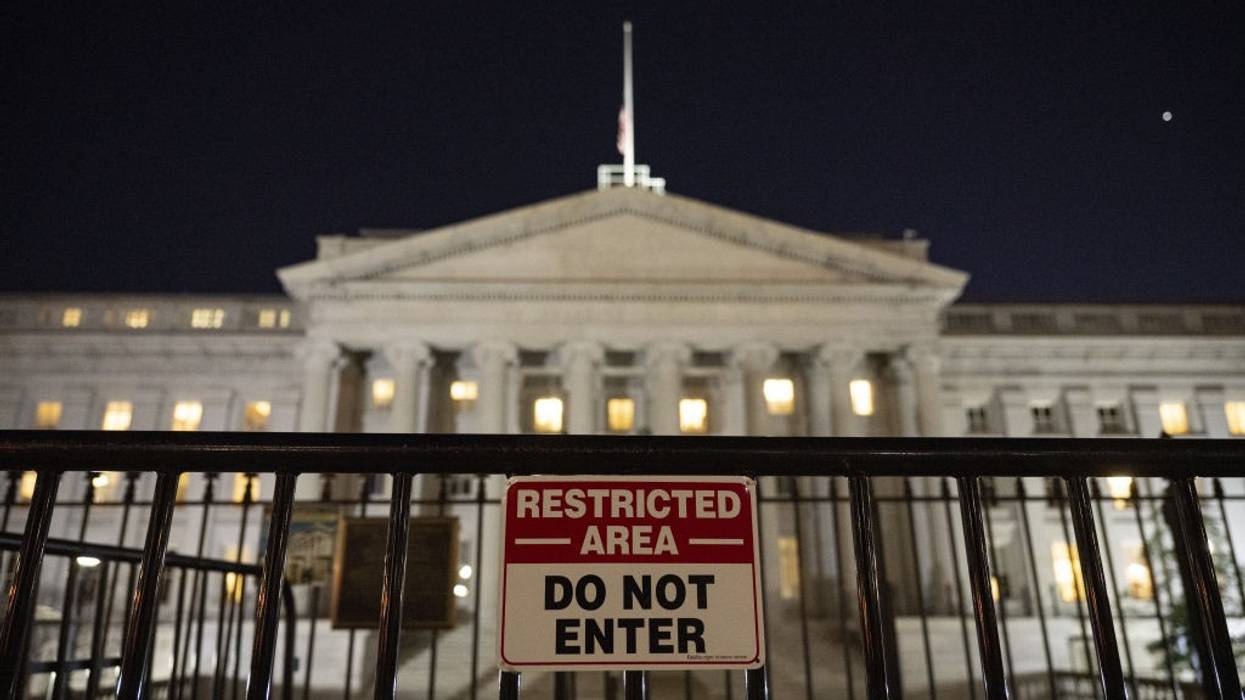
As of this writing, the CFPB's homepage (www.consumerfinance.gov) prominently displayed a 404 error message, though portions of the site appeared to be active.
In a Saturday statement, the Democrats on the House Finance Committee said the 404 image on the CFPB website was intentionally "deceptive," calling it "a brazen attempt to fool consumers and the public about the status" of the agency.
"As of this moment, links and pages are still up and functional on the website," the statement said, "including the Consumer Complaint portal and database and Home Mortgage Disclosure Act (HMDA) database. Various aspects of the CFPB's web content is required by statute to be published and available on the CFPB's website."
"Let's be clear: the people cheering this the loudest are scammers and people who don't want you to keep your hard-earned dollars. So much for lowering costs."
Nadine Chabrier, counsel at the Center for Responsible Lending, said the "deeply troubling" developments at the agency will "undermine the CFPB's mission to protect consumers from financial misconduct" of various kinds.
"CFPB has returned more than $20,000,000,000 to consumers since it was founded," said Rep. Gabe Amo (D-R.I.) on Friday evening in response to Musk's tweet. "Let's be clear: the people cheering this the loudest are scammers and people who don't want you to keep your hard-earned dollars. So much for lowering costs."
"It is disgraceful that the Trump administration has allowed unelected billionaires and their lackeys unfettered access to the personal and financial information of Americans."
A pair of labor unions and an advocacy group representing retirees sued the U.S. Treasury Department on Monday in an effort to halt Elon Musk's team's dangerous access to a critical government payment system—access granted by U.S. President Donald Trump's handpicked Treasury chief.
In a lawsuit filed with the U.S. District Court for the District of Columbia, the Alliance for Retired Americans, the American Federation of Government Employees (AFGE), and the Service Employees International Union (SEIU) said they're seeking to stop the Trump Treasury Department's "unlawful, ongoing, systematic, and continuous disclosure of personal and financial information" to Musk and members of his so-called Department of Government Efficiency (DOGE).
"The scale of the intrusion into individuals' privacy is massive and unprecedented," the complaint states. "Millions of people cannot avoid engaging in financial transactions with the federal government and, therefore, cannot avoid having their sensitive personal and financial information maintained in government records."
Treasury Secretary Scott Bessent's decision last week to give DOGE "full, continuous, and ongoing access to that information for an unspecified period of time means that retirees, taxpayers, federal employees, companies, and other individuals from all walks of life have no assurance that their information will receive the protection that federal law affords," the lawsuit adds.
The coalition urged the court to immediately enjoin the Treasury Department from "continuing to permit such access," which has sparked calls for Bessent's impeachment as observers characterize the Musk team's infiltration of key federal agencies as a coup.
"It is disgraceful that the Trump administration has allowed unelected billionaires and their lackeys unfettered access to the personal and financial information of Americans," AFGE national president Everett Kelley said in a statement Monday. "Together, we can stop this violation of American citizens' privacy."
Richard Fiesta, executive director of the Alliance for Retired Americans, said that "we are outraged and alarmed that the Trump administration has allowed so-called DOGE staff to violate the law and access millions of older Americans' sensitive personal and financial data."
"Seniors are already the most vulnerable Americans to fraud and scams, with FBI data showing losses of $3.4 billion in 2023 alone," Fiesta added. "We urge the court to quickly act to stop this unlawful theft of our data."
"We are living a nightmare created by Donald Trump and Elon Musk, and we need to wake up."
The lawsuit was filed as Bessent reportedly assured Republican lawmakers behind closed doors that Musk and his cronies "do not have control over" the Treasury payment system overseen by the Bureau of the Fiscal Service.
But reporting out Tuesday morning suggests that's not true. According to Wired, "a 25-year-old engineer named Marko Elez, who previously worked for two Elon Musk companies, has direct access to Treasury Department systems responsible for nearly all payments made by the U.S. government."
Citing unnamed sources, Wired reported that "Elez's privileges include the ability not just to read but to write code on two of the most sensitive systems in the U.S. government: The Payment Automation Manager (PAM) and Secure Payment System (SPS) at the Bureau of the Fiscal Service (BFS)."
Researcher Nathan Tankus wrote in his newsletter early Tuesday that "we are in such a catastrophic situation I do not have the words to describe."
"It is getting worse and very little is being done. Lawsuits have been launched to stop this on privacy grounds, but we need so much more. Strongly worded letters from Congress are not enough," wrote Tankus. "There is a protest at the Treasury today. This is not a newsletter to tell you how to organize or engage in political action. But wherever you are, whatever your context, get involved in resisting the Trump administration's catastrophic lawlessness and destruction. And get the word out about the Trump-Musk Treasury Payments Crisis of 2025, which is the crisis above all the crises happening concurrently."
At a press conference on Monday, Sen. Elizabeth Warren (D-Mass.) said that "when unelected billionaires start ransacking our government offices, this is not business as usual."
"We are living a nightmare created by Donald Trump and Elon Musk, and we need to wake up," Warren added. "We need to use every tool we have to fight back, and in the Senate, we can start by saying no to dangerous Trump nominees like Tulsi Gabbard or Russ Vought."
This story has been updated with new reporting from Wired.

Russ Vought, an architect of Project 2025, said he's "very proud" of Clinton-era welfare reform that devastated some of the nation's most vulnerable people.
U.S. President Donald Trump's pick to lead the Office of Management and Budget told lawmakers Wednesday that he's "proud" of the impacts of Clinton-era welfare reform, a Republican-backed legislative change that doubled extreme poverty by stripping government support from some of the nation's most vulnerable people—including children with disabilities.
Pressed on his record of advocating work requirements for Medicaid recipients, Project 2025 architect Russ Vought told members of the Senate Budget Committee that "one of the major legislations that our side has been very proud of since the 1990s was the impact of welfare reform" and suggested it should be a model for the Trump administration to apply to other federal programs going forward.
"It led to caseload reductions, people getting off of welfare, going back into the workforce," Vought said of the 1996 reform, neglecting to mention research showing that the law resulted in an explosion of extreme poverty as people were often unable to find jobs after losing benefits.
In response to Vought's remarks, Sen. Jeff Merkley (D-Ore.) noted that Arkansas' temporary imposition of work requirements on Medicaid recipients—with a green light from the first Trump administration—was a "failed experiment," with thousands losing health coverage without any significant increase in employment.
Watch the exchange:
At @SenateBudget confirmation hearing, Russell Vought says he's "very proud" of his plans to take Medicaid away from people who can't work.@SenJeffMerkley tells Vought this would trap Americans in poverty: "The way that people are able to work is when they're healthy". pic.twitter.com/3GmaVwmnVo
— Social Security Works (@SSWorks) January 22, 2025
Later in Wednesday's hearing, Vought—a longtime supporter of Medicaid cuts—said that "we need to go after the mandatory programs," a category that includes Social Security, Medicare, Medicaid, and the Supplemental Nutrition Assistance Program.
Republicans in Congress have reportedly discussed cutting trillions of dollars from Medicaid to help pay for another round of tax cuts that would disproportionately benefit the wealthiest Americans.
During his time questioning Vought on Wednesday, Sen. Ron Wyden (D-Ore.) said that "the distillation of the Trump economic program is to give tax breaks to all the people at the top, and it's gonna be paid for by" cuts to Medicaid and federal nutrition assistance.
"We would not characterize our economic program that way," Vought replied.
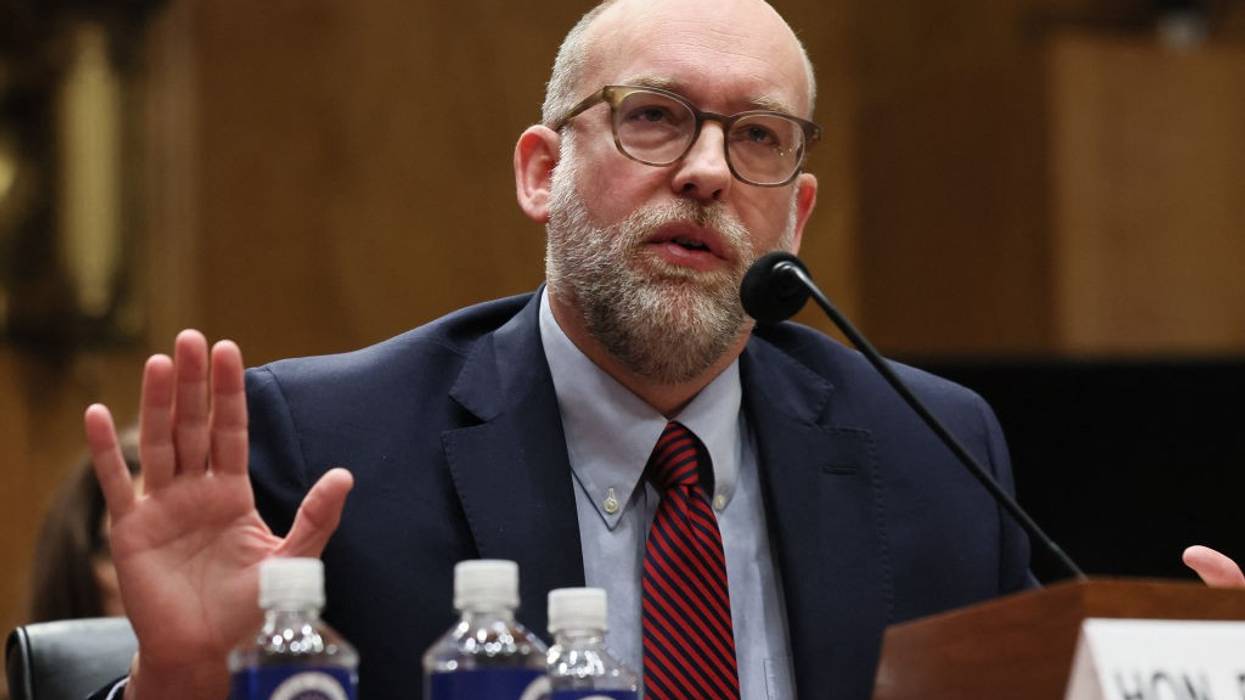
Russell Vought, Trump's pick to head the White House Office of Management and Budget, was questioned by members of the Senate Homeland Security Committee during a Wednesday confirmation hearing.
As a U.S. Senate committee held a confirmation hearing for Russell Vought—Republican President-elect Donald Trump's pick to head the White House Office of Management and Budget—progressive critics underscored what they called the extremism of the controversial nominee, who played a key role in crafting a proposed initiative to expand executive power and purge the federal civil service.
Vought—who was questioned Wednesday by members of the Senate Homeland Security Committee—served as both acting director and director of the Office of Management and Budget (OMB) during Trump's first term. He currently leads the think tank Center for Renewing America, whose motto is "For God. For Country. For Community."
The defender of Christian nationalism recently co-authored the policy portion of Project 2025, which includes dramatic cuts to critical public programs, abolishing or gutting essential government agencies, a national abortion ban, and a litany of additional far-right wish list items. While Trump has tried to distance himself from the deeply unpopular proposal, at least 140 people who worked in his first administration—including six former Cabinet secretaries—have been involved with Project 2025.
Tapped to oversee an agency that plays a key role in managing civil servants, Vought was secretly recorded saying he wants government officials to be "traumatically affected" by his reforms "because they are increasingly viewed as the villains."
Debra Perlin, policy director at the watchdog group Citizens for Responsibility in Washington, submitted written testimony to the Senate committee in which she warned that "should he be confirmed, it is abundantly clear that Mr. Vought intends to misuse his authority as director of OMB to harm civil servants, and as a result, endanger the American public."
Perlin continued:
During his tenure as OMB acting director and then director from January 2019 to January 2021, Mr. Vought was a central figure in attempting to implement Schedule F, President Trump's executive order that would have upended the merit-based civil service system by stripping employment protections away from thousands of career civil servants had President [Joe] Biden not rescinded it. Mr. Vought has called for reinstating Schedule F and was a key architect of Project 2025, the Heritage Foundation's sweeping—and wildly unpopular—conservative policy plan that advocates for dismantling the civil service. If Schedule F is reinstated, it would not only harm federal employees but would also cause catastrophic harm to government services, as well as causing deep economic impacts in places with significant populations of government workers including California, Texas, Virginia, Maryland, and Washington, D.C., among others.
In addition to Mr. Vought's intention to dismantle the civil service, he has pushed extreme strategies to consolidate presidential power under the banner of "radical constitutionalism." He supports the president withholding congressionally appropriated funds in violation of the Impoundment Control Act, bypassing the advice and consent of the Senate to push recess appointments, invoking the Insurrection Act to deploy the military on the American public, and abusing emergency powers. These plans to expand presidential power are even more troubling taken with Mr. Vought's stated desire to reduce the independence of federal agencies such as the Department of Justice, in part by purging agencies of career civil servants that are seen as standing in the way of the president's agenda. Mr. Vought has called for "an army of investigators" to prosecute current and former government officials who sought to hold President Trump accountable.
"These are just some of the ways Mr. Vought intends to misuse his own authority and craft plans for the president to subvert the law and, in the process, American democracy," Perlin added.
In a statement coinciding with Wednesday's hearing, Lisa Gilbert, co-president of the consumer advocacy group Public Citizen, said: "Vought has no business going back to OMB. His extreme ideological opposition to regulations that protect consumers, workers, our environment, and public health and safety will lead to more deregulatory disasters that harm all of us."
"He wants to slash funding for critical government agencies and services, interfere with agencies that are supposed to be politically independent, exclude the benefits of regulation from cost-benefit analysis, and fire vast numbers of civil service employees simply for doing their jobs," Gilbert added. "In addition, he abused his power during his last tenure at OMB to override agency experts, repeatedly endangering public health and safety. The Senate should reject this dangerous and extreme nomination."
Congressman Jared Huffman (D-Calif.), founder of the Stop Project 2025 Task Force, said Wednesday that "we don't have to guess if Russ Vought will enact the radical vision laid out in Project 2025 if he is confirmed, because he literally wrote the playbook and his record shows that he will stop at nothing to enact it."
"He is a self-avowed Christian nationalist who plans to dismantle the civil service—replacing thousands of qualified, nonpartisan federal employees such as scientists and engineers with political lackeys who will be selected to follow partisan orders above the law or the Constitution," the lawmaker continued. "He has vowed to ignore the Constitution by seizing unlawful power for Trump to unilaterally withhold or redirect funds for entire agencies or programs that Congress appropriated."
"His aggressive plan to gut checks and balances clears the way for Trump to enact his entire Project 2025 agenda to sell out the middle class, threaten personal rights and freedoms, and impose biblical morality codes on all of us," Huffman added. "We cannot take that risk and let this authoritarian architect of Project 2025 anywhere near the federal budget or the Oval Office."

"Vought's nomination makes it crystal clear that Trump lied to the American people," said Rep. Rosa DeLauro. "Trump's agenda is the Project 2025 manifesto."
President-elect Donald Trump's choice of Russell Vought, a Project 2025 architect, to lead the White House budget office was seen as further evidence of the threat the incoming administration poses to Social Security, Medicare, and other critical government programs.
Vought, who currently heads the far-right think tank Center for Renewing America think tank, served as director of the Office of Management and Budget (OMB) during Trump's first term, and he's set to return to the post after playing a central role in crafting the Project 2025 agenda that the Republican president-elect attempted to disavow on the campaign trail.
In remarks to an undercover journalist earlier this year, Vought dismissed the notion that Trump opposed the aims of Project 2025, saying the Republican leader was "very supportive of what we do."
Vought is expected to aggressively pursue federal spending cuts in concert with other actors within and around the incoming Trump administration, including the "government efficiency" commission led by billionaires Elon Musk and Vivek Ramaswamy.
"With the architect of Project 2025 nominated to lead Trump's Office of Management and Budget, there can be no distinction between the two."
During his tenure at OMB and as an outside adviser to Republican lawmakers, Vought advocated massive cuts to Medicaid and federal nutrition assistance, programs that the GOP is targeting as it looks to offset the costs of its proposed tax cuts.
Vought also spearheaded budget proposals from the Trump White House that recommended cuts to Social Security and Medicare, both of which the president-elect vowed to protect during his 2024 campaign.
"Vought oversaw every budget in the first Trump administration that cut Social Security and Medicare," said Tony Carrk, executive director of the watchdog group Accountable.US. "This much is clear: Social Security and Medicare are at risk in the second Trump presidency."
According to Accountable, Vought is one of at least six individuals associated with Project 2025 whom Trump has picked for a spot in the incoming administration.
"With the architect of Project 2025 nominated to lead Trump's Office of Management and Budget," said Carrk, "there can be no distinction between the two."
While Project 2025's sweeping policy document includes little discussion of Social Security, the far-right program's authors have endorsed changes such as raising the retirement age—which would result in across-the-board benefit cuts.
As for Medicare, Project 2025 proposes making privatized Medicare Advantage plans the default enrollment option for U.S. seniors, a change that would be massively profitable for insurance giants and potentially disastrous for patients.
Vought's nomination to lead OMB is expected to bolster Trump administration efforts to slash spending across the federal government. As Punchbowl reported Monday, Vought "is among those Trump allies looking to challenge Congress' authority over spending via impoundment," a strategy that Democratic lawmakers have condemned as unlawful.
Rep. Rosa DeLauro (D-Conn.), the top Democrat on the House Appropriations Committee, told Punchbowl in a statement that Vought "is deeply confused about this and many other points about the Constitution and the Impoundment Control Act of 1974."
"While Trump distanced himself from Project 2025, Vought's nomination makes it crystal clear that Trump lied to the American people," said DeLauro. "Trump's agenda is the Project 2025 manifesto."

Russell Vought, who served as director of the Office of Management and Budget during Trump's first term, said he wants to inflict "trauma" on career civil servants and bulldoze opponents of the Republican nominee.
A former high-level Trump administration official who played a key role in crafting the far-right Project 2025 agenda said in closed-door speeches revealed Monday that he wants to traumatize career civil servants and lay the groundwork for Republican nominee Donald Trump to seize total, unfettered control of the federal government should he win the November 5 election.
In partnership with the watchdog organization Documented, ProPublica on Monday published several videos of two private speeches that Russell Vought—who served as director of the Office of Management and Budget during Trump's first term—delivered in 2023 and 2024.
During the previously unreported speeches, ProPublica and Documented observed, Vought "detailed plans to deploy the military in response to domestic unrest" and "defund the Environmental Protection Agency."
"The two speeches delivered by Vought, taken together, offer an unvarnished look at the animating ideology and political worldview of a key figure in the MAGA movement," the new reporting notes. "Echoing Trump's rhetoric, Vought implicitly endorsed the false claim of a stolen 2020 election and likened the media's debunkings of that claim to Chinese Communist propaganda."
Vought also laid out in unsettling terms his intention to leave federal employees "traumatically affected" as part of a sweeping effort to purge the government of scientists and other civil servants deemed disloyal to Trump.
"When they wake up in the morning, we want them to not want to go to work because they are increasingly viewed as the villains," Vought said in a clip obtained by ProPublica and Documented. "We want their funding to be shut down so that the EPA can't do all of the rules against our energy industry because they have no bandwidth financially to do so."
While Trump has attempted to distance himself from Project 2025, claiming he knows nothing about it and has "no idea who is behind it," at least 140 members of his first administration—including Vought—were involved in assembling the sprawling far-right agenda, which outlines plans to gut climate regulations, further roll back abortion access, slash summer food assistance programs for children, and cut taxes for the wealthy.
Vought, who heads the Center for Renewing America think tank, has dismissed Trump's effort to disavow Project 2025, telling an undercover journalist earlier this year that the Republican nominee is "very supportive of what we do."
In the 2024 speech obtained by ProPublica and Documented, Vought said that he and other Project 2025 leaders have assembled "detailed agency plans" and are "writing the actual executive orders" for Trump to sign if he defeats Democratic nominee Kamala Harris in the November 5 election.
"We are writing the actual regulations now," said Vought, "and we are sorting out the legal authorities for all of what President Trump is running on."
Specifically, ProPublica and Documented reported, Vought "laid out how his think tank is crafting the legal rationale for invoking the Insurrection Act, a law that gives the president broad power to use the military for domestic law enforcement."
Lamenting that Trump was talked out of invoking the Insurrection Act to crush mass racial justice demonstrations sparked by the police killing of George Floyd in 2020, Vought said during the 2023 speech obtained by ProPublica and Documented that his preparations for a possible second Trump administration have included constructing a "shadow" Office of Legal Counsel, the body that advises presidents on their powers.
Vought, according to ProPublica and Documented, "made clear he wants the office to help Trump steamroll the kind of internal opposition he faced in his first term."
Jesse Eisinger, a senior editor at ProPublica, described Vought's assessment of the current state of the U.S. as "apocalyptic stuff," pointing to his stated view that the country is "in the late stages of a complete Marxist takeover... in which our adversaries already hold the weapons of the government apparatus, and they have aimed it at us."
Vought—who has previously said he hopes to "rehabilitate Christian nationalism"—cast Trump as a kind of savior in one of the newly revealed speeches, calling him "a man who is so uniquely positioned to serve this role."
"He has seen what it has done to him, and he has seen what they are trying to do to the country," Vought added. "That is nothing more than a gift of God."

A watchdog group secretly recorded Russell Vought, a former Trump administration official, explaining his plan to get confidential Project 2025 plans into the Republican nominee's hands if he wins in November.
A key architect of Project 2025 believed he was speaking to relatives of a wealthy right-wing donor when he described his plan to share a flurry of secret executive orders, proposed regulations, and other documents directly with Republican presidential nominee Donald Trump and his transition team if he wins another White House term in November.
In fact, Russell Vought—who served as director of the Office of Management and Budget during Trump's first term—unwittingly divulged his strategy to an undercover journalist and a paid actor working undercover for the Centre for Climate Reporting (CCR), an investigative organization based in the United Kingdom.
During the nearly two-hour conversation, which was secretly recorded by CCR's undercover team, Vought boasted of his close proximity to Trump and voiced confidence that he will be able to get Project 2025's confidential 180-day plan into the Republican nominee's hands following the November election, despite the former president's false claim that he knows "nothing about" the project.
"There are people like me that have his trust that will be able to get it to him in whatever position we're at," said Vought, who is expected to receive a high-ranking post in a potential second Trump administration. "The relationships will be there. The trust level will be there."
Vought, founder of the Center for Renewing America (CRA), went on to describe Project 2025's secret plan as a "very, very close hold," which CCR noted is a phrase used by the U.S. government for documents that aren't for public consumption.
Watch CCR's video of its conversation with Vought, who expressed his desire to "rehabilitate Christian nationalism," pursue "the largest deportation in history," and "block funding for Planned Parenthood":
NEW
We went undercover in Project 2025.
Our investigation uncovered details of the secretive second phase of Project 2025 being led by a Trump insider, with plans to feed hundreds of highly-confidential battle plans directly into the Trump transition team.
Watch here. pic.twitter.com/je9qHpjAns
— Centre for Climate Reporting (@ClimateReport_) August 15, 2024
Much of the media attention on Project 2025—a sweeping far-right agenda crafted by more than 100 conservative groups and many former Trump administration officials—has centered on the initiative's 922-page "Mandate for Leadership," a document that outlines plans to abolish the Education Department, further privatize Medicare, roll back climate regulations and abortion protections, and centralize power in the executive branch.
Such plans are deeply unpopular with the U.S. public, according to recent polling.
But in recent weeks, Democratic lawmakers and watchdogs have attempted to shine light on what Project 2025 has called the "Fourth Pillar" of its agenda, which is briefly described on the project's website as a "180-day transition playbook" that contains "a comprehensive, concrete transition plan for each federal agency."
Micah Meadowcroft, who worked in the Environmental Protection Agency during Trump's first term, told CCR's undercover reporter that Vought has "supervised" the handling of Project 2025's secretive "second phase," which aims to "break down actual policy packets and executive orders and agenda items and things like that."
"He's the team lead behind the scenes, just putting all that together," said Meadowcroft, who helped set up the meeting between Vought and CCR's undercover team. "I have colleagues who officially work for CRA, but like 35 out of their 40-hour work week is Project 2025 stuff."
Meadowcroft went on to describe Project 2025's secret plan as "a big, fat stack of papers that will be distributed during the transition period, but not as part of the transition."
"Because obviously, you want as little of it to be FOIA-able... as possible," he added, referring to the ability of members of the press and the public to request documents under the Freedom of Information Act.
Vought told CCR that he is "overseeing a large team that is developing 350 different transition documents, consisting of draft executive orders, secretarial memos, and regulations," the outlet noted in its detailed story on the investigation.
"His priority, he said, is to provide detailed plans for enacting policies he already knows Trump wants to carry out, based on the former president's campaign speeches," CCR continued. "He is confident that these plans won't end up in a White House shredder, despite the Trump campaign's insistence that they have nothing to do with Project 2025. He suggested that Trump's disavowal of Project 2025 is a pre-election political ploy rather than anything substantive."
As Vought himself put it: "He's running against the brand. He is not running against any people; he is not running against any institutions."
"He's very supportive of what we do," Vought said of Trump's stance on the Center for Renewing America, which CCR noted is "responsible for promulgating some of the most radical Project 2025 policy ideas."