SUBSCRIBE TO OUR FREE NEWSLETTER
Daily news & progressive opinion—funded by the people, not the corporations—delivered straight to your inbox.
5
#000000
#FFFFFF
To donate by check, phone, or other method, see our More Ways to Give page.
Daily news & progressive opinion—funded by the people, not the corporations—delivered straight to your inbox.
Just like Tom Paine, and until the very end, Bob saw hope in the people who were rising up and demanding a future defined by their humanity, as opposed to corporate power.
Bob McChesney, who died on Tuesday at the age of 72, first introduced himself to me almost 30 years ago, on the set of a public television news program in Madison, Wisconsin. Bob was a distinguished University of Wisconsin professor who was gaining an international reputation for his groundbreaking analysis of the threat to democracy posed by corporate control of media. Raising his arguments in books, speeches, and frequent C-Span appearances, he was well on his way to becoming one of the great public intellectuals of his time. I was a young newspaper editor who had earned a slim measure of recognition for my advocacy on behalf of investigative journalism and press freedom.
The program was framed as a debate about the future of journalism. Bob was positioned as the doomsayer, warning about how media consolidation was killing journalism. I was expected to counter that the future was actually bright. As it turned out, neither of us wanted to follow the script. Instead of arguing, we both agreed that profit-obsessed corporations were destroying American journalism, and that this destruction would pose an ever more serious threat to American democracy.
It wasn’t a particularly satisfying exchange for our hosts that evening, but it was the beginning of a collaboration that would span three decades. Bob and I cowrote half a dozen books and dozens of articles, joined Bill Moyers for a series of PBS interviews that would examine threats to journalism and democracy, and did our best, with more allies than we could have imagined in those early days, to stir up a reform movement that recognized the crisis and endeavored to set the stage for media that serves people rather than corporate bottom lines.
Bob, with his remarkable intellect and even more remarkable capacity for communicating his vision of a media that served citizens rather than corporations, was always the driving force. His research and his insatiable curiosity helped him to see the future more clearly than any scholar of his generation, with such precision that Moyers would compare him to both Tom Paine and Paul Revere. As new political and societal challenges arose in an ever more chaotic moment for America and the world, Bob explained how they should be understood as fresh manifestations of an ancient danger: the concentration of power—in this case, the power of the media, in the hands of old-media CEOs and new tech oligarchs, all of whom cared more about commercial and entertainment strategies than democratic and social values.
Bob, with his remarkable intellect and even more remarkable capacity for communicating his vision of a media that served citizens rather than corporations, was always the driving force.
Bob took the “public” part of “public intellectual” seriously. You knew he wanted to swing into action when he’d say, “We need to put our heads together…” That was his call to write another book, organize another national conference on media reform, or rally another movement to defend the speak-truth-to-power journalism that the founders of the American experiment understood as the only sure footing for representative democracy.
Bob kept issuing the call, even as a series of health challenges slowed him down. He was still doing so a few days before his death following a year-long fight with cancer. His was a life fulfilled in the best sense of the word. He died a happy man, holding the hand of his beloved wife, Inger Stole, and reflecting on time spent with his daughters, Amy and Lucy.
Our last conversations recalled friends and colleagues who had answered his calls to save journalism and renew our democracy: Craig Aaron, Victor Pickard, Josh Silver, Kimberly Longey, Russell Newman, Derek Turner, Ben Scott, Joe Torres, Tim Karr, Matt Wood, Katrina vanden Heuvel, Michael Copps, Noam Chomsky, Amy Goodman, Bernie Sanders, Ralph Nader, the Rev. Jesse Jackson, and too many others to name. Bob loved scholarship, loved activism, and loved collaborating with people who made connections between the two—sharing writing credits with former students at UW-Madison and later at the University of Illinois at Urbana-Champaign, working with unions of media workers and, perhaps above all, strategizing with the team at Free Press, the media reform group he co-founded in 2003 to advocate for diversity in ownership, robust pubic media, net neutrality and always, always, democracy. Bob was frustrated by the oligarchical overreach now on display in the Washington of Donald Trump and Elon Musk—a development he had predicted with eerie accuracy. Yet he remained undaunted to the end, still spinning out fresh ideas for upending corporate control of media, getting Big Money out of politics, and ushering in a new era of freewheeling debate and popular democracy.
That was the essence of Robert Waterman McChesney. He was a globally respected communications scholar who was wholly welcome in the halls of academia, yet he was never satisfied working within an ivory tower. He was a rigorous researcher into the worst abuse of corporate and political establishments. Yet he refused to surrender his faith in the ability of people-powered movements to upend monarchs and oligarchs and, in the words of Tom Paine, “begin the world over again.”
Bob regarded Paine—the immigrant pamphleteer who rallied the people of his adopted country to dismiss King George III and the colonial enterprise, and who spent the rest of his life demanding that this new United States live up to the egalitarian promise of liberty and justice for all—as the essential founder of the American project. Like Paine, Bob believed that with information and encouragement, grassroots activists could carry Paine’s legacy forward into the 21st century. Countless people heeded his call.
“Bob McChesney was a brilliant scholar whose ideas and insights reached far beyond the classroom. He opened the eyes of a generation of academics, journalists, politicians, and activists—including mine—to how media structures and policies shape our broader politics and possibilities,” explained Craig Aaron, the co-CEO of Free Press. “While McChesney spent much of his career charting the problems of the media and the critical junctures that created our current crises, he believed fundamentally in the public’s ability to solve those problems and build a media system that serves people’s needs and sustains democracy. His ideas were bold and transformative, and he had little patience for tinkering around the edges. Rather than fighting over Washington’s narrow vision of what was possible, he always said—and Bob loved a good sports metaphor—that we needed to throw the puck down to the other end of the ice.”
Bob examined the relationship between media and democracy with scholarly seriousness. Yet he coupled that seriousness with a penchant not just for sports metaphors and references to rock-and-roll songs but spot-on cinematic analogies, which invited Americans to recognize the crisis. Speaking to Moyers about how America’s media policies were forged behind closed doors in Washington, by lobbyists and politicians, Bob succintly defined that process: “Pure corruption. This is really where Big Money crowds everything else out. The way to understand how policymakers make media in this country [is to watch] a great movie: The Godfather: Part II. There’s a scene early in the movie where all the American gangsters are on top of a hotel roof in Havana. It’s a classic scene featuring Hyman Roth and Michael Corleone. They’ve got a cake being wheeled out to them. And Hyman Roth is cutting up slices of the cake. The cake’s got the outline of Cuba on it, and they’re giving each gangster a slice of Cuba. And while he’s doing this, Hyman Roth’s [talking about how they can work with government to carve up Cuba in ways that make them all rich]. That’s how media policy is made in the United States.”
The accessibility of his speech—the way it turned something as potentially obscure as communications policy into a readily understandable issue—was Bob’s genius. He wanted to upend the money power and tip the balance toward systems that would empower working-class people—as opposed to billionaires—to shape the future of media: with strategies for giving citizens democracy vouchers that they could use to support independent media, and a host of other remedies. Like his friend Bernie Sanders, Bob believed it essential to have a media free enough from corporate influence to speak truth to economic and political power, boldly critique the excesses of capitalism, and raise the alarm against creeping oligarchy.
The accessibility of his speech—the way it turned something as potentially obscure as communications policy into a readily understandable issue—was Bob’s genius.
This was the premise that underpinned an academic career that saw Bob author or co-author almost 30 books—including the groundbreaking Rich Media, Poor Democracy, his 1999 manifesto on how the decay of journalism would lead to a collapse of democratic norms, and 2013’s Digital Disconnect, his essential assessment of the danger of allowing Silicon Valley billionaires to define online communications. Many of the same themes ran through examinations of the shuttering of newspapers by corporate conglomerates that left communities as news deserts, of the destructive influence of political advertising on the national discourse, and of the failure of political and media elites to bring citizens into debates about automation, machine learning, and artificial intelligence. Noam Chomsky, whose own work on the media’s manufacturing of consent had profoundly influenced Bob’s scholarship (along with that of Ben Bagdikian, the journalist who wrote The Media Democracy), became Bob’s most ardent champion. “Robert McChesney’s work has been of extraordinary importance,” explained Chomsky. “It should be read with care and concern by people who care about freedom and basic rights.”
Bob’s research—and the books, lectures and activism that extended from it—earned him Harvard’s Goldsmith Book Prize, the Kappa Tau Alpha Research Award, the Newspaper Guild’s Herbert Block Freedom Award (for “having done more for press freedom than anyone”), and the International Communications Association’s C. Edwin Baker Award for the Advancement of Scholarship on Media, Markets and Democracy. It also gained him a hearing from thoughtful members of Congress, the Federal Communications Commission, and the Federal Trade Commission. Even if they did not always follow his advice, progressive officials recognized the wisdom of his analysis and incorporated it into their work. That’s one of the reasons why, in 2009, Utne Reader named Bob as one of “50 visionaries who are changing your world.” Charles Lewis, the founder of the Center for Public Integrity, simply referred to Bob as “the conscience of the media in America.”
Bob’s last words to me, though they were a bit more labored due to his illness, were a repeat of his constant call to action: “Let’s put our heads together…”
Lewis wrote those words the better part of two decades ago. Bob remained that conscience, even as “media deserts” spread their arid path across America, as disinformation and misinformation overwhelmed the Internet, as propagandistic advertising warped our politics and as democratic expectations were undermined. It was all as he had predicted. But he was not inclined toward “I told you so” rejoinders.
Rather, Bob kept the faith that popular movements would push back against the decay, and the chaos, just as they had in the Progressive Era, the New Deal years, and the 1960s. “You’ve got to look in the mirror and understand that, if you act like change for the better is impossible, you guarantee it will be impossible,” he would say. “That’s the one decision each individual faces.”
Bob looked in that mirror confidently and courageously throughout a life of scholarship and activism. Some of our last conversations were about the huge crowds Bernie Sanders was attracting for his “Fighting Oligarchy” tour, and the thousands of Americans who have been showing up to challenge Republican members of Congress at town hall meetings. Just like Tom Paine, Bob saw fresh hope in the people who were rising up and demanding a future defined by their humanity, as opposed to corporate power. This might, he suggested, be the opening for a new surge in activism for journalism and democracy, a surge that might “begin the world over again.”
Bob’s last words to me, though they were a bit more labored due to his illness, were a repeat of his constant call to action: “Let’s put our heads together…” In other words, let’s make a plan. Let’s do something. That was his charge to those of us who cherished Bob McChesney’s mission and his spirit. We honor him best by accepting it.
"The world of media scholarship, journalists far and wide, and anyone who cares about a free press, a functioning democracy, and a better world has suffered a tremendous loss," said Common Dreams' managing editor.
Robert McChesney—prominent media scholar, Free Press co-founder, dogged defender of democracy, and friend of Common Dreams—died Tuesday at the age of 72.
McChesney's many books, nearly three dozen in total which he either wrote or edited, include: Rich Media, Poor Democracy (2000); The Problem With the Media (2004); The Death and Life of American Journalism (2010, co-authored with John Nichols); Dollarocracy (2012, also with Nichols); Digital Disconnect (2013); and Digital Democracy (2014).
He was the Gutgsell endowed professor in the Department of Communication at the University of Illinois Urbana–Champaign, and also co-founded the Illinois Initiative on Global Information and Communication Policy with Dan Schiller.
"Bob McChesney was a brilliant scholar whose ideas and insights reached far beyond the classroom. He opened the eyes of a generation of academics, journalists, politicians and activists—including me—to how media structures and policies shape our broader politics and possibilities," said Free Press president and co-CEO Craig Aaron.
Free Press mourns the passing of co-founder Robert W. McChesney, a brilliant scholar & generous mentor who captured corporate media's profound influence on the health of our democracy. https://www.freepress.net/news/press-releases/free-press-mourns-death-co-founder-and-scholar-robert-w-mcchesney
[image or embed]
— Free Press (@freepress.bsky.social) March 27, 2025 at 8:08 AM
"While McChesney spent much of his career charting the problems of the media and the critical junctures that created our current crises, he believed fundamentally in the public's ability to solve those problems and build a media system that serves people's needs and sustains democracy," Aaron continued.
"His ideas were bold and transformative, and he had little patience for tinkering around the edges," he added. "Rather than fighting over Washington's narrow vision of what was possible, he always said—and Bob loved a good sports metaphor—that we needed to throw the puck down to the other end of the ice."
A Common Dreams reader, contributor, promoter, and supporter for over 25 years, McChesney will be deeply missed by all those associated with the independent, nonprofit news organization.
"Both in my personal political development earlier in life and as a working journalist in the profession," said Common Dreams managing editor Jon Queally, "McChesney had a profound influence on how I came to understand media systems and the political economy overall."
"Rich Media, Poor Democracy pretty much changed my life, a book that I once taught to high school students—which they loved, by the way—as it explains, in an accessible but penetrating fashion, just how corrupting the news and information landscape can be when it is controlled wholesale by corporate interests," Queally continued.
"The world of media scholarship, journalists far and wide, and anyone who cares about a free press, a functioning democracy, and a better world has suffered a tremendous loss with the passing of Bob McChesney," he added. "Our hearts go out to his family and many friends."
Rutgers University communications professor Andrew Kennis also highlighted the importance of Rich Media, Poor Democracy. He told Common Dreams that McChesney—who along with Noam Chomsky wrote openers to his 2022 book Digital-Age Resistance: Journalism, Social Movements, and the Media Dependence Model—influenced his own work.
"Bob McChesney's impact on media was immeasurable," Kennis said in a phone interview. "He was a steadfast public intellectual who inspired millions with accessible critiques of capitalism and its corrosive effects on democracy. He argued that the United States' descent into neoliberalism came at the expense of popular sovereignty."
Kennis said he got to know McChesney through Chomsky, adding that "Noam called Bob 'pretty much the best political economist' in the country, and practically the world."
"Bob very much self-identified as a political economist in general, but especially about communications," he explained.
In a 2013 appearance on "Moyers & Company," hosted by Bill Moyers on PBS, McChesney joined with friend and frequent co-author Nichols, national affairs correspondent for The Nation, to discuss their book, Dollarocracy: How the Money and Media Election Complex Is Destroying America.
"Democracy means rule of the people: one person, one vote," McChesney explained to Moyers during the interview. "Dollarocracy means the rule of the dollars: one dollar, one vote. Those with lots of dollars have lots of power. Those with no dollars have no power."
U.S. Sen. Bernie Sanders (I-Vt.) wrote the introduction to Dollarocracy. Jeff Cohen, founder of Fairness and Accuracy in Media (FAIR) and founding director of the Park Center for Independent Media at Ithaca College, called his friend McChesney a "proud socialist" who "told me how glad he was to go door to door" canvassing for Sanders when he ran for president in 2016 and 2020.
Writing for FAIR, Cohen said that "no one did more to analyze the negative and censorial impacts of our media and information systems being controlled by giant, amoral corporations."
"Particularly enlightening was his 2014 book, Digital Disconnect: How Capitalism Is Turning the Internet Against Democracy," Cohen continued, "in which McChesney explained in step-by-step detail how the internet that held so much promise for journalism and democracy was being strangled by corporate greed, and by government policy that put greed in the driver's seat."
"That was a key point for Bob in all his work: He detested the easy phrase 'media deregulation,' when in fact government policy was actively and heavily regulating the media system (and so many other systems) toward corporate control," Cohen added.
In 2015, at the National Conference for Media Reform in Denver hosted by Free Press, McChesney sat down with Common Dreams to discuss the importance of independent outlets as well as the inspiring promise of journalism that can "change the world" by exposing one person at a time to news or information they might not otherwise ever learn or come by:
Robert McChesney on Common Dreams
Nichols wrote for The Nation Thursday that while McChesney was a "globally respected communications scholar who was wholly welcome in the halls of academia," he "was never satisfied working within an ivory tower."
Indeed, a lesser-known aspect of McChesney's work was his immersion in one of the late 20th century's emerging music scenes.
"One of the first things that Bob did to have an impact on society was with the grunge movement in Seattle," Kennis told Common Dreams. "That was kind of his street cred before he went full nerd."
"Bob was doing some independent journalism and was studying in Seattle and was closely covering the emergence of Nirvana and other garage bands back then; that's how he got his first big dip into journalism," he said. "And he was a big fan, and part of the fabric of indie rock."
McChesney—who studied history and political economy at Evergreen State College in Olympia, Washington and earned a Ph.D. in communications from the University of Washington in Seattle in 1989—co-founded the The Rocket, an alternative weekly newspaper that highlighted groups such as Nirvana, Soundgarden, Pearl Jam, Screaming Trees, Sleater-Kinney, and Mudhoney as they rose to prominence. Ironically, The Rocket was sold to a big San Francisco publisher whose financial mismanagement killed the once-independent paper.
"Bob was a towering character," Kennis said, "always dedicated from the beginning to the end to the good fight."
From radio to the internet, a reading of his body of work offers a grand and inglorious tour of media history, and how we got to the horrific era of disinfotainment we’re in today.
Robert W. McChesney was a leading voice and a precious colleague in the battle for a more democratic media system, and a more democratic society. Bob passed away on Tuesday, March 24, at the age of 72. No one did more to analyze the negative and censorial impacts of our media and information systems being controlled by giant, amoral corporations.
Bob was a scholar—the Gutgsell endowed professor of communications at University of Illinois—and a prolific author. Each and every book taught us more about corporate control of information. (I helped edit some of his works.)
Particularly enlightening was his 2014 book, Digital Disconnect: How Capitalism Is Turning the Internet Against Democracy—in which McChesney explained in step-by-step detail how the internet that held so much promise for journalism and democracy was being strangled by corporate greed, and by government policy that put greed in the driver’s seat.
That was a key point for Bob in all his work: He detested the easy phrase “media deregulation,” when in fact government policy was actively and heavily regulating the media system (and so many other systems) toward corporate control.
For media activists like those of us at FAIR—whose board McChesney has served on for many years—it was a revelation to read his pioneering 1993 book Telecommunications, Mass Media and Democracy: The Battle for the Control of US Broadcasting, 1928–1935. It examined the broad-based movement in the 1920s and ’30s that sought to democratize radio, which was then in the hands of commercial hucksters and snake-oil salesmen.
From radio to the internet, a reading of his body of work offers a grand and inglorious tour of media history, and how we got to the horrific era of disinfotainment we’re in today.
Bob McChesney was not just a scholar. He was an activist. He co-founded the media reform group Free Press, with his close friend and frequent co-author John Nichols. Bob told me how glad he was to go door to door canvassing for Bernie Sanders’ presidential campaigns. (Bernie wrote the intro to one of McChesney and Nichols’ books.)
Bob was a proud socialist, and a proud journalist—and he saw no conflict between the two. In 1979, he was founding publisher of The Rocket, a renowned publication covering the music scene in Seattle. For years, while he taught classes, he hosted an excellent Illinois public radio show, Media Matters.
In 2011, he and Victor Pickard edited the book Will the Last Reporter Please Turn out the Lights: The Collapse of Journalism and What Can Be Done. One of Bob’s favorite proposals to begin to address the problem of US media (developed with economist Dean Baker) was to provide any willing taxpayer a voucher, so they could steer $200 or so of their tax money to the nonprofit news outlet of their choosing, possibly injecting billions of non-corporate dollars into journalism.
Bob was a beloved figure in the media reform/media activist movement. We need more scholar/activists like him today. He will be sorely missed.
Readers of the Columbia Journalism Review are well aware of the importance of local news media; they have been the foundation of the American free press, and political democracy, since 1776. Daily newspapers have traditionally constituted the heart and soul of local news media, and they have provided the lion's share of original reporting upon which all other news media depend. That remains the case in the digital era as much of newspapering has transitioned online.
We need the funding to support independent, competitive, professional local news media. That money must come from the government.
CJR readers are also aware that local journalism as it has been known for 200 years has all but disappeared in most places in the United States over the past two decades. The business model for commercial journalism, based on advertising providing most of the income, is dead. Thanks to the internet, it will never return. All efforts to find a viable new business model for local journalism have failed, and investors have abandoned the field, except for private-equity funds on the lookout for distressed properties they can strip for parts.
The ramifications are increasingly clear, and endlessly depressing. It is not simply that functional self-government is impossible without credible journalism with all that forebodes; it is that local newspapers have provided the social glue that brought communities to life, as places where people see themselves as participating in a joint enterprise with people they know and understand and care about. That is disintegrating.
What remains less appreciated is that the founders of the United States regarded creating a free press a policy issue of the greatest possible importance. The Post Office was established in large part to distribute all newspapers virtually for free, and that is most of what it did the first century of this nation's existence. Likewise, that has been the opinion of the Supreme Court in its major decisions. As Justice Potter Stewart put it, the free press clause of the First Amendment is "a structural provision of the constitution." [his emphasis]
This is the public policy imperative facing the United States regarding journalism in 2021: We need the funding to support independent, competitive, professional local news media. That money must come from the government. It is the only viable option at a point when the market has shown that it cannot begin to sustain existing media, let alone usher in a renewal of bold speak-truth-to-power journalism. Of course, we cannot allow the government to pick and choose who gets the money, or engage in censorship. Any viable policy to support local journalism must allow the people to make of it what they will, and trust them in the process of self-government. It is time to stop pretending that can be done without public funding.
How best can the federal government intervene to produce these outcomes? The answer we provide herein is what we term the Local Journalism Initiative. Under our plan, policymakers in Washington would provide a lump sum to every county in the nation annually based on the county's population to pay for nonprofit journalism within that county.
Once every three years, people over 18 will be given three "votes" on how the county's funds should be distributed to three different LJI candidates based in their county. Why three votes for each person? A main objective of the LJI is to have multiple well-funded news media in every county, so people should get multiple votes. In lightly populated rural areas, several counties can be merged to generate a sufficient population base. Conversely in large metropolitan areas counties can be merged if the residents of the counties so desire. In the most populous counties people may get four or five or votes to guarantee diversity of voices.
How the money will be allocated will be determined by people in each county for qualified applicants. To be a qualified applicant for LJI funds, an enterprise must:
Those candidates getting the most votes get a higher percentage of their county's LJI budget. No single applicant can get more than 25 percent of a county's annual budget, regardless of its vote total. An applicant must get at least 1 percent of the vote to qualify, or 0.5 percent of the vote in counties with over 1 million people. Diversity and competition are crucial.
Everything produced by federal funds must be made available immediately to everyone online and for free. In short, the principle is that journalistic organizations will be paid in advance, and what they produce primarily with public monies will be instantly put in the public domain and made available to all for free. The best check on abuses will be popular voting to determine the recipients.
The process will be overseen by the U.S. Postal Service, with elections taking place online and with print ballots available at or through the Postal Service. This is a renewal of the Postal Service's historic mission of sustaining independent and competitive journalism--a mission initiated by the founders of the American experiment and encouraged by their successors well into the 20th century.
There will be no content supervision by the government, no monitoring content to ascertain that it is "good journalism," or even journalism at all. The stipulations above will go a long way toward eliminating fraud. And if people elect to have disingenuous local news media? Just like elections in general, that is the possibility in a democracy.
The ultimate goal of the LJI is not simply to equal the optimum performance of the U.S. press system through history but to surpass it. Even at its best, U.S. journalism has reflected the view of large property owners and the well-to-do, and left dispossessed communities underserved, especially communities of color. One almost certain positive development from the LJI will be that communities of color across the nation will be in a position to have local news media that actually cover the issues in their neighborhoods, towns and cities seriously and thoroughly, produced by journalists from those communities. The LJI makes real a fundamental civil right, one at the heart of the American experiment: the right to a free press that gives everyone the information they need to make real the promise of democracy.
The immediate beneficiaries of the LJI will be the numerous local nonprofit news media that have already been formed, often by working journalists, in communities around the nation over the past decade. The LJI will prove to be an oasis for them. It will also make it practical for local journalists to take over dying local news media and convert them to nonprofit status. This is already happening in communities across the country, but often with much difficulty. The LJI would provide encouragement and support for journalists and their communities.
In big cities where historic daily newspapers are struggling to survive, and in smaller towns where weekly papers are shadows of their former selves, LJI could help local journalists and editors buy, sustain and reinvent publications that have withered under chain ownership.
Maintaining an existing publication, which has name recognition and contacts in the community, gives journalists a jumpstart. But they won't have so much of an advantage that other journalists cannot start competing publications. Indeed, we believe that, in short order, there will likely be a body of new non-profit news media engaged in generating local journalism and seeking LJI funds. This is the goal of the LJI.
The LJI is not hostile to the remaining for-profit local news media. We recognize how important it is to stop the bleeding in for-profit newsrooms, even as we build a necessary and more viable noncommercial system. To help make the transition, in its first six years (two terms) of existence, the LJI would allow local for-profit news media to compete for LJI funding in their county elections, providing they set up distinct nonprofit branches and use their LJI funding under the exact same terms as nonprofit LJI recipients. All remaining local for-profit newspapers and news sites are desperately searching for a workable business model, and if this grants them a lifeline to find a new way to operate in the black doing journalism, more power to them. And if profitability eludes them, they will be better positioned to transition to nonprofit status.
After the first six years, commercial news outlets--whether they are legacy media or startups--would close their nonprofit arms and become ineligible for LJI funding, unless they convert to full nonprofit status. This proposal has no interest in creating an army of investors and commercial lobbyists preying permanently on the government to bankroll their ventures.
At any rate, the right for anyone to launch their own news medium, commercial or otherwise, at any time will always be inviolate. Indeed, we can imagine how commercial news media could thrive alongside nonprofit journalism. Commercial firms, like anyone else, will always be able to publish anything produced by non-profit LJI recipients at no cost upon publication.
How much will it cost the taxpayers?
It is imperative that any system to solve the crisis must have a budget sufficient to get the job done and done well. Daily newspapers have been a massive industry in the U.S. economy until the past 15 years. The total revenues of U.S. daily newspapers constituted one percent of GDP as recently as 1960; that would amount to $232 billion in 2021. In 2000 the total revenues accounted for by daily newspapers was just under 0.6 of one percent of GDP. At that rate, the local journalism income for 2021 would be $133 billion. In 2021, the total daily newspaper revenues (including digital) will be less than $20 billion, and every year that number continues to decrease.
So providing the nation with a credible free press costs money, but, thanks to immense cost savings provided by the digital revolution, and being nonprofit, we do not need hundreds of billions of dollars. But we do need tens of billions, because the single most important and indispensable element of journalism remains skilled human labor, in competing newsrooms.
There actually is historical precedent. For much of the 19th century, when nearly all newspapers were delivered well below actual cost by the Post Office, the value of the postal subsidy, according to an 1840s government audit, effectively equaled 0.21 of one percent of GDP, which would amount to over $46 billion in 2021.
To be effective, the LJI would require an annual budget in this range. The best way to do that would be to set the annual budget at 0.15 of one percent of the previous year's GDP. Keeping the budget to this formula would account for economic and population growth, as well as inflation in coming years, and provide stability for planning. So for 2022 the budget would be just over $34 billion. After initial set-up and administration costs, that would leave at least $33.5 billion to go directly toward local news production.
The LJI funds would be distributed at the same rate for every person, so a county's LJI budget would be determined exclusively by its population. An annual budget of $33.5 billion divided by the US population of 333 million people, equals roughly $100 per capita. Therefore, a county of 250,000 people would get $25 million to produce and sustain local journalism. A county of 1 million people would get $100 million.
If people elect not to vote, the amount of the budget is not affected; it only means that fewer people would determine where the money goes.
The response of many when presented with a proposed budget like this is sticker shock, followed by "the cost is too high." The correct response, the one that guided our Founders, is what will the cost be if we don't do it? We can see signs all around us of what that looks like. We can no more lowball having a credible press system as our democracy crumbles than we would lowball military spending in the midst of a foreign invasion. The expenditure we propose is just over 4 percent of the annual cost of maintaining the military-industrial complex.
What are the upsides to this proposed solution?
There remains much to flesh out to make the LJI practical, and any plan must be flexible enough to account for unanticipated problems and issues. But there are some current institutions that will immediately benefit, and a few are are worth noting.
Local PBS, NPR and community media services present a special case for the LJI. The stations all do a variety of programming where journalism is generally a small percentage of the programming produced. Indeed, on these local stations, the journalism that is broadcast tends to be national in character, as opposed to local. LJI support seems appropriate, because it will create more local journalism where little or none existed before.
Therefore, local NPR, PBS and community stations can compete for and receive LJI funding, but it must go to dedicated journalism that is specifically within the home counties of the stations--in other words toward journalism they are not doing much of at present--and it must meet all of the LJI criteria otherwise. Public media will retain its existing budget allocation separate and apart from this legislation. The LJI is a tool for enhancing, as opposed to replacing, existing sources of public funding.
Likewise, there are numerous high schools, colleges and universities with student news media and, often, formal journalism education and departments. These programs are often filled with students eager to enter the field and make their mark, but they have nowhere to get gainful employment. The programs are floundering as the profession of journalism disappears. Now these programs and these students, of which there remain tens of thousands of optimistic participants every year, will have an important purpose again and an institutional basis for existence, much like schools of education.
Then there is Big Tech. Facebook, Google and other Internet platforms have become the main purveyors of journalism to people in the United States. This has led to considerable controversy over these companies' political power and their editorial judgment. With the LJI, Internet platforms will have popularly approved authentic local media to distribute in counties across the United States. The Internet platforms need simply acknowledge the popular news media choices in the counties people reside. This would seem to be in their own best interest. This also means the news produced through the LJI project can become ubiquitous in short order. Think of how Google search was able to help put Wikipedia on the map overnight.
The LJI also will offer philanthropists and foundations a way to effectively promote journalism at the local level. For the past 20 years, the philanthropic community has spent a good deal of money attempting to build up nonprofit journalism all across the nation. Most of these ventures have stagnated or failed because philanthropies seek to launch ventures but are in no position to support them in perpetuity. Now a philanthropy can give a two- or three-year grant to get a local newsroom up and running and, if it is well received, the LJI funds can kick in and take over thereafter.
One built-in outcome of the LJI is that it will result in several well-funded journalism outlets in each community, as had been the case for much of American history. By the final decade of the 20th century, this grand tradition of journalists competing to get stories, and to provide distinctive takes on the news, was deep in history's rear-view mirror. One-newspaper towns--with the newspapers increasingly owned by large chains with no particular interest in the community or in journalism--were the order of the day in all but a handful of communities. The LJI will allow for a renewal of the diversity and competitive vigor that is essential for a muscular free press.
We offer this proposal in order to jumpstart a policy debate that is desperately needed. There is no time to lose. To read a longer version of this proposal that includes citations as well as much more material on media economics, the history of journalism, the Constitution and the free press, and important international comparisons, please click here.
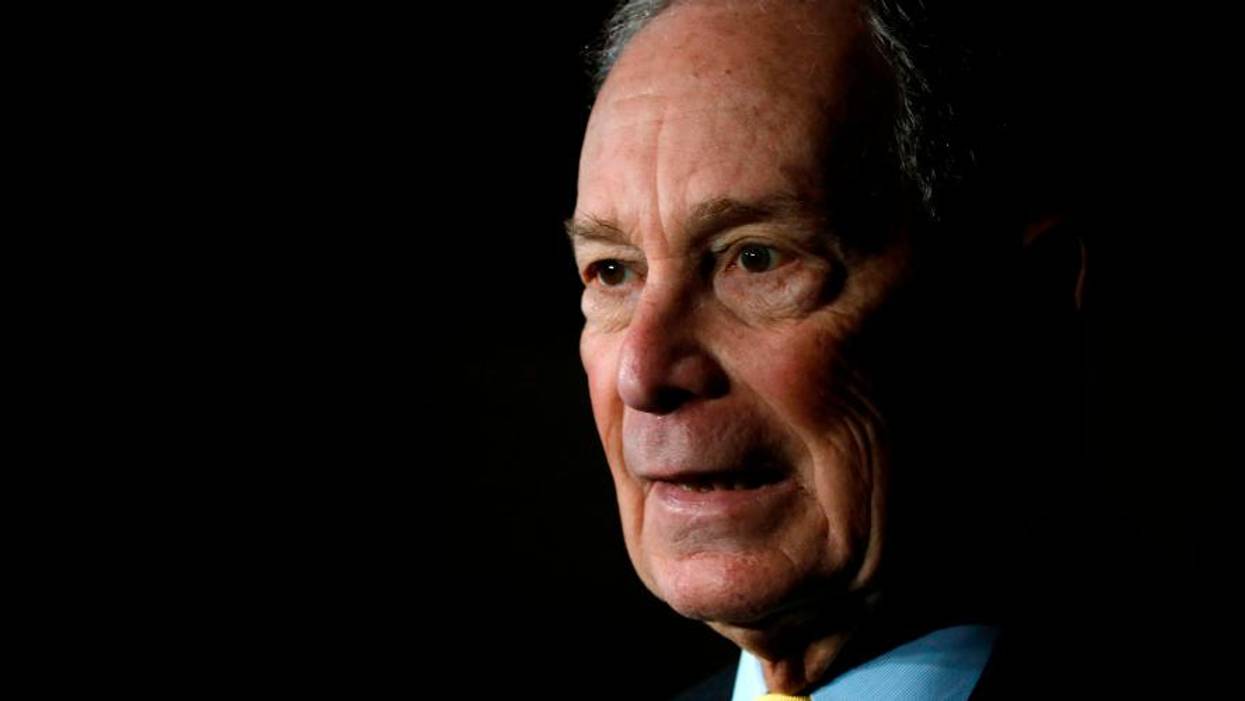
Presidential candidate Michael Bloomberg is one of the 10 richest persons in the world, with a net worth approaching $60 billion, depending upon the vagaries of the stock and bond markets on any given day.
For anyone who is not a billionaire, it is almost impossible to grasp just how much money this is for a single human being. It would be like calculating the distance of our planet to a distant galaxy in centimeters. Bloomberg could spend $100 million every single day on his presidential campaign between now and election day in November--basically more than any candidate except Bloomberg and fellow billionaire Tom Steyer have spent so far in the entire 2019-20 election cycle--and he would still have a net worth greater than $30 billion. He would remain one of the 30 richest people in the world.
Think about that. Money basically means nothing to Bloomberg. It makes no material difference to his life--anymore than losing a penny would to most people--to spend all this money. At age 77, why the hell not? And wouldn't it be fun to be president? You only live once.
"Bloomberg could spend $100 million every single day on his presidential campaign between now and election day in November--basically more than any candidate except Bloomberg and fellow billionaire Tom Steyer have spent so far in the entire 2019-20 election cycle--and he would still have a net worth greater than $30 billion. He would remain one of the 30 richest people in the world."
Bloomberg may well be successful. He has already made media corporations hugely profitable by flooding the airwaves with his expensive and slick advertising--he has shown something corporate America knows well: carpet-bombing advertisements works if you can afford it--and this is just the beginning. He has bought off everyone with a pulse so he has a large chunk of the political class on his payroll, with many more to come. He will accordingly get terrific mainstream press coverage, the type any other candidate would like, and Bernie Sanders can't even begin to imagine.
In short, Bloomberg is demonstrating the deep problems of the U.S. Supreme Court decision that permits candidates to spend unlimited amounts of their own money on their own campaigns, especially in a period of breathtaking wealth inequality. Why be like the Kochs and Sheldon Adelson and spend a fortune on other people running for office? You are the smart guy after all; spend it on yourself.
If Bloomberg is successful, this could well become the new normal. Presidential elections will be contests between the wealthy who put their own money on the line. Bloomberg demonstrates that no one else could possibly compete with them in terms of resources. We are already a way down that road in Congressional elections. The already fading notion that this is a functional democracy will take another sharp turn in the wrong direction.
Bloomberg explains his decision to run for president as a concern with how Trump is such a dreadful president and that he is best positioned to defeat Trump, restore integrity to governance, and change his deplorable policies, especially on the environment and guns.
Fair enough. But aside from the issue of billionaires buying elections, there is one other extraordinary flaw in his thinking: Bloomberg should be running against Trump as a Republican, not a Democrat. If he actually cared about this country more than stroking his massive ego that is exactly what he would be doing.
This is not such a crazy idea. For starters, Bloomberg is a Republican, or he was until the tea party and then Trump showed up. He fits the profile of the sort of traditional Republican most Americans have been familiar with for generations. He is pro-business, pro-empire, anti-labor, and not especially sympathetic to the concerns of minorities or the dispossessed. These old-school Republicans were committed to the rule of law, however, and to majority rule.
Now Trump has come in and crystallized currents already growing in the Republican Party, like the "tea party" explosion in 2009-10. With his endless lying and rejection of the rule of law, Trump has led the Republicans toward a stronger embrace of authoritarianism, even, dare I say it, fascism. There are discussions about whether Trump would even leave office were he to lose the 2020 presidential election! The career Republican politicians have capitulated to Trump en masse, hence discrediting this party in toto.
Because of the way U.S. elections are structured, we have a two-party system and it is very difficult to replace one of the existing parties with a new one, despite popular support for introducing new ideas into our politics. So the United States is moving toward an exceptionally dangerous place where one of the two main parties is flirting with fascism and dedicated to maintaining political power with only a minority of the country supporting it. It holds the rule of law in contempt.
Bloomberg could have been a real patriot and applied his billions of dollars to challenging Trump and the fascist trend within the Republican party. He could have done everything possible to expose Trump and to locate and encourage anti-Trump Republicans. He could have supported primary challengers on the Republican side to defeat Trump's allies and enablers. He could have built up a parallel party apparatus employing thousands of Republican operatives at big salaries. He probably would have lost, but you never know for sure until you try. Bloomberg could outspend Trump 20 to 1. He would have been able to force public attention to this issue, and keep it there. He might have made Trump completely crack up. At any rate, he would have had an enormous impact that might have helped to slow and begin to reverse the Trumpian drift.
"If Bloomberg is successful in buying the Democratic nomination... The party could disintegrate enough that Trump waltzes to a second term, precisely what Bloomberg claims he does not want to have happen."
Then, if he failed to get the Republican presidential nomination, Bloomberg could throw his support and his resources to the Democrats, as he claims he plans to do now.
He would have been a patriot, perhaps even a hero.
Instead, he has opted to bring his takeover project to the Democratic Party. The Democrats are currently in a profound struggle for determining the course of the party between their progressive and establishment wings. By most accounts, patching it up by November will be crucial for electoral success. Bloomberg's entrance as an establishment savior has won him understandable support from those Democrats who dislike the progressive trend, and believe, erroneously in my opinion, that Bloomberg is the best bet to defeat Trump in November. If Bloomberg is successful in buying the Democratic nomination, or being the kingmaker who decides it, it will generate such anger and antipathy in the progressive wing of the party to the point where even his billions cannot buy off people to see things his way. The party could disintegrate enough that Trump waltzes to a second term, precisely what Bloomberg claims he does not want to have happen.
The moral of the story for establishment Democrats is don't be seduced by Bloomberg and his billions. He will break up the Democrats and cost them the election if he or someone he supports takes the nomination.
So Bloomberg's legacy would be that he left his own party to the neo-fascist crowd and went on to blow-up the Democrats, keeping the Republicans in control.
That is 180 degrees away from being a hero, or a patriot.
Bernie Sanders's policy proposals ranging from Medicare For All and abolishing student and medical debt to free college tuition and even the right to vote are presented as universal rights and programs. They are provided to everyone with no exceptions. The record shows that this is the basis of viable social programs in a democracy. It is the reason the two most popular and successful federal government programs in the United States--Social Security and Medicare--have been impossible for the right to defeat, even though they have been trying to do so since the moment those programs were created in the 1930s and 1960s respectively.
"Note that it is almost always the wealthy and privileged and very rarely the poor or working-class that drive the push for means testing. That alone should demonstrate how phony this is as a progressive issue."
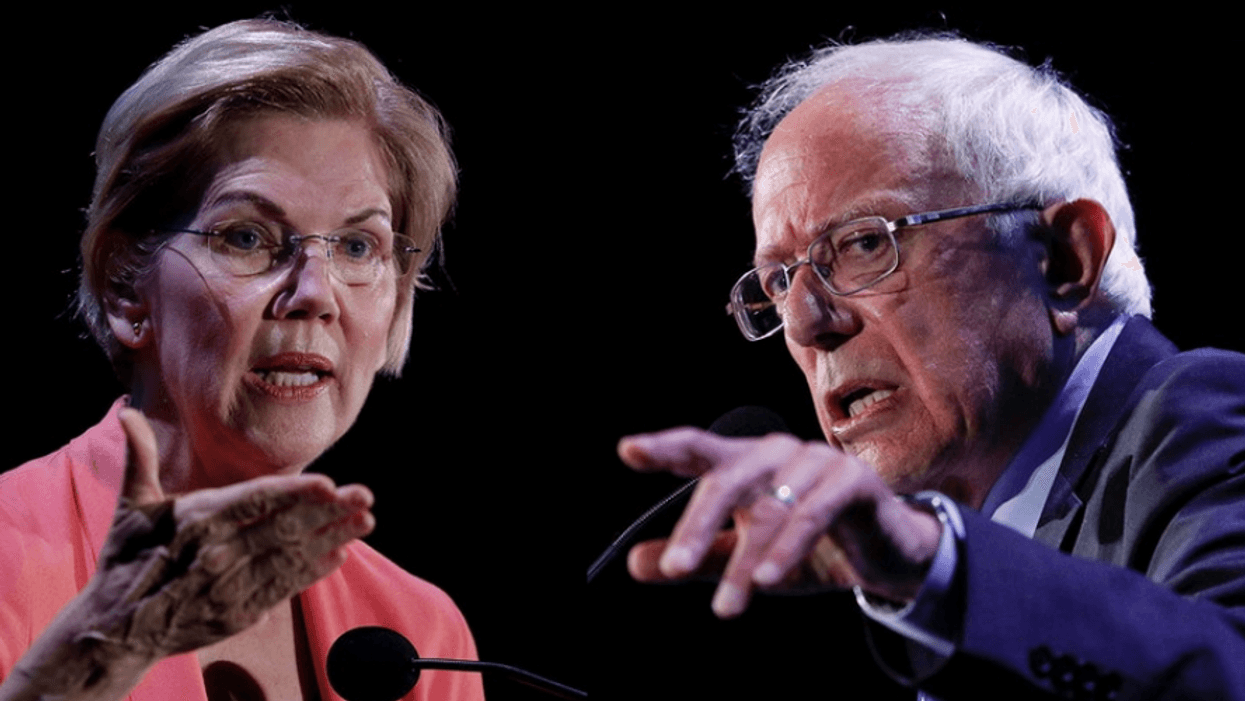
It is standard procedure for most Democratic candidates to support Bernie style social programs in theory--or at least some of them--but then to insert the caveat that "of course, rich people or even people above the poverty line should not get them for free because they can afford to pay for them out of their own pockets." It sounds very fair and progressive, a blow against crony capitalism and directing government money to the undeserving rich. It is a staple line regarding the student debt plan of Elizabeth Warren, for example, and is roundly approved by the punditocracy. It is the mark of a "serious" candidate. It is called "means testing."
But means testing is a phony progressivism and a crucial tactic promoted by the right to eliminate social welfare programs that could benefit the population. We can understand why corporate Democrats like Biden or Buttigieg or Harris advocate means testing; the corporate wing of the Democratic Party warmed to means testing in the 1980s and it began to be embraced as a legitimate device in both the Clinton and Obama administrations. It is now a common approach for that crowd.
So when someone as ostensibly progressive as Warren does the same it demonstrates just how pervasive right-wing ideology has been internalized in our politics.
Why do I call this a right-wing idea? Because as soon as means testing is accepted on principle and introduced for a program, it begs the logical question of why not extend it to other similar social programs? So if means testing free public college tuition is such a great idea, then why not have well-to-do parents pay tuition for their children in public high schools and middle schools and elementary schools? Why not bill only the rich when they drive on any public roads or use public libraries or parks or restrooms? Why not charge them for using the police or fire departments? Where exactly do you draw the line? That is a slippery slope toward privatization and elimination of government functions.
Why is that the case? Because when programs are universal it is much harder for the enemies of those programs to attack them as welfare giveaways to the poor, and an unfair burden on those who are more successful. Note that it is almost always the wealthy and privileged and very rarely the poor or working-class that drive the push for means testing. That alone should demonstrate how phony this is as a progressive issue.
The introduction of means testing creates a layer of bureaucracy to monitor who is eligible and ineligible for the social program. It produces a completely useless and unnecessary bureaucracy to eliminate fraud. It drives up the costs of the program and people become infuriated having to fill out forms and prove they are eligible. It is as pleasurable as dealing with a health insurance company or getting a root canal worked on by your dentist. This too plays directly into the hands of those who wish to establish that progressive government programs are inherently flawed, inefficient and incapable of being successful. Better to privatize and turn everything over to profit-seeking corporations in the marketplace.
Means testing also means routine humiliation for those who must prove their destitution in order to qualify for the public good.
So how does a society have universal social programs without means testing that do not give the wealthy unfair privileges? That's easy. Through rigorous progressive taxation, including wealth taxes, and an end to the income cap on social security taxes. If the tax code is truly progressive, then, in combination with universal social programs, there is the foundation of a more humane, egalitarian, democratic and happier society. Ironically, research shows that rich people are far happier living in more egalitarian societies. Not that much fun, I guess, to live in an armed compound to avoid the masses.
This is why all the great social democratic programs in Scandinavia and around the world are usually universal. It is why Social Security and Medicare are universal. And it is why the countries with the most effective and pervasive universal social programs tend to have the most progressive tax systems and are generally ranked as the world's best democracies.
"If the tax code is truly progressive, then, in combination with universal social programs, there is the foundation of a more humane, egalitarian, democratic and happier society. Ironically, research shows that rich people are far happier living in more egalitarian societies."
To his immense credit, Bernie Sanders gets all this. As Bernie states plainly: "I happen to believe in universality." As the reporter Ryan Cooper puts it: "The road to hell is paved with means-testing."
Elizabeth Warren has been a disappointment with regard to means testing. She has opened the door for means testing with her student debt plan, and with this gesture Warren has signaled to corporate Democrats that they can work with her on social policies and she should not be feared. Combined with her recent waffling on her commitment to single-payer and Bernie's Medicare For All bill--which she co-sponsored!--this should be an enormous red flag for voters seeking substantive change.
To her credit, Warren recently backed down from her earlier position that she would accept corporate money in the general election campaign were she to win the Democratic nomination for president, because she saw how hypocritical it made her rejection of such money in the primary season seem. Warren now needs to formally and loudly back down from her embrace of "means testing" for social programs. The general rule in politics is that you usually see the very most progressive side of a candidate during an election campaign, and it only gets worse once the votes are cast and the office door is shut and elites return to their usual privileged access. So this is not a minor issue; it pretty much tells voters how serious she is about representing the needs of the people, not the powerful.

An opportunity we had not anticipated helped make our network a major player more rapidly than we had ever imagined. Free Press took shape early in 2003, as George W. Bush was selling his war in Iraq. Americans recognized that media outlets had let them down by tipping coverage in favor of a wrongheaded rush to war. When administration allies on the FCC proposed greater consolidation of media ownership by the same interests that had facilitated an unnecessary war, Free Press and allies like Common Cause, MoveOn and Code Pink got an unprecedented 3 million Americans to signal their opposition. The courts put consolidation on hold, citing the public outcry.
Early victories created a sense that we could pressure Congress and regulators to do the right thing. Free Press and other groups achieved significant success with those strategies, forcing the FCC to consider minority ownership issues, fighting cuts to public broadcasting, exposing corporate and government spin masquerading as news, and defending Net neutrality and a free and open Internet. But big media corporations have reasserted themselves. They are spending more freely on campaigns and lobbyists than ever before, reminding all of us that whichever party is in power, the money power rules in Washington.
It's time to get back to our roots--the grassroots--and organize citizens into a media-reform movement so big and so bold it cannot be denied. The people are ready. On our current book tour we have spoken to thousands of Americans. We've heard the fury at a media system that fails to cover elections but gladly pockets billions for spewing negative campaign ads; that facilitates government and corporate data mining; that creates cartels rather than independent journalism.
We are more certain than ever that Americans can be organized around ideas for sweeping media reforms. They include:
SS Increase public funding for public media. Newspaper and broadcast layoffs, cutbacks and closings have gutted newsrooms, and digital media are not coming close to filling the void. We are as excited by the investment Pierre Omidyar is making in a new venture with Glenn Greenwald as we are by every serious investment in serious journalism. But there will never be enough enlightened billionaires to fill the information voids that have opened. We need enlightened policies. Instead of merely opposing cuts, reformers must fight for massive expansion of public broadcasting, community media and nonprofit digital experiments. The hallmark of a strong democracy is public support for great independent and aggressive journalism--and a great deal of it.
SS Give the Internet back to the people. The Internet has spawned the greatest wave of monopoly in history. Thirteen of the thirty-two most valuable publicly traded US firms are primarily Internet companies, and many of those thirteen have a market share in their core activities approaching that of John D. Rockefeller's Standard Oil monopoly in its prime. This is simply untenable for democratic governance. One place to start: eliminating the government-created cartel of Verizon, AT&T and Comcast, which gives the United States some of the lousiest, yet most expensive, cellphone and Internet service in the world. Washington should establish free high-speed broadband for every American.
SS Restore privacy. Coverage of the NSA scandal has focused on data mining by the government. But private corporations and political consultants have access to the same information, and they're using it to manipulate our choices as consumers and citizens. The restoration of privacy rights may begin with limits on the NSA, but it should extend to strict regulation of, and limits on, the digital data that can be collected from us, and how corporations and politicians can use those data to manage discourse.
These are starting points for a broader reform moment in which we must limit the influence of negative campaign ads while extending the range of political debate; more tightly regulate the commercial carpet-bombing of our children; and make media literacy central to public education. That moment must be characterized, above all, by organizing so that no matter who runs things in Washington, politicians will know that the people want media that err on the side of diversity and democracy--not profiteering and propaganda.

With those words, King spoke a language every bit as American as his "I Have a Dream" message of four years earlier. There are times for optimism and hope, and there are times for acknowledgment of an overwhelming challenge and the radical demand that it be addressed. Often they merge, and in these moments, great movements fundamentally redirect the nation. Tom Paine knew that. So did Frederick Douglass, and Jane Addams, and A. Philip Randolph. There is a rich American tradition of recognizing that some crises cannot be answered by tinkering at the edges of the problem. At such times, the people have responded with a boldness that ushered in new political parties or a New Deal, new understandings of the rights of citizens and the responsibilities of governments. And they have amended the Constitution, not once or twice but twenty-seven times.
After the Supreme Court's 2010 Citizens United ruling, we began what would become a three-year survey of the state of American democracy, using the 2010 and 2012 election cycles as touchstones but focusing on a range of electoral, governmental and journalistic measures of democratic decay. The experience forced us to recognize the futility of timid supplications in pursuit of reforming politics and the media. We did this not as critics of the reform impulse, but as co-founders of a media reform organization who have maintained a long-term faith in the power of organizing and the potential of electoral politics to achieve consequential change. We retain that faith, along with a deep understanding of the value of continual prodding at the local, state and national levels. But we concluded that mild reforms are no longer sufficient to address a political crisis as far-reaching as any the nation has known.
The United States has experienced fundamental changes that are dramatically detrimental to democracy. Voters' ability to define political discourse has been so diminished that even decisive election results like Barack Obama's in 2012 have little impact. That's because powerful interests--freed to, in effect, buy elections, unhindered by downsized and diffused media that must rely on revenue from campaign ads--now set the rules of engagement. Those interests so dominate politics that the squabbling of Democrats and Republicans, liberals and conservatives, is a sideshow to the great theater of plutocracy and plunder. This is not democracy. This is dollarocracy.
Tens of millions of Americans recognize the crisis. Congress is held in ridiculously low esteem. Almost two-thirds of the public say their government is controlled by a handful of powerful interests. At the same time, confidence in the media as a check on abuses of power is collapsing almost as quickly as the circulation figures of daily newspapers.
Yet when the evidence of the decay of democracy is pieced together, as it is in our new book Dollarocracy, the picture is even more troubling than most observers and activists imagine. To wit:
SS The 2012 elections were the most expensive in the Republic's history, with spending of roughly $10 billion. They did not cost $6 billion, as was broadly reported last November. That figure was based on a sound study of federal election spending, but it did not account for the massive infusion of cash into local and state contests, as well as judicial and referendum votes, by the same wealthy donors, corporations and interest groups that fund national campaigns. The full picture shows that the worst fears of good-government groups have already been realized.
SS The biggest fantasy promulgated by pundits after the 2012 election was that President Obama's victory showed that grassroots activism can still beat big money. In fact, Obama and his supporters raised and spent roughly $1.1 billion, while Mitt Romney and his supporters raised and spent roughly $1.2 billion. Yes, Obama's campaign collected more small individual contributions than Romney's. But the Democrat's campaign also collected more large contributions than did the Republican's. Romney's relatively slight money advantage came from the higher level of spending on his behalf by interests like the Super PACs. Bottom line: in 2012, big money beat big money.
SS Big money--especially big corporate money--gets what it pays for. It's easy to blame the absolutist demands of the Tea Party movement (which itself benefits from special-interest funding) or right-wing talkers like Rush Limbaugh for gridlock in Washington. But the truth, as Sunlight Foundation senior fellow Lee Drutman notes, is that "big corporate money is often quite eager to see gridlock. Just ask Big Oil if it would like an active Congress on climate issues. Or ask hedge fund donors if they'd like an active Congress on the taxation of carried interest." Even when the process moves, as on the healthcare debate in 2009-10, the result is a reform that steers federal dollars to insurance companies, not single-payer Medicare for All. It's even worse when it comes to debates about education and austerity; with the frequent collaboration of media that buy into the most simplistic spin, politicians become indistinguishable as they promote cuts and privatization schemes that answer the demands of billionaire projects like those of the Koch brothers and the American Legislative Exchange Council, Pete Peterson's Fix the Debt campaign or the Betsy DeVos-chaired American Federation for Children.
SS The interests that pushed campaign spending to record levels in 2010 and 2012 are only getting started. That's the overwhelming conclusion arising from our interviews with elected officials, candidates, campaign managers, consultants and directors of so-called "independent" organizations. Spending on federal races doubled between 2000 and 2012. It will no doubt double again far more rapidly--and keeping track of it will become far more difficult, as wealthy donors and corporate interests increasingly rely on the subterfuges of "dark money." As this spending increases, the influence of small donors will decline because, as the Center for Responsive Politics notes, "small donors make good press, big donors get you re-elected." That's why, even after his relatively disappointing 2012 season, billionaire donor Sheldon Adelson was greeted by Republicans in Washington as a conquering hero. They knew Adelson was right when he explained: "I don't cry when I lose. There's always a new hand coming up. I know in the long run we're going to win." And with a $26.5 billion fortune, it's no sweat for him to keep placing $200 million bets.
SS Prospects for legislative remedies are slim, perhaps nil. Supreme Court decisions that began with the 1976 Buckley v. Valeo ruling have just about eliminated the government's ability to restrict the flow of big money into politics. Citizens United got the headlines, and deservedly so, as it broke down century-old barriers to the direct purchase of elections by corporations. But it was part of a long trend. And it is not finished: this fall, in McCutcheon v. FEC, the Court will entertain arguments--from Mitch McConnell and others--for scrapping most, and perhaps all, remaining campaign contribution limits. The High Court is on an activist course that appears to have two goals: making it easier for big money to influence elections and making it harder for citizens to vote by undermining the structural integrity of the Voting Rights Act. The appointment of a liberal justice could tip the balance on many issues, but the fact is that the Court has already moved in a decidedly anti-democratic direction.
SS Just as the courts have become unreliable defenders of the public interest when it comes to elections, so too have much of the media. Journalism is in crisis. The demands of investors and a steady decline in advertising revenue have led to the high-profile closing of newspapers and the low-profile contraction of newsroom staff, which has left vast areas of politics and governance uncovered. The darkness is so deep that we witness increasing instances of flawed and unelectable candidates for high office--a US senator from South Carolina, the lieutenant governor of Illinois--being exposed only after they are nominated. The little coverage there is often confers "legitimacy" based on fundraising ability and analyzes ads rather than ideas. A quarter-century after the major television networks ceded control of presidential debates to a consortium operated by the former chairs of the Democratic and Republican parties, much of TV campaign coverage boils down to spin points recited by partisan talking heads.
SS The idea that the Internet would be a permanent lie detector preventing politicians from telling different messages to different audiences has been turned on its head. The National Security Agency surveillance scandal reminds us that the government has access to immense amounts of "Big Data." So do corporations and politicians. As Bloomberg Businessweek noted after the 2012 election, cutting-edge campaigns like Obama's are "unifying vast commercial and political databases to understand the proclivities of individual voters." Indeed, they're getting so good at it that, after the president was re-elected, Google's executive chairman, Eric Schmidt, helped Obama's Big Data team establish a start-up firm to teach corporations how to do what the campaigns did first. We are entering a new political age in which candidates and parties will maintain extraordinary dossiers on prospective voters. They will tailor messages to demographic groups, to donors and ultimately to individual voters. Obama had the advantage in 2012, but Republicans have reached for their checkbooks and plan to leapfrog the Democrats in 2014. Are there any safeguards? None that we can see.
SS The void created by the contraction of journalism has been filled by a slurry of negative ads so foul that they reduce voter turnout, as part of a broader voter-suppression strategy by political players who prefer small, easily managed electorates. Instead of objecting, the owners of TV stations shave minutes off local newscasts to make space for more ads; in battleground states, political money has become the mother's milk of local television. Is it any wonder that some of the loudest critics of campaign finance reform are the media conglomerates that profit by giving us less news and more propaganda?
We do not use the word "propaganda" casually. Countries that rank far higher than the United States on The Economist's Democracy Index bar paid political ads because they view them as propaganda. Those countries also provide dramatically more support for public media to ensure a broader range of voices and deeper political analysis. We need to recognize the dangers of a system in which voters get their information not from a free press but from a money-and-media election complex that seeks to maintain the free flow of cash into its coffers--and to protect the interests of the sources of that cash.
We have entered a new Gilded Age in which the gap between rich and poor is widening rapidly. Our politics threatens to accelerate the redistribution of wealth upward with the privatization of Social Security, Medicare, Medicaid, the Postal Service and even public education. Instead of calling attention to that threat--and to the need for fundamental regulation of Wall Street and corporate power--much of our media collaborate with the political class to depict our choice as being between the cruel and usual austerity of Paul Ryan and the kinder and gentler austerity of Ryan's Democratic colleagues.
* * *
With the underpinnings of civil society under assault, it is easy and often necessary to be drawn into the fight of the moment, to battle as teachers in Wisconsin and women in Texas and African-Americans in North Carolina have to preserve gains once thought to be permanently enshrined. Those battles are vital and cannot be neglected. But they are not enough. Merely responding to the constantly emerging symptoms of the crisis or waiting in hopes of a better election result or the next Supreme Court appointment simply locks in a "new normal" that is certainly not new and should never be normal.
A century ago, Teddy Roosevelt declared: "At every stage, and under all circumstances, the essence of the struggle is to equalize opportunity, destroy privilege, and give to the life and citizenship of every individual the highest possible value both to himself and to the commonwealth. That is nothing new." Roosevelt's words helped to usher in a transformational age of reform. At the start of the 1910s, children who should have been in school were changing bobbins in mills. Workers who dared to organize unions were mowed down by paramilitary forces. Women who could not vote were dying in sweatshop fires. The government lacked the ability to collect the revenues necessary to address the basic demands of a nation experiencing dramatic but horrifyingly unequal growth. Progress in Washington was stymied by millionaires who bought Senate seats in back-room deals. Reformers decried a "money power" that made a mockery of the promise of popular governance.
Ten years later, the Constitution had been amended so that women could vote, the Senate was directly elected by the people and Congress had the power to implement progressive taxation. At the same time, child labor, workplace safety and pure-food and -drug laws were implemented; labor unions were re-energized; and the rough outlines of what would become the New Deal were taking shape in states that came to be known as "laboratories of democracy." The great leap forward was made possible by a recognition that we needed fundamental change and that some of that change required amending the Constitution. It was the same in the 1960s and early '70s, another age of reform that saw constitutional amendments banning poll taxes and clearing the way for 18-year-olds to vote. For a moment it seemed likely that another amendment would eliminate the archaic Electoral College, and that the promise of one-person, one-vote might end the gerrymandering of legislative districts. In that age of democratic ferment, it became possible to conceive and implement a Civil Rights Act, a Voting Rights Act and economic justice measures like Medicare, Medicaid and the War on Poverty.
Since then, reformers have generally worked within political, regulatory, legislative and judicial confines. That was understandable as long as it seemed that a framework for open and honorable politics was on the way. But that's no longer happening. The United States is tumbling down that Economist list, on the brink of being reclassified as a "flawed democracy." Today's crisis is different from the ones that inspired the two earlier periods of activism. But it demands a response that is every bit as ambitious.
We fully support legislative and legal initiatives that advance democracy. But we do not believe they will succeed unless they are part of a broad campaign for constitutional reform. Yes, we're for a new Voting Rights Act. But we agree with Representatives Keith Ellison and Mark Pocan--and the folks from Fair Vote and Color of Change--who argue that America should not leave voting rights to chance. We need a constitutionally defined and protected right to vote. We need to eliminate the Electoral College, so that never again will a candidate who loses the popular vote, as George Bush did in 2000, be able to manipulate his way into the presidency. We need to bar gerrymandering and make real the promise of one person, one vote. And we need to make it clear once and for all that money is not speech, corporations are not people and government is not for sale to the highest bidder.
Not every challenge of the current crisis requires constitutional reform. We can repair our broken media system through supercharged funding of public broadcasting, robust support for community media and content-neutral systems that subsidize independent, not-for-profit journalism. We don't agree with most proposals for vouchers, but we like variations on economist Dean Baker's plan to issue citizens $100 democracy vouchers that they can direct to independent, not-for-profit media.
Yes, we know that many of these measures are "impossible." Indeed, every fix of consequence was once deemed impossible. As impossible as the Civil Rights Act or the Voting Rights Act or the Americans With Disabilities Act or marriage equality or the vote for women and 18-year-olds, as impossible as banning poll taxes or ending the appointment of senators by state legislatures. As impossible as creating an income tax.
When progressives wrap their heads around the idea of fundamental change, the range of possibility expands. The demand moves beyond the technical to the aspirational. We don't suggest that it's easy to amend the Constitution or to reshape political or media systems. And it may really be impossible to win some fights. But any honest assessment of America's arc of history tells us that it has bent toward justice only when the demand has been sufficient to address the crisis.
Our current crisis requires a great demand. The people know this. That's why the most successful reform movement of the moment is the most ambitious: sixteen states and more than 500 communities--from the city of Los Angeles to the town of Mount Desert, Maine--are, at the encouragement of Free Speech for People, Move to Amend, Public Citizen, Common Cause, People for the American Way and other groups, calling for a constitutional amendment to restore the ability of cities, states and the federal government to regulate money in politics. It is an audacious demand, one that could overturn Citizens United. But it is not sufficient to renew American democracy. For that, we need a new age of reform that answers the call for voting rights, for free and fair elections and for a media system that informs rather than discourages voters. To offer anything less underestimates the task at hand. We must recognize anew, as Dr. King did a half-century ago, that "America is at a crossroads of history, and it is critically important for us, as a nation and a society, to choose a new path and move upon it with resolution and courage. It is impossible to underestimate the crisis we face in America. The stability of a civilization, the potential of free government, and the simple honor of men are at stake."
It is too late for timid supplications. It is time to demand democracy--and nothing less.
As the commercial model of journalism is in freefall collapse, those remaining news media franchises have become playthings for billionaires, generally of value for political purposes, as old-fashioned monopoly newspapers still carry considerable influence.
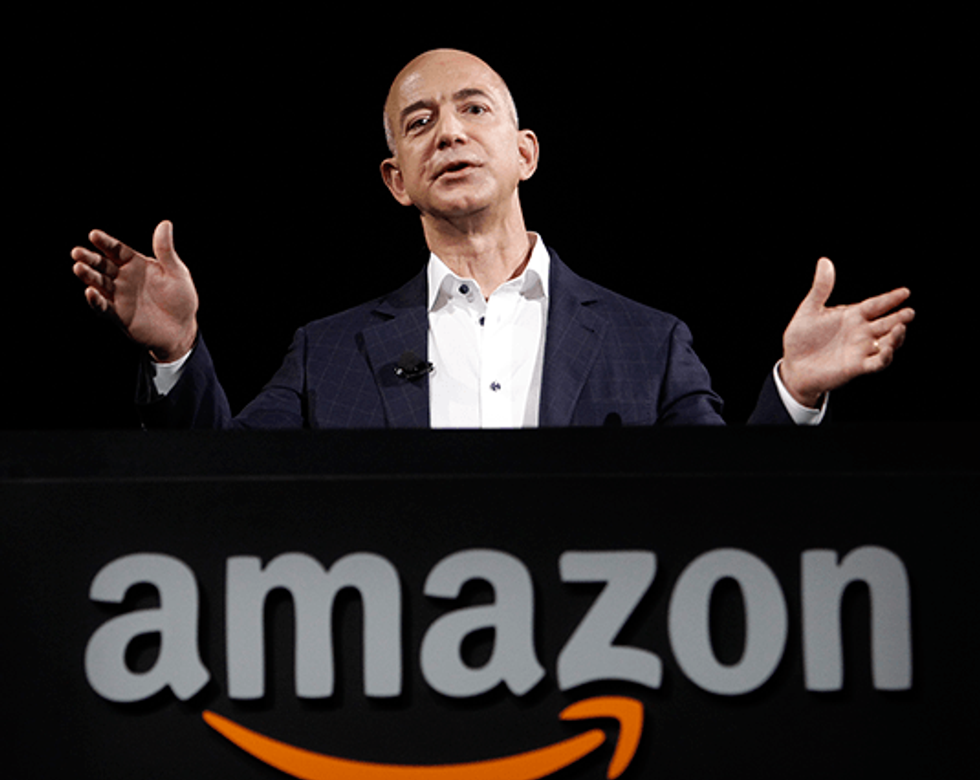
The United States went through this type of journalism at the turn of the last century and it produced a massive political crisis that led eventually to the creation of professional journalism, to protect the news from the dictates of the owners.
Today professionalism has been sacrificed to commercialism, and the resources for actual reporting have plummeted.
Perhaps nothing illustrates the desperation facing American journalism and democracy better than the fact we are reduced to praying we get a benevolent billionaire to control our news, when history demonstrates repeatedly such figures are in spectacularly short supply, and the other times we relied on such a model crashed and burned.
America meets an existential crisis with an absurd response.
No wonder this is a golden age for satire.
We have to do better.
In a communications landscape where everything is up for grabs, the most powerful--and self-serving--players are grabbing for everything. And decisions that President Obama and his next appointee to chair the Federal Communications Commission will make in the coming months could well decide whether new media robber barons will dominate the local, state and national discourse.
Rupert Murdoch has renewed his push to have the FCC scrap its thirty-eight-year-old media cross-ownership rule, which bars him from buying up the daily newspaper, the largest television and radio stations, and the top digital news and entertainment sites in major American cities. Murdoch wants to rule the roost in Los Angeles, where he already owns TV stations and is salivating at the prospect of combining them with the Los Angeles Times, the nation's fourth-largest newspaper, which the Tribune Company is putting up for sale.
If the FCC clears the way for greater media consolidation, Murdoch could face competition from even more ambitious players, including the Koch brothers. LA Weekly reports that the billionaire funders of right-wing campaigns might begin backing up their political projects with purchases from a Tribune stable that includes the largest newspapers in California, Illinois, Connecticut and Maryland, as well as media properties in battleground states like Florida and Virginia.
Newspapers no longer make the kind of money they once did, but as the American Journalism Review notes, there are buyers who get excited by a "Citizen Kane model of using the paper's news columns to promote a point of view." And if the FCC scraps its cross-ownership rule, the "Citizen Kane model" won't be restricted to traditional news columns. For evidence of that, look to San Diego, where developer Doug Manchester has, since he purchased the powerful Union-Tribune, stirred an outcry by turning the paper (and its popular website) into a cheerleader for his projects, proposals and candidates. Even if the media buyers are not heavy-handed right-wingers, rule changes that would allow billionaires to use old-media newsrooms as one-size-fits-all "content providers" for broadcast outlets and heavily trafficked new-media sites should be rejected, in the words of Free Press president Craig Aaron, as "unfathomable at a moment when the airwaves are already so consolidated, so concentrated, and simply don't represent the diversity, and the diversity of viewpoints, of the American people."
Why are we even debating such rule changes when a Democratic president's appointees should be defining the FCC as a public interest agency? Because Obama's first commission chair, Julius Genachowski, renewed some of the worst proposals from the Bush/Cheney era, when millions of Americans organized to fight for media diversity. "I thought we would have made some changes, beginning in 2009, to reverse the ongoing trend toward media consolidation," says former FCC commissioner Michael Copps. Instead, he suggests, "we haven't tightened the rules. We haven't done anything about media consolidation. And the situation gets worse and worse, and the consolidation goes on and on."
Those aren't the only places where Genachowski got it wrong. Groups like Color of Change spent much of his term battling to realize the promise of the Internet for all Americans. Yet Genachowski's FCC failed to make broadband affordable and accessible to communities on the losing end of a yawning digital divide, and it enacted only toothless protections for network neutrality, which keeps the Internet open and competitive while preventing corporate gatekeepers from making Americans pay for access to the national discourse.
Advocates of media diversity have a dream pick for Genachowski's replacement as chair: Benjamin N. Cardozo School of Law professor Susan Crawford (who served briefly as Obama's special assistant for science, technology and innovation policy, and whose new book on the telecom industry Copps discusses on page 21). But the president has plenty of other prospects who "get it." Unfortunately, there are reports that Obama--who knows it will be difficult to win Senate approval for a bold pick-- could select a telecom-tied chair who talks the citizen talk but walks the corporate walk. Media activists, who gather April 5-7 in Denver for the fifth National Conference for Media Reform, will work to make sure that doesn't happen.
The FCC should not be a tool of the industries and political insiders who already call too many shots in Washington. It should be a bold agency that fights media consolidation, protects net neutrality, expands access to high-quality Internet at little or no cost to the people who need it most and--as Copps has suggested in these pages (see "Sunshine on Dark Money," February 25)--enforces existing rules that require attack-ad funders to put their names in these commercials, which so diminish our democratic discourse. President Obama has an opportunity to renew the promise of the FCC's New Deal-era founding: to make it an agency that promotes diversity and democracy, that listens less to Rupert Murdoch and old-media moguls and more to the champions of a multimedia future that provides Americans with what an open society requires. We should all demand that he seize it.