SUBSCRIBE TO OUR FREE NEWSLETTER
Daily news & progressive opinion—funded by the people, not the corporations—delivered straight to your inbox.
5
#000000
#FFFFFF
To donate by check, phone, or other method, see our More Ways to Give page.

Daily news & progressive opinion—funded by the people, not the corporations—delivered straight to your inbox.
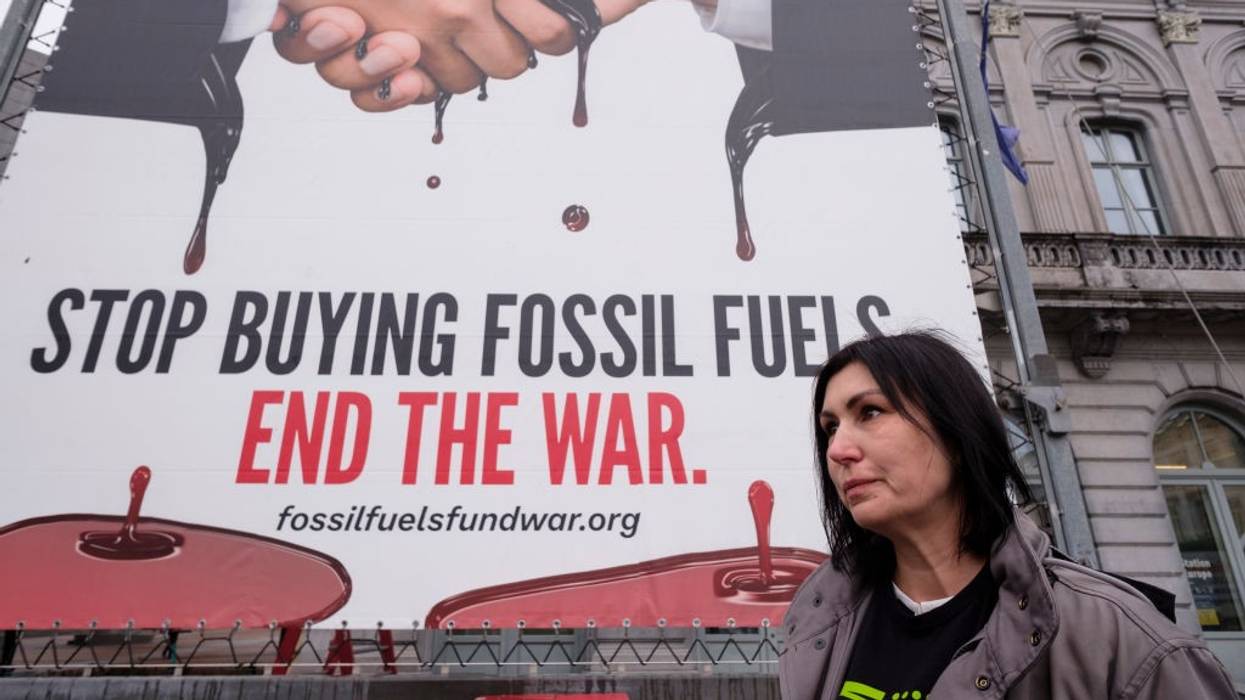
We are pushing the planet towards mass species extinction, irreversible biodiversity loss, and socio-economic collapse—a fact that Western elites have tried to bypass or ignore for decades. This war must end. So must our addiction to oil and gas.
There is no more vivid and undeniable proof that Russia is a terrorist state than what we witnessed last week: one of the most prestigious pediatric medical facilities in Ukraine and Europe, Okhmatdyt Children’s Hospital in Kyiv, was turned into rubble by a deliberate and targeted missile attack on July 8.
While Ukrainians confront the brutality of this act of terror with sorrow and grim determination, we call for solidarity and action to address the root of the problem: the world’s addiction to oil, which finances Putin’s regime and his terror campaigns. This addiction also fuels the escalating trade of fossil fuels, driving the global warming and climate disruption that has killed dozens this week alone in the USA. We are pushing the planet towards mass species extinction, irreversible biodiversity loss, and socio-economic collapse—a fact that Western elites have tried to bypass or ignore for decades.
With the Kremlin's blood oil profits amounting to hundreds of billions of dollars, Putin is attempting to build a zombie USSR by funnelling revenues from these exports into his war economy and strengthening totalitarian state control.
Encouraged by impunity and fueled by ongoing flows of Western cash despite sanctions, Putin continues to escalate his terror campaign against Europe and his war against the people of Ukraine. However, his empire can be reduced to rubble with one decisive action: if the West finally heeds the call of its scientists and activists to end its dependency on dirty energy.
Despite sanctions, Russia is selling increasing amounts of oil. Every day, Russia receives over $300 million from crude oil exports alone and around $700 million from all fossil fuels combined. Russia’s federal budget, which has a record allocation to the military this year, relies on these revenues for half of its income.
If the West makes a strategic move to end its dependency on dirty energy, as urged by its scientists and citizen activists for decades, Putin will lose his strongest weapon
Despite sanctions Russia is selling increasingly more oil. Every single day Russia receives more than $300 million from crude oil exports alone and around $700 million from all fossil fuels. Russia’s federal budget, which shows record allocation to the military this year, relies on those streams for half of its income.
In a single day, Russia fired 38 missiles at Ukraine. The X-101 missile, that hit Okhmatdit Child Hospital in the center of Kyiv, cost around $13 million each. The missile attack on the hospital’s dialysis department, left at least 4 dead and more than 50 injured, including doctors and children. The hospital now lies in ruins. As a result of Russia's latest wave of massive missile strikes on July 8, at least 37 people were killed and 170 were wounded, affecting Dnipro, Kryvyi Rih, and the Donetsk region.
The total cost of the children's hospital attack was estimated by Forbes at $200-250 million, roughly the equivalent of what Russia makes in one day from its crude oil exports. Putin is building a violent and expansionist Russia by funneling blood-oil revenues into his war economy and strengthening totalitarian state control, while destabilizing all democracies he can.
In spring 2022, following Russia’s full-scale invasion of Ukraine and the ensuing global energy crisis triggered by it, the International Energy Agency (IEA) proposed specific actions to governments to reduce oil demand significantly. Recommendations were made to switch to clean energy, which is now cheaper on average than fossil fuels, helps solve the climate crisis, and will save trillions of dollars in preventing climate-caused extreme weather catastrophes.
However, the USA and G7 governments did almost nothing to reduce oil demand, and in fact, continue heavily subsidising fossil fuels. Meanwhile, Big Oil capitalized on the turmoil to reap record profits, while also redoubling lobbying efforts, taking legal action against activists, and continuing disinformation campaigns in the media. Some important turning points were missed, and we are now in an even more desperate position than in 2022.
We must state clearly that the American and G7 countries' refusal to follow the IEA’s recommendations on reducing oil demand, combined with their failure to enforce sanctions against Russian oil, is contributing to the deliberate mass murder of civilians and children in Ukraine.
More than two years into the war, Europe and the UK remain among the top contributors to funding the Russian war machine due to incomplete sanctions, lack of enforcement, and lack of political will. The USA has given much support, but has only used limited sanctions, while American companies like Halliburton and SLB have, in fact, sent equipment to Russia to help keep Putin's bloody oil pumping.
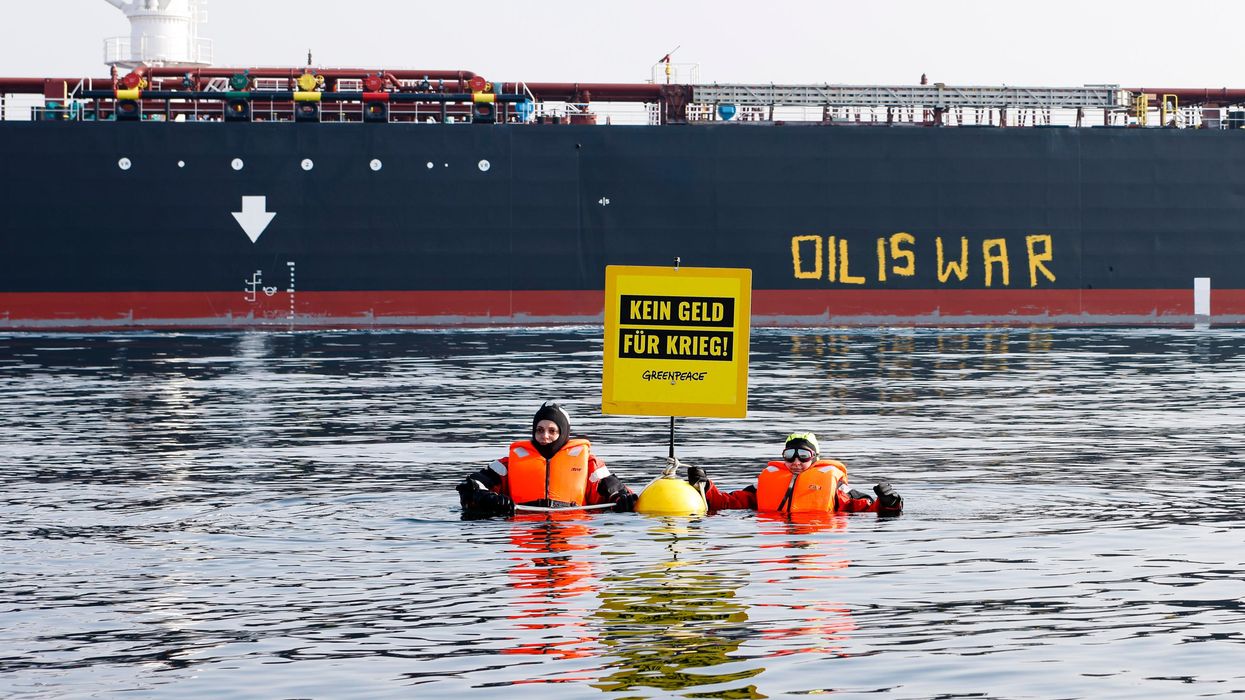
Today, Russian blood oil proliferates to new markets, and the shadow tanker fleet endangers the world’s oceans and seas with looming threats of major spills, that can lead to environmental disasters across Europe's coastal regions.
America, still acting as a leader of the free democratic world, must acknowledge that our planet is speeding down a highway to hell. The response to the terrorist attack on Okhmadit Children's Hospital marks a symbolic and crucial turning point: Will we let petro-dictator Putin get away with his crimes, condemning our children and future generations to the doom of new wars and the abyss of runaway climate change? Or will we stand up and fight for a better world, free from fossil fuel addiction?
If the West makes a strategic move to end its dependency on dirty energy, as urged by its scientists and citizen activists for decades, Putin will lose his strongest weapon, and his authoritarian and brutal projects can be reduced to rubble.
When the Soviet Union collapsed in the early 1990s, the world saw a remarkable reduction in global CO2 emissions, contributing positively to global climate. This precedent illustrates that dismantling a fossil-fuel-dependent economy can lead to substantial environmental benefits. Phasing out Russian fossil fuels from the global energy mix is not only a geopolitical necessity to curb Putin’s war machine but also a critical step towards achieving energy security and the decarbonization needed to limit global warming.
The US and all other G7 governments must take decisive action to implement structural policies that reduce oil demand and replace Russian oil imports (which are ongoing through refining loopholes) with domestic clean energy alternatives. This includes enforcing stringent sanctions, closing loopholes in existing measures, and investing in renewable energy infrastructure. Embracing electric vehicles, improving public transportation, and incentivizing energy efficiency are essential steps toward breaking free from the grip of fossil fuel addiction.
The current situation demands a united and resolute response from the U.S. and the free world. We cannot afford to repeat past mistakes, where short-term economic interests overshadowed the need for structural shifts to clean energy. The ongoing war in Ukraine and the escalating global climate crisis are intertwined, and addressing one requires addressing the other.
The attack on Okhmatdyt Children’s Hospital is a stark reminder of the human cost of inaction. As long as we fund Putin’s war machine through our reliance on Russian oil, we are complicit in the atrocities against innocent civilians and children. It is time to stand up for a world free from the stranglehold of Big Oil and its devastating impacts on our environment and future.
Leaders of the free world must acknowledge that the path to a sustainable and secure future lies in ending our dependence on fossil fuels. By learning from the collapse of the Soviet Union, we can understand the transformative power of dismantling a fossil fuel-driven economy. The need for bold, structural changes in energy policy is urgent. Together, we can turn the tide against the axis of modern political evil and pave the way for a cleaner, safer, and more equitable world for future generations.
A full Western embargo on liquefied national gas would send a clear message: Europe will not be a party to Russia’s aggression.
Because of the full-scale war against Ukraine, the EU is now actively seeking to reduce its reliance on Russian LNG suppliers, including Novatek. However, some vested corporations with continued interests in doing LNG business with Russia propel the scare that supposedly China can save Novatek from US/EU sanctions if the Western export route for Russian LNG is closed. This is categorically false and misleading for several economic and political reasons.
From a superficial first glance, China, undeniably a major LNG consumer, might seem like a natural savior for Novatek among impeding Western sanctions. However, unlike Europe’s historically high gas prices in 2022, which benefited Novatek, the Chinese market is known for being fiercely competitive, with much lower average gas/LNG prices. Unlike Europe where Russians could in the past act in a seller's market, China has always ensured that it has a plethora of piped and LNG suppliers (Central Asian states, Burma, various LNG suppliers ranging from the US, Australia to Qatar and many others).
China imports LNG from more than 20 countries and Russia’s share is marginal. Australia ranks as the largest supplier with a 40% market share, followed by Qatar with 11%. Looking at the long-term LNG contracts announced by Chinese companies analyzed by Nikkei, Russia will not be one of the main suppliers either. It appears Beijing is more prone to sign long-term LNG deals with countries other than Russia to win some favors from Washington D.C., Doha, Canberra, and Kuala Lumpur based on balanced considerations geopolitically and energy-security-wise.
Billions of euros and dollars continue to flow to the Kremlin via Novatek as it still sends LNG to Europe and China. This hard currency provides a lifeline for Russia’s war machine and hybrid warfare which is now waged not only against Ukraine, but indirectly against Europe.
China’s National Energy Administration (NEA) has set the goal of ensuring that the self-sufficiency of natural gas supply should be no less than 50% in its annual policy papers. NEA and its officials have emphasized on numerous occasions that a sufficiently high rate of natural gas self-sufficiency is crucial for China's energy security and that it is a long-standing principle that will be upheld. This means that China's appetite for imported gas (whether piped or LNG) will not be big in the medium to long term. According to the China Natural Gas Development Report 2023, the country’s natural gas consumption was 364.6 bcm in 2022, while 217.8 bcm of it came from domestic production. This means that China's natural gas self-sufficiency rate was close to 60%.
If one just looks at the map, one could also see a problem with logistics. Shipping LNG to Europe from Russia’s Arctic projects is a relatively short journey compared to the vast distances involved in reaching China. These longer distances translate to higher transportation costs for Novatek, further squeezing profit margins.
Regardless of choosing the Red Sea or taking the Arctic route, the logistical and time costs of getting Russian LNG into China are much higher than for pipeline gas. This makes China inherently less interested in Russian LNG. Last summer, Gazprom made the first delivery of LNG to China from a port near St. Petersburg via the Arctic Northern Sea Route as receding ice sheets rendered the route more viable, but it still took nearly a month.
China’s LNG infrastructure is concentrated along its eastern coast, far from the major gas consumption centers in the north and central regions, making the journey longer for LNG tankers even when they reach China’s territorial waters. This necessitates additional pipelines or costly coastal transportation, again adding to Novatek’s LNG price tag. That is another reason why China has traditionally preferred to get mostly Russian piped gas rather than LNG as the gas fields that feed Russian export pipelines to China are much closer than Novatek’s LNG production sites.
In fact, all past track record for piped and LNG gas shows that China is using Russia as a sort of a swing supplier, on a residual basis and structures deals with the Russian counterparts from a position of strength, exploiting Russian logistical, political, and economic limitations and exposures. Moreover, for both oil and gas Beijing has always acted from a position of strength vis-a-vis Russian suppliers even at the time of China’s rising demand, combining commercial logic with security and political interests.
Which brings us to the point that not only China is skillfully using the market environment (buyer’s market) to its advantage, it is also carefully weighing its political and security needs which leave Novatek and Russians in general in a poor negotiating position. Unlike Europe, which was historically a seller’s market, keeping the upper hand and commercial rationale in negotiations is always following first and foremost Communist Party's line. Despite all the rhetoric on friendship, China has always preferred to keep all Russian energy suppliers—Gazprom, Rosneft, and Novatek—on a short leash where they had to agree to much worse prices and other conditions then they could get in Europe.
Meanwhile, China has developed much stronger gas relations with established LNG suppliers like Qatar, the U.S., and Australia not only because it makes sense commercially but also because the Chinese government wants to diversify their supply sources and routes of delivery and they see a benefit in having mutually beneficial projects in this strategic industry. These non-Russian players have well-developed infrastructure, cutting edge technology, and long-term contracts with Chinese buyers, making it extremely difficult for Novatek to gain a significant and long-term foothold. And importantly for Beijing, what these players don't have are massive western sanctions, technological lag, and harsh Arctic conditions with production centers on the other side of Eurasia.
At the end of the day big binding long term contracts—not verbal assurances of friendship by Chinese officials or Memorandums of Understanding (MoUs) by Chinese energy companies—talk volumes of China’s actual scale of interest in Novatek’s LNG supply. The interest is there but as to a residual supplier, one of many “backup” options. According to recent Russian figures derived from the Chinese customs Russian LNG supply to China increased last year to 8 million tons from 6.5 year-on-year. Even if that is true, the way Russian propaganda is spinning it is an exaggeration, these are still small volumes for China (given its import requirements of around 90 millionn tons) and not a way to diversify from Europe. Thus, it is counterproductive and misleading for Western stakeholders to help Russia spin this as a successful ability for Novatek "to substitute the West for the East."
As for frequent exaggerated projections of Chinese future demand for Russian LNG from 2030, they are mostly not taken seriously by any independent and commercially minded investors in energy majors or other gas market players who mostly do not place their financial commitments beyond the 3–5-year horizon. The overwhelming number of long-term projections for supposed big demand for Russian gas have been traditionally exaggerated by select western corporate or institutional analysts. There are many reasons for that, but most important is a constant desire to exaggerate Russia's energy importance either by vested corporate and partisan interests in the West or by gullible but not knowledgeable outsiders or lobbyists in the press.
Given real limitations of the Chinese market for Novatek’s LNG and the potential for further sanctions, a full Western embargo on Russian LNG emerges as a much more effective strategy for both European energy security and crippling the Kremlin’s war chest. Full embargo does not require overly complicated measures. Industry analysis by Razom We Stand and Uregwald shows targeted sanctions against ice-class Russian LNG tankers and sanctions against the provision of shipping services, insurance, and any other financial services for the export of Russian LNG can alone choke all Novatek’s LNG exports. The past two years of reduced Russian gas imports to Europe already showed that the EU can easily survive without Novatek’s LNG and not upset its energy supply in any dramatic way.
Meanwhile, billions of euros and dollars continue to flow to the Kremlin via Novatek as it still sends LNG to Europe and China. This hard currency provides a lifeline for Russia’s war machine and hybrid warfare which is now waged not only against Ukraine, but indirectly against Europe. The EU is literally subsidizing the Kremlin via Novatek LNG to undermine its own security and democratic institutions. A complete embargo would not give breathing space for Novatek in China but in Europe it would positively accelerate EU’s diversification efforts away from Russian gas altogether. It would incentivize investments in renewable energy and energy efficiency projects and would significantly reduce income stream to the Kremlin, making it harder for Russia to sustain its aggressive actions against Ukraine and Europe. A full Western embargo sends a clear message: Europe will not be a party to Russia’s aggression, and it is willing to pay the price for its freedom and security.Nations should actively advocate for the diversification of energy sources and the establishment of sustainable transportation routes that do not hinge on potential shifts in the geopolitical landscape.
With the ongoing costly Russian war on Ukraine, and Russia's central funding of that war coming from its fossil fuel exports, we examine here those exports specifically on the Black Sea.
Russian energy exports also contribute to catastrophic climate disruption costing trillions, but for those bearing the brunt of their bullets, bombs, and rockets in Ukraine, drying up Russia's war chest is the top priority.
In a strategic move starting December 5, 2022, the European Union implemented a sea route ban on Russian oil imports, reshaping the global oil landscape. Yet, rather than achieving a seamless transition, this embargo has sparked intricate manoeuvres, especially in the Black Sea, casting shadows on the efficacy of sanctions and Europe's energy security.
The E.U.'s embargo to curtail Russia's energy export revenues and support Ukraine in its struggle has triggered seismic shifts in the global oil market. The Black Sea, once a crucial route for Russian oil exports, has become a stage for intricate manoeuvres in energy policy.
Together, the E.U., alongside the United States and G7 counterparts, established a mechanism to cap the price of Russian oil exported to non-sanctioning countries. This mechanism includes a ban on maritime services for the transportation of Russian oil to third countries and insurance for cargo if their price exceeds a specific limit—a "ceiling" or price cap. The E.U. has set this ceiling at $60 per barrel.
Despite the embargo, the trade in oil persists, and the politics and economics of the Black Sea are becoming increasingly pivotal to the region.
This move, aimed at curbing Russia's revenues from energy exports and supporting Ukraine in the ongoing war, has set the stage for a complex dance in energy policy. As a result of the E.U. and G7 embargo on Russian oil imports via sea routes, the Black Sea was transformed into a hub of strategic importance. Despite the restrictions, Russian oil continued to enter the world markets through four key shipping points: Novorossiysk, Taman, Tuapse, and ship-to-ship transfer.
The volumes of transportation through these ports since the embargo indicate that the Black Sea remained a vital channel for Russian oil exports. These manoeuvres, often facilitated by both European and non-European shipowners, caused considerable concern among politicians and experts, as they undermined the effectiveness of the sanctions and raised new questions about the security of Europe's energy supply.
Although the embargo was supposed to stop Russian crude oil exports, they are vulnerable to restrictions, according to the Black Sea News and the Institute for Black Sea Strategic Studies.
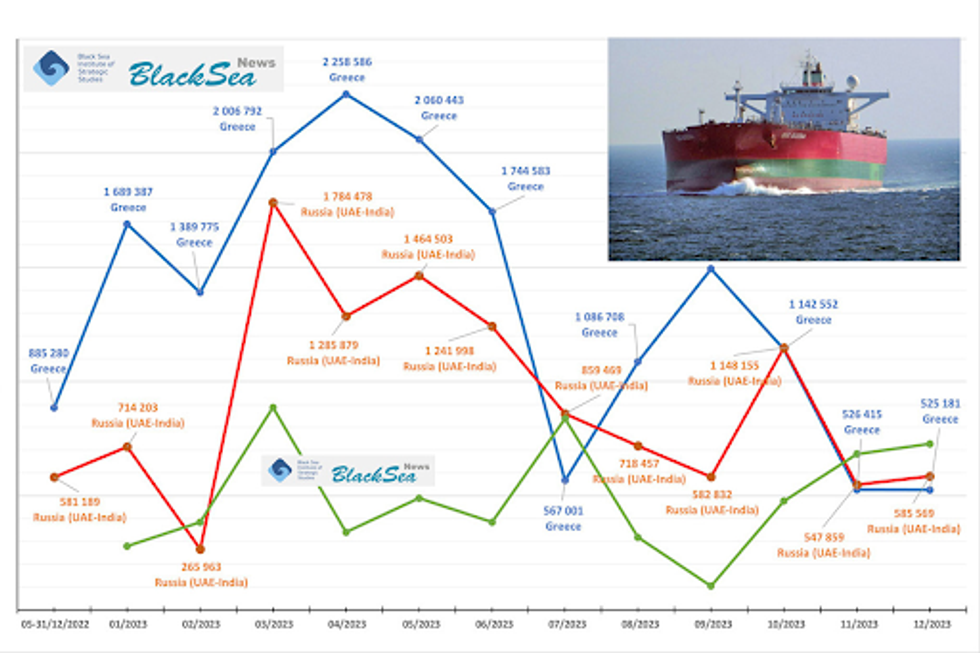
Who transported Russian crude oil from Black Sea ports after the E.U. and G7 embargo was imposed.
(Image: Black Sea News)
Between December 2022 to December 2023, 47.5 million tons of oil were exported from the Black Sea, of which 41.09%—19.6 million tons—were transported by European shipowners. Even with the restrictions, ships from non-European countries and even from Russia continued to transport oil.
Since March 2023, non-European shipowners have significantly increased their transportation volumes and become major players in the transportation industry. Notably, Greek companies topped the list, transporting 36.53% of oil, followed by Russian companies with 24.77%. After the announcement of the 11th E.U. sanctions package on June 21, 2023, five Greek companies were recognized as sponsors of war. This led to a decrease in the transportation of Greek tankers, but later the figures rose again.
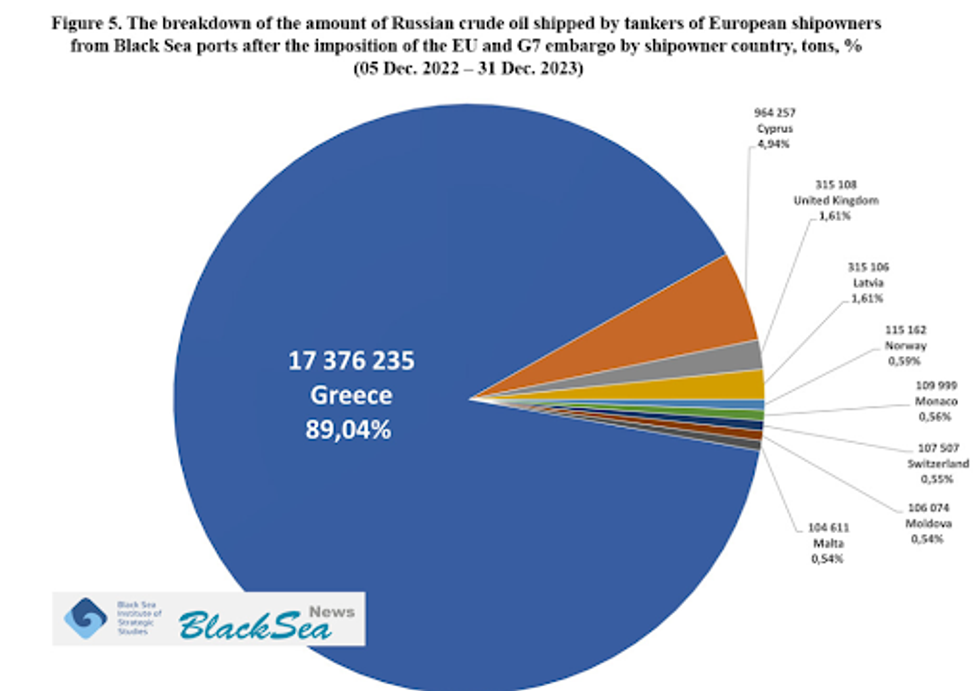
The tendency for Greek companies to be replaced by other shipowners, especially from "flag of convenience" countries and Russia, was noticeable. In 2023, Russian companies once again surged to the forefront, transporting 42% of oil, underscoring the need for vigilant oversight to prevent sanctions circumvention and mitigate geopolitical tensions. Despite the embargo, the trade in oil persists, and the politics and economics of the Black Sea are becoming increasingly pivotal to the region.
The situation involving the transportation of Russian oil through the Black Sea under the E.U. and G7 embargo carries potentially serious consequences for energy security and geopolitical stability. Primarily, it presents a risk of violating sanctions and undermining general political coordination between countries. Actions taken by shipowners to circumvent the sanctions may instigate new economic and political conflicts, escalating tensions in the region and jeopardizing economic stability.
Given this situation, the European Union and the G7 countries must urgently implement measures to ensure compliance with sanctions and fortify the international legal order. Developing a collective strategy that considers all facets of energy security and geopolitical challenges is crucial. Efforts should be directed toward finding effective mechanisms to identify and prevent the circumvention of sanctions, thereby averting violations of international norms and rules.
Moreover, nations should actively advocate for the diversification of energy sources and the establishment of sustainable transportation routes that do not hinge on potential shifts in the geopolitical landscape. This approach will enhance the resilience of the energy sector and diminish susceptibility to external influences. A clean energy buildout will also help meet climate reduction targets and save up to $178 trillion in climate catastrophe costs by 2070 according to The Wall Street Journal.
Given the critical importance of energy security and geopolitical stability, immediate action and collaborative efforts are imperative to ensure a peaceful and stable global energy landscape.
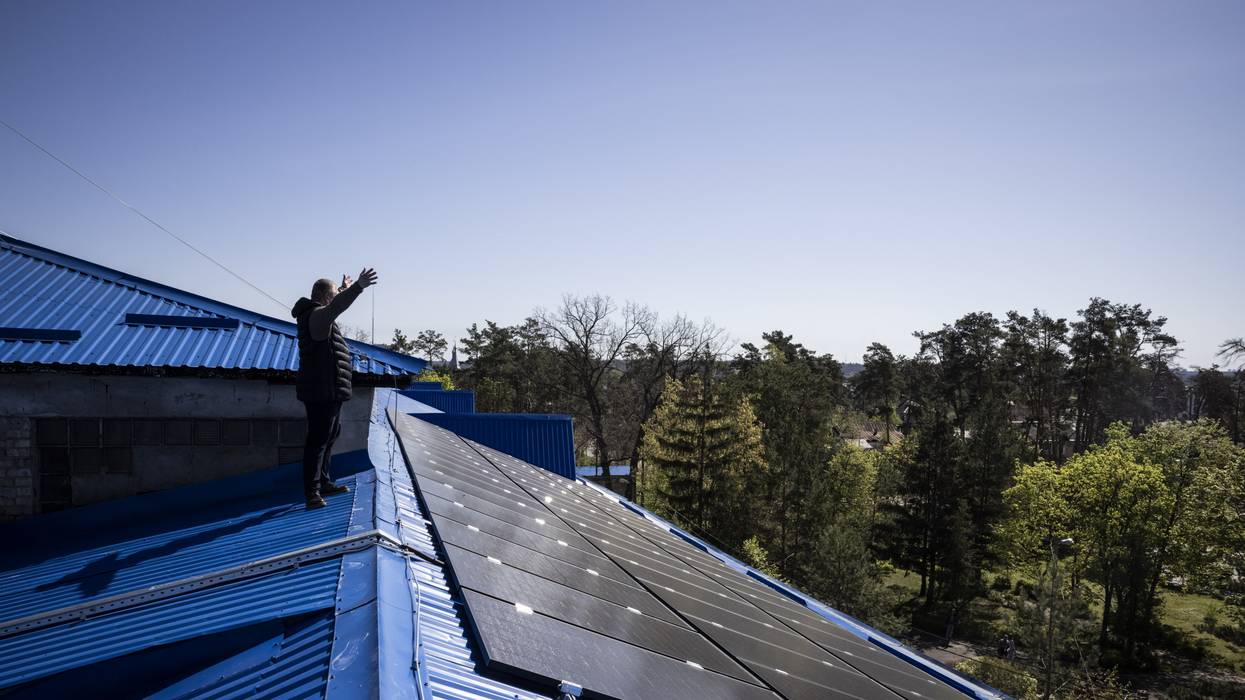
In the face of full-scale conflict, climate-friendly renewable energy projects have emerged as a ray of light, showcasing Ukraine's innovative spirit and determination.
As we mark the two-year anniversary of the devastating war in Ukraine that has taken thousands of innocent lives, the crisis has also led to some positive changes in terms of clean energy independence.
Having to quickly adapt to targeted Russian attacks, which damaged 50% of its dated energy infrastructure, Ukraine has rapidly embarked on a journey toward climate-friendly renewable decentralised energy. This is not only a testament to Ukraine's resilience but also to the rapid clean energy transformation that offers economic benefits and can be a model for all of Europe.
Historically, Ukraine imported much of its fossil fuel resources from Russia, but since Russia's first invasion in 2014, Ukraine has been expanding its efforts in renewable energy. The aim is to reduce its dependence on imported energy, improve energy security, and create high-quality jobs in the booming renewables sector. After two years of fighting for survival, Ukraine's commitment to clean energy has only strengthened. Even Ukrainian President Volodymyr Zelenskyy has noted that green energy guarantees real energy stability, and Ukraine could be one of the key suppliers of clean electricity to Europe. The potential of this industry alone is about $400 billion.
Ukraine's new energy strategy demonstrates the nation's commitment to renewable energy development and aligns with the latest European Union Governance and climate requirements. New legislation, such as the Law on Alternative Energy Sources, is integral to cooperation with international partners such as the European Bank for Reconstruction and Development (EBRD). This close collaboration with Europe has helped Ukraine launch several ambitious new renewable energy projects.
Before the Russian invasion on February 24, 2022, Ukraine already had ambitious renewable energy targets, aiming to increase its share in the overall energy mix to 25% by 2035. According to the National Energy and Utilities Regulatory Commission (NEURC), as of December 31, 2021, the installed capacity of Ukraine's renewable energy sector had already reached impressive levels, including growth in solar installations for private households. But since the 2022 war started, Ukraine has pledged to radically increase the share of renewable energy in its energy mix to increase collaboration with the E.U.
Ukraine synchronised its power grid with continental Europe during wartime, presenting opportunities for green transition and clean energy exchange with the E.U. The European REPowerE.U. plan aims to increase the E.U.'s target for renewables in its electricity balance to 45% by 2030. Ukraine has enacted laws to develop energy storage systems and allowed the sale of renewable electricity directly on the markets. The government is actively working on 'Green' auctions for new solar and wind capacities, showcasing a strategic vision for the energy sector's recovery.
As a result of Russia's ongoing war, a significant part of the energy infrastructure, including renewable energy facilities, was damaged or located in the occupied territories. This reduced the country's total installed capacity of renewable energy sources and provided a further need to rapidly create replacement energy sources for people.
Such situations stress the critical need to accelerate the transition to decentralised clean energy for energy independence and sustainable development. Renewable energy emerges as a key player in economic recovery, job creation, and providing clean, affordable energy for all. During 2022-23, more than 660 megawatts of new renewable energy capacity was commissioned in Ukraine.
Ukraine's strides in transitioning to clean energy and enhancing energy efficiency have already yielded significant economic and social benefits.
Despite massive challenges, Ukraine has demonstrated innovation and resilience in adopting renewable energy solutions. Solar power plants (SPPs) were built for vital needs: schools, hospitals, and water utilities. Collaborative efforts between state-owned companies, private enterprises, and international firms highlight the nation's successes with green energy.
State-owned Ukrnafta, in cooperation with the City Council, lit up Boryslav Hospital by installing a 30 kilowatt solar power plant on the roof. Aurora invested in a rooftop solar power plant in Vinnytsia, and the city of Kyiv plans to install solar power plants to supply energy to medical facilities, reinforcing social responsibility through green energy. Scatec, an international company, is developing a project called "mobile SPP plus batteries". The city of Nizhyn, in cooperation with the German Society for International Cooperation (GIZ), will build an SPP to provide electricity to the water utility.
Wind farms in southern and western Ukraine have been significantly expanded, along with bioenergy projects like biogas plants, contributing to reducing greenhouse gas emissions and solving waste disposal challenges while generating energy.
Amid the relentless challenges posed by Putin's brutal war, Ukraine's unwavering commitment to clean energy stands as a beacon of resilience. In the face of full-scale conflict, climate-friendly renewable energy projects have emerged as a ray of light, showcasing Ukraine's innovative spirit and determination. These initiatives fortify the nation's economic growth and energy independence and chart new horizons for green energy.
Ukraine's strides in transitioning to clean energy and enhancing energy efficiency have already yielded significant economic and social benefits. Investment in renewables and efficiency have spurred job creation, reduced dependency on imported energy, and slashed energy costs. Beyond the economic impact, these efforts have elevated the quality of life, fostered a cleaner environment, mitigated health risks, and contributed significantly to winning the war. We in Ukraine stand strong, and despite our tough situation, we are rising to our challenges and creating a clean energy revolution that Europe would do well to follow.The pressure of sanctions, difficulties with settlements, and pressure on logistics chains are reducing fossil fuel cooperation between the two nations.
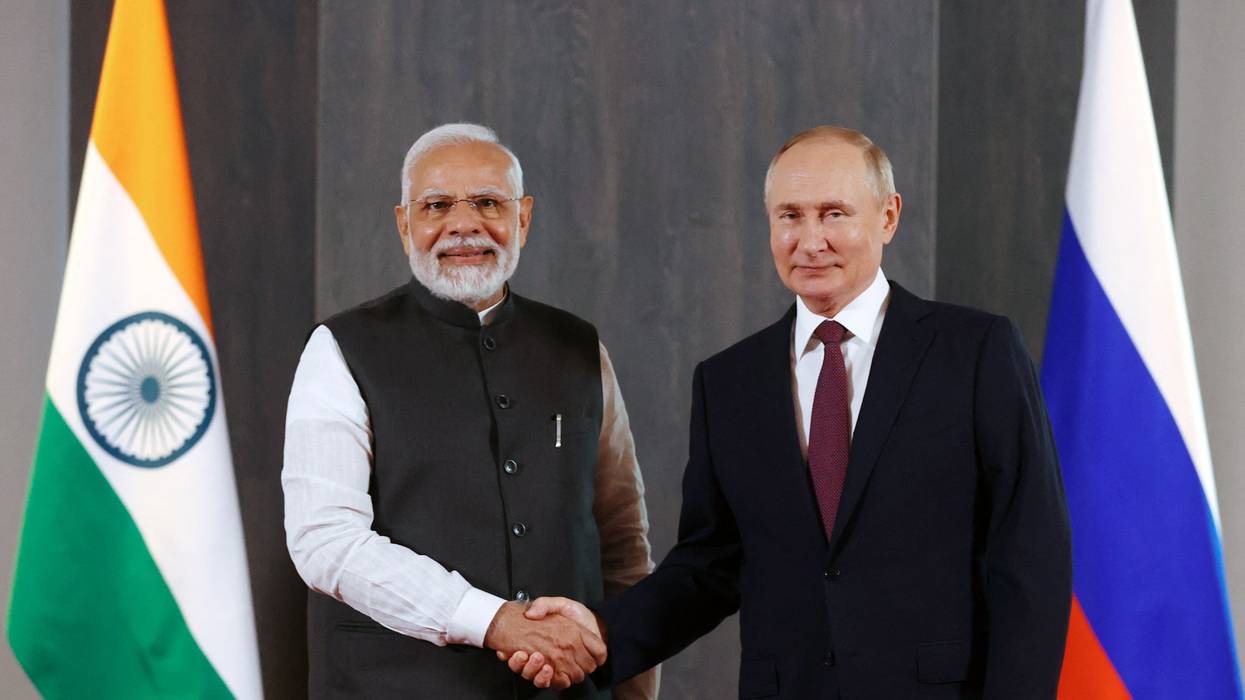
Russia continues to grapple with severe challenges stemming from its brutal war on Ukraine, particularly in the economic realm. While Russia regards exports to China and India as pivotal, these exports are encountering obstacles, resulting in declining sales.
The downturn in India's oil imports from Russia, already underway, can be attributed to various factors. Since the beginning of the war in Ukraine, India has significantly increased its purchases of Russian oil due to the significant discounts offered by Russia to avoid price caps and sanctions on their exports. This became possible due to Western sanctions against Russian oil, which led to a decrease in oil prices. Russia became India's leading oil supplier, accounting for about 40% of the country's oil imports. However, the process is now reversed.
The historical background of relations between India and Russia in the context of oil trade is deeply rooted and has undergone significant changes over time.
Indian companies have invested heavily in Russia's oil industry, particularly in projects like the Vankor and Taas oil fields. These investments have strengthened economic ties between the two countries and helped India expand its access to energy resources.
In April 2023, Indian Foreign Minister Dr S. Jaishankar called the bilateral agreement with Russia one of the "most stable in the world." A month before his speech, the Kremlin's foreign policy document of March 2023 stated that Russia would "continue to build a particularly privileged strategic partnership" with India.
Following Russia's full-scale invasion of Ukraine and the imposition of Western sanctions against Russia, relations between India and Russia in the oil trade have undergone significant changes.
The initiation of Indian investment in Russia's energy sector traces back to when Videsh Oil and Gas Corporation (OVL) injected $1.6 billion for a 20% stake in the Sakhalin-1 oil project. Before the onset of the conflict in Ukraine, this project boasted a daily oil production of 220,000 barrels, with ONGC receiving a substantial share of 44,000 barrels.
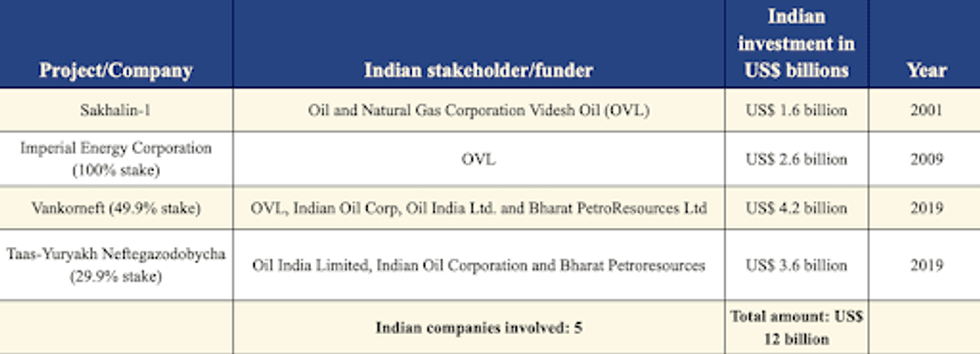
Thus, India has been investing in Russian projects for decades to diversify and increase its sources of supply.
In the wake of the brutal invasion of Ukraine, India seized the opportunity to secure Russian oil at significantly reduced prices, establishing Russia as one of its primary oil suppliers. Global sanctions against Russia have led to a substantial decline in demand for Russian oil and gas, prompting the United States, the European Union, Australia, and their allies to impose price limits on Russian oil, capping it at $60 per barrel.
India, heavily dependent on oil and gas imports with 87% of its oil and 65% of its gas sourced externally, strategically exploited the low prices by substantially raising its imports of Russian oil. This surge catapulted Russian oil's share in India's total oil imports from 1% to a substantial 40%. Even amid ongoing investigations into 120,000 Russian war crimes in Ukraine, India's enthusiasm for Russian fuels remained resilient. In the fiscal years 2022-2023, India imported a staggering $38.8 billion worth of Russian oil, translating to substantial savings of $3.6 billion on energy imports for the Indian government in the preceding fiscal year. Private oil refineries reaped even greater benefits, amounting to savings of up to $7.6 billion.
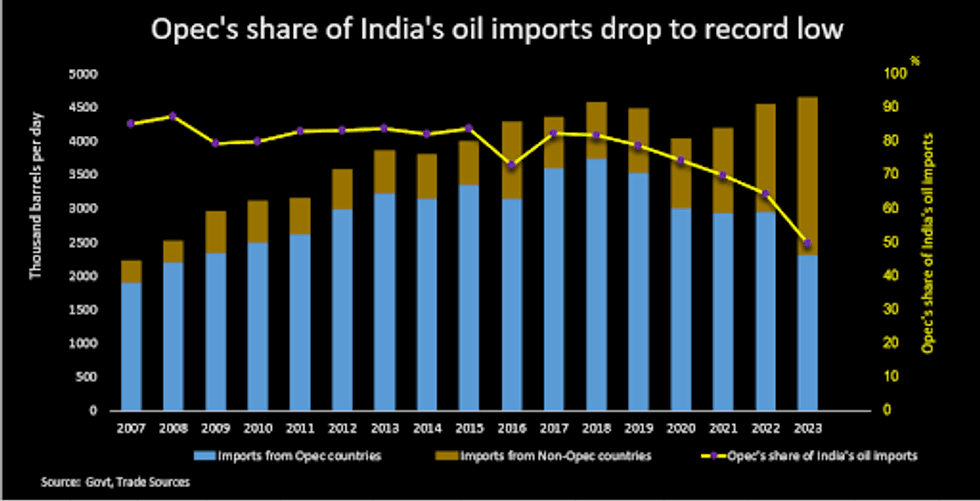
In the fiscal years 2022-2023, India exported 3.8 million tons of refined Russian oil to the E.U. countries for $20 billion. This amounted to about 10% of India's total exports of petroleum products.
Thus, India has taken advantage of Western sanctions against Russia by increasing its imports of Russian oil and saving significant money on energy imports.
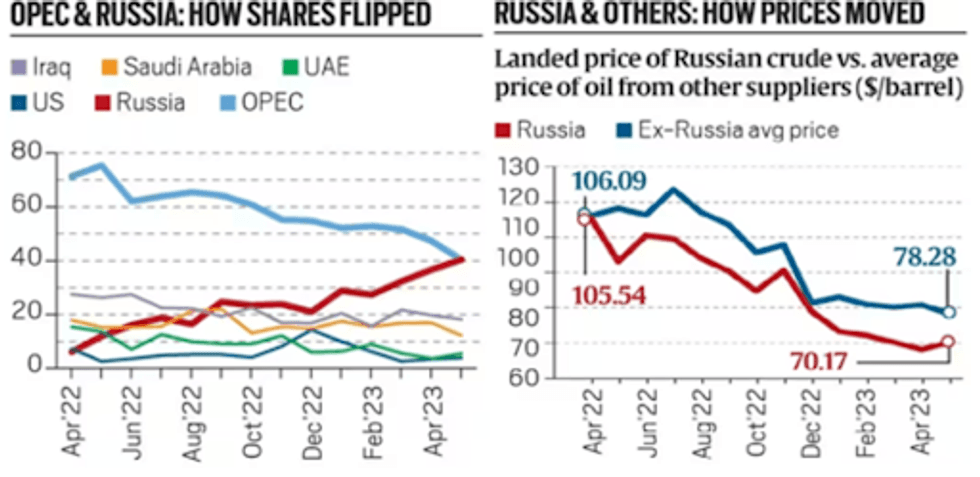
Conversely, India seeks to pursue an oil import policy that ensures a steady supply, diversifying its oil basket to reduce the impact of possible supply shocks.
Several key factors can explain the decline in India's oil imports from Russia.
Western sanctions: After Russia invaded Ukraine, Western countries imposed sanctions on Russian oil. However, rising prices for Russian oil on the one hand and stricter sanctions enforcement on the other hand have prompted a preference for alternative supplies.
Critical increase in the share of Russian oil in Indian imports: Due to these discounts, the share of Russian oil in India's total imports increased to 19.1% in the financial year 2022-2023, up from 2% in the previous year.
Doubtful discounts: Despite the declared discounts, the actual discounts on Russian oil remained unclear due to the lack of transparency in pricing for Russian oil cargoes. The actual cost of oil included freight and insurance costs, which were raised due to Western sanctions.
Diversification: India plans to pursue a policy of oil imports that provides equal supplies from the Persian Gulf countries and Russia. It is currently working on further diversifying its oil supplies. This is done to reduce the impact of possible supply shocks.
As a result, the decline in oil imports from Russia may be partly due to changes in global economic conditions, India's diversification of suppliers, and the complex effects of Western sanctions.
Following Russia's full-scale invasion of Ukraine and the imposition of Western sanctions against Russia, relations between India and Russia in the oil trade have undergone significant changes.
Since April 2023, Russian banks have been withholding Indian dividends totaling $400 million, which cannot be transferred due to Western sanctions. Additionally, four Russian oil and gas projects, including Sakhalin-1 and three oil fields of Taas, have suspended their operations. This was because these projects were previously managed by Western energy companies that left Russia after the conflict in Ukraine.
However, the pressure of sanctions, difficulties with settlements, and pressure on logistics chains are reducing this cooperation. Such actions can reduce Russia's income from fossil fuel exports and limit its ability to stock up Russian President Vladimir Putin's war chest. Therefore, this pressure must be further increased to reduce Russia's revenues and, consequently, its ability to wage it's brutal, aggressive war against Ukraine.
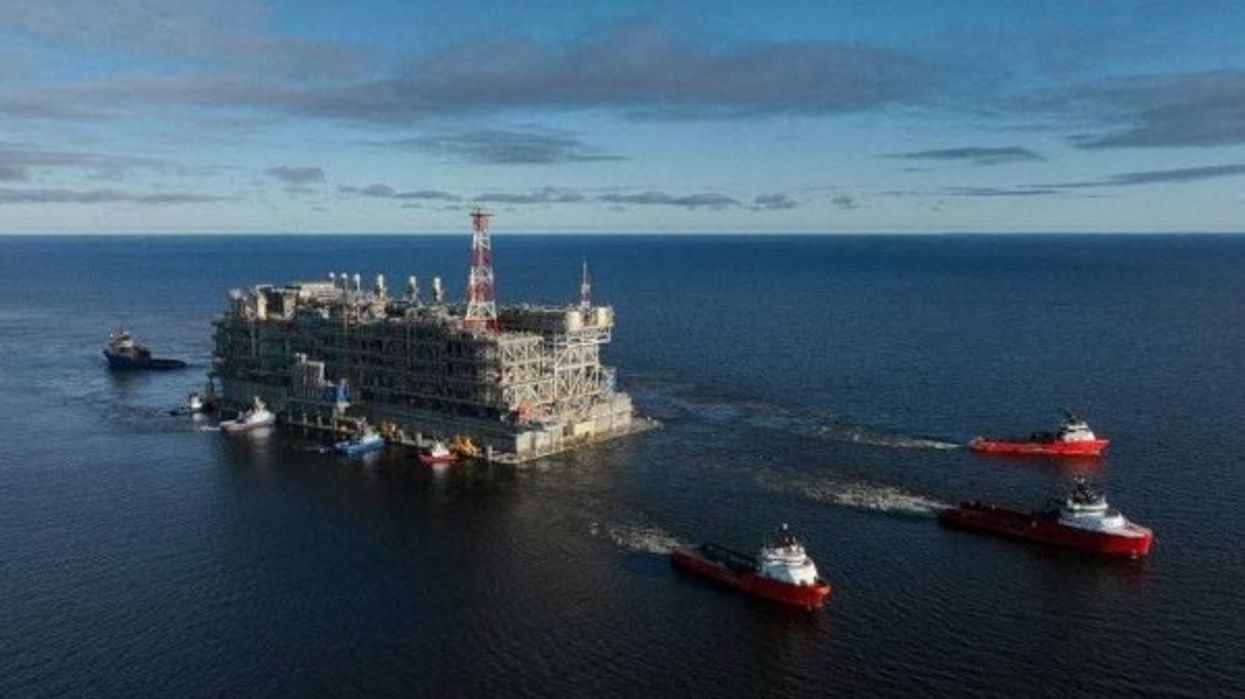
The slated launch of the initial phase of the Arctic LNG 2 terminal by the end of 2023 and the outlined plans to achieve nearly 20 million tonnes of LNG annually by 2026 underscore the strategic prominence of this project.
Given the geopolitical context and Russia's economic strategies, Novatek's Arctic LNG-2 project emerged as a pivotal area for energy sector advancement and international influence for Putin. Thus, the opposition from the US serves as an intriguing case to comprehend the mechanics behind sanctions.
What is the Arctic LNG 2 project?
The Arctic LNG 2 project, led by Russian oligarchs Leonid Mikhelson and Gennady Timchenko, aims to substantially increase Russia's natural gas exports to global markets. The proprietors of Novatek hold influential positions within the upper echelons of the Russian government and play a significant role in strategic decision-making.
A pivotal element of this initiative is the amplification of LNG production. In 2022, Novatek's initial operating terminal, Yamal LNG, exhibited remarkable financial performance, boasting revenues of EURO 8 billion, nearly doubling its profits and revenues year-on-year.
The subsequent phase in the company's blueprint involves inaugurating and streamlining the functioning of Arctic LNG-2. It aims to augment LNG production by an additional 20 million tonnes per year by 2026. This venture doesn't just impact Russia's economic terrain; it holds substantial ramifications for the global energy market, environmental concerns, and geopolitical relations.
Why is it so important to Russia?
By 2030, Russia envisions scaling up its overall LNG exports to 100 million tonnes annually, while also constructing four new substantial terminals. Throughout this timeframe, the LNG export expansion program holds immeasurable significance for the nation. Importantly, energy resource imports to the European Union have surged to their peak levels in the past three years. Notably, in November 2023, Russian LNG imports to Europe soared to a new high, reaching 1.75 million tonnes.
As a pivotal industry player, Novatek sets its sights on doubling its export capacity. The slated launch of the initial phase of the Arctic LNG 2 terminal by the end of 2023 and the outlined plans to achieve nearly 20 million tonnes of LNG annually by 2026 underscore the strategic prominence of this project.
In 2022, despite the sanctions, Russia witnessed an 8% surge in liquefied natural gas production. The nation persistently expanded its LNG provisions to Europe and global markets, leveraging the infrastructure of European ports.
In 2022, despite the sanctions, Russia witnessed an 8% surge in liquefied natural gas production.
Amidst restrictions and sanctions last year, Western companies still delivered cutting-edge components for the Arctic LNG 2 project and offered engineering services for its initial phase construction. If Russia continues its successful evasion of sanctions or secures equipment suppliers in China, the final two phases of the project might conclude. This advancement would enable Arctic LNG 2 to yield 19.8 million tonnes of LNG annually, aligning closely with the Kremlin's strategic objective of exporting 100 million tonnes of LNG yearly through the Northern Sea Route.
International companies like France's TotalEnergies, China's CNPC and CNOOC, and a consortium of Japan's Mitsui and JOGMEC have been actively engaged in the Arctic LNG 2 project. However, the involvement of certain companies has sparked investigations and raised concerns.
For instance, Baker Hughes, an American company that provided turbines for the initial phase of construction, ceased its operations in Russia following appeals by Ukrainian NGOs to the Scottish government. These appeals focused on grant funding for the turbine manufacturer and requested disclosure of their activities.
Ongoing investigations are scrutinizing additional international entities involved in the project. German and Austrian media have spotlighted Linde, engaged in joint ventures in Russia after the Crimea annexation, supplying critical components for natural gas cooling. Despite escalating sanctions, Linde persisted in fulfilling contracts in Russia post the 2022 illegal invasion of Ukraine, prompting increased attention and scrutiny.
In a separate incident, engineering firm Technip took over management of the Arctic LNG 2 project in 2019, breaching US sanctions against Russia's Novatek. Even after these sanctions were enforced, Technip continued supplying equipment to Russia, contravening restrictions in efforts to meet Russian demand.
These narratives illustrate a complex web of collaboration involving companies from various nations, persisting in operations or technological provision despite the pressures of sanctions and geopolitical limitations.
How the sanctions were imposed
In September 2023, the United States altered its sanctions strategy, broadening its scope to target entities linked to the project. These measures encompassed Russian companies, their subsidiaries, and newly established firms in third countries. For instance, entities in the United Arab Emirates were importing equipment bought from European companies into Russia, effectively circumventing the sanctions.
These sanctions, initiated on September 14, marked the initial move in constraining Russia's future energy pathways. Additionally, the US Department of State expanded the sanctions list, for the first time, including individuals directly engaged in the development, operation, and ownership of the Arctic LNG 2 project.
On November 2, 2023, the US Department of State and the Office of Foreign Assets Control (OFAC) directly imposed sanctions on ARCTIC LNG 2 LLC, the operator overseeing the new LNG terminal project.
The results of the sanctions are critical for the project
The French swiftly reacted to the sanctions. TotalEnergies stated it's evaluating the impact of the new US sanctions on Russia's Arctic LNG 2 project, where it holds a direct 10% stake and a 21.5% interest through its investment in Novatek. Since March 2022, it has ceased reserving gas reserves for Arctic LNG 2 and stopped investing in the project. The company had already written off a substantial amount—recording a EUR 3.7 billion impairment in the first quarter of 2022 and a total asset write-down of EUR 13.5 billion during the same year.
The Japanese followed suit in considering their position. Mitsui & Co., Ltd., a private company, engaged in Arctic LNG 2 through its joint venture Japan Arctic LNG B.V., partnering with the state-owned JOGMEC. Mitsui mentioned studying the sanctions' implications while affirming compliance with agreements and international regulations, including sanctions and vowed cooperation with the Japanese government. In the Russian LNG sector, the balance of investments and loans amounts to EUR 108 million, with guarantees totalling EUR 1.5 billion. The estimated adverse risk stands at EUR 1.5 billion after provisions and insurance claims, still falling within the controlled financial balance.
Initially, Leonid Mikhelson’s partners adopted a wait-and-see stance. However, it seems that the legal manoeuvres didn't yield results, and no loopholes were discovered. Consequently, the partners commenced withdrawing from the project, with the Koreans being the first to do so.
On December 26, it was revealed that Samsung had halted the construction of gas carriers for Russia's Arctic LNG 2 project due to US sanctions. Initially, the company had contracts for the construction of 15 LNG carriers, but work on 10 of them has now been suspended. Samsung Heavy Industries ceased the production of equipment for these LNG carriers.
The agreements entailed constructing these vessels at the Zvezda shipyard in Primorsky Krai. While the hulls of 5 LNG carriers were shipped to Russia under special permission from the South Korean government, construction on the remaining 10 was halted due to the imposed sanctions.
Termed as the SN2366 project, these LNG carriers were specifically designed for transporting LNG across the Arctic Ocean. They boasted a cargo capacity of 172,600 cubic meters and were equipped with the special Arc7 ice class, ensuring optimal performance under Arctic conditions.
Indeed, South Korea's involvement in developing the Russian LNG tanker fleet holds a pivotal position. Korean icebreakers are virtually irreplaceable for this purpose. The project hinges on this fleet, and without it, the project's functionality faces significant challenges. Consequently, other participants began to withdraw from their involvement in the project.
The sanctions were a culmination of collaborative efforts by Ukrainian, American, and European politicians and diplomats, buoyed by active public engagement and investigative journalism.
The imposition of new US sanctions prompted TotalEnergies, China's CNPC and CNOOC, and the Japanese consortium Mitsui and JOGMEC to declare a force majeure situation. This declaration inhibits their ability to fulfil financial commitments and honour the LNG supply contracts associated with the project. Each shareholder held specific allocations within the project—NOVATEK, as the primary shareholder, was allocated 12 million tonnes annually, while foreign participants were each assigned 2 million tonnes.
Under these new circumstances, Arctic LNG 2 might be compelled to sell its gas via the spot market as foreign participants express their inability to honour contracts due to the sanctions.
Notably, Chinese companies have made attempts to circumvent sanctions through formal channels. CNPC and CNOOC formally petitioned the US Treasury Department's Office of Foreign Assets Control (OFAC) seeking exemption from the sanctions imposed on the Russian Arctic LNG 2 project. However, there's been no response from US authorities yet. Japanese companies have initiated a similar process, while Spain's Repsol also declared force majeure.
The situation remains tense: despite the sanctions, the initial phase of Arctic LNG-2 commenced LNG production by the end of December 2023. With the pressing issues surrounding long-term contracts and constrained storage capacity, Novatek might have no choice but to sell gas through the spot market. What's more, it might need to offer discounts simply to sustain operations. This scenario could entice numerous buyers in Europe and the Far East, considering that we're looking at approximately 2.6 million tonnes from the initial phase alone.
The US Treasury is yet to decide on exemptions for China and Japan. However, we remain hopeful for consistent decisions based on prior determinations by the US.
Financial hurdles pose a significant challenge. According to Kommersant's report in June, the Arctic LNG 2 project's cost surged by approximately 17% to EUR 22 billion, attributed to the requirement for additional equipment. Shareholders were initially expected to cover this increase, but with TotalEnergies halting investments in Russian projects post the Ukraine conflict, NOVATEK now faces the task of sourcing the required financing.
The rejection of sanctioned terminal LNG by foreign shareholders might result in a shortfall of long-term contracts, potentially risking default on EUR 8.6 billion in external financing.
The sanctions were a culmination of collaborative efforts by Ukrainian, American, and European politicians and diplomats, buoyed by active public engagement and investigative journalism.
This underscores the significance of cooperative action in countering Russian aggression and preventing further economic and political interference in Europe. Nonetheless, this endeavour remains challenging, demanding meticulous attention and careful analysis to identify all nodes in the chain of circumventing sanctions and Russian intermediaries.
As Russia's fossil fuel industry continues to fund its aggression against Ukraine, the U.S. must lead the world on a path towards justice and sustainability.
As the UN climate conference COP28 unveils deep ruptures between democratic governments and petro-dictatorship, the urgency for collective action among Western nations has never been more evident. The war in Ukraine, the proliferation of Russian fossil fuels, and strengthening ties between Russia and the Gulf petro-states underscore the urgency of accelerated clean energy transition, tightening the embargoes and international sanctions, and the dire need for resolute decisions.
The devastating war in Ukraine, a stark reminder of aggression and disregard for global peace, beckons the US, EU, and G7 to act decisively. While political rhetoric often clouds the urgency of action, the harsh reality remains: Russia's war machinery runs on revenues from fossil fuel exports.
Razom We Stand recently published a new report mapping Russian fossil fuel exports and the relevant international sanctions imposed, which reveals the shocking truth — over $600 billion has been amassed since the invasion of Ukraine in February 2022 because of weak sanctions and insufficient enforcement. These funds have been channeled to perpetuate violence while bolstering the fossil fuel industry, jeopardizing not only peace but also exacerbating the climate crisis and other conflicts.
The United Arab Emirates (UAE), which is hosting COP28, holds significant links to Russian fossil fuels, serving as a crucial nexus in global energy trade. Recent reports have unveiled the UAE's involvement in facilitating trade and services for Russian oil and gas. Companies registered in the Gulf state bought at least 39 million tonnes of Russian oil worth more than $17 billion between January and April — around a third of the country’s exports declared to customs during that period.
Russia is trying to strategically manipulate the negotiations at COP28 by utilizing its alliances with the UAE and other OPEC+ nations. While rallying other petro-dictatorships to its side, Russia is aiming to sabotage, weaken, or stall any significant climate action, impeding the UN talks from achieving consensus on an equitable and just phase-out of fossil fuels. The extent of this interference was painfully evident as Putin was welcomed with open arms in Dubai during COP28, sending a starkly hypocritical message to those advocating for an end to fossil fuel dependency and a peaceful future for all of us.
While we deliberate on climate action, we must not overlook the pressing need to rebuild Ukraine's economy based on clean energy and energy efficiency.
With COP28 proving to be nothing more than a roadshow for petro-dictators and the fossil fuel industry lobbyists, the USA must stand up to the challenge. The US's pivotal role in shaping climate policy cannot be overstated. As one of the largest economies globally, the US must wield its influence judiciously, prioritizing the curbing of fossil fuel dependencies. The sanctions placed on Russian fossil fuels underscore a necessary shift — a clarion call to reduce reliance on entities that fuel war and impede progress toward a sustainable future.
The findings from our report highlight the financial impact of curtailing fossil fuel exports on Russia, illuminating a path toward peace and climate action. The observed decline in export volumes since 2022 — 7.5% in coal and approximately 11% in oil — reflects the significant (yet insufficient) impact of international measures. However, the financial gains Russia continues to amass, despite reduced exports, necessitate more vigorous, united efforts. The US's measures, while significant, must be fortified to diminish the revenue inflow that fuels conflict.
The EU must overcome the subversive addiction to Russian fossil fuels together with the US and fast-track the energy transition and the clean energy investment, the most powerful adversary of fossil-fuelled dictatorships. This must start with the US, eliminating loopholes in sanctions and tightening the enforcement.
While we deliberate on climate action, we must not overlook the pressing need to rebuild Ukraine's economy based on clean energy and energy efficiency. My nation stands at a precipice, grappling with devastation on multiple fronts — humanitarian, economic, and environmental. Ukraine's reconstruction cannot be an afterthought. The world must come together to support Ukraine's revival, ensuring solidarity and aid to mend the scars of war. But before we rebuild in fully renewable, oligarch-free and clean energy, we need international solidarity and support to defeat Putin’s attack on Ukraine, which is more than a war of aggression - in essence, it is a linchpin of the fossil fuel industry onslaught against humanity.
The EU must overcome the subversive addiction to Russian fossil fuels together with the US and fast-track the energy transition and the clean energy investment, the most powerful adversary of fossil-fuelled dictatorships.
As the Global Stocktake exercise shows at COP28, in the words of King Charles III, the world “remains so dreadfully far off track” that the Western nations have an opportunity — a responsibility — to demonstrate unwavering commitment and action. A united front, fortified by stringent measures against fossil fuel dependencies and bolstered by steadfast support for Ukraine's restoration, will echo a resounding call for a sustainable, peaceful world.
The time for rhetoric is past. As the U.S. assumes the role of climate leader, it must lead with action — a commitment that transcends boardrooms and conference halls — an assurance to future generations that we chose a path of sustainability, peace, and justice, in practice that requires dismantling the Russian oil and gas business. Controlling profit-driven traders, banks, shippers, refineries, and all intermediaries sustaining the Kremlin’s financial lifeline is no simple feat. However, it’s an imperative task that the Biden administration and other Western leaders can't afford to dodge.
To tackle the climate crisis, the world must have a real plan to phase out fossil fuels, starting with Russian oil and gas exports.
As the UN General Assembly took place during the New York Climate Week, the two key topics—war in Ukraine and climate change—seem far detached in the high-level discussions. A critical link was missing—between the deadly sprawl of the fossil fuels industry and petro-dictator Putin's assault on Ukraine, international law and democratic governance.
President Zelenskyy, during his speech at the UN General Assembly, noted that the world has repeatedly witnessed Russia's use of energy as a weapon. Russia consistently turns its fossil fuel exports and nuclear energy into geopolitical weapons.
There seems no limit to how far Russia can go—evidenced by numerous terrorist acts involving the Zaporizhzhya nuclear power plant: they shelled it, occupied it, and now are blackmailing the whole world with the threat of a radiation leak.
Yet an even more significant threat remains largely unnoticed by the international community and out of high-level speeches: Russia's dangerous oil and gas infrastructure sprawl in the Arctic. This poses a global climate threat as it could ignite the fuse to massive carbon bombs, unlocking extraction in new Russian oil and gas fields and enabling further exploration in the world's most climate-sensitive region.
It’s quite shocking that U.S. banks are among the biggest backers of these projects, despite civil society organizations urging them for years to stop financing fossil fuels and take the side of a radical shift to investment in clean energy solutions.
Russia’s sensitive northernmost territories, Yamal and Gydan peninsulas, are now being ravaged by new megaprojects and the frantic rush for gas. New gas projects in the icy lands of Yamal and Gydan can lead to increased methane, a potent greenhouse gas, leaking from damaged permafrost. Russia's expansion in the Arctic could have devastating consequences for all life on Earth.
During Climate Week in New York, hundreds of thousands worldwide urgently called for immediate climate action. These include small island nations threatened by rising seas, Africa grappling with severe food shortages, Southeast Asia dealing with droughts and floods, and Ukrainians resisting the Kremlin's invasion fueled by fossil fuels.
Concerns grow about Russia's LNG expansion coupled with the overall global crisis of climate disruption.
Yet it's precisely Russia's oil and gas industry and its sprawl in the Arctic that is turning this planet into hell, to use a metaphor from UN Secretary-General António Guterres last week. Hundreds of thousands are under constant and heavy attacks in Ukraine, and billions are affected by climate change. To tackle the climate crisis, the world must have a real plan to phase out fossil fuels, starting with Russian oil and gas exports. Their decline should be the first essential step.
Europe is already making progress in phasing out Russian fossil fuels. According to a recent briefing by the Centre for Research on Energy and Clean Air, in August 2023, the increased generation of solar and wind electricity in European Union countries led to a reduction in fossil gas consumption by 18 terawatt-hours (TWh), more than half of the total fossil gas imports from Russia. Yet, much further investment in renewable energy sources and energy efficiency is needed to safeguard the energy security and affordability of the world. The U.S. must implement additional policies to speed up the clean energy transition to keep energy affordable, reduce reliance on volatile fossil fuel markets, and stop cooperating with Russian energy companies that are financing Vladimir Putin's war on Ukraine.
Concerns grow about Russia's LNG expansion coupled with the overall global crisis of climate disruption. The global oil and gas industry would have to invest only 3% of the income it earned in 2022, or $100 billion, to reduce its methane emissions by 75%, according to the IEA's Methane Tracker 2023 report. Yet they didn't. Even with multiple supportive frameworks (OGMP, GMI, MGP) and commercial incentives, they do nothing to cut methane emissions. Some, like American company Halliburton, are doing the opposite by taking part in the deadly sprawl of the Russian gas industry.
Last week, press reports revealed that Halliburton sent equipment worth over $7 million into Russia in the past year. Media reports exposed that Halliburton's Russian business partners included Gazprom, which has its own mercenaries reportedly fighting on the front lines against us in Ukraine. The U.S. must immediately force all its companies, including Halliburton, to stop doing business with Russia.
These sort of fossil gas dealers further tarnish their reputations by becoming the embodiment of greed, neglect, and bad faith. They pay little attention to the human suffering or climate impacts their product causes and continue to expand gas infrastructure, contributing to fossil-fuelled violence and denying us the right to a liveable planet.
True leaders of the democratic world, including President Joe Biden, must unite and stand up to the challenge of dethroning petro-dictators like Putin and their greedy corporate partners. Making sure Russia will be isolated at the upcoming UN climate conference COP28 and gathering international support to cut Russian oil and gas exports is going to be a tough fight. Yet, it's one we cannot lose.