
SUBSCRIBE TO OUR FREE NEWSLETTER
Daily news & progressive opinion—funded by the people, not the corporations—delivered straight to your inbox.
5
#000000
#FFFFFF
To donate by check, phone, or other method, see our More Ways to Give page.


Daily news & progressive opinion—funded by the people, not the corporations—delivered straight to your inbox.
"During a disaster... Waymos would be blocking evacuation routes. Hard to believe no one asked these questions, until you realize that good governance is suspended when billionaires knock on the door," said one observer.
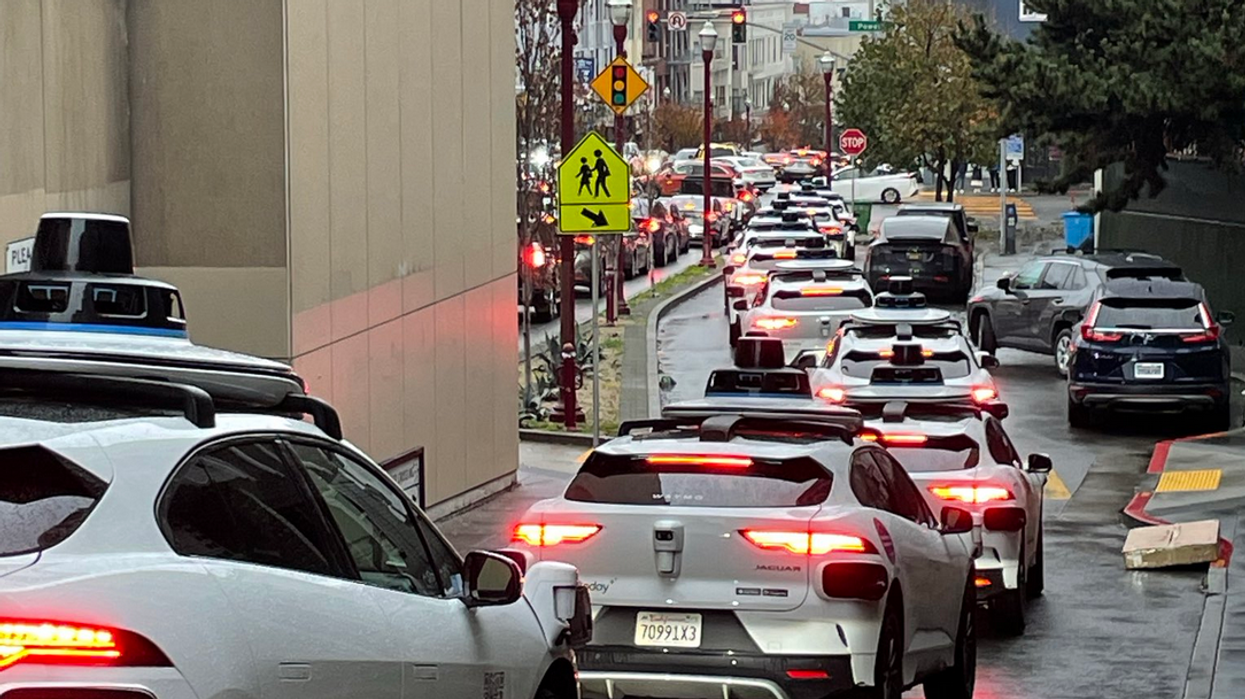
A citywide Pacific Gas & Electric power outage Saturday in San Francisco paralyzed Waymo autonomous taxis, exacerbating traffic chaos and prompting a fleet-wide shutdown—and calls for more robust robotaxi regulation.
Around 130,000 San Francisco homes and businesses went dark due to an afternoon fire at a PG&E substation in the city's South of Market neighborhood. While most PG&E customers had their electricity restored by around 9:00 pm, more than 20,000 rate-payers remained without power on Sunday morning, according to the San Francisco Standard.
The blackout left traffic lights inoperable, rendering much of Waymo's fleet of around 300 robotaxis "stuck and confused," as one local resident put it, as cascading failures left groups of as many as half a dozen of the robotaxis immobile. In some cases, the stopped vehicles nearly caused collisions.
On a walk across San Francisco on Saturday night prior to the fleet grounding at around 7:00 pm, this reporter saw numerous Waymos stuck on streets or in intersections, while others seemed to surrender, pulling or even backing out of intersections and parking themselves where they could.
Bad look for Waymo. Lots of reports out of SF where the power outage caused its robotaxis to stop in traffic, causing jams.
On the other side, the Tesla robotaxi fleet (& personal FSD users) continued the service without hiccups.
Not clear if Waymo vehicles themselves are… pic.twitter.com/DexuAh0Bpt
— Jaan of the EVwire.com ⚡ (@TheEVuniverse) December 21, 2025
"There are a lot of unique road scenarios on the roads I can see being hard to anticipate and you just hope your software can manage it. 'What if we lose contact with all our cars due to a power outage' is something you should have a meeting and a plan about ahead of time," Fast Company digital editor Morgan Clendaniel—a self-described "big Waymo guy"—said Sunday on Bluesky.
Clendaniel called the blackout "a predictable scenario [Waymo] should have planned for, when clearly they had no plan, because 'they all just stop' is not a plan and is not viable for city roads in an emergency."
Waymo—which is owned by Alphabet, the parent company of Google—said it is "focused on keeping our riders safe and ensuring emergency personnel have the clear access they need to do their work.”
Oakland Observer founder and publisher Jaime Omar Yassin said on X, "as others have noted, during a disaster with a consequent power outage, Waymos would be blocking evacuation routes. Hard to believe no one asked these questions, until you realize that good governance is suspended when billionaires knock on the door."
"Waymo's problems are known to anyone paying attention," he added. "At a recent anti-[Department of Homeland Security] protest that occurred coincidentally not far from a Waymo depot, vehicles simply left [the] depot and jammed [the] street behind a police van far from [the] protest that wasn't blocking traffic."
Waymo came to dominate the San Francisco robotaxi market after the California Public Utilities Commission suspended the permit of leading competitor Cruise to operate driverless taxis over public safety concerns following an October 2023 incident in which a pedestrian was critically injured when a Cruise car dragged her 20 feet after she was struck by a human-driven vehicle. The CPUC accused Cruise of covering up the details of the accident.
Some California officials have called for more robust regulation of robotaxis like Waymo. But last year, a bill introduced by state Sen. Dave Cortese (D-15) that would have empowered county and municipal governments "to protect the public through local governance of autonomous vehicles" failed to pass after it was watered down amid pressure from industry lobbyists.
In San Francisco, progressive District 9 Supervisor Jackie Fielder said during a press conference last month after a Waymo ran over and killed a beloved Mission District bodega cat named KitKat that while Waymo "may treat our communities as laboratories and human beings and our animals as data points, we in the Mission do not."
Waymo claimed that KitKat "darted" under its car, but security camera video footage corroborated witness claims to Mission Local that the cat had been sitting in front of the vehicle for as long as eight seconds before it was crushed.
Fielder lamented that "the fate of autonomous vehicles has been decided behind closed doors in Sacramento, largely by politicians in the pocket of big tech and tech billionaires."
The first-term supervisor—San Francisco's title for city council members—is circulating a petition "calling on the California State Legislature and [Gov. Gavin Newsom] to give counties the right to vote on whether autonomous vehicles can operate in their areas."
"This would let local communities make decisions that reflect their needs and safety concerns, while also addressing state worries about intercity consistency," Fielder wrote.
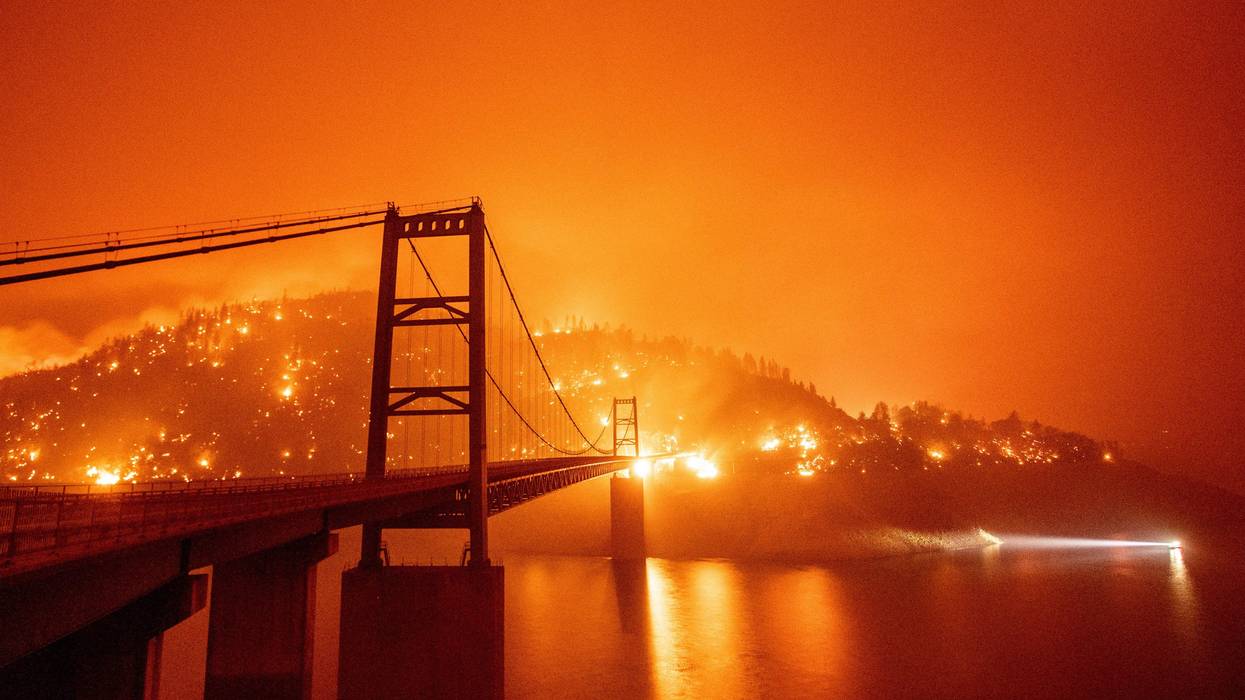
Other local progressives pointed to the citywide blackout as more proof that PG&E—whose reputation has been battered by incidents like the 2018 Camp Fire, which killed 85 people in Butte County and led to the company pleading guilty to 84 counts of involuntary manslaughter—should be publicly run, as progressive advocacy groups have urged for years.
The San Francisco power outage is absolutely unacceptable. There are still people & businesses in SF that don’t have power. I can’t imagine what this is like for the elderly & people with disabilities. PG&E should not be a private company.
[image or embed]
— Nadia Rahman 駱雯 (@nadiarahman.bsky.social) December 21, 2025 at 10:35 AM
"Sacramento and Palo Alto don’t have PG&E, they have public power," progressive Democratic congressional candidate Saikat Chakrabarti said Sunday on X. "They pay about half as much as us in utility bills and do not have weekend-long power outages. We could have that in San Francisco."

"Millions of lives are at risk this week as extreme heat scorches our country," said one campaigner. "Trump and his billionaire buddies will have blood on their hands."
With extreme temperatures fueled by human-caused global heating gripping much of the United States, a coalition of more than 150 advocacy groups on Tuesday urged federal, state, and local elected leaders to ban potentially deadly utility disconnections, increase worker protections, and tax polluters to finance renewable energy.
The Center for Biological Diversity (CBD) led two letters—one to Democratic congressional leaders and another to governors and mayors—arguing that U.S. President Donald Trump "has put millions of lives at risk by dismantling federal agencies and lifesaving programs that help working families keep their homes cool and survive deadly heatwaves like the one this week."
"Since taking office Trump has stripped Americans of access to lifesaving measures, including the Low-Income Home Energy Assistance Program and Low-Income Household Water Assistance Program, which help more than 8 million working families pay their utility bills," CBD noted.
"Every day of extreme heat in the United States claims about 154 lives."
The Trump administration has also laid off staff at the Federal Emergency Management Agency, "crippling the agency's ability to help communities before and after disaster strikes. And the country's first-ever proposed federal heat standard, which would prevent heat-related illness and injury in workplaces, is stalled after staff cuts at the Occupational Safety and Health Administration."
CBD said that extreme heat is the deadliest weather-related phenomenon, "claiming more lives each year than hurricanes, tornadoes, and floods combined."
"Every day of extreme heat in the United States claims about 154 lives," the group added. "In the past seven years there has been a nearly 17% increase each year in heat-related deaths. Among those most harmed by extreme heat are outdoor workers and children."
The diverse groups signing the letter—which include Climate Justice Alliance, Food & Water Watch, Free Press Action, Friends of the Earth U.S., Sunrise Movement, and Utility Workers Union of America—centered the voices of people who are most vulnerable to exposure to extreme heat, including outdoor workers like José, a Florida roofer.
"I've felt dizzy, weak, unable to breathe, with cramps, and my heart beats very fast, desperate," the 24-year-old said. "The heat suffocates me and many times I've been close to going to the hospital. While working on the roofs, it feels like the heat is over 110°F or 115°F and we only take one or two short breaks. I need this work to survive, but as the summers get hotter, I worry that one day I will collapse."
CBD senior attorney and energy justice program director Jean Su said in a statement Tuesday that "millions of lives are at risk this week as extreme heat scorches our country. Trump and his billionaire buddies will have blood on their hands."
"Corporations are taking advantage of working people and stripping them of access to lifesaving utilities, clean water, and a safe and resilient future," Su added. "Congress and especially state leaders must deliver emergency relief and tax greedy polluters who are endangering our lives and the climate. Everyone deserves heat-resilient homes, schools, and workplaces."
Will Humble, executive director of letter signatory Arizona Public Health Association, said: "We're not asking for the moon here. We're just looking for state and federal officials to help keep people alive during the summertime."
"Heat kills as many people in Arizona as influenza and pneumonia, and every one of those heat deaths is preventable," Humble added. "The least our elected officials can do is make sure people have places of refuge from these deadly fossil fuel-driven heatwaves. We also need stronger limits on summertime electricity shutoffs, so people aren't dying because the utility company has turned off their power."
"We're just looking for state and federal officials to help keep people alive during the summertime."
Last week, Oregon became the latest of more than two dozen states to ban power disconnections during high summer heat. However, as CBD and others have noted, utilities still find ways to shut off utilities during hot periods.
Six major investor-owned utilities—Georgia Power, DTE Energy, Duke Energy, Ameren Corporation, Pacific Gas & Electric, and Arizona Public Service—"shut off power to households at least 400,000 times during the summertime," according to a CBD report published in January. Those six utilities raked in $10 billion in profits while collectively hiking their customers' rates by at least $3.5 billion since 2023.
"Mayors and governors must act now with bold, local solutions, including expanded public transit and community-centered strategies like neighborhood cooling hubs," Climate Justice Alliance executive director KD Chavez said in a statement. "We also urge stronger labor protections, including municipal and state-level heat standards, to protect postal workers, farmworkers, and all outdoor workers who are increasingly exposed to deadly heat without adequate safeguards."
"Extreme heat has been endangering communities across the country," Chavez added. "We're feeling it closely this week and know it will only get worse. Our growing dependence on aging buildings, air conditioning and a fragile, fossil fuel-dependent power grid is putting lives at risk, especially in frontline, low-income neighborhoods and U.S. territories without government representation."
Picking Hawaiian Electric up before or out of bankruptcy and converting it to a public good will insure the state with reliable, citizen-centered electricity for years to come while guaranteeing minimal disruption for employees.
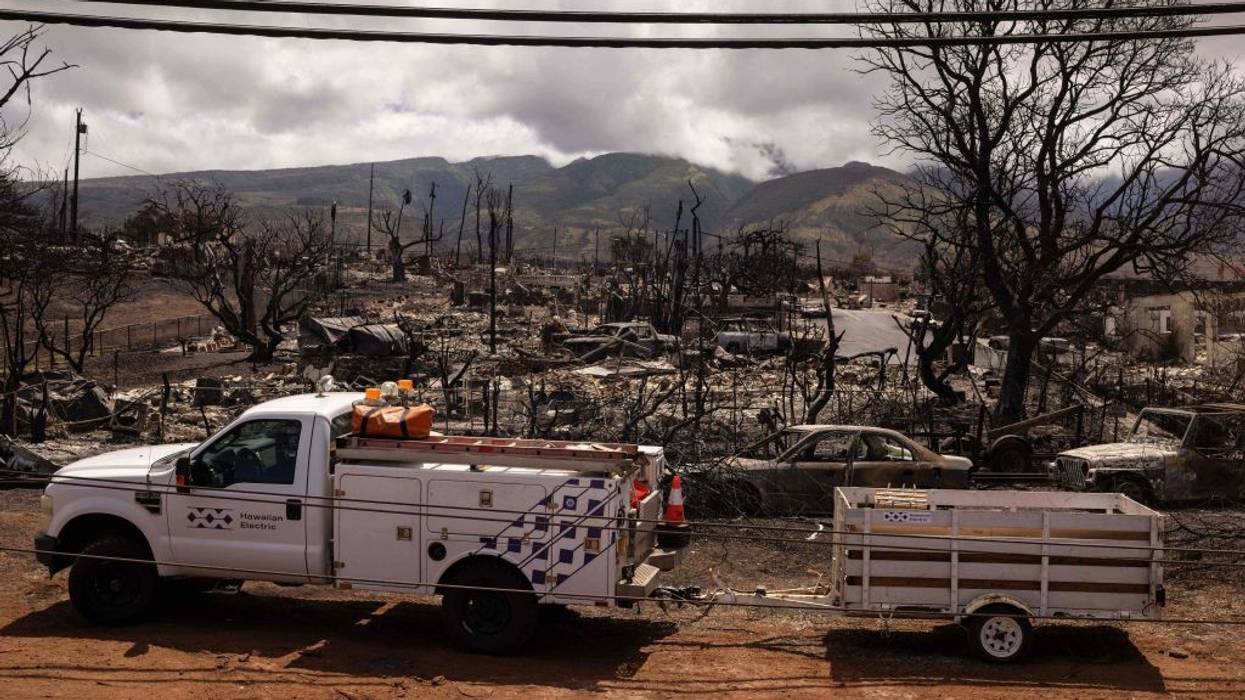
Following the tragic—and perhaps criminal—fires in Lahaina, the state of Hawaii should purchase Hawaiian Electric, the sole provider of electric power to the state, and run it as a publicly owned utility. Here’s why.
When it comes to electric utilities, there are basically only two types of companies: private and public. The main difference between the two is one of incentives.
Private companies, owned by shareholders, have a singular primary goal: to make money. Every action they take must be scrutinized in the light of their impact on profits, because if profits aren’t maintained at a level acceptable to the shareholders, the senior level of management is looking at being replaced by people who will prioritize profits.
People served by publicly owned power companies pay less for electricity, get better service, and have fewer outages.
Public companies, owned by the governments representing the people they serve or run as co-ops and owned by the consumers themselves, also have a singular primary goal: serve the people as well as possible. Every action they take is scrutinized by the people and the government to make sure that people are getting the services they need, in the way they need, at a price they can afford.
Private for-profit electricity utilities not only cost their customers more and generally provide poorer service, but they also have such a long history of ripping people off to increase profits that every state in the union has had to create a regulatory agency to control their worst impulses.
This “public management” to oversee the private company’s management adds another layer of cost, on top of the profits extracted as dividends paid to shareholders, paid by the customers being burdened by privately owned power companies.
Hawaiian Electric is a private, shareholder-owned for-profit corporation, much like California’s PG&E. And, if investigations turn up further evidence of what’s already being reported in the media—that the Lahaina fires were possibly caused by the power company’s failure to turn off the power when the winds hit gale force—they’ll be as responsible for the deaths there as PG&E was for deaths from multiple wildfires in California. Those deaths cost PG&E billions.
This is part of why the company’s shares right now are in the tank, trading around $13 after years of bouncing between $30 and $40.
The market is anticipating lawsuits like the ones that bankrupted PG&E (a half-dozen have already been filed against Hawaiian Power, including a class action), driving down the share price, making now a perfect time for the state to buy out the company. Wells Fargo says they believe the stock will settle around $8 a share making it an amazing bargain.
In fact, the company filed a brief this week with the U.S. Securities and Exchange Commission (SEC), which regulates private companies, revealing that they are looking into bankruptcy.
People served by publicly owned power companies pay less for electricity, get better service, and have fewer outages. Serving over 49 million (1 in 7) Americans, including large cities like Austin, Nashville, Los Angeles, and Seattle as well as over 2,000 communities across the country, public power companies return an average of 20% more to their communities than do private power companies.
Customers of privately owned power companies suffer an average of 150 minutes of lost power per year; for customers of publicly owned power companies it’s only 62 minutes per year. Being responsive to their communities’ concerns, in 2019 fully 40% of all power generated by publicly owned companies came from renewable resources.
This only makes sense. While the management of a private company is always looking for ways to cut costs to satisfy shareholder demands for higher dividends, the management of publicly owned companies spend their time every day looking for ways to better serve their customers.
Not only that, private corporations can get away with behaviors that are imprisonable crimes when committed by government employees. These “now legal” breaches of the public trust include self-dealing, handing off cash to family members, paying off politicians, and harassing or firing whistleblowers.
As In the Public Interest notes:
[P]rivate providers are generally not subject to conflict‐of‐interest laws, nepotism statutes or ordinances, ethics codes or whistleblower protection for their employees, or restrictions on political involvement.
Back in 2015, when Hawaiian Electric announced it was in negotiations to be purchased by a big Florida power corporation, citizens of Hawaii got together and launched a series of plans and petitions to flip the company to public ownership. These plans ranged from the state taking over the entire company to breaking it up into smaller parts that were owned by the governments of each island or major city.
Forty legislators and county council members met at the state Capitol to request the legislature consider taking over Hawaiian Electric and turning it public. They were led by former Energy Committee Chair Chris Lee.
The group formed on Oahu was called KULOLO (Keep Our Utility Locally Owned and Locally Operated), named after a well-known fudge-like Hawaiian desert made from taro and coconut. City Council Chair Ernie Martin put forth the resolution to the city for a feasibility study.
On the Big Island, citizens and legislators formed the Hawaii Island Energy Cooperative. Its members included some well-known names from the area: Richard Ha of Hamakua Farms, state Sen. Russell Ruderman, and Department of Hawaiian Home Lands Commissioner Wallace Ishibashi. They went so far as to hire a big PR firm (Hastings and Pleadwell) to sell the idea to citizens.
Maui Mayor Alan Arakawa was serious, too: he awarded $70,000 to the consulting firm Guernsey for a study of the viability of transitioning that city’s power to a municipally owned utility.
But then the deal fell through and the conversation about taking over the company went silent.
Now it’s back.
A sense of crisis around Hawaiian Electric is already in the air. Just a few days ago, State Senator Angus McKelvey (D-Maui) told the Honolulu State Advertiser:
The consequences [of the fire] are beyond measure. I hope that this will be the mother of all wake-up calls. People need to have comfort that this won’t happen ever again.
The senator, who’s been in the legislature for 18 years, added that the privately owned power company has repeatedly resisted calls from him and other legislators to spend money to harden their power systems by burying cables where they can’t cause fires:
“They fight it tooth and nail,” he told the Advertiser. “There’s zero excuse in my mind why power lines in Lahaina shouldn’t be underground now. No amount of money should be a reason not to do it.”
Disaster workers are still searching for bodies in Lahaina, but, with over 100 dead and counting, the fire already represents the worst American wildfire death toll in over a century.
Hawaiian Electric not only provides an essential service (which shouldn’t be exploited for profits), but also employs about 3,800 people across the islands.
Picking it up before or out of bankruptcy and converting it to a public good will insure the state with reliable, citizen-centered electricity for years to come while guaranteeing minimal disruption for those employees (other than the senior executives with their fat paychecks, like the CEO, who makes $3.8 million a year, who will probably need to be replaced).
Back when Enron was collapsing, our local utility here in Portland, Oregon, was one of their affiliates and on the block for sale. The city scraped together the asking price and a small premium to sweeten the pot, but the company refused to sell to a municipality or state, wanting to keep the utility in for-profit hands. It’s now called Portland General Electric (PGE).
Portlanders got screwed (I’ve personally experienced multiple days of power outages almost every year since) and we didn’t even get a T-shirt out of the deal.
During our last power outage, a month or two ago, PGE came out and strung a temporary high-voltage power line, attaching it to trees (!), to keep our neighborhood lit; we’re now bracing for the winter winds.
PGE, after all, has to come up with the $6.2 million in annual compensation its CEO gets, not to mention the other high-paid senior executives and the $158 million in dividends it paid to its stockholders last year. Fixing my neighborhood naturally competes with that priority.
Which is why Hawaii needs to move on this quick, before other for-profit utilities get into the act as happened here in Oregon. The corporate raiders will soon be circling, even as Lahaina buries its dead.