SUBSCRIBE TO OUR FREE NEWSLETTER
Daily news & progressive opinion—funded by the people, not the corporations—delivered straight to your inbox.
5
#000000
#FFFFFF
To donate by check, phone, or other method, see our More Ways to Give page.
Daily news & progressive opinion—funded by the people, not the corporations—delivered straight to your inbox.
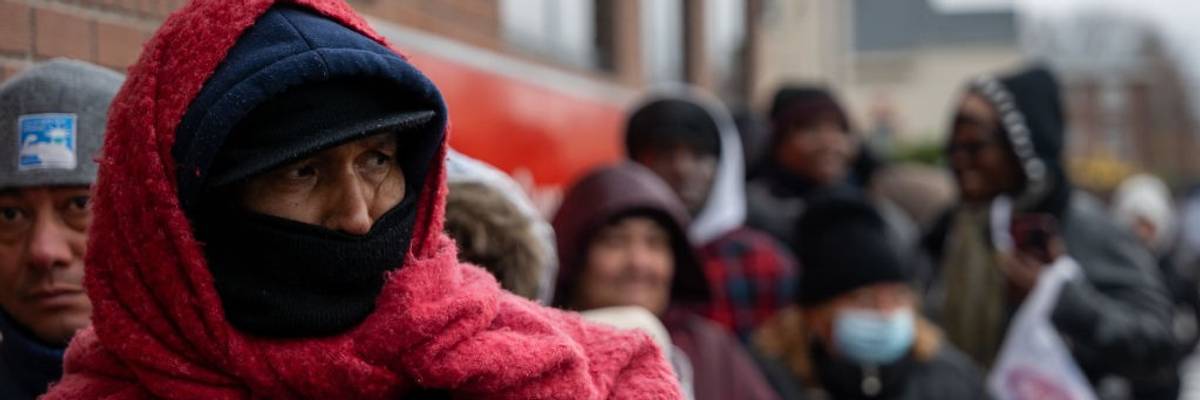
People wait in line on a cold and rainy afternoon at the Queens Community Justice Center in Jamaica to receive a free Thanksgiving turkey on November 22, 2024 in New York City.
Trump's Health and Human Services Secretary has overseen an attack on the program that helps millions of low-income individuals and families stay warm in winter and cool in summer. Does it get worse than this?
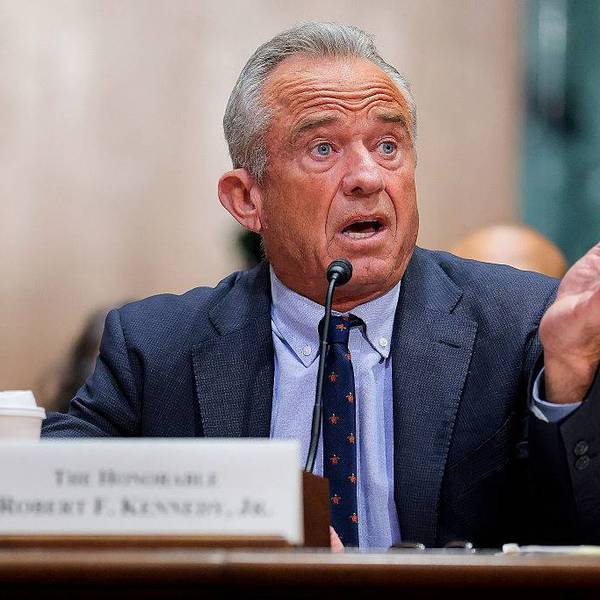
President Donald Trump has caused so much devastation over the last several weeks that it is hard to calculate the loss. It is easy to lose sight of the people who are being hurt. Earlier this week, the Trump administration's Health and Human Services Secretary Robert F. Kennedy Jr. announced a vast restructuring of the agency. As a result, literally thousands of workers were fired and entire sections of HHS eliminated and countless programs—spanning the gamut from world health to food safety—negatively impacted.
One of the programs devastated was the Low-Income Heating Assistance Program (LIHEAP) which helps low-income individuals and families pay for heating or cooling homes. According to the New York Times, the entire staff of LIHEAP was fired. LIHEAP helps over six million low-income people and has an annual budget of $4.1 billion.
Over the years, both Republicans and Democrats have supported LIHEAP. The program found supporters in New England who depended on LIHEAP for heating assistance and those in the southwest who used the assistance to help cool their homes. Those days of bipartisan cooperation are long gone.
Unless the cuts to LIHEAP are reversed, April 2025 will end up being a very cruel month for the millions of Americans who depend on LIHEAP...
No one should have been surprised by the severe cuts to LIHEAP. The program was targeted by Project 2025 and by the House Republican Study Committee’s proposed budget last year. Interestingly, this position puts the GOP at odds with utilities/energy companies which support LIHEAP.
In terms of bureaucracy, the LIHEAP staff was very small (25 people) when compared with overall staffing at HHS. Given the number of people LIHEAP helps, the program seems very efficient. Furthermore, LIHEAP serves a vital—that is, life-saving—purpose. The Census Bureau's Household Pulse Survey shows that families across the country are having problems affording their energy costs. In October of last year, Louisiana (31%), West Virginia (28.%), and Massachusetts (27%) topped the charts in states with the highest percentage of adults in households that were unable to pay an energy bill in full in the last 12 months.
Congress has already approved $4.1 billion for LIHEAP subsidies and implementation costs for the current fiscal year and about 90% of that amount has already been awarded to the states who administer the grants to individuals in need. However, it is unclear how the rest of the funds will be disbursed as there is no staff to administer the program. It is anyone’s guess as to what happens when the money runs out.
One thing is for sure: If LIHEAP is eliminated, people will die and these will be the most vulnerable among us. In case you are interested in proof of this common-sense conclusion, check out the paper “The Mortality Effects Of Winter Heating Prices” in the Economic Journal.
On Thursday, Kennedy told ABC News that some of the HHS cuts had been made in error and would be rescinded. This whole situation will be clarified when Kennedy testifies on April 10 about the HHS reorganization before the Senate Health Committee. Hopefully, LIHEAP will be one of the programs that was cut in error. Given the fact that Project 2025 singled out LIHEAP, this may be a forlorn hope.
Written just over a hundred years ago, T.S. Elliot's The Wasteland proffered that “April is the cruelest month.” Unless the cuts to LIHEAP are reversed, April 2025 will end up being a very cruel month for the millions of Americans who depend on LIHEAP to stay warm in their homes and survive in this world.
Dear Common Dreams reader, It’s been nearly 30 years since I co-founded Common Dreams with my late wife, Lina Newhouser. We had the radical notion that journalism should serve the public good, not corporate profits. It was clear to us from the outset what it would take to build such a project. No paid advertisements. No corporate sponsors. No millionaire publisher telling us what to think or do. Many people said we wouldn't last a year, but we proved those doubters wrong. Together with a tremendous team of journalists and dedicated staff, we built an independent media outlet free from the constraints of profits and corporate control. Our mission has always been simple: To inform. To inspire. To ignite change for the common good. Building Common Dreams was not easy. Our survival was never guaranteed. When you take on the most powerful forces—Wall Street greed, fossil fuel industry destruction, Big Tech lobbyists, and uber-rich oligarchs who have spent billions upon billions rigging the economy and democracy in their favor—the only bulwark you have is supporters who believe in your work. But here’s the urgent message from me today. It's never been this bad out there. And it's never been this hard to keep us going. At the very moment Common Dreams is most needed, the threats we face are intensifying. We need your support now more than ever. We don't accept corporate advertising and never will. We don't have a paywall because we don't think people should be blocked from critical news based on their ability to pay. Everything we do is funded by the donations of readers like you. When everyone does the little they can afford, we are strong. But if that support retreats or dries up, so do we. Will you donate now to make sure Common Dreams not only survives but thrives? —Craig Brown, Co-founder |
President Donald Trump has caused so much devastation over the last several weeks that it is hard to calculate the loss. It is easy to lose sight of the people who are being hurt. Earlier this week, the Trump administration's Health and Human Services Secretary Robert F. Kennedy Jr. announced a vast restructuring of the agency. As a result, literally thousands of workers were fired and entire sections of HHS eliminated and countless programs—spanning the gamut from world health to food safety—negatively impacted.
One of the programs devastated was the Low-Income Heating Assistance Program (LIHEAP) which helps low-income individuals and families pay for heating or cooling homes. According to the New York Times, the entire staff of LIHEAP was fired. LIHEAP helps over six million low-income people and has an annual budget of $4.1 billion.
Over the years, both Republicans and Democrats have supported LIHEAP. The program found supporters in New England who depended on LIHEAP for heating assistance and those in the southwest who used the assistance to help cool their homes. Those days of bipartisan cooperation are long gone.
Unless the cuts to LIHEAP are reversed, April 2025 will end up being a very cruel month for the millions of Americans who depend on LIHEAP...
No one should have been surprised by the severe cuts to LIHEAP. The program was targeted by Project 2025 and by the House Republican Study Committee’s proposed budget last year. Interestingly, this position puts the GOP at odds with utilities/energy companies which support LIHEAP.
In terms of bureaucracy, the LIHEAP staff was very small (25 people) when compared with overall staffing at HHS. Given the number of people LIHEAP helps, the program seems very efficient. Furthermore, LIHEAP serves a vital—that is, life-saving—purpose. The Census Bureau's Household Pulse Survey shows that families across the country are having problems affording their energy costs. In October of last year, Louisiana (31%), West Virginia (28.%), and Massachusetts (27%) topped the charts in states with the highest percentage of adults in households that were unable to pay an energy bill in full in the last 12 months.
Congress has already approved $4.1 billion for LIHEAP subsidies and implementation costs for the current fiscal year and about 90% of that amount has already been awarded to the states who administer the grants to individuals in need. However, it is unclear how the rest of the funds will be disbursed as there is no staff to administer the program. It is anyone’s guess as to what happens when the money runs out.
One thing is for sure: If LIHEAP is eliminated, people will die and these will be the most vulnerable among us. In case you are interested in proof of this common-sense conclusion, check out the paper “The Mortality Effects Of Winter Heating Prices” in the Economic Journal.
On Thursday, Kennedy told ABC News that some of the HHS cuts had been made in error and would be rescinded. This whole situation will be clarified when Kennedy testifies on April 10 about the HHS reorganization before the Senate Health Committee. Hopefully, LIHEAP will be one of the programs that was cut in error. Given the fact that Project 2025 singled out LIHEAP, this may be a forlorn hope.
Written just over a hundred years ago, T.S. Elliot's The Wasteland proffered that “April is the cruelest month.” Unless the cuts to LIHEAP are reversed, April 2025 will end up being a very cruel month for the millions of Americans who depend on LIHEAP to stay warm in their homes and survive in this world.
President Donald Trump has caused so much devastation over the last several weeks that it is hard to calculate the loss. It is easy to lose sight of the people who are being hurt. Earlier this week, the Trump administration's Health and Human Services Secretary Robert F. Kennedy Jr. announced a vast restructuring of the agency. As a result, literally thousands of workers were fired and entire sections of HHS eliminated and countless programs—spanning the gamut from world health to food safety—negatively impacted.
One of the programs devastated was the Low-Income Heating Assistance Program (LIHEAP) which helps low-income individuals and families pay for heating or cooling homes. According to the New York Times, the entire staff of LIHEAP was fired. LIHEAP helps over six million low-income people and has an annual budget of $4.1 billion.
Over the years, both Republicans and Democrats have supported LIHEAP. The program found supporters in New England who depended on LIHEAP for heating assistance and those in the southwest who used the assistance to help cool their homes. Those days of bipartisan cooperation are long gone.
Unless the cuts to LIHEAP are reversed, April 2025 will end up being a very cruel month for the millions of Americans who depend on LIHEAP...
No one should have been surprised by the severe cuts to LIHEAP. The program was targeted by Project 2025 and by the House Republican Study Committee’s proposed budget last year. Interestingly, this position puts the GOP at odds with utilities/energy companies which support LIHEAP.
In terms of bureaucracy, the LIHEAP staff was very small (25 people) when compared with overall staffing at HHS. Given the number of people LIHEAP helps, the program seems very efficient. Furthermore, LIHEAP serves a vital—that is, life-saving—purpose. The Census Bureau's Household Pulse Survey shows that families across the country are having problems affording their energy costs. In October of last year, Louisiana (31%), West Virginia (28.%), and Massachusetts (27%) topped the charts in states with the highest percentage of adults in households that were unable to pay an energy bill in full in the last 12 months.
Congress has already approved $4.1 billion for LIHEAP subsidies and implementation costs for the current fiscal year and about 90% of that amount has already been awarded to the states who administer the grants to individuals in need. However, it is unclear how the rest of the funds will be disbursed as there is no staff to administer the program. It is anyone’s guess as to what happens when the money runs out.
One thing is for sure: If LIHEAP is eliminated, people will die and these will be the most vulnerable among us. In case you are interested in proof of this common-sense conclusion, check out the paper “The Mortality Effects Of Winter Heating Prices” in the Economic Journal.
On Thursday, Kennedy told ABC News that some of the HHS cuts had been made in error and would be rescinded. This whole situation will be clarified when Kennedy testifies on April 10 about the HHS reorganization before the Senate Health Committee. Hopefully, LIHEAP will be one of the programs that was cut in error. Given the fact that Project 2025 singled out LIHEAP, this may be a forlorn hope.
Written just over a hundred years ago, T.S. Elliot's The Wasteland proffered that “April is the cruelest month.” Unless the cuts to LIHEAP are reversed, April 2025 will end up being a very cruel month for the millions of Americans who depend on LIHEAP to stay warm in their homes and survive in this world.