

SUBSCRIBE TO OUR FREE NEWSLETTER
Daily news & progressive opinion—funded by the people, not the corporations—delivered straight to your inbox.
5
#000000
#FFFFFF
To donate by check, phone, or other method, see our More Ways to Give page.
Daily news & progressive opinion—funded by the people, not the corporations—delivered straight to your inbox.
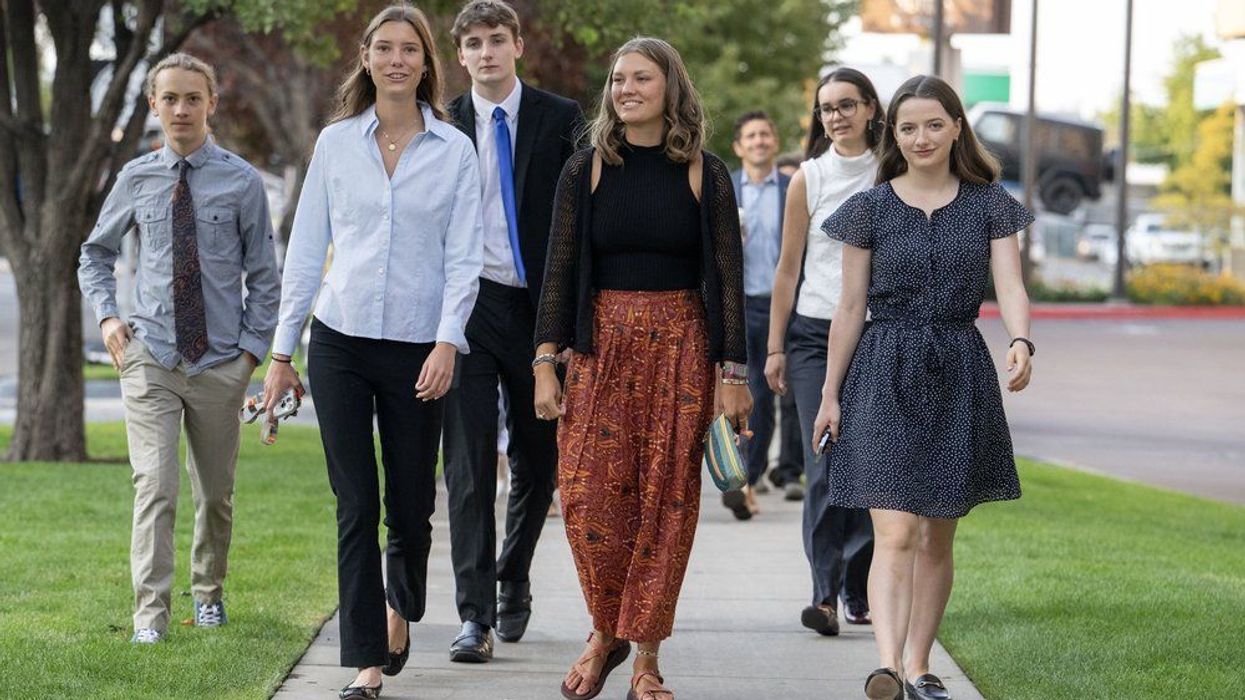
"Some days I can't even go outside because the air is so polluted," said one plaintiff. "I get headaches, feel dizzy when it’s too hot, and sometimes I can't even see down my own street because of smoke from wildfires."
Following the Utah Supreme Court's dismissal of a youth-led constitutional climate lawsuit earlier this year, 10 young Utahns on Monday launched a new case intended to block state permits for coal, gas, and oil development.
Backed by Our Children's Trust—a legal group behind various youth climate suits, including Juliana v. United States and Held v. State of Montana—the plaintiffs are suing the Utah Board of Oil, Gas, and Mining; the Division of Oil, Gas, and Mining; and the director of the latter, Mick Thomas, in state court.
"Plaintiffs bring this action to protect their fundamental rights to life, health, and safety that defendants are violating by permitting fossil fuel development, when doing so is harmful, unnecessary, and more expensive than clean, renewable forms of energy," says the complaint.
"Due to localized air and climate pollution caused by defendants' permitting activities, plaintiffs live in some of the worst air quality of any state in the nation and face climate disruptions, including elevated temperatures and deadly heatwaves, frequent and severe wildfires and smoke, exceptional drought, exacerbated medical conditions, and increased health risks," the filing continues.
"Defendants' fossil fuel permitting challenged here is unconstitutional because it harms the health and safety of plaintiffs, interferes with their healthy development, and takes years off of their lives," the document adds.
When the Utah Supreme Court upheld the dismissal of the earlier lawsuit in March, Our Children's Trust called it a "partial win" because, as lead attorney Andrew Welle explained at the time, "the decision opens a clear path forward for continuing our challenge to the state's actions in promoting fossil fuel development."
🚨Ten Utah youth filed a constitutional climate lawsuit against their state for issuing fossil fuel permits that endanger their health, lives, and safety. Learn more: bit.ly/49LVqA0
[image or embed]
— Our Children’s Trust (@youthvgov.bsky.social) December 1, 2025 at 4:07 PM
The lead plaintiff for both cases is Natalie Roberts, an 18-year-old who lives in Salt Lake City. In April, the American Lung Association's annual State of the Air report gave the state capital's metro area an "F" grade for both ground-level ozone (smog) and particle (soot) pollution.
"Both ozone and particle pollution can cause premature death and other serious health effects such as asthma attacks, heart attacks and strokes, preterm births, and impaired cognitive functioning later in life. Particle pollution can also cause lung cancer," said Nick Torres, advocacy director for the American Lung Association, in a statement when the report was released.
"Unfortunately, too many people in the Salt Lake City metro area are living with unhealthy levels of ozone and particle pollution," Torres continued. "This air pollution is causing kids to have asthma attacks, making people who work outdoors sick and unable to work, and leading to low birth weight in babies. We urge Utah policymakers to take action to improve our air quality, and we are calling on everyone to support the incredibly important work of the US Environmental Protection Agency."
Roberts, in a Monday statement, shared her experiences with her city's polluted air and increasingly hot temperatures.
"Some days I can't even go outside because the air is so polluted," the teenager said. "I get headaches, feel dizzy when it's too hot, and sometimes I can't even see down my own street because of smoke from wildfires. I worry every day about my health, my future, and what kind of world I'll live in if the state keeps approving these fossil fuel permits. We're fighting for our lives and asking the court to protect us before it's too late."
The complaint details similar experiences by other plaintiffs. When 21-year-old Park City resident Sedona Murdock "is exposed to dangerous air quality, she experiences pain in her chest and lungs, difficulty breathing, and coughing, and it can trigger life-threatening asthma attacks," it says. "Sedona experiences stress and anxiety because of the harms to her health that she has already suffered."
Otis W. and Lev W., brothers from Salt Lake City who are respectively 16 and 13, "experience painful headaches from bad air quality and have often had days where their schools have not allowed them or their peers to go outside," according to the filing. "Increasingly intense rain events have resulted in flooding and water intrusion in Otis and Lev's home, threatening their shelter and presenting a risk of dangerous mold growth."
"Decreased snowfall, snowpack, precipitation, and warming temperatures are diminishing water sources that provide water for Otis and Lev's family and community, threatening their water security," the complaint says. "Several trees in Otis and Lev's yard that provided shade for their home have already died from increased heat and drought conditions, making their home hotter and increasing the dangers to them of rising temperatures and heatwaves."
The document also points out how the pair and other youth plaintiffs have had to alter or abandon beloved outdoor activities, from team sports such as soccer to camping, hiking, mountain biking, rafting, running, and skiing, because of the fossil fuel-driven climate emergency.
"The state cannot continue issuing fossil fuel permits that put children's lives and health in jeopardy," said Welle, the lead attorney. "This case is about holding Utah accountable to its constitutional obligations to protect youth from serious harm caused by air pollution, climate impacts, and unsafe fossil fuel development. The court now has what it says it needs to hear and decide this case and prevent further harm to these young people and ensure the state governs responsibly."
"Courts cannot offer more protection to fossil fuel companies seeking to preserve their profits than to young Americans seeking to preserve their rights," said the plaintiffs' lead attorney.
American children and young adults suing over President Donald Trump's anti-climate executive orders plan to keep fighting after a federal judge on Wednesday dismissed their case, citing a previous decision from the US Court of Appeals for the 9th Circuit.
Eva Lighthiser, Rikki Held—of the historic Held v. State of Montana case—and 20 other young people filed a federal suit in Montana in May, taking aim at Trump's executive orders (EOs) declaring a "national energy emergency," directing federal agencies to "unleash" American energy by accelerating fossil fuel development, and boosting the coal industry.
"The founders of this country believed our rights to life and liberty were the fundamental tenets of a reasoned and just society, among the most sacred of rights to protect from government intrusion and overreach," said Daniel C. Snyder, director of the Environmental Enforcement Project at Public Justice, one of the groups representing the young plaintiffs.
"Not only should Americans be outraged by unlawful executive actions that trample upon those rights, but also because the harm these executive orders have inflicted was acknowledged by the court—showing the serious nature of plaintiffs' case," Snyder continued. "Allowing the burning of fossil fuels to continue will eventually render our nation unlivable for future generations."
"Allowing the burning of fossil fuels to continue will eventually render our nation unlivable for future generations."
US District Judge Dana Christensen "reluctantly" dismissed Lighthiser v. Trump on Wednesday, pointing to the 9th Circuit's 2020 opinion in Juliana v. United States, a constitutional climate case that the US Supreme Court effectively ended in March.
"Plaintiffs have presented overwhelming evidence that the climate is changing at a staggering pace, and that this change stems from the rise in atmospheric carbon dioxide, caused by the production and burning of fossil fuels," wrote Christensen. "The record further demonstrates that climate change and the exposure from fossil fuels presents a children's health emergency."
The appointee of former President Barack Obama also said that he was "troubled by the very real harms presented by climate change and the challenged EOs' effect on carbon dioxide emissions." Specifically, he noted, "plaintiffs have shown the challenged EOs will generate an additional 205 million metric tons of carbon dioxide annually by 2027, an increase which plaintiffs convincingly allege will expose them to imminent, increased harm from a warming climate."
While Adam Gustafson, acting assistant attorney general of the Environment and Natural Resources Division at the US Department of Justice, cheered the dismissal of what he called "a sweeping and baseless attack on President Trump's energy agenda," the judge wrote that "if the 9th Circuit disagrees" with his decision, he "welcomes the return of this case to decide it on the merits."
Lawyers for the youth plaintiffs have already set their sights on the higher court. Lead attorney Julia Olson of Our Children's Trust stressed that "Judge Christensen said he reached his decision reluctantly and invited the 9th Circuit to correct him so these young Americans can have their case heard—and the 9th Circuit should do just that."
"Every day these executive orders remain in effect, these 22 young Americans suffer irreparable harm to their health, safety, and future," she noted. "The judge recognized that the government's fossil fuel directives are injuring these youth, but said his hands were tied by precedent."
"We will appeal—because courts cannot offer more protection to fossil fuel companies seeking to preserve their profits than to young Americans seeking to preserve their rights," Olson added. "This violates not only the Constitution and Supreme Court precedent, but the most basic principles of justice."
"He's waging war on us with fossil fuels as his weapon, and we're fighting back with the Constitution," said one of the 22 plaintiffs.
Nearly two dozen American children and young adults sued U.S. President Donald Trump, leaders in his administration, and various agencies in federal court on Thursday over a trio of executive orders they argue "escalate" the climate emergency that imperils their futures.
Lighthiser v. Trump, filed in the U.S. District Court for the District of Montana, challenges executive orders (EOs) 14156, 14154, and 14261—which, respectively, declared a "national energy emergency," directed agencies to "unleash" American energy by accelerating fossil fuel development, and called for boosting the country's coal industry.
"Trump's fossil fuel orders are a death sentence for my generation," said named plaintiff Eva Lighthiser in a statement. "I'm not suing because I want to—I'm suing because I have to. My health, my future, and my right to speak the truth are all on the line. He's waging war on us with fossil fuels as his weapon, and we're fighting back with the Constitution."
Specifically, the complaint argues that "the EOs violate the Fifth Amendment substantive due process clause on their face by depriving plaintiffs of their fundamental rights to life and liberty." The filing also states that the orders are ultra vires—meaning they go beyond Trump's presidential authority "in assuming powers reserved to and exercised by Congress through Article I" of the U.S. Constitution.
"From day one of the current administration, President Trump has issued directives to increase fossil fuel use and production, and block an energy transition to wind, solar, battery storage, energy efficiency, and electric vehicles," the complaint reads. "President Trump's EOs falsely claim an energy emergency, while the true emergency is that fossil fuel pollution is destroying the foundation of plaintiffs' lives."
"These unconstitutional directives have the immediate effect of (a) slowing the buildout of U.S. energy infrastructure that eliminates planet-heating fossil fuel greenhouse gas pollution... and (b) increasing the use of fossil fuels that pollute the air, water, lands, and climate on which plaintiffs' lives depend," the filing stresses.
🚨 Youth from Montana and four other states are suing the Trump administration for violating their constitutional rights with executive orders that fast-track fossil fuel projects, worsen the climate crisis, and suppress climate science. PR: bit.ly/youthsuetrump-pr #YouthvGov
[image or embed]
— Our Children’s Trust (@youthvgov.bsky.social) May 29, 2025 at 10:11 AM
The youth are asking the district court to declare Trump's EOs and related executive actions "unlawful, unconstitutional, ultra vires, and invalid," and to issue a permanent injunction blocking the long list of defendants from implementing or enforcing them.
Lighthiser is a 19-year-old from Livingston, Montana. She and 24-year-old Rikki Held are among 10 of 22 plaintiffs in this case who were also part of Held v. State of Montana, in which a judge in 2023 agreed with young residents who argued that Montana violated their state constitutional rights by promoting fossil fuel extraction. The Montana Supreme Court upheld that decision last December.
Both groups of young plaintiffs are represented by Our Children's Trust, known for several youth climate lawsuits, including Juliana v. United States, the landmark constitutional case that the U.S. Supreme Court ended in March.
Lead attorney Julia Olson of Our Children's Trust said Thursday that "these executive orders are an overt abuse of power. The president is knowingly putting young people's lives in danger to serve fossil fuel interests, while silencing scientists and defying laws passed by Congress."
"These young plaintiffs refuse to be collateral damage in a fossil fuel war on their future," Olson continued. "They are demanding accountability where it still matters—in a court of law. The executive branch is not above the Constitution, and these young people are here to prove it."
For Lighthiser v. Trump, Our Children's Trust has partnered with Gregory Law Group, McGarvey Law, and Public Justice.
"The government's actions irreparably harm our nation's most important asset: our children," said Dan Snyder, director of the Environmental Enforcement Project for Public Justice. "The science is irrefutable that humans and their pollution are causing climate change, and that a changing climate will result in a growing list of injuries that are uniquely felt by America's youngest population."
"Our children enjoy the same constitutional rights to life and liberty as adults, yet have been tasked with shouldering the impact of a destabilized climate system without ever having a say in the matter," he added. "President Trump's executive orders are unlawful and intolerable, and these youth plaintiffs shall put an end to it."
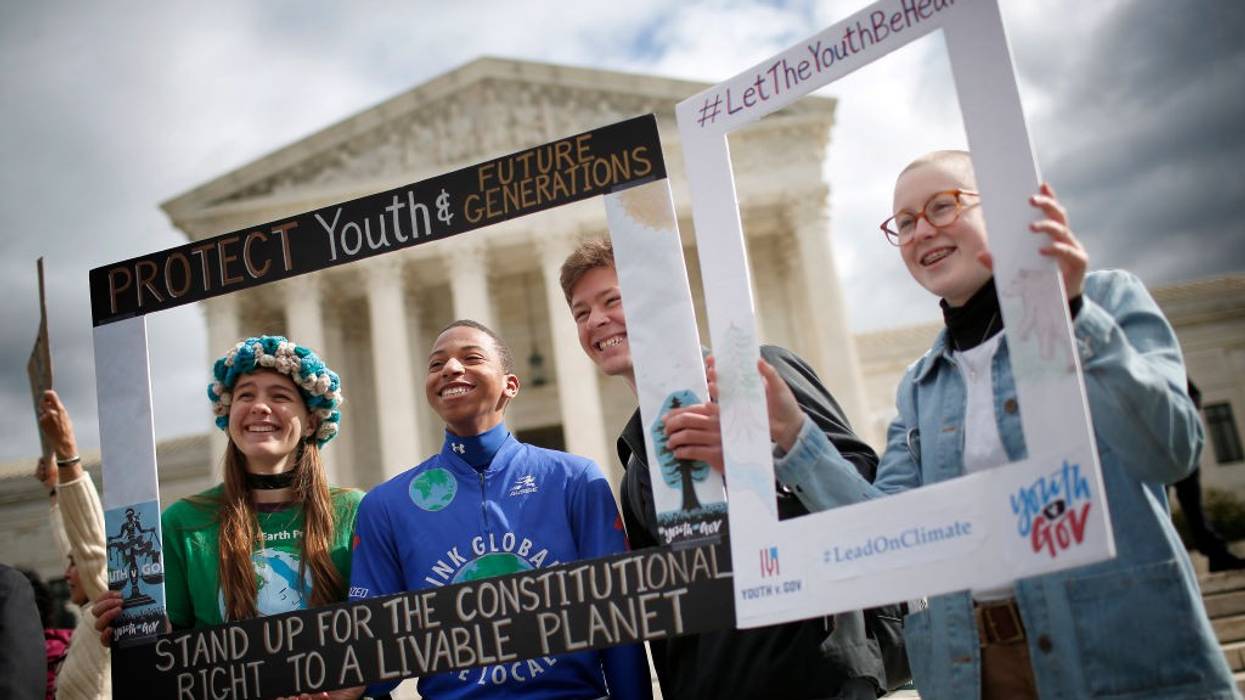
While the decision was disappointing for those involved with the case, they highlighted that "Juliana sparked a global youth-led movement for climate rights that continues to grow."
Although young plaintiffs and their supporters were disappointed by the U.S. Supreme Court effectively ending their constitutional climate lawsuit on Monday, they also emphasized the positive and far-reaching impacts of Juliana v. United States over the past decade.
First filed by 21 youth plaintiffs in 2015, Juliana aimed to hold the federal government accountable for its contributions to the fossil fuel-driven climate emergency. Over the years, the effort garnered support from more than 100 members of Congress, over 400 groups, and hundreds of thousands of people worldwide. In September, plaintiffs asked the justices to reverse an appellate court's dismissal of the case—but the country's highest court on Monday denied a petition for certiorari.
"The Supreme Court's decision today is not the end of the road and the impact of Juliana cannot be measured by the finality of this case alone," Julia Olson, chief legal counsel of Our Children's Trust, which represented the plaintiffs, said in a statement. "Juliana sparked a global youth-led movement for climate rights that continues to grow. It has empowered young people to demand their constitutional right to a safe climate and future."
"For almost 10 years, we've stood up for the rights of present and future generations, demanding a world where we can not only survive, but thrive."
Juliana plaintiff Miko Vergun—who was born in the Marshall Islands, a country in the Pacific on the frontlines of the climate crisis—similarly said that "ultimately, we didn't get the decision we wanted today, but we've had many wins along the way."
"For almost 10 years, we've stood up for the rights of present and future generations, demanding a world where we can not only survive, but thrive," she said. "We've faced extreme resistance by the federal government, yet we've never wavered in our resolve. All great movements have faced obstacles, but what sets them apart is the perseverance of the people behind them. We've shown the world that young people will not be ignored, and I'm incredibly proud of the impact Juliana v. United States has made."
For example, in August 2023, Montana District Court Judge Kathy Seeley sided with young plaintiffs in Held v. State of Montana, finding that the state's environmental policy law violates the Montana Constitution, which guarantees residents a "clean and healthful environment." The state Supreme Court upheld that decision in December.
"Juliana, through the unwavering dedication of its plaintiffs and legal team, has left an indelible mark on the landscape of climate litigation, paving the way for lawsuits like Held v. State of Montana," Rikki Held, lead plaintiff in that case, said Monday. "I am inspired by the courage and determination of the young people who have led this case, and I hope their legacy continues to motivate others to hold our governments and leaders accountable for the actions that worsen the climate crisis, impacting our homes, our lives, and our futures."
Our Children's Trust represented plaintiffs in Held—the first youth-led constitutional climate lawsuit in U.S. history to go to trial and win—as well as Navahine v. Hawaii Department of Transportation, which wrapped up with a settlement last year.
"Last June, my lawsuit—Navahine v. Hawaii Department of Transportation—achieved the first settlement in a constitutional climate case, securing the systemic decarbonization of a state transportation system. This historic moment would not have been possible without the blueprint laid by the Juliana youth plaintiffs," plaintiff Mesina D. said Monday.
"They took on the most powerful government in the world, and their resilience and perseverance showed us that it's possible to stand up for what's right and demand justice, even in the face of overwhelming odds," she continued. "Thanks to these 21 Americans, young people everywhere now know they can raise their voices and demand the protection of their constitutional rights to life and liberty."
Looking ahead, Olson said that "we've already secured important victories, and we will continue pushing forward. This fight is far from over. These claims will be heard, evidence will be presented, and the federal government will be held accountable. The Juliana plaintiffs started this fight for justice, and others will carry it forward."
"This is a call to all young people who want to stand up to those in the executive office of the president who would silence you and threaten your health and safety—join us in protecting your constitutional rights," she continued, nodding to Republican President Donald Trump's support for fossil fuels and the industry's assault on the global climate.
"Juliana has ignited a movement and created a powerful legal framework for future generations to assert their constitutional rights in the face of the climate crisis," she concluded. "Our Children's Trust remains committed to working with young people to hold their government accountable and we will see the federal government back in federal court very soon."
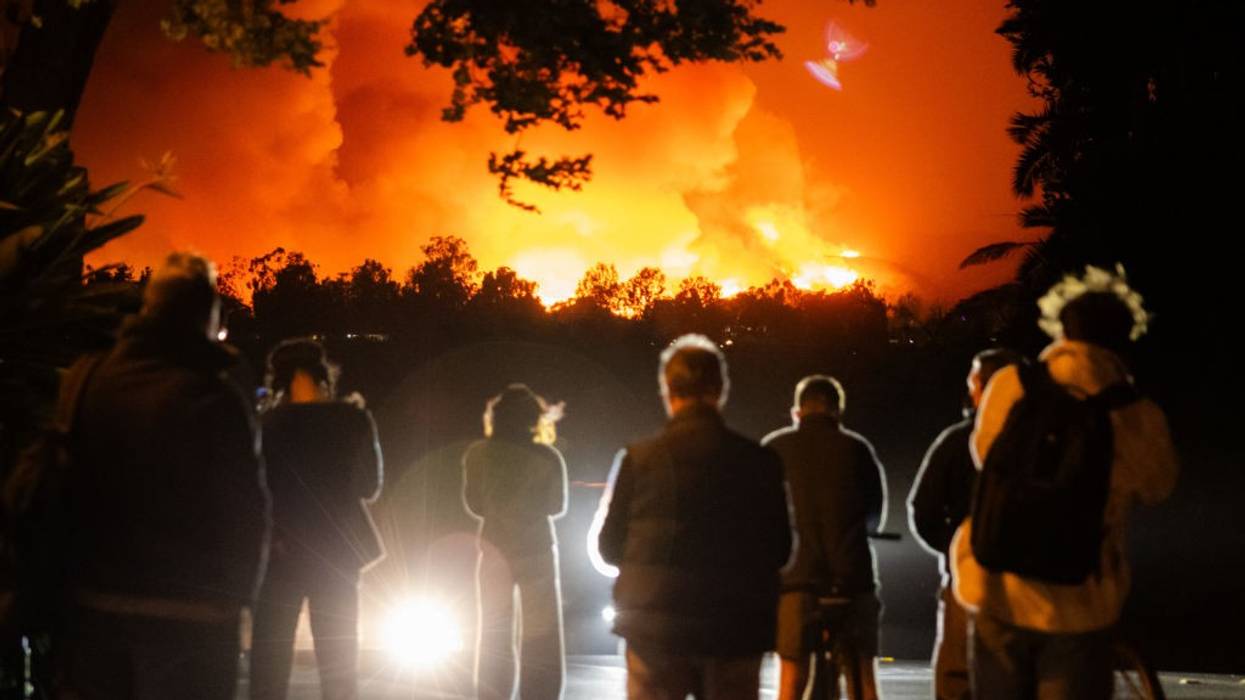
"Wildfires are ravaging these children's communities in California, but the court claims that their suffering is too 'indirect' to matter," said the plaintiffs' lawyer. "This ruling is nothing short of judicial dereliction."
With Californians still reeling from what is expected to be "the costliest wildfire disaster in American history," a federal judge in the state on Tuesday dismissed a constitutional climate case that young people brought against the U.S. government.
The firm Our Children's Trust filed the equal protection lawsuit on behalf of 18 children in the Central District of California on December 10, 2023. Genesis B. v. United States Environmental Protection Agency initially just targeted the EPA and its administrator, but the plaintiffs later added the Office of Management and Budget and its director as defendants.
Since the beginning of the case, the Biden administration fought for its dismissal. U.S. District Judge Michael Fitzgerald, an appointee of Democratic former President Barack Obama, previously dismissed the case last May but also allowed the youth plaintiffs' lawyers to amend their complaint. The judge dismissed the case again on Tuesday, the first major development since Republican President Donald Trump—a noted enemy of climate action—returned to the White House last month.
"We are fighting not just for ourselves, but for every young person who deserves a world where their lives, their health, and their future matter."
Responding in a Tuesday statement, Our Children's Trust slammed the "extraordinary decision to dismiss the case by disregarding key evidence showing the harmful effects of the EPA's policies and the unique vulnerability of children's bodies to climate pollution," highlighting expert testimony from economist Joseph Stiglitz and Dr. Elizabeth Pinsky, a psychiatrist and pediatrician.
"By dismissing this case, the court is turning a blind eye to the real-world harms youth are enduring right now. Wildfires are ravaging these children's communities in California, but the court claims that their suffering is too 'indirect' to matter," said Julia Olson, chief legal counsel for the plaintiffs.
"This ruling is nothing short of judicial dereliction in the face of a climate emergency," she asserted. "The court refused to consider that the government's devaluation of children isn't just bad policy—it's a violation of fundamental equal rights."
The young plaintiffs also expressed disappointment with Fitzgerald's decision in the wake of January blazes that experts tied to the climate emergency—specifically, the World Weather Attribution found that fossil fuel-driven global warming made the weather conditions that caused the Los Angeles County fires 35% more probable.
"The court's decision to dismiss this case before we could even present our evidence is a gut punch," lead plaintiff Genesis B said Tuesday. "We are living with the consequences of these policies every single day—wildfires, choking smoke, evacuation orders. And now, with the strongest storm of the year set to hit Southern California this week, our case is more urgent than ever."
"Forecasters are warning of widespread flooding, landslides, and dangerous debris flows, especially in areas devastated by wildfires," Genesis B. explained. "We wanted the chance to show the court the science, the economics, and the lived experiences that prove the government's actions are harming us. Instead, we were denied that opportunity. He just shut the door on us, made up his own facts, and never listened to the real experts. He never gave us the opportunity to testify."
The 18 young plaintiffs are not backing down! They remain committed to fighting for their constitutional rights and will continue to pursue all available legal avenues to hold the U.S. government accountable for its actions. Read the PR: bit.ly/GenesisPR0225 #YouthvGov #GenesisvEPA
[image or embed]
— Our Children’s Trust (@youthvgov.bsky.social) February 11, 2025 at 3:45 PM
Despite the setback in court on Tuesday, the young plaintiffs in this case are determined to keep fighting and are now considering potential next steps with their lawyers.
"We are not backing down. This fight is about refusing to let our lives be discounted, and we won't stand by as our future is treated as expendable," declared plaintiff Maya W. "We are fighting not just for ourselves, but for every young person who deserves a world where their lives, their health, and their future matter."
This case is just one of many that young people have pursued in recent years, some of which are ongoing and many that involve Our Children's Trust. The group said that earlier Tuesday, attorneys representing a dozen youth plaintiffs in the constitutional climate case Layla H. v. Virginia presented their case virtually before the state Supreme Court.
In another Our Children's Trust case, Juliana v. United States, 43 members of Congress last month submitted a brief to the U.S. Supreme Court supporting the 21 plaintiffs. That filing came less than a month after the Montana Supreme Court upheld a 2023 decision that the state government's promotion of fossil fuels violates young residents' state constitutional rights. Earlier last year, Hawaii's governor and Department of Transportation announced an "unprecedented" settlement in another youth climate case.
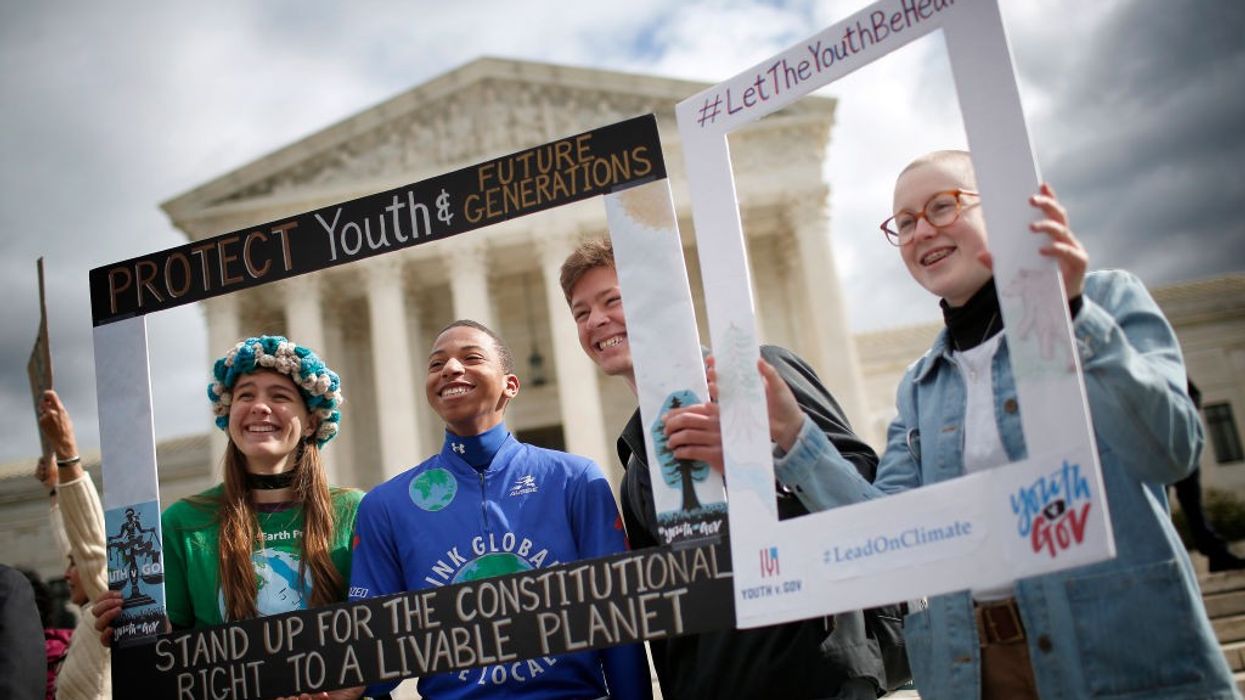
A 17-year-old plaintiff commended the federal lawmakers for "using their voices to weigh in on the importance of our rights to access justice and to a livable climate."
Dozens of members of Congress on Monday submitted an amicus brief to the U.S. Supreme Court supporting 21 youth plaintiffs who launched a historic constitutional climate case against the federal government nearly a decade ago.
Since Juliana v. United States was first filed in the District of Oregon in August 2015, the Obama, Trump, and Biden administrations have fought against it. Last May, a panel of three judges appointed to the 9th Circuit Court of Appeals by President-elect Donald Trump granted a request by President Joe Biden's Department of Justice to dismiss the case.
After the U.S. Supreme Court in November denied the youth plaintiffs' initial request for intervention regarding the panel's decision, their attorneys filed a different type of petition last month. As Our Children's Trust, which represents the 21 young people, explains on its website, they argued to the justices that federal courts are empowered by the U.S. Constitution and the Declaratory Judgment Act (DJA) "to resolve active disputes between citizens and their government when citizens are being personally injured by government policies, even if the relief is limited to a declaration of individual rights and government wrongs."
The Monday filing from seven U.S. senators and 36 members of the House of Representatives argues to the nation's top court that "the 9th Circuit's dismissal of the petitioners' constitutional suit for declaratory relief has no basis in law and threatens to undermine the Declaratory Judgment Act, one of the most consequential remedial statutes that Congress has ever enacted."
The Supreme Court "should grant the petition to clarify that declaratory relief under the DJA satisfies the Article III redressability requirement," wrote the federal lawmakers, led by Sen. Jeff Merkley (D-Ore.) and Rep. Jan Schakowsky (D-Ill.). "Doing so is necessary because Congress expressly authorized declaratory relief 'whether or not further relief is or could be sought.'"
"The 9th Circuit's jurisdictional holding, which prevented the district court from even reaching the question whether declaratory relief would be appropriate, conflicts with this court's holding that the DJA is constitutional," the lawmakers continued. "It also conflicts with this court's holding that Article III courts may not limit DJA relief to cases where an injunction would be appropriate."
In a Monday statement, Juliana's youngest plaintiff, 17-year-old Levi D., welcomed the support from the 43 members of Congress—including Sens. Ed Markey (D-Mass.) and Bernie Sanders (I-Vt.) as well as Reps. Pramila Jayapal (D-Wash.), Ro Khanna (D-Calif.), Alexandria Ocasio-Cortez (D-N.Y.), Ilhan Omar (D-Minn.), Jamie Raskin (D-Md.), and Rashida Tlaib (D-Mich.).
"After 10 years of delay, I have spent more than half of my life as a plaintiff fighting for my fundamental rights to a safe climate. Yet, the courthouse doors are still closed to us," said Levi. "Five years ago, members of Congress stood by me and my co-plaintiffs on the steps of the Supreme Court. Today, as the climate crisis worsens and hurricanes ravage my home state of Florida, they are still with us, using their voices to weigh in on the importance of our rights to access justice and to a livable climate."
"The recent win in Held v. State of Montana and historic settlement in Navahine v. Hawaii Department of Transportation showed the world that young people's voices, my voice, and legal action are not just symbolic, but they hold governments accountable to protect our constitutional rights," Levi added. "Now, it's our turn to be heard!"
The lawmakers weren't alone in formally supporting the young climate advocates on Monday. Public Justice and the Montana Trial Lawyers Association filed another brief that takes aim at the government's use of mandamus—a court order directing a lower entity to perform official duties—to deny the Juliana youth a trial.
"The government's sole argument to justify mandamus is the Department of Justice's past and anticipated future litigation expenses associated with going to trial. That argument is firmly foreclosed by precedent," the groups argued. "And even if it wasn't foreclosed by precedent, the argument trivializes the extraordinary nature of mandamus and would improperly circumvent the final judgment rule."
The organizations urged the high court to grant certiorari to uphold the mandamus standard set out in Cheney v. United States District Court for the District of Columbia in 2004. Plaintiff Miko V. said Monday that "I'm incredibly grateful to Public Justice and the Montana Trial Lawyers Association for standing with us in our fight for justice."
"We're not asking for special treatment; we're demanding the right to access justice, as our constitutional democracy guarantees," Miko stressed. "The recent victory in Held v. State of Montana demonstrates the power of youth-led legal action, and the urgent need for courts to recognize that our generation has the right to hold our government accountable. Every day that the government prevents us from presenting our case, we all lose more ground in the fight for a livable future. It's time for the judiciary to open the courthouse doors and allow us a fair trial."
The briefs came just a week before Big Oil-backed Trump's second inauguration and on the same day that the U.S. Supreme Court rejected attempts by fossil fuel giants to quash a Hawaiian municipality's lawsuit that aims to hold the climate polluters accountable, in line with justices' previous decisions. Dozens of U.S. state and local governments have filed similar suits.

The court, said one attorney, "has affirmed the constitutional rights of youth to a safe and livable climate, confirming that the future of our children cannot be sacrificed for fossil fuel interests."
Youth plaintiffs celebrated on Wednesday after the Montana Supreme Courtupheld a judge's August 2023 decision that the state government's promotion of climate-wrecking fossil fuels violates the young residents' state constitutional rights.
"This ruling is a victory not just for us, but for every young person whose future is threatened by climate change," said Rikki Held, the named plaintiff for Held v. State of Montana, in a statement. "We have been heard, and today the Montana Supreme Court has affirmed that our rights to a safe and healthy climate cannot be ignored."
Highlighting that "this will forever be in the court record, despite any continued rhetoric of denial coming from people in power in the state," Grace, another plaintiff, said, "I am thrilled that the Montana Supreme Court has sided with Montana citizens to protect the people and the places we love."
Another plaintiff, Olivia, welcomed the ruling as "a monumental win" and "a call to action for all Montanans."
Plaintiff Georgi similarly asserted that "this is a time for Montana to embrace the future—clean energy offers economic benefits and new jobs," and added that "we look forward to working with the state to implement this transition and ensure that Montana leads the way in tackling the climate crisis."
Plaintiff Kian pointed to other ongoing cases across the globe, declaring that "this ruling is not just a win for Montana—it's a signal to the world that youth-led climate action is powerful and effective."
"We hope this decision inspires others across the country and beyond to stand up for their rights to a livable climate," Kian continued. Just as the youth plaintiffs in Navahine v. Hawaii Department of Transportation secured historic climate justice through a settlement this past June, the eyes of the world are now on us, seeing how youth-driven legal action can create real change."
In Montana, the state government appealed District Court Judge Kathy Seeley's historic ruling in favor of the 16 young plaintiffs to the state's highest court, which heard arguments in July. Wednesday's 6-1 decision—only Justice Jim Rice dissented—is the first of its kind for a state supreme court.
The majority's 70-page opinion discusses the drafters of the Montana Constitution, which says in part that "the state and each person shall maintain and improve a clean and healthful environment in Montana for present and future generations," and "the Legislature shall provide for the administration and enforcement of this duty."
Chief Justice Mike McGrath wrote that the court's majority rejects "the argument that the delegates—intending the strongest, all-encompassing environmental protections in the nation, both anticipatory and preventative, for present and future generations—would grant the state a free pass to pollute the Montana environment just because the rest of the world insisted on doing so."
"The district court's conclusion of law is affirmed: Montana's right to a clean and healthful environment and environmental life support system includes a stable climate system, which is clearly within the object and true principles of the framers' inclusion of the right to a clean and healthful environment," the chief justice added.
Attorneys for the plaintiffs joined the young Montanans in applauding the opinion. Nate Bellinger of Our Children's Trust said that "this is a monumental moment for Montana, our youth, and the future of our planet."
"Today, the Montana Supreme Court has affirmed the constitutional rights of youth to a safe and livable climate, confirming that the future of our children cannot be sacrificed for fossil fuel interests," he added. "This is a victory for young people and for generations to come. The court said loud and clear: Montana's Constitution does not grant the state a free pass to ignore climate change because others fail to act—this landmark decision underscores the state's affirmative duty to lead by example."
Melissa Hornbein, senior attorney with the Western Environmental Law Center, noted that "the Montana Supreme Court's decision compels the state to carefully assess the greenhouse gas emissions and climate impacts of all future fossil fuel permits."
"Specifically, Montana's regulatory agencies must now evaluate the potential harm to the environment and the health and safety of the state's children from any new fossil fuel projects, and determine whether the project can be justified in light of the ongoing unconstitutional degradation of Montana's environment, natural resources, and climate," she explained. "This ruling clarifies that the constitution sets a clear directive for Montana to reduce its greenhouse gas emissions, which are among the highest in the nation on a per capita basis, and to transition to a clean, renewable energy future."
Whether the state government will comply with the decision remains to be seen. In a statement to The Hill, a spokesperson for Republican Montana Attorney General Austin Knudsen's office called the ruling "disappointing, but not surprising" and claimed that the court majority "yet again ruled in favor of their ideologically aligned allies and ignored the fact that Montana has no power to impact the climate."
Separately, Knudsen on Tuesday filed his 59th lawsuit against the Biden administration, challenging its plan to halt federal coal production in the Powder River Basin, which the attorney general said would "effectively kill Montana's coal industry."

"I hope our case inspires youth to always use their voices to hold leaders accountable for the future they will inherit," said one plaintiff.
Days before a case brought by 13 young climate advocates in Hawaii was set to go to trial, the state's governor and Department of Transportation on Thursday announced an "unprecedented" settlement that will expedite the decarbonization of Hawaii's transit system—and formally "recognizes children's constitutional rights to a life-sustaining climate."
The plaintiffs in Navahine v. Hawaii Department of Transportation were between the ages of 9 and 18 when they filed their case in 2022, alleging that the state government was violating their rights under the Hawaii Constitution by investing in fossil fuel-intensive infrastructure that would worsen the effects of the climate crisis.
The case is the first youth-led legal challenge addressing constitutional rights related to pollution from the transportation sector, and according to Earthjustice, which represented the plaintiffs along with Our Children's Trust, the settlement is the first agreement "of its kind, in which government defendants have decided to resolve a constitutional climate case in partnership with youth plaintiffs, committing to comprehensive changes" to reduce fossil fuel dependence and emissions.
Under the settlement, the Hawaii Department of Transportation (HDOT) agreed to "plan and implement transformative changes of Hawaii's transportation system to achieve the state's legally established goal of net-negative emissions by 2045," said Earthjustice.
Specific actions the HDOT agreed to take include:
Earthjustice credited HDOT Director Edwin Sniffen with taking "unprecedented leadership to negotiate a resolution and embrace the government's kuleana (responsibility) to lead the way on bold and broad climate action."
The Navahine youth plaintiffs, said Julia Olson, founder and chief legal counsel of Our Children's Trust, "activated the courts and inspired true democracy in action—all three branches of government committing to work together to do what needs to be done according to best available science, to safeguard their futures."
"Our courts are essential guardians of children's constitutional rights and empowered to protect the planet, but they rely on our collective engagement," said Olson. "Young people across the country and around the world will follow in [the plaintiffs'] footsteps, carrying the same values of care, defense, and love of the land to action."
The settlement was announced nearly a year after young climate advocates in Montana won another historic victory in a case arguing that the state had violated their constitutional rights by prioritizing fossil fuel projects.
Three federal judges who had been appointed by former President Donald Trump angered climate groups last month when they granted the Biden administration's request to dismiss Juliana v. United States, a case originally filed in 2015, which argues the U.S. government has violated the rights of children by continuing to support planet-heating fossil fuel extraction.
A judge in Hawaii last year dismissed the state's request to dismiss the Navahine case. Hawaii officials argued that state laws aimed at reducing carbon emissions were "aspirational" and could not be used in legal arguments claiming the state had violated children's rights.
"Transportation emissions are increasing and will increase at the rate we are going," Judge Jeffrey Crabtree of the O'ahu 1st Circuit Court said as he denied the state's request. "In other words, the alleged harms are not hypothetical or only in the future. They are current, ongoing, and getting worse."
Gov. Josh Green, a Democrat, echoed Crabtree's words on Thursday as he announced the settlement.
"We're addressing the impacts of climate change today, and needless to say, this is a priority because we know now that climate change is here," Green said. "It is not something that we're considering in an abstract way in the future."
Andrea Rogers, deputy director of U.S. strategy for Our Children's Trust, said the "historic agreement offers a holistic roadmap for states and countries to follow around the world."
The partnership between the plaintiffs and the state, said a plaintiff identified as Rylee Brooke K., "marks a pivotal step towards preserving Hawaii for future generations—one that will have a ripple effect on the world."
"Being heard and moving forward in unity with the state to combat climate change is incredibly gratifying, and empowering," said Rylee. "I hope our case inspires youth to always use their voices to hold leaders accountable for the future they will inherit."
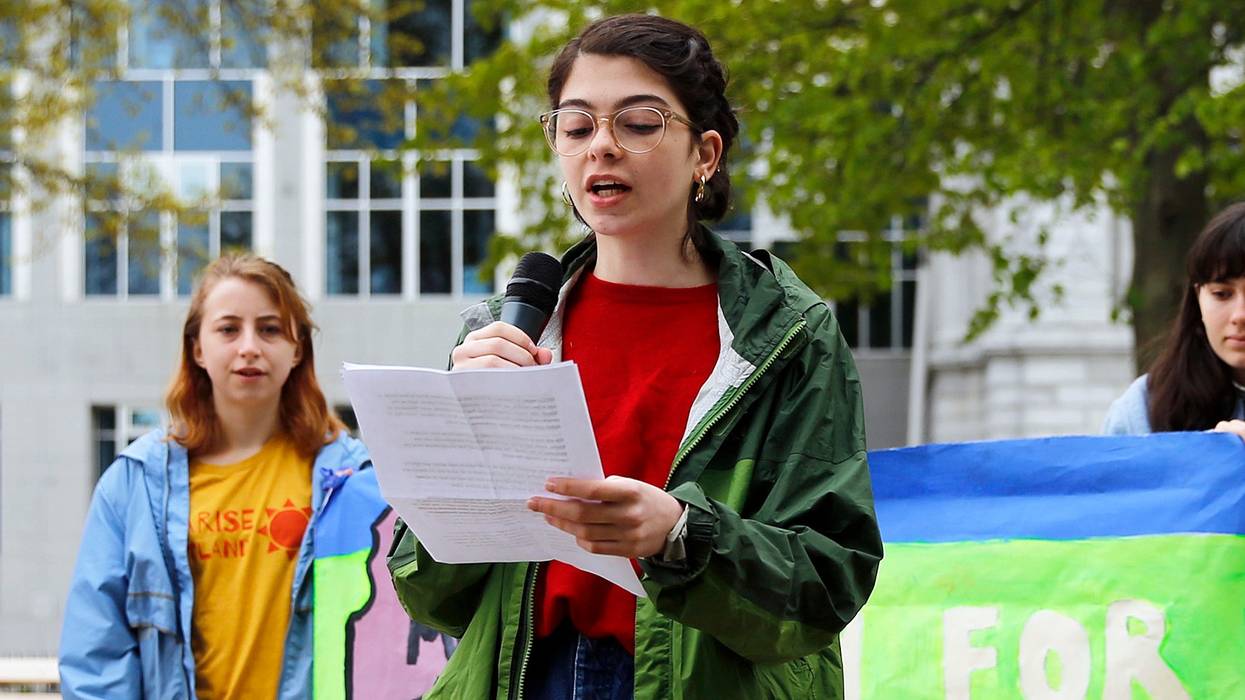
"We will keep fighting for climate justice," said one plaintiff, "but this is another dark day for protecting young people from climate harm imposed by their government."
A panel of three Trump-appointed judges on Wednesday granted the Biden Justice Department's request to have a landmark youth climate case dismissed, another setback for a long-running effort to hold the U.S. government accountable for damaging the planet and violating the rights of younger generations.
The order handed down by a 9th Circuit Court of Appeals panel instructs an Oregon district court to toss Juliana v. United States for lack of standing, siding with the Justice Department's emergency petition for a writ of mandamus—which the DOJ itself describes as "an extraordinary remedy" that "should only be used in exceptional circumstances of peculiar emergency or public importance."
Julia Olson, co-executive director of Our Children's Trust, a public interest law firm backing the youth plaintiffs, said in a statement Wednesday that "the Biden administration was wrong to use an emergency measure to stop youth plaintiffs from having their day in court."
"The real emergency is the climate emergency," said Olson. "This emergency was not created by these young people, who have just been stripped of their fundamental constitutional rights by one of the highest courts in our country. Children deserve access to justice."
Calling the 9th Circuit decision "tragic and unjust" and "wrong on the law," Olson said the legal fight is "not over" and stressed that President Joe Biden "can still make this right by coming to the settlement table."
"We will keep fighting for climate justice, but this is another dark day for protecting young people from climate harm imposed by their government."
Juliana v. United States was brought in 2015 by 21 young Americans who argued the federal government has violated their "fundamental constitutional rights to life, liberty, and property" by continuing to allow the extraction of fossil fuels despite knowing their central role in destructive planetary heating.
Three consecutive administrations have worked aggressively to prevent a trial, deploying emergency legal tactics to delay and derail the youth-led case even as climate impacts became increasingly devastating in the U.S. and around the world.
Mat dos Santos, general counsel of Our Children's Trust, warned last month that "it's a mistake" for the Biden administration to "take this position in an election year, especially when young voters continue to be more and more disenchanted with the current administration and the permitting of big fossil fuel projects."
"This is an opportunity for the administration to do right by young people," he added.
Earlier this year, just before parties to the case were set to receive trial dates from a federal judge in Oregon, the Biden Justice Department filed a motion to stay the case and then another to have it tossed, drawing outrage from the youth plaintiffs. Dozens of members of Congress have weighed in on the side of the plaintiffs, arguing they should be allowed a trial to present their arguments and evidence.
Avery McRae, one of the plaintiffs, said in response to the 9th Circuit order on Wednesday that "every time we get a decision as devastating as this one, I lose more and more hope that my country is as democratic as it says it is."
"I have been pleading for my government to hear our case since I was 10 years old, and I am now nearly 19," said McRae. "A functioning democracy would not make a child beg for their rights to be protected in the courts, just to be ignored nearly a decade later. I am fed up with the continuous attempts to squash this case and silence our voices."
Another plaintiff, Nathan Baring, said that "we will keep fighting for climate justice, but this is another dark day for protecting young people from climate harm imposed by their government."

"We're challenging the EPA's failure to protect us. The air we breathe has become a casualty of their opposition."
As the United Nations climate talks cast a spotlight on the fossil fuel-driven climate emergency, the U.S. law firm Our Children's Trust on Sunday launched a constitutional lawsuit against the Biden administration on behalf of 18 California children "growing up with polluted air and a government-imposed and -sanctioned climate crisis."
Filed in the U.S. District Court in the Central District of California, the complaint takes aim at the federal government, the Environmental Protection Agency, and its administrator, Michael Regan, arguing that the "EPA's conduct in controlling the pollution that enters the nation's air actively discriminates against children, and these plaintiffs, knowingly causing them disproportionate harm compared to similarly situated adults and burdening them with a lifetime of hardship."
Avroh, a 14-year-old plaintiff, said in a statement Monday that "we are experiencing what no one should have to experience. We're facing constitutional negligence. We're challenging the EPA's failure to protect us. The air we breathe has become a casualty of their opposition."
Another plaintiff, 8-year-old Neela, said that "I believe kids can make a difference and the Earth needs our help. I want to help protect the people and places I love. I'm excited to be a part of this case and be a voice for all kids who deserve a healthy environment."
"We feel a constant worry about the future, and all around us no one is moving fast enough."
Catherine Smith, of counsel to Our Children's Trust—which secured a landmark victory while representing Montana youth in state court earlier this year—argued that "in times like this, when the legislative and executive branches have breached their obligation to young people by intentionally allowing climate pollution and explicitly discounting children's lives in some political or economic calculus fully aware of its consequences to youth, courts must serve as a constitutional backstop to end it."
The plaintiffs—who are ages 8-17—are seeking "a declaratory judgment that as children they are entitled to a heightened level of
judicial review over government conduct that burdens them with lifetimes of hardship, that they are members of a constitutionally protected class, and that defendants have violated their constitutional rights," according to the complaint.
"They also seek declaratory relief that defendants have infringed their fundamental rights to life, including their personal security and happiness, and in so doing have also acted outside the scope of their delegated authority," the filing adds. "Plaintiffs seek further relief as deemed necessary and proper to enforce a declaratory judgment after the facts are found and the legal conclusions of the district court are rendered on a full evidentiary record."
Noah, a 15-year-old plaintiff, warned that "time is slipping away, and the impact of the climate crisis is already hitting us directly. We are running from wildfires, being displaced by floods, panicking in hot classrooms during another heatwave."
"We feel a constant worry about the future, and all around us no one is moving fast enough," Noah noted. "The Constitution guarantees every American the rights to life, liberty, and the pursuit of happiness including and especially children."
Our Children’s Trust chief legal counsel Julia Olson declared that "these children are rising up from fire, smoke, heat, and flood to share their stories of physical harm and despair, along with their clarion call to adults—'our equal rights to life matter as much as yours.'"
"There is one federal agency explicitly tasked with keeping the air clean and controlling pollution to protect the health of every child and the welfare of a nation—the EPA," she continued. "The agency has done the opposite when it comes to climate pollution and it's time the EPA is held accountable by our courts for violating the U.S. Constitution and misappropriating its congressionally delegated authority."
In addition to representing youth plaintiffs in Held v. State of Montana—which the state is now appealing—Our Children's Trust is the group behind Juliana v. United States, the constitutional climate lawsuit first filed on behalf of 21 young people in 2015. While a June ruling put Juliana on track to proceed to trial, the Biden administration continues its battle to quash the case.
E&E News reported Monday that "while Juliana targets a swath of government agencies," the new case, Genesis B. v. EPA, singles out one agency. Our Children's Trust senior staff attorney Andrea Rodgers explained that the firm hopes the focus will mean that the EPA "won't fight this case" in the way that the Obama, Trump, and Biden administrations have targeted Juliana.