

SUBSCRIBE TO OUR FREE NEWSLETTER
Daily news & progressive opinion—funded by the people, not the corporations—delivered straight to your inbox.
5
#000000
#FFFFFF
To donate by check, phone, or other method, see our More Ways to Give page.
Daily news & progressive opinion—funded by the people, not the corporations—delivered straight to your inbox.
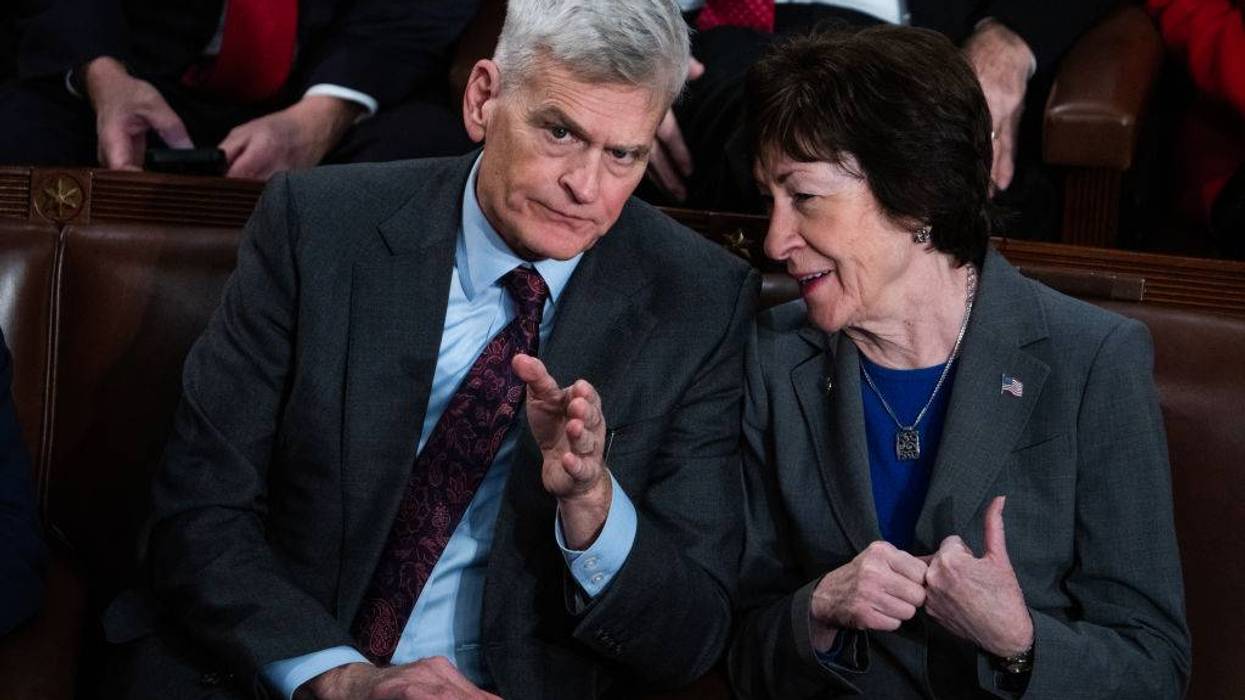
"The moment Collins announced she was a no on Blanche, you knew they had the votes," said MS NOW host Chris Hayes.
Republican Sen. Bill Cassidy of Louisiana announced Friday that he would vote yes on Todd Blanche's nomination for US attorney general, rendering vulnerable Sen. Susan Collins' opposition to President Donald Trump's former personal attorney effectively meaningless.
Sen. Lisa Murkowski (R-Alaska) on Friday morning came out in opposition to Blanche's confirmation—but Cassidy hours later announced that he would vote in vote in favor of the former personal attorney to President Donald Trump.
In a speech announcing the decision, Cassidy acknowledged that Blanche—who as deputy attorney general arranged for convicted sex trafficker Ghislaine Maxwell to be transferred to a minimum-security jail and who orchestrated the widely criticized $1.8 billion slush fund for Trump allies—is "not perfect."
I will support Todd Blanche for U.S. Attorney General. pic.twitter.com/PKWr3atuvA
— U.S. Senator Bill Cassidy, M.D. (@SenBillCassidy) August 7, 2026
"But the choice is not between perfection and Mr. Blanche," Cassidy continued. "It is between Mr. Blanche and another acting attorney general who may not run the department effectively under President Trump, and who indeed may not be as good as Mr. Blanche."
The Louisiana Republican added that he expected to "be criticized for this vote," before adding, "What's new?"
The sequence of Collins (R-Maine) and Murkowski announcing their opposition to Blanche, only for Cassidy to clinch his confirmation shortly after, made MS NOW host Chris Hayes suspicious that the fix was in from the start.
"The moment Collins announced she was a no on Blanche," Hayes wrote, "you KNEW they had the votes."
The social media account of Susan Collins Watch, a website that has tracked the Maine Republican's voting patterns for decades, made a similar observation.
"Of the thousands of GOP nominees Susan Collins has voted on over a 29-year career, NOT ONCE has she cast a tie-breaking vote against the GOP," they wrote. "But she's cast dozens of tie-breaking votes for GOP nominees, bills, etc. Are we supposed to believe this is some quirky statistical anomaly?"
Sam Stein, reporter for The Bulwark, argued Cassidy's yes vote on Blanche "doesn't help Collins" politically, as she "will continue to be tagged with only voting against Trump when her vote doesn't matter."
Collins in 2018 was the decisive vote in favor of confirming US Supreme Court Justice Brett Kavanaugh. During her speech announcing her vote for Kavanaugh, she insisted that he would uphold the precedent set by Roe v. Wade establishing the constitutional right to an abortion.
Four years later, however, Kavanaugh joined the Supreme Court majority in overturning Roe.
Former Maine state Senate President Troy Jackson, who is running against Collins as the Democratic Party's nominee for the US Senate, has highlighted the vote to confirm Kavanaugh as a major reason why she must be unseated.
“When Susan Collins was helping overturn Roe v. Wade,” Jackson said in a recent interview, “here in Maine... I co-sponsored one of the most progressive reproductive rights bills in the country—fought incredibly hard for it."
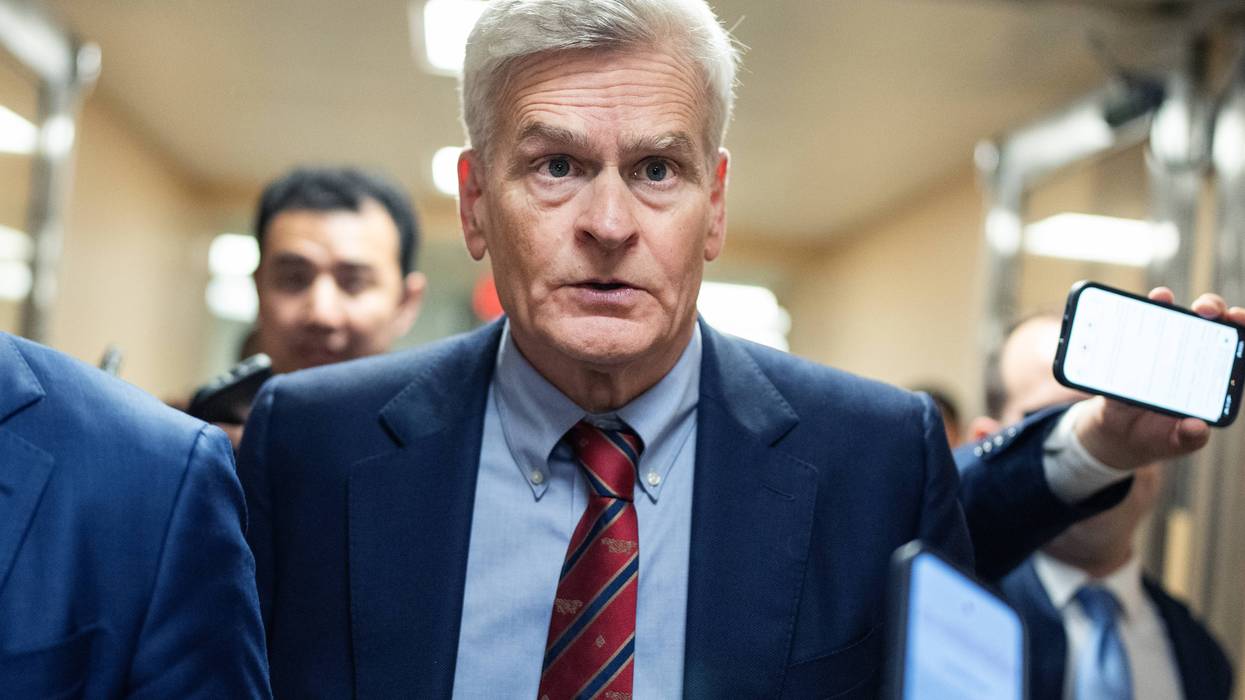
"This vote offers one last shot to use his power to do what he knows is right."
Attention turned to Republican Sen. Bill Cassidy on Friday after his colleague, Lisa Murkowski of Alaska, announced her opposition to confirming President Donald Trump's former personal lawyer Todd Blanche as US attorney general, leaving the GOP without any additional votes to spare.
With Sen. Mitch McConnell (R-Ky.) expected to be absent and Sens. Murkowski and Susan Collins (R-Maine) planning to vote no, Cassidy (La.)—who lost reelection in May to a Trump-backed challenger—is seen as the last-remaining obstacle to confirming Blanche. The Trump lackey is currently leading the Justice Department in an acting capacity.
Murkowski said in a statement that she decided to oppose Blanche's confirmation because of the Justice Department's "handling of the release of the Epstein files; the sweeping immunity protections granted to the President, his family, and their businesses; the statements that have been made to anti-abortion groups; and the repeated targeting of individuals ranging from former administration staff to sitting US senators."
“I am also keenly aware that the Department’s nearly $2-billion dollar slush fund—which likely would have rewarded January 6 protesters—is only off the table because this nomination is pending and the Senate has leverage. Once we vote, that will end, and there is no telling what the future holds," the Republican senator added. “The country needs an attorney general who will check the worst impulses of this administration. I hope Mr. Blanche is able to achieve that, if confirmed, but I simply do not have confidence that will be the case.”
Cassidy met with Blanche earlier this week but has not indicated publicly how he intends to vote. Republicans were hoping to confirm Blanche before senators leave for August recess on Friday.
In an interview earlier this week, Cassidy said that he has to be convinced that Blanche "is an attorney general who just happens to have once been President Trump’s personal attorney, as opposed to President Trump’s personal attorney who is now the attorney general."
"I think there’s a big difference between the two," the Louisiana senator.
Cassidy has repeatedly drawn Trump's ire since voting to convict him in 2021 for inciting the January 6 insurrection. Earlier this year, Cassidy reportedly got into a shouting match with Trump over the Iran war after the Republican senator voted to advance a war powers resolution that sought to bring the illegal conflict to an end.
But in some cases, Cassidy has aided the administration. In February, for instance, the Louisiana Republican cast the deciding vote to confirm Robert F. Kennedy Jr. as head of the Health and Human Services Department. Cassidy, a physician, has since criticized Kennedy's leadership of the health department.
Sarah Longwell, a former Republican and publisher of The Bulwark, wrote Friday that "considering his disastrous decision to confirm RFK and Trump’s attacks against him in the primary, this vote offers one last shot [for Cassidy] to use his power to do what he knows is right."
"For God’s sake man, stand for something!" Longwell added.
If Cassidy announces his opposition, it's possible that Republicans will try to summon McConnell to cast the deciding vote on Blanche.
McConnell was hospitalized in June after a fall, according to his office. On Thursday, McConnell said he was discharged and planned to continue his recovery at home.
McConnell's primary residence is in Washington, DC.
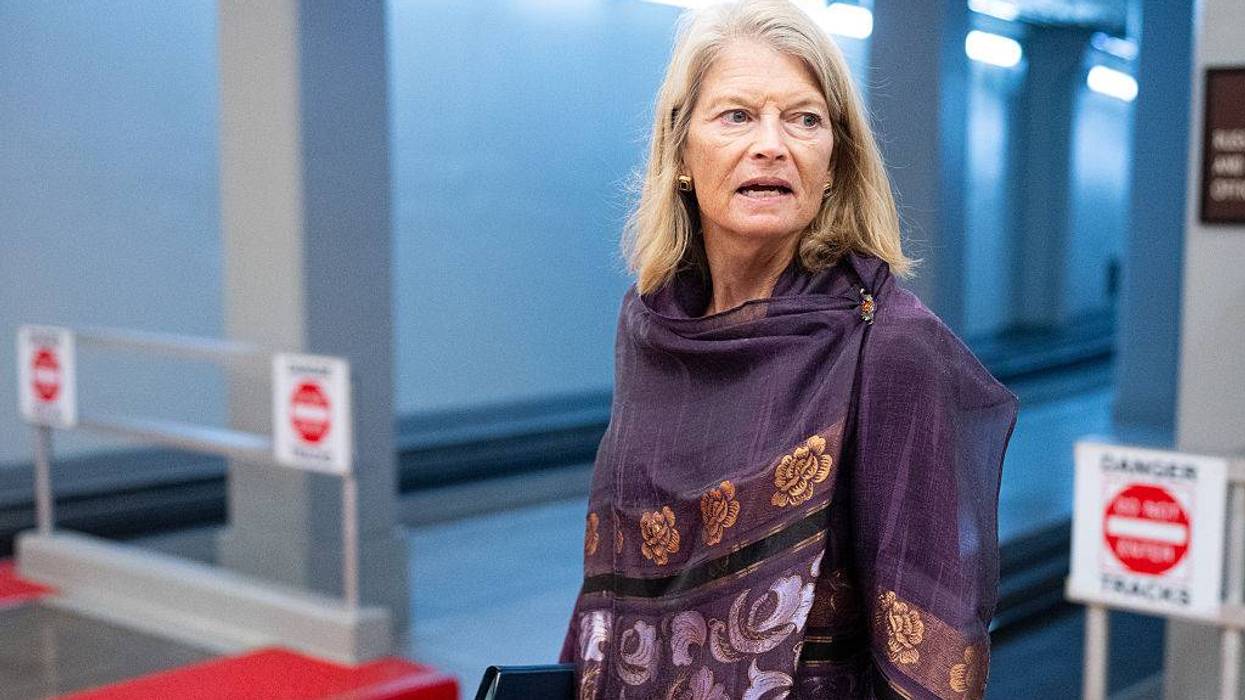
"If the Federal Reserve loses its independence, the stability of our markets and the broader economy will suffer."
The US Department of Justice's decision to open a criminal investigation into Federal Reserve Chairman Jerome Powell has ignited a major backlash that even has some Republican senators drawing a line in the sand.
Shortly after Powell released a video on Sunday accusing the Department of Justice (DOJ) of waging an "intimidation" campaign against him on behalf of President Donald Trump, Sen. Thom Tillis (R-NC) blasted the administration, accusing them of trying to compromise the independence of America's central bank.
“If there were any remaining doubt whether advisers within the Trump administration are actively pushing to end the independence of the Federal Reserve, there should now be none,” said Tillis, who further vowed to "oppose the confirmation of any nominee for the Fed—including the upcoming Fed chair vacancy—until this legal matter is fully resolved."
On Monday, Sen. Lisa Murkowski (R-Alaska) backed up Tillis' pledge to oppose any nominees for the Federal Reserve until the criminal probe of Powell, whose term as Fed chair is due to end in May, has been resolved.
Murkowski also revealed that she spoke with Powell and determined that "it’s clear the administration’s investigation is nothing more than an attempt at coercion" aimed at affecting his decisions on US monetary policy.
"The stakes are too high to look the other way," Murkowski emphasized. "If the Federal Reserve loses its independence, the stability of our markets and the broader economy will suffer."
Trump can only afford to lose the support of four Republican senators in a vote for a new Fed chair, which means Tillis and Murkowski's vows not to support any nominee until the case against Powell is resolved carry significant weight.
A bipartisan group of economists who have served under US presidents dating back to Ronald Reagan—including former Federal Reserve Chairs Alan Greenspan, Ben Bernanke, and Janet Yellin—released a joint statement on Monday denouncing what they described as an effort to strong-arm the Federal Reserve into doing the president's bidding.
"The reported criminal inquiry into Federal Reserve Chair Jay Powell is an unprecedented attempt to use prosecutorial attacks to undermine... independence," they wrote. "This is how monetary policy is made in emerging markets with weak institutions, with highly negative consequences for inflation and the functioning of their economies more broadly. It has no place in the United States, whose greatest strength is the rule of law, which is at the foundation of our economic success."
Trump, who nominated Powell to be Federal Reserve chairman in 2017, has been openly pressuring Powell for months to more aggressively cut interest rates in the face of a faltering jobs market.
Powell, however, has continued to take a more cautious approach, and has cited the price instability caused by Trump's tariffs as a reason to hold off on more aggressive rate cuts.
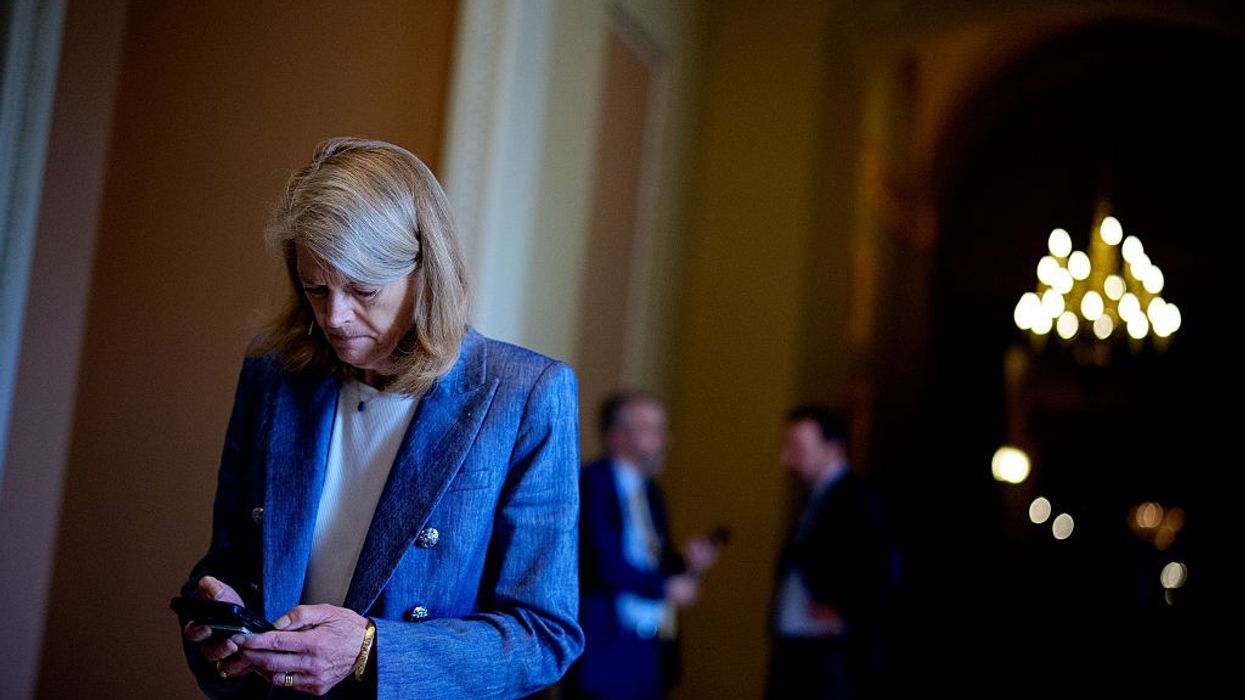
Sen. Lisa Murkowski was the deciding vote to pass Republicans' massive social safety net cuts through the Senate. She said she didn't like the bill, but voted for it anyway after getting Alaska exempted from some of its worst harms.
By the thinnest possible margin, the U.S. Senate voted Tuesday to pass a budget that includes the largest cuts to Medicaid and nutrition assistance in U.S. history while giving trillions of dollars of tax cuts to the wealthiest Americans.
The deciding vote was Sen. Lisa Murkowski (R-Alaska), who admitted she didn't like the bill. However, she voted for it regardless after securing relief for her home state from some of its most draconian cuts.
But in an interview immediately afterward, she acknowledged that the rest of the country, where millions are on track to lose their healthcare coverage and food assistance, would not be so lucky.
"Do I like this bill? No," Murkowski told a reporter for MSNBC. "I try to take care of Alaska's interests. I know that in many parts of the country there are Americans that are not going to be advantaged by this bill. I don't like that."
The 887-page bill includes more than $1 trillion in cuts to Medicaid and the Children's Health Insurance Program over the next decade—cuts the Congressional Budget Office (CBO) projects will result in nearly 12 million people losing health coverage. The measure also takes an ax to the Supplemental Nutrition Assistance Program (SNAP)—imperiling food aid for millions.
In recent days, Murkowski—a self-described "Medicaid moderate"—expressed hesitation about signing onto a list of such devastating cuts, calling the vote "agonizing". To get her on board, her Republican colleagues were willing to give her state some shelter from the coming storm.
As David Dayen explained in The American Prospect, Murkowski was able to secure a waiver that exempts Alaska from the newly implemented cost-sharing requirement that will force states to spend more of their budgets on SNAP.
In The New Republic, Robert McCoy described it as a "bribe."
Initially, Republicans attempted to simply write in a carve-out for Alaska and Hawaii. But after this was shot down by the Senate parliamentarian, they tried again with a measure that exempted the 10 states with the highest error rates.
Sen. Amy Klobuchar (D-Minn.) called it "the most absurd example of the hypocrisy of the Republican bill."
"They have now proposed delaying SNAP cuts FOR TWO YEARS ONLY FOR STATES with the highest error rates just to bury their help for Alaska," she said.
Murkowski also got a tax break for Alaskan fishing villages inserted into the bill. She attempted to have Alaska exempted from some Medicaid cuts as well, but the parliamentarian killed the measure.
"Did I get everything that I wanted? Absolutely not," she told reporters outside the Senate chamber.
However, as Dayen wrote, "Murkowski decided that she could live with a bill that takes food and medicine from vulnerable people to fund tax cuts tilted toward the wealthy, as long as it didn't take quite as much food away from Alaskans."
Murkowski showed herself to be well aware of the harms the bill will cause. After voting to pass the bill, she said, "My hope is that the House is gonna look at this and recognize that we're not there yet."
Rep. Pramila Jayapal (D-Wash.) called Murkowski's bargain "selfish," "cruel," and "expensive."
"Voting for the bill because [of] a carve-out for your state is open acknowledgement that people will get kicked off healthcare and will have to go to much more expensive emergency rooms," Jayapal wrote. "Clear you know it's a terrible bill for everyone."
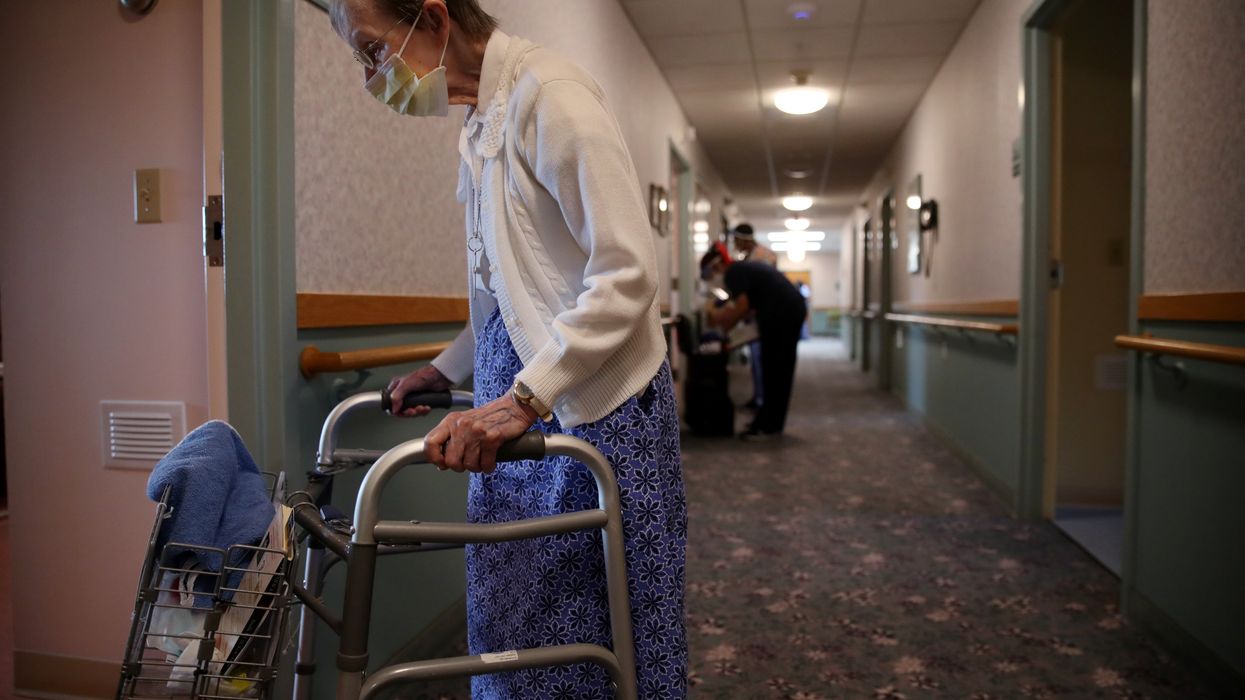
If the Big Ugly Bill becomes law, over half of nursing homes say they will have to reduce staff, and a quarter say they will close.
Imagine learning that your grandmother’s nursing home is closing. The nearest one with room for her is a three-hour drive away. It doesn’t accept Medicaid, so if your grandmother is among the two-thirds of nursing home patients who are covered by Medicaid, she’s out of luck.
Your grandfather still lives at home. But the hospital near his house is closing, too. If he has a medical emergency, he’ll have to go to an overburdened hospital that’s 40 minutes away.
That’s what will happen if President Donald Trump’s so-called “One Big Beautiful Bill” becomes law. There’s nothing beautiful about this hideous betrayal of the American people. Unless you’re a billionaire who can hop in a helicopter to see your private doctor, it will make your health care worse. All to give that same billionaire a giant tax cut.
Sen. Mitch McConnell (R-Ky.) says Americans who are concerned about Medicaid should “get over it.” Sorry, Mitch. We refuse to “get over it,” and we’re not dying quietly.
The Big Ugly Bill cuts a trillion dollars from Medicaid. Even if you’re not on Medicaid, this will hurt you and your family. That’s because hospitals and nursing homes around the country rely on Medicaid for much of their funding.
If this bill becomes law, over half of nursing homes say they will have to reduce staff, and a quarter say they will close. At the nursing homes that remain open, seniors and people with disabilities will wait in agony for someone to take them to the bathroom or give them their pain medication.
Those whose nursing homes close will struggle to find another one with room for them, especially if they rely on Medicaid. If they manage to find one, it will likely be hours away from their loved ones.
This bill is a disaster for people who rely on Medicaid to pay for nursing homes and other long-term care. But it’s also a disaster even for those who don’t directly rely on Medicaid, because it will devastate the entire healthcare system. Rural areas will be hit hardest, but nowhere and no one (except for billionaires) is safe.
Sen. Joni Ernst (R-Iowa) told Iowans concerned about the bill’s Medicaid cuts that “we all are going to die.” Many of us will die faster, including the hundreds of Iowans who will lose their nursing home beds.
In Iowa alone the impact is massive across the entire state and in each vulnerable Republican House District.
In Iowa’s 1st District, represented by Republican Mariannette Miller-Meeks, four nursing homes with a collective 280 beds will close: Aspire of Muscatine (46), Mississippi Valley Healthcare & Rehabilitation Center—Keokuk (83), Iowa City Rehab and Health Care Center—Iowa City (89), and Azria Health Prairie Ridge—Mediapolis (62).
In Iowa’s 2nd District, represented by Republican Ashley Hinson, two nursing homes with a collective 271 beds will close: Heritage Specialty Care—Cedar Rapids (201) and Cedar Falls Healthcare Center (70).
In Iowa’s 3rd District, represented by Republican Zach Nunn, two nursing homes with a collective 113 beds will close: Aspire of Perry (46) and Granger Nursing and Rehabilitation Center—Granger (67).
And this story repeats across the entire country. There is no place to hide from the tsunami being unleashed against nursing homes. Anyone who has dealt with the current system knows how bad it is now. It is about to be a whole lot worse. Nursing homes that don’t close outright will become death traps as the demand far outstrips the supply.
All of this needless death and chaos, just so some billionaires can get trillions in tax handouts that they don’t even need.
Sen. Mitch McConnell (R-Ky.) says Americans who are concerned about Medicaid should “get over it.” Sorry, Mitch. We refuse to “get over it,” and we’re not dying quietly.
Polling shows that Americans hate the Big Ugly Bill—if they know about what’s in it. The problem is that most of them don’t. Nearly half of Americans are completely unaware of the bill, and only 8% of them know it cuts Medicaid.
Talk to your friends and family members. Tell them that Republicans are about to cause a nursing home and hospital apocalypse—but it isn’t too late to stop it. The Senate is voting on the Big Ugly Bill very soon. Then, it goes back to the House of Representatives, where Republicans will try to rush the bill through before the public can learn about it.
Call your representative and both senators now at 202-224-3121. The key swing votes in the Senate include Susan Collins of Maine (the oldest, and most rural, state in the country) and Lisa Murkowski of Alaska. If you know anyone in those states, urge them to call today and tell their senators to stop the nursing home apocalypse!
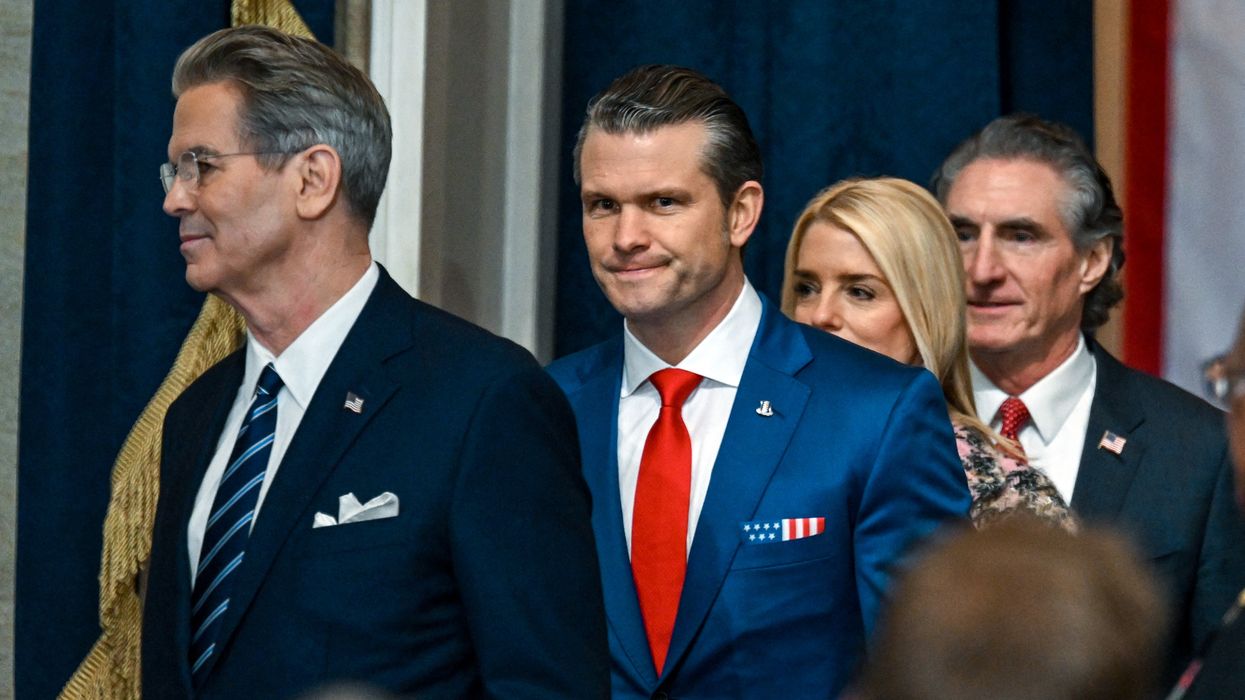
Pete Hegseth was confirmed as secretary of defense by the Senate on Friday, with all but three Republican senators—Susan Collins of Maine, Lisa Murkowski of Alaska, and Mitch McConnell of Kentucky—voting him through.
Pete Hegseth—U.S. President Donald Trump's controversial pick to lead the Pentagon—was narrowly confirmed as secretary of defense late Friday, despite a confirmation process that was rocked by allegations of sexual assault, sexist behavior, and more that critics warned made him unqualified and unfit to lead the country's largest federal agency.
"Hegseth is such a monster—just depressing for us all," wrote David Duhalde, the chair of the Democratic Socialists of America Fund on X following the Senate's confirmation of Hegseth, an army veteran and former Fox News co-host.
Hegseth was sworn in to the position on Saturday morning.
Vice President JD Vance cast a tie breaking vote to get Hegseth over the line after Sen. Mitch McConnell (R-Ky.), Sen. Lisa Murkowski (R-Alaska), and Sen. Susan Collins (R-Maine) joined all of the body's Democratic and Independent senators in opposing his nomination. This was only the second time that a vice president has broken a tie for a cabinet nominee, according to CNN. The other time was when Betsy DeVos faced her 2017 Senate confirmation for Secretary of Education.
McConnell—who according to NBC News was among a group of GOP members who expressed reservations about Hegseth, but voted for an earlier procedural motion to allow Hegseth's nomination to advance to a final vote—issued a lengthy statement following his confirmation.
"Effective management of nearly 3 million military and civilian personnel, an annual budget of nearly $1 trillion, and alliances and partnerships around the world is a daily test with staggering consequences for the security of the American people and our global interests," McConnell wrote. "Mr. Hegseth has failed, as yet, to demonstrate that he will pass this test. But as he assumes office, the consequences of failure are as high as they have ever been."
Sen. Tammy Duckworth (D-Ill.), who lost both her legs while deployed to Iraq in 2004, issued a statement following the vote, writing, "it is deeply shameful that tonight—despite shouting from the rooftops that they wanted to bring meritocracy back to our military—nearly every Republican chose to confirm someone who so obviously lacks the merits to serve as our Secretary of Defense," according to Fox 32 Chicago.
"Pete Hegseth's confirmation will make our nation less safe," wrote Sen. Elizabeth Warren (D-Mass.) in a statement Friday. "His confirmation is a slap in the face to the quarter of a million active duty women in our military... Too few Republican leaders stood up for them."
"Republican Senators approved an unqualified nominee with a long history of alleged substance abuse, sexual harassment, and assault," she added.
Hegseth was able to secure the nomination despite multiple, explosive allegations that came to light during his nomination process. In November 2024, The Washington Post reported that Hegseth paid a woman who accused him of sexually assaulting her in 2017 as part of a nondisclosure agreement, though according to Hegseth their encounter was consensual. In December, The New Yorker reported that a whistle-blower report and other documents suggest that Hegseth was forced out of leadership positions due to sexist behavior, financial mismanagement, and being drunk on the job. Hegseth's former sister-in-law also provided the Senate Armed Services Committee with an affidavit earlier this week accusing him of being abusive toward one of his ex-wives. Hegseth has denied the allegations in the affidavit.
Hegseth has also come under scrutiny for making comments in the past that women should not serve in combat roles.
Tony Carrk, the executive director of the watchdog group Accountable.US, slammed the GOP senators who voted Hegseth through, writing, "this confirmation shows that most Republican Senators are willing to rubber-stamp the lowest common denominator from the Trump administration even when it puts everyday Americans in harm's way. That’s terrifying."

"Anyone who says there has been a final decision is wrong," said White House Press Secretary Karine Jean-Pierre, refuting media reports that the $8 billion "ticking carbon bomb" in Alaska would be imminently approved.
White House Press Secretary Karine Jean-Pierre on Friday denied reports that U.S. President Joe Biden would imminently approve the Willow Project, saying "no final decisions" have been made on the highly controversial $8 billion ConocoPhillips oil drilling endeavor in northern Alaska slammed by critics as a "climate catastrophe."
"Anyone who says there has been a final decision is wrong," Jean-Pierre told reporters Friday evening after outlets including Bloomberg, CNN, and The New York Times reported that the Biden administration would green-light what would be the single-largest oil operation in the United States.
"President Biden is delivering on the most aggressive climate agenda of any U.S. president in history and spurring an unprecedented expansion of clean energy," the White House spokesperson added.
Republican U.S. Sen. Lisa Murkowski of Alaska—who supports the project—told the Times that she had not received notification of its approval.
"We are not celebrating yet, not with this White House," she said.
Climate campaigners, Indigenous groups, environmentalists, dozens of Democratic U.S. lawmakers, and others are vehemently opposed to what many have called a "ticking carbon bomb" and a "climate catastrophe."
The Biden administration's own assessment of the project acknowledges that it "would likely incur spills," and the Interior Department has expressed "substantial concerns" about the proposal.
According to the Sierra Club:
Willow is sited in a vast Arctic landscape that provides critical habitat for birds from all over the world as well as animals like the caribou that subsistence hunters rely on to feed their families and communities. Native communities, like Nuiquset, are already dealing with the consequences of oil development in the region, including deteriorating air quality and a spike in respiratory disorders. Last year, a well in Conoco's Alpine Field blew out, spewing methane into the air and endangering residents of Nuiquset. These risks are already here, and Willow only makes them worse.
On Friday, former U.S. Vice President Al Gore called the proposed project "recklessly irresponsible," adding that "we must end the expansion of oil, gas, and coal and embrace the abundant climate solutions at our fingertips."
Len Montgomery, public lands campaign director at Environment America, told Common Dreams via email that "we need our leaders to think long-term. Clean energy, not oil, is our future."
"Allowing a brand new Arctic oil project to break ground in one of our most sensitive ecosystems would be short-sighted," Montgomery argued. "This project will exacerbate climate change and will directly harm caribou and polar bears. We are inspired by the outpouring of opposition against this project from across the country and we will continue our efforts to prevent the chillers, the ice roads, and the well pads from ever encroaching on this pristine area."
Quannah Chasinghorse—a Han Gwich'In and Sicangu/Oglala Lakota land protector, climate justice activist, and fashion model from Eagle Village, Alaska and the tribes of South Dakota—wrote in a CNN opinion article Friday that "ConocoPhillips has claimed that the Willow Project could create thousands of construction jobs and hundreds of permanent ones, along with needed oil, but at what cost?"
"We must change the narrative that the land serves us and only exists so that we can extract resources from it."
"Make no mistake, it will not only be local communities, or even Alaskans, who will feel the negative climate impacts of this project," she continued. "According to an analysis from the Center for American Progress, developing and burning oil from the Willow Project would produce up to 287 million metric tons of carbon dioxide over the next 30 years. That's equal to the annual emissions of 76 coal power plants—a third of all coal plants in the United States."
"We must change the narrative that the land serves us and only exists so that we can extract resources from it," Chasinghorse asserted. "My elders tell me that if we take care of the land, the land will take care of us. We cannot live without healthy land. Not just us Gwich'in. All of us, everywhere"
"President Biden, stop the Willow Project," she added. "Stop climate chaos, before it's too late"