

SUBSCRIBE TO OUR FREE NEWSLETTER
Daily news & progressive opinion—funded by the people, not the corporations—delivered straight to your inbox.
5
#000000
#FFFFFF
To donate by check, phone, or other method, see our More Ways to Give page.
Daily news & progressive opinion—funded by the people, not the corporations—delivered straight to your inbox.
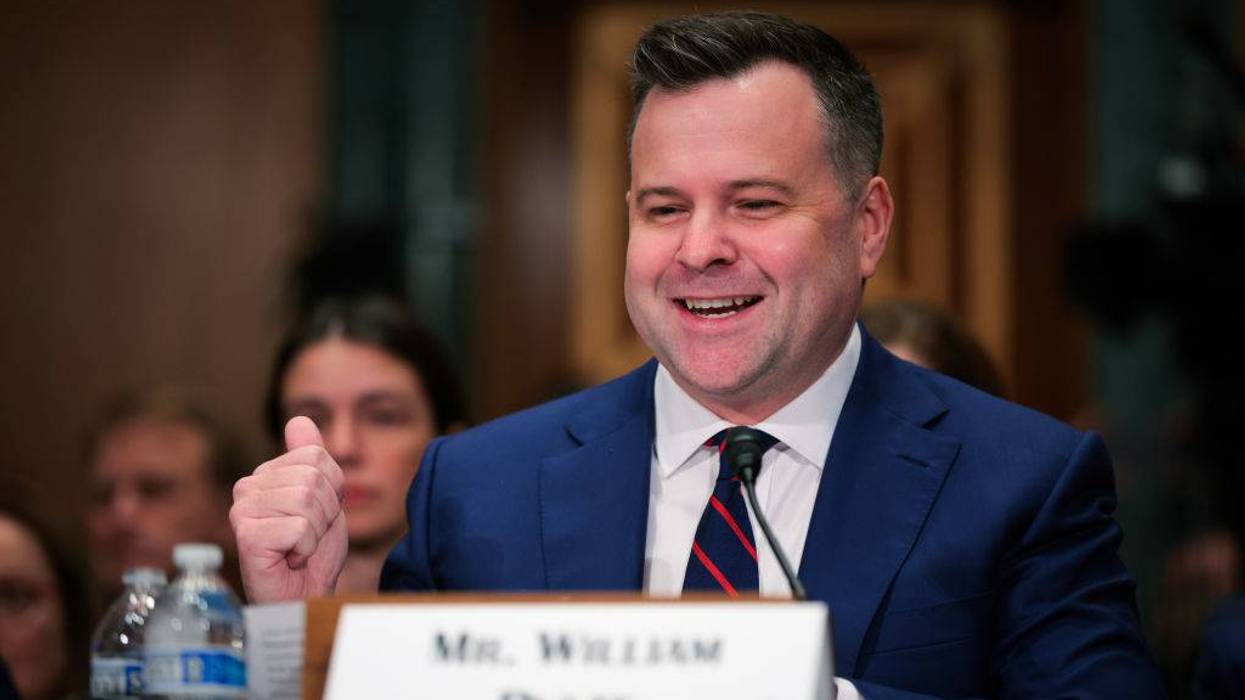
"The president has chosen an official who has demonstrated not just willingness but eagerness to use the authorities of government to pursue political retribution," said US Sen. Mark Warner.
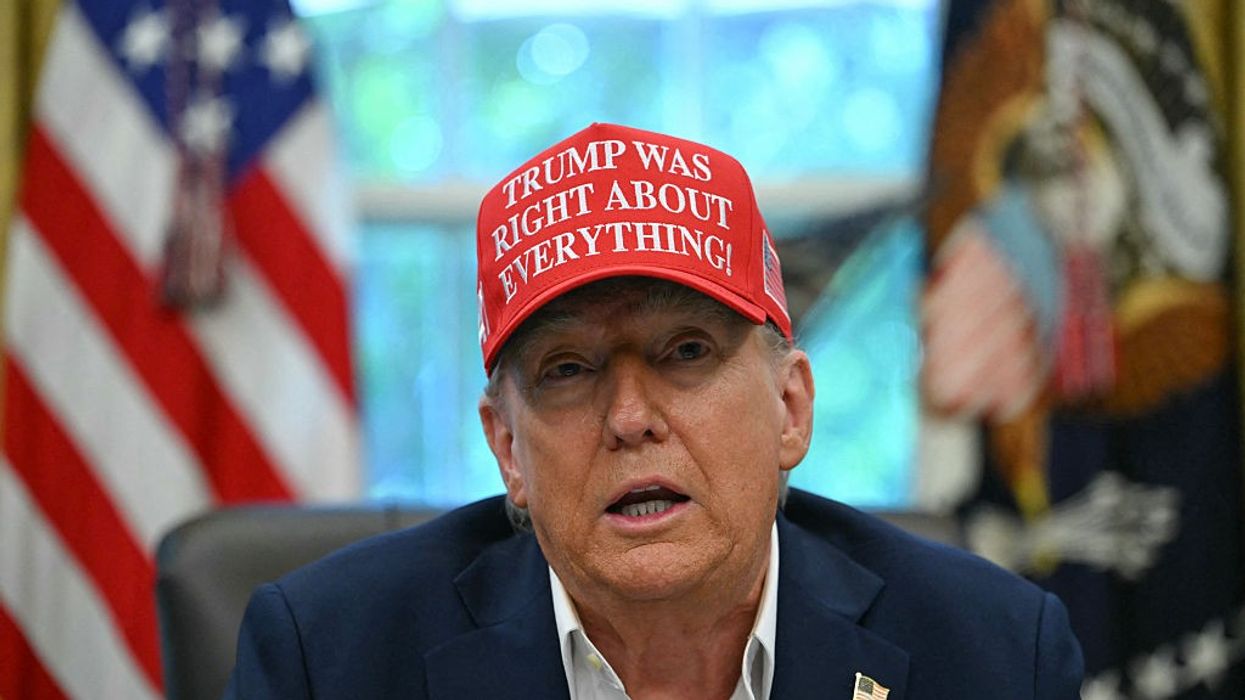
President Donald Trump shocked many observers on Tuesday when he appointed Federal Housing Finance Agency Director Bill Pulte to be his acting director of national intelligence, weeks after Tulsi Gabbard stepped down from the role.
In a Tuesday morning social media post, Trump announced that Pulte would be taking over as DNI while also remaining at his current post at the FHFA, which regulates government-sponsored housing enterprises Fannie Mae and Freddie Mac.
As noted by a Tuesday CNBC report, Pulte "has no prior experience in an intelligence role. His tenure at FHFA has been marked by his criminal referrals for mortgage fraud against Trump's political foes, including New York Attorney General Letitia James and Federal Reserve Governor Lisa Cook, whom the president has been trying to fire in an effort to stack the US central bank with political loyalists.
James was targeted for prosecution after she won a $450 million judgment against the president and his business in a civil fraud case.
Sen. Mark Warner (D-Va.), vice chairperson of the Senate Committee on Intelligence, delivered a scathing response to Trump's announcement.
"This appointment speaks volumes about what this president expects from the nation's top intelligence official," he said. "Rather than selecting a respected national security professional capable of delivering independent judgments, the president has chosen an official who has demonstrated not just willingness but eagerness to use the authorities of government to pursue political retribution."
Sen. Catherine Cortez Masto (D-Nev.) also denounced the president's decision.
"Bill Pulte led Donald Trump’s efforts to charge and jail his political enemies, now he’s being rewarded with a job he has no business doing," Cortez Masto said. "Putting Pulte at the helm of the intelligence community risks American lives just so Trump can keep going after his political opponents."
Sean Vitka, executive director of Demand Progress, argued that Pulte's appointment was yet another reason for Democrats to oppose further extension of warrantless spying powers under Section 702 of the Foreign Intelligence Surveillance Act (FISA).
"Congress must not sign away unchecked spying powers to the government," said Vitka, "when Donald Trump’s top spy is a man whose primary qualification is his willingness to weaponize sensitive information held by the government against the president’s political enemies."
Vitka specifically urged Warner to change course on his push to renew Section 702, particularly in light of Pulte's appointment.
"By supporting a FISA extension without any independent checks like warrant protections, Sen. Warner is putting the entire country at serious risk and enabling perhaps the greatest threat to American democracy we have seen in modern history," he said.
Journalist James Surowiecki expressed horror at Pulte's elevation to acting DNI.
"Even for Trump, this is nuts," Surowiecki wrote. "Bill Pulte, who's a [private equity] guy/real-estate developer with exactly zero intelligence experience, is going to be the new Director of National Intelligence—while also continuing to run FHFA and Fannie Mae/Fredde Mac!"
Don Moynihan, a professor of public policy at the University of Michigan, issued a dire warning about Pulte potentially abusing US intelligence services to target Trump opponents.
"Fuck me, this is Bill Pulte," Moynihan wrote. "The guy who was using mortgage data to launch DOJ investigations against Lisa Cook, Letitia James, and [US Sen.] Adam Schiff (D-Calif.). He is being put in charge of national intelligence because of his track record of being willing to manufacture false allegations to target Trump's enemies."
Political commentator Keith Boykin described Pulte as Trump's "personal henchman" who "abused his position as chairman of Fannie Mae and Freddie Mac to send baseless criminal referrals against Letitia James and Lisa Cook."
National security attorney Bradley Moss, meanwhile, could not hide his disgust at Pulte's appointment in an all-caps social media post.
"WHAT THE... I QUIT," Moss wrote. "I GIVE UP. BILL PULTE??"
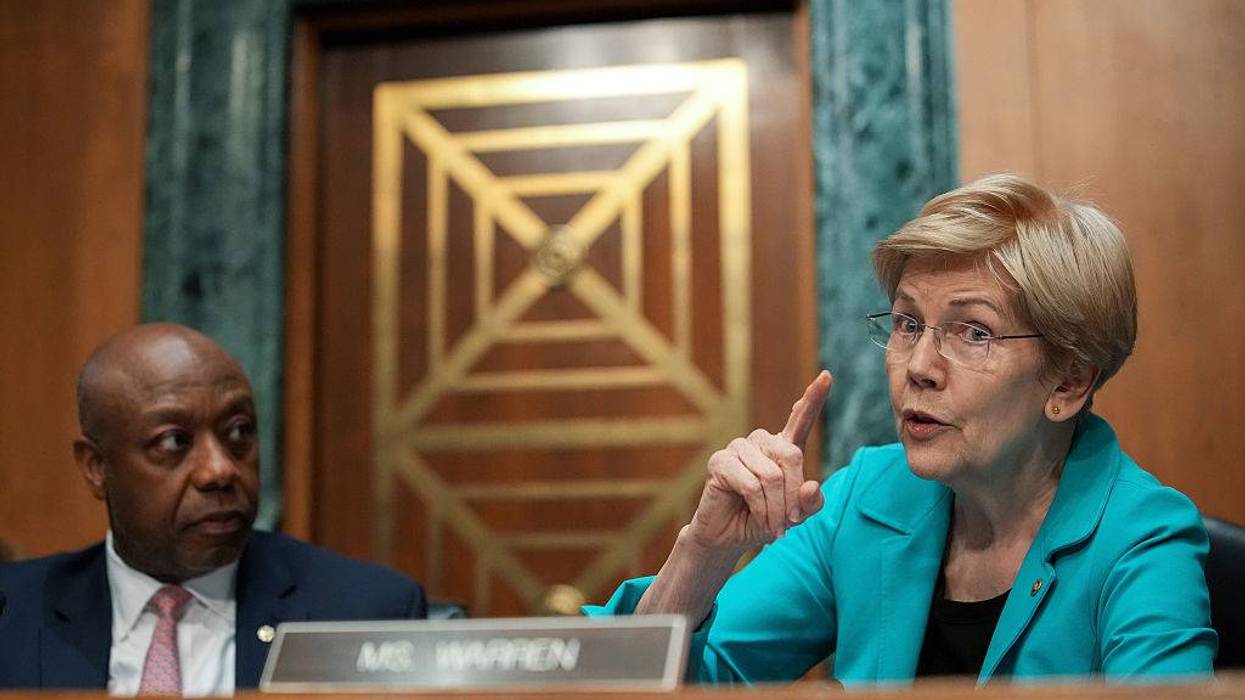
"Anyone who believes Donald Trump’s corrupt scheme to take over the Fed is over is fooling themselves."
The Justice Department on Friday dropped its criminal investigation into US Federal Reserve Chairman Jerome Powell, but Sen. Elizabeth Warren warned in response that the threat to the central bank's independence is far from over.
Shortly after US Attorney Jeanine Pirro announced on that her office was abandoning its months-long investigation of Powell for now, Warren released a statement cautioning that the end of the widely condemned probe didn't mean an end to President Donald Trump's efforts to take over the Federal Reserve.
Warren pointed out that while Pirro was no longer investigating Powell, the Justice Department is still investigating Federal Reserve Gov. Lisa Cook, whom Trump has unsuccessfully tried to fire.
"Let’s be clear what the Justice Department announced today," said Warren. "They threatened to restart the bogus criminal investigation into Fed Chair Powell at any time while failing to drop their ridiculous criminal probe against Governor Cook. Anyone who believes Donald Trump’s corrupt scheme to take over the Fed is over is fooling themselves."
Warren concluded by saying that the US Senate should not move forward with the confirmation of Kevin Warsh, a financier whom Trump nominated to be Powell's replacement.
“This is just an attempt to clear the path for Senate Republicans to install President Trump’s sock puppet Kevin Warsh as Fed chair," the Massachusetts senator said.
Sen. Andy Kim (D-NJ) echoed Warren's criticisms, and said that dropping the Powell investigation wasn't enough to make him believe the president had given up on his quest to control US monetary policy.
"Trump wants a Fed chair that will do his bidding," wrote Kim. "He'll drop the bogus investigation into Powell but not Lisa Cook because it clears the path for Senate Republicans to confirm Kevin Warsh, Trump’s pick for Fed chair. You deserve a Fed that works for you, not Donald Trump."
Democrats on the House Judiciary Committee also called foul on the Trump DOJ's machinations, writing in a social media post that the entire investigation into Powell "was just a political tactic and had nothing to do with evidence of a crime."
"The White House is using criminal prosecutions to free up spots on the Federal Reserve Board so the President can manipulate the money supply to cover up for his disastrous economic policies," the House Judiciary Democrats wrote. "And US Attorney Jeanine Pirro is content to abuse the grand jury process to attack Trump's chosen political targets."
University of Michigan economist Justin Wolfers delivered a warning for Sen. Thom Tillis (R-NC), who had vowed to hold up Warsh's confirmation until the probe of Powell was dropped, to resist the temptation to believe the investigation's end meant the crisis was over.
"While I admired Tillis' stand for Fed independence, this was always the problem with his strategy," Wolfers explained. "The president can meet Tillis' threshold of promising not to jail this end-of-term Fed chair, but he's kept open the option of threatening to jail the next one. The threats will continue unless the Senate refuses to confirm any nominee without clear legislation outlawing it. Congress has a role to play."
While Pirro is no longer investigating Powell, White House Press Secretary Karoline Leavitt said this didn't mean the probe had ended, but had been transferred to the Federal Reserve inspector general.
"The case is not necessarily dropped, it's just being moved over to the inspector general," Leavitt told reporters. "This has been a priority for the president. The investigation still continues."
LOL -- Leavitt says the Powell investigation actually isn't over
"The case is not necessarily dropped, it's just being moved over to the inspector general. This has been a priority for the president. The investigation still continues." pic.twitter.com/LW4jeKzY9p
— Aaron Rupar (@atrupar) April 24, 2026
This prompted Warren to reiterate that the Senate should not move forward with any vote to confirm Warsh as Federal Reserve chairman.
"Trump's spokeswoman says the witch hunt against Jerome Powell 'still continues,'" Warren wrote. "No Republican claiming to care about Fed independence should move Warsh’s nomination forward."
Trump for the last year has publicly attacked Powell for not aggressively cutting interest rates. Powell, who was nominated by Trump to be chairman of the Federal Reserve in 2017, has refused to cave into the president's pressure campaign, and has pointed to the Trump administration's own policies—in particular its global tariffs on imported products—as putting upward pressure on inflation.
Powell's term as chairman expires on May 15.
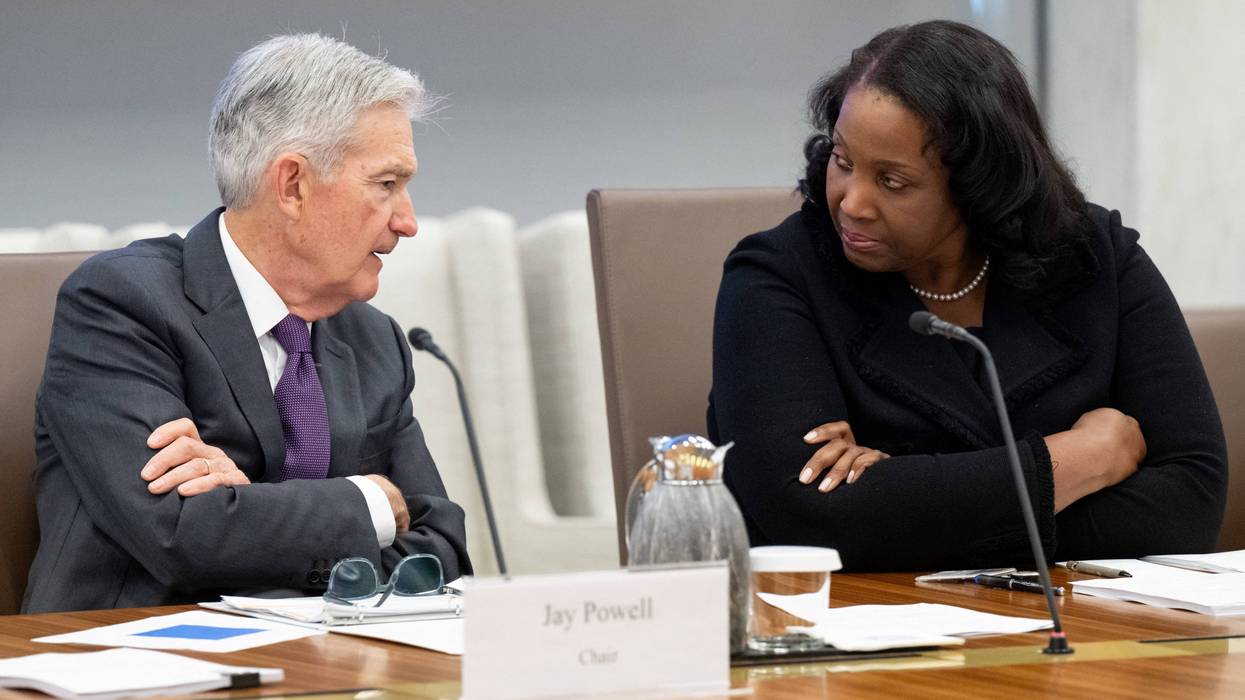
The president is trying to fire Fed Gov. Lisa Cook for alleged mortgage fraud. Critics say he's targeting another one of his political foes.
Federal Reserve Chair Jerome Powell reportedly plans to attend Wednesday's US Supreme Court oral arguments in the case involving President Donald Trump's attempt to fire Fed Gov. Lisa Cook.
A "person familiar with the matter" told the Associated Press on condition of anonymity that Powell would attend the high court session in the face of Trump's unprecedented effort to oust one of the seven members of the Fed's governing board.
Last August, Trump announced his termination of Cook—an appointee of former President Joe Biden—for alleged fraud, accusing her of signing two primary residence mortgages within weeks of each other. An investigation published last month by ProPublica revealed that Trump did the same thing that he's accusing Cook of doing.
Cook denies any wrongdoing, has not been charged with any crime, and has filed a lawsuit challenging Trump’s attempt to fire her. In October, the Supreme Court declined to immediately remove Cook and agreed to hear oral arguments in the case.
In what many critics allege is an attempt by Trump to strong-arm the Fed into further interest rate cuts, the US Department of Justice (DOJ) earlier this month served the central bank with grand jury subpoenas related to Powell's congressional testimony on renovations to Fed headquarters in Washington, DC.
Powell—who was nominated by Trump in 2017 and whose four-year term as Fed chair ends May 15—responded by alleging that “the threat of criminal charges is a consequence of the Federal Reserve setting interest rates based on our best assessment of what will serve the public, rather than following the preferences of the president."
"This is about whether the Fed will be able to continue to set interest rates based on evidence and economic conditions—or whether instead monetary policy will be directed by political pressure or intimidation," he added.
Trump is trying to install his puppets at the Fed.First by trying to fire Lisa Cook and rushing in his top econ adviser.Now by abusing the law to try to push Jerome Powell out for good.Next he'll nominate a new Chair—and Trump says “anybody that disagrees" with him is out.
[image or embed]
— Elizabeth Warren (@warren.senate.gov) January 15, 2026 at 7:54 AM
In addition to Cook, Trump has targeted a number of Democrats with what critics say are dubious mortgage fraud claims.
Last November, a federal judge dismissed a DOJ criminal case against New York Attorney General Letitia James, who was charged with bank fraud and false statements regarding a property in Virginia. Critics called the charges against James—who successfully prosecuted Trump for financial crimes—baseless and politically motivated. A federal grand jury subsequently rejected another administration attempt to indict James.
The president has accused other political foes, including US Sen. Adam Schiff and Rep. Eric Swalwell—both California Democrats who played key roles in both of the president’s House impeachments—of similar fraud. Swalwell is currently under formal criminal investigation. Both lawmakers deny the allegations.
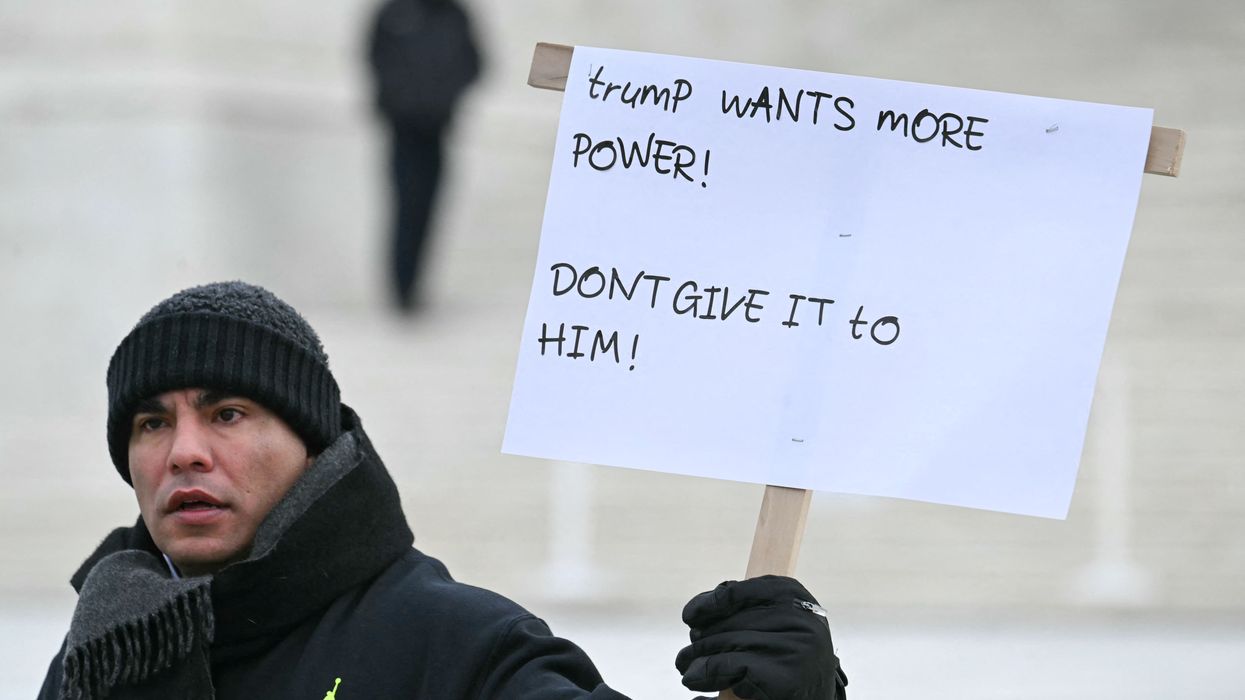
The court's right-wing majority signaled a willingness to overturn the 90-year-old precedent Humphrey’s Executor—a move that would "enable Donald Trump’s corrupt march toward oligarchy," said one critic.
The warnings on Monday from the US Supreme Court’s liberal justices were stark as the Trump administration argued in favor of allowing the president to easily fire top officials at federal agencies—a move that would reverse nearly a century of precedent that originated with a unanimous ruling known as Humphrey's Executor in 1935.
"You're asking us to destroy the structure of government," Justice Sonia Sotomayor told Solicitor General D. John Sauer, who argued on behalf of the Trump administration that Humphrey's Executor limits presidential authority in an unconstitutional way even following rulings by the conservative majority that have weakened the decision.
Justice Elena Kagan added that setting aside the precedent and allowing President Donald Trump to fire Federal Trade Commission (FTC) board members and other federal agency leaders would “put massive, uncontrolled, unchecked power in the hands of the president.”
"Once you're down this road, it's a little bit hard to see how you stop," Kagan said.
But the court's right-wing majority signaled little concern about the unchecked authority it could give the president should it rule in Trump's favor in the coming months in Trump v. Slaughter, which centers on the White House's firing of FTC Commissioner Rebecca Kelly Slaughter, a strong defender of consumer rights in March.
Slaughter has said she was dismissed for being "inconsistent with [the] administration's priorities" as the Department of Government Efficiency was gutting federal agencies and rooting out programs and employees that were also viewed as being in the way of Trump's right-wing agenda.
But under Humphrey's Executor, which was decided after former President Franklin D. Roosevelt tried to remove an FTC member, a president can fire a board member only for "inefficiency, neglect of duty, or malfeasance in office," in accordance with a law passed by Congress in 1914.
The ruling established that the president can remove executive officials without cause, but not at independent agencies that are "neither political nor executive, but predominantly quasi-judicial and quasi-legislative," such as the FTC.
Sauer wrote in a court document that the ruling "was always egregiously wrong," furthering the argument made by right-wing proponents of the "unitary executive" theory—a view that holds that the president should hold absolute power over federal agencies, including by firing leaders they view as opposed to their agenda.
A lawyer for Slaughter, Amit Agarwal of Protect Democracy, told the justices on Monday that "dozens of institutions that have been around for a long time, that have withstood the test of time, that embody a distillation of human wisdom and experience, all of those would go south” if the court allowed the president to hold complete control over agencies.
Undoing Humphrey's Executor would “profoundly destabilize institutions that are now inextricably intertwined with the fabric of American governance," Slaughter's lawyers have argued.
Chief Justice John Roberts signaled an unwillingness to preserve the 90-year-old precedent, calling the ruling a "dried husk" at one point. Right-wing courts and justices have worked to weaken the precedent for more than a decade, with Roberts writing in a 2010 opinion that the president's power should be understood to include “the authority to remove those who assist him in carrying out his duties."
A decade later, the Supreme Court ruled in a 5-4 decision in Seila Law LLC v. Consumer Financial Protection Bureau that the CFPB's structure itself was unconstitutional because the president does not have the authority to fire the director of the independent agency without just cause.
On Monday, Josh Orton, director of judiciary reform group Demand Justice, said there was "grave danger in what the Supreme Court appears willing to do today: hand giant corporations and Donald Trump’s billionaire class unchecked power over our economic system, gutting one of the few institutions left that’s charged with ensuring fairness, stability, and competition in our economy.
“For generations, independent federal agencies, including the Federal Trade Commission and the Federal Reserve, have proven essential to the long-term stability of our country and markets—all to the benefit of workers, consumers, and businesses alike," said Orton.
A lower court ruled earlier this year that Slaughter had been illegally fired, but the Supreme Court in September allowed the dismissal to stand with an emergency order, until the case could be heard.
The Supreme Court has also permitted Trump to move forward, at least temporarily, with the firings of officials at the National Labor Relations Board, the Merit Systems Protection Board, and the Consumer Product Safety Commission.
The justices on Monday signaled that even if they allow the president's firing of Slaughter and the other officials, they may not approve the dismissal of Federal Reserve Gov. Lisa Cook, who the court has permitted to stay in her role despite Trump's attempt to fire her. The court is scheduled to hear a separate case in January regarding Cook's firing.
But Kate Judge, a professor at Columbia Law School, said an overruling of Humphrey's Executor would ultimately have an impact on the Federal Reserve even if the justices carve out an exception.
"[The] Fed's practical independence and the legitimacy needed to sustain it grew alongside the independence of other agencies," said Judge. "It will be hard to maintain faith in one technocratic body while saying the rest are legitimate only because they are directly answerable to the president."
With or without an exception, Orton argued that "a Supreme Court that overturns Humphrey’s Executor and 90 years of precedent to enable Donald Trump’s corrupt march toward oligarchy is simply not a sustainable or legitimate institution.”
“Given Trump’s position on situations like this, he’s going to either need to fire himself or refer himself to the Department of Justice,” said one mortgage law expert.
As US President Donald Trump targets political opponents with dubious allegations of mortgage fraud, an investigation published Monday revealed the Republican leader once did the same thing as a senior official he is trying to fire.
In an August letter, Trump announced his termination of Federal Reserve Gov. Lisa Cook—an appointee of former President Joe Biden—for alleged fraud, accusing her of signing two primary residence mortgages within weeks of each other.
Cook, who denies any wrongdoing, has not been charged with any crime and has filed a lawsuit challenging Trump's attempt to fire her. In October, the US Supreme Court declined to immediately remove Cook and agreed to hear oral arguments on the case in January.
Trump called Cook's actions "deceitful and potentially criminal." However, ProPublica reviewed records showing that Trump "did the very thing he’s accusing his enemies of."
Trump committed mortgage fraud, according to Trump.Somehow I doubt his DOJ will go after him the way he instructed his DOJ to go after his political enemies over this.Every Republican accusation is a confession.
[image or embed]
— Melanie D’Arrigo (@darrigomelanie.bsky.social) December 8, 2025 at 5:47 AM
According to the publication:
In 1993, Trump signed a mortgage for a “Bermuda style” home in Palm Beach, Florida, pledging that it would be his principal residence. Just seven weeks later, he got another mortgage for a seven-bedroom, marble-floored neighboring property, attesting that it too would be his principal residence.
In reality, Trump, then a New Yorker, does not appear to have ever lived in either home, let alone used them as a principal residence. Instead, the two houses, which are next to his historic Mar-a-Lago estate, were used as investment properties and rented out, according to contemporaneous news accounts and an interview with his longtime real estate agent—exactly the sort of scenario his administration has pointed to as evidence of fraud...
Mortgage law experts who reviewed the records for ProPublica were struck by the irony of Trump’s dual mortgages. They said claiming primary residences on different mortgages at the same time, as Trump did, is often legal and rarely prosecuted. But Trump’s two loans, they said, exceed the low bar the Trump administration itself has set for mortgage fraud.
"Given Trump’s position on situations like this, he’s going to either need to fire himself or refer himself to the Department of Justice,” Kathleen Engel, a Suffolk University law professor and leading expert on mortgage finance, told ProPublica. “Trump has deemed that this type of misrepresentation is sufficient to preclude someone from serving the country.”
Lisa Gilbert, co-president of the consumer advocacy group Public Citizen, responded to ProPublica's analysis in a statement slamming "Trump's mortgage fraud witch hunt."
"The cruel and lawless hypocrisy of Donald Trump using the levers of government to dig up so-called mortgage fraud on his perceived political opponents, while doing the very same, is blatant," Gilbert said in a statement.
A federal judge recently dismissed the US Department of Justice's (DOJ) criminal case against Democratic New York Attorney General Letitia James, who was charged with bank fraud and false statements regarding a property in Virginia. Critics called the charges against James—who successfully prosecuted Trump for financial crimes—baseless and politically motivated. A federal grand jury subsequently rejected another administration attempt to indict James.
“The administration has used the idea of claiming a home as your primary residence without residing there to justify DOJ takedowns of Lisa Cook, Tish James, and more," Gilbert added. "If this is how they really feel, and the ProPublica reporting is accurate, then Donald Trump should be next in the DOJ crosshairs.”
ProPublica said that Trump hung up on one of its reporters who asked about similarities between his Florida mortgages and those of people targeted by his administration.
“President Trump’s two mortgages you are referencing are from the same lender," a White House spokesperson subsequently told the outlet. "There was no defraudation. It is illogical to believe that the same lender would agree to defraud itself.”
“President Trump has never, or will ever, break the law," the spokesperson falsely added.
Trump has accused other political foes, including US Sen. Adam Schiff and Rep. Eric Swalwell—both California Democrats who played key roles in both of the president's House impeachments—of similar fraud. Swalwell is currently under formal criminal investigation. Both lawmakers deny the allegations.
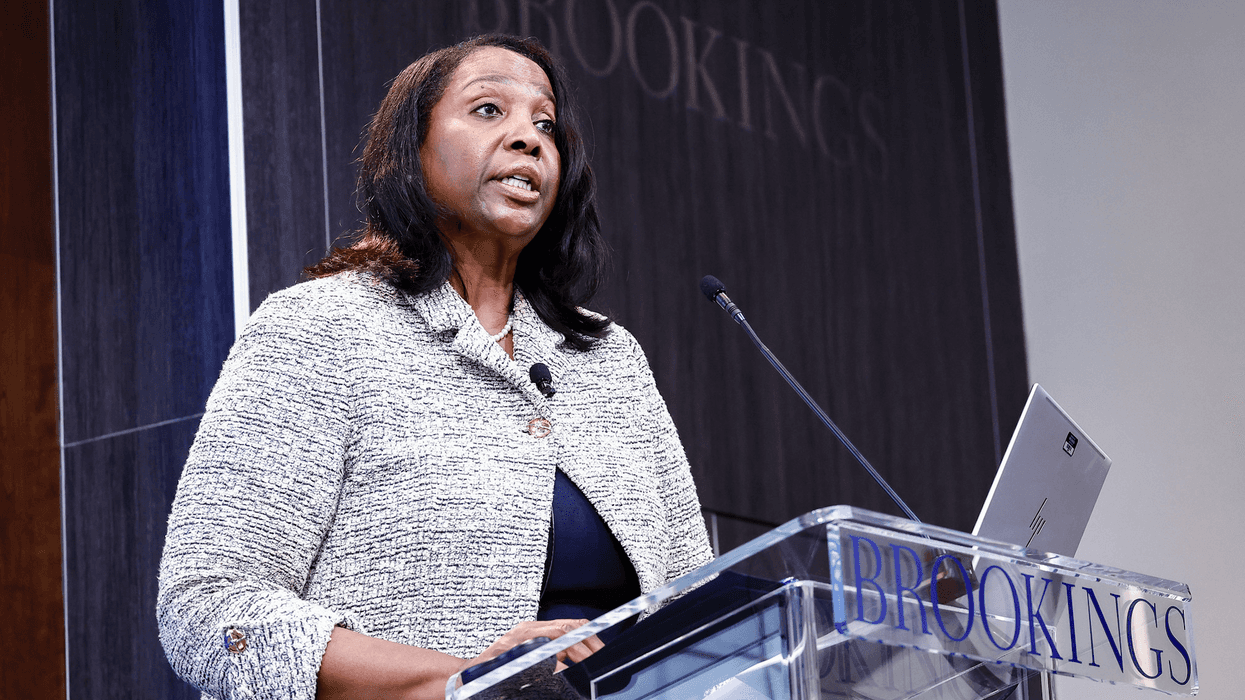
"According to the government, the determination of cause is committed to the president's discretion by statute, leaving no role for this court," said a federal judge. "The court disagrees."
A federal judge late Tuesday ruled against President Donald Trump's unlawful attempt to fire Federal Reserve Board Governor Lisa Cook last month, determining that the president's "for cause" argument was unconvincing as it was based on unsubstantiated accusations of wrongdoing and represented an executive overreach with worrying implications.
Trump claimed his attempted removal of Cook, whose legal team challenged it as politically motivated and an "unprecedented and illegal" violation of the Fed's statutory independence, was for falsified mortgage applications for homes Cook purchased prior to her appointment to the board, However, Judge Jia M. Cobb of the US District Court for the District of Columbia found that the alleged infractions were neither substantiated and also took place prior to her taking the position.
"According to the government, the determination of cause is committed to the president's discretion by statute, leaving no role for this court. The court disagrees," Cobb said in her decision.
The accusations against Cook center on accusations brought by Bill Pulte, a prominent political supporter of Trump appointed by the president to lead the Federal Housing Finance Agency (FHFA), which operates the public lending arms of both Fannie and Freddie Mac. Critics of Pulte have accused him of weaponizing his access to private mortgage data by sifting through records of Trump's perceived political enemies.
As economist Dean Baker wrote in a column last week, people would be wise to recognize Pulte's outsized role in the accusations Trump made against Cook.
"While the validity of Pulte's allegations will have to be determined by the courts, the real scandal is Pulte himself," wrote Baker. "He is supposed to be running the agency that oversees the processing of tens of millions of mortgages by two huge quasi-public agencies. We are not supposed to be paying him to rifle through mortgage documents to find and disclose dirt that Trump can use against his political opponents."
By ruling against Trump on Tuesday, Cobb sided with Cook's request for a temporary injunction. This means she will remain in her post, with full voting rights as a governor of the Fed Board, as the case proceeds in the courts.
"Today's ruling recognizes and reaffirms the importance of safeguarding the independence of the Federal Reserve from illegal political interference," said Abbe Lowell, an attorney on Cook's legal team. "Allowing the president to unlawfully remove Governor Cook on unsubstantiated and vague allegations would endanger the stability of our financial system and undermine the rule of law."
For now, Lowell added, Cook will "will continue to carry out her sworn duties as a Senate-confirmed Board Governor."
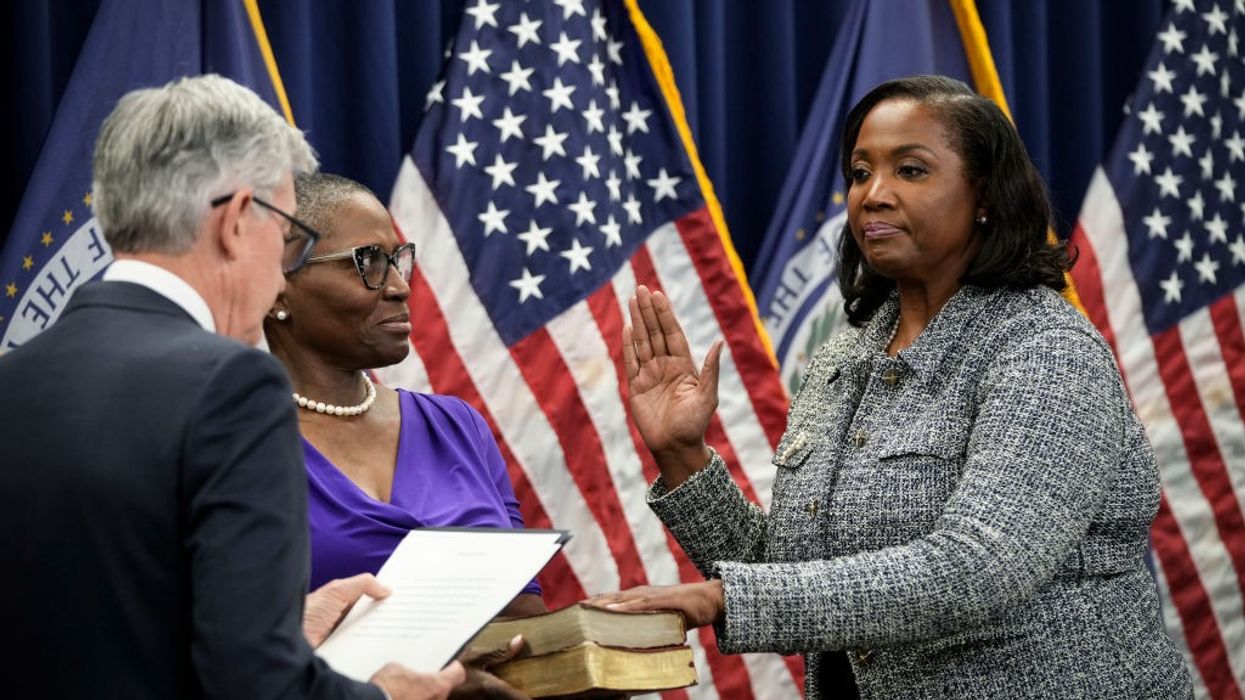
While the validity of Pulte’s allegations against the Fed Governor will have to be determined by the courts, the real questions that need answers are about Pulte himself.
Bill Pulte is the head of Federal Housing Finance Agency (FHFA), the agency that oversees Fannie Mae and Freddie Mac. He has been in the news recently over his allegations that prominent opponents of President Trump committed mortgage fraud. Most recently, Pulte has put Federal Reserve Board Governor Lisa Cook in his crosshairs, claiming that she listed two homes as principal residences on mortgage applications.
Trump immediately used this allegation as a basis for trying to fire Cook, even though the Fed is supposed to be an independent agency outside of the president’s control. Governor Cook sued Trump over his firing effort, and the courts will ultimately decide whether this is within his power.
At this point, it is important to remember that Cook has not even been indicted for anything, much less convicted. We only have an allegation from Mr. Pulte.
What reason does Pulte have for not following normal procedures? Pulte really needs to come clean on this.
It is also worth noting the irony of Trump, who was convicted in a civil trial for putting false information on loan forms, trying to fire someone for listing two homes as principal residences. Among the items that Trump put on his loan form was the claim that his 10,000 square foot condo was actually 32,000 square feet. Perhaps President Trump is offended by the pettiness of Cook’s alleged crime.
While the validity of Pulte’s allegations will have to be determined by the courts, the real scandal is Pulte himself. He is supposed to be running the agency that oversees the processing of tens of millions of mortgages by two huge quasi-public agencies. We are not supposed to be paying him to rifle through mortgage documents to find and disclose dirt that Trump can use against his political opponents.
The media really need to be directing some serious questions in Pulte’s direction. First and foremost, how did he happen to discover the mortgage abuses that he alleges were committed by NY Attorney General Letitia James, Senator Adam Schiff (D-California), and now Governor Lisa Cook? Were these “discoveries” the result of random inspections done by agency staff?
Furthermore, was he looking through non-public mortgage files to gather this information? Also, why did he make this information public when he uncovered it, instead of going through normal channels. If he had followed established procedures, he would have turned over the information to the agency’s inspector general, who would then turn if over to the Justice Department, if they determined it was appropriate. The first time the public would hear about it was when an indictment was issued.
What reason does Pulte have for not following normal procedures? Pulte really needs to come clean on this.
He should also come clean on his holdings of Pulte Group stock, the huge housing construction company started by his grandfather. It may be the case that conflicts of interest are almost a job requirement in the Trump administration, but many of us still think that government officials should be working for the public, not trying to fatten their pocketbook.
If Pulte helps Trump get his wish and a Trump-controlled Fed lowers interest rates, it would provide a big boost to the Pulte Group’s profits. That hope would give Pulte a strong motivation to try to hasten the day when Trump appointees dominate the Fed’s Open Market Committee that sets interest rates.
Anyhow, there is definitely a big scandal here—but it involves Bill Pulte, not Lisa Cook. The media really need to take notice.
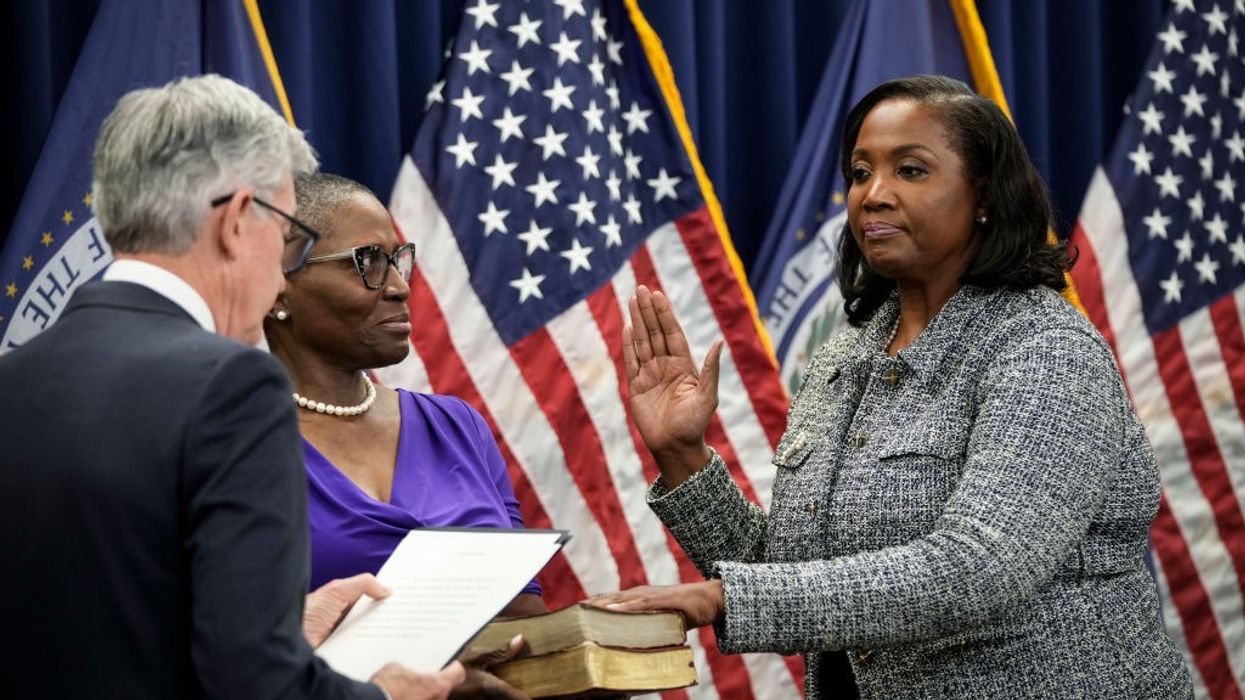
Dr. Cook has earned her position through expertise, service, and integrity. She should be allowed to continue her work without intimidation or political interference.
When US President Donald Trump attempted to remove Federal Reserve Governor Dr. Lisa D. Cook from her post, he didn’t just target one individual. He threatened the independence of the Federal Reserve and sent a chilling message to every leader serving in public life: No matter your qualifications, your service is never safe from political retribution.
Trump’s attack on Dr. Cook is also yet another attempt to delegitimize Black leadership across the highest levels of American government. That’s why my organization, the Joint Center—America’s leading Black think tank—convened a coalition of leading civil rights, economic justice, and policy organizations to stand with Dr. Cook and push back.
Dr. Cook’s credentials are beyond dispute. She’s a world-class economist who’s advised governments during global crises, served at multiple levels of the Federal Reserve System, and earned acclaim as a professor at Michigan State University.
She was elected by Midwestern community bankers to the boards of the Federal Home Loan Bank of Indianapolis and the Federal Reserve Bank of Chicago—proof of the broad trust she’s earned across the financial community.
In 2022, Dr. Cook made history as the first Black woman appointed to the Federal Reserve Board of Governors. Her appointment was a breakthrough for Black representation in economic governance. Today, that breakthrough is under threat.
President Trump’s attempt to force her out is part of a broader pattern. Time and again, he’s sought to discredit and remove Black leaders from positions of power—from insulting Rep. Maxine Waters (D-Calif.) by calling her “low IQ” to attacking prosecutors like Letitia James and Fani Willis, undermining federal judges like Tanya Chutkan, and dismissing the leadership of Maryland Gov. Wes Moore.
Attacking the tenure of a Federal Reserve governor—especially one as qualified and effective as Dr. Cook—undermines that independence and destabilizes the very system Trump claims to protect.
Trump has also ignored the will of DC residents and Mayor Muriel Bowser by ordering National Guard troops into the city’s streets.
These attacks are not random. They’re part of a deliberate strategy to weaken and delegitimize Black leadership across our institutions—from the courts to the military to economic governance.
The attack on Dr. Cook marks a dangerous escalation. The Federal Reserve is one of the most important independent institutions in our democracy. It safeguards our economy and makes decisions that affect virtually every family and business in this country.
Attacking the tenure of a Federal Reserve governor—especially one as qualified and effective as Dr. Cook—undermines that independence and destabilizes the very system Trump claims to protect.
We cannot allow this to stand.
In moments like this, silence is complicity. That is why we are calling on policymakers, civic leaders, and the public to speak out—not just in defense of Dr. Cook, but in defense of every public servant facing illegitimate harassment as part of a politically motivated attack.
The coalition’s message is simple: Dr. Cook has earned her position through expertise, service, and integrity. She should be allowed to continue her work without intimidation or political interference.
If we fail to take action now, we risk sending a dangerous message to future generations of leaders: No matter how qualified you are, your leadership can be erased at the whim of those in power. We also risk losing some of the small gains in Black political representation that has emerged over the last 30 years.
We must not let that message stand.
"Confidence that the Fed will respond wisely to future periods of macroeconomic stress... will evaporate," warned one economist.
Economists are warning that US President Donald Trump's efforts to meddle with the Federal Reserve are going to wind up raising prices even further on working families.
Michael Madowitz, principal economist at the Roosevelt Institute, said on Wednesday that the president's efforts to strong-arm the US central bank into lowering interest rates by firing Federal Reserve Gov. Lisa Cook would backfire by accelerating inflation.
"The administration's efforts to politicize interest rates—an authoritarian tactic—will ultimately hurt American families by driving up costs," he said. "That helps explain why Fed independence has helped keep inflation under 3%, while, after years of political interference in their central bank, Turkey's inflation rate is over 33%."
Heidi Shierholz, the president of the Economic Policy Institute, said that the president's move to fire Cook "radically undermines what Trump says his own goal is: lowering U.S. interest rates to spur faster economic growth."
She then gave a detailed explanation for why Trump imposing his will on the Federal Reserve would likely bring economic pain.
"Presidential capture of the Fed would signal to decision-makers throughout the economy that interest rates will no longer be set on the basis of sound data or economic conditions—but instead on the whims of the president," she argued. "Confidence that the Fed will respond wisely to future periods of macroeconomic stress—either excess inflation or unemployment—will evaporate."
This lack of confidence, she continued, would manifest in investors in US Treasury bonds demanding higher premiums due to the higher risks they will feel they are taking when buying US debt, which would only further drive up the nation's borrowing costs.
"These higher long-term rates will ripple through the economy—making mortgages, auto loans, and credit card payments higher for working people—and require that rates be held higher for longer to tamp down any future outbreak of inflation," she said. "In the first hours after Trump's announcement, all of these worries seemed to be coming to pass."
Economist Paul Krugman, a former columnist for The New York Times, wrote on his personal Substack page Thursday that Trump's moves to take control of the Federal Reserve were "shocking and terrifying."
"Trump's campaign to take over monetary policy has shifted from a public pressure to personal intimidation of Fed officials: the attack on Cook signals that Trump and his people will try to ruin the life of anyone who stands in his way," he argued. "There is now a substantial chance that the Fed's independence, its ability to manage the nation's monetary policy on an objective, technocratic basis rather than as an instrument of the president's political interests and personal whims, will soon be gone."
The economists' warnings come as economic data released on Friday revealed that core inflation rose to 2.9% in August, which is the highest annual rate recorded since this past February. Earlier this month, the Producer Price Index, which is considered a leading indicator of future inflation, came in at 3.3%, which was significantly higher than economists' consensus estimate of 2.5%.
Data aggregated by polling analyst G. Elliott Morris shows that inflation is far and away Trump's biggest vulnerability, as American voters give him a net approval of -23% on that issue.

The suit alleges a "pretextual" bid to oust Cook in order to "vacate a seat for President Trump to fill and forward his agenda to undermine the independence of the Federal Reserve."
US Federal Reserve Gov. Lisa Cook on Thursday filed an anticipated lawsuit in response to President Donald Trump's contentious attempt to fire her—something no president has ever done in the 111-year history of the central bank's governing body.
"This case challenges President Trump's unprecedented and illegal attempt to remove Gov. Cook from her position which, if allowed to occur, would the first of its kind in the board's history," says the lawsuit, which was filed in the District Court for the District of Columbia, and names Trump, the Fed Board of Governors, and Fed Chair Jerome Powell as defendants.
The suit contends that Cook's termination "would subvert the Federal Reserve Act... which explicitly requires a showing of 'cause' for a governor's removal, which an unsubstantiated allegation about private mortgage applications submitted by Gov. Cook prior to her Senate confirmation is not."
The US Department of Justice last week launched a criminal investigation of alleged mortgage fraud committed by Cook. The DOJ referral accuses Cook of misrepresenting her primary residence information on mortgage documents for two properties in 2021 in order to secure more favorable loan terms.
Cook—who has not been criminally charged—denies any wrongdoing.
"The unsubstantiated and unproven allegation that Gov. Cook 'potentially' erred in filling out a mortgage form prior to her Senate confirmation does not amount to 'cause,'" the lawsuit argues. "Allowing the president to remove members of the board over policy disagreements would also render illusory the board's independence."
"The mortgage allegations against her are pretextual, in order to effectuate her prompt removal and vacate a seat for President Trump to fill and forward his agenda to undermine the independence of the Federal Reserve," the filing adds.
Cook's suit asks a federal judge to declare that Trump's bid to remove her is an illegal violation of her due process rights, that Fed governors may only be fired for cause, and that the unproven mortgage fraud claim does not constitute such cause. She is also seeking an injunction to bar Powell and the Fed board from firing her.
Trump's effort to fire Cook has been condemned by critics as another attempt to bully the Fed and Powell as the White House pressures the central bank to cut interest rates. Powell signaled last week that the Fed is inclined to lower interest rates during its meeting next month.
Cook is the third Trump political foe accused of mortgage fraud by his administration.
Federal Housing Finance Agency (FHFA) Director William Pulte, a Trump appointee, has also targeted Democratic New York Attorney General Letitia James, who successfully sued the president and the Trump Organization for fraud, as well as Sen. Adam Schiff (D-Calif.), who was the lead manager in the first of Trump's two House impeachments.
Cook, a nominee of former President Joe Biden, has served on the Fed Board of Governors since 2022. Her term is not set to expire until 2038. She is the first Black woman to serve as a Fed governor.
Responding to Cook's lawsuit, White House spokesperson Kush Desai said in a statement that Trump had cause to fire the governor because she was "credibly accused of lying in financial documents from a highly sensitive position overseeing financial institutions."
However, Cook's alleged offense occurred the year before she joined the Fed board.
The president's bid to oust Cook could backfire—for him and Pulte—as the discovery process of her lawsuit may reveal "if the White House ordered a Trump loyalist to move against her," according to journalist Greg Sargent.