SUBSCRIBE TO OUR FREE NEWSLETTER
Daily news & progressive opinion—funded by the people, not the corporations—delivered straight to your inbox.
5
#000000
#FFFFFF
To donate by check, phone, or other method, see our More Ways to Give page.
Daily news & progressive opinion—funded by the people, not the corporations—delivered straight to your inbox.
"When Big Pharma gets richer off the back of a grandmother struggling to pay for cancer medication, the system is broken."
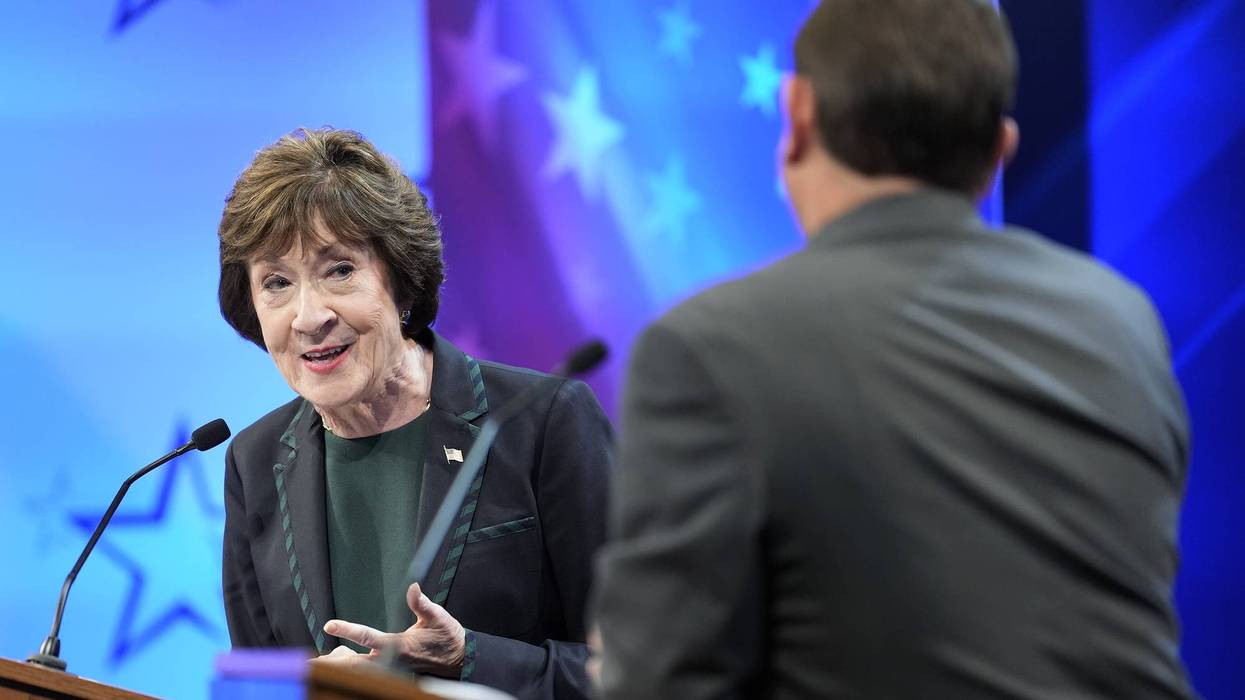
Led by Senate Finance Committee Chair Ron Wyden, four Democratic senators on Wednesday outlined plans to reduce the costs of prescription drugs after President Donald Trump claimed he would do so—only to allow Big Pharma companies to delay negotiating lower prices and secure "zero commitments" from top executives on making lifesaving medications more affordable for millions of Americans.
“There is no greater fraud than Donald J. Trump when it comes to lower drug prices,” Wyden (D-Ore.) said. “Our doors are wide open to anybody who wants to take the bold next step forward on lowering drug costs for Americans."
Along with a "flash report" on Trump's "broken promises" regarding his pledge to bring drug prices down “to levels nobody ever thought was possible," Wyden sent a Dear Colleague letter to Democratic senators regarding his committee's plans to follow through with lowering costs.
"Finance Committee minority staff will dedicate substantial time and effort this year to developing the next generation of healthcare solutions that lower costs for American families," Wyden wrote. "These solutions will rein in Big Pharma’s outrageous price increases, lower costs for consumers, guarantee predictability for patients, and reduce wasteful government spending that pads the profits of big corporations. Alongside the co-signers of this letter, I invite you to be a part of this bold vision."
The letter, co-signed by Sens. Catherine Cortez Masto (D-Nev.), Peter Welch (D-Vt.), and Ruben Gallego (D-Ariz.), notes that "the only concrete drug pricing policy Trump enacted within the past year was a price hike for the biggest blockbuster cancer drugs on Earth, giving an $8.8 billion windfall to the pharmaceutical industry."
In contrast, the senators wrote, the Senate Finance Committee will develop policies to incorporate international pricing models into the Medicare drug price negotiation framework, including by allowing Health and Human Services Secretary Robert F. Kennedy Jr. to consider international prices as a factor or penalize drugmakers when pricing for US customers exceeds international benchmarks.
“Democrats are determined to bring prices down, and we’re willing to work with anyone to find concrete ways to do it."
The committee will also work to end Republican "blockbuster drug bailouts from negotiation," like the ones included in the One Big Beautiful Bill Act that shielded several high-priced drugs—including the cancer drug Keytruda—from Medicare price negotiations.
"The Republican budget bill contained a nearly $9 billion sweetheart deal that benefits the biggest drug companies by delaying or exempting some lifesaving medications from negotiation," reads the Democrats' flash report.
Gallego said that "when Big Pharma gets richer off the back of a grandmother struggling to pay for cancer medication, the system is broken."
"That’s what this is all about: Big Pharma execs sitting in their fancy corner offices profiting off of sick, working-class Americans,” the senator said. “We are not going to accept an America where millions of families live in fear of getting sick and needing to fill a prescription. We are going to fight and fight hard for a healthcare system that does what Donald Trump never did: actually lower costs for working families.”
The lawmakers emphasized that even if manufacturers are forced to lower drug prices, patients are not currently guaranteed to directly benefit, because as much as 45% of the $5.4 trillion the US spends on healthcare annually is "absorbed by middlemen such as insurers, pharmacy benefit managers (PBMs), and drug distributors."
"Healthcare middlemen profit when drug costs are high because they make money off of drug margin or payments that are linked to the price of a drug, ripping off patients who pay more than they should. Medicare Part D and the patients it serves should stop footing the bill for inflated drug prices and instead pay for drugs in a more transparent manner that reduces middleman margin," wrote the senators.
The Finance Committee will develop policies to eliminate abuses in the prescription drug supply chain including "egregious drug price markups," and to ensure that patient cost-sharing on drugs more closely aligns with the costs to plans and PBMs.
Finally, the Democrats said they would work to fix the "unmitigated disaster" that Trump and Kennedy have been "for innovation and drug development," as the administration has proposed slashing the National Institutes of Health budget by 40% and has cut off access to treatment for an estimated 74,000 patients who were enrolled in NIH clinical trials.
The Finance Committee, they said, plans to create new incentives for innovation and drug development, including through the tax code.
In their flash report, the Democrats wrote that while failing to force Big Pharma to the negotiating table to save money for Americans, Trump "has been parading Big Pharma executives through the White House, claiming to be cutting cost-saving deals with these corporations."
"One look under the hood reveals the truth: Trump is giving them a pass on tariffs, while receiving zero commitments about how they will lower costs for taxpayers and patients," they wrote. "Donald Trump is getting fleeced by Big Pharma CEOs, and Americans are going to foot the bill."
Welch said that the president "loves to talk a big game and make promises to working families about lowering prescription drug prices. But in reality, his administration is handling this like a PR problem: They’ve got to keep moving and talking about it, but then do nothing to really address the crisis."
“Democrats are determined to bring prices down, and we’re willing to work with anyone to find concrete ways to do it," said Welch. "We’re going to lower healthcare costs and ensure everyone can access affordable, lifesaving, and pain-relieving medication.”
“We know that patients have died basically waiting for evacuation," a WHO spokesperson said, "and that’s something which is horrible when you know just a few miles or kilometers outside that border help is available."
With only five Palestinians in need of medical evacuation from Gaza permitted to leave through the Rafah crossing after it reopened on Monday, health authorities in the exclave warned that the restrictions Israel is continuing to impose at the crossing could ultimately kill thousands of Palestinians who have been waiting for years for treatment as Israeli attacks have decimated Gaza's health system.
Zaher al-Wahidi, a spokesperson for the Gaza Health Ministry, told Al Jazeera Tuesday that although the crossing has reopened—a step that has been hailed as progress under the "ceasefire" agreement reached in October—the intense screening process Palestinians are subjected to by Israeli authorities at the entry point is "too complex."
About 20,000 patients in Gaza are awaiting medical evacuation, including about 440 people whose cases are critical and need immediate treatment.
Egyptian officials had said before the crossing reopened that 50 people were expected to cross from Gaza into Egypt per day, but al-Wahidi said that if the rate of crossing on Monday continues, "we would need years to evacuate all of these patients, by which time all of them could lose their lives while waiting for an opportunity to leave."
Al Jazeera reported that people hoping to leave Gaza must register their names with Egyptian authorities, who send the names to Israel's Shin Bet for approval. Palestinians then enter a checkpoint run by the Palestinian Authority and European Union representatives before Israeli officers use facial recognition software to identify those who are leaving.
Reporting for the outlet, Nour Odeh said the crossing process has been "humiliating" for Palestinians and exemplifies the "absolute control" Israel demands over the lives of people in Gaza.
"There were strip searches and interrogations, but now there are even more extreme elements. We’re hearing about people being blindfolded, having their hands tied, and being interrogated," said Odeh. "When we talk about security screening, and a person needing urgent medical care, that person is basically being denied medical attention."
Ambulances waited for hours on Monday on the Egyptian side of the border, ready to take patients to 150 hospitals across Egypt that have agreed to treat patients from Gaza, before five people were finally able to cross after sunset.
The process, said al-Wahidi, "will not allow us to evacuate patients and provide medical services to them to give them a chance at life."
About 30,000 Palestinians have also requested to return to Gaza, having fled the exclave after Israel began bombarding civilian infrastructure and imposing a total blockade on humanitarian aid in October 2023—retaliating against Gaza's population of more than 2 million people, about half of whom are children, for a Hamas-led attack on southern Israel.
But only about a dozen people were permitted to reenter Gaza on Monday, falling far short of the daily target of 50.
The Associated Press reported that Palestinians arrived at the border crossing with luggage that they were told they could not bring into Gaza.
“They didn’t let us cross with anything,” Rotana Al-Regeb told the AP after returning to Khan Younis. “They emptied everything before letting us through. We were only allowed to take the clothes on our backs and one bag per person.”
Another woman told Tareq Abu Azzoum of Al Jazeera that she was "blindfolded and interrogated by the Israeli military on her way back to Gaza," and other said "they were intercepted by Israeli-backed militias" who demanded information about armed groups in Gaza.
For people who have waited months or years to return to Gaza, Abu Azzoum said, "the Rafah crossing has been a humiliating process instead of a day marking a beautiful reunion with family."
Palestinian political analyst Muhammad Shehada of the European Council on Foreign Relations said the process "means in practice that Israel has made the Rafah border crossing a one-way ticket. If you decide to go to Gaza, they tell you, 'Okay, you will be caged there permanently. Forget about being able to leave ever again.' If you decide to leave you will have to settle with the concept of being banished and exiled again, permanently, because the queue is so formidably long."
Palestinian analyst @muhammadshehad2 explains the restrictions that Israel has imposed at Rafah Crossing are so harsh that it would take approximately 10 years for all 150,000 Palestinians in Egypt to return to Gaza, and similarly long for the tens of thousands of patients and… https://t.co/FBy1TCAW3L pic.twitter.com/WwBA7rs4xC
— Drop Site (@DropSiteNews) February 2, 2026
On Tuesday, a World Health Organization (WHO) team arrived at a Palestinian Red Crescent hospital in Khan Younis to take about 16 patients with chronic conditions or injuries sustained in Israeli attacks to the Rafah crossing. The Red Crescent had previously been told 45 people would be able to cross on Tuesday.
Al Jazeera reported that health authorities in Gaza are being forced to choose which sick and wounded patients will be permitted to get treatment first.
“We know that patients have died basically waiting for evacuation," WHO spokesperson Christian Lindmeier said, "and that’s something which is horrible when you know just a few miles or kilometers outside that border help is available."
Senators who believe in compassion and human rights have a unique opportunity to pull back the agency’s powers by refusing to back an appropriations bill passed by the House of Representatives that would renew ICE's budget.
More Americans now support abolishing Immigration and Customs Enforcement, or ICE, than keeping it.
A January 13, 2026 Economist/YouGov poll found that 46% want to eliminate ICE, compared to 43% who support preserving it. It’s a trend that’s been growing since ICE agents have been running rampant in US cities during Donald Trump’s second term.
A majority of Americans in 2024 backed strict immigration enforcement, so this surge in anti-ICE sentiment likely stems from the agency’s draconian crackdown on immigrants, protesters, citizens, and even children. Most recently, federal agents shot and killed an ICU nurse named Alex Pretti in Minneapolis when he came to the defense of other protesters.
Pretti was only the latest casualty. On New Year’s eve, a Black man named Keith Porter was killed in Los Angeles, allegedly at the hands of an off-duty ICE officer with a documented history of abusing children and being racist and homophobic.
Imagine living in a nation where, instead of pouring our collective resources into hurting and killing our fellow human beings, we pay to house, feed, clothe, educate, and care for one another.
A week later in Minneapolis, ICE officer Jonathan Ross shot and killed a white woman named Renee Good in an incident that galvanized the nation.
During the same crackdown, ICE agents dragged an elderly Hmong American man into the street in his underwear in frigid temperatures after invading his home and terrorizing his family. Other agents tear-gassed a family of eight trying to get home from their son’s sporting event, causing their infant child to lose consciousness.
These are just the documented incidents involving US citizens. Meanwhile, immigrant children as young as 5 years old are being targeted and detained, and dozens of noncitizens have died in ICE custody.
Senators who believe in compassion and human rights have a unique opportunity to pull back the agency’s powers by refusing to back an appropriations bill passed by the House of Representatives. That bill, according to the American Civil Liberties Union, “would renew ICE’s excessive budget, with no strings attached, adding to the over $170 billion in taxpayer funds already allocated for immigration enforcement in July 2025.”
Although seven House Democrats voted for the bill alongside Republicans, a majority of Democrats voted against it and there are even rumblings within the party to support the idea of eliminating the agency altogether. Rep. Delia Ramirez (D-Ill.) recently introduced legislation to that effect.
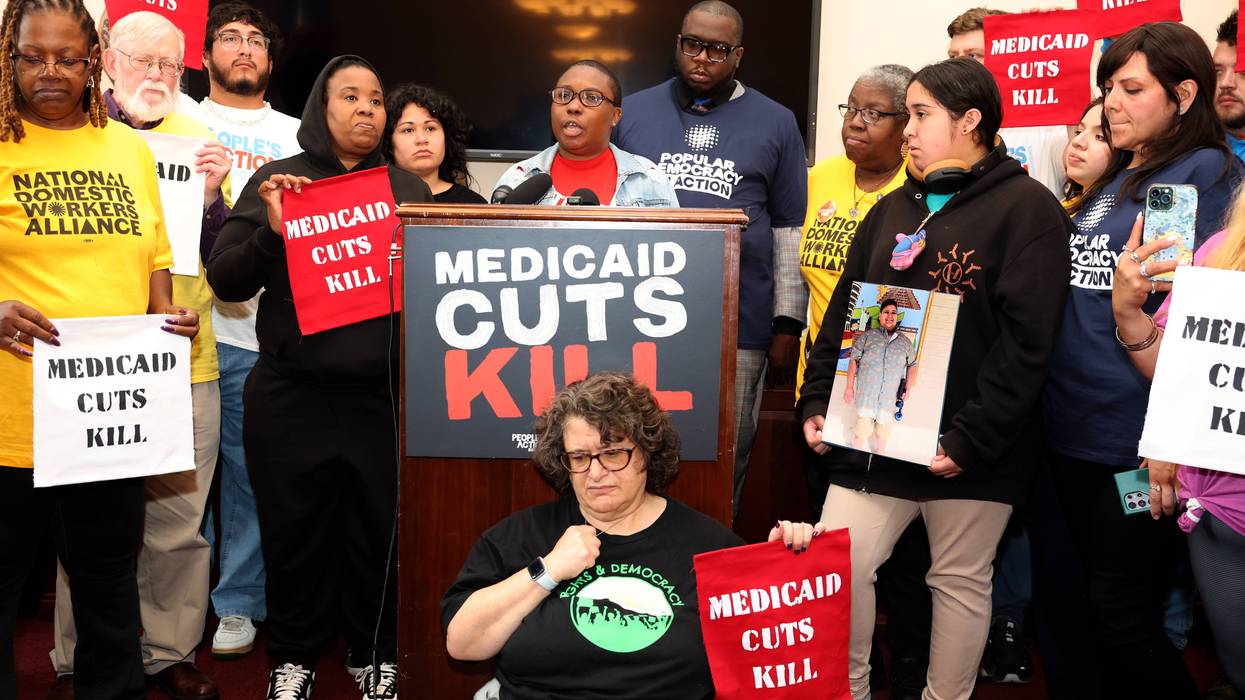
Abolishing ICE is not only good for human rights in the nation—it would also free up funding for such critical needs as healthcare. “My position has always been clear that ICE funding should be cut,” explained Rep. Alexandria Ocasio-Cortez (D-NY) after Good was shot, adding: “the cuts to your healthcare are what’s paying for this.”
She’s right. Trump’s “Big Beautiful Bill” deeply slashed Medicaid funding and allowed subsidies that lowered healthcare costs for Affordable Care Act plans to expire at the same time it hiked ICE funding to historic levels.
ICE funding comes out of the pockets of all working Americans—who are currently, absurdly, funding an agency with striking similarities to Hitler’s Brown Shirts. This comes at a time of continued economic insecurity for a majority of Americans.
For a microcosm of what it would look like to reverse the equation, look at New York City. In just a few weeks the city’s popular new mayor, Zohran Mamdani, who has clearly stated his desire to abolish ICE, has taken actionable steps toward affordable housing, universal childcare, and other bread-and-butter issues.
Imagine living in a nation where, instead of pouring our collective resources into hurting and killing our fellow human beings, we pay to house, feed, clothe, educate, and care for one another.
The Senate now faces such a choice. It was only after Pretti was killed that Senate minority leader Chuck Schumer (D-NY) signaled his party would take a stand and block the vote.
This can and should be the first step toward eliminating ICE altogether.