

SUBSCRIBE TO OUR FREE NEWSLETTER
Daily news & progressive opinion—funded by the people, not the corporations—delivered straight to your inbox.
5
#000000
#FFFFFF
To donate by check, phone, or other method, see our More Ways to Give page.
Daily news & progressive opinion—funded by the people, not the corporations—delivered straight to your inbox.
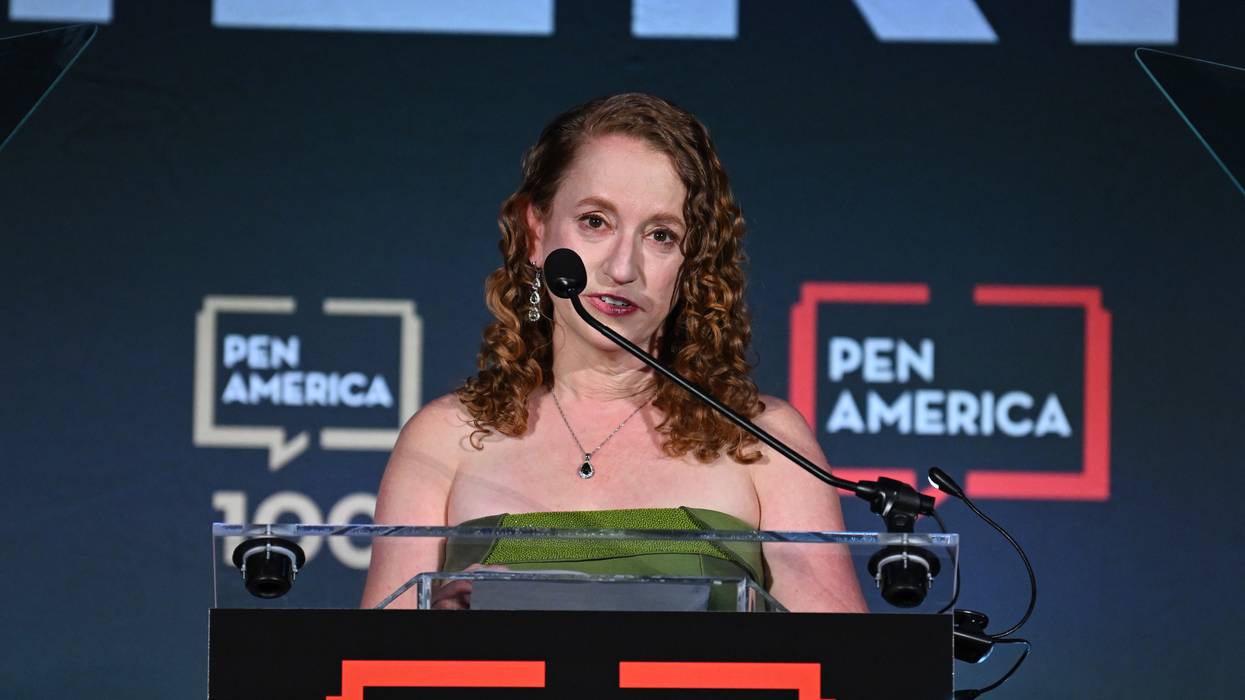
"We cannot, in good faith, align with an organization that has shown such blatant disregard of our collective values," a group of authors and translators wrote in an open letter.
The prominent free expression group PEN America announced Monday that it has canceled its 2024 literary awards ceremony amid growing backlash over the organization's response to Israel's assault on Gaza and alleged attempts to suppress dissent among its employees.
The decision came after nearly half of the authors nominated for PEN America awards withdrew their names from consideration, accusing PEN America of not sufficiently speaking out against Israel's war on Gaza and the dire consequences for free expression.
The awards ceremony was scheduled to take place on April 29 in Manhattan.
In an open letter released last week, dozens of authors and translators who refused to accept any honors from the organization wrote that "PEN America has remained shamefully unwilling to speak out against the systematic nature" of Israel's "often-targeted killings of Palestinian writers, professors, and journalists and their families."
"We stand in solidarity with one another and with the people of Palestine in our refusal to lend our names and tacit approval to PEN America's disgraceful inaction," reads the open letter, which demands the resignation of PEN America CEO Suzanne Nossel, president Jennifer Finney Boylan, and the group's entire executive committee.
"We cannot, in good faith, align with an organization that has shown such blatant disregard of our collective values," the letter adds. "We stand in solidarity with a free Palestine. We refuse to be honored by an organization that acts as a cultural front for American imperialism. We refuse to gild the reputation of an organization that runs interference for an administration aiding and abetting genocide with our tax dollars. And we refuse to take part in anything that will serve to overshadow PEN's complicity in normalizing genocide."
"We have been disgusted, for months, by the sight of these leaders clinging to a disingenuous façade of neutrality."
Clarisse Rosaz Shariyf, PEN America's literary programming chief officer, said in a statement Monday that "we greatly respect that writers have followed their consciences, whether they chose to remain as nominees in their respective categories or not."
"We regret that this unprecedented situation has taken away the spotlight from the extraordinary work selected by esteemed, insightful, and hard-working judges across all categories," Rosaz Shariyf added. "As an organization dedicated to freedom of expression and writers, our commitment to recognizing and honoring outstanding authors and the literary community is steadfast."
Outrage over PEN America's approach to Israel's war on the Gaza Strip has been intensifying for months.
In March, as Common Dreams reported at the time, Naomi Klein, Michelle Alexander, and other high-profile writers pulled out of the PEN World Voices Festival, accusing PEN America of betraying "the organization's professed commitment to peace and equality for all, and to freedom and security for writers everywhere."
After initially refusing to do so, PEN America late last month joined its global parent PEN International in calling for an immediate cease-fire in Gaza. But the organization's critics—including current and former employees—argue it has failed to clearly and forcefully condemn Israel's assault, which has killed more than 34,000 people in Gaza and fueled a catastrophic humanitarian emergency.
"We have been disgusted, for months, by the sight of these leaders clinging to a disingenuous façade of neutrality while parroting hasbara talking points," the open letter from PEN America award nominees states. "We have also been appalled to learn that management has sought to suppress the off-hours political speech and activity of its own workers, in part by suggesting language by which staffers could be punished for participating in any political activity that undermines PEN America's mission."
The Intercept reported late last month that PEN America staffers also raised concerns in December over Nossel's decision to visit Israel amid the country's devastating attack on Gaza.
"We are concerned that Suzanne Nossel's trip as planned will be perceived as a dismissal of the urgent and worsening humanitarian crisis in Gaza and free expression and human rights violations in the West Bank and in Israel," the staffers wrote.
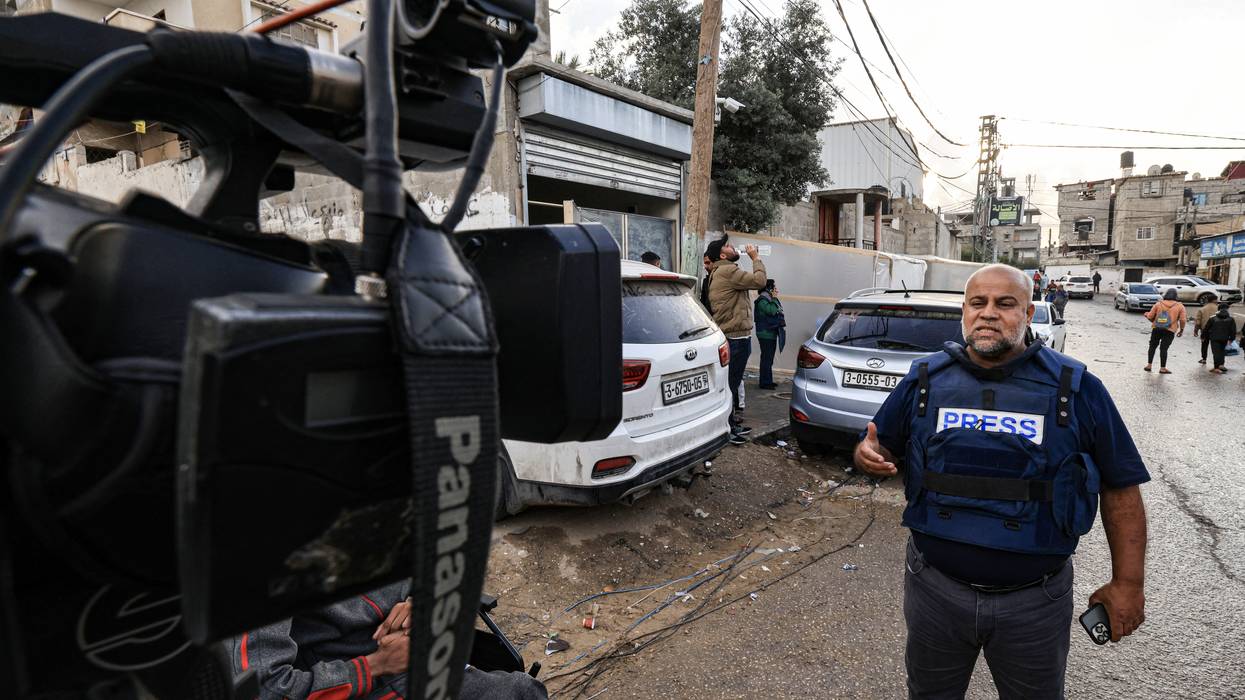
"After murdering multiple Al Jazeera journalists, Israel is now moving to expel the news organization entirely," said one advocacy group.
Israeli Prime Minister Benjamin Netanyahu pledged Monday to "immediately" move to ban Al Jazeera from broadcasting from Israel after the Knesset approved legislation that gives the country's government the power to shut down the operations of foreign media outlets deemed a threat to national security.
In a social media post, Netanyahu called the Qatari-owned network a "terrorist channel" and said he would use the new law to halt its activities in Israel.
"I welcome the law promoted by Communications Minister Shlomo Karai with the support of coalition members led by coalition chairman Ofir Katz," wrote Netanyahu.
Under the new law, the Israeli communications minister can ban foreign outlets with the prime minister's permission. The measure, which also gives Israeli authorities the power to confiscate a foreign media outlet's equipment, passed the Knesset in an overwhelming 71 to 10 vote.
The law's passage comes days after Al Jazeera broadcast video footage of Israeli soldiers gunning down two unarmed Palestinians in northern Gaza, one of whom was waving a piece of white fabric in a gesture of surrender. The footage showed Israeli bulldozers subsequently burying the two bodies under the sand of the beach where the killings took place.
"Israel continues to act as a rogue, authoritarian state with total impunity."
Al Jazeera has a bureau in Jerusalem and offices in the West Bank and Gaza, and it has covered Israel's assault on the Gaza Strip closely and critically, regularly reporting and broadcasting footage and eyewitness accounts of Israeli atrocities. Al Jazeera is one of the few international media outlets to broadcast live from Gaza during Israel's latest war on the Palestinian enclave.
The outlet's correspondents have been among the dozens of journalists killed, wounded, or detained by Israeli forces in Gaza since October 7.
Wael Dahdouh, Al Jazeera's Gaza bureau chief, was wounded by an Israeli missile attack in December. Israeli forces have killed five members of Dahdouh's family—including his son, Hamza, who was also an Al Jazeera journalist.
"After murdering multiple Al Jazeera journalists, Israel is now moving to expel the news organization entirely," Canadians for Justice and Peace in the Middle East wrote in response to the new law's passage. "Israel continues to act as a rogue, authoritarian state with total impunity."
Al Jazeera reported Monday that the Netanyahu government has been threatening to shutter the outlet and other publications for months under the guise of wartime security.
In a statement ahead of Monday's vote, the Association for Civil Rights expressed opposition to the proposed crackdown on foreign media outlets, arguing that the measure's "real purpose is not security-related but political: to allow the government to impose sanctions on foreign broadcasting tools whose broadcasts are not to its liking."
"In addition to the grave infringement on freedom of expression and freedom of the press, it also prohibits the court from overturning a non-proportional decision, effectively tying the court's hands from intervening in decisions regarding the closure of media outlets," the group said. "This is a direct continuation of the judicial overhaul, harming the courts and media outlets, all while cynically using war and security justifications."

Human Rights Watch examines how repressive governments use harassment, surveillance, and assassination to target dissidents.
A report published Thursday by Human Rights Watch details how governments around the world relentlessly target dissidents, journalists, and others beyond their borders, resorting to threats, harassment, and even abduction and assassination to silence those perceived as threats.
"Transnational repression looks different depending on the context," notes the new report. "Recent cases include a Rwandan refugee who was killed in Uganda following threats from the Rwandan government; a Cambodian refugee in Thailand only to be extradited to Cambodia and summarily detained; and a Belarusian activist who was abducted while aboard a commercial airline flight. Transnational repression may mean that a person's family members who remain at home become targets of collective punishment, such as the Tajik activist whose family in Tajikistan, including his 10-year-old daughter, was detained, interrogated, and threatened."
The report—titled "We Will Find You": Global Look at How Governments Repress Nationals Abroad—also highlights the well-known case of Jamal Khashoggi, a journalist and dissident who was violently murdered inside the Saudi consulate in Istanbul in 2018.
U.S. intelligence agencies concluded that Crown Prince Mohammed bin Salman, the de facto ruler of Saudi Arabia, "approved" the operation. Khashoggi's remains were never found.
The Saudi regime, an ally of the U.S., uses a number of tactics to silence dissidents, the new report notes, pointing to the targeting of family members of government critics, arbitrary arrests and disappearances, and surveillance.
In total, the report examines more than 75 cases of transnational repression committed by over two dozen governments.
"Governments responsible for transnational repression should be on notice that their efforts to silence critics, threaten human rights defenders, and target people based on their identity are no less problematic abroad than they are at home," the report states.
1/ Powerful new @HRW report today on how governments harass & abuse their citizens living abroad inc killings, kidnapping, misuse of Interpol, arrest of relatives at home. Urgent action needed by govts, EU, UN to stop this #TransnationalRepression https://t.co/zrT298Rjpo
— Hugh Williamson (@HughAWilliamson) February 22, 2024
The new report comes after the United Kingdom's High Court held two days of hearings on whether WikiLeaks founder Julian Assange—an Australian national who has spent the past five years in a high-security London prison—can appeal his extradition to the United States.
Advocacy groups, including Human Rights Watch, have described the case as a "grave" threat to press freedom and an attempt to "intimidate and silence" journalists worldwide.
Bruno Stagno, chief advocacy officer at Human Rights Watch, said Thursday that "governments, the United Nations, and other international organizations should recognize transnational repression as a specific threat to human rights."
"They should prioritize bold policy responses that are in line with a human rights framework and uphold the rights of affected individuals and communities," said Stagno.
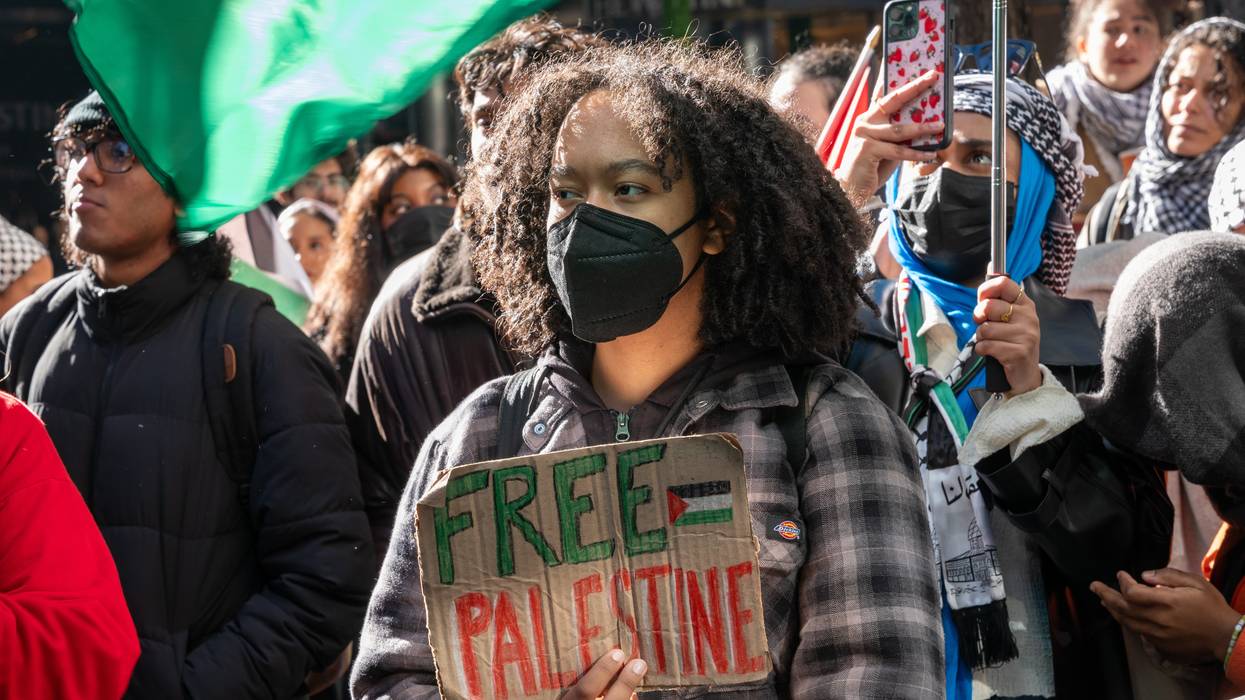
"The suppression of dissenting voices, at this moment, especially those advocating for peace and non-violence, is antithetical to the very foundations upon which our democracy stands."
More than 1,700 lawyers and law students on Tuesday urged the American Bar Association to take action to combat the growing trend of censorship and discrimination against those voicing solidarity with Palestinians amid Israel's devastating bombing campaign, ground invasion, and siege in Gaza.
Since Israel launched its latest military assault on the Gaza Strip following a deadly Hamas-led attack on October 7, there have been "increasing instances of discrimination and censorship faced by Palestinian, Muslim, Arab, South Asian, Black, Indigenous, immigrant, and other communities within law schools, universities, law firms, and other corporate entities, particularly due to their expression of support for the Palestinian people," the lawyers and students wrote in a newly released letter to the ABA.
"These incidents include rescinding job offers, terminating employees, and harassing and doxxing law students, among others," the letter states. "We share our grave concerns that the target of these incidents are law students and legal professionals seeking to uphold international law and Palestinian human rights. Censorship and retaliation cause democratic backsliding, against which our profession is one of the guardrails, and is antithetical to the very foundations of a free society."
The letter, which was also backed by a collective of more than 125 legal institutions, comes after Columbia University suspended two pro-Palestinian groups and the prominent New York-based law firm Davis Polk rescinded job offers for three Harvard and Columbia law students over their purported roles on campus organizations that signed a pair of statements in the wake of the October 7 attack.
One of the statements extended "heartfelt condolences to the individuals and communities at Columbia University affected by the tragic losses experienced by both Palestinians and Israelis" and argued that "the weight of responsibility for the war and casualties undeniably lies with the Israeli extremist government and other Western governments, including the U.S. government, which fund and staunchly support Israeli aggression, apartheid, and settler-colonization."
The other statement, released by the Harvard Palestine Solidarity Committee, argued that the events of October 7 "did not occur in a vacuum" and stated, "The apartheid regime is the only one to blame."
Davis Polk is reconsidering its decision for two of the students after they objected to the rescissions, saying they did not authorize the statements—neither of which named individual signatories.
After former Harvard president Larry Summers condemned the Harvard Palestine Solidarity Committee's statement on social media, Republican members of Congress and business leaders quickly seized on it and demanded retaliation against the signatories.
"I have been asked by a number of CEOs if Harvard would release a list of the members of each of the Harvard organizations that have issued the letter assigning sole responsibility for Hamas' heinous acts to Israel, so as to insure [sic] that none of us inadvertently hire any of their members," hedge fund billionaire Bill Ackman wrote. "If, in fact, their members support the letter they have released, the names of the signatories should be made public so their views are publicly known."
Within days of the Harvard statement's release, Harvard senior Rebecca Cadenhead reported for The Nation, "opponents of the letter began to post the personal information of students in the Palestine Solidarity Committee and other signatories."
"Currently, at least four websites list such personal information, and students have reported that hundreds of strangers have tried to contact their employers and families, targeted their social media accounts, and sent them intimidating messages, including death threats," Cadenhead added. "As a result, a list of the co-signing organizations was removed from the letter on the afternoon of October 10."
In their new letter, the coalition of lawyers and law students wrote that "academic and employment retaliations against individuals based on their beliefs, ethnic backgrounds, nuanced academic opinions, or religious affiliations not only infringe upon their rights to academic freedom but also silence important voices from our communities, which are necessary for a well-functioning pluralistic democratic society."
The letter calls on the ABA to take a number of steps to "aid in the reversal of the pervading atmosphere of fear and unlawful targeting of law students and lawyers," including urging law schools to "take proactive steps to protect their students" from doxxing campaigns and issuing "public guidance signaling its intolerance against any and all forms discriminatory retaliation."
"The suppression of dissenting voices, at this moment, especially those advocating for peace and non-violence, is antithetical to the very foundations upon which our democracy stands and our legal profession is built," the letter reads. "We remain hopeful that with the ABA's guidance, we can continue to create a more inclusive and just profession."

Such bills represent a growing effort to "hijack public education in America," said PEN America's Jonathan Friedman.
Over the past two and a half years, Republicans across the United States have introduced nearly 380 bills aimed at establishing a climate of fear among educators, librarians, and other school officials, according to a report released Wednesday by the free expression group PEN America.
Distinct from the outright censorship measures that GOP lawmakers have unveiled in a number of U.S. states in recent years, "educational intimidation" bills "pressure educators to be more timid in the content they teach, pressure librarians to be more restrictive in the books they make available to students, and pressure students to limit their self-expression, without imposing direct prohibitions," the new report notes.
"Put simply, these 'educational intimidation' provisions, as we dub them, empower the use of intimidation tactics to cast a broad chilling effect over K-12 classrooms by mandating new and intrusive forms of inspection or monitoring of schools, as well as new ways for members of the public—including, in some cases, citizens with no direct connection to the schools—to object to whatever they see that they do not like," the report adds.
Often introduced under the guise of protecting "parental rights," such bills require students to receive approval from their parents before taking part in any instruction related to gender identity, give parents and other state residents more power to review and protest instructional materials, prohibit school libraries from offering any material not deemed "age-appropriate," and more.
Between January 2021 and June 2023, PEN America found, a total of 392 educational intimidation bills were introduced across the U.S.—with the GOP leading 377 of them—and nearly 40 were signed into law in 19 states. Over roughly that same period, teachers and librarians reported a surge in written and verbal threats related to topics considered "politically controversial."
"Of the intimidation bills introduced in 2023," PEN observed, "45% have an anti-LGBTQ+ provision, including the forced outing of students."
Jonathan Friedman, director of Free Expression and Education programs at PEN America, said that the "rising tide of educational intimidation exposes the movement that cloaks itself in the language of 'parental rights' for what it really is: a smoke screen for efforts to suppress teaching and learning and hijack public education in America."
"The opportunity for parents to inspect and object to school curricula is already commonly granted in public school systems, as it should be," Friedman added. "But this spate of provisions dramatically expands these powers in ways that are designed to spur schools and educators to self-censor. These bills risk turning every classroom into an ideological battleground, forcing teachers out of the profession, and jeopardizing the future of millions of students."
"These bills are not what they seem. They are the next phase in a years-long campaign to incite panic and impose ideological strictures on schools."
Missouri lawmakers have introduced the most educational intimidation bills in the U.S. at 31, with Texas, Oklahoma, and South Carolina not far behind.
"Florida, perhaps the country's greatest laboratory for educational censorship, has already demonstrated the dangers posed by such measures," PEN America noted.
As the new report explains:
HB 1467, enacted in 2022, requires school districts to take actions that sound reasonable on their face: to post online, in a “searchable format,” a list of all instructional materials used in the district and a list of all library materials and mandatory reading lists.47 Rules from the Florida Board of Education clarified that this law extends to classroom libraries, meaning educators have to include all books in one's classroom in a search database as well...
In Florida and across the country, many school districts already make their library catalogs available to parents or members of the public. But in legislating them to do so, especially when in conjunction with reinforcing citizens’ rights to lodge objections and requiring objections to be reported to the state, the true intent of the law becomes clear: to encourage ideologues to use the law to scan school collections and protest inclusion of any books to which they object, and to mobilize state pressure on local school districts. Indeed, the net effect of the bill has been to prompt librarians and educators to take the most risk-averse approach possible toward potentially controversial books. Reports out of Florida's Manatee and Duval Counties have detailed the near-total suspension of students' access to classroom libraries while collections underwent new processes of review in response to the law.
HB 1467 has also made it easier for censorship-minded activists to use school districts' published lists of instructional materials and library resources as targets for their ideological offensives. In Clay County, Bruce Friedman, leader of the local chapter of No Left Turn in Education, has been successful at getting hundreds of books temporarily or permanently removed from school library shelves, and has told journalists he has a list of thousands of titles to challenge. The same scenario is playing out in Florida's St. Lucie County, where Dale Galiano, a local retiree with no children in the school system, has made it her mission to challenge what she considers inappropriate books.
Republicans at the federal level have embraced the sweeping educational intimidation push.
PEN America's report points to a 2022 Republican National Committee memo encouraging candidates to focus on "parental rights" instead of critical race theory, which the GOP has turned into a bogeyman and used to justify further attacks on public education.
In March, the Republican-controlled U.S. House of Representatives passed the Parents Bill of Rights Act, legislation that resembles educational intimidation bills introduced at the state level.
"These bills are not what they seem," Friedman said Wednesday. "They are the next phase in a years-long campaign to incite panic and impose ideological strictures on schools. Education in a democracy must be characterized by openness and curiosity, by the freedom to read, learn, and think. These bills strike at that foundation, in novel, sometimes subtle, yet potentially irrevocable ways. Their spread should not be taken lightly."

"We will never trade our First Amendment rights for cheap political points," said the civil liberties group.
The ACLU and other civil liberties groups accused the Montana GOP of running roughshod over free expression after Republican Gov. Greg Gianforte signed a bill completely banning TikTok in the state and prohibiting private companies from allowing Montanans to download the popular social media app.
Gianforte's move made Montana the first state in the U.S. to ban TikTok as congressional Republicans—and some Democrats—push for a federal ban or heavy restrictions, casting the short-form video platform as a national security threat with little to no supporting evidence.
TikTok is a subsidiary of the Chinese tech firm ByteDance. Gianforte echoed the typical GOP line on TikTok in a statement Wednesday, saying the new ban is aimed at protecting "Montanans' private data and sensitive personal information from being harvested by the Chinese Communist Party."
But the ACLU of Montana said in response that "there's no public evidence of harm that would meet the high bar set by the U.S. and Montana Constitutions" to justify a total ban on a widely used communication platform.
"With this ban, Governor Gianforte and the Montana legislature have trampled on the free speech of hundreds of thousands of Montanans who use the app to express themselves, gather information, and run their small business in the name of anti-Chinese sentiment," said Keegan Medrano, the ACLU of Montana's policy director. "We will never trade our First Amendment rights for cheap political points."
Montana's new ban, which is set to take effect on January 1, 2024, sets financial penalties of up to $10,000 a day for companies—including TikTok itself—that continue to make the app available for Montanans to download.
"This unconstitutional ban undermines the free speech and association of Montana TikTok users and intrudes on TikTok's interest in disseminating its users' videos," the Electronic Frontier Foundation wrote on Twitter. "It is a blatant violation of the First Amendment, whether it's done by Congress or Montana."
More than 150 million Americans use TikTok, according to the company's own figures.
Earlier this year, the Biden administration launched a fresh effort to force ByteDance to sell TikTok, reprising a failed pressure campaign first launched by the Trump White House. Late last year, President Joe Biden signed into law a spending bill containing a provision barring the TikTok app from devices issued by the federal government.
Congressional Republicans, including Sen. Josh Hawley (R-Mo.), have demanded legislative action to prohibit TikTok nationwide, drawing pushback from progressive lawmakers who say the push is fueled by dangerous anti-China sentiment and unfounded national security fears.
"I am opposed to efforts by some Republicans and Democrats to unilaterally ban an entire social media platform," Rep. Ilhan Omar (D-Minn.) said in a statement in late March, echoing Reps. Alexandria Ocasio-Cortez (D-N.Y.), Jamaal Bowman (D-N.Y.), and others.
"I don't like censorship," Omar added.
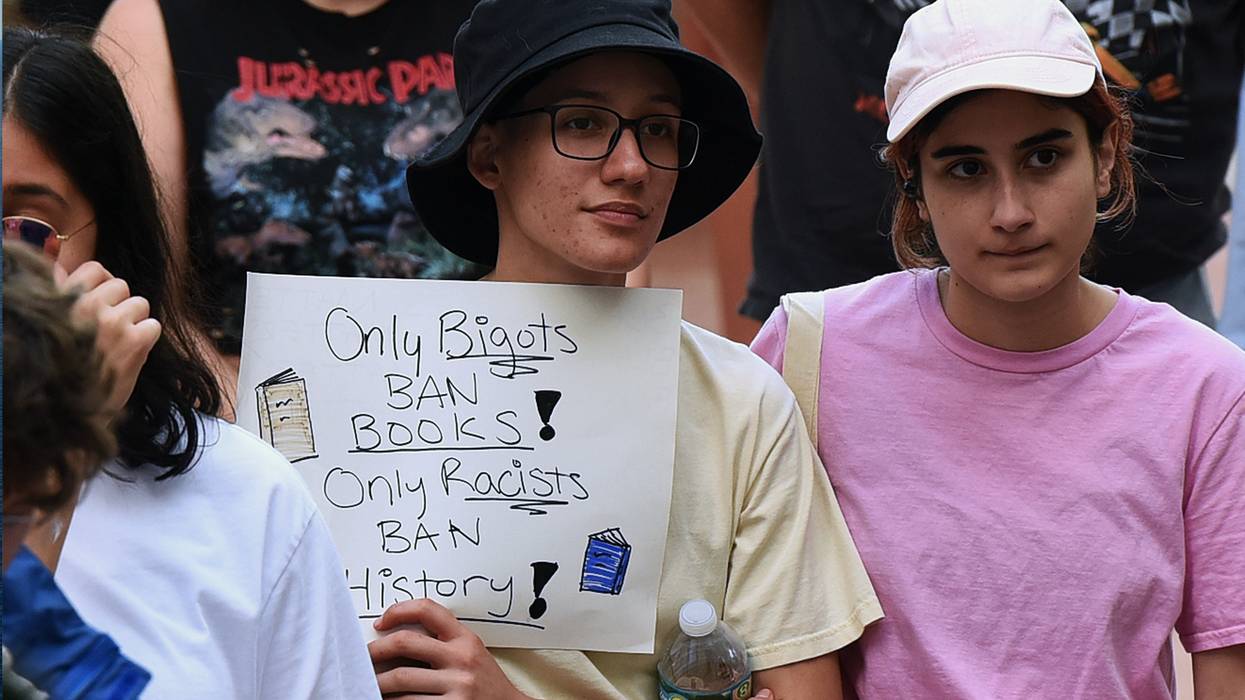
"Children in a democracy must not be taught that books are dangerous," asserted PEN America CEO Suzanne Nossel. "The freedom to read is guaranteed by the Constitution."
The free expression group PEN America on Wednesday joined Penguin Random House—the largest U.S. book publisher—and a group of authors and parents in a lawsuit challenging a Florida county school district's banning of titles about race and LGBTQ+ topics, a policy stemming from Republican Gov. Ron DeSantis' self-described "war on woke."
"Today, Escambia County seeks to bar books critics view as too 'woke,'" states the lawsuit, which was filed in the U.S. District Court for the Northern District of Florida and seeks to return proscribed titles to school libraries.
"In the 1970s, schools sought to bar Slaughterhouse-Five and books edited by Langston Hughes," the suit notes. "Tomorrow, it could be books about Christianity, the country's founders, or war heroes. All of these removals run afoul of the First Amendment."
According to The New York Times:
In Escambia County, the restrictions the lawsuit is concerned with began when Vicki Baggett, a language arts teacher at the district's Northview High School, challenged more than 100 titles beginning last year. Among them were picture books, young adult novels, and works of nonfiction. The complaint described her objections as "nakedly ideological," saying that she had argued that the books "should be evaluated based on explicit sexual content, graphic language, themes, vulgarity, and political pushes."
Among the books was And Tango Makes Three, about a penguin family with two fathers, which she objected to for "serving an LGBTQ agenda using penguins."
The school board—which is a defendant in the case, along with the district—has so far "voted to remove 10 books, some entirely and others from certain grade levels," the Times reported. "In each instance, the board did so despite a recommendation from a district-level committee of educators, media specialists, community members, and parents that the books remain in place."
PEN America CEO Suzanne Nossel said in a statement that "children in a democracy must not be taught that books are dangerous. The freedom to read is guaranteed by the Constitution."
"In Escambia County, state censors are spiriting books off shelves in a deliberate attempt to suppress diverse voices," Nossel added. "In a nation built on free speech, this cannot stand. The law demands that the Escambia County School District put removed or restricted books back on library shelves where they belong."
Penguin Random House CEO Nihar Malaviya said that "books have the capacity to change lives for the better, and students in particular deserve equitable access to a wide range of perspectives."
" Censorship, in the form of book bans like those enacted by Escambia County, [is] a direct threat to democracy and our constitutional rights," Malaviya added. "We stand by our authors, their books, and the teachers, librarians, and parents who champion free expression."
Lindsay Durtschi, an Escambia County parent and plaintiff in the suit, argued that "without diverse representation in literature in school libraries and inclusive dialogue in the classroom, we are doing irreparable harm to the voices and safety of students in Florida."
"Our children need the adults in their lives to stand up for the promise of inclusion and equity," Durtschi added.
The new lawsuit comes amid a relentless attack by DeSantis—a likely 2024 Republican presidential candidate—on educational freedom from kindergarten through the university level.
On Wednesday, DeSantis signed a bill extending the so-called "Don't Say Gay or Trans" law—which prohibits classroom discussions of sexual orientation or gender identity—to include all grades K-12.
The governor has also replaced key state education officials with right-wing allies who toe his "anti-woke" line, while stoking a climate of fear in which educators have removed books from classroom libraries to avoid running afoul of bans on titles dealing with race or LGBTQ+ issues.
Common Dreams reported last month that laws passed in Republican-controlled states have led to nearly 1,500 book bans nationwide during just the first half of the 2022-23 school year. This followed a record number of book bans last year, according to the American Library Association.