

SUBSCRIBE TO OUR FREE NEWSLETTER
Daily news & progressive opinion—funded by the people, not the corporations—delivered straight to your inbox.
5
#000000
#FFFFFF
To donate by check, phone, or other method, see our More Ways to Give page.
Daily news & progressive opinion—funded by the people, not the corporations—delivered straight to your inbox.
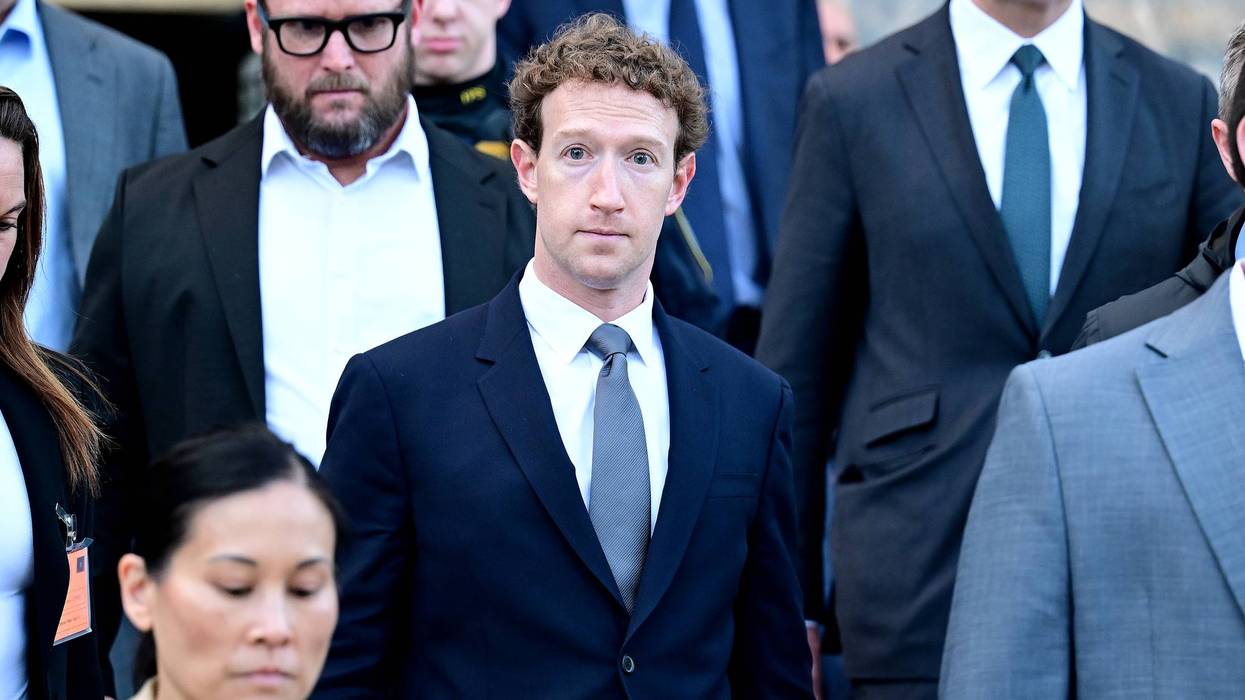
While the company plans to challenge the decision, the state's attorney general said the figure "should send a clear message to Big Tech executives that no company is beyond the reach of the law."
Democratic New Mexico Attorney General Raúl Torrez and other child advocates on Tuesday celebrated a state jury's landmark verdict against Meta, despite the social media giant's plans to fight the decision requiring it to pay $375 million in civil penalties.
"The jury's verdict is a historic victory for every child and family who has paid the price for Meta's choice to put profits over kids' safety," said Torrez, who had accused the company behind Facebook, Instagram, and WhatsApp of violating the state's Unfair Practices Act. "Meta executives knew their products harmed children, disregarded warnings from their own employees, and lied to the public about what they knew. Today, the jury joined families, educators, and child safety experts in saying enough is enough."
The Associated Press highlighted that "the landmark decision comes after a nearly seven-week trial, and as jurors in a federal court in California have been sequestered in deliberations for more than a week about whether Meta and YouTube should be liable in a similar case."
Torrez said that "New Mexico is proud to be the first state to hold Meta accountable in court for misleading parents, enabling child exploitation, and harming kids. In the next phase of this legal proceeding, we will seek additional financial penalties and court-mandated changes to Meta's platforms that offer stronger protections for children."
"The substantial damages the jury ordered Meta to pay should send a clear message to Big Tech executives that no company is beyond the reach of the law," he added. "Policymakers and law enforcement officials across the country can help make this verdict a turning point in the fight for children's safety. This is a watershed moment for every parent concerned about what could happen to their kids when they go online—and this victory belongs to them."
Josh Golin, executive director of the nonprofit Fairplay, welcomed the verdict. He said in a statement that "we've known for years that Meta enables the sexual exploitation of children. Now, that has been proven by a jury."
"As an organization that fights to protect children from Big Tech's deadly business model, Fairplay thanks Attorney General Torrez for his leadership in taking Meta to court," Golin continued. "Between this case and the ongoing trial in Los Angeles, parents, survivors, and state officials are doing their part to hold Big Tech accountable. Now, it's time for our leaders in the US Congress to get off the sidelines and pass the Senate's version of the Kids Online Safety Act to force these companies to change their addictive and dangerous product designs."
As Common Dreams has reported, while a diverse coalition supports the Kids Online Safety Act, civil rights groups have also expressed concerns about the legislation. Jenna Leventoff, senior policy counsel at the ACLU, warned last year that "the overbroad language in KOSA and similar legislation risks censoring everything from jokes and hyperbole to useful information about sex ed and suicide prevention."
Amid celebrations over the New Mexico jury's decision on Tuesday, Meta said in a statement that "we respectfully disagree with the verdict and will appeal. We work hard to keep people safe on our platforms and are clear about the challenges of identifying and removing bad actors or harmful content. We will continue to defend ourselves vigorously, and we remain confident in our record of protecting teens online."
NBC News noted that "separately, Meta is facing thousands of lawsuits accusing it and other social media companies of intentionally designing their products to be addictive to young people, leading to a nationwide mental health crisis. Some of the lawsuits, which have been filed in both state and federal courts, seek damages in the tens of billions of dollars, according to Meta’s filings with financial regulators."

"AI toys are not safe for kids," said a spokesperson for the children's advocacy group Fairplay. "They disrupt children's relationships, invade family privacy, displace key learning activities, and more."
As scrutiny of the dangers of artificial intelligence technology increases, Mattel is delaying the release of a toy collaboration it had planned with OpenAI for the holiday season, and children’s advocates hope the company will scrap the project for good.
The $6 billion company behind Barbie and Hot Wheels announced a partnership with OpenAI in June, promising, with little detail, to collaborate on "AI-powered products and experiences" to hit US shelves later in the year, an announcement that was met with fear about potential dangers to developing minds.
At the time, Robert Weissman, the president of the consumer advocacy group Public Citizen, warned: “Endowing toys with human-seeming voices that are able to engage in human-like conversations risks inflicting real damage on children. It may undermine social development, interfere with children’s ability to form peer relationships, pull children away from playtime with peers, and possibly inflict long-term harm."
In November, dozens of child development experts and organizations signed an advisory from the group Fairplay warning parents not to buy the plushies, dolls, action figures, and robots that were coming embedded with "the very same AI systems that have produced unsafe, confusing, or harmful experiences for older kids and teens, including urging them to self harm or take their own lives."
In addition to fears about stunted emotional development, they said the toys also posed security risks: "Using audio, video, and even facial or gesture recognition, AI toys record and analyze sensitive family information even when they appear to be off... Companies can then use or sell this data to make the toys more addictive, push paid upgrades, or fuel targeted advertising directed at children."
The warnings have proved prescient in the months after Mattel's partnership was announced. As Victor Tangermann wrote for Futurism:
Toy makers have unleashed a flood of AI toys that have already been caught telling tykes how to find knives, light fires with matches, and giving crash courses in sexual fetishes.
Most recently, tests found that an AI toy from China is regaling children with Chinese Communist Party talking points, telling them that “Taiwan is an inalienable part of China” and defending the honor of the country’s president Xi Jinping.
As these horror stories rolled in, Mattel went silent for months on the future of its collaboration with Sam Altman's AI juggernaut. That is, until Monday, when it told Axios that the still-ill-defined product's rollout had been delayed.
A spokesperson for OpenAI confirmed, "We don't have anything planned for the holiday season," and added that when a product finally comes out, it will be aimed at older teenagers rather than young children.
Rachel Franz, director of Fairplay’s Young Children Thrive Offline program, praised Mattel's decision to delay the release: "Given the threat that AI poses to children’s development, not to mention their safety and privacy, such caution is more than warranted," she said.
But she added that merely putting the rollout of AI toys on pause was not enough.
"We urge Mattel to make this delay permanent. AI toys are not safe for kids. They disrupt children's relationships, invade family privacy, displace key learning activities, and more," Franz said. "Mattel has an opportunity to be a real leader here—not in the race to the bottom to hook kids on AI—but in putting children’s needs first and scrapping its plans for AI toys altogether.”

"Online platforms use sophisticated and opaque techniques of data collection that endanger young people and put their healthy development at risk," said one children's advocate.
Child welfare advocates renewed calls for U.S. lawmakers to pass a pair of controversial bills aimed at protecting youth from Big Tech's "dangerous and unacceptable business practices" after the Federal Trade Commission published a report Thursday detailing how social media and streaming companies endanger children and teens who use their platforms.
The FTC staff report—entitled A Look Behind the Screens: Examining the Data Practices of Social Media and Video Streaming Services—"shows how the tech industry's monetization of personal data has created a market for commercial surveillance, especially via social media and video streaming services, with inadequate guardrails to protect consumers."
The agency staff examined the practices of Meta platforms, which include Facebook, Instagram, and WhatsApp; YouTube; X, formerly known as Twitter; Snapchat; Reddit; Discord; Amazon, which owns the gaming site Twitch; and ByteDance, the owner of TikTok.
"The report finds that these companies engaged in mass data collection of their users and—in some cases—nonusers," Bureau of Consumer Protection Director Samuel Levine said in the paper. "It reveals that many companies failed to implement adequate safeguards against privacy risks. It sheds light on how companies used our personal data, from serving hypergranular targeted advertisements to powering algorithms that shape the content we see, often with the goal of keeping us hooked on using the service."
The publication "also finds that these practices pose unique risks to children and teens, with the companies having done little to respond effectively to the documented concerns that policymakers, psychologists, and parents have expressed over young people's physical and mental well-being."
FTC Chair Lina Khan said in a statement that "the report lays out how social media and video streaming companies harvest an enormous amount of Americans' personal data and monetize it to the tune of billions of dollars a year."
"While lucrative for the companies, these surveillance practices can endanger people's privacy, threaten their freedoms, and expose them to a host of harms, from identify theft to stalking," she added.
Researchers at Boston Children's Hospital and Harvard University published an analysis last December that revealed social media companies made nearly $11 billion in 2022 advertising revenue from U.S.-based users younger than 18.
According to the FTC report:
While the use of social media and digital technology can provide many positive opportunities for self-directed learning, forming community, and reducing isolation, it also has been associated with harms to physical and mental health, including through exposure to bullying, online harassment, child sexual exploitation, and exposure to content that may exacerbate mental health issues, such as the promotion of eating disorders, among other things.
The publication also flags "algorithms that may prioritize certain forms of harmful content, such as dangerous online challenges."
The report accuses social media companies of "willful blindness around child users" by claiming that there are no children on their platforms because their sites do not allow them to create accounts. This may constitute an attempt by the companies to avoid legal liability under the Children's Online Privacy Protection Act Rule (COPPA). Last December, Khan
proposed sweeping changes to COPPA to address the issue.
Josh Golin, executive director of Fairplay—a nonprofit organization "committed to helping children thrive in an increasingly commercialized, screen-obsessed culture"—said in a statement that "this report from the FTC is yet more proof that Big Tech's business model is harmful to children and teens."
"Online platforms use sophisticated and opaque techniques of data collection that endanger young people and put their healthy development at risk," Golin added. "We thank the FTC for listening to the concerns raised by Fairplay and a coalition of advocacy groups, and we call on Congress to pass COPPA 2.0, the Children and Teens' Online Privacy Protection Act, and KOSA, the Kids Online Safety Act, to better safeguard our children from these companies' dangerous and unacceptable business practices."
On Wednesday, the House Energy and Commerce Committee voted to advance COPPA 2.0 and KOSA, both of which were overwhelmingly passed by the Senate in July.
However, rights groups including the ACLU condemned KOSA, which the civil liberties organization warned "would violate the First Amendment by enabling the federal government to dictate what information people can access online and encourage social media platforms to censor protected speech."
In May 2023, U.S. Surgeon General Dr. Vivek Murthy issued an advisory on "the growing concerns about the effects of social media on youth mental health."
The White House simultaneously announced the creation of a federal task force "to advance the health, safety, and privacy of minors online with particular attention to preventing and mitigating the adverse health effects of online platforms."
Murthy has also called for tobacco-like warning labels on social media to address the platform's possible harms to children and teens.
According to a study published in January by the corporate power watchdog Ekō, in just one week that month there were more than 33 million posts on TikTok and Meta-owned Instagram "under hashtags housing problematic content directed at young users," including suicide, eating disorders, skin-whitening, and so-called "involuntary celibacy."

Sen. Ron Wyden echoed their concerns that "a future MAGA administration could still use this bill to pressure companies to censor gay, trans, and reproductive health information."
As the U.S. Senate on Tuesday overwhelmingly passed legislation intended to better protect children on the internet, rights groups renewed their intense criticism of parts of the package.
The Senate voted 91-3 on the Kids Online Safety and Privacy Act (KOSPA), which includes the Children's and Teens Online Privacy Protection Act (COPPA 2.0) as well as the controversial Kids Online Safety Act (KOSA), which opponents say "makes kids less safe."
KOSA requires online platforms to enable the strongest privacy settings for children by default as well as prevent and mitigate specific dangers to them. It also requires independent audits and research. Critics argue some provisions would "threaten young people's privacy, limit minors' access to vital resources, and silence important online conversations for all ages."
The trio who voted against the bill on Tuesday was Sens. Mike Lee (R-Utah), Rand Paul (R-Ky.), and Ron Wyden (D-Ore.), a longtime privacy advocate who said on social media last week that "the final version of this bill is improved" but he would still vote no.
"The changes that I, LGBTQ+ advocates, parents, student activists, civil rights orgs, and others have fought for over the last two years have made it less likely that the bill can be used as a tool for MAGA extremists to wage war on legal and essential information to teens," Wyden said.
"While constructive, these improvements remain insufficient," he continued. "I fear KOSA could be used to sue services that offer privacy technologies like encryption or anonymity features that kids rely on to communicate securely and privately without being spied on by predators online."
Wyden added that "I also take very seriously concerns voiced by the American Civil Liberties Union, Fight for the Future, and LGBTQ+ teens and advocates that a future MAGA administration could still use this bill to pressure companies to censor gay, trans, and reproductive health information."
The ACLU and Fight for the Future reiterated those concerns on Tuesday, joined at a press conference by leaders of the Electronic Frontier Foundation, TransOhio, and Woodhull Freedom Foundation.
"We need legislation that addresses the harm of Big Tech. And still lets young people fight for the type of world that they actually want to grow up in," declared Evan Greer, director at Fight for the Future.
Jenna Leventoff, senior policy counsel at the ACLU, said that "as state legislatures and school boards across the country impose book bans and classroom censorship laws, the last thing students and parents need is another act of government censorship deciding which educational resources are appropriate for their families."
The bill still needs to get through the Republican-controlled U.S. House of Representatives. Already, two of the chamber's leading progressives, Reps. Alexandria Ocasio-Cortez (D-N.Y.) and Maxwell Frost (D-Fla.) have come out against it. Leventoff declared that "the House must block this dangerous bill before it's too late."
Last week, the ACLU led over 300 students in a lobbying day on Capitol Hill to oppose the package.
"It's called the Kids Online Safety Act, but they have to consider kids' voices, and some of us don't think it will make us safer," Anjali Verma, a 17-year-old high school senior, said Tuesday. "We live on the internet, and we are afraid that important information we've accessed all our lives will no longer be available. We need lawmakers to listen to young people when making decisions that affect us."
Meanwhile, Senate Majority Leader Chuck Schumer (D-N.Y.) celebrated the package's passage, joined by Sens. Richard Blumenthal (D-Conn.), Marsha Blackburn (R-Tenn.), Bill Cassidy (R-La.), and Ed Markey (D-Mass.).
Cassidy and Markey spearheaded COPPA 2.0, which has not elicited criticism from rights groups the way KOSA has. They said in a joint statement that their bill's passage "is an overdue and much-needed victory" for young people and with the vote, "the Senate has sent a clear message that Big Tech's days of targeting and tracking kids and teenagers online are over."
"Enough with harmful targeted advertising," the senators said. "Enough with collecting deeply personal information on young people. Enough with ignoring the health and well-being [of] millions of young people. Enough with leaving teens and parents powerless to delete a mistaken social media post. Enough with lining Big Tech's pockets at the expense of our young people."
"To the parents, advocates, and young people who have been heroically fighting for these privacy protections for more than a decade, we thank you. We would not be here without your passion, commitment, and bravery," they added. "This vote is a breakthrough moment for tech regulation in the United States with Congress finally stepping up to the plate and putting real guardrails on Big Tech's pernicious business model."
Josh Golin, executive director of Fairplay and co-founder of ParentsSOS, said that "today's historic vote is a testament to the tireless efforts of parents who have lost their children to Big Tech's greed and an incredible coalition that believes a better internet for young people is possible. We thank Sens. Blackburn, Blumenthal, Cassidy, and Markey for introducing this game-changing legislation and call on the House to follow the Senate's lead."

Like cigarettes, online platforms denounced as products "whose business model depends on addicting kids."
U.S. Surgeon General Vivek Murthy on Monday called for warning labels on social media that address platforms' mental health effects on adolescents, drawing support from experts and advocacy groups.
Murthy issued the call in an op-ed in The New York Times, citing social media platforms' association with "significant mental health harms" for adolescents and connecting it to a mental health crisis among young people. He said he'd push for congressional action, which would be required for a formal surgeon general's warning to be issued.
"Why is it that we have failed to respond to the harms of social media when they are no less urgent or widespread than those posed by unsafe cars, planes, or food?" Murthy wrote. "These harms are not a failure of willpower and parenting; they are the consequence of unleashing powerful technology without adequate safety measures, transparency, or accountability."
The @Surgeon_General is telling everyone the extreme health and emotional dangers of social media for kids, and asking for phone-free schools AND design feature rules (no infinite scroll, filters, algorithmic addictions). https://t.co/fq5BcJdDHa
— Zephyr Teachout (@ZephyrTeachout) June 17, 2024
Murthy drew attention to the power disparity between parents who don't know how to keep their children safe and companies that can design products based on profit motives.
"There is no seatbelt for parents to click, no helmet to snap in place, no assurance that trusted experts have investigated and ensured that these platforms are safe for our kids," Murthy wrote. "There are just parents and their children, trying to figure it out on their own, pitted against some of the best product engineers and most well-resourced companies in the world."
Experts supported the surgeon general's call, noting that the ad-driven platforms—which vacuum up huge amounts of personal data regardless of the users age—are designed to be addictive for children.
"Social media today is like tobacco decades ago: It's a product whose business model depends on addicting kids," Josh Golin, executive director at Fairplay, an advocacy group, said in an emailed statement. "And as with cigarettes, a surgeon general's warning label is a critical step toward mitigating the threat to children."
Major social media platforms made nearly $11 billion in advertising revenue from U.S.-based users under age 18 in 2022, with YouTube alone making nearly $1 billion off of users age 12 and under, a recent study showed.
The human brain continues to develop until the mid-to-late 20s, and the prefrontal cortex that controls decision-making and prioritization of tasks is among the last parts to develop, according to the National Institute of Mental Health.
"We can give our children smartphones, or we can give them a childhood," X user John Stoffel said in response to the surgeon general's call. "We can't give them both."
NBC News reported Monday that social media companies gave a muted response to the surgeon general's warning.
Social psychologist Jonathan Haidt, author of The Anxious Generation, a new book that has amplified discussions of the harm social media may be inflicting on young people, praised the surgeon general on Monday. "Thank you, Surgeon General Murthy, for your leadership on this issue," Haidt wrote on X. "Yes, this is a consumer product that is unsafe for children and teens," he added.
Haidt has tied the rise of social media in the late 2000s to a prolonged rise in suicidal behavior since that time, though other experts have cited other possible causes, including "economic hardship, social isolation, racism, school shootings and the opioid crisis," according to The Times, which reported on the op-ed that it published.
In the op-ed, Murthy told the story of a Colorado woman whose teenage daughter had committed suicide after being bullied on social media. That woman is Lori Schott, a member of advocacy group Parents for Safe Online Spaces, who made a statement in conjunction with Fairplay on Tuesday.
"Just as we have strict warnings and regulations for car seats, baby formula, and the like, we must also ensure that parents and children are fully informed about the real dangers that social media can pose," Schott said.
Murthy's call for warning labels follows an advisory he put out last year warning of evidence of social media's "profound risk" to the mental health of children and adolescents, which drew praise from many medical and psychology associations.
Two proposed congressional bills, the Kids Online Safety Act (KOSA), which Fairplay supports, and an update to the existing Children and Teens' Online Privacy Protection Act, sometimes called COPPA 2.0, deal with social media regulation and data privacy. Murthy didn't specify support for either bill but did call for tighter regulations—and soon.
"One of the most important lessons I learned in medical school was that in an emergency, you don’t have the luxury to wait for perfect information," Murthy wrote. "You assess the available facts, you use your best judgment, and you act quickly."

The Ekō report came as a U.S. Senate panel held a hearing about online child sexual exploitation featuring testimony from five Big Tech CEOs.
As five Big Tech executives appeared before the U.S. Senate Judiciary Committee on Wednesday, the group Ekō released a report highlighting how "social media companies are not only failing to safeguard young users from harm, but actively profiting from it."
"This briefing serves as an urgent call for legislative action," says the 17-page publication from Ekō—previously called SumOfUs—which is addressed to the Senate panel on the first page and urges constituents to contact their members of Congress.
The report builds on Ekō research from 2021 and 2023. Again, the group focused on TikTok and Meta-owned Instagram, examining posts about "body image issues, skin whitening, mental health issues, including suicide and self-harm, as well as incel and misogynistic content."
"A handful of tech CEOs have manufactured a new public health crisis and it's harming kids with increasing ferocity."
"This updated research, conducted between January 18th-25th, 2024 provides concrete data for members of the committee on how this kind of problematic content not only remains rampant on the platforms but in some cases has increased in volume," the document states.
Ekō's investigation uncovered over 33.26 million posts on both platforms "under hashtags housing problematic content directed at young users."
Specifically, researchers found:
Meanwhile, the report points, "social media giants are making a staggering $11 billion in U.S. ad revenue from ads targeted at minors, and despite promising to take action to stop directing personalized ads to children, they continue to do so."
"Health experts are increasingly worried about the role of social media platforms in fueling the child mental health crisis, while
multiple studies have exposed the growing problem of child sexual exploitation online; and academics point to the growing evidence of addiction to social media among young people," the document adds, urging "decisive actions from lawmakers."
Ekō campaigner Maen Hammad echoed that call to action in a statement, saying that "this research underscores what we've known for a very long time now—a handful of tech CEOs have manufactured a new public health crisis and it's harming kids with increasing ferocity."
"Senators can ask Mark Zuckerberg as many questions as they like, but it's not going to fix the problem unless we also get robust new laws," Hammad added, referring to Meta's CEO. "The real question is how much more evidence do U.S. lawmakers need before they act to defend our children from these predatory tech monopolies."
In addition to Zuckerberg, whose company also owns Facebook, members of the Senate Judiciary Committee heard testimony from TikTok's Shou Chew, Snap's Evan Spiegel, Discord's Jason Citron, and Linda Yaccarino of X, the platform formerly called Twitter and owned by billionaire Elon Musk.
Ekō—which supports a full ban on surveillance advertising, the establishment of an algorithmic oversight board, and ending Big Tech's predatory business model based on personal data harvesting—was far from alone in demanding legislative action as the panel held its "Big Tech and the Online Child Sexual Exploitation Crisis" hearing.
"Another hearing, more evasions and deflections from big tech CEOs," Josh Golin of the child advocacy group Fairplay said Wednesday. "If Congress really cares about the families who packed the hearing today holding pictures of their children lost to social media harms, they will move the Kids Online Safety Act. Pointed questions and sound bites won't save lives, but KOSA will."
In September, Fairplay acknowledged concerns that KOSA "will have unintended consequences and cut off LGBTQ+ youth from online resources, or expand censorship powers" of right-wing state attorneys general, but said the group had consulted with "attorneys, leading queer advocates, First Amendment experts, and platform design experts who all agreed that any attempt by conservative AGs to censor LGBTQ+ content would not succeed."
However, some digital rights advocates remain concerned about KOSA and other internet-related bills including the Eliminating Abusive and Rampant Neglect of Interactive Technologies (EARN IT) Act; Strengthening Transparency and Obligation to Protect Children Suffering from Abuse and Mistreatment (STOP CSAM) Act; Cooper Davis Act; and Restricting the Emergence of Security Threats that Risk Information and Communications Technology (RESTRICT) Act.
"Strict privacy and antitrust legislation would... go a long way toward reducing harm and diminishing the power and dominance of Big Tech giants."
Fight for the Future director Evan Greer said Wednesday that "Big Tech is harming kids. That's not up for debate. We commend the parents and young people who are speaking up and demanding that lawmakers do something. Fight for the Future has worked for years to expose and address the harms of Big Tech monopolies and their surveillance capitalist business model."
"But unfortunately, today's hearing shows once again that many senators are actively helping Big Tech harm kids because they're more interested in creating sound bites for TV than the actual work of legislating," she argued. "Experts have repeatedly explained why, as written, dangerous and misguided bills like KOSA, STOP CSAM, and the EARN IT Act would make kids less safe, not more safe. Hundreds of thousands of young people and others have spoken up, calling for legislation that protects privacy rather than leads to censorship."
Greer suggested that "these bills could be amended to ensure they target specific harmful business practices like autoplay, infinite scroll, and use of minor's personal data to power recommendation algorithms, rather than being a blank check for censorship and expanding surveillance. Strict privacy and antitrust legislation would also go a long way toward reducing harm and diminishing the power and dominance of Big Tech giants."
While praising the Senate panel for "bringing social media CEOs in to testify on the harms their companies cause or exacerbate for kids and families," Demand Progress corporate power director Emily Peterson-Cassin also promoted antitrust bills on Wednesday.
"As the committee considers new legislation to address online harms to youth and families, we urge them to stay open-minded about types of solutions that could address these and other harms," she said. The American Innovation and Choice Online Act and Open Apps Market Act, she noted, "would weaken the power of large companies to command our attention and our money."
The Federal Trade Commission's rulemaking on commercial surveillance "could ensure our privacy and safety against the abuses that stem from a data-hoarding business model," she added. "These all have the potential to make the internet a better and safer place for everyone."
The U.S. 988 Suicide & Crisis Lifeline can be reached by calling or texting 988, or through chat at 988lifeline.org. It offers 24/7, free, and confidential support.

"Anyone who believes that children deserve to explore and play online without being tracked and manipulated should support this update."
To ensure that tech giants will not have "carte blanche with kids' data," as one advocacy group said, the Federal Trade Commission on Wednesday unveiled major proposed changes to the United States' online privacy law for children for the first time in a decade, saying that companies' evolving practices and capabilities require stronger protection for young people.
"Kids must be able to play and learn online without being endlessly tracked by companies looking to hoard and monetize their personal data," said FTC Chair Lina Khan as she announced proposed changes to the Children's Online Privacy Protection Act (COPPA) of 1998.
For more than two decades the law has restricted companies' online tracking of children through social media apps, video games, and advertising networks by requiring firms to obtain parental consent before gathering or using young users' personal information.
Platforms like Instagram and TikTok have sought to comply with COPPA by prohibiting children under age 13 from having accounts and requiring users to provide their birth dates, but regulators have accused several tech companies of failing to adequately protect children, and firms including Amazon, Google, and Epic Games have been hit with multimillion dollar penalties for COPPA violations.
Under the proposed changes, companies would be:
Education technology firms would also be permitted to collect and use students' personal information only for school-authorized educational purposes and not for commercial use, and COPPA Safe Harbor programs—industry groups which are permitted to seek FTC approval for self-regulatory guidelines that are the same as or stronger than COPPA's—would be required to publicly disclose their membership lists and report additional information to the FTC.
Haley Hinkle, policy counsel for children's digital advocacy group Fairplay, said the proposed rulemaking builds on the FTC's recent enforcement actions against companies including Epic Games—which charged users, including children, for unwanted purchases—and Meta, which misled parents about controls on its Messenger Kids app and about who could access kids' data.
"With this critical rule update, the FTC has further delineated what companies must do to minimize data collection and retention and ensure they are not profiting off of children's information at the expense of their privacy and well-being," Hinkle said. "Anyone who believes that children deserve to explore and play online without being tracked and manipulated should support this update."
Katharina Kopp, director of policy for the Center for Digital Democracy, said that strengthened online safeguards are "urgently needed" as markets and web companies increasingly pursue children "for their data, attention, and profits."
The rule will "help stem the tidal wave of personal information gathered on kids," Kopp said.
"The commission's plan will limit data uses involving children and help prevent companies from exploiting their information," she added. "These rules will also protect young people from being targeted through the increasing use of AI, which now further fuels data collection efforts. Young people 12 and under deserve a digital environment that is designed to be safer for them and that fosters their health and well-being. With this proposal, we should soon see less online manipulation, purposeful addictive design, and fewer discriminatory marketing practices."
Khan said the updated rules will make clear that safeguarding children's data online is the responsibility of tech firms.
"The proposed changes to COPPA are much-needed, especially in an era where online tools are essential for navigating daily life—and where firms are deploying increasingly sophisticated digital tools to surveil children," she said. "Our proposal places affirmative obligations on service providers and prohibits them from outsourcing their responsibilities to parents."
Zamaan Qureshi, co-chair of the Design It for Us coalition, said the proposed rules, which are subject to a 60-day public comment period before the FTC votes on them, "will make kids and teens much safer online."
"We applaud the FTC's new proposed rules that strengthen COPPA by centering the experience of children online, rather than Big Tech's bottom line," said Qureshi. "The proposed rule directly targets Big Tech's toxic business model by requiring the invasive practice of surveillance advertising to be off by default, limiting harmful nudges that keep young people coming back to the platform even when they don't want to, and including protections against the collection of biometric information."
"The FTC is acting where Congress has failed to, imposing strict rules for Big Tech who have spent years profiting off our personal information and data," Qureshi added. "This proposal should signal to Congress to act quickly in 2024 to advance bipartisan kids' privacy and safety legislation."

"It seems there's no legal theory, however far-fetched, that Meta won't deploy to avoid a full accounting of its harmful data practices," said one digital rights defender.
Meta Platforms—which owns Facebook, Instagram, and WhatsApp—on Wednesday sued the U.S. Federal Trade Commission six months after the agency proposed an order that would prohibit the tech giant from monetizing minors' data.
The lawsuit, which also names FTC Chair Lina Khan and Democratic Commissioners Rebecca Slaughter and Alvaro Bedoya as defendants, challenges what Meta claims is the agency's "structurally unconstitutional authority."
The legal action comes after the FTC in May proposed banning Meta from monetizing children's data, a practice regulators said violates the Children's Online Privacy Protection Act (COPPA). The FTC proposal aims to strengthen a 2019 consent decree prohibiting Meta—then called Facebook—from profiting off data collected from minors. As part of the settlement, the company agreed to pay a $5 billion fine for previous privacy violations.
Earlier this week, a federal judge denied a motion filed by Meta seeking the court's intervention in the company's dispute with the FTC.
"This is a blatant example of the company's ruthless profit-over-safety strategy," the Real Facebook Oversight Board, a watchdog group, said of the new lawsuit. "They claim they want regulation but when they realize their business model is threatened, they attack the regulator."
Emily Peterson-Cassin, digital rights advocate for the consumer advocacy group Public Citizen, said that "Facebook made an agreement with the FTC, and now it doesn't want to face the consequences of possible violations of that agreement."
"It's beyond cynical for Facebook to launch a legal attack on the FTC's authority to enforce an agreement the company voluntarily entered into," she added. "Facebook is accused of hurting and exploiting kids; the public needs the FTC to get to the bottom of those accusations and hold Facebook liable for any and all violations, without delay."
U.S. Sen. Elizabeth Warren (D-Mass.) said Meta suing the FTC is "like Big Tobacco trying to gut the [Food and Drug Administration] because they didn't want to be held accountable for hooking kids onto nicotine."
"The FTC has been around for over a century now," Warren added. "This agency is constitutional and using its powers to apply the law as written."
Sen. Ed Markey (D-Mass) also weighed in on Meta's lawsuit, saying that "Meta's baseless lawsuit is a weak attempt to avoid accountability for its repeated failures to protect kids' privacy online."
"When a Big Tech company wants to take the federal cop off the beat, it's probably because it doesn't want to be caught," the senator added. "For years, Meta has been willfully ignoring the problems it has created—including a privacy crisis, a teen mental health crisis, and an algorithmic injustice crisis—and this lawsuit is just the latest craven distraction."
According to the children's advocacy group Fairplay:
Meta has posed a threat to the privacy and welfare of young people in the U.S. for many years, as it targeted them to further its data-driven commercial surveillance advertising system. Scandal after scandal has exposed the company's blatant disregard for children and youth, with nearly daily headlines about its irresponsible actions coming from former-employees-turned-whistleblowers and major multistate and bipartisan investigations of state attorneys general. Despite multiple attempts by regulators to contain Meta's ongoing undermining of its user privacy, including through multiple FTC consent decrees, it is evident that a substantive remedy is required to safeguard U.S. youth.
"While many have noted social media's role in fueling the mental health crisis, the Federal Trade Commission has taken actual meaningful action to protect young people online by its order prohibiting serial privacy offender Meta from monetizing minors' data," Fairplay executive director Josh Golin said in a statement. "So it's not surprising that Meta is launching this brazen attack on the commission."
"Anyone who cares about the well-being of children—and the safety of American consumers—should rally to the defense of the commission and be deeply concerned about the lengths Meta will go to preserve its ability to profit at the expense of young people," Golin added.
Katharina Kopp, director of policy at the Center for Digital Democracy, said that "for decades Meta has put the maximization of profits from so-called behavioral advertising above the best interests of children and teens."
"Meta's failure to comply repeatedly with its 2012 and 2020 settlements with the FTC, including its noncompliance with the federal children's privacy law (COPPA), and the unique developmental vulnerability of minors, justifies the FTC to propose the modifications of Meta's consent decree and to require it to stop profiting from the data it gathers on children and teens," Kopp stated.
"It should not surprise anybody then that Meta is now going after the FTC with its lawsuit," she added. "But this attack on the FTC is essentially an attack on commonsense regulation to curtail out-of-control commercial power and an attack on our children, teenagers, and every one of us."
John Davisson, the litigation director at the nonprofit research group Electronic Privacy Information Center, asserted that "it seems there's no legal theory, however far-fetched, that Meta won't deploy to avoid a full accounting of its harmful data practices."
"The reason is clear," Davisson said. "A hearing before the FTC will confirm that Meta continues to mishandle personal data and put the privacy and safety of minors at risk, despite multiple orders not to do so."
"The changes FTC is proposing to Meta's exploitative business model can't come soon enough," he added. "We hope the court will reject Meta's latest attempt to run out the clock, as another federal court did just this week."
The FTC and Meta were already locked in a separate antitrust fight stemming from the agency's request for a federal court to force the company to sell Instagram and WhatsApp. That case has yet to go to trial.

"How can we expect kids to learn and teachers to teach when there are concerts, movies, parties, cyberbullies, shopping malls, and drug dealers in their pockets?" said the leader of a letter to the U.S. education secretary.
Dozens of parents, child advocates, and researchers this week called on U.S. Secretary of Education Miguel Cardona to issue an official advisory "urging U.S. K-12 schools to adopt phone-free policies" to "promote student achievement, foster educational excellence, and ensure an equitable experience for all."
"We are a community of individuals and organizations who see an academic, mental health, and teaching crisis in every state of the union that can be improved automatically and effectually with a single strategy: removing students' personal mobile devices from our places of learning (with notable exceptions for those with special educational or medical needs)," states the Monday letter to Cardona.
"If all students are phone-free during the school day, there will be less distraction, less inappropriate content viewed, less cyberbullying, less planned fights," the letter stresses. "There will be more focus on academics, development of social skills, and students engaging with each other—in class and at extracurricular activities."
In 2019-20—the most recent data available—nearly 77% of U.S. public schools prohibited nonacademic use of cellphones or smartphones during school hours, according to the National Center for Education Statistics. However, research suggests much more needs to be done.
As the letter details:
According to the Common Sense Media report, Constant Companion: A Week in the Life of a Young Person's Smartphone Use, released this month, "Phone use during school hours is nearly universal but varies widely, reflecting a patchwork of different school policies." 97% of participants used their phones during school hours for an average of 43 minutes per day. The majority of students' time was spent on social media (32%), gaming (17%), and YouTube (26%). Mobile devices are a deterrent to learning.
Those findings are part of the growing collection of research and reporting that the signatories—including experts in early childhood development, education, psychology, and technology—highlighted to make the case for phone-free U.S. schools.
Researchers and journalists have documented differences in students' note-taking and grades as well as "alarming" misuse of personal devices, "from sexting to air-dropping compromising photos to hundreds of classmates with one click, to purchasing drugs," the letter notes. A theater teacher in Colorado told The Denver Post that her students are "more hesitant to take risks in class because they fear that they will be recorded, the video will be posted online, and then they will be judged."
The journalism referenced in the letter also captures positive responses to well-implemented policies, such as "phone hotels" where kids stash their devices during instruction. Public school district superintendents from Illinois to Maine told Education Week that students have thanked them for ending the distraction of phones in class.
Florida's newly implemented statewide ban "has been extraordinarily positive for [students'] mental health from an anecdotal perspective," one principal told Education Week. "Our kids are way more engaged. The apathy that we had seen from them in the last year to two years has seemed to wane. They seem more like they're waking back up to a social experience."
In addition to an official U.S. Department of Education advisory, the letter signatories urged Cardona to "encourage state boards of education to offer grants, like those offered in Massachusetts," to implement policies on the use of electronic devices.
The letter emphasizes the urgency of the situation, citing U.S. Surgeon General Dr. Vivek Murthy's May advisory about the effects of social media on young people, which states that "at a moment when we are experiencing a national youth mental health crisis, now is the time to act swiftly and decisively to protect children and adolescents from risk of harm."
As Common Dreams reported, 41 states and the District of Columbia on Tuesday filed a pair of lawsuits against Meta, which owns Facebook and Instagram, to protect children from features they argue are designed to keep users addicted to social media.
Efforts to better protect kids from social media platforms and electronic devices used to access them are far from limited to the United States. The letter points to China, England, and France's education-related phone policies as well as a recent United Nations Educational, Scientific, and Cultural Organization (UNESCO) report that advocates for a global ban on smartphones in schools.
"Phones are polluting our schools. They sabotage the teaching and learning processes," said Lisa Cline of the Screen Time Action Network at Fairplay for Kids, who spearheaded the letter to Cardona, in a statement on Wednesday.
"We know empirically that they are distracting—by design—so it's not a fair fight," she added. "How can we expect kids to learn and teachers to teach when there are concerts, movies, parties, cyberbullies, shopping malls, and drug dealers in their pockets?"

The White House also announced actions to protect children online, winning praise for the administration's "continued commitment to creating a safer, less exploitative digital media environment for young people."
As U.S. Surgeon General Dr. Vivek Murthy on Tuesday issued an advisory calling attention to "the growing concerns about the effects of social media on youth mental health," the White House unveiled federal actions to better protect children online.
"The most common question parents ask me is, 'Is social media safe for my kids?'," Murthy said in a statement. "The answer is that we don't have enough evidence to say it's safe, and in fact, there is growing evidence that social media use is associated with harm to young people's mental health."
"Children are exposed to harmful content on social media, ranging from violent and sexual content to bullying and harassment. And for too many children, social media use is compromising their sleep and valuable in-person time with family and friends," he continued. "We are in the middle of a national youth mental health crisis, and I am concerned that social media is an important driver of that crisis—one that we must urgently address."
Up to 95% of youth ages 13-17 use social media, and over a third do so "almost constantly," Murthy's advisory notes. While most platforms require users to be at least 13 years old, nearly 40% of children ages 8-12 also report using social media.
"More research is needed to fully understand the impact of social media; however, the current body of evidence indicates that while social media may have benefits for some children and adolescents, there are ample indicators that social media can also have a profound risk of harm to the mental health and well-being of children and adolescents," the advisory warns.
"We must acknowledge the growing body of research about potential harms, increase our collective understanding of the risks associated with social media use, and urgently take action to create safe and healthy digital environments that minimize harm and safeguard children's and adolescents' mental health and well-being during critical stages of development," the document adds.
Along with detailing the benefits and pitfalls of young people using social media as well as the existing scientific research and which "critical questions remain unanswered," the advisory offers recommendations for policymakers, technology companies, researchers, parents and caregivers, and youth.
As The New York Times reported Tuesday:
The advisory joins a growing number of calls for action around adolescents and social media, as experts probe what role it may play in the ongoing teen mental health crisis. Earlier this month, the American Psychological Association issued its first-ever social media guidance, recommending that parents closely monitor teens' usage and that tech companies reconsider features like endless scrolling and the "like" button.
The American Psychological Association was among top medical organizations that applauded Murthy's release, with Arthur Evans Jr., the group's CEO and executive vice president, saying that "we support the advisory's recommendations and pledge to work with the surgeon general's office to help build the healthy digital environment that our kids need and deserve."
The advisory was also welcomed by leaders at the American Academy of Family Physicians, American Academy of Pediatrics, American Medical Association, American Psychiatric Association, American Public Health Association, and National Parent Teacher Association.
"Social media use by young people is pervasive," said Susan Polan associate executive director of public affairs and advocacy at the American Public Health Association. "It can help them, and all of us, live more connected lives—if, and only if, the appropriate oversight, regulation, and guardrails are applied."
"Now is the moment for policymakers, companies, and experts to come together and ensure social media is set up safety-first, to help young users grow and thrive," Polan added. "The surgeon general's advisory about the effects of social media on youth mental health issued today lays out a roadmap for us to do so, and it's critical that we undertake this collective effort with care and urgency to help today's youth."
The White House on Tuesday announced actions at the departments of Commerce, Education, Health and Human Services, Homeland Security, and Justice that "build upon" Murthy's advisory, including the creation of a task force as well as new regulations and resources.
President Joe Biden "has made tackling the mental health crisis a top priority, and he continues to call on Congress to pass legislation that would strengthen protections for children's privacy, health, and safety online," the White House said, noting that it is Mental Health Awareness Month.
"We applaud President Biden for today's executive actions and his continued commitment to creating a safer, less exploitative digital media environment for young people," said Josh Golin, executive director of the advocacy group Fairplay. "We are particularly excited by the plans to help schools use technology in ways that support students' learning and mental health."
"We urge Congress to follow the president's lead in putting the well-being of children ahead of Big Tech's profits by passing the Kids Online Safety Act and COPPA 2.0," Golin added, referring to bills also called KOSA and the Children and Teens' Online Privacy Protection Act.
Dozens of rights groups have expressed free speech and privacy concerns about KOSA along with three other bills backed by child safety advocates: the Cooper Davis Act, Eliminating Abusive and Rampant Neglect of Interactive Technologies (EARN IT) Act, and Strengthening Transparency and Obligation to Protect Children Suffering from Abuse and Mistreatment (STOP CSAM) Act.
When COPPA 2.0 was reintroduced earlier this month, Fight for the Future director Evan Greer—who has sounded the alarm about the other legislation—said that "we think federal data privacy protections should cover EVERYONE, not just kids, but overall this is a bill that would do some good and it does not have the same censorship concerns as bills like KOSA."