It’s time to get real about old age as a condition that, yes, desperately needs and deserves better resources and reverence, but also careful monitoring and culling. Such thinking is not a bias crime. It’s not even an alert for ancient drivers on the roads. It’s an alarm for tolerating dangerous old politicians who spread lies and send youngsters to war, while we continue to willfully waste the useful experience and energy of all ages.
Once you’ve accepted that you’ll look, feel, and be treated differently in old age, you’re also ready to accept the fact that you can be the master of your attitude and response.
We have to weaponize old age for good causes. We have to shake a mindset that allows us to warehouse people because their presence is an inconvenience while covering up for those with money and power. Out of shame or guilt or that feeling of elder helplessness, even smart old people all too often go along with arbitrary cut-off dates. I remember my dad, at 75 and retired, inveighing against the “dead wood,” especially in his field (education) that blocked progress and discouraged young energy and innovation. By 75, he maintained, people were sliding downhill, which was his way of justifying being shelved himself. He became increasingly depressed and listless, not because he was too old but because he had been made to feel useless.
Then, at 76, he was given the chance to help other old people with their tax returns and, ultimately, their confrontations with local government. He promptly perked up and became an active advocate for elder rights until his accidental death at 100.
My old friends and I talk constantly about our aging, how to suffer it, outwit it, gang up on it, or even strategically give in to it. We’ve decided that nobody in power is doing anything meaningful about it because, beyond exploitive eldercare, they haven’t figured out how to turn a profit.
Meanwhile, the really rich coots like Rupert Murdoch, at 93, are still tomcatting around and fussing with succession plans, while Warren Buffet, at 94, is cagily toying with his billions to avoid inheritance taxes.
Those old boys are anything but role models for me and my friends. After all, they’ve been practicing all their lives how to be rich old pigs, their philanthropy mirroring their interests, not the needs of the rest of us. In my pay grade, we’re expected to concentrate on tips from AARP newsletters on how to avoid telephone scams and falls, the bane of the geezer class. And that’s important, but it’s also a way of keeping us anxious and impotent.
Those Falls
This screed isn’t just the product of my stewing over old age. An incident in the parking lot of a big box store on the day after The Great Debate set me off.
Here’s what happened: An elderly man in the car beside mine stepped out of the driver’s seat, lowered his cane to the concrete, and pitched over flat on his face. His wife immediately ran to him from the passenger’s seat. I got there next, phone out, and asked her if I should call an ambulance. She was adamant: No! Within two minutes there were six of us, including four elderly gents, helping him turn himself over and sit up. There was no blood on his face, just one skinned kneecap.
He shook off attempts to help him stand, looking angry, humiliated, and embarrassed. I finally rolled a shopping cart next to him and he used it to clamber to his feet. Even with his cane planted on the concrete, he still seemed shaky, but he got right back in his car with his wife and hurriedly drove off. The rest of us looked at each other and wordlessly drifted away.
I then sat in my car trying to sort out what I had just experienced. On the one hand, the quick response of a largely elderly crew was thrilling proof that we were still up for the game, that we could still help each other. But I found the embarrassed, almost hostile response of the fallen man—and the wife who obviously knew what he wouldn’t stand for—discouraging. Why hadn’t he acknowledged our desire to help him? Why had he driven off so brusquely without even checking himself out?
And why should he have felt so obviously mortified by a common accident? Because it was such a marker of old age? Why hadn’t the rest of us, me included, tried to be more persuasive about helping him? Were we too inappropriately understanding of old age’s sense of vulnerability, weakness, helplessness? The seeming diminution of manhood? Would a woman have acted differently?
I then mentioned it to a woman—my wife Lois and she promptly asked me, “Did it remind you of your fall?”
How had I forgotten that?
Just last winter, while walking the dog, my legs had slid out from under me on my icy driveway. I was suddenly flat on my back. I thought about inching down the driveway to a fence where I might be able to pull myself up. It would be a long trip, but…
A voice suddenly boomed out behind me. “You alright?”
“I’m fine, thanks,” I said as cheerily as I could.
“Yeah, right. It’s Jim Read.”
The local chief of police! I felt embarrassed. Strong hands boosted me up, guided me down the driveway to safe ground, and frisked me for broken bones. I barely had a chance to say thanks, before he was back in his patrol car, pulling away.
A few months later I ran into him. He shrugged off my thanks, as if he either didn’t remember my fall or considered it too commonplace to dwell on.
Role Models
Those incidents stay in my mind as symbolic of how routinely we oldsters shrink from confronting our vulnerabilities. And then I thought about two people I had once known and one I still see who faced them head-on
My prime role model, my dad, helped form my attitude toward aging and, in my own old age, he—or at least his memory—lives with me still. Above all, he taught me not to be afraid of the whole process. The second crucial figure—remember for years I was a sports reporter for The New York Times—was New York Yankee and then New York Mets manager Casey Stengel who showed me how aging could be used, for better and for worse. And my current inspiration, the 95-year-old artist Jules Feiffer, continues to offer me a blueprint for having a late working life. What they’ve all taught me is this: Once you’ve accepted that you’ll look, feel, and be treated differently in old age, you’re also ready to accept the fact that you can be the master of your attitude and response.
I met Stengel in 1962 at the first spring training of the New York Mets. He was then 71 years old, incredibly old to the 24-year-old sportswriter Robert Lipsyte. (And remember that “old” started much sooner then.) He was bitter at having recently been fired after a long and historic winning career with the Yankees. “I made the mistake of getting old,” he would tell me.
It does seem that old age almost always arrives at a bad time and it’s hard to kick the bad guys in the butt when you can’t raise your knee.
Most sportswriters readily accepted the decision of the Yankees and treated Stengel as a comical figure, too old to manage effectively. They wrote him off as “the ol’ Perfesser” and his rambling monologues as nonsensical “Stengelese,” when all conversation with him required was careful attention. (Mind you, I’m not innocent here. More than 60 years later, I still cringe at descriptions in articles I wrote then of his “pleated face” and scuttling, crab-like gait.)
Stengel could be cruel. One spring, he called a press conference and trotted out the two least talented rookies in training camp. He regaled the sportswriters with predictions about their potential and how they represented the future of the brand-new Mets. National and local press and TV outlets featured them. A few days later, they were cut from the team and never heard from again, corollary casualties of Casey’s revenge on the media.
At the time, I felt sorry for those young players. But even as one of the victims of his nasty prank, I couldn’t help appreciating how he had used our ageism against us. We swallowed his story. After all, how could that old coot bamboozle us?
But there was another side to Casey. That same first season with the Mets, on a muggy night in Houston during pre-game batting practice, I watched him respond to a middle-aged man, dragging a sullen-looking teenage boy, who beckoned from the stands. “I wonder if you remember me, Case,” he said, mentioning his name. “I pitched against you in Kankakee.” (He was referring to a pre-World War I minor-league team in Illinois at the start of Stengel’s long playing career.) The teenager kept trying to pull his father away.
Casey read the situation. He said, “The old fireballer himself. Why I was sure glad when you quit that league, I never could hit you a-tall.” Casey kept talking until it was time to manage the game.
The man and the boy returned to their seats, grinning, shoulders bumping. When I caught up to Casey, he just shrugged and then admitted he had no memory of who the man was.
Later, I told the story to one of the “Stengelese” sportswriters and he suggested Casey had staged the scene to impress The New York Times’ soft-hearted, liberal rookie reporter. “You should write that,” I responded. “It’s another way of looking at him, proves he’s still pretty sharp.”
“It’s not what the fans and the editors want,” the older sportswriter said. “They like the nutty old-fart stuff. It sells.”
The nutty old-fart stuff still sells—in the case of Joe Biden as a way to diminish, dismiss, or even demonize him. Soon after his debate debacle with Donald Trump, a stylish young editor at GQ asked me to write an old man’s take on the president’s situation, a welcome nod to experience. The first thing I thought of was how hard it is for any of us to give up what I call “the warm,” that cheering spotlight of attention. I thought of heavyweight champion Muhammad Ali, who I had ever so long ago covered as a reporter and how, in his final fights, he was humiliated because he couldn’t acknowledge getting older, losing strength and power, stuck as he was in the victory culture male’s sense of power and triumph, of never surrendering.
Biden must have shared that until he committed what functionally was political suicide, even if it was acclaimed as a selfless sacrifice.
My current inspiration, my friend and former neighbor Jules Feiffer, the famed Pulitzer Prize-winning cartoonist, is seriously hearing- and sight-impaired and can barely walk. But he can still think, laugh, and draw. Every day.
Jules is one of those “shining examples”—especially after his first attempt at a graphic novel for middle-graders, Amazing Grapes, just got a rave review in The New York Times and tons of attention (“mostly because I’m so old,” he assured me). But it’s his spirit, often mislabeled as “youthful” instead of humane, that offers hope. Even as he admittedly struggles to hang on to what’s left of his Bronx-born American dream in the Age of Trump, he never gives up on himself or his ability to keep nudging his readers toward their own sense of possibility and change. His nearly completed next book—yes, there already is one!—will be an illustrated commentary on his (and our) strange times.
Okay, so where do I go from here? In fantasy, Dad, Casey, and Jules would make a fine team to deal with this increasingly disturbed and disturbing world of ours. If only. But how exactly do we put such a team together? We’re all short-timers, no matter how old we get, but we can’t let the bad guys wait us out. We need to treat old age as an identity and ourselves as part of an ethnic-style group deserving attention.
Yes, it does seem that old age almost always arrives at a bad time and it’s hard to kick the bad guys in the butt when you can’t raise your knee. And somehow the shining examples of individual super seniors like Dad, Casey, and Jules tend to remain just that—shining examples—rather than models for small-scale collective action.
But consider this my call to (old) arms. After all these years, haven’t we earned the right to be loud and obstreperous?
A Gang of Elders
As the former president of my town’s senior citizen organization let me tell you this: Old age is just a wrinkled extension of who you’ve always been, whether you end up frolicking in a golf cart at a luxury retirement community or waiting in semi-darkness for Meals on Wheels.
The board of my group was made up of a dozen oldsters who variously worked remarkably hard or were remarkably lazy, proved innovative or simply obstructive in distinctly alert or zombie-like modes—pretty much, I thought, as they must have acted all their lives. The nice ones could be passive, the mean ones relentless. Institutional memory was generally a good thing, but all too often presented itself as numbing anecdotage. Those seniors I dealt with then defined themselves by class, education, or economic position, but rarely age. Beyond creaky joints, treated with wry humor, and recommended doctors, old never seemed to be a shared identity.
Why not? Maybe because we didn’t have a clear social mission. The group’s main job was supporting—by fundraising and lobbying—the town’s senior services, mostly nutritional and logistical. We did that well, from buying an $85,000 wheelchair-accessible bus to renovating the local church kitchen that serves much of the food at senior events. But we could never get it together for the next major step—creating a political force. Maybe we could get seniors out on election day, but we couldn’t get them to vote for the candidates that might serve their immediate interests, much less help deal with climate change, water quality, community housing, medical and healthy food accessibility, and the like.
We couldn’t mount a resistance. We couldn’t recapitulate the spirit of the Gray Panthers, the group formed in 1970 to combat forced retirement, reform nursing home practices, and protect social security. Founder Maggie Kuhn said: “Old age is not a disease—it is strength and survivorship, triumph over all kinds of vicissitudes and disappointments, trials and illnesses.”
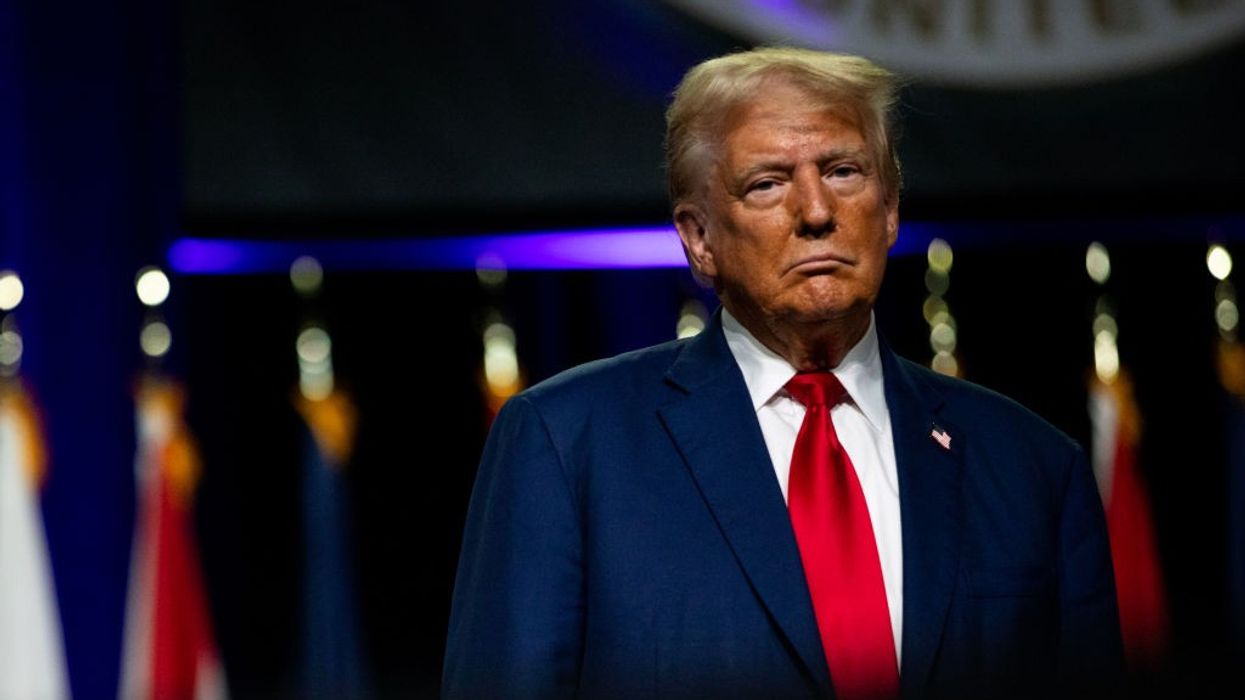
The Gray Panthers were created to be an intergenerational group although its energy came from the anger and experience of its older members. The Gray Panthers exist, working for peace and equal rights. Understandably it’s not a commercially sexy group and doesn’t get a lot of publicity. Still, in the age of Donald Trump, go join them anyway and remind the world that he is not what it means to be old, although statistically he would be our oldest president if the worst-case scenario occurs in November.
Or start your own club. Be a club of one. Register old people to vote and drive them to the ballot box. Don’t be shy. What have we got to lose? They can’t eat us, can they? Sharpen the end of your cane, affix spurs to the front of your wheelchair. Die trying.
While you’re at it just try not to fall. And if you do, let someone help you up.