'Era of Unconstrained Nuclear Competition' Looms With US-Russia New START Treaty Expiring
“The United States and Russia already have enough deployed nuclear weapons to kill tens of millions of people in an hour and devastate the world," said one expert, warning a lapse will "only make the world less safe."
If New START expires on Thursday, it will be the first time in decades that the United States and Russia don't have a nuclear arms control treaty, and experts have been sounding the alarm about the arms race that likely lies ahead.
“The expiration of New START would be massively destabilizing and potentially very costly both in terms of economics and security," said Jennifer Knox, a research and policy analyst at the Union of Concerned Scientists' (UCS) Global Security Program, in a Tuesday statement.
"The United States and Russia already have enough deployed nuclear weapons to kill tens of millions of people in an hour and devastate the world," Knox pointed out. "Letting New START lapse would erase decades of hard-won progress and only make the world less safe."
New START was signed in April 2010, under the Obama administration, and entered into force the following February. A decade later, just days into the Biden administration, it was renewed for five years. In 2022, Russia invaded neighboring Ukraine—an ongoing conflict—and the next year, Russian President Vladimir Putin suspended his country's participation in the treaty, though he has not withdrawn.
"The global security environment facing the United States is very different from when New START was first negotiated, but it remains true that bounding an open-ended, costly arms race will still require some form of agreement between Washington and Moscow," said Ankit Panda, the Stanton senior fellow in the Carnegie Endowment for International Peace's Nuclear Policy Program, in a statement.
"The public and lawmakers alike must recognize that we are on the cusp of a fundamentally new nuclear age—one that is more unpredictable, complex, and dangerous than anything we've witnessed post-Cold War," warned Panda, one of the experts participating in a Wednesday briefing about the treaty. "A big risk is that without any quantitative limits or hands-on verification, we'll end up with compounding worst-case-scenario thinking in both capitals, as during the Cold War."
While Putin has halted US inspections of Russian nuclear facilities, he has still proposed extending the treaty for a year. Tara Drozdenko, director of the UCS Global Security Program, said that "abiding by New START for another year would be a win-win-win for the United States, Russia, and the rest of the world... The Trump administration should take swift action to publicly acknowledge that the United States will continue to abide by New START in the interim."
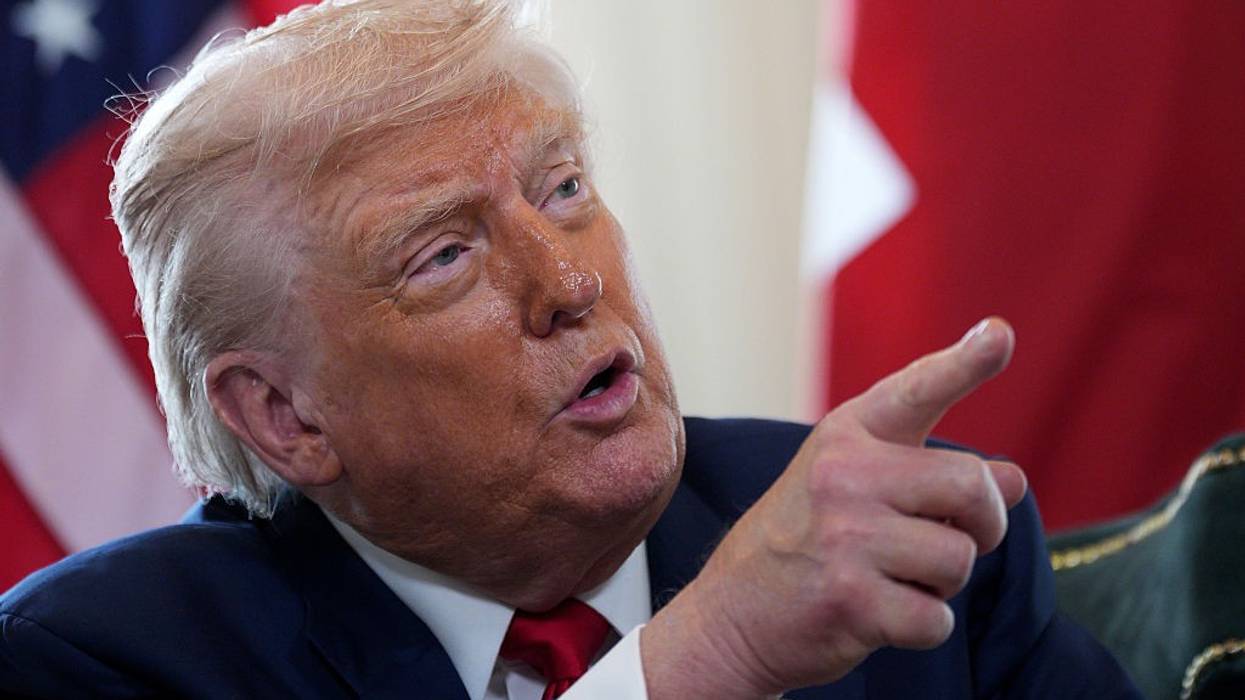
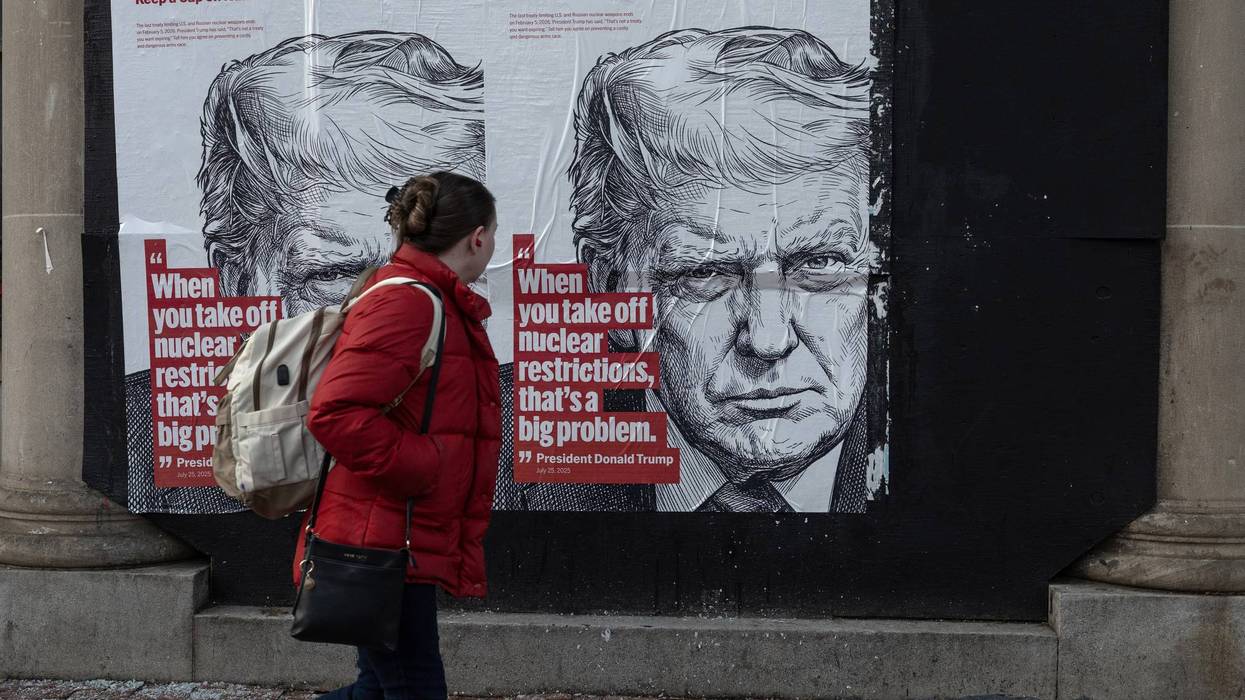
However, US President Donald Trump—who fancies himself as a deal-maker—hasn't expressed an interest in fighting for the pact, telling the New York Times last month that "if it expires, it expires," and "I'd rather do a new agreement that's much better."
Trump has called for China—which has the most nuclear weapons after Russia and the United States, and is building up its arsenal—to be part of a new deal, but Beijing hasn't signaled it will do so. Putin has proposed participation from France and the United Kingdom. The other nuclear-armed nations are India, Israel, North Korea, and Pakistan.
Noting Trump's comments to the Times and aspiration for the Chinese government to join, Jennifer Kavanagh, director of military analysis at the think tank Defense Priorities, declared that "this is wishful thinking–if the administration thinks getting a new 'better' treaty after this one lapses will be easy, they are mistaken."
"New START's end brings few benefits and lots of risks to the United States, especially as Washington tries to stabilize relations with rivals like Russia and China," she said, suggesting that Trump "would be better off hanging on to the agreement he has a little longer before trying to get a better one."
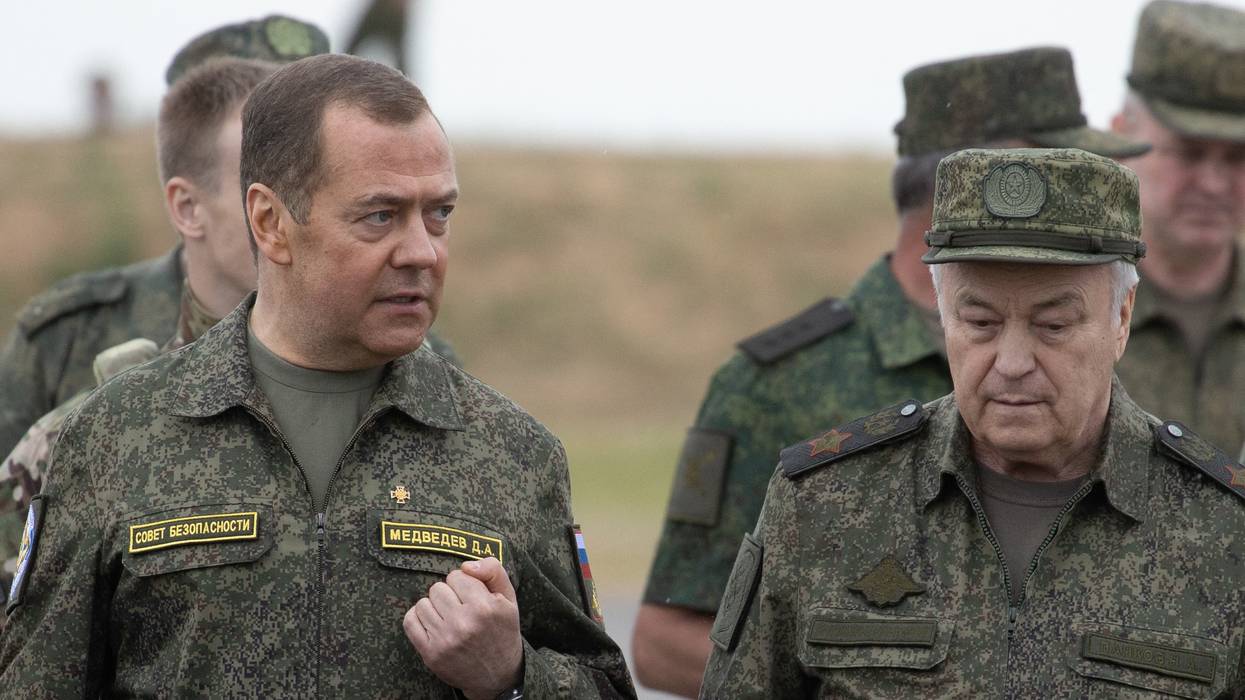
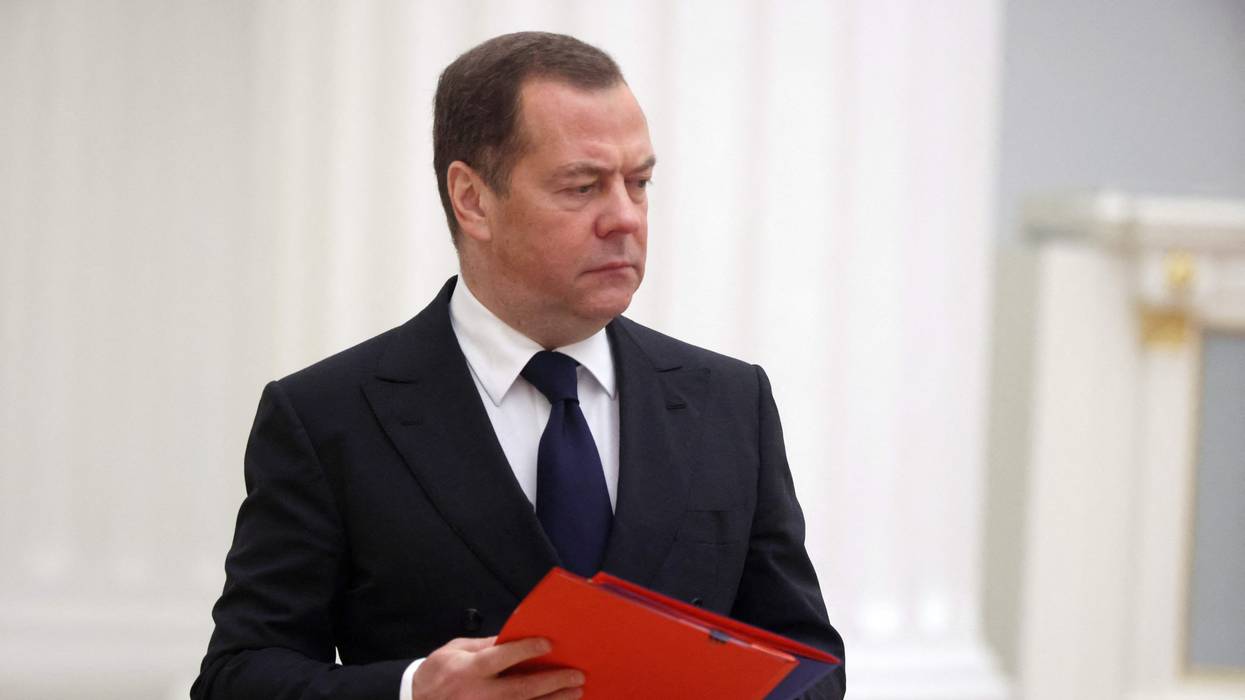
Dmitry Medvedev, a Putin ally who signed the treaty while serving as president and is now deputy chairman of the Russian Security Council, said in a Monday interview with Reuters, TASS, and the WarGonzo project that "our proposal remains on the table, the treaty has not yet expired, and if the Americans want to extend it, that can be done."
"For almost 60 years, we haven't had a situation where strategic nuclear potentials weren't limited in some way. Now such a situation is possible," he noted. "I spent almost my entire life, starting from 1972, under the umbrella of the Strategic Arms Limitation Treaty."
"In some ways, even with all the costs, it is still an element of trust," Medvedev said. "When such a treaty exists, there is trust. When it doesn't, that trust is exhausted. The fact that we are now in this situation is clear evidence of a crisis in international relations. This is absolutely obvious."
Considering New START's potential expiration this week, the Russian leader said that "I don't want to say that this immediately means a catastrophe and a nuclear war, but it should still alert everyone. The clock that is ticking will, in this case, undoubtedly accelerate again."
According to Reuters, he was referencing the Doomsday Clock. Last week, the Bulletin of the Atomic Scientists' Science and Security Board set the symbolic clock at 85 seconds to midnight, the closest it has ever been to global catastrophe, citing various developments, including a failure to extend the treaty, Russian weapons tests, and China's growing arsenal.
"In 2025, it was almost impossible to identify a nuclear issue that got better," Jon B. Wolfsthal, a board member and director of global risk at the Federation of American Scientists (FAS), said last week. "More states are relying more intently on nuclear weapons, multiple states are openly talking about using nuclear weapons for not only deterrence but for coercion. Hundreds of billions are being spent to modernize and expand nuclear arsenals all over the world, and more and more non-nuclear states are considering whether they should acquire their own nuclear weapons or are hedging their nuclear bets."
"Instead of stoking the fires of the nuclear arms competition, nuclear states are reducing their own security and putting the entire planet at risk. Leaders of all states must relearn the lessons of the Cold War—no one wins a nuclear arms race, and the only way to reduce nuclear dangers is through binding agreement to limit the size and shape of their nuclear arsenals," he argued. "Nuclear states and their partners need to invest now in proven crisis communication and risk reduction tools, recommit to preventing the spread of nuclear weapons, refrain from nuclear threats, and pursue a more predictable and stable global security system."
Regarding New START specifically, FAS Nuclear Information Project associate director Matt Korda stressed this week that "we are about to enter an era of unconstrained nuclear competition without any guardrails. Not only will there no longer be anything stopping the nuclear superpowers from nearly doubling their deployed nuclear arsenals, but they would now be doing so in an environment of mutual distrust, opacity, and worst-case thinking."
"While New START was a bilateral agreement between Russia and the United States, its expiration will have far-reaching consequences for the world," he said. "There are no benefits from a costly arms buildup that brings us right back to where we started, but there would be real advantages in pursuing transparency and predictability in an otherwise unpredictable world."