

SUBSCRIBE TO OUR FREE NEWSLETTER
Daily news & progressive opinion—funded by the people, not the corporations—delivered straight to your inbox.
5
#000000
#FFFFFF
To donate by check, phone, or other method, see our More Ways to Give page.
Daily news & progressive opinion—funded by the people, not the corporations—delivered straight to your inbox.
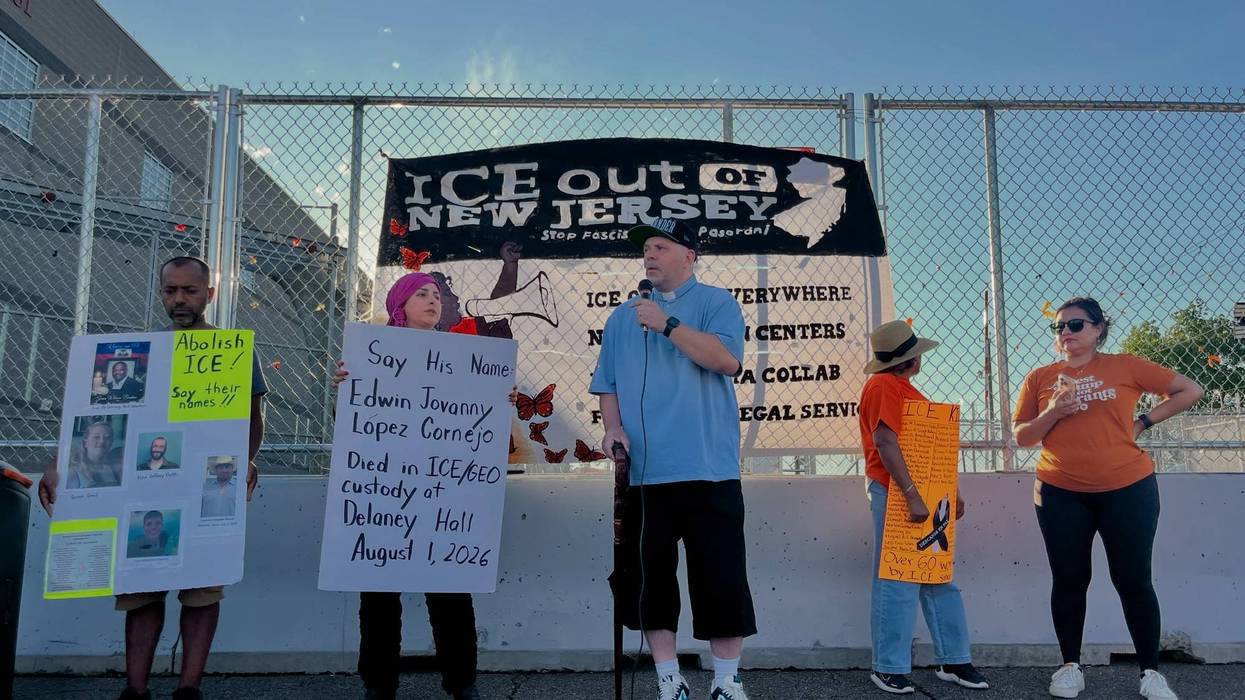
By rescinding policies that mandate accountability and oversight, while simultaneously purchasing privately held detention centers, the Trump administration is working to hide the abuses, death, and violence occurring at their facilities.
On August 1, Edwin Lopez-Cornejo, a Salvadorian migrant imprisoned at the Delaney Hall Detention Facility in Newark, died.
While Immigration and Customs Enforcement (ICE) insists that Lopez-Cornejo “received proper medical care and was seen by medical professionals” while in custody, there are reasons to be doubtful. In May, 300 detainees launched a labor and hunger strike protesting medical neglect, being fed spoiled and rotten food, and other “torturous” conditions.
In June, Gothamist reported that more than 70 detainees at Delaney Hall had filed federal lawsuits alleging medical neglect. That includes 30 who claim they were denied prescribed medications for chronic conditions such as asthma, epilepsy, diabetes, and cancer.
Lopez-Cornejo likely experienced the same. Rep. Rob Menendez (D-NJ) said he spoke with ICE officials who told him Lopez-Cornejo had expressed feeling dizzy and fatigued earlier that day. Menendez further added, “We asked certain medical questions, which ICE couldn’t give us answers to.”
Detention centers have always been deadly. Under Trump, ICE is doing everything it can to make them even more dangerous.
Lopez-Cornejo had been prescribed medication for diabetes, high blood pressure, and seizures—conditions that, if not properly treated, can lead to those symptoms as well as death. In an interview, his mother, Maria Cornejo, explained, “That is one of the reasons that I believe caused the death of my son, the negligence—that he wasn't given his medication that he had to take.”
Lopez-Cornejo is at least the 23rd person to die in ICE custody this year. In 2025, at least 33 people died in detention centers—the highest total in more than two decades according to the National Immigration Project.
Importantly, those numbers only represent the deaths that ICE has reported. During his visit to Delaney Hall on August 3, Menendez learned that another detainee had died at the detention center last month. That death was not reported because ICE agents had granted him a “discretionary release” in the middle of his medical emergency.
In June, ICE rescinded a Biden-era policy that required them to report on the deaths of detainees that occurred within 30 days of their release. ICE is now exploiting this change to obscure their death count.
And this is just the tip of the iceberg. In July, the Department of Homeland Security (DHS) purchased the Otay Mesa Detention Center and the California City Detention Facility for $1.5 billion from the private prison company CoreCivic.
According to an ICE spokesperson, these purchases were necessary because “the state’s sanctuary politicians continue to push legislation to outlaw or make private prisons financially infeasible.” Shifting ownership from CoreCivic to the federal government circumvents these measures, thereby allowing ICE to retain “crucial” detention capacity.
This, however, is not all it does. In 2025, California passed legislation that granted its Department of Justice (DOJ) oversight to regularly inspect and report on the conditions of “county, local, or private locked detention facilities in which noncitizens are being housed or detained for purposes of civil immigration proceedings.” In June 2026, the California DOJ found that conditions at Otay Mesa were overcrowded and dirty. Medical recordkeeping was “disorganized and violated PBNDS [Performance-Based National Detention Standards] requirements” which resulted in “lapses in basic care.” At California City, the department found that detainees spent “unnecessarily long periods locked down in their cells” and experienced “extremely cold temperatures, with leaks during rainy periods.” California DOJ reported that healthcare infrastructure and systems at the center were “inadequate,” including “crisis-level health care understaffing.”
By taking ownership of those detention centers, the Trump administration is placing them beyond the reach of state inspections. As Alexa Van Brunt, the Director of the Illinois office at the McArthur Justice Center, explains, inspection reports are crucial in lawsuits alleging constitutional violations. Without them, it is far more difficult to obtain evidence of ICE’s wrongdoings. “To that point,” she remarks, “it will make it more onerous to hold DHS liable.”
It is also worth emphasizing that while ownership is being transferred, CoreCivic will remain in charge of managing those facilities. Same management, same abuses, but now with less oversight—the perfect recipe for more unaccounted detainee deaths.
In July, CBS News reported that only 15 of the 45 detention centers holding 500 or more people had been inspected by ICE’s Office of Detention Oversight in the last 12 months. This follows a shift in ICE’s policies whereby dedicated facilities, which exclusively hold ICE detainees, are now inspected once a year rather than twice; and non-dedicated facilities, such as county jails, are inspected every other year.
Notably, ICE’s detention center purchases extend beyond sanctuary cities. On August 5, CoreCivic announced that ICE had purchased the Prairie Correctional Facility in Minnesota and the Midwest Regional Reception Center in Kansas for a total of $734 million. Both facilities were previously shut down—the former in 2010; and the latter in 2021 as the Biden administration shifted away from private prison contracts. CoreCivic had been struggling since last year to reopen Midwest Regional amid protest from local residents—in a famously pro-prison town that Trump won with more than 60% of the vote in 2024—and legal challenges from city officials. Now it will, despite their objections and with possibly fewer guardrails.
Officials with CoreCivic and The Geo Group—which owns Delaney Hall—have reportedly discussed selling several more sites to the Trump administration.
By rescinding policies that mandate accountability and oversight, while simultaneously purchasing privately held detention centers, the Trump administration is working to hide the abuses, death, and violence occurring at their facilities. At the same time, these purchases have been a major windfall for CoreCivic, which has used our taxpayer dollars to pay down its $600 million debt.
Detention centers have always been deadly. Under Trump, ICE is doing everything it can to make them even more dangerous. Before it's too late, Congress must act immediately to not only abolish ICE, but punish everyone involved in enacting their campaign of domestic terrorism and death.
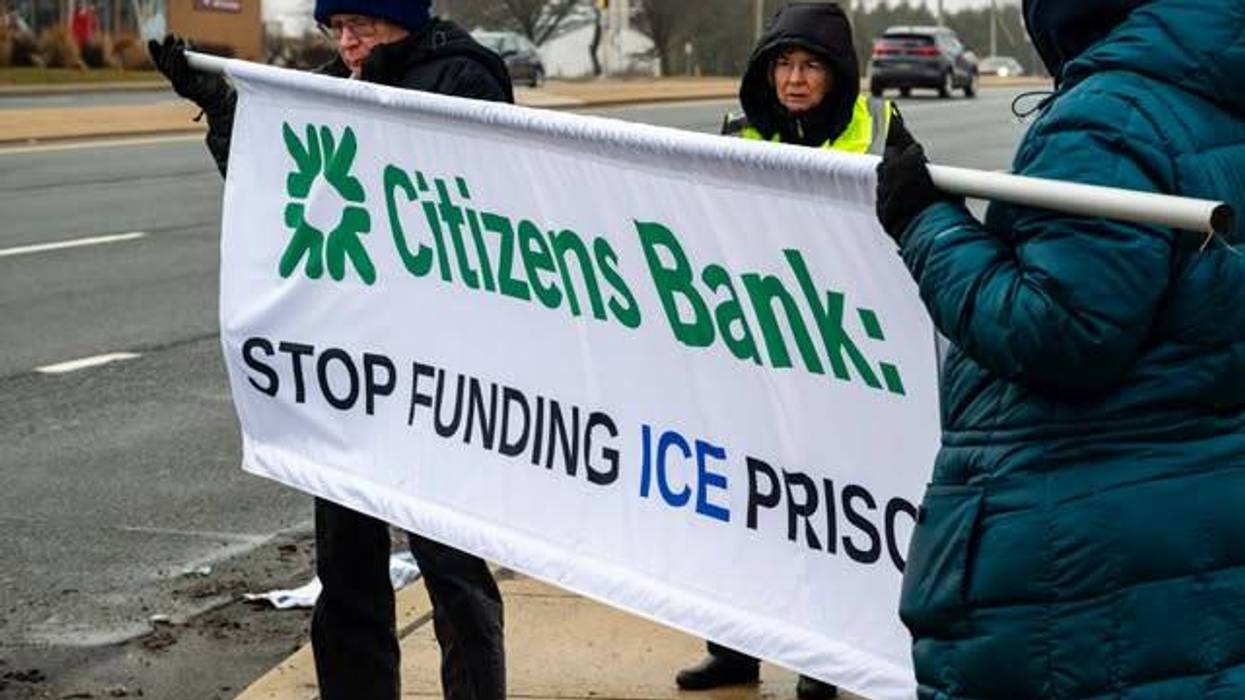
The grassroots effort was a textbook example of sustained, targeted civil resistance that can undermine Trump administration policies; by chipping away at corporate supporters of programs like ICE, citizen activism can erode and stop these initiatives.
Just as a great loaf of bread requires the right ingredients to rise, a winning civil resistance campaign needs three essentials to rise up: a compelling vision, broad community engagement, and a spark for action.
The De-ICE Citizens Bank campaign had all these ingredients, which is why it succeeded in forcing Citizens Bank to stop financing prison company giants, CoreCivic and GEO Group, operating dozens of detention centers for US Immigration and Customs Enforcement (ICE). The Rhode Island bank severed its ties in mid-July after months of protests and other targeted actions across the country.
Hundreds of rallies, faith-led actions, shareholder demands, billboard and flyover campaigns, and withering financial pressure—withdrawals totaling $380 million, with more still happening—created a tsunami of opposition the bank could not ignore.
It is a textbook example of sustained, targeted civil resistance that can undermine Trump administration policies. By chipping away at corporate supporters of programs like ICE, citizen activism can erode and stop these initiatives.
While Bank of America and a half-dozen other banks ended their relationships with private prison companies in 2019, Citizens strengthened its ties, providing more than $2.8 billion in loans and other credit to CoreCivic and GEO Group over a dozen years.
“No, Citizens Bank won’t credit you at all for its decision, but it is what it is,” MSNBC’s Rachel Maddow said, during a 10-minute segment on the campaign win in late July. “Actions have consequences, including when you work hard, when you organize, and when you decide to just never give up.
"And then the day does come when you win.”
This civil resistance story began with a single person, a woman in Texas, taking a stand. She didn’t carry a protest sign or march alone. She built a website.
Horrified by ICE’s mass incarceration campaign early last year, research-nerd activist Laura Berlin, a mother of two teenagers, built a website, boycottcitizens.org, to expose Citizens Bank’s role.
While Bank of America and a half-dozen other banks ended their relationships with private prison companies in 2019, Citizens strengthened its ties, providing more than $2.8 billion in loans and other credit to CoreCivic and GEO Group over a dozen years.
Drawing on Securities and Exchange Commission filings and other documents, the website showed Citizen’s duplicity, loan-by-loan, year-by-year. Still, the website didn’t get much attention when it was launched 13 months ago, only a dozen or so views a day in the first few months.
That all changed in January when ICE’s aggressive crackdown sparked and exploded. Just as a dozen Northeast activists were organizing their first coordinated protest day against Citizens Ban—an effort of the new De-ICE Citizens Bank Coalition—mother and poet Renee Good was gunned down January 7 by an ICE agent in Minneapolis.
Campaign interest and traffic on Berlin’s website took off. When Alex Pretti, an intensive care nurse, was shot and killed 17 days later in the same city, momentum skyrocketed.
On January 24, the campaign held three-dozen rallies in six states. By March, there were 70 protests in a dozen states. Three months later, 140 protests were organized nationwide, drawing in thousands of regular people angry about an immigration crackdown that has booked and detained more than 600,000 people, 66,000 of whom have been deported.
As protests swelled, coalition members brought new partners into the campaign. One brought in a key union group and activist students at Brown University. Others brought in faith groups. Dozens of local Indivisible groups also joined, including a Rightful Resistance group in New York City that specialized in billboard campaigns.
The Greater Boston Interfaith Organization (GBIO), a powerful faith group with deep historic ties to Citizens Bank, was an especially important partner.
The city’s pullout was a bit of a surprise, with the vote and initial withdrawal of $150 million happening in less than 24 hours. It was a clear sign that the campaign, which had swelled to 175 groups in 17 states, was now a movement.
In the early 2000s, GBIO teamed up with Citizens to offer a financial literacy program for its immigrant members around Boston. The bank also lowered fees for immigrants sending remittances to their families. “We were proud to bank with Citizens, and I was proud to be a member of the bank’s board of directors at that time,” wrote Rev. Ray Hammond, a key GBIO leader, in a recent column.
By winter 2026, the good vibes were over.
In early March, GBIO sent a letter to the bank requesting it cut financial ties with the prison companies. In April, Hammond and other shareholders confronted Citizens CEO Bruce Van Saun at the bank’s annual meeting in Providence. As Van Saun answered questions about reputation and legal risks, hundreds of protesters, young and old, sang and chanted loudly outside. They also pledged to withdraw their deposits if changes were not made.
The financial pressure campaign, "Not with Our Money, Citizens," came at a key moment. While rallies and billboards boosted awareness and sullied the bank’s reputation, the campaign now had a lever to harm the bank financially.
Within a few weeks, GBIO and the coalition had mobilized $20 million in withdrawal pledges by churches, synagogues, nonprofits, and individual customers angered by the bank’s role in bankrolling prisons. By May, GBIO had pulled $2 million of its deposits, while a similar faith organization in Ohio, the Greater Cleveland Congregations, was threatening to do the same.
Millions of withdrawals may sound like a lot, but it’s relatively small for a bank like Citizens, with $233 billion in assets. At weekly meetings, coalition members brainstormed how it could increase the financial bleeding—to turn those millions into hundreds of millions.
The answer came in June and the spark came from New Jersey. After weeks of hunger strikes and protests at GEO Group’s Delaney Hall ICE prison in Newark, municipalities started fighting back. The first blow was Jersey City’s June 7 vote to close its accounts with Citizens and pull all $276 million of its deposits.
The city’s pullout was a bit of a surprise, with the vote and initial withdrawal of $150 million happening in less than 24 hours. It was a clear sign that the campaign, which had swelled to 175 groups in 17 states, was now a movement.
One month later, Montclair, New Jersey did the same—another $91 million in deposits out the door. And other communities, including Bloomfield and Hoboken, were looking to follow suit.
Three days after Montclair’s vote, Citizens Bank called it quits. With no public fanfare, it released a statement to a Boston Globe reporter saying, “Citizens has determined that it is now appropriate to exit the credit facilities for these clients.”
The bank called it a ‘business decision,” while repeatedly downplaying the role of activists.
We know better.

"There's a 2-month-old baby there and four pregnant women there," said the Texas Democrat. "It's no place for a 2-month-old baby to be, or even a 1- or 5-year-old kid."
Democratic Texas Congressman Joaquin Castro appeared on MS NOW early Wednesday to discuss his recent trip to and persistent efforts to shut down what he called a "trailer prison" where US Immigration and Customs Enforcement is holding families in Dilley.
After leading a letter signed by over 100 other Democrats calling for the closure of the Dilley Immigration Processing Center, Castro on Tuesday conducted a congressional oversight visit of the facility with members of the Democratic Women's Caucus, including Reps. Yassamin Ansari (Ariz.), Lizzie Fletcher (Texas), Ayanna Pressley (Mass.), and Luz Rivas (Calif.).
During the interview on "Morning Joe," Castro said that Americans have watched in horror as ICE has killed and brutalized US citizens and immigrants in the streets, "but there's a brutality behind the prison walls of these detention centers that almost no one gets to see except for members of Congress who have an opportunity to go inspect them."
While touring the Dilley center seven times recently, "I've seen a lot of desperate children. I've seen traumatized children. There is a system there that is abusive of people," Castro said, citing complaints of worms in food, yellow drinking water, and inadequate medical care.
"When I asked, they said the youngest person there is 2 months old—so there's a 2-month-old baby there and four pregnant women there right now. And, you know, I can tell you that it's no place for a 2-month-old baby to be, or even a 1- or 5-year-old kid," he said.
Noting that the Texas facility is run by a private prison company—CoreCivic—and condemning the "commodification of child imprisonment," Castro declared that "we want the Dilley detention center shut down."
His comments on MS NOW mirrored those he and other lawmakers delivered outside the facility, also known as the South Texas Family Residential Center, and during a press conference with the organizations FWD.us and Families Belong Together.
The center is currently detaining 539 individuals, from 84 families, according to Pressley. She said that "these are law-abiding people that are our neighbors—people we love, people we live next to, we work and worship with, who were just going about their lives and met with such an aggressive disruption that they will be recovering from for the rest of their lives."
"Dilley must be shut down. We have to abolish ICE. And then I'm gonna take it one step further and say any of those agents that have contributed to and caused the injury, the harm, and even fatalities, they must also be held accountable, and we should abolish qualified immunity for these federal law enforcement officers," she argued.
FWD.us president Todd Schulte also called for "shutting down Dilley and releasing these children and families immediately."
"Dilley reflects a broader pattern that should not be expanded with additional, unprecedented taxpayer funding," he stressed, denouncing the hundreds of thousands of dollars that the Republican-controlled Congress has poured into President Donald Trump's mass detention and deportation campaign, led by ICE and US Customs and Border Protection.
"This will only cause irreparable harm to children and communities," Schulte warned. "Thank you to the members who continue to call for the release of families, and we join them in their calls for Dilley's closure."
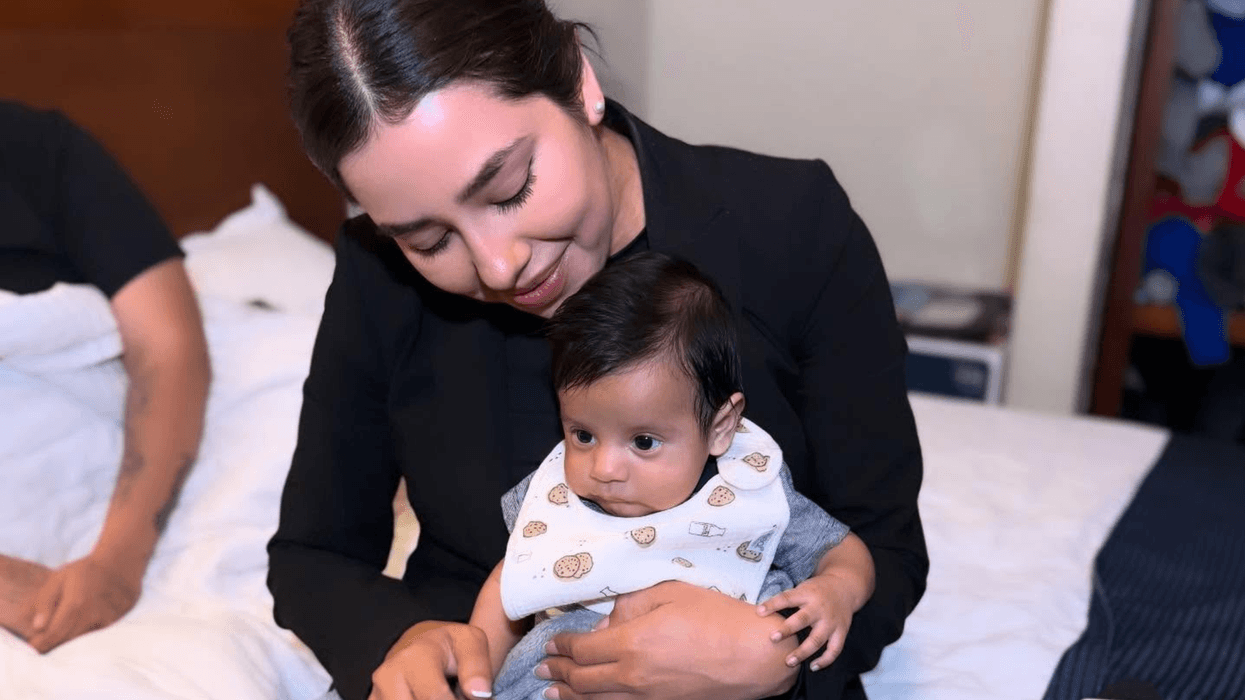
"To unnecessarily deport a sick baby and his entire family is heinous," said US Rep. Joaquin Castro.
US Immigration and Customs Enforcement has deported 2-month-old Juan Nicolás to Mexico—along with his 16-month-old sister, mother, and father—following the infant's hospitalization for respiratory issues and vomiting, which he suffered after spending more than three weeks in a Texas detention center run by the notorious private prison firm CoreCivic.
Rep. Joaquin Castro (D-Texas), who has been pushing the Trump administration to release Juan and his family, confirmed late Tuesday that they were deported after speaking with the family's attorney, who told the lawmaker that ICE removed them from the US "with only the money that they had in their commissary—a total of $190." Castro wrote that "to unnecessarily deport a sick baby and his entire family is heinous."
"My staff and I are in contact with Juan’s family," Castro added. "We are laser-focused on tracking them down, holding ICE accountable for this monstrous action, demanding specific details on their whereabouts and well-being, and ensuring their safety."
According to Migrant Insider's Pablo Manríquez, Juan Nicolás "has been fighting respiratory illness in a facility where measles recently walked through the door, where mothers report struggling to get clean water for formula, where sick children cycle through ibuprofen and basic antibiotics until they deteriorate badly enough that someone finally calls an ambulance."
"Which is what happened Monday night. An ambulance came," Manríquez wrote. "It was, depending on how you look at it, either a rescue or an admission of guilt."
Juan's mother told Castro that the baby is suffering from bronchitis. "We are all deeply concerned that Juan and his mom will be deported and that Juan’s health will continue to deteriorate," the Texas Democrat wrote Tuesday afternoon. "His life is in danger because of ICE’s monstrous cruelty."
Univision journalist Lidia Terrazas crossed into Mexico and located Juan and his family in the hours following their deportation. The reporter later posted a photo with Juan on Instagram.
🚨BREAKING: The great @LidiaTerrazas has found Juan Nicolás, the two-month-old ICE deported today to Mexico.
Update coming tomorrow at https://t.co/HpQYb2bjiA https://t.co/enYyUH0KzO pic.twitter.com/vP2tqMqvNd
— Pablo Manríquez (@PabloReports) February 18, 2026
The number of children held in ICE detention has skyrocketed during President Donald Trump's second White House term, rising more than sixfold. A recent analysis by The Marshall Project found that "on some days, ICE held 400 children or more."
"They are literally being treated as prisoners," Castro said after spending more than two hours inside the CoreCivic facility in Dilley, Texas last month. "This is a monstrous machine."
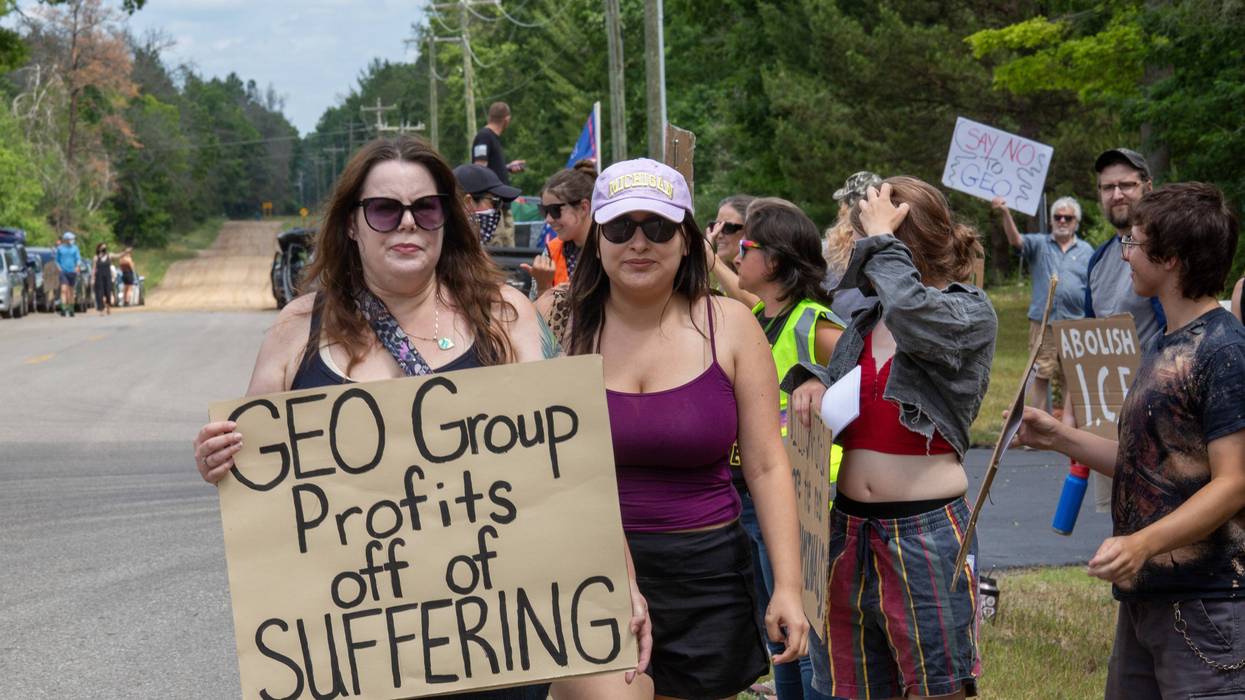
"Trump’s donors are making money from this violent separation of our immigrant families," said Rep. Rashida Tlaib. "This is corruption."
Private prison company GEO Group on Thursday reported a company record of $254 million in profit last year—a roughly 700% increase over 2024—driven by asset sales and contracts with the Trump administration to build several new US Immigration and Customs Enforcement detention facilities across the US.
GEO Group secured approximately $520 million in new or expanded contracts in 2025, based on annualized revenue, according to company founder and executive chairman George Zoley.
"This represents the largest amount of new business we have won in a single year in our company's history," Zoley said during an earnings call on Thursday. "We have entered into new contracts to house ICE detainees at four facilities totaling approximately 6,000 beds."
Those facilities are: Delaney Hall in Newark, New Jersey; North Lake Processing Center in Baldwin, Michigan; Folkston Processing Center at the D. Ray James Correctional Institution in Georgia; and a so-called "deportation depot" at the Baker Correctional Institution in Sanderson, Florida.
"The census across our active ICE facilities has continued to steadily increase from the third quarter at approximately 22,000 to presently approximately 24,000, which is the highest level of ICE populations we have ever had," Zoley said. "This past year, we also significantly expanded the delivery of our secure transportation services on behalf of both ICE and the US Marshals Service, valued at approximately $60 million in incremental annualized revenue."
"We continue to be optimistic about the importance and growth potential of the ICE contract," he added. "The new two-year contract includes pricing for 361,000 participants in year one and 465,000 participants in year two. With the capital investment we made in 2025, we believe we have the capability in scaling monitoring devices and case management services to achieve those significantly increased participation levels and far beyond if desired by ICE."
The so-called One Big Beautiful Bill Act signed last July by President Donald Trump contained a massive increase in funding for the Department of Homeland Security (DHS), ICE's parent agency, including about $45 billion for expanding immigrant detention capacity.
Days after Trump's 2024 reelection—which private prison companies funded to the tune of over $1 million—Zoley hailed the "unprecedented opportunity" of the incoming administration's mass deportation campaign.
“The GEO Group was built for this unique moment in our company’s [and] country’s history, and the opportunity that it will bring,” he beamed.
Unlike state prisons or county and local jails, which are accountable to oversight agencies, privately operated ICE detention centers are not subject to state regulation or inspection. These facilities are plagued by a history of abuse, often sexual in nature, and sometimes alleged deadly medical neglect—problems that carried over from previous administrations.
Thirty-two people died in ICE custody last year, the agency's deadliest in two decades. Most of these deaths reportedly occurred in privately operated detention centers, and 10 immigrants died in GEO Group facilities, according to data collected by attorney and independent journalist Andrew Free.
GEO Group's earnings call came just days after three detainees at one of the company's facilities in Washington state filed a lawsuit accusing two guards there of sexually assaulting and beating them, and then trying to cover it up. The company has been previously sued for alleged inadequate medical care, wrongful deaths, and forced labor.
This, in a system in which immigrant detention is meant to be nonpunitive and in which only a tiny fraction of those detained have been charged or convicted of any violent crime, according to a leaked DHS document exposed earlier this week.
Another private prison company, CoreCivic, on Thursday reported $116.5 million in 2025 profits, a nearly 70% increase from the previous year. The operator of ICE facilities including the notorious Dilley Immigration Processing Center in Texas—which detainees describe as a measles-infested "living hell" where they’ve been served moldy food full of worms and forced to drink putrid water—said it expects 2026 to be even more profitable.
Some private prison investors expressed frustration that ICE isn't jailing enough people to generate even more revenue.
"One of the big questions, I think... has been the pace of detention by ICE, that it's been below what people... thought [it] was going to be," Joseph Gomes of NOBLE Capital Markets, Inc. said on Thursday's CoreCivic earnings call. "I think... people thought we'd be at that 100,000 level. We're at... a little over 70,000."
One doctor warned that the outbreak "will become an epidemic if we don't act immediately."
Public health experts and immigrant advocates sounded the alarm Sunday over a measles outbreak at a US Immigration and Customs Enforcement internment center in Texas where roughly 1,200 people, including over 400 children, are being held.
Texas officials confirmed Saturday that two detainees at the Dilley Immigration Processing Center, located about 75 miles (120 km) southwest of San Antonio, are infected with measles.
"Medical staff is continuing to monitor the detainees' conditions and will take appropriate and active steps to prevent further infection," the US Department of Homeland Security (DHS) said in a statement. "All detainees are being provided with proper medical care."
DHS spokesperson Tricia McLaughlin said Sunday that ICE "immediately took steps to quarantine and control further spread and infection, ceasing all movement within the facility and quarantining all individuals suspected of making contact with the infected."
Responding to the development, Dr. Lee Rogers of UT Health San Antonio wrote in a letter to Texas state health officials that the Dilley outbreak "will become an epidemic if we don't act immediately" by establishing "a single public health incident command center."
"Viruses are not political," Rogers stressed. "They do not care about one's immigration status. Measles will spread if we allow uncertainty and delay to substitute for reasoned public health action."
Dr. Benjamin Mateus took aim at the Trump administration's wider policy of "criminalizing immigrant families and confining children in camps," which he called a form of "colonial policy" from which disease is the "predictable outcome."
Measles is a highly contagious viral disease that can kill or cause serious complications, particularly among unvaccinated people. The United States declared measles eliminated in 2000, but declining vaccination fueled by misinformation has driven a resurgence in the disease, and public health experts warn that the US is close to following Canada, which lost its elimination status late last year.
Many experts blame this deadly and preventable setback on the vaccine-averse policies and practices of the Trump administration, particularly at the Department of Health and Human Services, led by vaccine conspiracy theorist Robert F. Kennedy Jr.
US measles cases this year already exceed the total for the whole of 2023 and 2024 combined, and it is only January. Yikes.
[image or embed]
— Dr. Lucky Tran (@luckytran.com) January 29, 2026 at 12:29 PM
Critics also slammed ICE's recent halt on payments to third-party providers of detainee healthcare services.
Immigrant advocates had previously warned of a potential measles outbreak at the Dilley lockup. Neha Desai, an attorney at the Oakland, California-based National Center of Youth Law, told CBS News that authorities could use the outbreak as a pretext for preventing lawyers and lawmakers from inspecting the facility.
"We are deeply concerned for the physical and the mental health of every family detained at Dilley," Desai said. "It is important to remember that no family needs to be detained—this is a choice that the administration is making."
Run by ICE and private prison profiteer CoreCivic, the Dilley Immigration Processing Center has been plagued by reports of poor health and hygiene conditions. The facility is accused of providing inadequate medical care for children.
Detainees—who include people legally seeking asylum in the US—report prison-like conditions and say they've been served moldy food infested with worms and forced to drink putrid water. Some have described the facility as "truly a living hell."
The internment center has made headlines not only for its harsh conditions, but also for its high-profile detainees, including Liam Conejo Ramos, a 5-year-old abducted by ICE agents in Minneapolis last month and held along with his father at the facility before a judge ordered their release last week. The child's health deteriorated while he was at Dilley.
On Sunday, the League of United Latin American Citizens (LULAC)—the nation's oldest Latino civil rights organization—held a protest outside the Dilley lockup, demanding its closure.
"Migrant detention centers in America are a moral failure,” LULAC national president Roman Palomares said in a statement. "When a nation that calls itself a beacon of freedom detains children behind razor wire, separates families from their communities, and holds them in isolated conditions, we have crossed a dangerous line."

Parents who are legally applying for US asylum were prevented from getting emergency medical care for their 7-year-old daughter.
Advocates sounded the alarm Friday over federal agents' arrest last week of a family of legal asylum-seekers apprehended just outside a Portland, Oregon hospital where they had rushed their 7-year-old daughter for emergency medical treatment.
Yohendry De Jesus Crespo and his wife Darianny Liseth González de Crespo—Venezuelans with pending asylum claims living in Gresham, Oregon—were rushing their daughter Diana to Adventist Hospital in Portland on January 16 as the child suffered an unstoppable nosebleed.
According to the Oregonian, Diana never got to see a doctor, as three unmarked vehicles and Immigration and Customs Enforcement (ICE) agents surrounded their family car in the emergency room parking lot.
"The parents pleaded to let their 7-year-old daughter... be released so she could receive urgently needed medical care, but that request was denied," Oregon state Rep. Ricki Ruiz (D-50) said on Facebook.
Absolutely endless monster behavior from ICE & CBP. Detaining parents seeking urgent healthcare for their kids and who, in this case, had petitioned for asylum. All at the same hospital where they shot two people earlier this month.www.oregonlive.com/portland/202...
[image or embed]
— Aubrey Gordon (@yrfatfriend.bsky.social) January 23, 2026 at 9:18 AM
Friend Ana Linares said the family was arrested, driven to a facility in Tacoma, Washington, and then sent to Texas, where they are being held at the Dilley Immigration Processing Center near San Antonio.
The facility, which is run by ICE and private prison profiteer CoreCivic, is accused of providing inadequate medical care for children, as well as poor sanitary and health conditions. Detainees also report being served moldy or worm-infested food.
Ruiz said the child "remains ill, reportedly suffering from a fever, and has not received basic medical care."
The family's arrest—which took place less than 1,000 feet from where a US Border Patrol agent shot a Venezuelan couple earlier this month—appears to be the first time in Oregon that immigration enforcers have detained an entire family unit.
Heather Pease, a spokesperson for Adventist Hospital, told the Oregonian that “no law enforcement agency contacted us" about arresting the family, "and we did not coordinate with any agency."
“Adventist Health Portland is here for our community, open, available, and ready to provide care when it’s needed most," Pease added. "Patient care remains our priority, regardless of circumstances.”
It is unclear why the family was arrested. Neither parent has any known criminal record. Linares said the couple—who met in the Panamanian jungle while making their way to the United States—waited to enter the US legally and applied for an appointment. They were assigned a 2028 immigration court date to plead their asylum cases.
“They are good people, not criminals,” Linares told the Oregonian. “They were looking for stability. They wanted to help their families in Venezuela.”
The Trump administration's deadly mass deportation blitz has targeted children—among them US citizens, including a 3-year-old cancer patient—for detention and deportation.
As Common Dreams reported Thursday, federal agents seized at least four children from Minnesota public schools over the past two weeks, including a 5-year-old boy and a 10-year-old girl, who were sent to the Dilley lockup.
According to the US Department of Homeland Security, a record 73,000 people facing deportation are currently being jailed by ICE, including 6,000 family units.
Some of the nearly 5,000 children who were separated from their parents or other relatives during Trump's first term have also yet to be reunited with their families.
Child welfare advocates worry that Trump administration pressure to increase arrests and the commodification of migrants by for-profit prisons and other private profiteers is incentivizing the arrest and detention of immigrants, including children.
Asserting that "the immediate health and well-being" of Diana Crespo "must be the top priority," Ruiz said on Facebook, "We urgently call for the child to receive appropriate medical care without delay and for the family to be afforded due process and access to legal counsel."
"Situations involving children require heightened care, compassion, and coordination," he added, "and we expect all responsible agencies to act swiftly and humanely to ensure this child's health and safety are protected."

If we want to preserve our democracy, then none of us have the luxury of averting our eyes to the Trump administration’s injustices. No matter how grueling it may be, we must grit our teeth, bear witness, and fight.
Throughout 2025, Immigration and Customs Enforcement agents have been abducting people across the United States. This includes people like Rümeysa Öztürk who was arrested by six plainclothes officers as she left her home. It includes Frank Miranda, a US citizen, who was detained by plainclothes officers outside his Portland workplace and detained for hours. It includes Patricia Quishpe who was arrested by Border Patrol agents as part of the Trump administration’s Operation Midway Blitz.
These abductions are being fueled by multiple factors, including the Trump administration’s disregard for due process, their indifference to the safety of people of color, as well as ICE’s hired private sector bounty hunters. To date, ICE has hired 10 contractors with ties to spy agencies and the military-industrial complex to track and surveil suspected migrants. They have also partnered with private prison companies like Geo Group and CoreCivic. Currently, nearly 90% of all people in ICE custody are held in for-profit facilities. These multimillion-dollar contracts have been made possible by the One Big Beautiful Bill Act which allocated $170 billion to ICE for border and interior enforcement.
These partnerships and resources have allowed ICE to effectively create a secret police force that kidnaps people off the street, detains them in private prisons, and prevents lawmakers from exercising any oversight. ICE has become the Gestapo.
While this threat is real and growing, people are resisting ICE’s fascist tactics. This includes the work being done by groups like “Witness at the Border,” an advocacy group that has been monitoring and reporting ICE activities since 2018. Their work includes talking to people coming in and out of detention centers, tracking buses and flights carrying detainees, as well as traveling to the US-Mexico border to witness the dire conditions migrants face there. They have held in-person and online seminars to inform the public about what they have seen and learned, as well as lobbied state legislatures and Congress to hold ICE and the Department of Homeland Security (DHS) accountable for their abuses.
We cannot trust the Trump administration to be transparent with the American public. If DHS is becoming a secret police force, then it is up to us to bring their abuses to light. We must all bear witness to their cruelty.
These “witnesses” provide civilian oversight over ICE abuses. As Lee Goodman, one of the activists describes it: “Our process basically is to do what we can to see, to listen, to hear, to talk to people who know and to get the word. We don’t want [ICE] to ever think they can do what they want without being observed.” Goodman has been part of witnessing efforts at detention centers in Tornillo, Texas and Homestead, Florida—both of which have since shut down.
Advocates for Witness at the Border are currently witnessing outside several detention centers, including the North Lake Processing Center in Michigan and the Broadview ICE Facility in Illinois. These efforts are incredibly important. From the start of Trump’s mass deportation campaign, Secretary of Homeland Security Kristi Noem has worked to restrict congressional oversight. State representatives in Illinois, for instance, had been denied entry into the Broadview facility for months until a federal judge intervened in mid-December. This, despite numerous allegations of human rights abuses occurring at the Broadview ICE Facility, including denying detainees food and medical care as well as forcing them to sleep on concrete floors amid “urine and dirty water.”
We cannot trust the Trump administration to be transparent with the American public. If DHS is becoming a secret police force, then it is up to us to bring their abuses to light. We must all bear witness to their cruelty.
Fortunately, many are seeing the value of witnessing as a form of peaceful protest. Individuals, like Job Garcia and Carlitos Ricardo Parias, have recorded ICE’s cruelty and shared those videos on social media. In California, Gov. Gavin Newsom and Attorney General Rob Bonta have announced a new online portal to share information about unlawful activity by federal agents and officers across the state. As Gov. Newson puts it: “This new portal gives Californians an easy and safe way to speak up, share what they see, and help us hold people accountable. No one is above the law.”
DHS wants nothing more than to commit their illicit activities unseen. They fear witnesses and will resort to violence to stop them.
Beyond drawing attention to the problem, witnessing has several praiseworthy features.
First, and perhaps most obviously, witnesses document abuse. This is not only important for calling out ICE’s actions today, but for holding the people committing these abuses—including Secretary Noem and members of the Trump administration—criminally accountable in the future. When their day in court comes, we must ensure that the evidence against them is resounding. We must bear witness today to ensure justice tomorrow.
Second, witnesses empower and protect victims. DHS continues to deny any wrongdoing. Secretary Noem has even insisted, despite abundant evidence to the contrary, that, “there’s no American citizens that have been arrested or detained.” Yet, videos of ICE agents doing precisely this prove that she is lying. These videos validate the experiences of US citizens who have been assaulted by ICE agents. It provides them the leverage to speak out against an administration that wants nothing more than to discredit and silence them.
Third, witnessing provides a fuller picture. From the outside, it’s easy to think that everyone working at ICE facilities is simply evil or, at best, morally indifference. However, Majorie Ziefert, an activist working with Witness at the Border, reports that the reality on the ground is quite different. She has spoken with staff at processing centers who express hating what is happening to detainees at those facilities. They only continue to work there because they need the income. While we may still condemn those people for their part in ICE’s cruelty, witnessing draws attention to how capitalism pressures people to contribute to unjust systems. At the same time, it helps bridge inroads that may lead to unlikely alliances.
Fourth, to witness is to take a risk. ICE agents have attacked and detained people like Barbara Stone, a volunteer with the group Detention Resistance that observes and documents immigration court proceedings. Department of Homeland Security spokeswoman Tricia McLaughlin has claimed that “videotaping ICE law enforcement and posting photos and videos of them online is doxing our agents. We will prosecute those who illegally harass ICE agents to the fullest extent of the law.” This response by DHS highlights the value of witnessing as a form of protest. DHS wants nothing more than to commit their illicit activities unseen. They fear witnesses and will resort to violence to stop them.
Witnessing is risky, but facing this risk may help us cultivate the kinds of virtues—courage, selflessness, justice, perseverance, and empathy—that make people into good activists. The reality is that the Trump administration is far from over. The situation will likely get far worse, especially as DHS invests in more invasive surveillance technologies. We will all need to become more resilient to combat what comes next.
Fifth, like any form of protest, witnessing will be more impactful when done alongside others. But whether it’s at a detention center or on the street, whether it’s a testimony or recording a video, anyone can be a witness.
In 2025, the Trump administration deported more than 600,000 people while stripping 1.6 million immigrants of their legal status. In 2026, they seek to expand their efforts by denaturalizing 100 to 200 people per month. If we want to preserve our democracy, then none of us has the luxury of averting our eyes to the Trump administration’s injustices. No matter how grueling it may be, we must grit our teeth, bear witness, and fight.

The Trump administration leaves no doubt that it will detain as many undocumented immigrants as it can and send them to for-profit centers.
When it comes to for-profit, private corporate incarceration of immigrants, making lots of money is like drinking salt water: The more they drink, the thirstier they get. Roman proverbs say that the more money a rich man has, the more driven and addicted he becomes to accumulating even more money. Wealth addiction is at the root of giant private prison corporations’ domination of the US government as communities take a back seat to the need for private profit. Many government leaders from both political parties share the same “profits over people” ideology.
The industry is preparing for explosive growth. On recent earnings calls, CoreCivic executives announced plans to triple the number of beds in their facilities within a few months. That would mean an additional $1.5 billion in revenue for the corporation, more than doubling its annual earnings. The US private incarceration system is a deeply entrenched network of public-private partnerships that make billions from incarceration and detention every year.
Just like large. private health insurance corporations, the US private-profit incarceration system has the inherent tendency to invent new needs, disregard all boundaries, and turn everything into big profit. Limitless greed for money becomes a disease where a person may become oversaturated with food… but no one or private prison corporation ever has enough wealth. Wealth addiction is a greedy compulsion to obtain more and more wealth, and specifically obtain what belongs to others. The effect is to injure others because it is adversarial and harmful to society as a whole.
The private prison industry pushes for harsh immigration policies intended to drive up immigration detention. And private immigration detention centers suffer from many of the same problems as private prisons and jails, but the people held in them have even fewer rights and thus, at times, can suffer even more abuse.
Emerging from the Reagan administration’s advocacy of privatization of public services, immigration detention is now a booming business for private prison corporations. Today’s profiteering involves the complete outsourcing of the criminal legal system to the highest bidder. Corruption of money in politics allows greedy corporations to decimate families in disproportionately Black, brown, and Indigenous communities.
With burgeoning anti-immigrant rhetoric and legislative crackdowns at all levels, private prison corporations are increasing their hold on US detention policy. Today about 90% of detained immigrants are held in privately operated facilities, the highest percentage in US history. In a for-profit prison, jail, or immigrant detention facility, people are imprisoned by a private third party that contracts with a government agency. Contractual agreements between governments and private entities commit prisoners to privatized facilities and are paid a per diem or monthly rate, either for each immigrant or prisoner in the facility, or for each place available, whether occupied or not. Such contracts may be for the operation only of a facility, or for design, construction, and operation.
The Trump administration leaves no doubt that it will detain as many undocumented immigrants as it can and send them to for-profit centers. And to help make sure that happens, private prison companies spend millions on campaigns and congressional lobbying efforts, just like businesses that sell cars, real estate, hamburgers, or toothpaste.
Everyone interested should join all state and local efforts to end privatization. profiteering, and barbarous inappropriate imprisonment of immigrants.
Next to private health insurance corporations, there is no greater disconnect between the public good and private interests than the rise of corporate-owned and-operated for-profit jails. The interest of private jails lies not in the obvious social good of having the minimum necessary number of inmates, but instead having as many immigrants and prisoners as possible housed as cheaply and profitably as possible. In the push for austerity and privatization, private profit US prison corporations have become premier examples of private capitalist enterprises seeking profits from the misery of man while trying to ensure that nothing is done to decrease that misery.
Profiteering private prison corporations are cashing in on the misery and desperation of US citizens as many county jail and state prison systems privatize throughout the nation. Private companies house over 10% of the nation’s total prison population, with privatization and profiteering madness now extending to well over 6 million people under correctional supervision, more than ever were in Stalin’s gulags.
Very alarming, the private prison industry now incarcerates 90% of all immigrant children, adolescents, and adults. A spokesman for Immigration and Customs Enforcement (ICE), Alonzo Pena, acknowledged that the private companies have all too often fallen short, noting that “it wasn’t their priority to ensure that the highest standards were being met.” ICE deserves some blame and responsibility: “We set up this partnership with the private industry in a way that was supposed to make things much more effective, much more economical, but unfortunately, it was in the execution and the monitoring and the auditing we fell behind, we fell short.”
The standard method for privatization of jail:
In reality it’s not long until privatization falls short in quality service; the private jail program saves money by employing fewer, less-trained guards and other workers and pays them badly, with horror stories often accompanying how these jails are run. In addition to Department of Justice (DOJ) studies and experience showing that governments save little money, if any, by turning over prison functions to private outfits, the DOJ also concluded that private prisons were in general more violent than government-operated institutions, and ordered a phaseout under the Obama and Biden administrations of their use at the federal level. Regrettably, reversing that order was one of the first things that President Donald Trump did on taking office.
Without evidence, private prison corporations always claim that their program will save the county and state millions annually. Private companies, such as CoreCivic and GEO Group, tout their virtues by saying they build and operate prisons more cheaply than governments can, due to the public sector’s many mandates. Their day-to-day operations are similarly more efficient and less costly, they assert, and they do it all without compromising public safety. The bottom line, they say, is that they allow governments to free up public funds for pursuits that mean more to most taxpayers than how felons or immigrants are jailed. To make sure that happens, private prison companies spend millions on donations to politicians from both political parties at all levels of government, campaigns, and congressional lobbying efforts, just like businesses that sell cars, real estate, or hamburgers.
“Privately operated facilities are better equipped to handle changes in the flow of illegal immigration because they can open or close new facilities as needed,” said Rodney E. King, CoreCivic’s public affairs manager. Critics tell a different story. They cite moments like a 2015 riot to protest poor conditions at a prison in Arizona run by another major private player, Management and Training Corporation. Earlier at that same institution, three inmates had escaped and murdered two people.
Many case examples show scrimping by private immigrant detention facility operators, with bad food and shabby healthcare for inmates, low pay and inadequate training for guards, and hiring shortages. At immigrant detention centers, operators see little need to offer extensive educational programs for children or job training since people held there are mostly destined for deportation. Basic hygiene items like toothpaste or tampons are marked up by 300% or more by Commissary corporations. Contributing to suffering and preventable deaths, some private healthcare providers routinely delay or deny treament behind bars. Private food vendors serve meals that are frequently expired or nutritionally inadequate, all in the name of cutting costs and maximizing returns. “To maximize profit, you minimize your expenditures,” said Rachel Steinback, a lawyer for hunger strikers.
Despite many promises that jail and prison privatization will lead to big cost savings, such savings, as a comprehensive study by the Bureau of Justice Assistance, part of the US Department of Justice, concluded, “have simply not materialized.” To the extent that private prison and jail operators do manage to save money, they do so through “reductions in trained staff, fringe benefits, and other labor-related costs.” Economist Paul Krugman noted that “as more and more government functions get privatized, states become ‘pay-to-play’ paradises in which both political contributions and contracts for friends and relatives become quid pro quo for getting government busines.”
The corrupt nexus of privatization and patronage by private 1% corporations and oligarchs is undermining local and state levels of government across the USA. Longer-term institutionalization by for-profit corporations is promoted via harsh sentencing guidelines and other means for keeping inmates doing lengthy, and very profitable for the corporation, sentences. To fix this problem, we should demand that private corporations be removed from the administration of our local, state, and federal public prison programs. Privatization of jail services increases costs without any corresponding increase in quality or care. Until then, the powerful in county, state, and federal government, along with their corporate oligarch partners to whom they are beholden, will continue privatizing and profiteering as they please, while laughing all the way to the bank. Everyone interested should join all state and local efforts to end privatization. profiteering, and barbarous inappropriate imprisonment of immigrants.
In the new book, The Prison Industry: How it Works and Who Profits, authors Bianca Tylek and Worth Rises write:
Private prisons have embedded themselves in every facet of the criminal and immigration systems. While people have begun to challenge private prison corporations, there must be vigilant attention paid to the industry’s attempt to change its toxic image and expand into adjacent business lines. After all, whether walls are built out of concrete, wire, or WiFi, a prison is still a prison, and a private prison still needs more bodies to grow. No matter their form, private prison corporations have no place in any system that claims to be about justice.
"This expansion is a disastrous waste of billions of taxpayer dollars that will only line the coffers of the private prison industry," said one ACLU attorney.
The ACLU on Friday revealed new details about the Trump administration's plans to expand Immigration and Customs Enforcement detention centers in 10 states across the nation, with private prison corporations—whose share prices soared after the election of President Donald Trump—seeking to run at least a half dozen proposed ICE facilities.
The documents, obtained via a Freedom of Information Act request, "signal a massive expansion of ICE detention capacity—including at facilities notorious for misconduct and abuse—which echo reports earlier this week that the Trump administration has sought proposals for up to $45 billion to expand immigrant detention," ACLU said.
"The discovery also comes on the heels of a 'strategic sourcing vehicle' released by ICE earlier this month, which called for government contractors to submit proposals for immigration detention and related services," the group added.
The more than 250 pages of documents obtained by the ACLU "include information regarding facility capacity, history of facility use, available local transport, proximity to local hospitals, immigration courts, and transport, as well as access to local consulates and pro bono legal services."
"Specifically, the documents reveal that Geo Group, Inc. (GEO) and CoreCivic submitted proposals for a variety of facilities not currently in use by ICE," ACLU said.
These include:
GEO, CoreCivic, and Management Training Corporation (MTC) "also sought to renew contracts at current ICE detention facilities" in California, Nevada, New Mexico, Texas, and Washington, according to the files.
"The documents received provide important details regarding what we have long feared—a massive expansion of ICE detention facilities nationwide in an effort to further the Trump administration's dystopian plans to deport our immigrant neighbors and loved ones," said Eunice Cho, senior staff attorney at the ACLU's National Prison Project.
"This expansion is a disastrous waste of billions of taxpayer dollars that will only line the coffers of the private prison industry," Cho added.
Indeed, GEO shares have nearly doubled in value since Trump's election, while CoreCivic stock is up 57% over the same period.
Unlike state prisons or country and local jails, which are accountable to oversight agencies, privately operated ICE detention centers are not subject to state regulation or inspection. And although Department of Homeland Security detainees are not convicted criminals and ICE detention centers are not technically prisons, the facilities are plagued by a history of abuse, often sexual in nature, and sometimes deadly.
During Trump's first term, groups including the ACLU sounded the alarm on the record number of detainee deaths in ICE custody, and scandals—including the separation of children from their parents or guardians and forced sterilization of numerous women at an ICE facility in Georgia—sparked widespread outrage and calls for reform from immigrant rights defenders.
However, abuses continued into the administration of former President Joe Biden, including "medical neglect, preventable deaths, punitive use of solitary confinement, lack of due process, obstructed access to legal counsel, and discriminatory and racist treatment," according to a 2024 report published by the National Immigrant Justice Center. Biden also broke a campaign promise to stop holding federal prisoners and immigration detainees in private prisons.
Since Trump took office in January after being elected on a promise to carry out the largest deportation campaign in U.S. history, fresh reports of ICE detainee abuse and poor detention conditions have been reported. These include
alleged denial of medical care, insufficient access to feminine hygiene products, and rotten food at the South Louisiana ICE Processing Center in Basile, Louisiana, where Tufts University Ph.D. student and Palestine defender Rümeysa Öztürk is being held without charge.