

SUBSCRIBE TO OUR FREE NEWSLETTER
Daily news & progressive opinion—funded by the people, not the corporations—delivered straight to your inbox.
5
#000000
#FFFFFF
To donate by check, phone, or other method, see our More Ways to Give page.
Daily news & progressive opinion—funded by the people, not the corporations—delivered straight to your inbox.

The president's attempt to control the commission "is particularly troublesome" given the financial stakes that he, his family, and his supporters have in products the agency regulates, said dozens of groups.
Nearly a month after the US Supreme Court overturned almost a century of precedent to give President Donald Trump king-like power to purge independent agencies, consumer groups on Tuesday sounded the alarm over his nominees to the Consumer Product Safety Commission.
Before the high court's recent ruling, Trump last year fired the three Democratic commissioners appointed by his predecessor—hamstringing the CPSC, which needs at least three members to conduct official business, but currently only has acting Chair Peter Feldman.
Trump nominated Karen Sessions as a commissioner in February and Brien Lorenze, the agency's executive director, in early June. Later last month, the GOP-controlled Senate began considering the nominees, but has not yet confirmed them.
In a Tuesday letter to Sens. Ted Cruz (R-Texas) and Maria Cantwell (D-Wash.)—respectively, the chair and ranking member of the Senate Committee on Commerce, Science, and Transportation—dozens of consumer groups detailed their concerns.
Led by the Consumer Federation of America and National Consumers League, the coalition urged the senators "to protect the independence and nonpartisanship" of "the nation's chief household product safety regulator," stressing that "hazards have no partisan leanings, and neither should the commission tasked with addressing them."
The letter highlights that the agency, created by Congress over five decades ago, cannot have more than three commissioners affiliated with the same political party, and the law bars all of them "from owning stock or bonds of substantial value in a company that sells or manufactures consumer products, or from being in 'any other manner pecuniarily interested in such a person.'"
"Historically, the agency's independence has buffered the commissioners from political pressure from the White House and large donors. This has ensured that the agency has acted with transparency and a diversity of views, which has benefited the American people," the groups wrote. "Further, the presence of minority commissioners provided a layer of oversight and accountability on CPSC actions."
"With this independent and nonpartisan structure, the CPSC has had a lifesaving effect," the coalition emphasized, pointing to drops in residential fires, child poisonings, bicycle and pool injuries, and deaths from cribs, garage door incidents, and refrigerator entrapments.
The organizations stressed their concern that Trump ousted "the three Democratic, Senate-confirmed CPSC commissioners" without cause, and then "nominated two individuals of his own political party, threatening to further undermine the independence and nonpartisanship of the CPSC."
"Silencing the voices of subject matter experts with whom the president politically disagrees or who may not serve his financial interests can have a chilling effect on the CPSC's functions," they argued. "The president's assertion of control over CPSC commissioners has eliminated the transparency provided by minority commissioners and the independence of those who remain."
"This is particularly troublesome given the conflict of interest created by the president's financial stake and those of his family and supporters in consumer products the CPSC is entrusted to regulate," the groups noted.
Specifically, as the letter lays out:
President Trump financially benefits from the distribution of a vast array of consumer products, including Trump Watches, Trump Sneakers, and "45" Guitars. The president also has substantial financial interests in major manufacturers, retailers, and online marketplaces, including Whirlpool Corp., Newell Rubbermaid, Macy’s Retail Holdings, and Amazon.com Inc. The Trump Organization, helmed by Donald Trump Jr. and Eric Trump, sells a wide variety of consumer products, including toys and children’s products; apparel, footwear, and accessories; sporting goods; pet products; and household goods such as drinkware, kitchenware, linens, candles, and home décor. First Lady Melania Trump, through MelaniaTrump.com, is associated with the sales of jewelry and Christmas ornaments. Lara Trump and Kai Trump sell apparel through their respective online stores. Secretary of Education Linda McMahon maintains a significant financial stake in TKO Group Holdings, which has lucrative licensing deals for World Wrestling Entertainment toys, apparel, and accessories. Mike Lindell, a prominent supporter of the president, is the founder of MyPillow, which sells bedding and apparel. Former special government employee Elon Musk profits from sales of Tesla’s Powerwall systems and the Tesla Cyberquad for children. Political ally and Ultimate Fighting Championship (UFC) CEO Dana White profits from UFC’s sale of apparel, combat-sport equipment, and collectibles.
"These extensive financial and familial interests heighten concerns that the president could use his authority to influence CPSC enforcement decisions in ways that protect his and his associates' interests, as the administration has done in matters before other federal agencies," the letter warns, citing various actions involving the US Department of Justice and Securities and Exchange Commission.
In addition to those actions—from the attempt to create an "Anti-Weaponization Fund" to pay off Trump allies, to dropping investigations into his backers—the president has blatantly cashed in on his return to the White House, pocketing at least $2.2 billion, according to recently released annual financial disclosures.
"We are concerned that without balanced representation at the CPSC, this small agency with a big mission will be unable to independently carry out its congressionally mandated duties and provide the public with the transparency it deserves," the coalition told Cruz and Cantwell. "The CPSC is no place for political favoritism. We therefore urge you to oppose reporting favorably the nominations of Brien Lorenze and Karen Sessions to serve as CPSC commissioners."
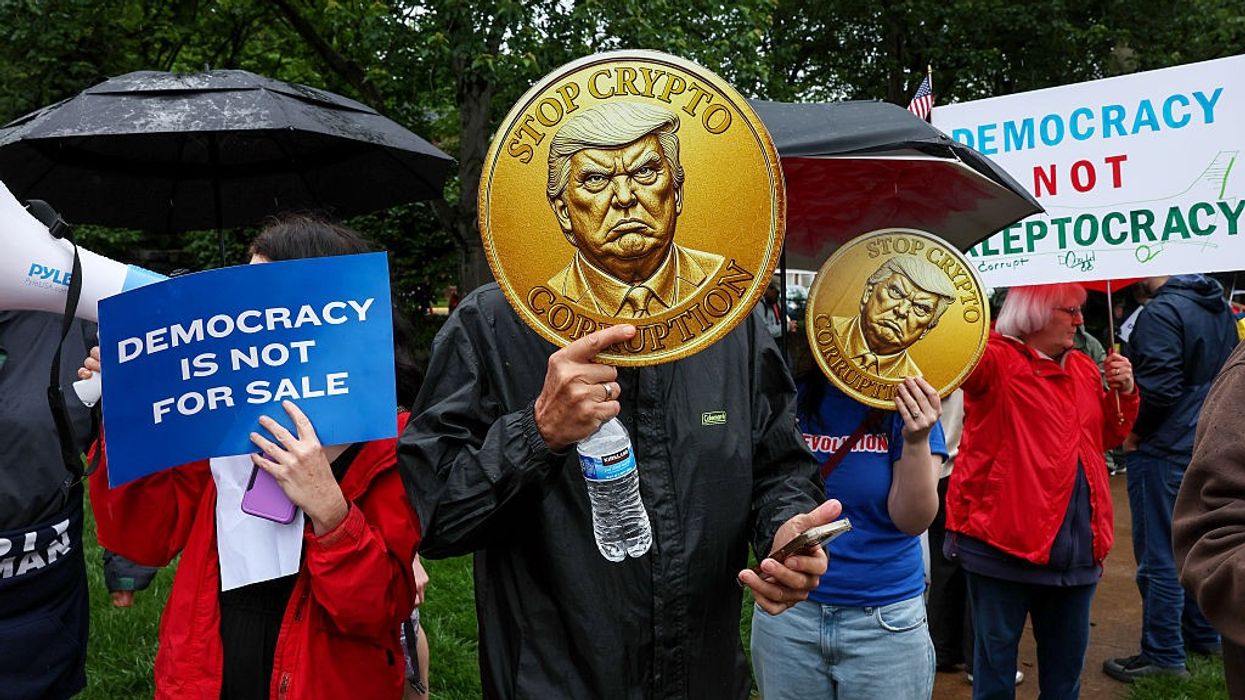
"For the first time in history, a president is leaning on a bank regulator to give his private enterprise the implicit backing of the federal government," said one critic.
Critics expressed alarm on Tuesday amid a new report suggesting that President Donald Trump's cryptocurrency firm is about to get federal banking privileges.
As reported by NOTUS, the Office of the Comptroller of the Currency (OCC) in the coming weeks is expected to approve a national trust bank charter for World Liberty Financial, the crypto startup founded by members of the Trump family and the family of Trump Middle East envoy Steve Witkoff.
Were it to receive the charter, NOTUS explained, World Liberty Financial would receive "significant legal and financial benefits," including being able "to settle financial transactions akin to Venmo or PayPal on the World Liberty Financial platform, through which the Trump family could receive a cut."
David Wachsman, a spokesperson for World Liberty Financial, dismissed concerns about conflicts of interest, telling NOTUS that "none of [the company's] leadership or employees work for the US government," even though the president and his entire family stand to personally benefit from the charter's approval.
Corey Frayer, director of investor protection for Consumer Federation of America, told NOTUS that here was simply no precedent for a sitting president being granted such privileges for a company he founded by a comptroller whom he personally appointed.
"For the first time in history, a president is leaning on a bank regulator to give his private enterprise the implicit backing of the federal government," Frayer explained. “It’s outrageous."
Diana Henriques, a veteran financial journalist best known for her extensive coverage of the Ponzi scheme run by disgraced financier Bernie Madoff, also expressed horror at the prospect of the OCC carrying out the president's bidding.
"The guardrails continue to fall," Henriques wrote. "It is functionally impossible to regulate a bank owned by the president. Yet it can imperil the entire banking system if it runs off the rails. For heaven's sake, this has to be stopped."
Derek Martin, vice president at Focal Point Strategy Group, wrote that there is "no other way to interpret" the NOTUS report "than Trump using the government to advance his own firm's interests."
"World Liberty Financial's entire brand—and reason for existence, basically—is 'We are affiliated with Trump,'" Martin added. "This is just the latest way they're leveraging it."
Government watchdogs for months have been raising alarms about the president having his own cryptocurrency firm, which has received massive investments from foreign governments since its founding in 2024.
According to NOTUS reporter Jeff Stein, Trump has reported personally earning $57 million from World Liberty Financial so far, a number that could get significantly higher if the firm is granted its charter.
An analysis published by Forbes last month estimated that Trump has nearly tripled his wealth since returning to office, going from a net worth of $2.3 billion in 2024 to $6.5 billion in 2026.
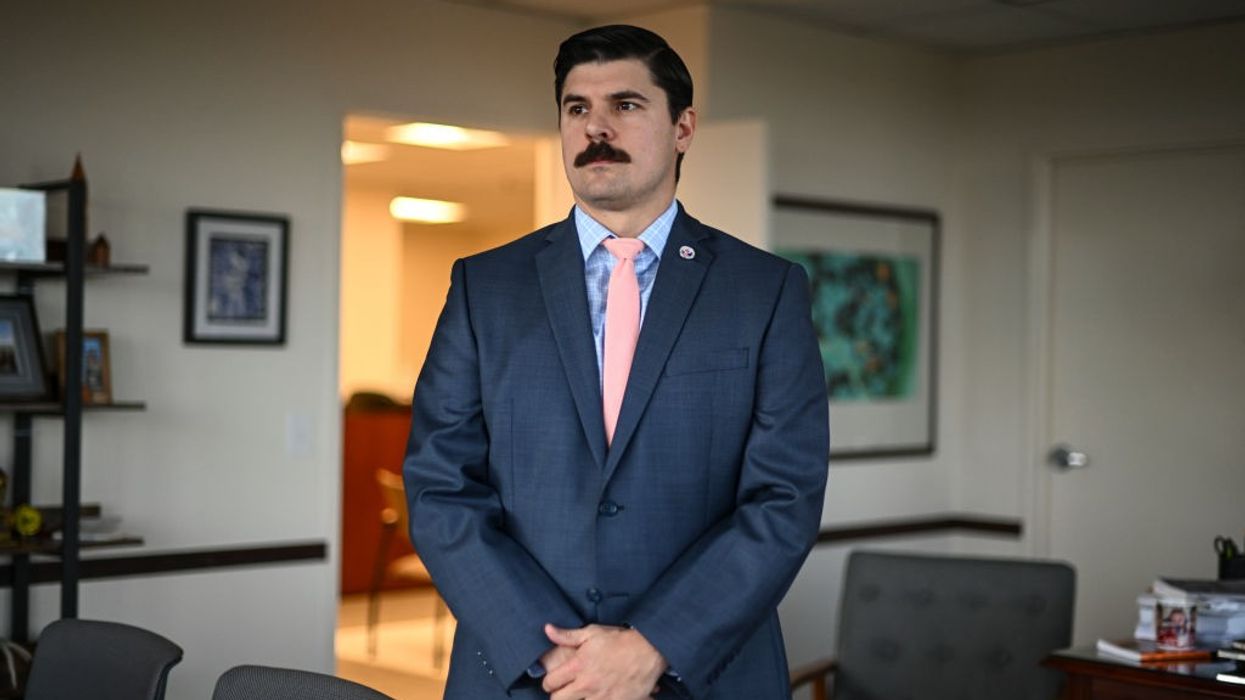
"I'll see him in court," said Richard Trumka Jr., one of the commissioners.
Three Democratic members of the Consumer Product Safety Commission vowed on Friday to fight back after U.S. President Donald Trump moved to fire them, an effort that the trio described as part of the White House's unlawful assault on independent agencies.
Mary Boyle, Richard Trumka Jr., and Alex Hoehn-Saric are now listed on the CPSC's website as "former commissioners." The Washington Post reported that Trump moved to fire the commissioners "shortly after" the Elon Musk-led Department of Government Efficiency visited the agency on Thursday.
"The Democratic commissioners objected to two DOGE employees being formally detailed to the agency," the Post noted, citing Trumka's account.
Boyle and Trumka said they received emails from the White House late Thursday informing them of the president's bid to remove them from their posts. Hoehn-Saric said in a statement Friday that while he has yet to receive communication from the White House, the acting chair of the CPSC is "preventing me from executing my duties as commissioner based on an assertion that the president is also seeking my removal."
"The illegal attempt to remove me from the CPSC happened immediately after my colleagues and I took steps to advance our safety work and protect our staff from arbitrary firings," said Hoehn-Saric. "President Trump's action politicizes a critical independent public safety agency that was structured by law to avoid such interference."
All three of the Democratic commissioners indicated that they don't intend to leave the agency quietly, following in the footsteps of commissioners at other agencies who have challenged Trump's attempts to fire them, setting the stage for a high-stakes battle at the U.S. Supreme Court.
Trumka, son of the late labor leader Richard Trumka, said Friday that he has "a set term on this independent, bipartisan commission that does not expire until October of 2028." Last week, Trumka defied a Trump executive order instructing federal agencies to submit all proposed rules to the Office of Information and Regulatory Affairs for review.
"I will continue protecting the American people from harm through that time," Trumka continued. "The president would like to end this nation's long history of independent agencies, so he's chosen to ignore the law and pretend independence doesn't exist. I'll see him in court."
Boyle, whose term was set to expire later this year, also signaled that she intends to remain at her post.
"Until my term as commissioner concludes,” Boyle said, "I will insist on following these time-tested principles, and I will use my voice to speak out on behalf of safety."
Consumer advocates voiced outrage in response to Trump's attempt to fire the CPSC commissioners.
"The illegal firing of CPSC commissioners is not just a brazen, unprecedented, and reckless assault on the rule of law, it is a direct threat to the lives and physical safety of Americans, especially our most vulnerable, infants and children," said Courtney Griffin, Director of Consumer Product Safety at the Consumer Federation of America. "The consequences may be measured in preventable injuries, hospitalizations, and lives lost."
William Wallace, director of safety advocacy for Consumer Reports, said in a statement that "this is an appalling and lawless attack on the independence of our country's product safety watchdog."
"Anyone who cares about keeping their family safe should oppose this move and demand that it be reversed," Wallace added. "This isn't really about the individual leaders, as commendable as they are. It's about whether Congress can maintain a federal agency that takes strong action to protect the public, based on scientific evidence and insulated from political whims."
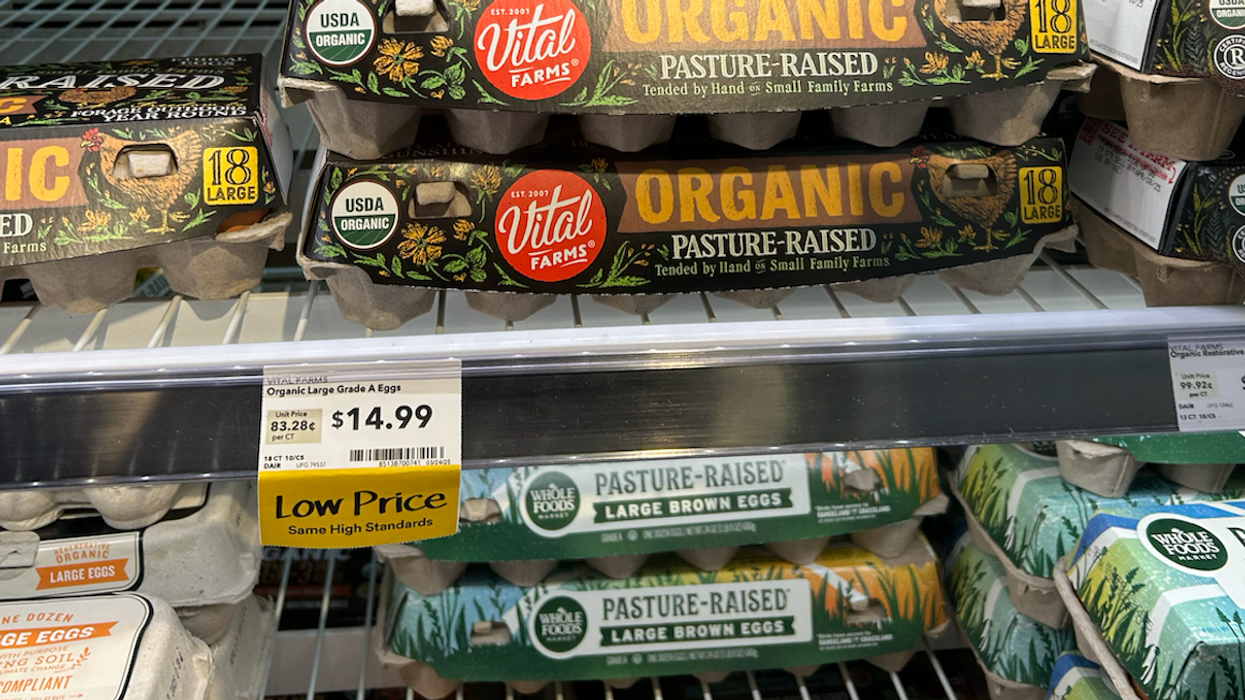
"The only egg prices Donald Trump is lowering," quipped the DNC chair, "is our nest eggs."
For the third straight month, U.S retail egg prices have hit a record high, despite falling wholesale prices, no bird flu outbreaks, and President Donald Trump's campaign promises—and recent misleading claims.
On Thursday, the U.S. Bureau of Labor Statistics' Consumer Price Index (CPI) reported the average retail cost of a dozen eggs rose from $5.90 in February to $6.23 last month.
Egg prices continue to increase despite bird flu outbreak slowing finance.yahoo.com/news/egg-pri...
[image or embed]
— Yahoo Finance (@yahoofinance.com) April 10, 2025 at 6:22 AM
Earlier this week, Trump claimed that "eggs are down 79%" due to his administration's work, a possible reference to the wholesale price, which does not reflect retail cost due to the role that profit-hungry industrial producers and grocery cartels play in inflating prices.
Trump also said that egg prices "are going down more," a statement that contradicts not only recent trends but also his own administration's Food Price Outlook, which forecasts a 57.6% increase in egg prices for 2025, with a prediction interval of 31.1%-91.5%.
Recent record egg prices have largely been driven by an avian flu epidemic that has forced farmers to cull over 166 million birds, most of them egg-laying hens. However, no farms are currently reporting any bird flu outbreaks.
On Tuesday, Cal-Maine Foods, the nation's largest egg producer, announced quarterly profits of $509 million, more than triple its gains from a year ago. The Mississippi-based company, which produces around 20% of U.S. eggs, also enjoyed a more than 600% increase in gross profits between fiscal years 2021-23, according to the consumer advocacy group Food & Water Watch (FWW).
Yet even as its profits soared, Cal-Maine still took $42 million in federal compensation for losses due to bird flu.
The top five egg producers own roughly half of all U.S. laying hens. The biggest of those corporations is Cal-Maine, which just announced quarterly profits of $509 million — more than 3x what it made a year ago. Corporate concentration + bird flu = a price-hiking free for all.
— Robert Reich (@rbreich.bsky.social) April 9, 2025 at 10:31 AM
Last month, the U.S. Justice Department's antitrust division launched an investigation of alleged price-fixing by the nation's largest egg producers, including Cal-Maine, which isn't even the largest recipient of avian flu-related government assistance. Versova, which operates farms in Iowa and Ohio, has been allotted more than $107 million in federal bird flu relief, The Washington Post reported Wednesday. Hillandale Farms, a Pennsylvania-based company sold last month to Global Eggs, received $53 million in avian flu-related subsidies.
"For those companies to be bailed out and then turn around and set exploitative prices, it just adds insult to injury for consumers," Thomas Gremillion, director of food policy at the Consumer Federation of America, told the Post. "Absolutely, it's unfair."
FWW research director Amanda Starbuck took aim at the corporate food system, saying Thursday that "the industry is proving itself effective at extracting enormous profits out of American consumers."
"We are all paying for it—at the store, with food shortages, and with the growing threat of the next pandemic," she continued.
"Restoring sanity to the grocery aisle will require immediate action to transform our food system," Starbuck added. "To lower egg prices, the Trump administration must take on the food monopolies, hasten and prioritize its investigation into corporate price fixing, and stop the spread of factory farms."
The fresh CPI figures weren't all bad news, as the index saw its first decline in five years, falling 0.1% mainly on the strength of lower oil prices. The 12-month increase in consumer prices also slowed from 2.8% to 2.4%.
However, the mildly positive CPI news was overshadowed by the economic uncertainty caused by Trump's mercurial global trade war, including a ramped-up 145% tariff on imports from China, one of the top U.S. trading partners, and ongoing stock market chaos.
"The only egg prices Donald Trump is lowering," Democratic National Committee Chair Ken Martin quipped earlier this week, "is our nest eggs."
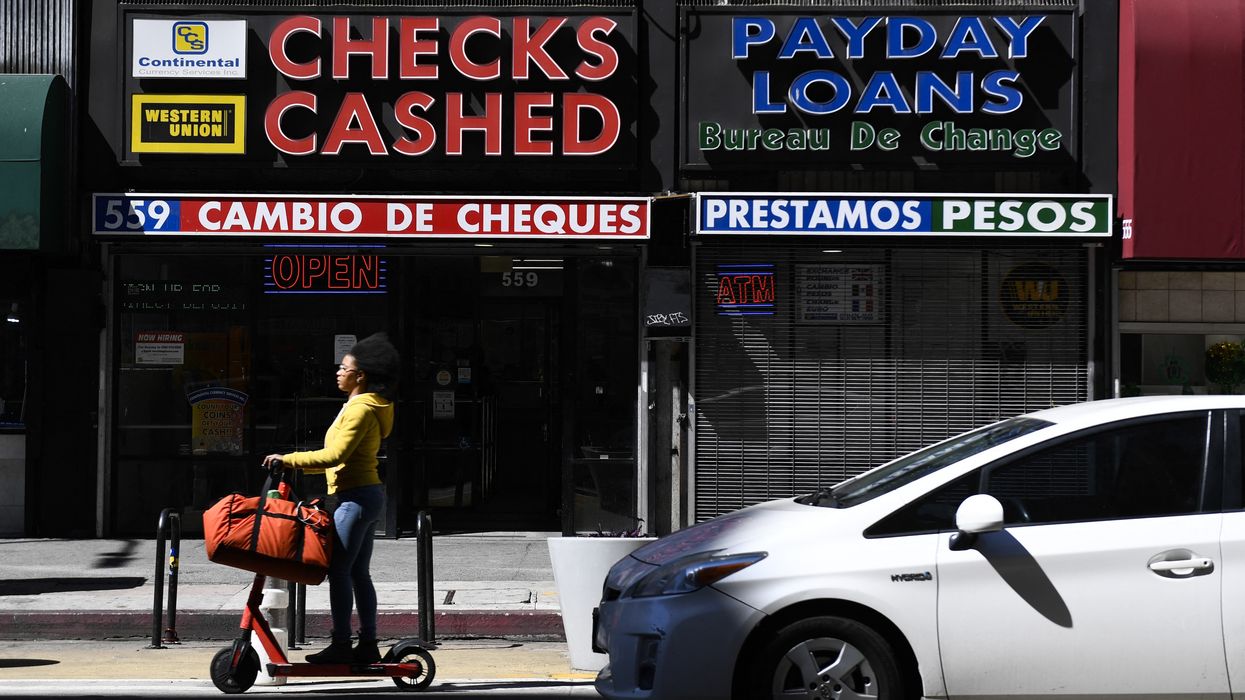
"A policy of 'hear no evil, see no evil, punish no evil' is a sure-fire way to promote lawless behavior," said one advocate.
"Regulatory relief for small loan providers" was how the Trump administration described its decision not to prioritize enforcing a rule meant to protect people who are financially struggling from predatory payday lenders—but one consumer protection advocate said Monday that the announcement signals a policy that that is certain to "promote lawless behavior" by corporations.
The Consumer Financial Protection Bureau (CFPB), whose actions aimed at protecting working families and consumers from big banks and other corporations have been attacked for years by Republicans, announced last Friday that under the Trump administration, it will not enforce a rule meant to safeguard people from fees they accrue when payday lenders repeatedly attempt to debit their accounts.
Part of the 2017 payday loan rule, the bounced payment rule was set to go into effect on Sunday—barring payday lenders, "buy now, pay later" (BNPL) lending services, and other predatory lenders from continuing to make attempts to debit bank accounts after a loan customer's payment bounced twice. The lenders would be required under the rule to gain the customer's permission after two failed attempts to retrieve the payment.
When the CFPB announced last year that the rule was set to go into effect on March 30, 2025, it noted that it had "found one instance of a lender making 11 failed withdrawal attempts in one day"—subjecting the consumer to "a pile of junk fees" including nonsufficient (NSF) funds fees, overdraft charges, and others.
Adam Rust, director of financial services for the Consumer Federation of America, said Monday that the CFPB had "sided with bottom-feeder payday lenders at the expense of vulnerable borrowers struggling to make ends meet."
"The CFPB is designed to be a law enforcement agency," said Rust. "A policy of 'hear no evil, see no evil, punish no evil' is a surefire way to promote lawless behavior."
The agency said it would also not enforce rules applying to vehicle title loans, which can have high interest rates and are banned or limited in at least 30 states.
Lauren Saunders, associate director of the National Consumer Law Center, noted that former CFPB Director Kathy Kraninger, the U.S. Supreme Court, and the 5th Circuit previously upheld "the bare minimum protection against multiple NSF fees on unaffordable loans."
"It's outrageous that the CFPB will not enforce the law that prohibits payday lenders and other 200% APR lenders from continually debiting people's accounts, subjecting them to multiple NSF and overdraft fees," said Saunders. "Buy now, pay later lenders that make unaffordable loans should not be allowed to keep hitting your bank account after payments bounce twice. It's unconscionable to have greater protections for payday lenders than for people struggling to afford basic necessities."
A Pew survey in 2013 revealed that 1-in-4 payday loan customers faced an overdraft fee due to the lender's attempt to collect a payment from an account with insufficient funds.
The CFPB said it was contemplating "issuing a notice of proposed rulemaking to narrow the scope of the rule."
"By allowing payday lenders to repeatedly debit borrowers' empty bank accounts," Nadine Chabrier of the Center for Responsible Lending told Consumer Affairs, "the CFPB's political leadership is giving a free pass for payday lenders to kick people when they're down."
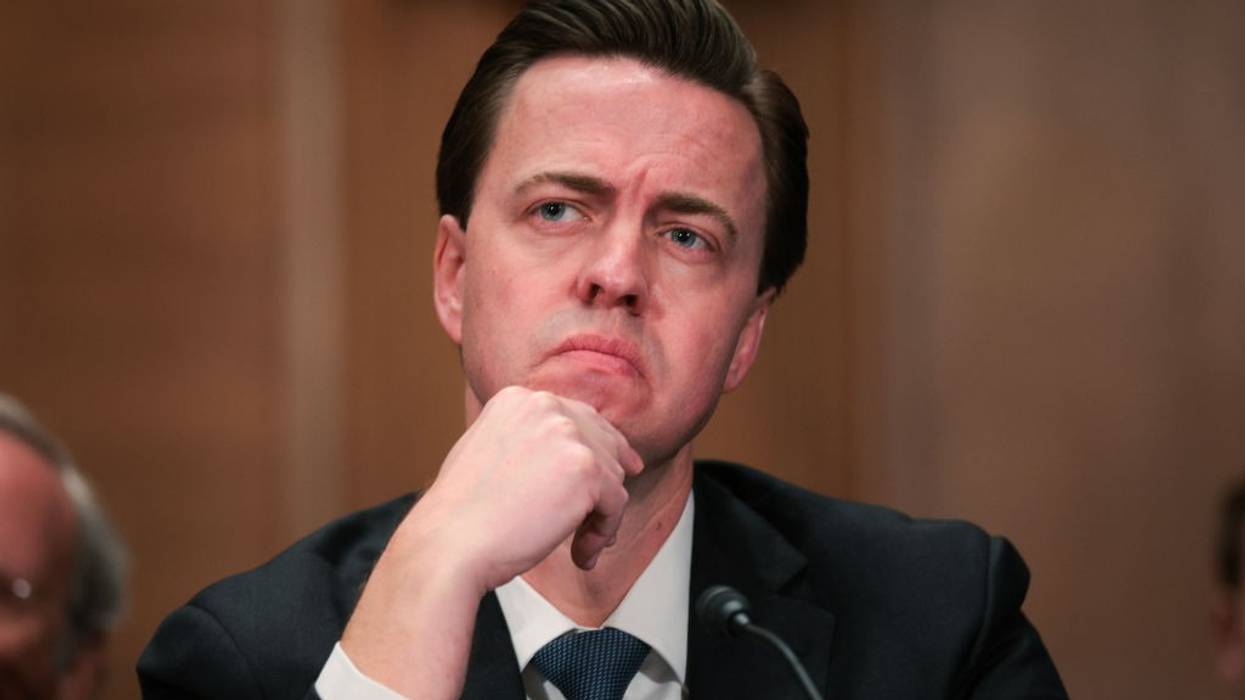
"This sends a dangerous message to corporate America that financial fraud and abuse will go unchecked," said one critic.
Consumer advocates on Thursday slammed the Trump administration for dropping various enforcement actions against companies accused of activities that include ripping off savings account holders, illegally collecting on student loans, and engaging in an unlawful mortgage broker kickback scheme.
The Consumer Financial Protection Bureau's notices of voluntary dismissal came as the U.S. Senate Committee on Banking, Housing, and Urban Affairs held a hearing for Jonathan McKernan, President Donald Trump's pick to lead the CFPB—which Accountable.US executive director Tony Carrk has called "a gift to big banks and special interests."
"We're getting a very strong message here that if you're a bank, if you're a student loan servicer, and you're violating the law, the CFPB is not only not going to pursue you, they're going to let you out of your case scot-free."
While the former Federal Deposit Insurance Corporation board member awaits confirmation from the GOP-controlled Senate, Trump and Russell Vought, the CFPB's temporary leader, have wasted no time trying to gut the agency and undo the work of its former director, Rohit Chopra, who oversaw cases against the following companies:
Court paperwork "in the Rocket Homes case notes that the 'Consumer Financial Protection Bureau dismisses this action, with prejudice, against all defendants,'" according to The Associated Press. "Dismissing a case without prejudice means that it cannot be refiled. Similar wording was used in the dismissals of the CFPB's Capital One and Vanderbilt Mortgage suits."
Those decisions came after the CFPB last week
dropped a case against SoLo Funds, which the agency accused of misleading borrowers about loan costs. Vought had then teased further action, saying on social media Sunday that "shockingly, the CFPB tried to destroy this company, SoLo, which incurred millions in legal fees and had to lay off 30% of its workforce. It was wrong and we dismissed the case. More to come but the weaponization of 'consumer protection' must end."
Meanwhile, critics like Christine Chen Zinner, consumer policy counsel at Americans for Financial Reform, are framing the CFPB's dismissals as a betrayal of the agency's mission.
"The old CFPB stood ready to protect consumers and wrestle back the ill-gotten gains of big banks like Capital One," Chen Zinner said Thursday. "With this decision, the Trump-appointed leadership is letting Capital One steal $2 billion from its depositors, another example of this administration standing up for Wall Street at the expense of everyday people who deserve the CFPB's protection."
Erin Witte, director of consumer protection at the Consumer Federation of America, also released a statement focused on the bank case.
"The CFPB was created to be a watchdog for big banks, not a lapdog, and dismissing this case is a gift to Capital One," said Witte. "$2 billion is a drop in the bucket for Capital One–less than half a percent of its total assets—but returning this money would make a huge difference to the hardworking Americans who trusted Capital One to safeguard their savings and were kept in the dark about how to earn more."
Witte also described the full list of dismissals as "unprecedented," and told Reuters, "We're getting a very strong message here that if you're a bank, if you're a student loan servicer, and you're violating the law, the CFPB is not only not going to pursue you, they're going to let you out of your case scot-free."
Accountable.US highlighted that "the news stands in stark and alarming contrast to McKernan's remarks... to senators, promising to review all existing CFPB lawsuits before making any decisions around dropping litigation."
Student Borrower Protection Center executive director Mike Pierce said in a statement about the PHEAA case that "Russ Vought and Donald Trump sided with a lawless and corrupt student loan company at the expense of borrowers across the country—another sign that powerful financial interests are driving the capture and demolition of the federal consumer watchdog."
"This is a slap in the face to students, student loan borrowers, and working people everywhere," Pierce continued. "PHEAA lied to some of the poorest and most vulnerable Americans, then illegally hounded them for debt that they did not owe, all to make a buck. And today, cowardly political sycophants backed down on the federal government’s only effort to hold PHEAA accountable."
"Of course, like all fascist toadies, Russ Vought will rightly be forgotten by history and sink into well-deserved irrelevance. But until then, law enforcement at every level of government must rush in to fill the void left by a federal consumer protection agency that now stands only to serve billionaires and big corporations," he added. "Remember: these people prey on those in need because they are motivated only by the desire to exercise power, and they are motivated to do so because they are cowards. It is everyone's job to remind Vought and his cronies of their powers' limits, and to remind the world of their cowardice."
Lauren Saunders, associate director of the National Consumer Law Center, also directed some blame at billionaire Elon Musk, the head of Trump's so-called Department of Government Efficiency, which is leading the administration's efforts to slash the federal workforce and spending.
"The Trump administration and Elon Musk are showing us exactly what it means not to have ordinary people protected by a strong Consumer Financial Protection Bureau—they are dismissing enforcement cases that sought to return billions to working families harmed by corporations accused of egregious conduct that violated the law," said Saunders. "On top of the stop-work order and firing of CFPB workers doing their jobs, this sends a dangerous message to corporate America that financial fraud and abuse will go unchecked. We must preserve a strong, independent, and functional CFPB to stand up to corporate bullies."
Sen. Elizabeth Warren (D-Mass.), a former bankruptcy professor, is the mastermind behind the CFPB. She is also the ranking member of the panel which McKernan appeared before on Thursday. The American Prospect executive editor David Dayen reported that the senator informed the nominee about the dismissals during the hearing.
"Literally while you've been sitting here and you've been talking about the importance of following the law, we get the news that the CFPB is dropping lawsuits against companies that are cheating American families, or alleged to be cheating American families," Warren said. "It seems to me the timing of that announcement is designed to embarrass you and to show exactly who is in charge of this agency right now: Elon Musk and his little band of hackers."

"No move could more clearly show whose side Trump and Musk are on—and who they are willing to exploit," said Public Citizen co-president Robert Weissman.
The only U.S. agency tasked solely with protecting consumers from predatory corporations was hit particularly hard this week by the Trump administration's sweeping purge of the federal workforce, a gift to financial institutions that prey on working-class Americans with exorbitant fees and other abusive practices—and a potential boon for Elon Musk's personal business empire.
Employees at the Consumer Financial Protection Bureau (CFPB), currently run in an acting capacity by Project 2025 architect and White House budget chief Russell Vought, reportedly began receiving termination emails Tuesday night, with the agency's enforcement division bearing the brunt of the firings.
Contractors and workers who were hired within the past one or two years were the primary targets of the latest round of terminations, Wired reported.
The outlet noted that the wave of terminations followed "a tumultuous few days at the CFPB" as Musk's lieutenants at the so-called Department of Government Efficiency (DOGE) "shut down a portion of the agency's homepage after a day of struggling to obtain access" to bureau systems last Friday.
That same night, Trump installed Vought at the helm of the CFPB, a move critics warned was a step toward Musk's stated goal of destroying the bureau.
Vought, a far-right ideologue, moved swiftly to halt virtually all of the agency's work, and even set up a "tip line" inviting corporations to file a report if they are "being pursued by CFPB enforcement or supervision staff, in violation of Acting Director Russ Vought's stand down order."
Robert Weissman of the consumer advocacy group Public Citizen said in a statement Thursday that "with their illegal and unconstitutional move to eliminate the CFPB, co-presidents Elon Musk and Donald Trump aim to deliver a corrupt bounty to Big Banks, predatory lenders, and other financial corporations."
"The CFPB has eliminated junk fees, capped credit card late charges, stopped the weaponization of medical debt, sued giant corporations, handled tens of thousands of individual complaints and provided relief to consumers of more than $21 billion—of course Big Banks, payday lenders, and financial scam artists want to eliminate it," Weissman added.
"This is a free pass for financial institutions to take advantage of consumers."
The Public Citizen co-president also put the spotlight on another potential motivation behind the Trump administration's zealous assault on the CFPB: Musk's foray into financial services, building off his existing control of X with a partnership with Visa that would allow peer-to-peer payments on the social media platform and beyond.
"Musk has a direct interest in eliminating the agency, which would be a regulator of X if it proceeds with well-reported plans to provide money transfer services," said Weissman. "No move could more clearly show whose side Trump and Musk are on—and who they are willing to exploit."
The Consumer Federation of America (CFA) noted in a statement Sunday that "if the CFPB can't do its job, no federal regulator will be able to prevent Elon Musk from building a financial services company."
More broadly, CFA pointed out that if the Trump administration shuts down or neuters the CFPB, no other agency will be able to assume the unique consumer protection role it played without a specific act of Congress.
"The CFPB was created after excessive risk-taking by financial companies, many of whom were not supervised by a federal regulator, crashed our economy," said Adam Rust, CFA's director of financial services. "It was created to protect people, not empower Elon Musk. If this administration chooses to cover its eyes from the facts, people will be put in harm’s way. This is a free pass for financial institutions to take advantage of consumers."

One observer said it "really feels like the climate crisis is putting the home insurance industry on a fast track to being almost as reviled as the health insurance industry."
As deadly wildfire incinerated more than 1,000 homes and other structures in Los Angeles County this week, insurance companies are sparking outrage for having recently canceled homeowners' policies across California—including in some of the areas hit hardest by the current blazes.
More than 1,000 homes, businesses, and other buildings have burned in the Palisades, Hurst, and Eaton fires—the latter of which has killed two people, The Los Angeles Times reported Wednesday. Fueled by fierce Santa Ana winds and extraordinarily dry conditions, all three fires were at 0% containment as of Wednesday afternoon, according to the California Department of Forestry and Fire Protection (CAL FIRE).
Authorities have issued mandatory evacuation orders for more than 80,000 residents. Los Angeles County Fire Chief Anthony Marrone told reporters Wednesday morning that a "high number of people who didn't evacuate" suffered serious injuries. Hundreds of thousands of area residents are also without power.
CAL FIRE said on Wednesday afternoon that the largest of the three blazes, the Palisades Fire, had burned more than 11,000 acres, while the Eaton Fire had scorched over 10,600 acres and the Hurst Fire topped 500 acres burned. Firefighters battling the Palisades Fire reported hydrants coming up dry.
Amid increased extreme weather events driven by the climate emergency, insurance companies have faced criticism for canceling policies and pulling out of states with elevated wildfire or hurricane risk.
State Farm, one of California's largest insurers, announced last year that it would not renew 30,000 home insurance policies throughout the state—including at least hundreds in areas affected by the current wildfires—explaining that the move was meant to avert a "financial failure" that would "detrimentally impact the entire market."
Other insurance companies have taken similar action, leaving their customers scrambling to find coverage.
Michael DeLong, research and advocacy associate at the Consumer Federation of America, told Common Dreams Wednesday that while climate-driven extreme weather has "made many areas riskier to insure," insurance companies are also canceling policies because "they're trying to take advantage of the situation of rising risks and rising costs to weaken consumer protections."
"They've been waging a campaign against Proposition 103… a ballot initiative that got passed in the late 1980s that, among other things, puts in place a lot of consumer protections about insurance," he added. "This has been a big deal for consumers and it's helped keep rates down. But insurance companies really hate these consumer protections and have been trying to weaken them."
In a Wednesday interview with Common Dreams, Jamie Court, president of the Los Angeles-based group Consumer Watchdog, noted that "under Prop 103, we could challenge rate hikes, and we saved $1 billion by challenging rate hikes that were too high last year."
However, advocates say that California Insurance Commissioner Ricardo Lara's new "sustainable insurance strategy" will make it harder to challenge rates and lacks transparency and public input.
DeLong said Lara is "allowing the net cost of reinsurance to be passed on to consumers."
Insurance Commissioner Ricardo Lara Reinsurance Regulation To Pump Up Homeowners Rates By 40% Without Guarantees of New Wildfire Coverage! With No Opportunity For Public Input! Read: consumerwatchdog.org/insurance/la... #insurance #InsuranceClaims #california
[image or embed]
— Consumer Watchdog (@consumerwatchdog.bsky.social) January 4, 2025 at 10:49 AM
Reinsurance is an arrangement in which insurance companies transfer risk to another insurer to mitigate damages.
"Until a few weeks ago, California's regulations didn't allow the cost of reinsurance to be passed on to consumers, and now they do," DeLong explained. "So that's probably going to drive up costs for consumers. The commissioner and the department say it's going to make the insurance industry more stable—we're kind of skeptical of that."
"Another reform that he's done is allowing the use of catastrophe models in insurance," DeLong added, referring to a risk management tool that helps insurers assess potential financial impacts of disasters. "Every other state allows insurance companies to use them; California did not until recently. Catastrophe models can be helpful and useful; the problem is that many catastrophe models aren't that good; they're based on inaccurate or incomplete information and they don't have any transparency."
Court also decried the lack of transparency in catastrophe models, which he said "can say anything they want, and then we have to pay the rate." He also criticized Lara's proposal to allow insurers to hike rates in exchange for a purported commitment to cover more properties in wildfire areas.
Lara said last year that "insurance companies will write no less than 85% of their statewide market share in wildfire distressed areas,"
However, Court cautioned that Lara is assuming "that the companies are actually going to increase their footprint in wildfire areas."
"When you look at the details... there are these big loopholes," he said. "Insurance companies have to commit to 85% [wildfire area saturation] within two years—or they can do 5% more than they're doing now. So if they're at 0%, they can go to 5%. This is complete bullshit."
As coverage becomes more difficult to obtain, hundreds of thousands of California homeowners have turned to the state's FAIR Plan, an insurer of last resort, which has more than doubled the number of policies issued since 2020.
"If the FAIR Plan is the only thing you can do, take that," DeLong said. "In the meantime, you can reach out to the Department of Insurance and let them know that you want them to protect consumers and reject excessive rate increases."
"You can also try mitigation measures to reduce risk, like clearing brush around your home, improving your roof so it's a Class A roof, which means it's very difficult to catch on fire, you can take measures to prevent embers from starting fires on your property," he added. "The problem is that all of that costs money, and not everyone may be able to afford that… California has recently started some proposals to provide grants to consumers to undertake these measures, and these should be expanded even more."
"There is some good news," DeLong said. "The California Department of Insurance is working on a public catastrophe model, one that would have opportunities for input from consumers, that would be based on data that's fair and open."
"However, that's going to take at least a couple of years to get off the ground," he added.
Court concurred. "We're a long way away from that, and it's not even going to be something that companies have to use, it's something that would be supplemental," he said of the public model. "I think it's giving lip service, but I think it's the right direction. It just needs to be much more aggressive."
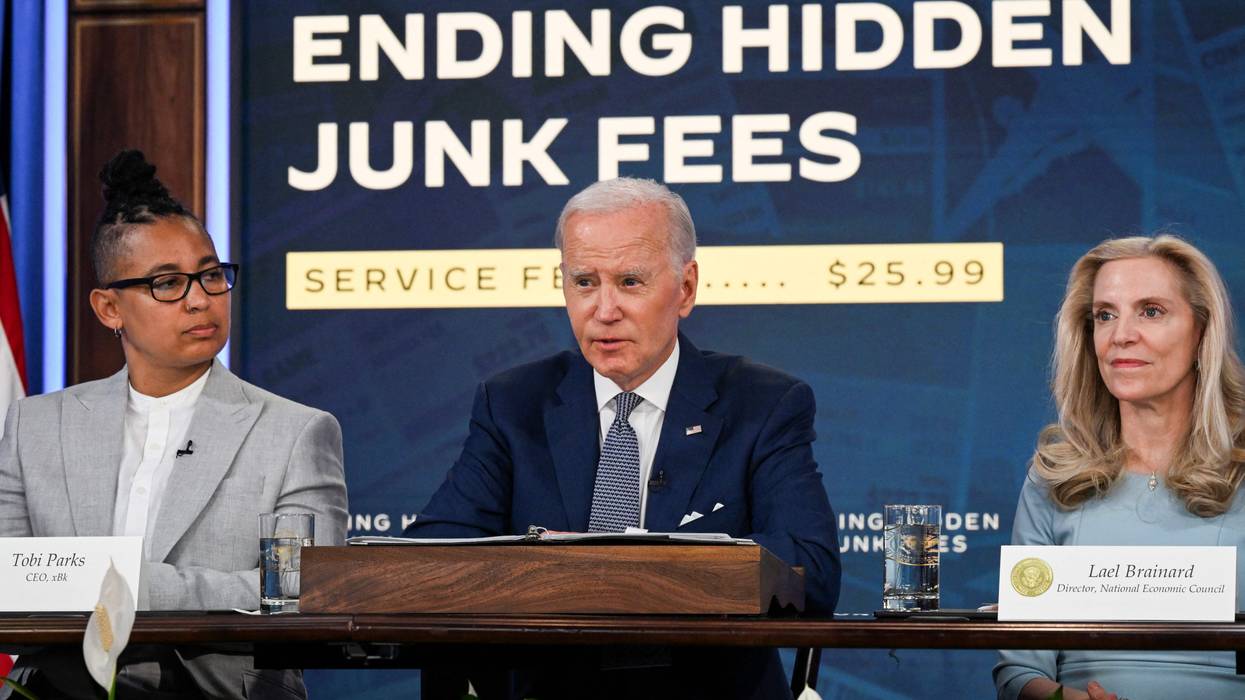
One advocate called the CFPB's new rule "a major milestone in its effort to level the playing field between regular people and big banks."
The Consumer Financial Protection Bureau, one of President-elect Donald Trump's top expected targets as he plans to dismantle parts of the federal government after taking office in January, announced on Thursday its latest action aimed at saving households across the U.S. hundreds of dollars in fees each year.
The agency issued a final rule to close a 55-year-old loophole that has allowed big banks to collect billions of dollars in overdraft fees from consumers each year,
The rule makes significant updates to federal regulations for financial institutions' overdraft fees, ordering banks with more than $10 billion in assets to choose between several options:
The final rule is expected to save Americans $5 billion annually in overdraft fees, or about $225 per household that pays overdraft fees.
Adam Rust, director of financial services at the Consumer Federation of America, called the rule "a major milestone" in the CFPB's efforts "to level the playing field between regular people and big banks."
"No one should have to pick between paying a junk overdraft fee or buying groceries," said Rust. "This rule gives banks a choice: they can charge a reasonable fee that does not exploit their customers, or they can treat these loan products as an extension of credit and comply with existing lending laws."
The rule is set to go into effect next October, but the incoming Trump administration could put its implementation in jeopardy. Trump has named billionaire Tesla CEO Elon Musk to co-lead the Department of Government Efficiency, an advisory body he hopes to create. Musk has signaled that he wants to "delete" the CFPB, echoing a proposal within the right-wing policy agenda Project 2025, which was co-authored by many officials from the first Trump term.
"The CFPB is cracking down on these excessive junk fees and requiring big banks to come clean about the interest rate they're charging on overdraft loans."
"It is critical that incoming and returning members of Congress and President-elect Trump side with voters struggling in this economy and support the CFPB's overdraft rule," said Lauren Saunders, associate director at the National Consumer Law Center (NCLC). "This rule is an example of the CFPB's hard work for everyday Americans."
In recent decades, banks have used overdraft fees as profit drivers which increase consumer costs by billions of dollars every year while causing tens of millions to lose access to banking services and face negative credit reports that can harm their financial futures.
The Federal Reserve Board exempted banks from Truth in Lending Act protections in 1969, allowing them to charge overdraft fees without disclosing their terms to consumers.
"For far too long, the largest banks have exploited a legal loophole that has drained billions of dollars from Americans' deposit accounts," said CFPB Director Rohit Chopra. "The CFPB is cracking down on these excessive junk fees and requiring big banks to come clean about the interest rate they're charging on overdraft loans."
Government watchdog Accountable.US credited the CFPB with cracking down on overdraft fees despite aggressive campaigning against the action by Wall Street, which has claimed the fees have benefits for American families.
Accountable.US noted that Republican Reps. Patrick McHenry of North Carolina and Andy Barr of Kentucky have appeared to lift their criticisms of the rule straight from industry talking points, claiming that reforming overdraft fee rules would "limit consumer choice, stifle innovation, and ultimately raise the cost of banking for all consumers."
Similarly, in April Barr claimed at a hearing that "the vast majority of Americans" believe credit card late fees are legitimate after the Biden administration unveiled a rule capping the fees at $8.
"Americans pay billions in overdraft fees every year, but the CFPB's final rule is putting an end to the $35 surprise fee," said Liz Zelnick, director of the Economic Security and Corporate Power Program at Accountable.US. "Despite efforts to block the rule and protect petty profits by big bank CEOs and lobbyists, the Biden administration's initiative will protect our wallets from an exploitative profit-maximizing tactic."
The new overdraft fee rule follows a $95 million enforcement action against Navy Federal Credit Union for illegal surprise overdraft fees and similar actions against Wells Fargo, Regions Bank, and Atlantic Union.
Consumers have saved $6 billion annually through the CFPB's initiative to curb junk fees, which has led multiple banks to reduce or eliminate their fees.
"Big banks that charge high fees for overdrafts are not providing a courtesy to consumers—it's a form of predatory lending that exacerbates wealth disparities and racial inequalities," said Carla Sanchez-Adams, senior attorney at NCLC. "The CFPB's overdraft rule ensures that the most vulnerable consumers are protected from big banks trying to pad their profits with junk fees."

"The CFPB's actions will help workers know what they are getting with these products and prevent race-to-the-bottom business practices," said the director of the bureau.
With inflation rising in recent years, driven by corporate greed according to numerous analyses, the number of people in the U.S. who have relied on paycheck advance products has skyrocketed—but a rule introduced Thursday by the Consumer Financial Protection Bureau is aimed at ensuring that lenders who provide these products are transparent with financially struggling workers about the fees they can incur.
The CFPB proposed a rule clarifying that paycheck advances, sometimes marketed as "earned wage" products, are consumer loans and are therefore subject to the Truth in Lending Act.
The federal law requires lenders to disclose all fees, interest, and total costs consumers will incur before they use the product.
According to a study released by the CFPB as it announced the new proposed rule, the number of paycheck advance transactions processed by employer-partnered firms ballooned by 90% from 2021-22. More than 7 million workers used paycheck advances to access $22 million over that time period in order to pay for their housing, utilities, and other essentials.
The study notes that "the mismatch between when a family receives income and when a family must make payments for expenses" is a major driver of demand for consumer credit and other products like paycheck advances.
"To reduce their costs, employers have a strong incentive to delay the payment of compensation to workers, which drives demand for short-term credit," reads the analysis.
As such, said Rohit Chopra, director of the CFPB, paycheck advances "are often marketed to and designed for employers, rather than employees."
"The CFPB's interpretive rule will level the playing field and promote competition among short-term small-dollar lenders."
"The CFPB's actions will help workers know what they are getting with these products and prevent race-to-the-bottom business practices," he said.
Th bureau's report focuses on employer-sponsored paycheck advances, which have been increasingly used over and over by the same workers. Employees took out an average of 27 paycheck advance loans per year, according to the CFPB, with the average transaction totaling $106.
"The share of workers in our sample using the product at least once a month increased from 41% in 2021 to nearly 50% in 2022," wrote the CFPB.
The bureau noted that while employers sometimes make paycheck advances fee-free for their employees, workers usually pay fees themselves, including expedited service fees and "tips" that the online services request when completing the transaction.
In the sample the CFPB reviewed, employers paid for less than 5% of the fees incurred by workers
"Across our sample of surveyed companies, in 2021 and 2022, roughly 90% of workers paid at least one earned wage product-related fee," said the bureau. "Among the companies in our sample that collect fees, the average cost per transaction ranged from $0.61 to $4.70. When workers paid a fee, the average size was approximately $3.18. Workers paid an average of $68.88 per year in fees."
Some services provide subscriptions for workers who used paycheck advances regularly; those who utilize them can pay as much as $14.99 per month in subscription fees, according to the CFPB.
"In recent years, workers have seen big increases in wages, but junk fees and high rates on financial products not only chip away at these gains—they take advantage of workers," acting Labor Secretary Julie Su said in a statement.
Adam Rust, director of financial services for the Consumer Federation of America, said the proposed rule shows that "an advance on wages is still a loan that has to be repaid, and no amount of hair-splitting can change it."
"Workers have always relied on wages to repay advances from lenders," said Rust. "Policymakers should be skeptical whenever lenders insist on regulatory exemptions from rules that apply to their competitors. The CFPB's interpretive rule will level the playing field and promote competition among short-term small-dollar lenders."
The CFPB is among several federal agencies that right-wing operatives, many of whom worked in the Trump administration, have pledged to abolish under the policy agenda Project 2025.
Under the Biden administration, in addition to taking aim at paycheck advances, the CFPB has proposed a rule to cap credit card late fees at $8, a move that would save Americans $10 billion per year; prevented discrimination by small business lenders; and fined Wells Fargo $3.7 billion for illegal activity.