SUBSCRIBE TO OUR FREE NEWSLETTER
Daily news & progressive opinion—funded by the people, not the corporations—delivered straight to your inbox.
5
#000000
#FFFFFF
To donate by check, phone, or other method, see our More Ways to Give page.


Daily news & progressive opinion—funded by the people, not the corporations—delivered straight to your inbox.
"Continuing to help the war machine will only cause you more pain. There has never been a better time to reject those orders, and join a fight that matters."
Dozens of veterans were arrested by US Capitol Police on Monday after they occupied the Cannon House Office Building on Capitol Hill to protest President Donald Trump's illegal war on Iran.
During the protest, which was organized by a coalition of veterans groups, the demonstrators stood in the middle of the rotunda, holding red tulips and chanting anti-war slogans.
A video published by Reuters shows Capitol Police restraining the veterans and taking them into custody one by one.
Military veterans protest Iran war https://t.co/jtiGxiTMjv
— Reuters (@Reuters) April 20, 2026
One of the demonstrators arrested was Mike Prysner, executive director of the Center on Conscience and War (CCW) and a veteran of the 2003 Iraq War, who encouraged members of the US military to become conscientious objectors in a statement released ahead of the demonstration.
"The war I was sent to senselessly claimed the lives of thousands of Americans and a million Iraqis," said Prysner. "Like the other veterans here with me today, I have spent the last two decades wishing I could turn back the hands of time and refuse to go. Service members have that chance right now."
Prysner then informed US service members that "conscientious objection is your legal right, and we have professional counselors who will fight to ensure you are approved and kept from deployment."
Tyler Romero, conscientious objector client for CCW, said that he "decided to get arrested today because as someone who was a participant in a war machine that is responsible for untold suffering around the world, it is my duty to help put an end to it."
Like Prysner, Romero also encouraged service members to declare themselves conscientious objectors.
"My advice to troops still serving is this," he said, "This is the most important historical moment of our lifetime, and what you choose to do matters. I can tell you from experience that continuing to help the war machine will only cause you more pain. There has never been a better time to reject those orders, and join a fight that matters."
Trump over the weekend renewed his threats to commit war crimes by bombing Iranian civilian infrastructure, including bridges and power plants, unless Iran agreed to a deal to give up its uranium enrichment capabilities and reopen the Strait of Hormuz.
"If they don’t sign the deal, then the whole country is going to get blown up,” Trump said.
Soldiers from all sides of this conflict are sickened by a war run by tyrants benefiting only weapons makers that is both morally repugnant and violates U.S. laws with every weapons transfer to Israel.
A group of former fighters from Palestine and Israel plus active duty U.S. GIs announced last week why they decided to stop participating in war and urged U.S. military members to tell Congress to stop funding Israel's genocide in Gaza via the " Appeal for Redress v2."
The online news conference was organized by Veterans For Peace and featured a former Israel Defense Forces (IDF) special forces member, a young Israeli who just finished 85 days in jail for refusing to join the military, a former Hamas youth activist, and three active-duty U.S. military members who are awaiting discharge as conscientious objectors.
Elik Elhanan is a former special forces soldier in the IDF who, from 1995-98, served in south Lebanon, the West Bank, and Gaza. In 1997, his 14-year old sister was killed by a suicide bomber in Jerusalem. He joined Courage to Refuse in 2002, co-founded the Israeli-Palestinian group Combatants for Peace in 2005, and now serves on the board of American Friends of Combatants for Peace.
He said: "My service made it clear that violence became an end rather than a means. In nonviolence I found a language for community building that allows for self-expression and exchange, while engaging in fierce resistance against the hegemonic discourse." Elik received his PhD in Middle East studies from Columbia University and is currently teaching at City College, New York.
"All we want is to live together without fear."
Sofia Orr, 19, spent 85 days in an Israeli military jail for refusing to join the Israeli Defense Force. Granted conscientious objector status and released in June, she wrote in her statement of refusal: "I refuse to enlist in order to show that change is needed and that change is possible, for the security and safety of all of us in Israel-Palestine, and in the name of empathy that is not restricted by national identity... I want to create a reality in which all children between the Jordan River and the [Mediterranean] Sea can dream without cages."
Ahmed Helou, now 52, lives in the West Bank and is a member of Combatants for Peace. He said: "I was born to a refugee family that was forced to flee from their home in 1948. Most went to Gaza while my parents fled to Jericho. They told me how Palestinians were killed right in front of them and how they passed by many bodies as they ran for safety."
"At 15, I was invited to join a group called Hamas, to fight for the freedom of my people. It was 1987, the First Intifada. I threw rocks and made Palestinian flags. In 1992, I was sentenced to seven months in an Israeli military prison as a political detainee. When my parents visited, they told me about the Oslo process and I couldn't stop thinking about how we could have another life."
"In 2004, a friend invited me to participate in a workshop with Israelis. I was shocked and angry. How could you ask me to meet my enemy who killed my people, took my land, and made me a refugee? By the fourth day, I found myself asking them, 'Are you really Israelis?' I had never met any who were not in uniform or carrying out violence–until then, I could not see their humanity. After the seminar, I wanted to know more about the 'other side,' to hear their stories, and understand them. Then I found Combatants for Peace."
"My wife and I have lost over 80 members of our extended family, including parents, siblings, aunts, uncles, and cousins in this war. My one remaining sister, Eman, and her five children are still alive. We are desperate to save them. Every day we awake in fear of what news will come. I hope I will be able to reunite with my sister and her family and be able to live together in peace, safety, and security. All we want is to live together without fear. We are scared for our children's lives and are doing all we can to protect them from the violence."
USAF Senior Airman Larry Hebert said: "As an active duty servicemember who joined believing our military was a force for good in the world, I'm horrified by the position of the United States government to fully support the genocide and occupation of civilians in Palestine. I'm also horrified by the true nature of war and its motives. The men and women who recognize their morals and beliefs and act on them are sometimes mistakenly taken as emotional. The truth is that having morals and standing firm on them is a sign of moral intelligence that many people seem to lack. Our complacency toward human suffering while seeing who profits from it is intolerable. I extend my heart to Palestine and those suffering from the country I used to have pride in. These are my views, not those of the Department of Defense."
"These military members today are following in the footsteps of courageous soldiers before them who are countering the failed narrative that we can bomb our way to peace."
USAF Senior Airman Juan Bettancourt said: "After 311 days, the death toll is appalling: nearly 41,000 innocent lives brutally taken, the majority women and children. Excruciating reports estimate a devastating total of 186,000 deaths, with almost 93,000 more suffering from severe injuries. Stories of widespread sexual violence, merciless executions, torture, and an endless list of war crimes flood the news, and yet our government remains apathetic to the suffering of Palestinians and the cries of millions calling for a lasting cease-fire and justice. As conscientious objectors, as advocates for peace and human rights, as service members with a shred of moral decency left in us, we adamantly refuse to be accomplices in this genocide. We demand an immediate, unilateral cease-fire and the cessation of all weapons transfers to the reprehensible state of Israel. These are my views, not those of the Dept. of Defense."
USAF Second Lt. Joy Metzler said: "As an active duty service member, I have been told repeatedly that military strength is the only way to counteract the threats we face in the world. But once again we see that violence, this time perpetrated by the Israeli government, only leads to death and destruction in an ever growing conflict. Hate begets hate, so I am calling for a cease-fire and an end to the growing humanitarian crisis in Gaza. These are my views, not those of the Dept. of Defense."
Mike Ferner, special projects coordinator for Veterans For Peace, said: "It is highly significant that former fighters from Israel and Palestine have joined American GIs to say, 'War is not the answer.' A growing number of GIs tell us they are disturbed about being in the military while our government funds the bombing of innocent people in Gaza. Now we can see that soldiers from all sides of this conflict are sickened by a war run by tyrants benefitting only weapons makers, that is both morally repugnant and violates U.S. laws with every weapons transfer to Israel."
Tiffany Goodwin-Van Camp, executive director of American Friends of Combatants for Peace, shared a message from the Combatants for Peace movement: "We refuse to be pitted against each other as enemies. We support peace, freedom, and dignity for all peoples between the river and the sea and an end to the occupation harming both Palestinians and Israelis. Our ultimate goal is collective liberation because we know that the fate of Israelis, Palestinians, and all of us is intertwined. Every day, CfP activists live out the values of nonviolence, empathy, and mutual recognition, holding each other's grief and pain. The trauma is endless and ongoing, but our community provides hope. It shows that another way is possible; that violence is not inevitable but a human choice that we can change. The only real solution is a hostage/prisoner deal now and a political agreement based on our shared humanity."
Civilian defense attorney James M. Branum said: "Too many service members are wrongly told by their commanders that they 'have no right' to speak out about what is happening in Gaza. This is not true as communications to Congress, such as the Appeal for Redress v2, are 'protected communications' under military regulations."
Bill Galvin, counseling coordinator at the Center on Conscience and War, said: "Our office has received calls from six new conscientious objectors in the past week. Some of them have said they feel complicit in the violence happening in Gaza. All of them have clearly said that participating in that conflict is morally wrong. That's why the Center on Conscience and War is supporting this Appeal for Redress."
Ariel Gold, executive director of Fellowship of Reconciliation, said: "Despite the pro-war hysteria that countries use to justify their military endeavors, conscientious objection remains a courageous option for those committed to peace. The Fellowship of Reconciliation supports resistance to war as we know that war is an abomination in the eyes of God and inherently unable to birth peace."
Diana Oestreich, a former Army combat medic in the Iraq War, was a conscientious objector and is development coordinator for Red Letter Christians. She said: "As soldiers we gave an oath to serve our country. Seeing the destruction in Iraq firsthand showed many of us our duty to be a conscience to our country. To stand up, instead of stand down, when lives and our country and faith's integrity is on the line. We are serving our country by refusing war. These military members today are following in the footsteps of courageous soldiers before them who are countering the failed narrative that we can bomb our way to peace."
To increase the awareness of this campaign among members of the military, civilian supporters of the appeal are encouraged to share it on social media and to ask peace and justice organizations to share it with their membership.
Initiated by active-duty military members, veterans, and G.I. rights groups, "Appeal for Redress v2" is modeled after the 2006 Appeal for Redress conducted during the highly unpopular occupation of Iraq, to allow GIs to tell their representatives they are opposed to U.S. policy.
Aaron Bushnell and Johan Galtung both devoted their lives to ending war in different ways.
The world recently lost two principled opponents of war, but under drastically different circumstances. Johan Galtung died on February 17 at the age of 93. The Norwegian sociologist was known as the father of peace studies and spent his life researching conflicts and fostering dialog in pursuit of peace.
Aaron Bushnell was just 25 years old. He was an active duty member of the U.S. Air Force. On Sunday, February 25, Aaron Bushnell started a live video stream as he walked toward the Israeli Embassy in Washington, D.C.
“I will no longer be complicit in genocide,” Bushnell said. “I am about to engage in an extreme act of protest, but compared to what people have been experiencing in Palestine at the hands of their colonizers, it’s not extreme at all. This is what our ruling class has decided will be normal.”
“He didn’t have thoughts of suicide. He had thoughts of justice.”
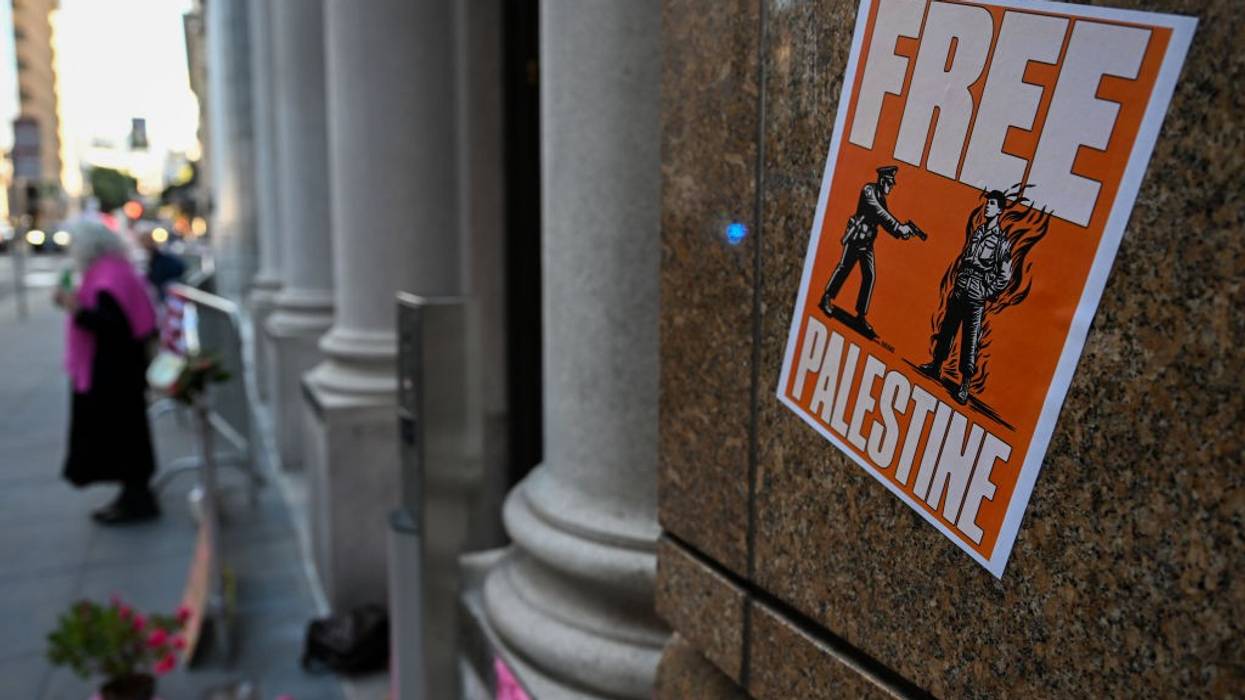
Standing at the embassy’s gate, with the video still running, he doused himself with a liquid and set himself on fire. His final words, shouted several times as the flames consumed him, were “Free Palestine! Free Palestine!” As an officer pointed a gun at Aaron, a second officer yelled, “I don’t need guns. I need a fire extinguisher.”
Aaron was formally declared dead hours later.
Earlier that day, he posted a link to the live stream, with the caption, “Many of us like to ask ourselves, 'What would I do if I was alive during slavery? Or the Jim Crow South? Or apartheid? What would I do if my country was committing genocide?' The answer is, you’re doing it. Right now.”
Levi Pierpont was a friend of Aaron’s. They met in basic training at Lackland Air Force Base in San Antonio, Texas. Speaking on the Democracy Now! news hour, days after Aaron’s death, Levi said they both joined the military “to explore the United States, to explore the world, to meet people from other backgrounds.” He went on, “over the years, both of us shifted in our beliefs regarding war, largely because of what we saw in the military, because we were a part of it. I know that he and I both were encouraged by people on YouTube that were writing video essays about social justice movements in the United States.”
“I did end up getting out as a conscientious objector,” Levi continued. “We spoke throughout that process. And at the time that I began to make headway with the process and it began to near its end—I got out in July of 2023—he felt like he was already close enough to his own end date that he decided not to take the same path. And I understood that, because the conscientious objector process can take over a year.”
Johan Galtung was also a conscientious objector, as a young man in Norway. As a child, Nazi Germany occupied his country and imprisoned his father. In one interview, he recalled how his mother made him read the newspaper to learn the names of political prisoners who the Germans had executed the day before, to see if his father was among them, to spare her the pain of reading the list. His father survived, but the war forever changed Johan. He devoted his life to bridging divides and finding creative solutions to real-world conflicts.
“I look forward to the U.S., instead of intervening militarily, starting solving conflicts,” Galtung said on Democracy Now!, in April 2012. “You have so many bright people in this country, so many well-educated people. Solving conflict, you have to talk with the other side, or the other sides. You have to sit down with Taliban and al Qaeda people or people close to al Qaeda. You have to sit down with Pentagon people, State Department people. And you have to ask them, ‘What does the Afghanistan look like where you would like to live? What does the Middle East look like where you would like to live?’ You get an enormous amount of very thoughtful people having very deep reflections.”
Levi Pierpont mourns the loss of his friend, and wishes Aaron hadn’t taken his own life.
“I don’t want anybody else to die this way. If he had asked me about this, I would have begged him not to. I would have done anything I could to stop him. But, obviously, we can’t get him back,” Levi said on Democracy Now!. “I would have told him that this wasn’t necessary to get the message out. I would have told him that there were other ways.”
Having expressed his deep sorrow, Levi concluded, “He didn’t have thoughts of suicide. He had thoughts of justice. That’s what this was about. It wasn’t about his life. It was about using his life to send a message.”
"I don't see myself as the hero or anything while people are being massacred every day in Gaza," said 18-year-old conscientious objector Tal Mitnick.
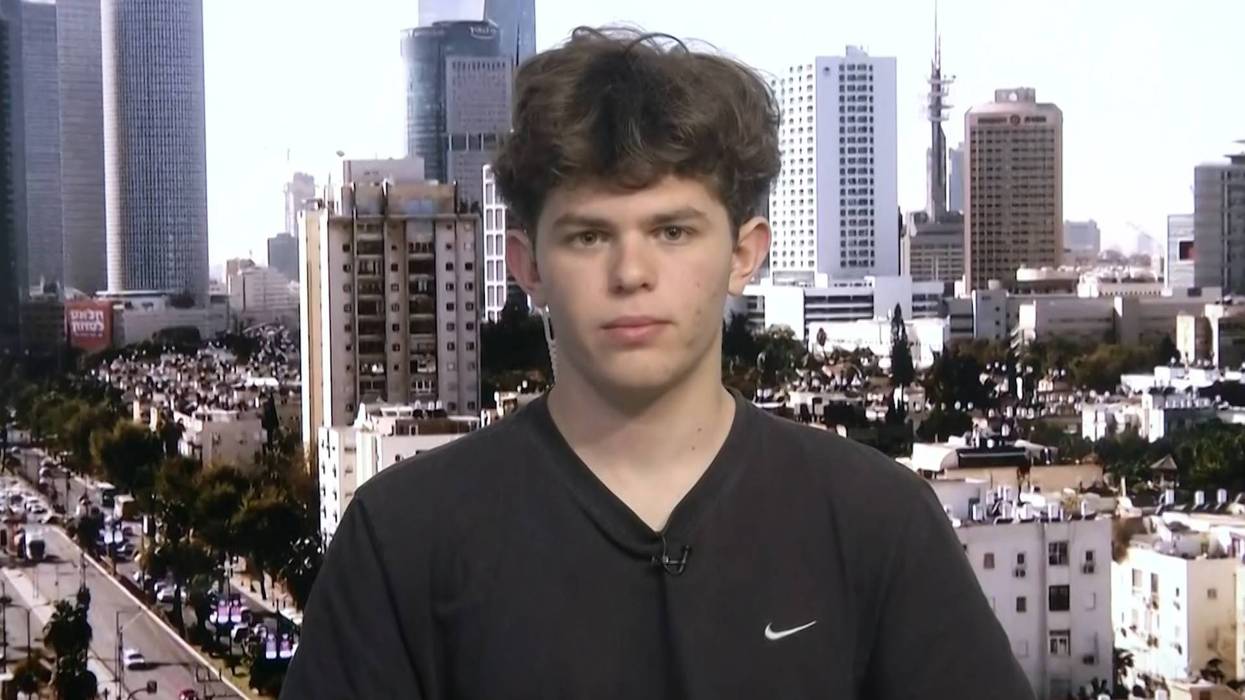
Undaunted after spending nearly a month behind bars for his conscientious objection to Israel's war on Gaza, 18-year-old refusenik Tal Mitnick on Tuesday reported for an additional 30 days of military detention.
As Common Dreams reported last month, Mitnick entered the Tel Hashomer enlistment center on December 27 with other members of the Mesarvot Network—a group of young conscientious objectors—and announced his refusal to enlist in the Israel Defense Forces (IDF), citing the war on Gaza and Israel's illegal occupation of Palestine.
"My refusal is an attempt to influence Israeli society and to avoid taking part in the occupation and the massacre happening in Gaza," Mitnick told +972 Magazine last month. "I'm trying to say that it's not in my name."
"I express solidarity with the innocent in Gaza. I know they want to live," he added.
Nearly 25,500 Palestinians—mostly women and children—have been killed, and over 63,000 others wounded, during the Israeli assault on the densely populated coastal enclave of 2.3 million people, most of whom have been forcibly displaced.
In an interview with The Guardian published Tuesday, Mitnick recounted his first day in military prison, where he was forced to sit in a classroom where notable quotes were posted on the walls. One from Nelson Mandela read, "Education is the most powerful weapon you can use to change the world."
"I nearly laughed to myself," Mitnick said via Zoom from his family's Tel Aviv home during his short-lived release, noting the irony of the IDF quoting an anti-apartheid icon while South Africa was leading a genocide case against Israel at the International Court of Justice (ICJ).
"I pointed out how ridiculous this quote being there was," he said. "No other prisoners engaged or agreed. I realized how alone I was."
While the IDF allows some service exemptions for conscientious objectors, they are almost always granted on religious grounds. IDF service is mandatory for most Israelis, including men and women. Exceptions include people with medical issues, certain criminal convictions, ultra-Orthodox Jews, Arab Muslims and Christians, Druze and Circassian women, and pregnant people and new mothers.
Israelis who refuse to serve on politically ideological grounds are usually first jailed for 7-10 days, with the possibility of up to 200 additional days added for unrepentant resisters after their initial release.
Exemption is also possible for people diagnosed with certain mental health conditions.
"I feel like not wanting to serve is not a mental problem and it shouldn't be seen as such," Mitnick told Sky News. "I want to show that I don't want to serve because of my beliefs and because of my values, and that is not a mental problem."
Mitnick also rejects the platitudes bestowed by some anti-war campaigners.
"I don't see myself as the hero or anything while people are being massacred every day in Gaza," he told The Guardian. "And I want to stress I'm by no means the only one. There are other anti-occupation activists. People opting to not join the army. Peace campaigners, young and old. But at the same time, I do think this takes bravery."
Last year, 10,000 IDF reservists threatened to refuse service in opposition to the highly contentious judicial overhaul launched by the far-right administration of Israeli Prime Minister Benjamin Netanyahu. Hundreds of Israeli air force and cyberwarfare reservists went on strike over the legislation. But opposition dramatically waned following the horrific Hamas-led attacks on October 7th.
"Now the supposed liberals, that protested judicial reform, are pilots massacring people in Gaza," Mitnick lamented. "People who were speaking out about government corruption are now supporting the far-right leadership, saying there are no civilians in Gaza."
That sort of incendiary rhetoric has been cited in the South African-led ICJ case as evidence of intent to destroy the Palestinian people "in whole or in part," a critical component for conviction under the
Convention on the Prevention and Punishment of the Crime of Genocide.
In an interview with Sky News, Mitnick scoffed at Israel's ambiguous detention regimen for conscientious objectors.
"I can take another 30 [days] and I can take another 30 after that because I know that a lot of people support me and that I'm succeeding in making a change and showing the world that there's another way and that we can choose nonviolence over violence," he asserted.
"I think that for 70 years we've been seeing the same policy of occupation, of siege, and of Jewish supremacy between the river and the sea, and I can't take part in it," Mitnick continued.
"The war has only strengthened my opinion," he added. "I feel like we need to stop the cycle of violence. Somehow it's going to stop and I believe that every person should work to stop the violence from their own position."
"I believe that slaughter cannot solve slaughter," said 18-year-old Tal Mitnick, who was sentenced to 30 days behind bars for refusing to participate in what a fellow draft resister called a "genocide" in Gaza.
A young Israeli man was sentenced Tuesday to 30 days behind bars for refusing to enlist in the Israel Defense Forces as it wages a genocidal assault on Gaza, a war the teen condemned as "a revenge campaign... not only against Hamas, but against all Palestinian people."
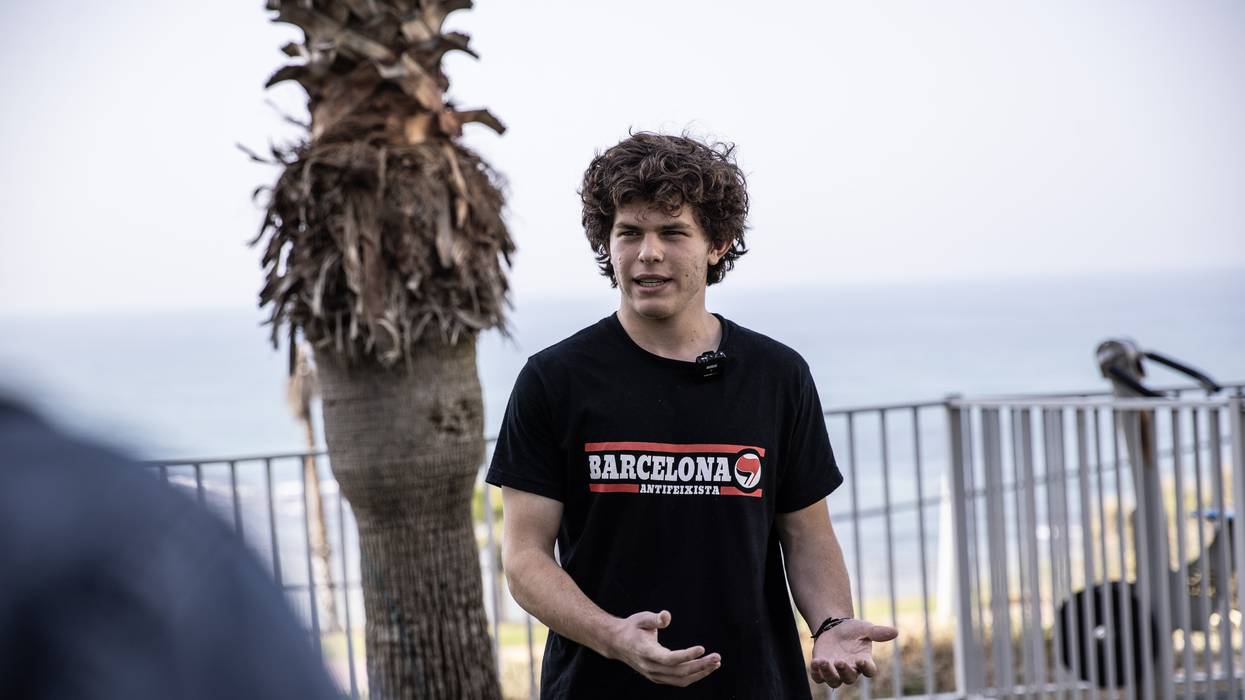
Tal Mitnick, an 18-year-old from Tel Aviv, entered the Tel Hashomer enlistment center with other members of the Mesarvot Network—a group of young conscientious objectors—and announced his refusal to enlist in the IDF, citing the war on Gaza and Israel's illegal occupation of Palestine.
"I believe that slaughter cannot solve slaughter," he said outside the base. "The criminal attack on Gaza won't solve the atrocious slaughter that Hamas executed. Violence won't solve violence. And that is why I refuse."
The 30-day sentence imposed on Mitnick is exceptionally long; Israeli refuseniks are usually first jailed for 7 to 10 days, with the possibility of up to 200 additional days added for unrepentant resisters after their initial release. Numerous observers believe the teen is likely being punished for his outspoken criticism of Israeli government policies and practices.
Mitnick expects to be imprisoned for an additional period after he serves out his month behind bars. In a statement shared Tuesday on social media, he slammed "the notion that this land belongs to only one people."
Mitnick wrote:
I refuse to believe that more violence will bring security, I refuse to take part in a war of revenge... We must recognize the fact that after weeks of the ground operation in Gaza, at the end of the day, negotiations, an agreement, brought back the hostages. It was actually military action that caused them to be killed. Because of the criminal lie that 'there are no innocent civilians in Gaza,' even hostages waving a white flag shouting in Hebrew were shot to death. I don't want to imagine how many similar cases there were that were not investigated because the victims were born on the wrong side of the fence.
The path to peace, Mitnick argued, will not come from Israeli or Palestinian politicians, but rather "from us, the sons and daughters of the two nations."
Supporters accompanying Mitnick at Tel Hashomer held signs with slogans like "an eye for an eye and we all go blind" and "there is no military solution."
Last month, Mitnick explained to TRT World that "the army that we have in this area is the operational wing of Jewish supremacy in the area and it's bent on the oppression of the Palestinian people, and I refuse to take part in that oppression and instead fight against it in my activism."
Mitnick said that the first day of the war was "defensive," but after that, it "turned into a war of aggression against civilians in Gaza."
"I refuse to agree with the idea that killing civilians in Gaza would provide security for anyone," he said. "It doesn't bring security to anyone, neither to the people of Gaza nor to the people of Israel. I believe that the only path to security and peace lies in coexistence."
Another Israeli conscientious objector, 19-year-old Ariel Davidov, told TRT World that "I cannot take part in something that is so immoral, so unjust. This is a genocide that has been going on since the beginning of Zionism."
Davidov said that prior to the establishment of the modern state of Israel in 1948, largely through terrorism and ethnic cleansing, "there was settler colonialism," and that Zionists—Jews seeking to establish a homeland in Palestine—"wanted to use this land and its people for their own interests."
"However," he stressed, "this situation cannot continue like this."
Yet another resister, Ella Keidal, said: "I don't wish to serve an army that is enacting an occupation, an apartheid regime."
"I don't want to serve in an army that enforces the occupation, implements a racist regime, and plays a role in oppressing the Palestinian people in this exploitation project," Keidal added.
As the teens were speaking to TRT World, a group of Israelis physically and verbally assaulted them, calling them "terrorists" and "Hamas supporters," forcing the interview to be cut short. The incident underscored the societal scorn and ostracization that Israeli conscientious objectors often face.
Teens like Mitnick, Davidov, and Keidal made the decision to become conscientious objectors even before the current war on Gaza. They are part of a group of more than 200 high school students who announced in August that they would refuse to enlist due to Israel's occupation of Palestine—which includes not just the West Bank and East Jerusalem but also Gaza under international law—and the anti-democratic judicial overhaul spearheaded by the far-right government of Israeli Prime Minister Benjamin Netanyahu.
"I don't wish to serve an army that is enacting an occupation, an apartheid regime."
"We truly fear for our own future, and for the future of all who live here. In view of this, we have no choice but to take extreme measures and refuse to serve in the army," the teens said in a statement published over a month before the Gaza war began. "A government that destroys the judiciary is not a government that we can serve. An army that militarily occupies another people is not an army that we can join."
Earlier this year, 10,000 IDF reservists threatened to refuse service over the judicial overhaul. Hundreds of Israeli Air Force and cyberwarfare reservists went on strike over the legislation.
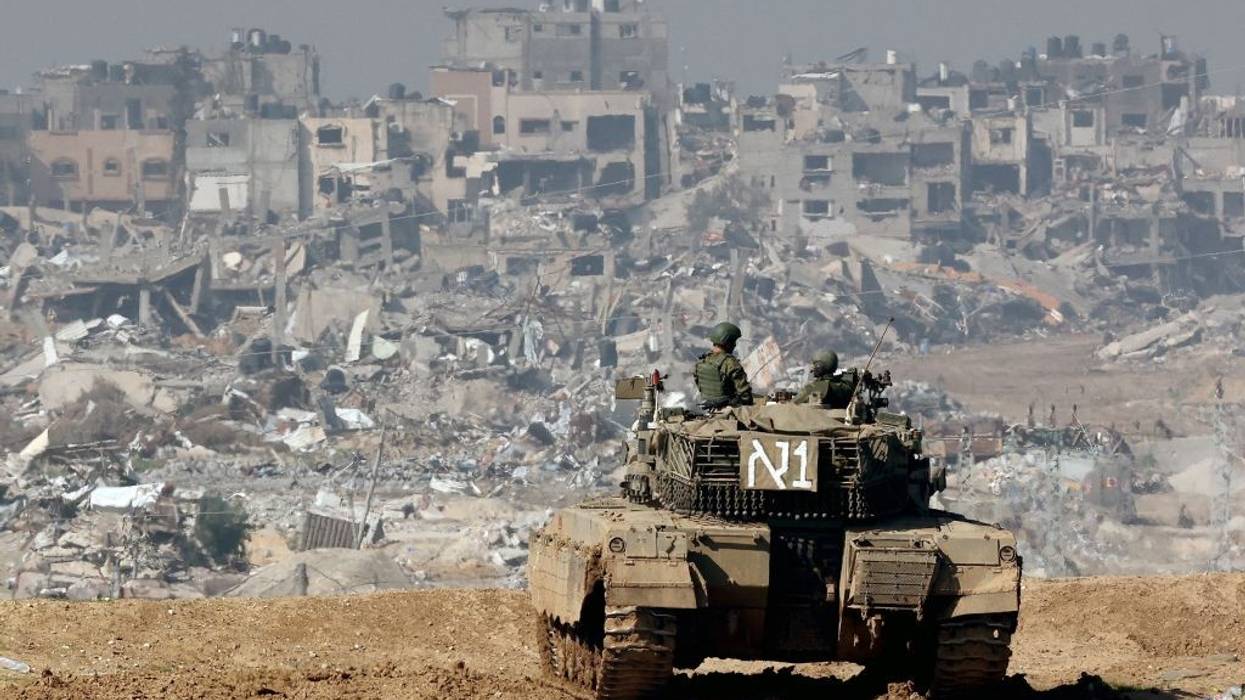
There has been no such act of mass conscientious objection during the current Gaza onslaught, which has left more than 80,000 Palestinians—mostly women, children, and elders—dead, maimed, or missing over 82 days of near-relentless Israeli attacks.
Military service is mandatory for most Israelis, including men and women. Exceptions include people with medical or psychological issues, certain criminal convictions, ultra-Orthodox Jews, Arab Muslims and Christians, Druze and Circassian women, and pregnant people and new mothers.
The IDF does allow exemptions for some conscientious objectors, but these are almost exclusively granted on religious grounds, not political ideology or principle.