

SUBSCRIBE TO OUR FREE NEWSLETTER
Daily news & progressive opinion—funded by the people, not the corporations—delivered straight to your inbox.
5
#000000
#FFFFFF
To donate by check, phone, or other method, see our More Ways to Give page.
Daily news & progressive opinion—funded by the people, not the corporations—delivered straight to your inbox.
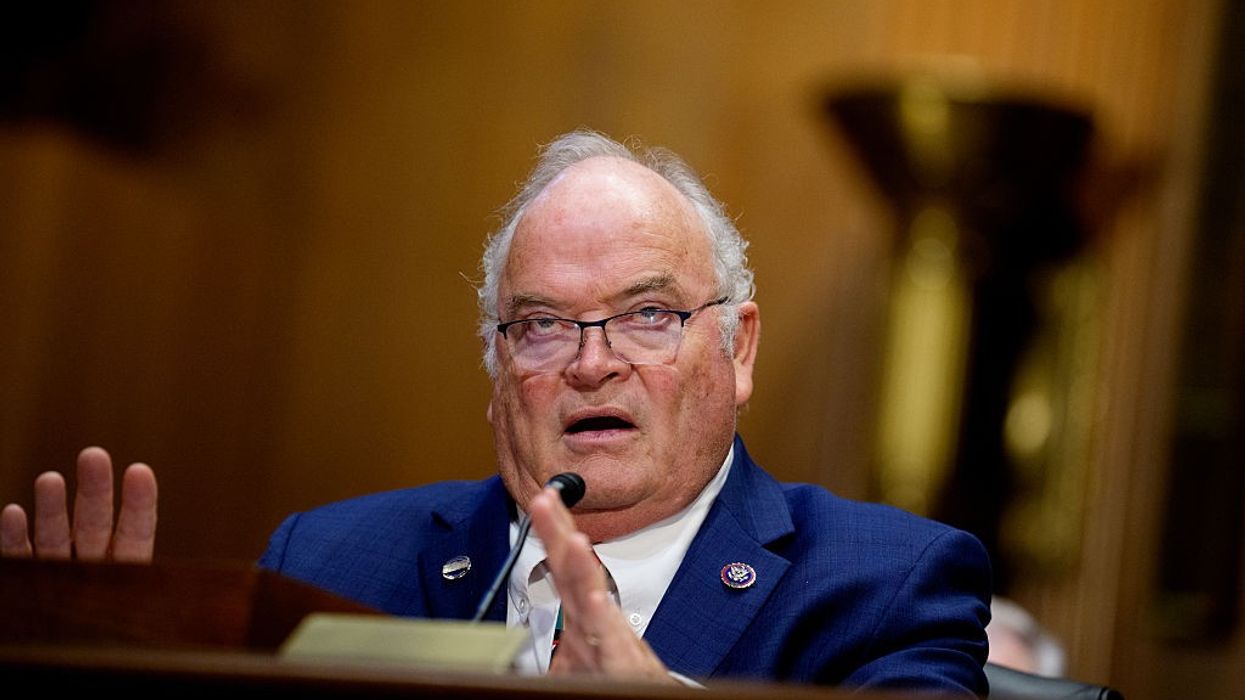
Senate Finance Committee Ranking Member Ron Wyden said that "my investigators have obtained alarming information pertaining to Long's conduct at the IRS that we have begun to investigate."
Less than two months after U.S. Senate Republicans confirmed Billy Long as head of the Internal Revenue Service, the scandal-plagued commissioner confirmed on Friday that he is leaving the IRS to serve as President Donald Trump's ambassador to Iceland.
U.S. Senate Finance Committee Ranking Member Ron Wyden (D-Ore.)—who opposed Long's IRS nomination with the rest of the chamber's Democrats—pledged in a Friday statement that a probe of the outgoing commissioner will continue.
"From the minute Trump announced Billy Long as his IRS pick it was obvious this would end badly, but every Senate Republican voted to confirm his nomination anyway," said Wyden. "He didn't even last two months on the job. Let's not forget that there wasn't a vacancy at the time Trump announced Long's nomination. Danny Werfel, a skilled leader with fans among Democrats and Republicans, had years left on his term."
The senator pointed out that "in just a handful of months, Trump and his crew have already gutted taxpayer service, weaponized IRS data against innocent taxpayers, and set us up for disaster when next year's filing season comes around. This is what Trump does—pick incompetent, unserious people for serious jobs, and sit back as the damage piles up."
"Billy Long left Congress a few years ago and went straight into the tax fraud industry, his only real experience in tax before his nomination," he added. "My investigators have obtained alarming information pertaining to Long's conduct at the IRS that we have begun to investigate, and that process will continue regardless of whether Trump stashes Long away in some foreign embassy."
The ouster was initially reported by The New York Times, which noted that "Treasury Secretary Scott Bessent will serve as acting commissioner until a permanent replacement takes office," according to a senior Trump administration official.
Long then confirmed the development on his personal social media account, saying that "it is a honor to serve my friend President Trump and I am excited to take on my new role as the ambassador to Iceland. I am thrilled to answer his call to service and deeply committed to advancing his bold agenda. Exciting times ahead!"
He later added a joke about Immigration and Customs Enforcement: "I saw where former Superman actor Dean Cain says he's joining ICE so I got all fired up and thought I'd do the same. So I called Donald Trump last night and told him I wanted to join ICE and I guess he thought I said Iceland? Oh well."
A spokesperson for Bessent's department, which includes the IRS, said in a statement: "Treasury thanks Commissioner Long for his commitment to public service and the American people. His zeal and enthusiasm to bring a fresh perspective to the federal government was evident in both the House of Representatives and as part of the Trump administration. A new candidate for commissioner will be announced at the appropriate time."
Long previously represented Missouri in the U.S. House, where Ways and Means Committee Ranking Member Richard Neal (D-Mass.) responded to the IRS commissioner's exit with a statement blasting Trump.
"We don't even need more details on Trump's latest scuttle to know how damaging his presidency has been for the IRS," Neal said. "With nearly a new commissioner each month and weakened customer service from his mass firings, the rampant instability comes at the expense of all who rely on it. One thing is for sure: Secretary Bessent should focus on his own job before collecting more responsibility."
Several critics, including Neal, highlighted that Long was preceded by several IRS leaders this year. As retired Adm. Mike Franken, a former Democratic U.S. Senate candidate from Iowa, put it on social media: "IRS Commissioner Billy Long is removed, the sixth change this year, by the guy who only hires 'the very best people.' The clown show continues."
Long's firing prompted widespread speculation that he was leaving the IRS because he refused to comply with an order from the president. Journalist Josh Marshall wondered, "How bad did the ask have to be for a Trumpy sleazebag like Billy Long to say no?"
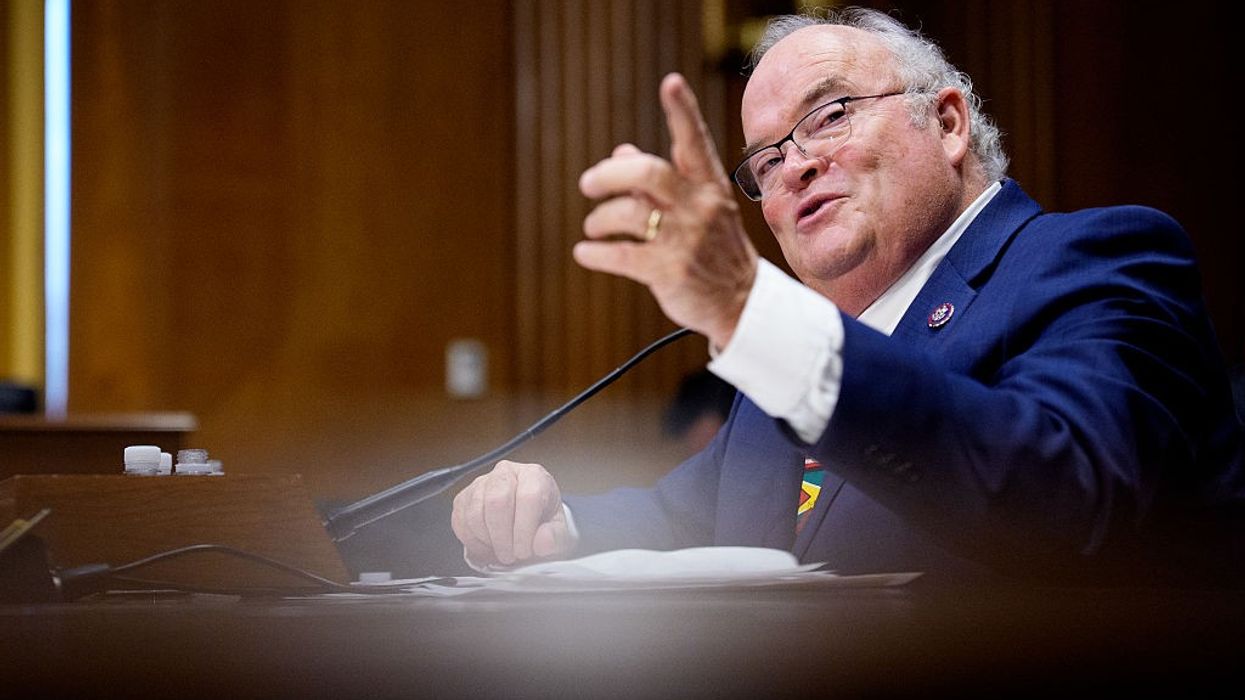
"It was never about efficiency, it's about Trump and his billionaire allies taking money from our pockets to make the tax system worse and line the pockets of big business elites in this predatory industry," said a spokesperson at Americans for Tax Fairness.
In a move backed by private tax-filing corporations, the administration of U.S. President Donald Trump officially announced the shut down of the government's free Direct File service this week.
For two years under the administration of former President Joe Biden, the IRS allowed taxpayers in some states to file their taxes online using public software under a pilot program.
A report published in March by the Economic Security Project found that:
At maturity in five years, Direct File would save the average user $160 in filing fees and hours of their time each year, which saves Americans a total of $11 billion annually between filing fees and time costs. By breaking down barriers to filing, Direct File would also deliver up to $12 billion each year in additional tax credits to low-income families currently missing out.
In January, the direct file system was rolled out to 30 million Americans across 25 states, to rave reviews. According to a memo circulated within the Internal Revenue Service (IRS), the program was "beloved by its users," with a 94% satisfaction rate among those who used it.
But according to IRS Chairman Billy Long, who spoke at a tax summit Monday, it will not be made available again in 2026.
"You've heard of direct file, that's gone," Long gloated. "Big beautiful Billy wiped that out."
"I don't care about Direct File. I care about direct audit," he added, referring to his efforts to make it easier for businesses and individuals under tax audits to get updates on their status.
The budget legislation that Trump signed into law last month did not formally end Direct File, as Long suggested. However, it did allocate $15 million to the Treasury Department for a task force to study public-private partnership alternatives to replace Direct File. "Big beautiful Billy" likely referred to Long himself, whose IRS formally ended the program.
Long's announcement was the culmination of a months-long scheme by private tax-filing corporations like Intuit and H&R Block, and Republicans in government to kill Direct File.
As early as December, following Trump's reelection victory, GOP congresspeople began calling for the program's demise. Twenty-nine of them, who'd accepted a combined $1.8 million in campaign donations from the tax prep industry over their careers, signed onto a letter written by Reps. Adrian Smith (R-Neb.) and Chuck Edwards (R-N.C.) calling on Trump to issue a "day-one executive order" killing the program.
Long, himself a former congressman from Missouri, raised eyebrows in January 2025, shortly after he was named as Trump's nominee to lead the IRS. According to The Lever, he received a curious $137,000 worth of donations that he then used to pay himself back for a $130,000 loan he'd made to his failed 2022 campaign for the Senate. Around a third of the money came from tax consultancy firms.
In March, following mass layoffs at the IRS by Elon Musk's Department of Government Efficiency (DOGE), staff working on the Direct File system were told to halt their work. Prior to that, Musk wrote on his social media app X that he had "deleted" 18F, the government agency working on the project.
Right after tax day in April, The Associated Press first reported that the administration was planning to end the program.
While consumer advocacy groups called the change a "big loss" for the public, the American Coalition for Taxpayer Rights, an astroturf group backed by tax-filing companies, thanked Smith, Edwards, and other GOP congresspeople "for their leadership" calling for the termination of the program.
The program was effectively dead for months, but Long's gleeful coroner's report this week made it official.
"Last year, Direct File saved taxpayers $5.6 million in tax preparation costs by allowing people to file their taxes for FREE," wrote Rep. Alexandria Ocasio-Cortez (D-N.Y.) Friday on X. "That's why tax preparation companies like... Intuit lobbied to get rid of it. Trump just gave them their wish."
Despite claims by GOP congresspeople that the program was "wasteful," it actually saved taxpayers much more money than it cost. According to the Economic Security Project's study, "For every dollar invested in the program, Direct File delivers $106 in benefits to American taxpayers, between savings on tax preparation fees and access to untapped tax credits."
"This move exposes what's really happening in Trump's administration," said David Kass, the executive director of Americans for Tax Fairness. "It was never about efficiency, it's about Trump and his billionaire allies taking money from our pockets to make the tax system worse and line the pockets of big business elites in this predatory industry."
The top Democrat on the Senate Finance Committee said Long is "knee-deep in tax scams, corruption and cover-ups."
The Republican-controlled U.S. Senate voted Thursday to confirm scandal-plagued Billy Long to serve as head of the Internal Revenue Service, an agency that he sought to abolish during his tenure in Congress.
Every Republican senator voted in favor of confirming President Donald Trump's IRS commissioner pick in the face of revelations that he was closely involved in promoting a fraud-riddled tax credit and allegations that he could be implicated in two separate bribery schemes.
In a floor speech ahead of Thursday's vote, Sen. Ron Wyden (D-Ore.) said that Long is "knee-deep in tax scams, corruption, and cover-ups" that should disqualify him from leading the IRS.
Wyden, the top Democrat on the Senate Finance Committee, pointed to a letter he sent earlier this week to White House Chief of Staff Susie Wiles detailing his concerns about the FBI's apparently lax background check on Long.
"Publicly available information raises very troubling questions of personal wrongdoing that merit serious and thorough investigation," Wyden wrote. "According to court documents, Mr. Long is implicated in a bribery conspiracy involving a healthcare company located in his Missouri district while he was a member of Congress. The case resulted in convictions and guilty pleas of more than a dozen people, including elected officials, businessmen, and lobbyists."
Democratic lawmakers also raised alarm over "unusually timed" donations that seven companies made to Long's defunct 2022 Senate campaign committee following news that he was nominated to lead the IRS.
"This ought to be an easy no," Wyden said Thursday. "It's one corruption bombshell after another with former Congressman Billy Long."
"Billy Long has a clear history of working to make it easier for corporations and the wealthy to skirt paying their fair share of taxes."
While representing Missouri's 7th Congressional District in the U.S. House, Long co-sponsored legislation that proposed eliminating the IRS, repealing the federal income tax, and putting in place a regressive national sales tax.
Americans for Tax Fairness (ATF), a progressive advocacy group, said Thursday that Long's confirmation "signals open season for wealthy tax cheats."
"Trump and Senate Republicans finally delivered a long-awaited return on investment to the billionaire backers that fund their party: an IRS chief with extreme views on tax policy and no interest in reining in wealthy tax cheats or helping working families," ATF executive director David Kass said in a statement. "With Long at the helm, it becomes even more critical to stop Trump's disastrous tax bill that cuts critical programs Americans depend on, like Medicaid and SNAP, to fund massive tax giveaways for billionaires."
Lisa Gilbert, co-president of Public Citizen, similarly warned that "tax cheats just received a huge gift."
"Billy Long has a clear history of working to make it easier for corporations and the wealthy to skirt paying their fair share of taxes," said Gilbert. "He has even supported abolishing the very agency he has now been tasked to lead—the agency meant to take the lead in cracking down on tax evasion and ensuring that government is sufficiently resourced to serve the public interest."
" Wall Street may celebrate his confirmation as IRS commissioner," Gilbert added, "but it is bad news for everyday people."
"For the second straight year, President Biden and the Democrats are poised to sacrifice a significant chunk of one of their biggest accomplishments," one critic lamented.
Economic justice advocates are urging House Democrats to do more to defend Internal Revenue Service funding after leaders of the minority party agreed to Republican draft legislation that would continue a freeze on more than $20 billion in IRS modernization and enforcement funds in order to avert a government shutdown.
The $20.2 billion freeze is part of a continuing resolution that would guarantee funding for the federal government through March 14. Although the Inflation Reduction Act signed into law by President Joe Biden in August 2022 allocated $80 billion in supplemental funding to the IRS, Congress subsequently rescinded $21.6 billion of that and added a rider for the $20.2 billion freeze in an earlier continuing resolution.
The freeze means that the funds are neither permanently rescinded nor available for use. According to the Institute on Taxation and Economic Policy, the effective $20.2 billion funding reduction would increase the federal deficit by $46 billion "due to a drop in the agency's capacity to enforce taxes on wealthy individuals owed under existing federal law."
As Dylan Gyauch-Lewis wrote Wednesday for The American Prospect, "For the second straight year, President Biden and the Democrats are poised to sacrifice a significant chunk of one of their biggest accomplishments: funding for the IRS to go after wealthy tax cheats."
"With the latest maneuver, more than 90% of the money invested to scale up IRS auditing and oversight could be gone before it can even be used," Gyauch-Lewis added. "Yet again, Democrats seem to have been outplayed by Republican leadership."
Conversely, the infusion of IRA funding has boosted IRS recovery of unpaid taxes.
"The IRS has collected $4.7 billion in back taxes from wealthy tax cheats thanks to funding from the Inflation Reduction Act," Groundwork Collaborative executive director Lindsay Owens said in a statement Wednesday. "But since its passage, Republicans have clawed back nearly half of the enforcement budget to make it easier for the ultra-wealthy to get away with not paying their share."
Democrats helped this happen. In order to secure a 2023 debt ceiling deal with then-House Speaker Kevin McCarthy (R-Calif.), Biden agreed to multi-year spending caps in the so-called Fiscal Responsibility Act, as well as the $21.6 billion IRS funding recision. Now it is uncertain whether the outgoing Biden administration or congressional Democrats will fight to defend IRS funding or once again acquiesce to GOP cuts in order to keep the government running.
House & Senate Dems told us they were fighting to add a provision in the CR to fix the frozen funding, but it didn't make the cut. Republicans have made no secret of targeting the expanded IRS funding from the IRA - an effort very likely to continue in 2025 under a GOP trifecta.
[image or embed]
— Cady Stanton (@cadystanton.bsky.social) December 18, 2024 at 5:10 AM
IRS Commissioner Danny Werfel warned during a recent media call that Republicans' proposed cuts to the agency's funding would "be critically damaging to our capacity to do the work we need to do to make sure that large corporations and complex partnerships are paying what they owe."
Owens said "it's clear congressional Republicans are paving the way for the Trump administration to make it open season for tax cheats."
Such fears mounted this month after Republican President-elect Donald Trump tapped former Rep. Billy Long (R-Mo.) to head the IRS. Long sponsored multiple bills to dismantle the IRS and legislation to repeal all estate taxes, which are overwhelmingly paid by the wealthiest Americans. He has also promoted a dubious pandemic-era tax credit that the IRS has called a magnet for fraud.
"Even before the new administration takes office, we are seeing Republicans take steps to hamstring the IRS to ensure the ultra-wealthy can continue to evade their taxes," Anna Aurilio, senior director of campaigns at Economic Security Project Action, said in a statement Wednesday.
"A well-funded IRS is vital to administering a fair tax code. Slashing funding for the agency, which recently collected nearly $5 billion from wealthy tax evaders and crime rings, only hurts the efficiency and efficacy of the government," Aurilio added. "By starving the agency that helps deliver vital tax credits to the American people, Congress will make it more difficult for people to file their taxes and get the credits they qualify for—all while making it easier for the wealthiest individuals and big businesses to avoid paying their fair share."
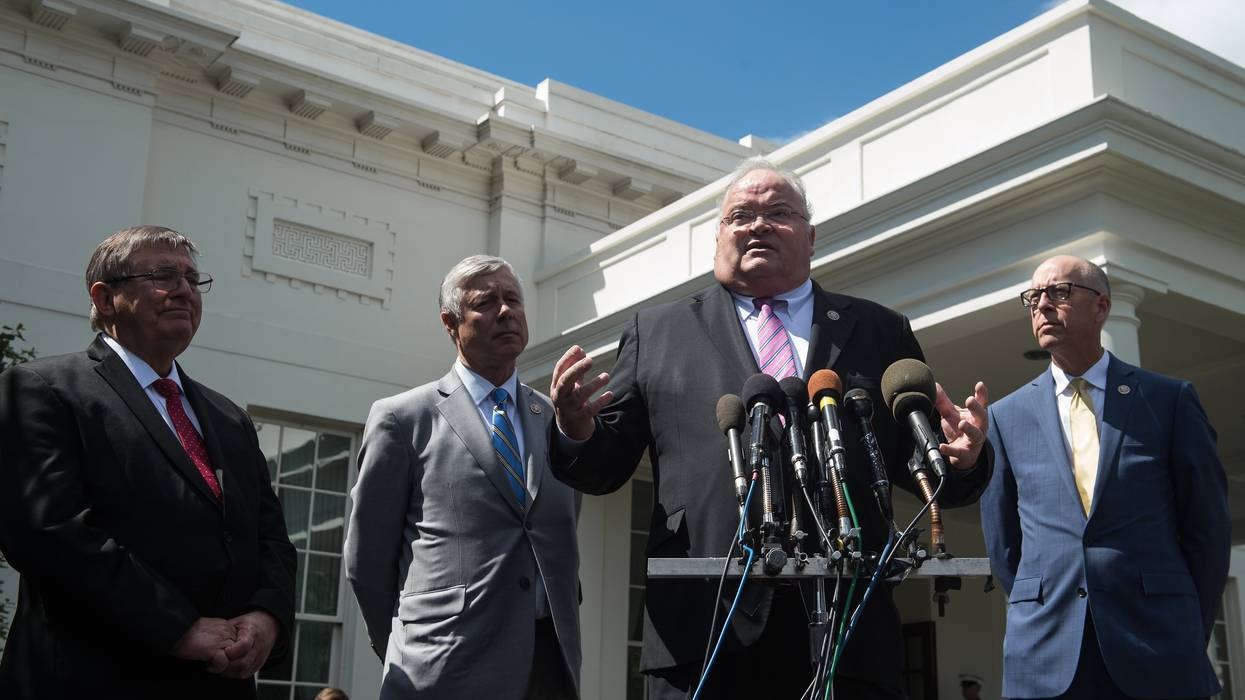
The nomination of Billy Long, said one lawmaker, indicates "Trump's intention to make the agency less responsive to the American people, while giving a green light to wealthy tax cheats."
U.S. President-elect Donald Trump's nominee to run the Internal Revenue Service, former Rep. Billy Long, didn't serve on the House committee tasked with writing tax policy during his six terms in office, and his lack of relevant experience is likely "exactly what Trump was looking for," according to one economic justice advocate.
Progressive lawmakers joined advocates on Wednesday in denouncing Trump's selection of Long, who since leaving office in 2023 has promoted a tax credit that's been riddled with fraud and who spent his time in the House pushing to abolish the very agency he's been chosen to run.
As a Republican congressman from Missouri, Long repeatedly sponsored legislation to dismantle the IRS, which under President Joe Biden has recovered at least $1 billion from wealthy people who previously evaded taxes.
He also co-sponsored legislation to repeal all estate taxes, which are overwhelmingly paid by the wealthiest households, but "said almost nothing on the floor regarding taxes, the IRS, and taxation during his 12 years in Congress," said John Bresnahan of Punchbowl News.
Long's limited experience with tax policy "ought to set off alarm bells," said Sen. Ron Wyden (D-Ore.), who pointed to "vastly improved taxpayer service" under the leadership of IRS Commissioner Danny Werfel, who Biden chose to replace Trump's nominee from his first term, Charles Rettig, after Rettig served his full term.
Werfel has "set up a tremendous direct-file system, and begun badly needed crackdowns on ultra-wealthy tax cheats who rip off law-abiding Americans," said Wyden. "If Trump fires Mr. Werfel, it won't be to improve on his work; it'll be to install somebody Trump can control as he meddles with the IRS."
The appointment is likely to commence an "open season for tax cheats," said Lindsay Owens, executive director of Groundwork Collaborative.
"If he's confirmed, taxpayers can expect longer wait times for customer service, a more complicated process to file taxes, and free rein for the rich and powerful to continue rigging the system at the expense of everyone else."
Since leaving office, Long has promoted the Employee Retention Tax Credit (ERTC), a pandemic-era credit that was intended to incentivize employers to continue paying workers during the economic shutdown when the coronavirus pandemic hit the United States.
He has worked to help businesses claim the credit from the IRS, but fraudulent and improper claims have so permeated the program that the IRS stopped processing new claims temporarily. The U.S. House passed a bill to entirely halt ERTC claims, but it has been stalled in the Senate.
"These ERTC mills that have popped up over the last few years are essentially fraud on an industrial scale, conning small businesses and ripping off American taxpayers to the tune of billions of dollars," said Wyden. "I'm going to have a lot of questions about Mr. Long's role in this business, first and foremost why the American people ought to trust somebody involved with a fraud-ridden industry to run an agency that's tasked with rooting out fraud."
Wyden also pointed out that Long has not been named in a "typical nomination like you'd see after every presidential election." Werfel's term was set to go until November 2027, and the IRS typically operates as a nonpartisan agency.
"Replacing Commissioner Werfel with over three years remaining in his term is a terrible mistake," said Rep. Don Beyer (D-Va.). "He has done an excellent job rebuilding the IRS, boosting customer service, and enhancing enforcement aimed at wealthy tax evaders. Removing him will clearly signal Trump's intention to make the agency less responsive to the American people, while giving a green light to wealthy tax cheats to evade their fair share of the tax burden."
"Trump's nominee has clearly stated that he wants to abolish the IRS," added Beyer. "The change Trump proposes in IRS leadership would be a gift to tax cheats and a blow to anyone who believes it is important to rein in deficits."
Sen. Elizabeth Warren (D-Mass.) added that Trump's nomination of Long signals "the weaponization of the tax agency."
"If he's confirmed," she said, "taxpayers can expect longer wait times for customer service, a more complicated process to file taxes, and free rein for the rich and powerful to continue rigging the system at the expense of everyone else."