SUBSCRIBE TO OUR FREE NEWSLETTER
Daily news & progressive opinion—funded by the people, not the corporations—delivered straight to your inbox.
5
#000000
#FFFFFF
To donate by check, phone, or other method, see our More Ways to Give page.
Daily news & progressive opinion—funded by the people, not the corporations—delivered straight to your inbox.
"The president should work with Democrats and Republicans to actually lower prescription drug costs for families," said Sen. Maggie Hassan, "rather than helping Big Pharma line its pockets."
Democratic members of the congressional Joint Economic Committee on Friday released a report warning that US families could end up spending thousands of dollars more on prescription drugs because of a website recently unveiled by President Donald Trump.
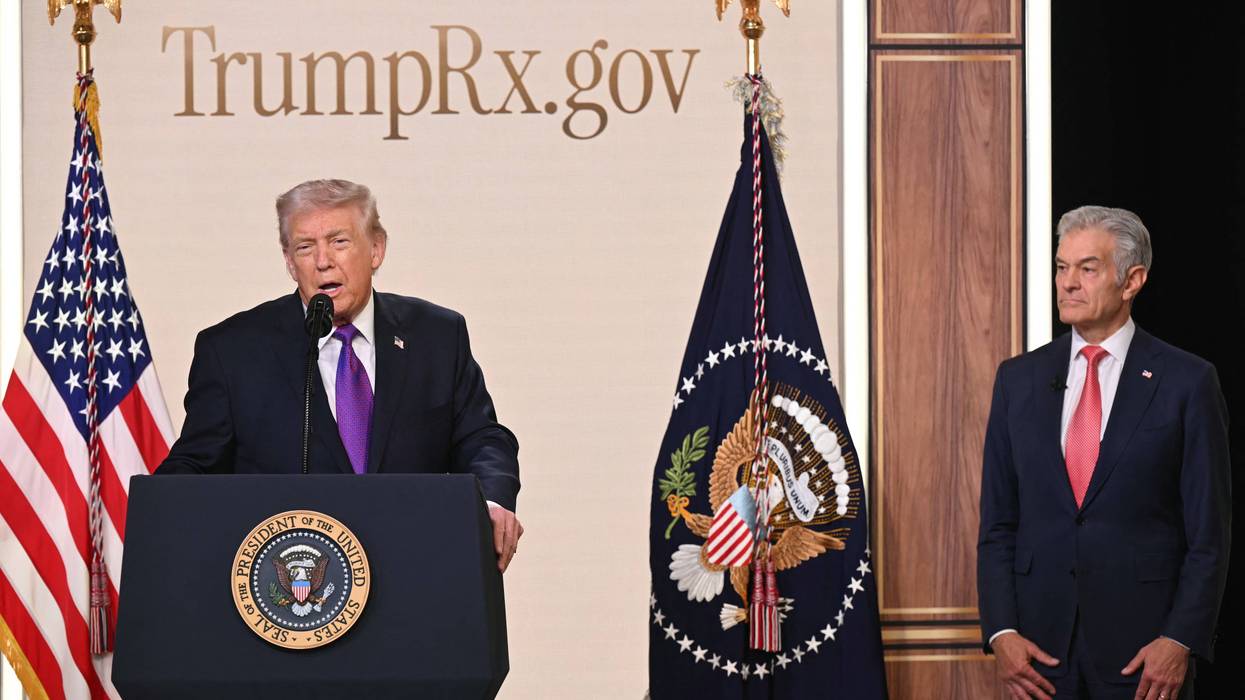
Launched last week with pharmaceutical companies, TrumpRx.gov is marketed as an aggregator to help patients save on prescription drugs by using manufacturer coupons or buying directly from manufacturers.
However, as the new report highlights, "many of the brand-name drugs listed on TrumpRx have significantly cheaper generic alternatives, which are excluded from TrumpRx. This means that TrumpRx steers families to pay more to Big Pharma when they could be getting the same medication at a much lower price."
"No matter what the president says, the bottom line is that TrumpRx directs families to buy expensive brand-name drugs when generic versions are available elsewhere at a fraction of the cost."
The report provides a chart comparing TrumpRx and generic prices, both for one prescription fill and the full annual cost. It also notes the difference. In some cases, the president's option is $10-50 more a year. However, there are also examples in which families could save hundreds or thousands of dollars with generic drugs.
For example, Colestid, a medication that lowers cholesterol, would cost $2,771.21 a year through TrumpRx, compared with $856.70 for the generic option, a difference of $1,914.51. The antidepressant Pristiq is $2,401.20 on the president's website, versus just $320.88 for the generic, a potential yearly savings of $2,080.32.
The biggest difference featured in the document is for Tikosyn, which helps patients maintain a normal heart rhythm. The TrumpRx annual cost is $4,032, whereas the generic is only $192.68, a difference of $3,839.32.
The report also stresses how extra costs from the president's site could stack up for households in which multiple people need medication:
"No matter what the president says, the bottom line is that TrumpRx directs families to buy expensive brand-name drugs when generic versions are available elsewhere at a fraction of the cost," said Sen. Maggie Hassan (D-NH), ranking member of the Joint Economic Committee and the Senate Finance Subcommittee on Health Care.
"The president should work with Democrats and Republicans to actually lower prescription drug costs for families," Hassan argued, "rather than helping Big Pharma line its pockets."
While the Trump White House responded defensively to the Democratic report, with spokesperson Kush Desai claiming to MS NOW that "product listings on TrumpRx.gov are in no way an endorsement for use of any prescription drug over another" and accusing Democrats of "resorting to idiotic or simply ignorant lines of attack instead of simply giving the president credit where it's due," the panel members aren't alone is highlighting such cost differences.
The added cost for US families also isn't lawmakers' only concern about TrumpRx. Last month, shortly before the site's launch, Democratic Sens. Dick Durbin (Ill.) Elizabeth Warren (Mass.), and Peter Welch (Vt.) sent a letter to the US Department of Health and Human Services Office of Inspector General raising concerns about the new direct-to-consumer (DTC) platform.
"There appear to be possible conflicts of interest involved in the potential relationship between TrumpRx and an online dispensing company, BlinkRx, on whose board the president's son, Donald Trump Jr., has sat since February 2025," they wrote. "Moreover, legitimate concerns about inappropriate prescribing, conflicts of interest, and inadequate care have been raised about the exact types of DTC platforms to which TrumpRx would route patients."
The trio also expressed alarm about high prices, noting that "pharmaceutical manufacturers who will reportedly be participating in TrumpRx have spent billions of dollars in combined advertising expenses for drugs sold on existing DTC platforms."
"The pharmaceutical industry's outrageous DTC advertisements fuel demand for specific medications, which balloon healthcare expenses," the senators wrote. "We are concerned that DTC advertising, including in relation to TrumpRx, will steer customers to prescriptions that may be reimbursed by federal health programs, creating the potential for unnecessary or wasteful spending."
"Trump has dressed up yet another corporate giveaway as a boon to patients," said one watchdog. "Real drug price reform doesn’t look like a website."
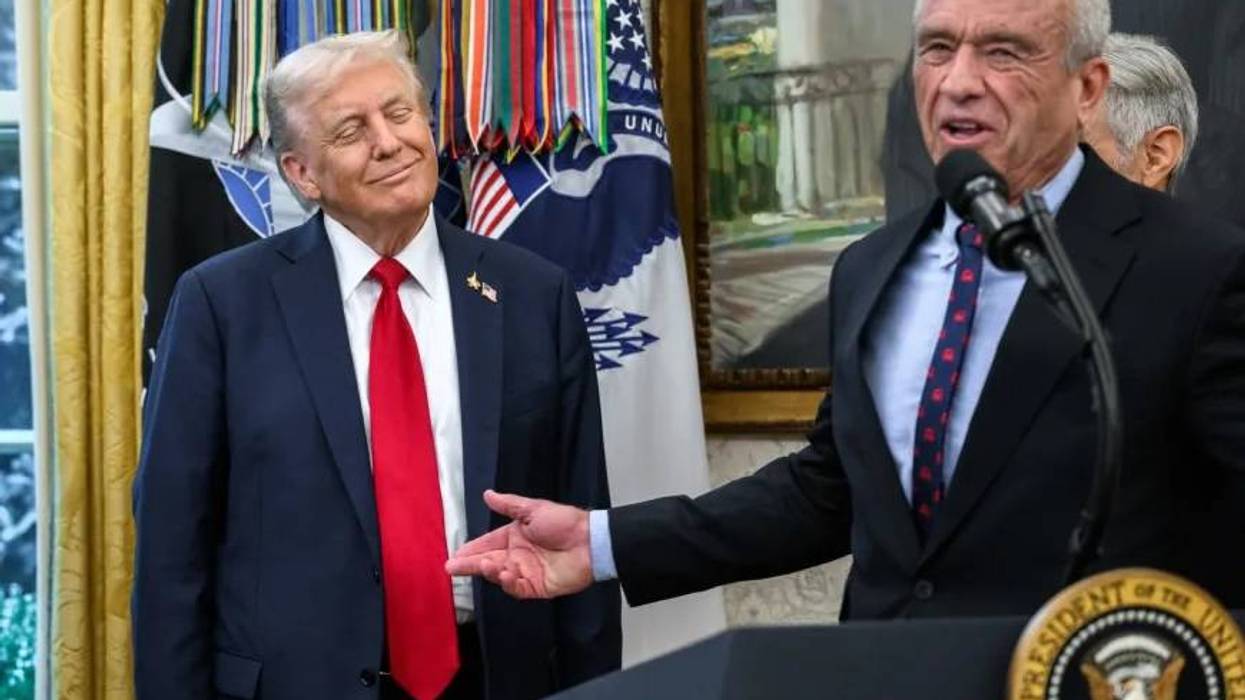
US President Donald Trump on Thursday launched a website, branded with his name, in a purported effort to help patients buy prescription drugs at lower prices.
But experts, watchdog groups, and Democratic lawmakers said TrumpRx will likely do little for consumers—or for the broader goal of bringing down exorbitant medicine costs—while further enriching Big Pharma and potentially lining the pockets of his eldest son, Donald Trump Jr.
TrumpRx.gov, launched in partnership with pharmaceutical giants, points users to direct-to-patient sales platforms hosted by drug companies to facilitate the purchase of an extremely limited selection of medications. For example, TrumpRx's listing for Farxiga links users to AstraZeneca Direct, where patients can pay out of pocket for the type 2 diabetes medication.
Donald Trump Jr. is on the board of BlinkRx, a prescription drug platform that stands to benefit from the Trump administration's promotion of direct-to-patient medicine sales. In December, the president's son reportedly met with top drug company executives and administration officials responsible for regulating the pharmaceutical industry—a gathering hosted by BlinkRx.
Frank Pallone Jr. (D-NJ), the top Democrat on the House Energy and Commerce Committee, said in a statement Thursday that TrumpRx "not only threatens patients’ health, safety, and privacy, but also likely includes kickback schemes designed to enrich President Trump, his family, and their friends."
"TrumpRx has been shrouded in secrecy from the beginning because the administration clearly does not want anyone to know it likely won’t save patients money," said Pallone. "However, we do know Trump only slaps his name on things when there’s something in it for him."
Last week, a group of Democratic senators sent a letter to the inspector general of the US Department of Health and Human Services warning that "without stricter safeguards before its official launch, TrumpRx could be used as a potential vehicle for unlawful kickback schemes that result in excessive costs for the federal government."
In addition to sending users to direct-to-patient sales sites, TrumpRx offers Trump-branded coupons for some medications. To obtain a coupon, site users must accept terms that state: "You agree that by redeeming this coupon, you (and anyone else acting on your behalf) agree not to seek reimbursement from any insurance plan for out-of-pocket costs for prescriptions purchased with this coupon. You also agree not to count the cost of prescriptions toward your deductible or true out-of-pocket costs."
The Washington Post reported that pharmaceutical companies "have agreed to list their drugs on TrumpRx.gov."
"TrumpRx is designed to help Big Pharma keep its prices high by diluting the bargaining power of insurance companies, weakening an important check on pharma."
Experts warned that patients who use TrumpRx could end up paying more for their medications than if they pursued other available options.
"TrumpRx’s offerings are very limited, fewer than 50 drugs listed, and most are niche products used by few patients," Rena Conti, an associate professor at Boston University, told ABC News. "Many are available in generic form at even lower prices or already available to consumers at low or even very low prices elsewhere. This suggests it pays for consumers to check their insurance coverage and ask their regular doctor or pharmacist before they use this service."
Peter Maybarduk, access to medicines director at Public Citizen, offered a more scathing assessment of TrumpRx, saying the president has "dressed up yet another corporate giveaway as a boon to patients."
"Most patients will do better through their insurance than through TrumpRx. Many patients without insurance will not be able to afford drugmakers’ still-high prices funneled through TrumpRx," said Maybarduk. "But drugmakers certainly will appreciate TrumpRx’s free promotion of their products, delivered with a false veneer of price accountability. TrumpRx is designed to help Big Pharma keep its prices high by diluting the bargaining power of insurance companies, weakening an important check on pharma."
“TrumpRx also appears to be another example of this president’s repeated corruption," he continued. "Trump’s son, Donald Trump Jr., sits on the board of BlinkRx, a key business that may benefit financially from TrumpRx. Getting serious about medicine affordability means getting serious about challenging Big Pharma. For all Trump’s talk, Big Pharma is getting a lot of special favors from this White House, while patients still are waiting. Real drug price reform doesn’t look like a website."
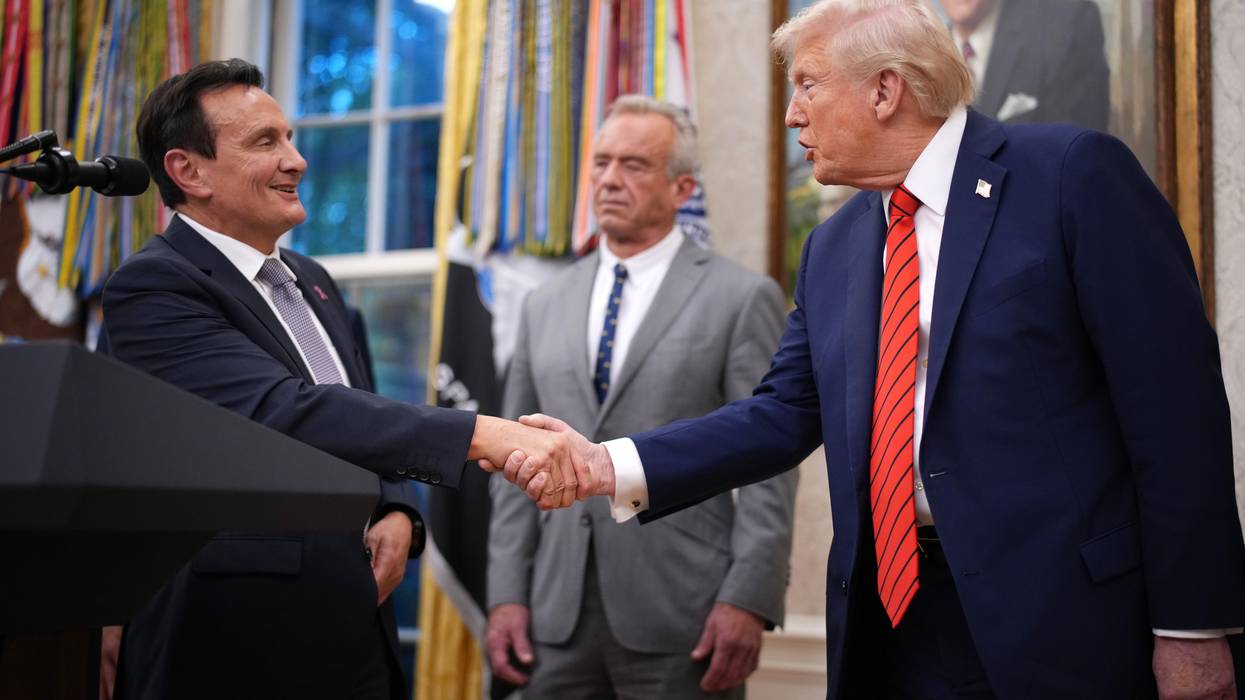
Throughout his second White House term, Trump has made outlandish promises to cut drug costs and hosted top executives at the White House to tout splashy deals—only for pharmaceutical giants to continue jacking up prices. Reuters reported last month that drugmakers planned to "raise US prices on at least 350 branded medications, including vaccines against Covid, RSV, and shingles and blockbuster cancer treatment Ibrance" in 2026.
Merith Basey, CEO of Patients for Affordable Drugs Now, said in a statement that the Trump administration's "voluntary agreements" with drug companies "lack clear enforcement mechanisms and still put the power to set and increase prices firmly in the hands of pharmaceutical corporations."
"Patients in our community will soon learn if they can reliably access these discounts at the pharmacy counter, where the program will ultimately be tested and where affordability matters most," Basey said of TrumpRx.
"When Big Pharma gets richer off the back of a grandmother struggling to pay for cancer medication, the system is broken."
Led by Senate Finance Committee Chair Ron Wyden, four Democratic senators on Wednesday outlined plans to reduce the costs of prescription drugs after President Donald Trump claimed he would do so—only to allow Big Pharma companies to delay negotiating lower prices and secure "zero commitments" from top executives on making lifesaving medications more affordable for millions of Americans.
“There is no greater fraud than Donald J. Trump when it comes to lower drug prices,” Wyden (D-Ore.) said. “Our doors are wide open to anybody who wants to take the bold next step forward on lowering drug costs for Americans."
Along with a "flash report" on Trump's "broken promises" regarding his pledge to bring drug prices down “to levels nobody ever thought was possible," Wyden sent a Dear Colleague letter to Democratic senators regarding his committee's plans to follow through with lowering costs.
"Finance Committee minority staff will dedicate substantial time and effort this year to developing the next generation of healthcare solutions that lower costs for American families," Wyden wrote. "These solutions will rein in Big Pharma’s outrageous price increases, lower costs for consumers, guarantee predictability for patients, and reduce wasteful government spending that pads the profits of big corporations. Alongside the co-signers of this letter, I invite you to be a part of this bold vision."
The letter, co-signed by Sens. Catherine Cortez Masto (D-Nev.), Peter Welch (D-Vt.), and Ruben Gallego (D-Ariz.), notes that "the only concrete drug pricing policy Trump enacted within the past year was a price hike for the biggest blockbuster cancer drugs on Earth, giving an $8.8 billion windfall to the pharmaceutical industry."
In contrast, the senators wrote, the Senate Finance Committee will develop policies to incorporate international pricing models into the Medicare drug price negotiation framework, including by allowing Health and Human Services Secretary Robert F. Kennedy Jr. to consider international prices as a factor or penalize drugmakers when pricing for US customers exceeds international benchmarks.
“Democrats are determined to bring prices down, and we’re willing to work with anyone to find concrete ways to do it."
The committee will also work to end Republican "blockbuster drug bailouts from negotiation," like the ones included in the One Big Beautiful Bill Act that shielded several high-priced drugs—including the cancer drug Keytruda—from Medicare price negotiations.
"The Republican budget bill contained a nearly $9 billion sweetheart deal that benefits the biggest drug companies by delaying or exempting some lifesaving medications from negotiation," reads the Democrats' flash report.
Gallego said that "when Big Pharma gets richer off the back of a grandmother struggling to pay for cancer medication, the system is broken."
"That’s what this is all about: Big Pharma execs sitting in their fancy corner offices profiting off of sick, working-class Americans,” the senator said. “We are not going to accept an America where millions of families live in fear of getting sick and needing to fill a prescription. We are going to fight and fight hard for a healthcare system that does what Donald Trump never did: actually lower costs for working families.”
The lawmakers emphasized that even if manufacturers are forced to lower drug prices, patients are not currently guaranteed to directly benefit, because as much as 45% of the $5.4 trillion the US spends on healthcare annually is "absorbed by middlemen such as insurers, pharmacy benefit managers (PBMs), and drug distributors."
"Healthcare middlemen profit when drug costs are high because they make money off of drug margin or payments that are linked to the price of a drug, ripping off patients who pay more than they should. Medicare Part D and the patients it serves should stop footing the bill for inflated drug prices and instead pay for drugs in a more transparent manner that reduces middleman margin," wrote the senators.
The Finance Committee will develop policies to eliminate abuses in the prescription drug supply chain including "egregious drug price markups," and to ensure that patient cost-sharing on drugs more closely aligns with the costs to plans and PBMs.
Finally, the Democrats said they would work to fix the "unmitigated disaster" that Trump and Kennedy have been "for innovation and drug development," as the administration has proposed slashing the National Institutes of Health budget by 40% and has cut off access to treatment for an estimated 74,000 patients who were enrolled in NIH clinical trials.
The Finance Committee, they said, plans to create new incentives for innovation and drug development, including through the tax code.
In their flash report, the Democrats wrote that while failing to force Big Pharma to the negotiating table to save money for Americans, Trump "has been parading Big Pharma executives through the White House, claiming to be cutting cost-saving deals with these corporations."
"One look under the hood reveals the truth: Trump is giving them a pass on tariffs, while receiving zero commitments about how they will lower costs for taxpayers and patients," they wrote. "Donald Trump is getting fleeced by Big Pharma CEOs, and Americans are going to foot the bill."
Welch said that the president "loves to talk a big game and make promises to working families about lowering prescription drug prices. But in reality, his administration is handling this like a PR problem: They’ve got to keep moving and talking about it, but then do nothing to really address the crisis."
“Democrats are determined to bring prices down, and we’re willing to work with anyone to find concrete ways to do it," said Welch. "We’re going to lower healthcare costs and ensure everyone can access affordable, lifesaving, and pain-relieving medication.”