
SUBSCRIBE TO OUR FREE NEWSLETTER
Daily news & progressive opinion—funded by the people, not the corporations—delivered straight to your inbox.
5
#000000
#FFFFFF
To donate by check, phone, or other method, see our More Ways to Give page.


Daily news & progressive opinion—funded by the people, not the corporations—delivered straight to your inbox.
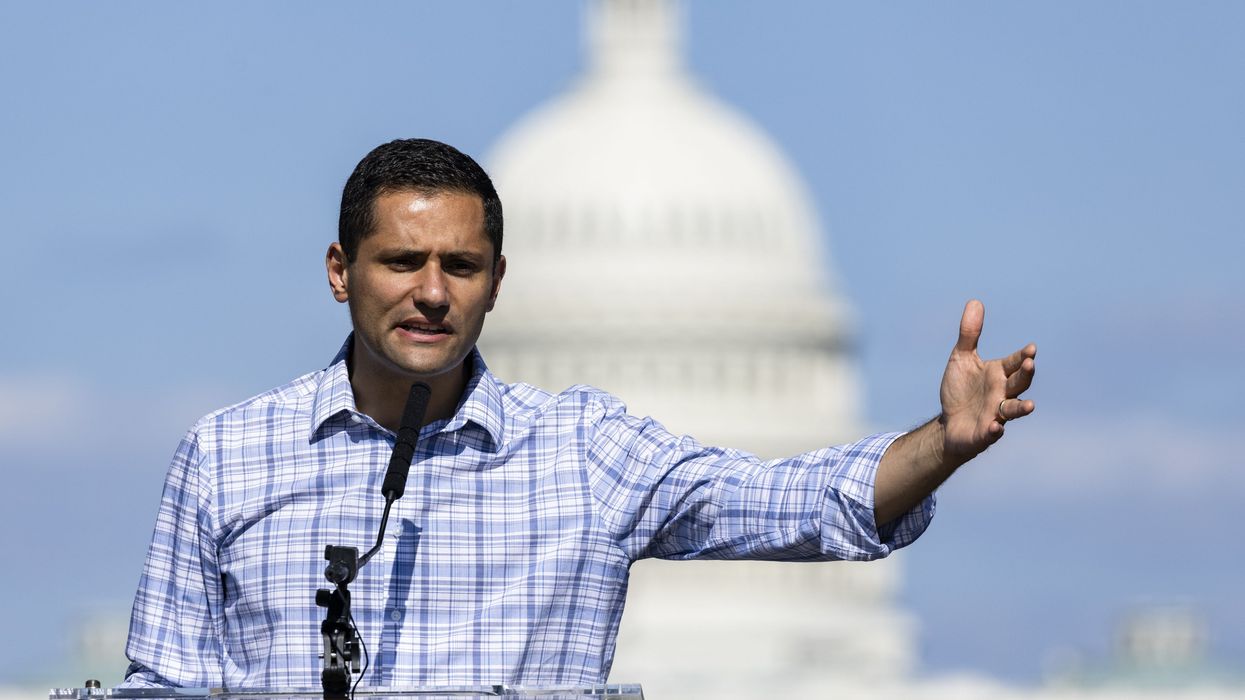
Sam Rasoul, a Palestinian-American State Legislator in Virginia, campaigns on affordability amid false charges of anti-Semitism.
In 2019, I visited my ancestral home in a small town in northwestern Germany named Prussian Oldendorf. Through genealogical research, I had learned that my Jewish ancestors—I am 100% Ashkenazi Jew genetically, as well as a proud Jew by upbringing and choice—had lived there for centuries, until my great-great-grandmother, Rosalie Cahen, a single mother with six children, fled persecution by the German authorities and immigrated to America in 1859.
I had read that there was a Jewish cemetery just outside of town that had been made intentionally hard to find because neo-Nazis had desecrated it in the 1980s. I found the cemetery and saw that many of the gravestones were my direct ancestors with the last name of Cahen, my mother’s maiden name. I also found the gravesite for Philipp Cahen, Rosalie’s husband and my great-great-grandfather.
Additionally, with the help of an old college friend from Germany who lives close to Prussian Oldendorf and who did much of the research necessary to make my visit possible, I found the retired pastor of the town’s 500-year-old Lutheran church who had restored the Jewish cemetery after its desecration. The pastor, who had protected and maintained the cemetery for decades, had come to Prussian Oldendorf at the end of World War II, having fled the Red Army as it rolled west as part of the destruction of the Third Reich. The pastor told me he had spoken out—to the great dismay of many of his parishioners—about how the townsfolk had remained silent during the Holocaust as their Jewish neighbors were disappeared.
According to the pastor, every single Jew in that town—save for one—was sent to the extermination camps and murdered by the Nazis.
As I was getting ready to leave Prussian Oldendorf, I walked past the Lutheran church, and something caught my eye on the ground.
There were small square stones, which I later learned were known across Europe as Stolpersteine or stumbling stones, embedded in the cobblestone courtyard surrounding the church. Inscribed upon the stumbling stones were the names of the townsfolk who were sent to the camps, when they had died, and the names of the camps.
Treblinka
Terezin
Sobibor
Auschwitz
Many of those stumbling stones bore our family name, Cahen.
Seeing these stones, I crumbled to the ground and cried, right there outside the church. When I was finally able to compose myself, I did two things. First, I quietly cursed the monsters who committed these atrocities: “You bastards.”
And then I thanked my great-great-grandmother Rosalie for having had the courage to leave some 80 years before the Holocaust because, if she had stayed, her descendants surely would have been exterminated. Suddenly, the old saying, “There but for the grace of God go I,” had a special and very tangible resonance.
Which brings me to Sam Rasoul, a proud Palestinian-American state legislator who has represented southwestern Virginia and Roanoke City in the Virginia General Assembly since 2014. Like Zohran Mamdani, a fellow Muslim state legislator who is campaigning on a platform of affordability for working people and who is poised to become the next Mayor of New York City, Rasoul leans into speaking out against injustices, including in Palestine. However, he does so not because he is Muslim nor because of his Palestinian heritage—he speaks out because he believes in intersectional justice for all, as evidenced by his work for the communities he represents.
As Rasoul puts it:
In my 11 years in the General Assembly, I have worked to lower healthcare costs, pushed for intersectional justice through a Green New Deal, advanced the socioemotional health of our children, fought to raise teacher pay to the national average, and advocated for good government in limiting the influence of special interests in our government.
I have worked closely with Delegate Rasoul for almost 10 years in environmental justice fights in Virginia that he has helped to foster and lead, most particularly the fight to save the historic African American community of Union Hill in Buckingham County. Union Hill was under assault by Dominion Energy, the state’s monopoly utility company, which wanted to build a massive pipeline compressor station there as part of the now-cancelled Atlantic Coast Pipeline. That fight was won through a relentless coalition-building campaign that brought together diverse communities from across the Commonwealth, and with the help of national civil rights organizations.
Delegate Rasoul was at the forefront of what would become the winning fight to save Union Hill, and he helped bring along most of his Democratic colleagues to join that fight. During that campaign, I watched as, at first, Rasoul worked quietly behind the scenes to garner support from his colleagues in the House for Union Hill, and then as he galvanized national support for the fight, travelling out of state to meet with Karenna Gore, a prominent environmental justice advocate and the daughter of former Vice President Al Gore, also an environmental champion. Rasoul’s work complemented the work of many others, particularly those who lived in the frontline community of Union Hill, and their efforts culminated in a large rally in Buckingham County featuring former Vice President Gore and civil rights leader Rev. William Barber II.
I came to know Delegate Sam Rasoul—his given name, Salam Rasoul, means “peace messenger”—as a kind and decent family man and a relentlessly positive and inclusive politician.
Rasoul is now running for reelection, and he has been attacked by his Republican-turned-“independent” opponent as “consumed with hate,” a laughably false smear, as anyone who has actually met or knows Rasoul can attest. Some in his own party have even chimed in, citing his outspoken denunciation of what Israel has done to Gaza for the past three years.
So let me say this as directly as I can—as a proud Jew who was not only brought up in a Zionist household, but whose relatives were exterminated in one of the greatest genocides in human history.
Let me say this as someone who understands the lessons of my own family heritage, that “never again” means never again—for anyone.
Israel has committed, and continues to commit, unspeakable war crimes against innocent civilians, mostly women and children—in Gaza.
Israel has committed, and continues to commit, genocide in Gaza, and is now moving to the West Bank.
As with the Holocaust, the years that follow will show who was on the right side of history, who spoke out, and who remained silent. I believe I am on the right side of history, and many proud Jews like me are not only on the right side of history but are helping to lead the worldwide movement to stop the genocide.
Delegate Rasoul is also on the right side of history.
But Rasoul is not running for reelection in Appalachia because Israel is committing genocide in Gaza.
Rasoul is running so he can continue to do what he has always done: fight injustice, and deliver for the people he represents in Roanoke—on pocketbook issues, affordability, healthcare, education, utility bills, environmental justice, and more.
If Rasoul prevails on November 4, it will represent a defeat for the politics of cynicism and demonization and a victory for the politics of inclusivity and lifting up communities.
It will send a message from Appalachia and beautiful Southwest Virginia all the way to New York and Washington, DC and around the world, that denouncing a genocide is a moral imperative, born of generations of tragedy, for all communities.
Most importantly, if Rasoul wins, it will prove that “never again” truly means never again for anyone, and that we should not only tolerate, but encourage, politicians denouncing injustice while simultaneously fighting for the basic needs of the communities they represent.
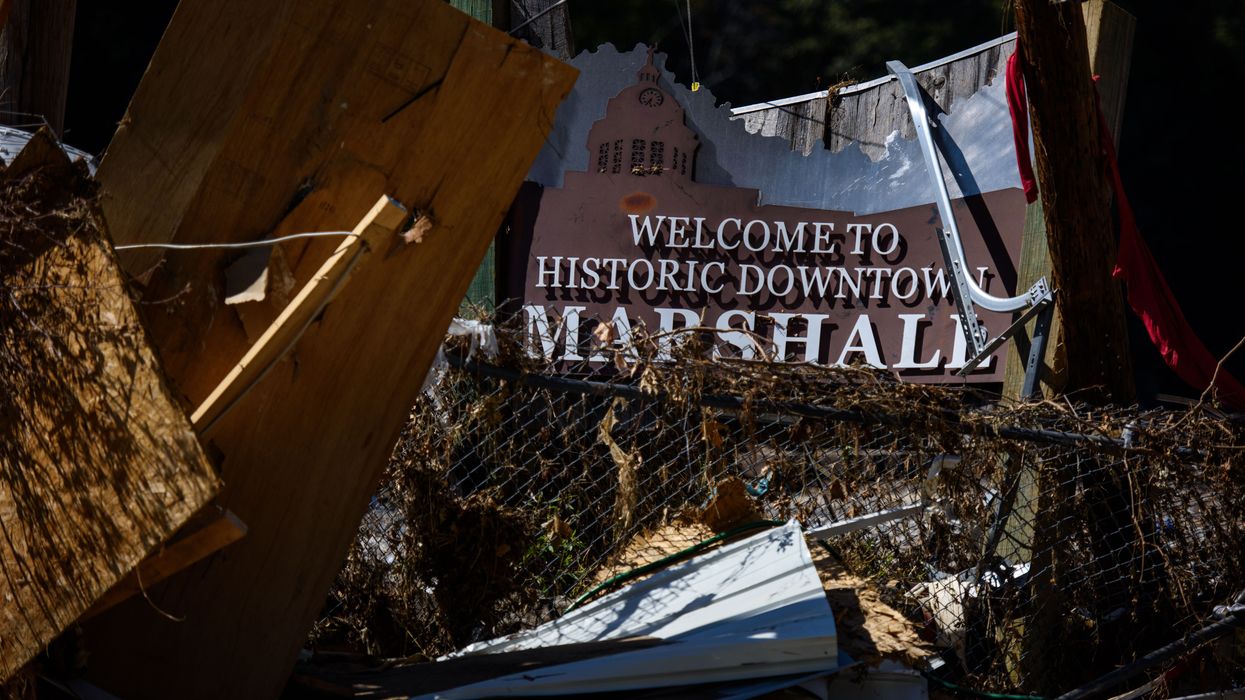
In the aftermath of Helene, we are now all grappling with the realities of a climate that have made such extreme weather events increasingly common.
In the heart of the Southern Appalachian Mountains, the impending arrival of Hurricane Helene transforms the serene landscape of Asheville and Marshall, North Carolina into a battleground against nature's fury. As heavy rains pour down, rivers swell to dangerous levels, the catastrophic winds from Helene down power lines and crash into houses, residents brace for the worst.
In the aftermath, we are now all grappling with the realities of a climate that have made such extreme weather events increasingly common. This personal account delves into the chaos and uncertainty brought by Helene, offering reflections on resilience, community service, and human connection in a region caught in the throes of a climate disaster.
Wednesday, September 25
Heavy rain begins to fall in the Asheville/Marshall area of North Carolina, where I have lived for 17 years. A cold front, slowed by the high mountains, has brought a flood of precipitation ahead of Hurricane Helene's arrival.
The city of Asheville, situated along the French Broad River, is known for its many yoga studios, artists, and exotic restaurants. Tiny Marshall (population 796), also located along the river, is known for its organic farms, Appalachian music, and the Civil War massacre in Shelton Laurel in 1863.
I imagine a grotesque sight: The Swannanoa River flooding through the windows of Andaaz, my favorite Indian restaurant. The water is a mixed soup of mud, plastic bottles, and pieces of wood.
I stock up on extra candles, a new flashlight, oil for the old-fashioned oil lamps, extra dry food, and fill up about 100 liters of drinking water in anticipation of life without electricity. At midnight, Asheville Airport reports over four inches (10 centimeters) of rain. I imagine that creeks and rivers have already reached record-high flood levels and sleep only a few hours at a time. We had flooding on an island in the middle of the river in 2021, but I know it has never rained so much in such a short time before. I anticipate the worst.
Thursday, September 26
Climate hurricane Helene rages up the mountains from the unusually warm waters off the Florida coast. Precipitation and winds intensify. The neighboring county of Yancey experiences over 8.5 inches (22 cm) of rainfall in just over a day. The rivers, especially the French Broad River, swell dangerously with water from rushing creeks and smaller rivers.
I talk on the phone with my 89-year-old mother in Norway. But suddenly we lose contact. A few minutes later, I go out on the porch and see that a large pine tree has fallen over the power lines. Without electricity, there's no Wi-fi and no water from the well for drinking, cooking, showering, or flushing the toilet.
In the evening, after not being able to call or write to my wife on a study trip in India, I read the classic travel book To a Mountain in Tibet by Colin Thubron by the light of two candles. As I go to sleep, I worry about my mother worrying about me.
Friday, September 27
Helene crashes through the forest around the house with heavy rainfall and strong winds. In the afternoon, I nervously drive down to the French Broad River and see rooftops, car parts, and plastic pipes violently streaming by.
A few days later, I read that Asheville Regional Airport lost communication after recording 13.8 inches (35 cm) of rain in less than 72 hours. That resulted in major flooding in the lowest parts of Asheville and many surrounding villages.
I imagine a grotesque sight: The Swannanoa River flooding through the windows of Andaaz, my favorite Indian restaurant. The water is a mixed soup of mud, plastic bottles, and pieces of wood. I envision Marshall completely underwater, the frozen food section in Madison Natural Foods store submerged in chocolate-colored water and industrial sludge.
I wake up after only an hour's sleep and listen to the strong wind and heavy rain drumming on the roof. I sleep restlessly for the rest of the night. Branches occasionally falling onto the roof. What if one of the large oak trees outside will come smashing through the bedroom ceiling?
Saturday, September 28
In the morning, the wind has calmed down somewhat. I make a primitive oven from flat stones and cook breakfast with pancakes and a compote of berries over the fire. The floodwater in the French Broad River has begun to recede, and the extent of the destruction becomes clearer.
From a friend, I hear that the muddy water reached the roofs of many buildings in downtown Marshall. Some wooden houses were smashed to pieces by the strong currents. I drive around the neighborhood and see that several metal structures from an asphalt company have been swept into the river along with a wooden house. Further downstream, a whole row of houses and trailers have been crushed or swept away by the violent river. Some people chose not to evacuate and disappeared downstream along with their houses. One woman was later found in the neighboring state of Tennessee.
In the afternoon, electricity and running water return to Prama Institute, the retreat center where I work, but not to my home or my neighbors'. (It would take nearly two weeks before power was restored.) Our neighborhood of about 30 adults and children gathers for a warm lunch, the first in several days. I can finally check email and occasionally make phone calls. I receive an email from my Norwegian friend Trond Øverland: "You must be experiencing both tragedy and great solidarity in your area right now."
"Good summary of the situation," I write back.
Sunday, September 29
The radio reports that the death toll has risen to 30, but 600 are still missing. A neighbor tells me that our friend Tom has lost his house in Chimney Rock, a place known from scenes in the movie The Last of the Mohicans with Daniel Day-Lewis. Like many of the other houses, it was swept into Lake Lure.
Over 70 roads are destroyed, and Asheville is only accessible by car from South Carolina. The damage to houses and roads is, according to a politician, "post-apocalyptic." Thousands of anxious, hungry, and thirsty people are without electricity, water, and mobile coverage. On the radio, I hear that tap water may not be available for several weeks, perhaps months in some areas.
Rich or poor, we are all fast becoming climate victims.
I take my first shower in several days, and I feel the guilty pleasure of privilege. As tragic as it is everywhere around us, we are among the lucky ones. We, up here in the now quiet, sunny forest.
Monday, September 30
Governor Roy Cooper inspects the damage from the air and on the ground, calling it "unlike anything ever seen in western North Carolina." The government organization FEMA begins registering residents for assistance as the long rebuilding process starts.
Anthony, a friend from Shelton Laurel, stops by with his truck. Despite a large oak crushing the kitchen in his new house, and his parents' home in the mountain town of Hot Springs now floating down the French Broad River, he is willing to help. He knows of a place in Tennessee where we can buy food and gas.
Later that day, I try my luck locally. But the lines are long at Ingles supermarket, and you need cash. With no open banks, I drive home disappointed. In the afternoon, some neighbors go to Marshall with shovels and rubber boots. They shovel half-meter thick mud out of Madison Natural Foods store and Zadie's restaurant.
Tuesday, October 1
Anthony finally returns from Tennessee with his truck full of vegetables and fruit. We have plenty of rice and beans stored, so we start cooking and serving hot meals to people in need outside our neighborhood.
In the afternoon, I check the propane tank for the kitchen stove; it's only 35% full. With the amount of food we're now cooking, this will only last just under a week. Then we learn that Southern State Gas Company, where we get our propane from, is closed due to flood damage.
We are tired from all the cooking, serving, and the thick mud. We are filled with tragic and despondent feelings from all the destruction. We wonder if we can handle such physical and mental pressure for another day. But what else can we do? We must just keep on keeping on.
Wednesday, October 2
We cook hot food at the retreat center and serve 150 people in an apartment block in Asheville. They are mostly low-income retirees and partially disabled. They are victims of an unevenly distributed economic system and a failed healthcare system. Now they are also climate victims.
I read the following on CNN's website: "Asheville was touted as a climate haven, a place to escape the worst ravages of extreme weather. But Hurricane Helene's deadly path of destruction reveals this North Carolina city, like any in America, was never safe—it's just that memories are short, and the reach of the climate crisis is consistently underestimated."
Rich or poor, we are all fast becoming climate victims.
Thursday, October 3
I listen to a NASA climate scientist, prerecorded from a few days ago and speaking on his own behalf on the news program Democracy Now! He says that none of the news reports have mentioned the connection between Helene and climate change. Well, that's because they've been too busy reporting on the destruction and human suffering. And rightly so.
But today I read the following on Salon.com: "The destruction after Hurricane Helene in Asheville confirms that we cannot hide from climate change. The city in North Carolina was meant to be a climate refuge."
That's true. Since the mid-1990s, hippies, artists, environmentalists, organic farmers, musicians, and yogis have arrived in the area to find Shangri-La. I was one of them. Over the last 10 years, this liberal, progressive, and colorful cultural area was discovered by the more well-to-do from New York and California.
Now the area has become too expensive to live in for many. The restaurant, Airbnb, hotel, and tourism industry dominate the economy. Some talk about wanting to escape to another haven. But as we have painfully experienced in recent days, there are certain problems we cannot escape from. And certainly not from the effects of climate change.
Friday, October 4
Some last thoughts. You may still wonder why our area was so hard hit by what is termed Hurricane Helene. Because we were not just hit with Ms. Helene; we were hit by two weather systems. We had already had days with heavy rain before Helene hit us.
A "perfect storm" of circumstances led to this catastrophe. The ground was already waterlogged before Helene arrived. Thus, two storm systems stalled over the area, unleashing an extraordinary combination of hurricane winds and rain in a relatively small geographic region.
Then the mountainous terrain funneled this massive volume of water into the valleys below. This combination of preexisting saturation, extreme rainfall, challenging topography, and extreme winds toppling trees and power lines created the "ideal" conditions for this devastating disaster.
In this time of crisis, we discovered our capacity to rise together, transforming challenges into opportunities for connection and service.
But why were we not better prepared: You don't prepare for hurricanes in the mountains any more than you prepare for snowstorms in Miami. But that should not be an excuse for not preparing better, for not becoming less dependent on the electrical grid, for example.
During the climate change era—with severe droughts there and rainstorms over here—erratic and extreme weather patterns have become the new normal. According to climate scientists, never-before-seen weather patterns, or extreme ones experienced once every 100 years or so, may now take place every 10-20 years. Or even more frequently.
So, what can we do to combat climate change? Business as usual offers quick-fix solutions through schemes such as carbon capture. But there are no quick fixes. From a larger systems perspective, we need to rapidly move away from economies designed like extractive machines focused on maximum profit and production. Instead, we need economies emerging from and supporting the ecosystems of people, nature, and cultures.
We need political systems supporting regenerative and cooperative communities and regions. While recognizing that humans have basic needs to be met, we must align our economies with nature's processes to support dynamic balance and biodiversity.
In our own, small systems community, we have learned that we should have installed that solar well pump we talked about long ago. It would have saved us from going without water for over a week. It has now been ordered, and it will be installed soon.
We also need more solar generators in our homes to produce electricity for fridges and computers. While some of us already have whole-house solar power, we need to expand that capacity as well.
In this time of crisis, we discovered our capacity to rise together, transforming challenges into opportunities for connection and service. As the storms of the outside world intensified, we turned inward, nurturing our resilience through daily meditation and yoga. These practices became our anchors, helping us avoid the pitfalls of burnout and despair while serving the community at large.
Change on a systemic level requires a holistic approach, one that embraces transformation both large and small, collective and individual. It is about fostering well-being not just for small, exclusive groups, but for the entire community, weaving individual growth into the fabric of collective change and resilience.
Faced with a troubling report that reveals multiple pipe defects, Mountain Valley Pipeline spins and misrepresents.
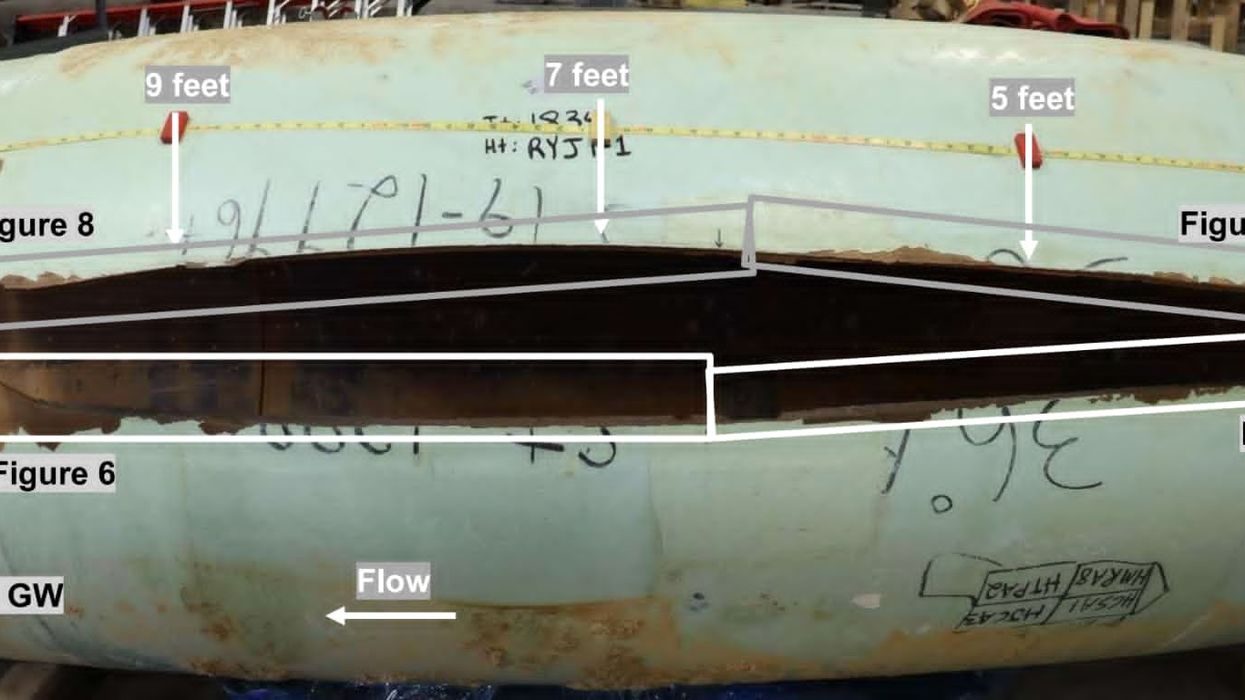
Almost four months after high-pressure water testing blew a
gaping hole in an elbow pipe fitting section of the Mountain Valley Pipeline on Bent Mountain in Virginia, the pipeline operator filed a report with the Federal Energy Regulatory Commission on August 29 addressing the cause of the pipe failure.
The incident, which occurred on May 1, roughly six weeks before MVP went into operation, was first noted by local land owners, who observed sediment in a nearby stream, reported it to the Virginia Department of Environmental Quality (DEQ), and then photographed the burst pipe as it was hauled away a day later.
MVP sent the 43-page report to the Pipeline and Hazardous Materials Safety Administration (PHMSA) on August 28, a day before the report was filed with FERC. In June, PHMSA and MVP entered into a consent agreement to resolve a 2023 notice of proposed safety order, which had alleged that conditions existed along MVP’s route through West Virginia and Virginia that posed “an integrity risk to public safety, property, or the environment.”
This fight will continue until MVP is held accountable and this ruinous disaster is stopped before the unthinkable happens.
MVP’s report—and the company’s reaction to it—leave more questions unanswered than answered.
But one thing is clear: MVP tried to mislead PHMSA and FERC, as well as the press and the public at large, by including with the report filing a two-page cover letter that downplayed the incident and omitted crucial information contained in the report.
Also troubling—and unexplained—the report went through three drafts, dated July 23, August 1, and August 21. It was prepared by risk management firm DNV GL USA, which described MVP as its “customer.”
MVP provided DNV with a 12.5-foot section of pipe that contained the burst elbow fitting as well as two smaller sections (1.5 feet and one foot) from a “sister fitting” from the same test section.
MVP claimed in its cover letter that the sister elbow fitting was the only piece of pipe along the 303-mile long pipeline that had a “matching pedigree.” It gave no supporting evidence, nor did it even describe what it meant by “matching pedigree,” and DNV did not address the claim, much less verify it.
DNV did tensile tests on the blown pipe and “duplicate tensile tests” on the two samples from the sister fitting. The purpose of the analysis was “to determine the metallurgical cause of the failure and identify any contributing factors.”
DNV concluded that “the elbow fitting failed at the longitudinal seam weld as a result of ductile overload.” Ductile overload is “the failure mode that occurs when a material is simply loaded to beyond its ultimate tensile strength.” That seems simple enough. Indeed, it is almost self-evident. Obviously, the pipe burst because pressure was put on it that was beyond its capacity to bear. But that does not tell you why there was ductile overload.
DNV reported that “a majority of the failure was at or near the fusion boundary of the seam weld metal and base metal, indicating a lower tensile strength at or near the fusion boundary compared to the base metal and weld metal.”
That brings us to the second goal of the testing: to determine contributing factors. And that’s where the report gets very interesting—and very scary:
Contributing factors to the lower tensile strength at or near the fusion boundary was (sic) softening of the base metal mid-thickness... and possibly a yield strength lower than the requirement as the base metal yield strength of the sister elbow fitting did not meet the yield strength requirement.
Here, DNV is talking about two different defects in the pipe that burst, and a different defect in the sister pipe.
First, there was inadequate tensile strength , which is the maximum stress that can be applied before an object breaks, in the pipe that burst.
Second, there was possibly also inadequate yield strength, which refers to the maximum stress before an object’s shape permanently changes, in the pipe that burst. The evidence for this is that “the base metal yield strength of the sister elbow fitting”—which MVP admitted had a “matching pedigree”—“did not meet the yield strength requirement.”
Of note, the inadequate yield strength of the sister fitting was not in a welded seam, but rather in the base metal of the pipe itself.
Two pipes tested.
Two pipes defective.
Two different defects.
Taking things further, DNV concluded that “the tensile properties of the sister elbow fitting (base metal) do not meet the tensile requirements for MSS SP75 Grade WPHY70 steel at the time of construction as the yield strength is lower than the required value of 70 ksi; the values are also lower than the MTR value of 70.9 ksi.”
As DNV noted, MSS SP-75 requires a minimum yield strength of 70 kilopounds per square inch (ksi). The two sister elbow samples had a yield strength of 63.5 and 66.8 ksi.
In plain English, the sister elbow would be expected to permanently deform at a level of stress below what was required by industry standards, and the elbow that burst would be expected to break at a level of stress below what is required by industry standards.
Presumably, it is not good for any section of MVP to be either susceptible to permanent alteration or, worse, a straight blow out, when subjected to high pressure. The tested pipes were subject to both. It is terrifying, when one considers that MVP carries explosive methane gas—which is pressurized at up to 1,480 psig—that people live well within the pipeline’s blast zone.
And it gets worse.
DNV reported that there was a separate problem altogether: The sister elbow pipe’s fracture appearance transition temperature (FATT) value, which is the temperature at which the steel’s fracture appearance goes from being mostly flexible to mostly brittle, was “higher (poorer) than typical when compared to 2018 vintage line pipe steel.” Simply put, this means that the sister elbow DNV tested was more susceptible to cracking as compared to other pipe steel made in the same time period.
Mountain Valley Pipeline’s cover letter did not mention any of these problems.
Instead, MVP simply said that its pipeline burst on May 1 “due to a manufacturer’s defective weld,” on one pipe elbow. MVP bragged that a sister fitting “was proactively removed… to provide material for a portion of the mechanical testing aspect of the failure analysis,” but conveniently omitted the fact that the second fitting suffered from multiple manufacturing defects. Incredibly, MVP then misleadingly stated that “a single failure,” when there actually were two defective pipes (out of only two tested), was “a negligible fitting failure rate.”
That’s not even accounting for the fact that this was not the only “failure” that MVP experienced during hydrostatic testing. On June 4, a “jumper pipe” burst, sending a geyser of water hundreds of feet into the nighttime sky and then into a stream that feeds into the Roanoke River. Local residents caught the incident on video. MVP has yet to provide a full explanation of exactly what occurred.
As to the May 1 pipe burst, MVP no doubt was betting that reporters would not dig through 43 pages of highly technical material and instead would rely on MVP’s two-page “summary.” And indeed, with one notable exception, virtually all media outlets did exactly that. Many simply reprinted a story circulated by The Associated Press, which parroted a separate blogpost from MVP that noted that the report found that “there was no evidence of external or internal corrosion.”
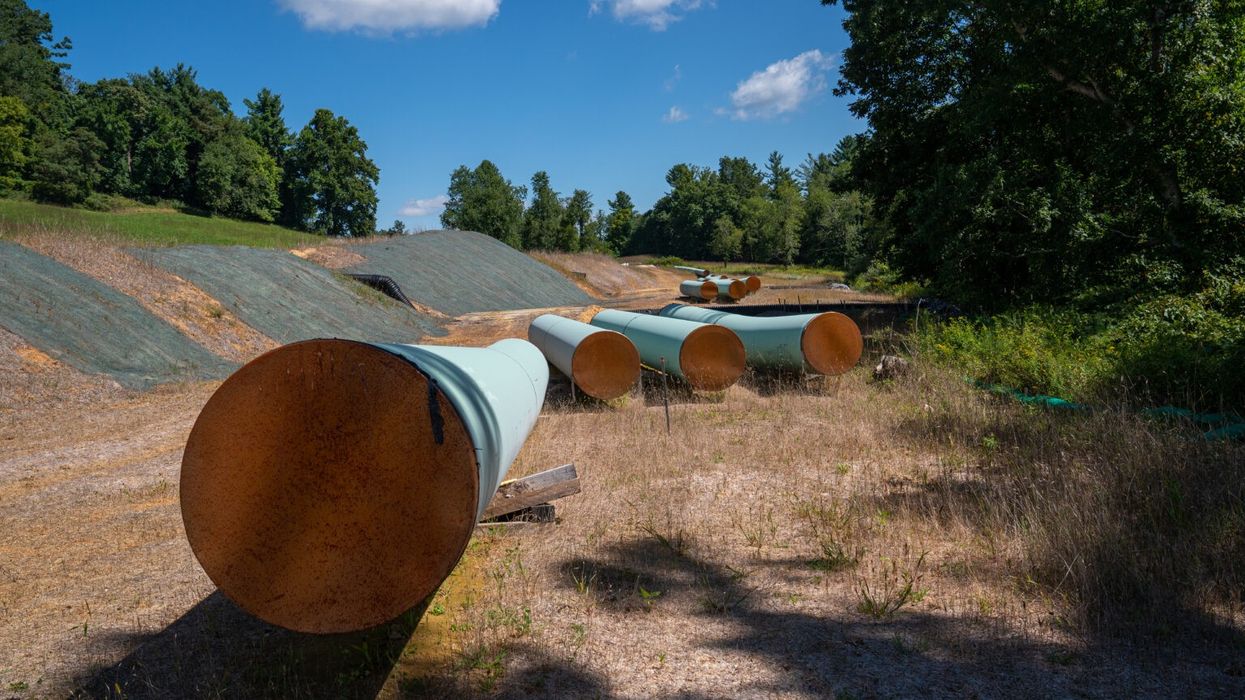
By highlighting that DNV found no evidence of corrosion, MVP was cleverly suggesting that widespread concern about corrosion of MVP’s pipes is unfounded. However, concerns about corrosion do not focus on pipes, like the ones at issue here, that were installed and buried in 2018. Rather, the danger of corrosion focuses on the fact that most of the pipeline was installed in 2023 and 2024 using pipes that had been baking in the sun for many years after construction was halted in 2018 and thereafter by federal courts and, in one brief instance, by the Virginia Department of Environmental Quality. In fact, according to federal court testimony from an MVP executive in 2018, the pipe needed to be installed within one year to avoid having the sun degrade its protective coating, which is designed to prevent corrosion.
All of this is very troubling. MVP has a long history of flouting the law, as evidenced by the fact that it has been fined millions of dollars and cited for hundreds of environmental violations as far back as 2018 and as recently as last month.
Now MVP wants those who live along the route and others concerned to accept their claim that the sister elbow fitting it gave to DNV for testing was the only pipe among the 2,500 fittings and thousands of other pipes along the route that had a “matching pedigree” with the pipe that burst, whatever that means, despite the fact that no one—not even DNV—has verified or even evaluated that claim.
MVP likewise does not want anyone to wonder why DNV produced three drafts of the report for its “customer,” MVP. Who knows what MVP asked to be added, deleted, or changed between July 23, when the first draft was completed, and August 21, when the final report was done? Nor is there any explanation as to why MVP waited until August 28 to provide the report to PHMSA.
In short, the people who live next to this polluting and dangerous nightmare, as well as the public at large, are left with many questions and very few answers. And regulatory agencies, whose job it is to protect the public, are simply asleep at the wheel.
As Russell Chisholm, co-director of the Protect Our Water, Heritage, Rights Coalition (POWHR), a local advocacy group, commented:
After four months of waiting, communities near the pipe rupture finally have details from MVP on what caused the pipe explosion during testing. The lab hired by MVP blames the rupture on weak steel and a defective weld. This is a pathetically predictable outcome; we know the MVP has used shoddy materials for their rushed construction job on this massive methane pipeline project. This is yet more evidence of the threat MVP poses to everyone along the route, and why the government never should have greenlit this corrupt project.
MVP continues to assault Appalachia. Week after week after week, MVP files environmental “compliance reports” that instead reveal environmental noncompliance, as sediment is deposited in once pristine and protected streams. This damage would be illegal but for the fact that Congress and the White House exempted this project from environmental laws by legislative fiat in June 2023. And just recently, MVP revealed that it is working to remedy an untold number of “slips,” a euphemism for landslides, that could rupture a pipeline that crosses 75 miles with slopes greater than 30%.
Being treated as a sacrifice zone, the people of Appalachia are left to protect themselves and each other.
It is the latest chapter in a centuries-old story.
But the people of Appalachia are strong—and they are not alone. This fight will continue until MVP is held accountable and this ruinous disaster is stopped before the unthinkable happens.
Because it is not just about tensile strength and hydrostatic testing.
It is about the people who live there. And the land they love.
And in the end, the people will win.