
SUBSCRIBE TO OUR FREE NEWSLETTER
Daily news & progressive opinion—funded by the people, not the corporations—delivered straight to your inbox.
5
#000000
#FFFFFF
To donate by check, phone, or other method, see our More Ways to Give page.


Daily news & progressive opinion—funded by the people, not the corporations—delivered straight to your inbox.
"This is an atrocious downplaying of real antisemitism at a time when rampant Jew hatred is killing people," said an American congressional candidate and school shooting survivor.
Israeli Prime Minister Benjamin Netanyahu was swiftly criticized around the world on Sunday for trying to connect a deadly shooting that targeted a Hanukkah celebration at Bondi Beach in Sydney to the Australian government's decision to recognize Palestinian statehood.
Netanyahu referenced a letter he sent to Australian Prime Minister Anthony Albanese in August, after Albanese and Foreign Affairs Minister Penny Wong announced the decision, which followed similar moves from Canada, France, and the United Kingdom, amid Israel's assault on the Gaza Strip, which has been widely condemned as genocide.
As Netanyahu noted, he wrote to Albanese: "Your call for a Palestinian state pours fuel on the antisemitic fire. It rewards Hamas terrorists. It emboldens those who menace Australian Jews and encourages the Jew hatred now stalking your streets."
The Israeli leader shared a video and transcript of his commentary on the social media platform X, where Jasper Nathaniel, who reports on the illegally occupied West Bank, called it a "depraved response to a depraved act."
"Obviously massacring unarmed men, women, and children at a Hanukkah celebration is antisemitic terror," Nathaniel added in a separate thread. "Just like massacring unarmed men, women, and children in Gaza and the West Bank is anti-Palestinian terror. There are no moral exceptions regarding the slaughter of civilians."
Electronic Intifada director Ali Abunimah said, "Basically Netanyahu is saying that Australia got what it had coming for not supporting his genocide in Gaza even more than it already does."
Avi Meyerstein, founder of the Washington, DC-based Alliance for Middle East Peace, declared: "This is absurd. Calling to resolve the Israeli-Palestinian conflict with peace, security, and self-determination for all, recognizing Israel and Palestine both, is a call to reduce the flames and put everyone on a path toward a better future."
Cameron Kasky, who survived the 2018 mass shooting at Marjory Stoneman Douglas High School in Parkland, Florida and is now running for Congress as a Democrat in New York, also blasted Netanyahu over his comments, saying that "this is an atrocious downplaying of real antisemitism at a time when rampant Jew hatred is killing people."
The death toll in Australia has risen to 16, including one of at least two gunmen, and dozens more people were injured in the attack. A bystander who wrestled a gun away from one of the shooters has been identified by Australian media as Ahmed al Ahmed, a 43-year-old fruit shop owner and father. His cousin said that he was shot twice and had to get surgery.
Even Netanyahu recognized that in Australia, "we saw an action of a brave man—turns out a Muslim brave man, and I salute him—that stopped one of these terrorists from killing innocent Jews," but the Israeli leader then doubled down on what he called Albanese's "weakness."
Responding to Netanyahu, Assal Rad, a fellow at the Arab Center Washington, DC, said that "blaming Palestinian statehood, while committing genocide against them, is just another reminder that you want to erase Palestinians from existence."
"If you condemn the horrific, antisemitic attack in Bondi Beach while still defending genocide in Gaza, you're not actually outraged by the killing of innocent people," Rad also said. "It's not hard to condemn both, unless you think some lives are more valuable than others."
"The images out of Bondi Beach in Australia this morning of a vile, antisemitic massacre at a Hanukkah celebration are shocking, disgusting, and heartbreaking," said Dr. Abdul El-Sayed, a US Senate candidate.
This is a developing story… Please check back for updates…
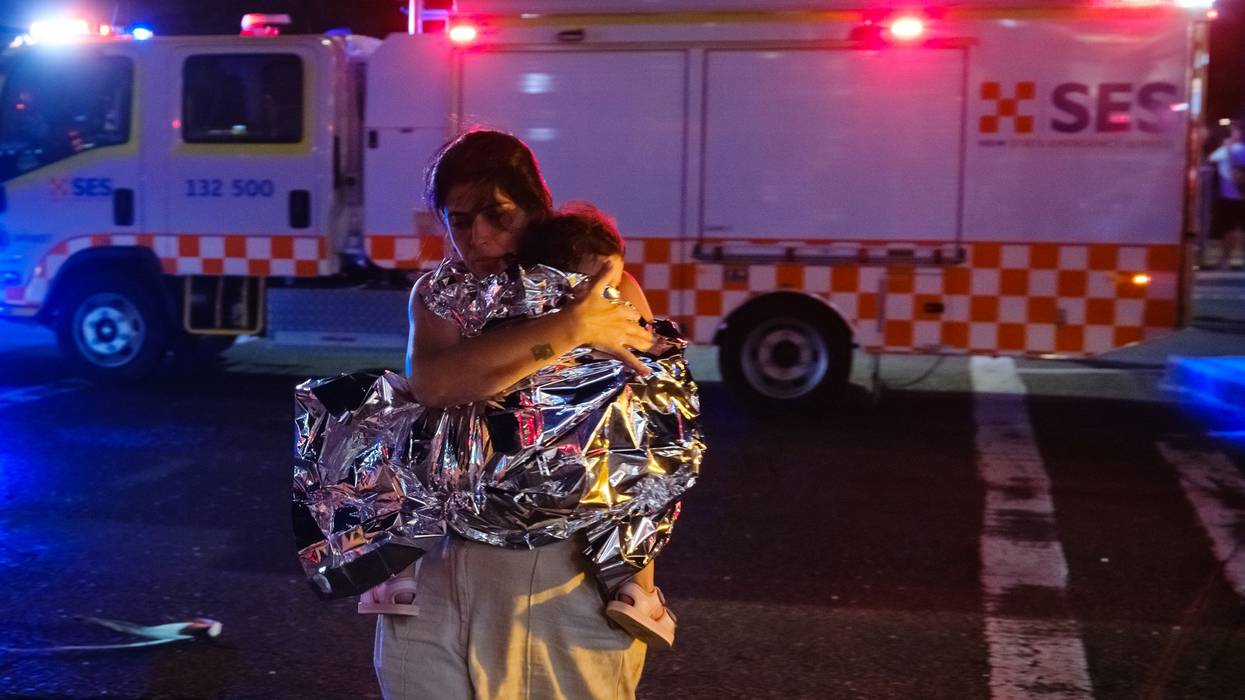
At least 16 people are dead, including a gunman, and dozens of others were transported to various hospitals for injuries after shooters attacked a Hanukkah celebration at the iconic Bondi Beach in Sydney, Australia.
New South Wales Police confirmed that one suspect was killed and another is in custody, and a suspected improvised explosive device (IED) was found in a nearby vehicle, according to the Australian Broadcasting Corporation.
"One of the gunmen has been identified as Naveed Akram from Bonnyrigg in Sydney's southwest," ABC also reported. "An official, speaking on condition of anonymity, says Mr Akram's home in Bonnyrigg is being raided by police."
Australian Prime Minister Anthony Albanese called the shooting "a targeted attack on Jewish Australians on the first day of Hanukkah, which should be a day of joy, a celebration of faith," and "an act of evil, antisemitism, terrorism, that has struck the heart of our nation."
"There is no place for this hate, violence, and terrorism in our nation," he continued, noting that many people remain alive "because of the courage and quick action of the New South Wales Police, and the first responders who rushed to their aid, as well as the courage of everyday Australians who, without hesitating, put themselves in danger in order to keep their fellow Australians safe."
A video of one such bystander has swiftly circulated online: A man identified as Ahmed al Ahmed tackled one gunman and took his weapon. A 7NEWS reporter spoke with a cousin of the 43-year-old Muslim fruit shop owner and father of two at the hospital. The "hero," as his cousin and many others have called him, was shot twice and had surgery, but should be OK.
The video garnered attention around the world. Democratic congressional candidate and outgoing New York City Comptroller Brad Lander, who is Jewish, acknowledged the "extraordinary courage" of the man who "bravely risked his life to save his neighbors celebrating Hanukkah." Lander added: "Praying for his full and speedy recovery. And so deeply inspired by his example."
As the Associated Press noted Sunday:
Mass shootings in Australia are extremely rare. A 1996 massacre in the Tasmanian town of Port Arthur, where a lone gunman killed 35 people, prompted the government to drastically tighten gun laws and made it much more difficult for Australians to acquire firearms.
Significant mass shootings this century included two murder-suicides with death tolls of five people in 2014, and seven in 2018, in which gunmen killed their own families and themselves.
In 2022, six people were killed in a shootout between police and Christian extremists at a rural property in Queensland state.
The attack in Australia followed a deadly shooting Saturday at Brown University in Providence, Rhode Island in the United States, where such incidents are far more common.
In the largest US city, the New York Police Department said Sunday that "we are in touch with our Australian partners, and at this time we see no nexus to NYC. We are deploying additional resources to public Hanukkah celebrations and synagogues out of an abundance of caution."
American leaders and political candidates also condemned the Sunday attack, including Dr. Abdul El-Sayed, a Democratic US Senate candidate in Michigan who said that "the images out of Bondi Beach in Australia this morning of a vile, antisemitic massacre at a Hanukkah celebration are shocking, disgusting, and heartbreaking. The shooters deliberately attacked families celebrating a holiday because of their faith. There is no justification for such a cowardly act of terrorism."
"Our family is praying for the victims and their families—and for Jewish communities in Australia and around the world," added El-Sayed, who is Muslim. "I join my Jewish sisters and brothers grieving these attacks. And we stand resolved to stamp out antisemitism and hate in all its forms."
People's power is proving more than capable of swaying some governments to impose sanctions and sever diplomatic ties with Israel.
Is it finally happening? Is the West turning against Israel? Or are we, whether motivated by hope or driven by despair, simply engaging in wishful thinking? The matter is not so simple.
In July 2025, a significant number of countries and organizations signed the "New York Declaration," a strong statement that followed a high-level meeting titled, "Conference on the Peaceful Settlement of the Question of Palestine."
The conference itself and its bold conclusion warrant a deeper conversation. What matters for now, however, is the identity of the countries involved. Aside from states that have traditionally advocated for international justice and law in Palestine, many of the signatories were countries that had previously supported Israel regardless of context or circumstance.
These mostly Western countries included Australia, Canada, and the United Kingdom, among others. Some of these nations are also expected to formally recognize the state of Palestine in September.
Of course, one has no illusions about the hypocrisy of supporting peace in Palestine while still arming the Israeli war machine that is carrying out a genocide in Gaza. That notwithstanding, the political change is too significant to ignore.
In the case of Ireland, Norway, Spain, Luxembourg, Malta, and Portugal, among others, one can explain the growing rift with Israel and the championing of Palestinian rights based on historical evidence. Indeed, most of these countries have historically teetered on the edge between the Western common denominator and a more humanistic approach to the Palestinian struggle. This shift had already begun years prior to the ongoing Israeli genocide.
But what is one to make of the positions of Australia and the Netherlands, two of the most adamantly pro-Israel governments anywhere?
In Australia's case, media accounts argue that the friction began when the federal government denied an Israeli extremist lawmaker, Simcha Rothman, a visa for a speaking tour.
The precious blood of hundreds of thousands of innocent Palestinians in Gaza deserves for history to be finally altered.
Israel quickly retaliated by ending visas for three Australian diplomats in occupied Palestine. This Israeli step was not just a mere tit-for-tat response but the start of a virulent campaign by Israeli Prime Minister Benjamin Netanyahu to wage a diplomatic war against Australia.
"History will remember [Australian Prime Minister Anthony] Albanese for what he is: a weak politician who betrayed Israel and abandoned Australia's Jews," Netanyahu said, again infusing the same logic of lies and manipulation tactics.
Israel's anger was not directly related to Rothman's visa. The latter was a mere opportunity for Netanyahu to respond to Australia's signature on the New York Declaration, its decision to recognize Palestine, and its growing criticism of Israel's genocide in Gaza.
Though Albanese did not engage Netanyahu directly, his Home Affairs Minister, Tony Burke, did. He answered the accusations of weakness by boldly arguing that "strength is not measured by how many people you can blow up."
This statement is both true and self-indicting, not only for Australia but for other Western governments. For years, and numerous times during the genocide, Australian leaders have argued that "Israel has the right to defend itself." Since blowing people up hardly qualifies as self-defense, it follows that Canberra had known all along that Israel's war is but an ongoing episode of war crimes. So, why the sudden, though still unconvincing, shift in position?
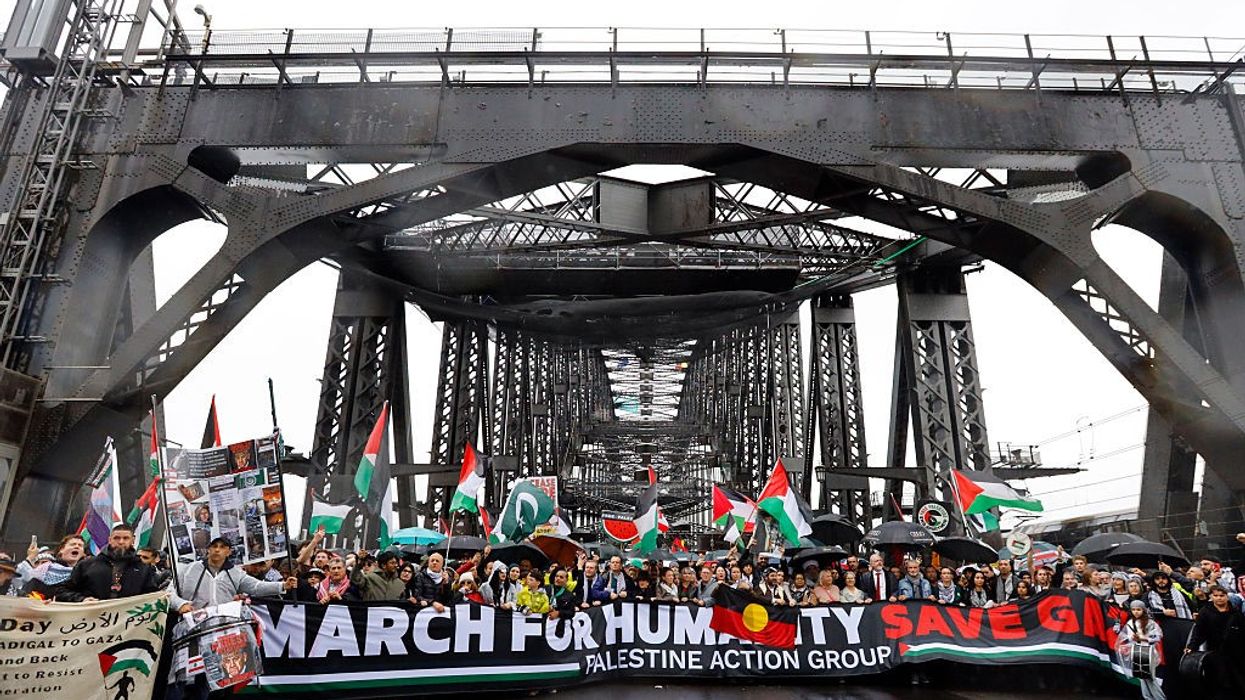
The answer to this question is directly related to the mass mobilization in Australia. On a single Sunday in August, hundreds of thousands of Australians took to the streets in what organizers described as the largest pro-Palestinian demonstrations in the country's history. Marches were held in more than 40 cities and towns, including a massive rally in Sydney that drew a crowd of up to 300,000 people and brought the city's Harbour Bridge to a standstill. These protests, which called for sanctions and an end to Australia's arms trade with Israel, demonstrated the immense public pressure on the government.
In other words, it is the Australian people who have truly spoken, courageously standing up to Netanyahu and to their own government's refusal to take any meaningful step to hold Israel accountable. If anyone should be congratulated on their strength and resolve, it would be the millions of Australians who relentlessly continue to rally for peace, justice, and an end to the genocide in Gaza.
Similarly, the political crisis in the Netherlands, starting with the resignation of Foreign Minister Caspar Veldkamp on August 22, 2025, is indicative of the unusually significant change in European politics toward Israel and Palestine.
"The Israeli government's actions violate international treaties. A line must be drawn," said Eddy van Hijum, the leader of the country's New Social Contract Party and deputy prime minister.
The "line" was indeed drawn, and quickly so when Veldkamp resigned, ushering in mass resignations by other key ministers in the government. The idea of a major political crisis in the Netherlands sparked by Israeli war crimes in Palestine would have been unthinkable in the past.
The political shift in the Netherlands, much like in Australia, would not have happened without the massive public mobilization around the Gaza genocide that continues to grow worldwide. While pro-Palestine protests have occurred in the past, they have never before achieved the critical mass needed to compel governments to act.
Though these governmental actions remain timid and reluctant, the momentum is undeniable. People's power is proving more than capable of swaying some governments to impose sanctions and sever diplomatic ties with Israel, not only through pressure in the streets but also through pressure at the ballot box.
While the West has not yet fully turned against Israel, it may only be a matter of time. The precious blood of hundreds of thousands of innocent Palestinians in Gaza deserves for history to be finally altered. The children of Palestine deserve this global awakening of conscience.
"This would be the best decision Biden ever made," said one supporter of the jailed WikiLeaks publisher.
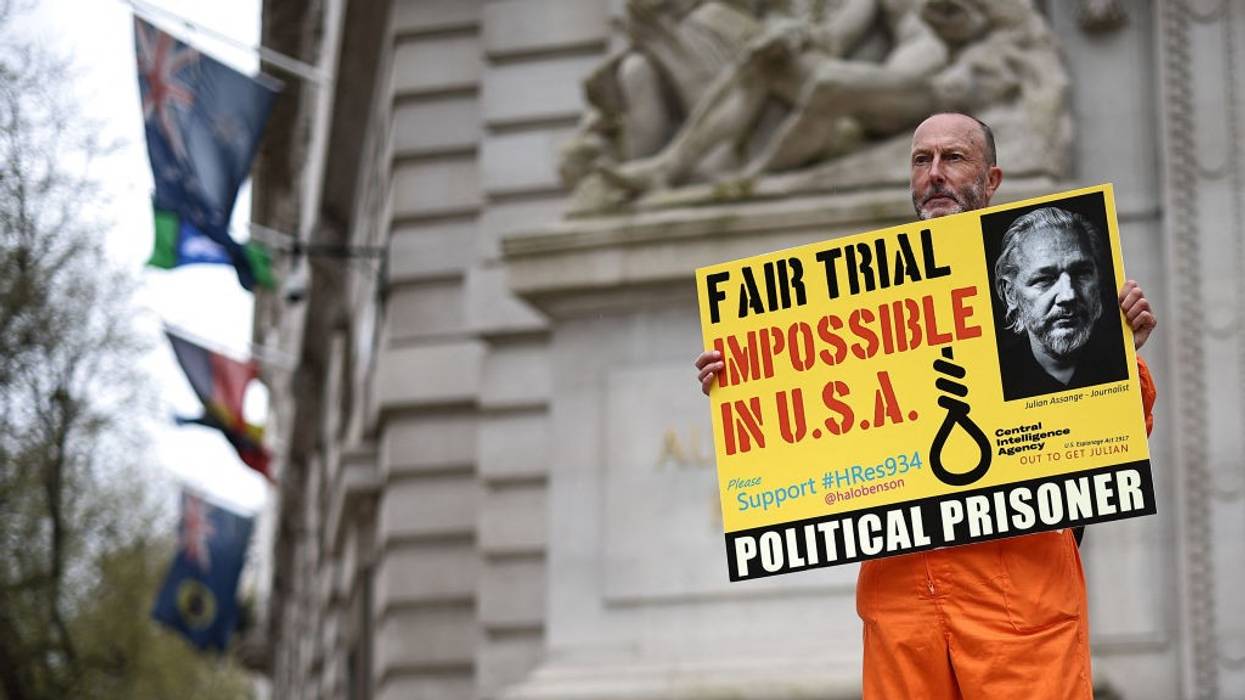
U.S. President Joe Biden on Wednesday said his administration is weighing the Australian government's requests to drop charges against WikiLeaks founder Julian Assange, who has been deprived of his freedom since 2010 and is currently jailed in London's notorious Belmarsh Prison while fighting extradition to the United States.
Asked by reporters at the White House about requests from Australian Prime Minister Anthony Albanese and members of the country's Parliament for the U.S. and United Kingdom to drop the extradition effort and charges against Assange—an Australian citizen—Biden said that "we're considering it."
Stella Assange, Julian's wife, responded to Biden's remarks on social media. "Do the right thing," she wrote. "Drop the charges. #FreeAssangeNOW."
Srećko Horvat, a Croatian philosopher and co-founder of the Democracy in Europe Movement 2025 pan-European progressive political party,
said that "this would be the best decision Biden ever made."
British journalist Afshin Rattansi
asked, "Why has Julian Assange been put through this ordeal in the first place?"
Assange—who is 52 years old and suffers from various health problems—faces multiple U.S. charges under the Espionage Act and Computer Fraud and Abuse Act for his role in publishing classified government documents, some of them revealing war crimes and other misdeeds. Among the files published by WikiLeaks are the "Collateral Murder" video—which shows a U.S. Army helicopter crew killing a group of Iraqi civilians—the Afghan and Iraq war logs.
Three U.S. administrations have pursued charges against Assange. During the administration of former President Donald Trump—who is the presumptive 2024 Republican nominee—officials including then-Secretary of State Mike Pompeo allegedly plotted to assassinate Assange to avenge WikiLeaks' publication of the "Vault 7" documents exposing CIA electronic warfare and surveillance activities. In 2010, Trump called for Assange's execution.
The U.K. High Court ruled last month that Assange could not be immediately extradited to the U.S., where he faces up to 175 years behind bars if convicted on all counts. The tribunal gave the Biden administration until April 16 to guarantee that Assange won't face the death penalty. Absent such assurance, Assange will be allowed to continue appealing his extradition.
Last month, Assange's legal team denied reports that a plea deal with the U.S. government may have been in the works.
Assange has been imprisoned in Belmarsh since 2019. Before that, he spent nearly seven years in the Ecuadorian Embassy in London, where he had been granted political asylum under the government of leftist former President Rafael Correa.
The United Nations Working Group on Arbitrary Detention
found in 2016 that Assange had been arbitrarily deprived of his freedom since his first arrest on December 7, 2010. In 2019, Nils Melzer, then the U.N.'s special rapporteur on torture, said Assange had been subjected to "psychological torture."
Following the High Court's decision last month, Amnesty International legal adviser Simon Crowther said that "the U.S. must stop its politically motivated prosecution of Assange, which puts Assange and media freedom at risk worldwide."
More than 100 lawyers endorsed the referral, which points to the military, intelligence, and rhetorical support Prime Minister Anthony Albanese has provided to the Israeli government.
Australian Prime Minister Anthony Albanese is one of several Western leaders who have provided political and material support of the Israeli government and military over the past five months as their bombardment of Gaza has killed more than 30,000 people, but on Monday he became the first to be referred to the International Criminal Court for being an "accessory to genocide."
More than 100 lawyers supported the referral under Article 15 of the Rome Statute, arguing that Albanese, a member of the Labor Party, as well as members of his Cabinet and of Parliament, have provided Israel with "rhetorical support in their public statements, their press conferences, their speeches" as well as material assistance, as attorney Sheryn Omeri told ABC's "News Breakfast."
Omeri said thee aid Australia has "most particularly" provided since Israel began attacking Gaza has been the export of F-35 fighter jet parts as well as military intelligence through the government's surveillance work at Joint Defense Facility Pine Gap in Australia's Northern Territory.
While Albanese has recently called on Israel to respect international law, said Omeri, "it's been months since the 7th of October, 2023, and between then and now there has been very little in the way of urging restraint on Israel and discouraging what the International Court of Justice found on the 26th of January was a plausible case of genocide."
The 92-page document compiled by the legal team lays out a number of specific ways Albanese and other Australian officials have acted as an accessory to genocide, including:
"The Rome Statute provides four modes of individual criminal responsibility, two of which are accessorial," Omeri explained in a statement.
Along with Albanese, U.S. President Joe Biden, British Prime Minister Rishi Sunak, and German Chancellor Olaf Scholz are among the Western leaders who have repeatedly defended Israel's actions in Gaza—despite the genocidal intent expressed in numerous public statements by Israeli leaders.
Biden was sued in federal court in January for alleged "complicity in the Israeli government's unfolding genocide." That case is still making its way through the U.S. appeals process.
U.S. and U.K. persecution of Assange has been continuous and severe.
Australian Prime Minister Anthony Albanese said during Prime Minister’s Questions on February 15, “This thing cannot just go on and on and on, indefinitely.”
The Prime Minister was addressing an action he took a day earlier, on Valentine’s Day. No, not his marriage proposal to his partner, Jodie Haydon (she said yes). He was explaining his support for a parliamentary motion that passed overwhelmingly, calling for the release of an Australian citizen, imprisoned WikiLeaks founder Julian Assange.
Albanese’s support builds on a growing demand from Australians across the political spectrum that the United Kingdom not extradite Assange to the United States, and for the U.S. to drop its espionage and hacking charges against him. Assange, who has been imprisoned in London’s notorious maximum-security Belmarsh Prison since 2019, has a court hearing in the UK.
Assange’s counsel, Jennifer Robinson, texted us on Thursday:
“The appeal next week could be Julian’s final appeal against U.S. extradition. If permission to appeal is denied, there are no further appeals available to us in the U.K.” If extradited, Assange faces up to 175 years in prison in the United States. Said Prime Minister Albanese, “Enough is enough.”
Prior to his imprisonment in Belmarsh, Julian Assange spent seven years cramped inside Ecuador’s small London embassy, where he’d been granted political asylum.
Assange founded WikiLeaks, a website that publishes leaked material while protecting the identity of the whistleblowers. While it launched in 2006, it wasn’t until 2010 that the U.S. government forcefully and publicly targeted Wikileaks and Assange, after Wikileaks made several massive disclosures of leaked documents related to the U.S. invasions and occupations of Iraq and Afghanistan.
On Monday, April 5, 2010, Julian Assange released a shocking video at the National Press Club in Washington, D.C. The video, which WikiLeaks titled “Collateral Murder,” was shot in 2007 from a U.S. military Apache helicopter flying over Baghdad, Iraq. The video shows in grainy black and white detail the gunship’s attack on a group of people on the ground. Twelve civilians, including two Reuters news employees, were mowed down by automatic fire from the helicopter. The voices of the crew were recorded, as they sought permission to “engage” with their targets, and as they laughed and cursed through the slaughter. It was a chilling video, documenting a war crime.
The video’s release was followed by the publication on Wikileaks.org of hundreds of thousands of digital records from the U.S. military, dubbed the Iraq War Logs and the Afghan War Diary. These documents provided further proof that the U.S. was committing war crimes. Some elected officials in the U.S. called for Assange to be assassinated. Then-Vice President Joe Biden called him a “high-tech terrorist.”
Not long after, the U.S. Justice Department convened a secret grand jury which issued a sealed indictment against Assange. Existence of that indictment itself was revealed on WikiLeaks, in a subsequent leak, in 2012. U.S. and U.K. persecution of Assange since then has been continuous and severe. In 2017, as revealed in 2021 by journalist Michael Isikoff and colleagues, the CIA hatched plans to either kidnap Assange from the Ecuadorian embassy or even to assassinate him.
Andrew Wilkie, an independent member of the Australian Parliament from Tasmania, introduced the resolution in support of Assange this week, saying, “This House notes that on 20 and 21 February 2024, the High Court of Justice in the United Kingdom will hold a hearing into whether Walkley Award-winning journalist Julian Assange can appeal against his extradition to the United States of America… both the Australian Government and Opposition have publicly stated that this matter has gone on for too long; and underlines the importance of the U.K. and USA bringing the matter to a close so that Mr Assange can return home to his family in Australia.”
The Australian government is not alone in calling for Assange’s release. In November, 2022, five major newspapers that collaborated with WikiLeaks—The New York Times, The Guardian, Le Monde, El Pais, and Der Spiegel—released a joint letter calling for an end to the prosecution. “Obtaining and disclosing sensitive information when necessary in the public interest is a core part of the daily work of journalists. If that work is criminalized, our public discourse and our democracies are made significantly weaker,” the letter read.
Assange’s attorney Jennifer Robinson will be in the London court for the hearing. She told us, “We have been saying for years: This is a political case which requires a political solution. The unprecedented showing of political support in the Australian Parliament overnight shows that Julian’s case is a priority for the Australian government, our parliament, and the people. The U.S. should listen to the concerns of its ally—and drop the case.”
Leaders from Australia, Canada, and New Zealand emphasized that the ICJ's provisional decision is "binding," the need for humanitarian aid "has never been greater," and an Israeli assault on Rafah "would be catastrophic."
With mounting fears of an Israeli assault on Rafah and the Gaza Strip's death toll already topping 28,500, the prime ministers of Australia, Canada, and New Zealand on Thursday issued a joint statement with demands including a cease-fire, while U.S. President Joe Biden continued to resist mounting pressure to do the same.
Prime Ministers Anthony Albanese of Australia, Justin Trudeau of Canada, and Christopher Luxon of New Zealand began by urging the Israeli government not to attack Rafah, warning it "would be catastrophic," given the "already dire" humanitarian crisis across Gaza and approximately 1.5 million Palestinians crammed into the city.
"A sustainable cease-fire is necessary to finding a path towards securing lasting peace for Israelis and Palestinians."
The trio—who had previously put out a joint statement in December—highlighted the "growing international consensus" that there must be a cease-fire after over four months of a war that Israeli Prime Minister Benjamin Netanyahu declared in retaliation for the October 7 Hamas-led attack on Israel, which killed over 1,100 people.
As the BBC reported Thursday, French President Emmanuel and German Foreign Minister Annalena Baerbock have also expressed opposition to attacking Rafah, while Ireland and Spain have asked the European Commission "to examine 'urgently' whether Israel is complying with its human rights obligations in Gaza under an accord linking rights to trade."
According to Albanese, Trudeau, and Luxon:
Israel must listen to its friends and it must listen to the international community. The protection of civilians is paramount and a requirement under international humanitarian law. Palestinian civilians cannot be made to pay the price of defeating Hamas.
An immediate humanitarian cease-fire is urgently needed. Hostages must be released. The need for humanitarian assistance in Gaza has never been greater. Rapid, safe, and unimpeded humanitarian relief must be provided to civilians. The International Court of Justice has been clear: Israel must ensure the delivery of basic services and essential humanitarian assistance and must protect civilians. The court's decisions on provisional measures are binding.
Since the court last month ordered Israel to "take all measures within its power" to uphold its obligations under the Genocide Convention as the South Africa-led case moves forward, Israeli forces have killed thousands of more people in Gaza.
"A sustainable cease-fire is necessary to finding a path towards securing lasting peace for Israelis and Palestinians," the three leaders argued. "Any cease-fire cannot be one-sided. Hamas must lay down its arms and release all hostages immediately. We again unequivocally condemn Hamas for its terror attacks on Israel on October 7."
"Ultimately, a negotiated political solution is needed to achieve lasting peace and security," they concluded. "Australia, Canada, and New Zealand remain steadfast in their commitment to a two-state solution, including the creation of a Palestinian state alongside Israel, where Palestinians and Israelis live side by side in peace, security, and dignity."
Officials from the United States, Qatar, and Egypt have been negotiating a possible exchange of hostages taken on October 7 and Palestinians imprisoned in Israel as well as a pause in fighting. On Wednesday, The New York Times reported that "those talks are still underway in Cairo, but, according to Israeli news outlets, Mr. Netanyahu told Israel's representatives not to return to Cairo."
Netanyahu has not publicly confirmed the move but said in a statement Wednesday that "strong military pressure and very tough negotiations" are "the key to freeing more of our hostages." He added: "Indeed, I insist that Hamas drop its delusional demands. When they do so, we will be able to move forward."
While Biden has publicly called out Israel's "indiscriminate bombing" of Gaza and privately expressed frustrations with Netanyahu—reporting the White House contests—his administration has also bypassed Congress to arm Israeli forces and asked federal lawmakers for a $14.3 billion package on top of the $3.8 billion in annual U.S. military aid to Israel.
Like the trio of prime ministers, Win Without War executive director Sara Haghdoosti stressed in Thursday statement that Israel's looming "full-scale attack on Rafah would be catastrophic," though she added that "the U.S. is likely the only government in the world that could sway the Israeli government to not move forward with this plan."
The vote "gives the government a real mandate to advocate very, very strongly for a political solution to bring Julian Assange home," said the journalist's brother.
As WikiLeaks founder Julian Assange awaits a two-day hearing before the United Kingdom's High Court next week on his possible extradition to the United States, lawmakers in his home country of Australia voted Wednesday in favor of pushing the U.S. and U.K. to allow Assange to return home instead.
"Enough is enough," said Australian Prime Minister Anthony Albanese regarding the U.S. case against Assange, who published thousands of classified diplomatic and military documents in 2010 that included evidence of U.S. war crimes. "This thing cannot just go on and on and on indefinitely."
The prime minister joined 85 other lawmakers in voting for a motion proposed by Andrew Wilkie, an Independent member of the country's House of Representatives, to demand that the U.S. and U.K. drop the extradition effort and bring the case against Assange "to a close so that Mr. Assange can return home to his family in Australia."
Forty-two lawmakers opposed the measure.
Assange has been held at London's high-security Belmarsh Prison for the past five years, having been arrested for skipping bail in a separate legal matter.
In the U.S., he faces 17 espionage charges over WikiLeaks' publication of the classified documents.
In 2021, a U.K. judge ruled that the U.S. could not extradite Assange on the charges, saying prison conditions in the U.S. would endanger Assange's life. The journalist's physical and mental health has been in decline since his imprisonment, and he has suffered a mini-stroke, severe depression, and suicidal ideation, according to his attorneys.
The Biden administration appealed the decision, and the following year a court ruled that the extradition could proceed.
The High Court is set to hear Assange's case on February 20-21 to determine whether he should be granted a full appeal to challenge his extradition, and his family and other supporters fear that if he loses the appeal, the U.K. could send him to the U.S. before he has a chance to appeal to the European Court of Human Rights.
Assange's wife, Stella Assange, said at a news conference on Thursday that the journalist could be on a plane to the U.S. "within days" if he loses the case.
"If he is extradited, he will die," she said.
On Wednesday, Amnesty International reiterated its call for the charges against Assange to be dropped, citing both "the risk of serious human rights violations" against him if he is held in the U.S. prison system and "a profound 'chilling effect' on global media freedom."
"The risk to publishers and investigative journalists around the world hangs in the balance. Should Julian Assange be sent to the U.S. and prosecuted there, global media freedoms will be on trial, too," said Julia Hall, Amnesty International's expert on counter-terrorism and criminal justice in Europe. "The public's right to information about what their governments are doing in their name will be profoundly undermined. The U.S. must drop the charges under the Espionage Act against Assange and bring an end to his arbitrary detention in the U.K."
Albanese said it is generally "not up to Australia to interfere in the legal processes of other countries, but it is appropriate for us to put our very strong view that those countries need to take into account the need for this to be concluded."
Speaking before Parliament ahead of the vote, Wilkie urged his colleagues to "stand for media freedom and the rights of journalists to do their jobs."
"Regardless of what you might think of Julian Assange," he said, "this has gone on too long... It must be brought to an end. And I'm confident that this Parliament can support this motion... It will send a very powerful political signal to the British government and the U.S. government."
Gabriel Shipton, Assange's brother, applauded Parliament for their show of support "at a crucial time" and said the vote "gives the government a real mandate to advocate very, very strongly for a political solution to bring Julian Assange home."
"World leaders attending COP28 this week should take note that the mass protest in New South Wales is not an isolated incident but part of a global pushback for change now," said one campaigner.
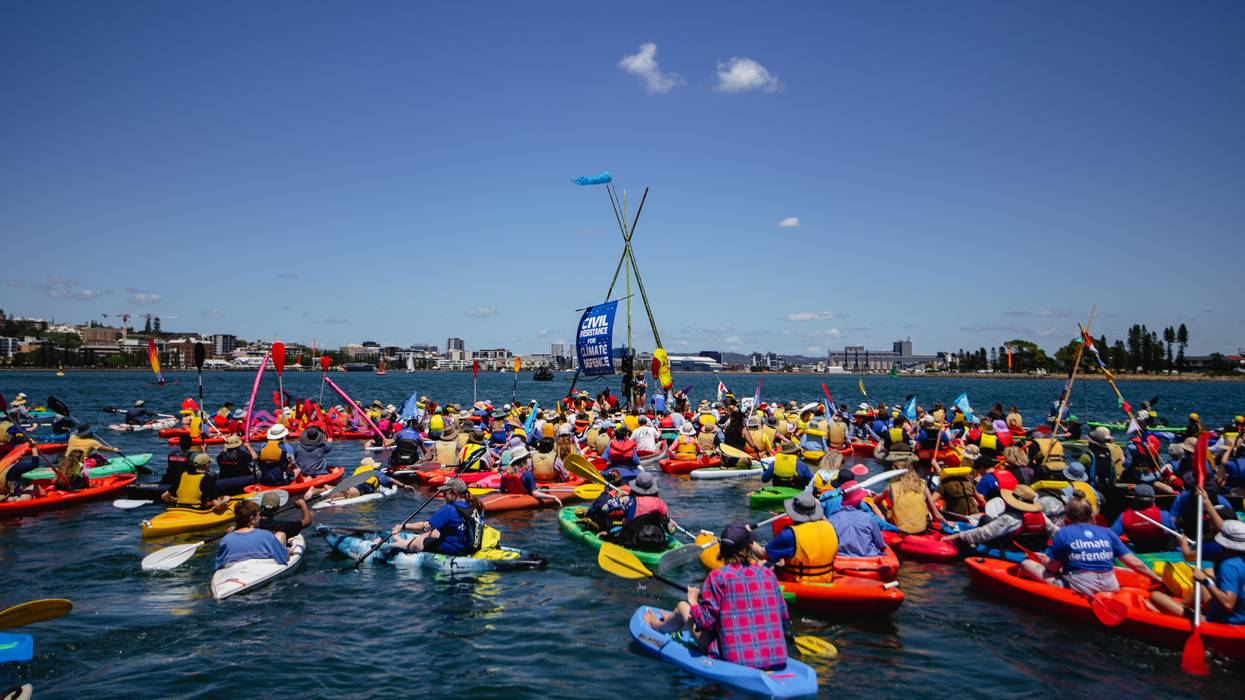
More than 100 climate defenders were charged Monday in New South Wales, Australia after using kayaks or swimming to blockade the coal port at Newcastle—the world's largest—to demand an end to fossil fuels as petrostate United Arab Emirates prepares to host the United Nations Climate Change Conference later this week.
New South Wales police said 109 people were arrested after paddling kayaks or swimming into the shipping lane servicing coal cargo at the Port of Newcastle during a 30-hour protest on Saturday and Sunday. The arrested activists were all charged with operating a vessel so as to interfere with others' use of waters.
The climate action group Rising Tide Australia, which led the action, said it would keep holding protests until federal and state governments take meaningful climate action.
"That's the choice we are giving government, either do your job and take on the industry that's causing the crisis, or people will continue to put themselves in situations like this," Rising Tide spokesperson Zack Schofield told ABC Newcastle.
Among those arrested was 97-year-old church minister Alan Stuart, who told SBS News that he engaged in civil disobedience "for my grandchildren and for future generations because I don't want to leave them with a world full of increasingly severe, frequent national disasters because of climate change."
Anjali Beames, an activist with the School Strike for Climate movement started in Sweden by Greta Thunberg, was also arrested.
"My future is getting sold by the fossil fuel industry for profit, and I'm not going to sit idly by while that happens, it's the Australian government's failure to act," Beames told SBS News.
"We know that the climate crisis is here and now, and if there's any hope of mitigating the consequences and saving people's lives, we have to stop new fossil fuel projects, and that includes new coal," she added.
The New South Wales Council for Civil Liberties (NSWCCL) said several of the group's legal observers were arrested and charged along with the protesters. The group said its personnel "were easily identifiable by wearing pink high-visibility jackets with 'Legal Observers' written across the vest in large black letters."
NSWCCL president Lydia Shelly said that "the charges against the legal observers should be immediately withdrawn."
"It is not in the public interest for these charges to proceed," Shelly added. "If the charges are not withdrawn, it risks sending a dangerous message to the public that NSW police do not want their interactions or conduct with peaceful protestors monitored by independent organizations."
Referring to the U.N. Climate Change Conference slated to start Thursday in Dubai, Amnesty International Pacific researcher Kate Schuetze said in a statement Monday that "while it is deeply discouraging to see this kind of outcome after peaceful protests on the climate crisis days before COP28, it is also hugely inspiring to see the creativity, ingenuity, and solidarity of the protesters who took to kayaks to oppose climate inaction."
"World leaders attending COP28 this week should take note that the mass protest in New South Wales is not an isolated incident but part of a global pushback for change now," Schuetze continued. "People will not stay silent when climate upheaval threatens their futures."
New South Wales Premier Chris Minns of the center-left Labor Party dismissed the protesters' climate concerns, noting on Monday that "not only is the extraction and sale and export of minerals in NSW legal, it's our single biggest export."
"If we don't take some of the royalties from coal export, we will not meet our renewable energy targets in NSW," Minns added. "We won't even come close."
Alexa Stuart, an organizer of the protest and Alan Stuart's granddaughter, told SBS News that the Australian government's climate inaction forced climate campaigners' hands.
"We wish we did not have to do this but the Albanese government needs to understand we are serious," she said, referring to Labor Australian Prime Minister Anthony Albanese, a supporter of Australia's nearly U.S. $40 billion coal industry.
"If Australia today said we are not going to export any more coal, [it] wouldn't lead to a reduction in global emissions," Albanese said last year, rejecting Australian Greens' calls for a fossil fuel export moratorium. "What you would see is a replacement with coal from other countries that's likely to produce higher emissions… because of the quality of the product."
Still, Australian Climate Change Minister Chris Bowen claims the government's COP28 delegation will bring to Dubai evidence proving the country is on track to meet its target of a 43% reduction in carbon emissions by 2030.
Kelly O'Shanassy, chief executive of the Australian Conservation Foundation, told The Guardian on Saturday that "the Albanese government is taking genuine steps to reduce carbon emissions at home, while enabling the increased and indefinite export of coal and gas to other countries."
"It doesn't matter where the coal and gas is burnt," O'Shanassy added. "Australian fossil fuels are supercharging climate damage, fueling heatwaves, bushfires, and coral bleaching."
"We believe the right and best course of action would be for the United States' Department of Justice to cease its pursuit and prosecution of Julian Assange."
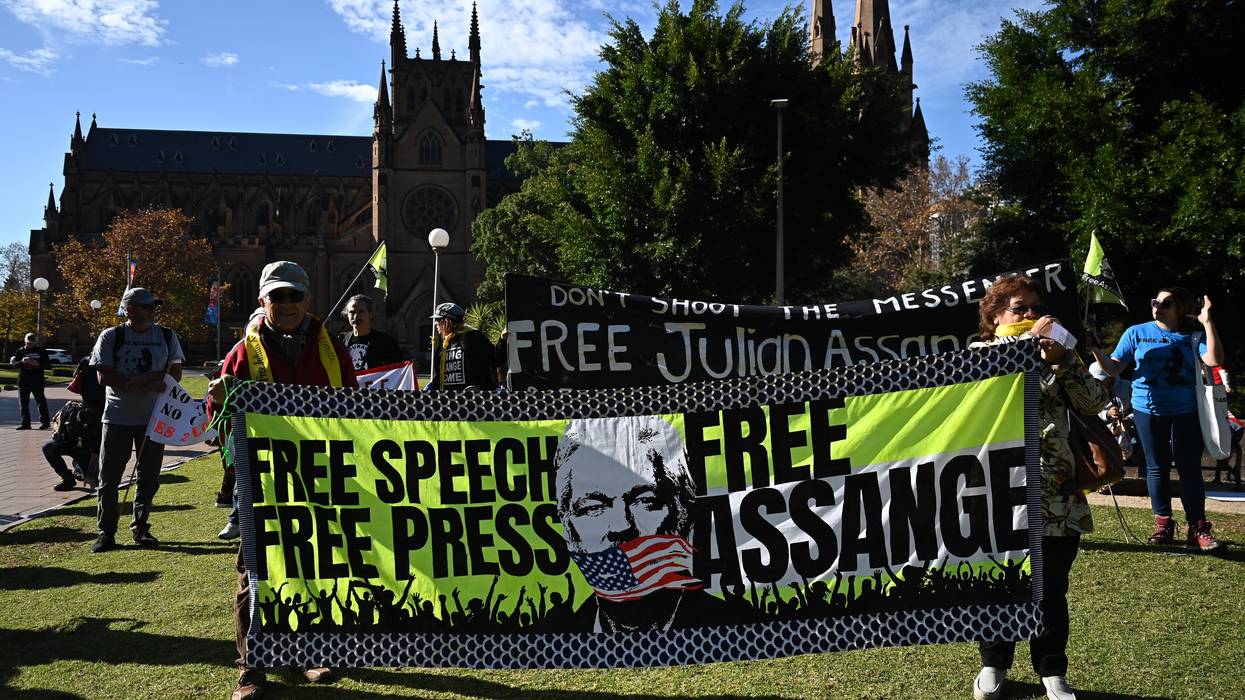
As a cross-party delegation of Australian politicians headed to Washington, D.C. on Tuesday to pressure the U.S. government to end its yearslong pursuit of jailed WikiLeaks founder Julian Assange, dozens of parliamentarians from Down Under expressed support for the diplomatic trip.
"We are resolutely of the view that the prosecution and incarceration of the Australian citizen Julian Assange must end," states a letter signed by 64 Australian senators and members of Parliament, which was shared with journalists last week and published on Tuesday as a full-page advertisement in The Washington Post.
"We agree entirely with the position expressed by the Australian Prime Minister Anthony Albanese," they wrote, pointing out that the Australian Labor Party leader—who is set to visit D.C. next month—said in May that "enough is enough when it comes to the ongoing incarceration of Julian Assange and that nothing is served from the ongoing incarceration of Julian Assange."
Assange lived at the Ecuadorian Embassy in London from 2012 until 2019, when Ecuador withdrew his asylum protections and he was arrested by British authorities. He remains imprisoned in the United Kingdom while fighting extradition to the United States, where he faces Espionage Act charges for obtaining and publishing leaked material from American whistleblower Chelsea Manning.
"Let there be no doubt that if Julian Assange is removed from the United Kingdom to the United States there will a sharp and sustained outcry in Australia," warns the letter, which also applauds the U.S. academics, civil society groups, human rights advocates, journalists, and lawmakers who have demanded freedom for the 52-year-old.
"We believe the right and best course of action would be for the United States' Department of Justice to cease its pursuit and prosecution of Julian Assange," the letter says. "Alternatively, a decision to simply abandon the extradition proceedings would have the sensible, just, and compassionate effect of allowing Mr Assange to go free from a prolonged and harsh period of high-security detention. It is well and truly time for this matter to end, and for Julian Assange to return home."
The letter was led by co-convenors of the Bring Julian Assange Home Parliamentary Group: Liberal MP Bridget Archer, Independent MP Andrew Wilkie, Labor MP Josh Wilson, and Greens Sen. David Shoebridge. Joining Shoebridge for the U.S. trip are Liberal Sen. Alex Antic, Nationals MP Barnaby Joyce, Independent MP Monique Ryan, Greens Sen. Peter Whish-Wilson, and Labor MP Tony Zappia.
"Members of the delegation have different reasons for wanting the U.S. to drop the charges against Assange, from characterizing him as a brave truth-teller to the broader fear, stressed by Joyce, that allowing the extradition of someone who hasn't been accused of wrongdoing in their country of citizenship would set a precedent that China, among other countries, might exploit," Jon Allsop noted last week in the Columbia Journalism Review. "Even Joyce, however, has echoed the argument of press freedom groups that the charges against Assange would effectively criminalize information-gathering and publishing practices that news organizations routinely engage in."
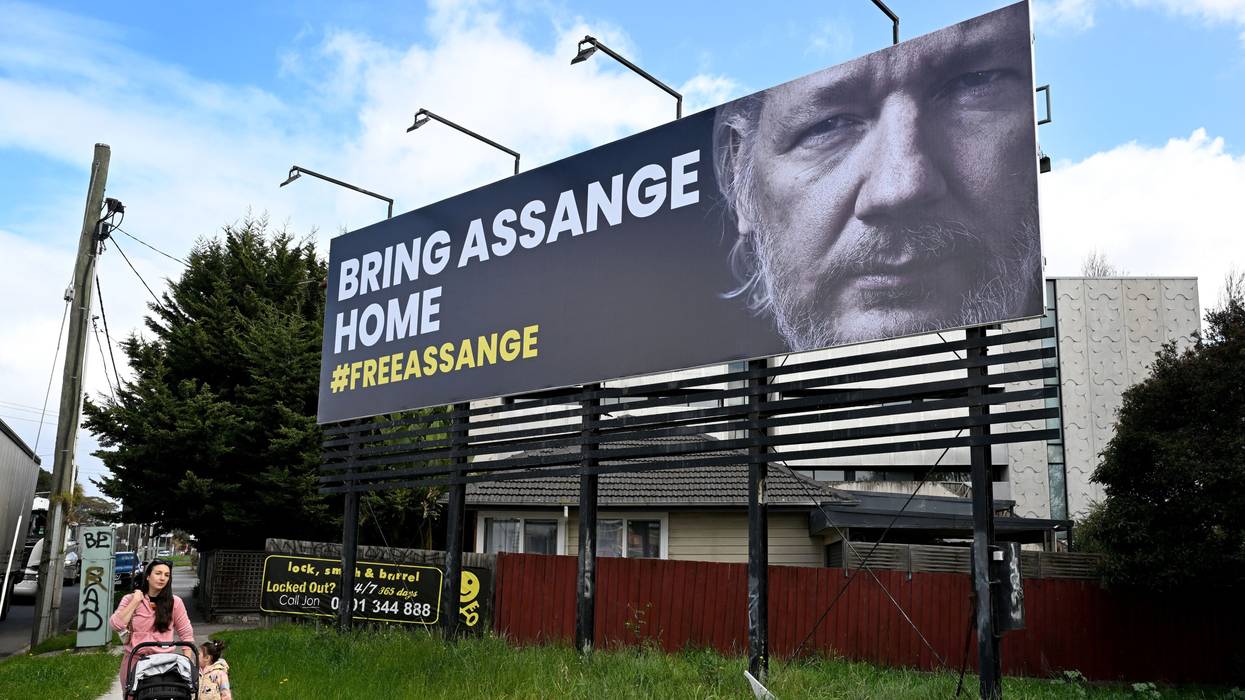
Gabriel Shipton—the WikiLeaks founder's brother and chair of the Assange Campaign, which raised money for the delegation's trip—told Allsop that the visit "will be pivotal" in creating "the political space" for Albanese to pressure U.S. President Joe Biden to let Assange return home when the prime minister travels to the United States in late October.
"The time to act to save Julian is now," Shipton said in a statement. "We have faith that the group's message will be heard in Washington, D.C. and officials will abandon attempts to extradite Julian to the United States in relation to unprecedented allegations of espionage."
"Julian's physical and mental health continue to deteriorate each minute he spends in prison," his brother added.
Shoebridge said last week that "the reason we are going is that Julian Assange is facing an unprecedented situation," and "the core crime he faces is the crime of being a journalist."
"We are hopeful that [in] the partisan world of Washington politics, such a broad cross-party visiting group will have some political cut through," the senator added. "We are at a critical point. In a matter of weeks Julian Assange could be put on a plane, in shackles, and sent to the U.S."