

SUBSCRIBE TO OUR FREE NEWSLETTER
Daily news & progressive opinion—funded by the people, not the corporations—delivered straight to your inbox.
5
#000000
#FFFFFF
To donate by check, phone, or other method, see our More Ways to Give page.
Daily news & progressive opinion—funded by the people, not the corporations—delivered straight to your inbox.
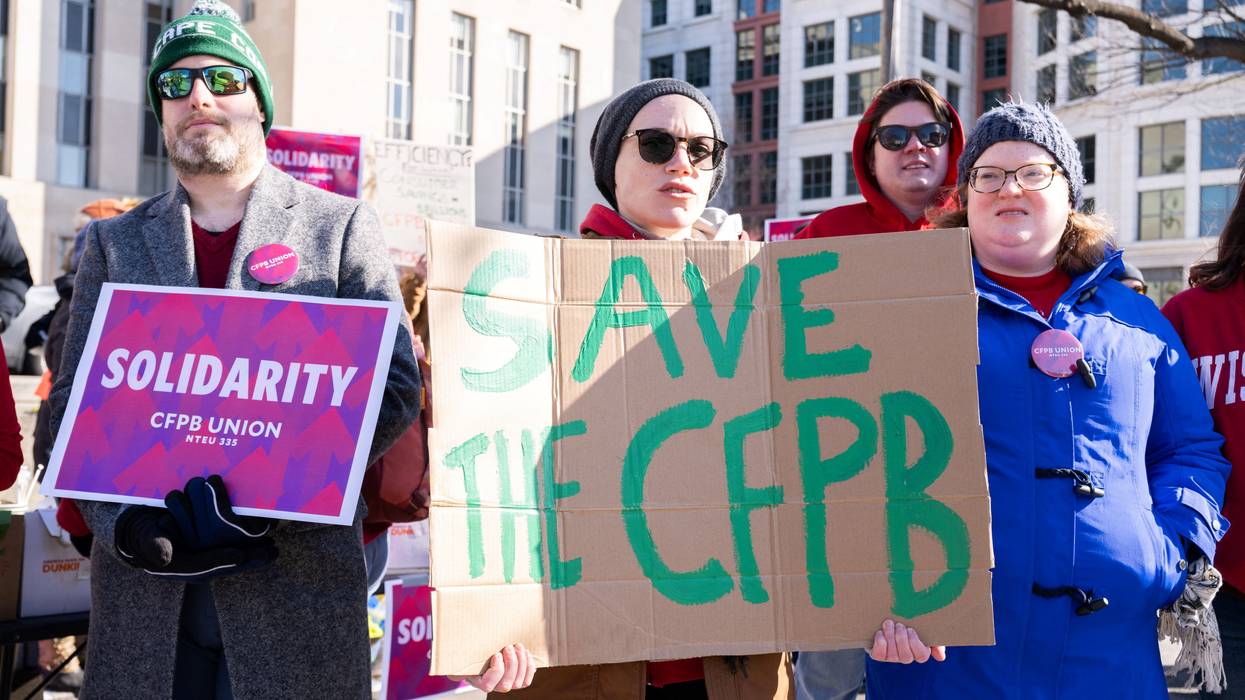
"It's clear that the mission of Elon Musk and his DOGE crew has nothing to do with reducing 'waste, fraud, and abuse,' and everything to do with lining their own pockets at the expense of working people," said one advocate.
Several watchdog and advocacy groups are demanding the acting inspector general of the U.S. Consumer Financial Protection Bureau investigate potential conflicts of interest between the Department of Government Efficiency employees who have been involved in mass layoff efforts at the U.S. Consumer Financial Protection Bureau, with a focus on one DOGE aide in particular.
The groups behind the letter, which is dated May 8, include Accountable.US, Public Citizen, Project On Government Oversight, and others.
Twenty five-year-old software engineer Gavin Kliger was detailed to work at the the CFPB starting in March as part of DOGE operations to downsize the agency, according to ProPublica.
The investigative outlet reported that Kliger holds stock in companies "that could benefit from the agency's dismantling" but went on to help oversee mass layoffs at the CFPB, despite objections reportedly raised by ethics attorneys at the agency.
The CFPB, an agency created in the aftermath of the 2008 financial crisis to protect consumers from deceptive or unfair practices in the consumer financial space, bars employees from owning holdings in specific firms—a list that "is tailored to include only businesses that are subject to examination by the bureau." That list is in addition to ethics regulations in place at other financial regulatory agencies and those that apply to executive branch employees more generally.
In April, ProPublica reported that Kliger owns up to $365,000 worth of shares in Apple Inc., Tesla Inc. and two cryptocurrencies. Apple and Tesla are on the list of prohibited holdings. The two cryptocurrencies, Bitcoin and Solana, are not on that list but "are nevertheless barred under agency guidance on investing in cryptocurrency firms," according to ProPublica.
In May, the outlet reported that further review of his public financial report showed that Kliger has even more holdings in companies that are on that prohibited holdings list. "Kliger also disclosed owning as much as $350,000 worth of stock in Google parent Alphabet Inc., Warren Buffett's Berkshire Hathaway and the Chinese e-commerce company Alibaba," the reporting states.
Pointing to court records and government emails, ProPublica reported that Kliger was indeed involved in overseeing layoffs of more than 1,400 employees at the CFPB. A spokesperson for the White House repeatedly told ProPublica that Kliger "did not even manage" the layoffs, "making this entire narrative an outright lie."
Those layoffs are currently tied up in litigation.
Kliger departed the CFPB last week, according to Bloomberg Law.
"Americans expect that those who serve in office are looking out for the public interest, not their own bottom line," said Accountable.US executive director Tony Carrk in a statement on Monday. "Clearly, the Trump administration is more focused on self-enrichment schemes and making it easier for corporate special interests to take advantage of regular Americans than it is on bringing down skyrocketing costs. The CFPB inspector general must investigate this matter immediately."
Mike Pierce, executive director of another group behind the letter, the Student Borrower Protection Center, added that "it's clear that the mission of Elon Musk and his DOGE crew has nothing to do with reducing 'waste, fraud, and abuse,' and everything to do with lining their own pockets at the expense of working people."
In the letter, the groups point to ProPublica's reporting about Kliger's holdings, note that CFPB employees are barred from owning holdings in specific companies, and cite federal law that forbids executive branch employees from participating in matters affecting their own personal financial interests.
The letter also links to research from the Student Borrower Protection Center which explores how Musk could also benefit from a less powerful CFPB.
"We urge you to swiftly investigate these clear conflicts of interest violations of Trump administration officials acting in their own personal financial interest, and we look forward to your prompt response on this matter," concludes the letter.
According to Politico, which first reported on the letter, spokespeople with the Office of Personnel Management, CFPB, and DOGE did not respond to requests for comment.
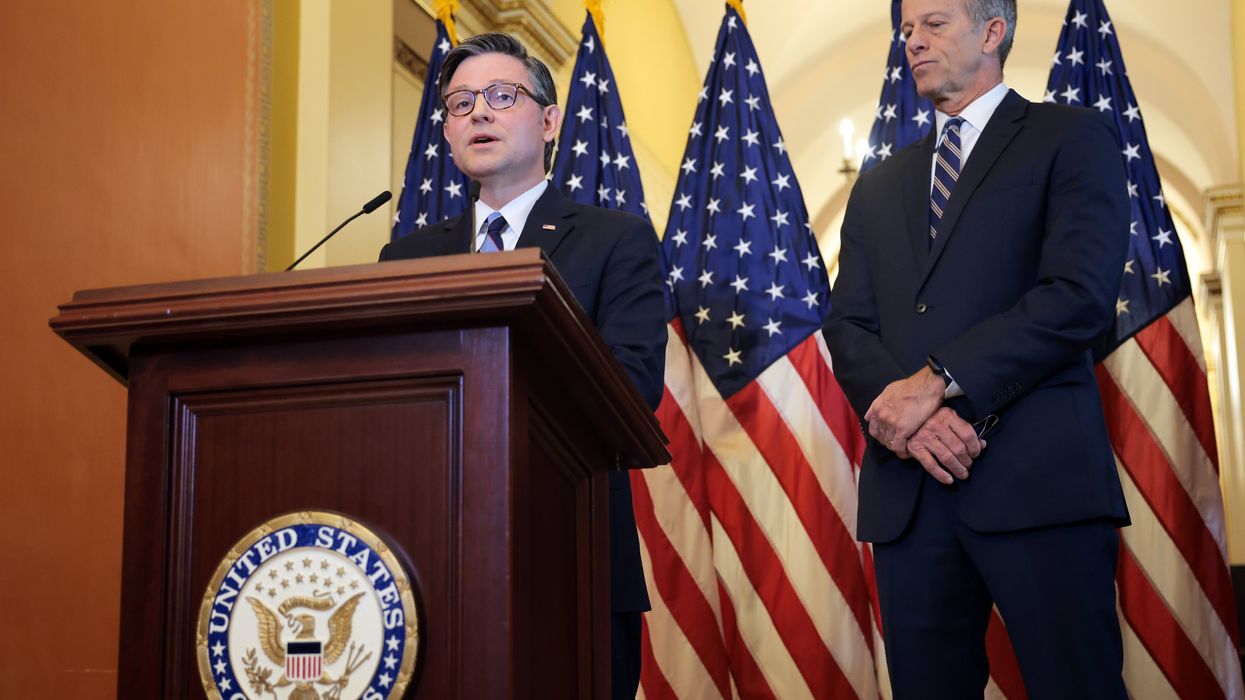
"Put simply: at a time when costs continue to rise for everyday Americans, this tax day, Congressional Republicans aren't focused on making their constituents' lives better," said one watchdog.
To honor Tax Day, a watchdog group is highlighting research showing how 70% of congressional Republicans may see personal financial benefit from the party's tax plan, now making its way through Congress, which would likely be paid for in part by deep cuts to Medicaid and through cuts to the Supplemental Nutrition Assistance Program (SNAP).
According to Accountable.US, a progressive research and advocacy group, "270,000 households in many of the lowest-income Republican congressional districts could lose SNAP benefits while their representatives potentially save millions."
"While millions prepare their returns, the Trump administration and their lackeys in Congress are eagerly seeking a way to rob their constituents of vital services and pay for tax giveaways to themselves, their billionaire donors, and mega corporations," Tony Carrk, the group's executive director, said in a statement Tuesday.
"Put simply: at a time when costs continue to rise for everyday Americans, this tax day, Congressional Republicans aren't focused on making their constituents' lives better; instead they’re focused on gutting programs Americans rely on and cutting taxes for those doing just fine."
As part of its spending and tax plan, Republicans are aiming to extend expiring provisions of Trump's 2017 Tax Cuts and Jobs Act, a move that would disproportionately benefit the wealthy.
The provisions set to expire include a 20% deduction for "pass-through" businesses—whose owners report their share of profits as taxable income under the individual income tax—and the current estate tax exemption amount. If the estate tax TCJA exemption were to expire, the exemption would drop down to $7 million per individual, meaning more millionaires would be forced to pay federal estate tax.
Senate Majority Leader John Thune (R-S.D) also recently endorsed a full repeal of the estate tax, which is a tax applied to assets inherited by others when a wealthy person dies.
The pass-through deduction and estate tax are two benefits that are tilted toward the wealthy, according to Accountable.US, which focused on these two benefits when building their "Cash in Congress" database.
To compile the data, the group looked at lawmakers' most recent federal annual disclosure, and counted them within the 70% of lawmakers set to gain from the tax plan if they are set to benefit from the pass-through deduction.
Some lawmakers are also poised to benefit from keeping the TCJA estate tax exemption amount in place. According to Accountable.US, 18% of Republican House members and 28% of Senate Republicans are wealthy enough that they are currently subject to the estate tax. They would also pay even less in estate taxes if the provision was fully repealed.
Specifically, the 10 wealthiest House Republicans are threatening Medicaid access for 1.7 million of their own constituents, among the poorest in their districts, according to a statement from the group when they launched the database last week.
Accountable.US also highlights the situation of individual members who may benefit.
Rep. Diana Harshbarger (R-Tenn.) is a member of the House Energy and Commerce Committee, which is tasked with coming up with spending cuts that will likely impact Medicaid. Per Accountable.US, she could benefit from the repeal of the estate tax after reporting over $40 million in assets on her most recent annual financial disclosure.
Meanwhile, according to the group, her district has a median household income that is over 20,000 below the U.S. median household income, and 14.3% of adults have income below the poverty line. Over 35,000 of the households she represents receive SNAP benefits.
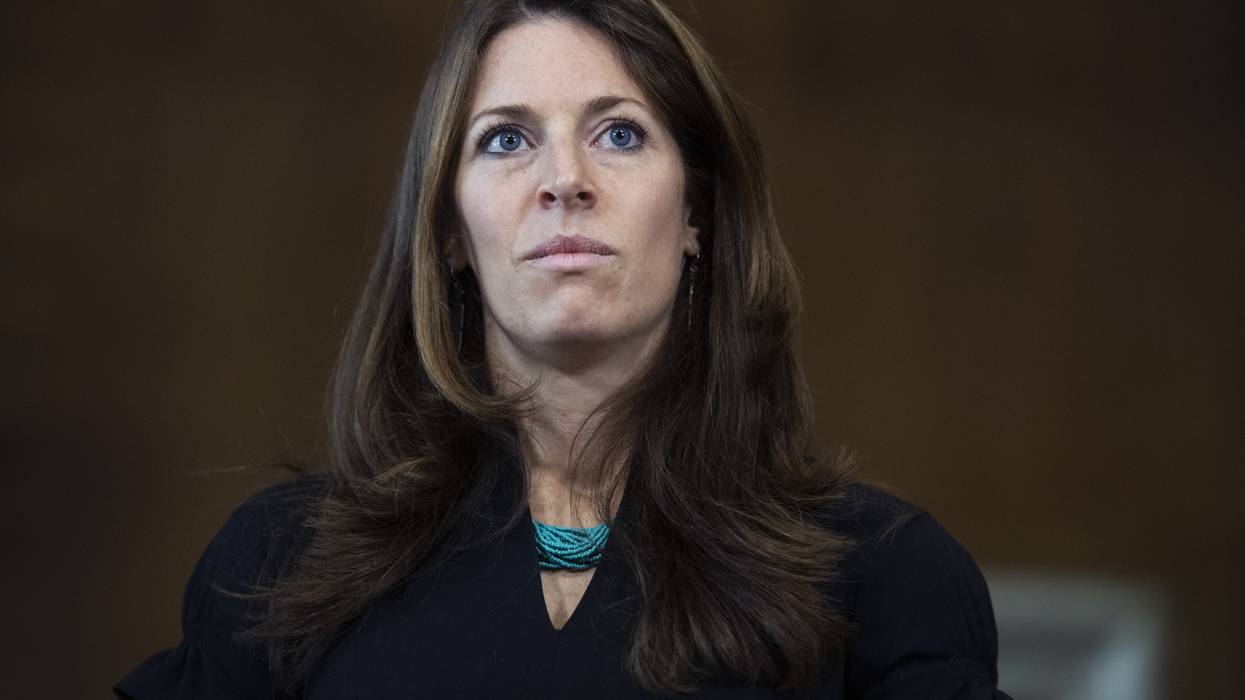
The Trump administration is "plotting to sell off America's national public lands to their billionaire friends, and Kate MacGregor is the perfect henchwoman."
Watchdog groups are warning that U.S. President Donald Trump's pick for deputy secretary of the U.S. Department of the Interior, Kate MacGregor—who they call a friend of the fossil fuel industry—will be an enthusiastic accomplice in the Trump administration's efforts to open up public land to oil and gas leasing.
Trump, Interior Secretary Doug Burgum, and Trump's billionaire adviser Elon Musk "are plotting to sell off America's national public lands to their billionaire friends, and Kate MacGregor is the perfect henchwoman," said Alan Zibel, a research director with the watchdog Public Citizen, in a statement on Wednesday.
MacGregor, an energy company executive who was deputy secretary of the Department of the Interior during the first Trump administration from early 2020 until January 2021 had her confirmation hearing Wednesday before the Senate Energy and Natural Resources Committee.
Oil Change International's U.S. campaign manager Collin Rees blasted MacGregor over her testimony, including support for legislation co-sponsored by Sen. Cindy Hyde-Smith (R-Miss.) that would require the Interior Department to hold two offshore oil and gas lease sales per year for 10 years.
MacGregor's previous time in the Interior Department, showed she "prioritized fossil fuel interests over the good of the American people."
"Her support for a decade of at least two offshore oil and gas lease sales is completely incompatible with avoiding the worst impacts of the climate crisis, as well as the Department of Interior's mandate to protect public lands and waters," Rees said.
In 2017, as an aide to then-Interior Secretary Ryan Zinke, MacGregor helped successfully fast track a permit for an oil firm to begin fracking on a patch of farmland in Oklahoma, according to 2019 reporting from the investigative outlet Reveal.
"While a senior staffer of the House Committee on Natural Resources, she developed strong ties to the energy industry and its lobbyists," according to Reveal. "In recent years, she has also built a public profile as an advocate of offshore oil drilling and a foe of any environmental rules that might limit energy production."
According to a record of her work calendar, which was obtained via a Freedom of Information Act request by the nonprofit publication Pacific Standard, MacGregor met over 100 times with extractive industry groups or representatives between January of 2017 and January of 2018, when she was at the Department of the Interior but not yet the deputy secretary.
Pointing to MacGregor's background, executive director of the watchdog Accountable.US Tony Carrk said that with MacGregor's nomination, Trump "continues to build a dream team of big oil and gas shills to ravage America's public lands, while taxpayers and our environment deal with all the fallout."
Zibel of Public Citizen also noted that "public lands belong to all Americans, not wealthy corporate executives."
Meanwhile, Public Citizen is also sounding the alarm on the expected appointment of Matt Giacona, a lobbyist for the National Ocean Industries Association—which represents oil, gas, and wind companies working offshore—to head the Department of Interior's Bureau of Ocean Energy Management (BOEM). The current person leading BOEM is retiring, according to Politico Pro.
In response to the potential appointment of Giacona to BOEM, which oversees offshore energy production in deep waters, director of Public Citizen's energy program Tyson Slocum on Wednesday said: "Trump Appointing a Big Oil lobbyist to oversee deep water oil drilling in the Gulf of Mexico shows that the administration's goal is to empower and enrich powerful corporations at the expense of everyone and everything else."
"This continues the clear trend of Trump turning federal agencies and the public good into profit opportunities for powerful corporate interests," he said.
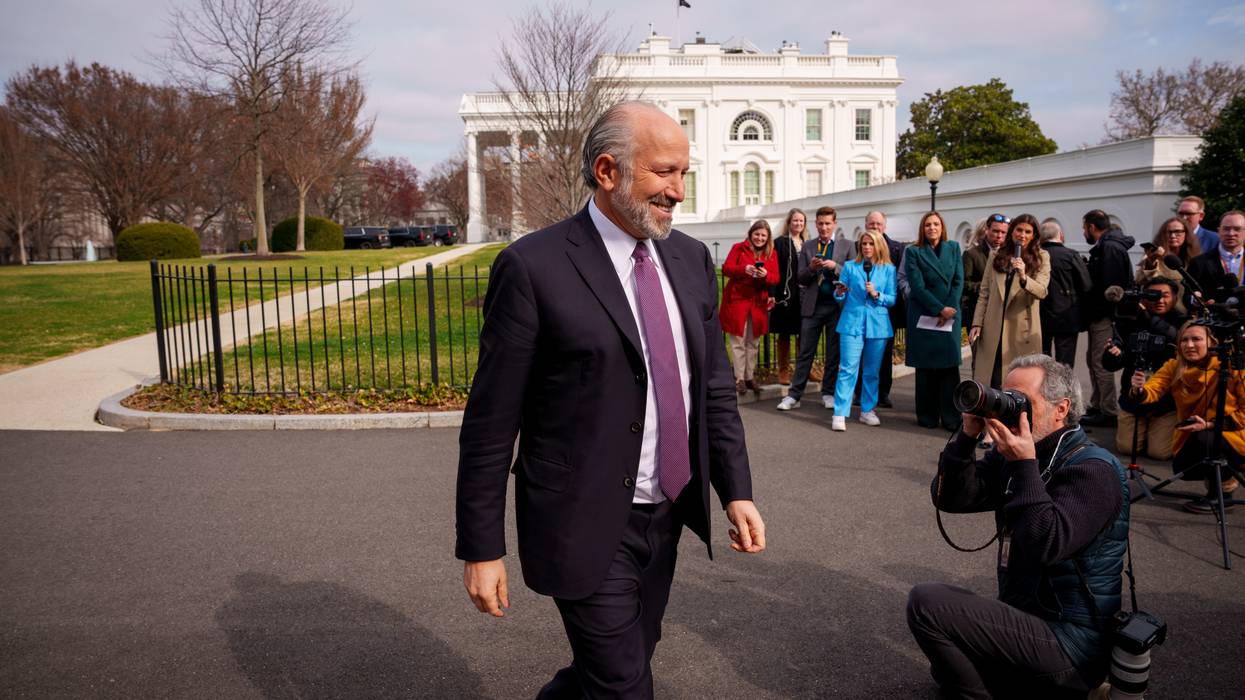
"While working people keep waiting for a single specific policy from the president to deal with exploding costs, his administration instead hatched an official crypto policy scheme that could conveniently enrich many top Trump officials," said one watchdog.
Last week, U.S. President Donald Trump signed an executive order creating both a "Strategic Bitcoin Reserve" and a "Digital Asset Stockpile" —his latest move to elevate and industry that he has a personal stake in. But the president is not the only person in the Trump administration who has ties to crypto, and a new analysis from the watchdog group Accountable.US details how some in Trump's orbit may have benefited or could benefit from this new crypto rollout.
"While working people keep waiting for a single specific policy from the president to deal with exploding costs, his administration instead hatched an official crypto policy scheme that could conveniently enrich many top Trump officials," wrote Accountable.US executive director Tony Carrk in a statement published Thursday.
U.S. Commerce Secretary Howard Lutnick, who has been involved in Trump's crypto efforts, has links to the firm Strategy, the biggest corporate holder of Bitcoin, through the financial firm he led for four decades, according to Accountable.US
After being confirmed as Secretary of Commerce, Lutnick handed over the reins of his firm, Cantor Fitzgerald, to his two sons, but Bloomberg reporting from November cast Lutnick as an "executive whose grip on his various businesses is bolted tight."
U.S. Securities and Exchange Commission filings retrieved by Accountable.US show that Cantor Fitzgerald recently invested $1.58 billion in Strategy (formerly known as MicroStrategy). It's not clear whether Lutnick personally holds crypto assets, according to CNN, and Lutnick has agreed to divest his business interests.
Market analysts say that because of its Bitcoin holdings, Strategy is poised to be a major beneficiary of Trump's crypto reserve plan.
Also, Cantor Fitzgerald will be expanding its "Bitcoin financing services in the wake of Trump administration changes," according to Bitcoin Magazine.
Lutnick's involvement with Trump's crypto policy and ties to Cantor Fitzgerald might raise eyebrows, but so may other crypto holdings by cabinet secretaries detailed by Accountable.US's analysis.
Treasury Secretary Sean Duffy, Defense Secretary Pete Hegseth, Health and Human Services Secretary Robert F. Kennedy Jr., and Trump's nominee to lead the Centers for Medicare and Medicaid Services—Mehmet Oz—have collectively disclosed up to $7.7 million in holdings in Bitcoin, Ether, and Solana, according to Accountable.US.
Ether and Solana, in addition to Bitcoin, are coins that Trump has said would be in his "digital asset stockpile."
These four officials did not say they would divest these assets in ethics agreements they filed with the federal government, per Accountable.US, and may have benefited from the bump that crypto received following Trump's crypto reserve announcement.
The rise in value those currencies experienced after Trump posted about his crypto reserve on Truth Social on March 2 possibly helped their investments grow from a maximum of $7.7 million to over $8.5 million, according to Accountable.US.
Additionally, Treasury Secretary Scott Bessent, Director of National Intelligence Tulsi Gabbard, and Deputy Attorney General nominee Todd Blanche—who have said they will divest up to $1 million in crypto investments, but have yet to file certifications proving those divestments, according to the watchdog—could have seen their investments in "related cryptocurrencies" swell by a maximum of roughly $125,000 after Trump's post on Truth Social.
"In this bill, Republicans are saying the quiet part out loud: Billionaires, big companies, and special interests not only deserve a tax break, but that it should be paid for by everyday Americans."
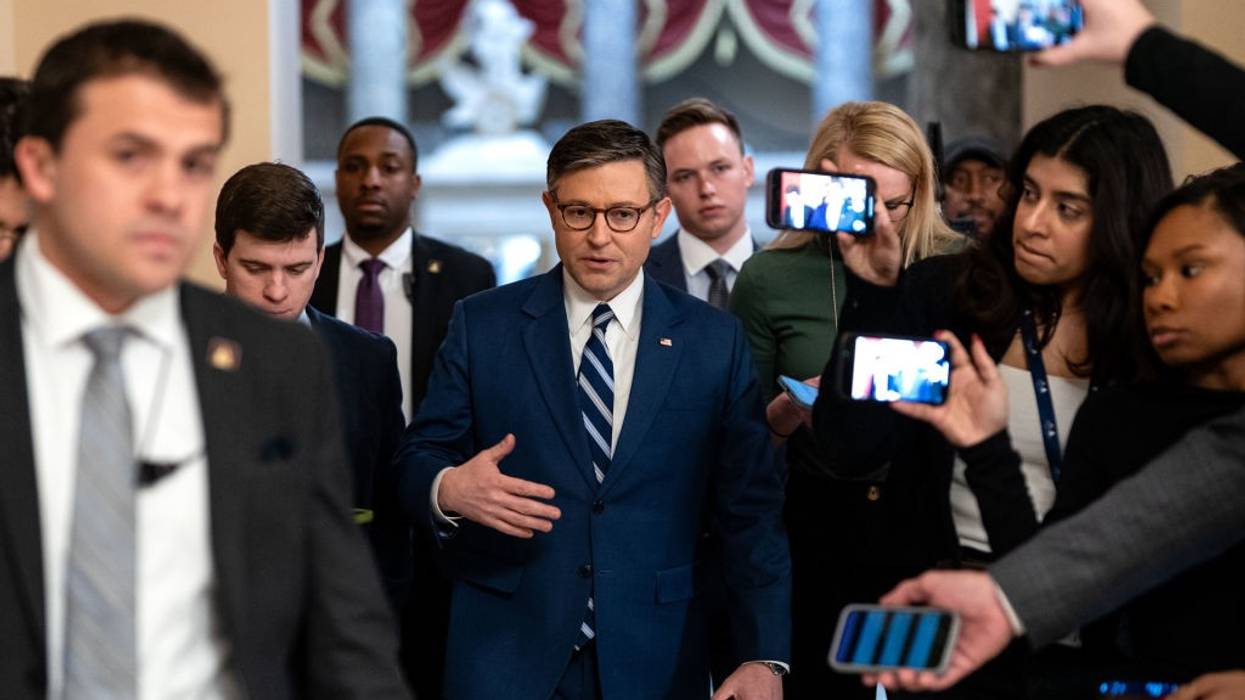
Republicans on the House Rules Committee voted late Monday to advance a budget resolution that, if translated into law, would enact painful cuts to Medicaid and federal nutrition assistance, potentially stripping critical benefits from tens of millions of low-income Americans to help fund trillions of dollars in tax giveaways that would flow primarily to the rich.
The rules panel voted 9-4 along party lines in favor of the budget blueprint, setting the stage for a House floor debate and vote as soon as Tuesday evening.
While some House Republicans have publicly and privately voiced concerns about the scale of the Medicaid cuts proposed in the budget resolution, GOP members of the rules panel on Monday rejected Democratic amendments aimed at preventing cuts to the healthcare program as well as the Supplemental Nutrition Assistance Program (SNAP) and other spending.
"Republicans can't have it both ways—they can't claim to stand up for their constituents on SNAP and Medicaid and then reject amendments that would do just that," said Rep. Gabe Amo (D-R.I.), who sponsored the proposed changes. "My common-sense amendments would have supported these two key programs that feed hungry children and care for sick Americans. Democrats provided Republicans with several chances to stand with the many instead of the rich. They declined multiple times. I'll continue to pull out every stop as I seek to prevent these cuts from becoming reality."
"Put simply: the bill is a betrayal of the promise that every Republican made just months ago to lower costs."
Monday's committee vote came after a Center on Budget and Policy Priorities (CBPP) analysis found that the SNAP cuts proposed by the House GOP resolution "would result in widespread harm," potentially taking benefits from "more than 9 million low-income people in an average month."
"Deep SNAP cuts would worsen food insecurity, hurt local businesses, and weaken SNAP's ability to boost jobs in every state. SNAP is highly effective at reducing food insecurity and poverty, and research links SNAP participation to better health outcomes and lower healthcare costs," CBPP noted. "Regardless of how lawmakers impose $230 billion or more in cuts to SNAP, these cuts would make it harder for low-income families in every state to afford groceries, worsening food insecurity and hardship. Slashing low-income households' grocery budgets would also reduce revenue for thousands of businesses in every state, with ripple effects throughout the food supply chain."
CBPP previously estimated that House Republicans' plans for Medicaid—specifically their push to impose work requirements—could put 36 million Americans at risk of losing health coverage.
The Economic Policy Institute (EPI) separately found that if the House GOP's proposal for $880 billion in Medicaid cuts over the next decade becomes reality, it would "reduce incomes for the bottom 40% more than extending the [Trump tax cuts] would boost them—and the lowest-income households would fare the worst."
"Strikingly, this is true even as the full $880 billion in Medicaid cuts would only pay for about 20% of the total cost of the [Tax Cuts and Jobs Act]—other cuts and economic damage falling on non-rich families stemming from tax cuts for the rich would still be forthcoming," EPI's Josh Bivens wrote last week. "Meanwhile, the TCJA boosts the incomes of the top 1% significantly, while these households do not rely in any way on Medicaid."
Democrats are expected to unanimously oppose the House Republican budget resolution, leaving Speaker Mike Johnson (R-La.) with extremely narrow margins to pass the measure and move ahead with President Donald Trump's legislative agenda. Trump has endorsed the House resolution, despite claiming to oppose cuts to Medicaid.
House Republicans must also reconcile major differences with their Senate colleagues, who want to advance Trump's agenda in separate, smaller bills rather than one sprawling measure.
"The bill House Republicans are bringing forward tomorrow is a gift to Trump's billionaire donors paid for by hard-working Americans who are already feeling the heat from high prices in Donald Trump's America," Tony Carrk, executive director of the watchdog group Accountable.US, said in a statement Monday. "In this bill, Republicans are saying the quiet part out loud: Billionaires, big companies, and special interests not only deserve a tax break, but that it should be paid for by everyday Americans."
"For far too many Americans, this bill will only increase their everyday costs, from their healthcare to their groceries," Carrk added. "Put simply: the bill is a betrayal of the promise that every Republican made just months ago to lower costs."
Rep. Pramila Jayapal (D-Wash.), a senior whip for the House Democratic caucus, wrote in a social media post on Monday that she will not "vote for a budget that gives tax breaks to billionaires and cuts critical programs for working families—including healthcare and education."
"I will be a NO on the Republican budget resolution this week," Jayapal added.

"Any attack on the Postal Service would be part of the billionaire oligarch coup," said the president of the American Postal Workers Union.
President Donald Trump's reported plan to terminate every member of the U.S. Postal Service Board of Governors and bring the independent and highly popular USPS under his administration's control drew immediate outrage from the world's largest postal union, which said the floated takeover would be illegal and destructive to public mail operations.
"Any attack on the Postal Service would be part of the billionaire oligarch coup, directed not just at the postal workers our union represents, but the millions of Americans who rely on the critical public service our members provide every single day," said Mark Dimondstein, president of the American Postal Workers Union (APWU), which represents hundreds of thousands of current and retired postal workers.
The union leader's statement came after The Washington Post reported Thursday that Trump is preparing to "dissolve the leadership of the U.S. Postal Service and absorb the independent mail agency into his administration, potentially throwing the 250-year-old mail provider and trillions of dollars of e-commerce transactions into turmoil."
"Trump is expected to issue an executive order as soon as this week to fire the members of the Postal Service's governing board and place the agency under the control of the Commerce Department and Secretary Howard Lutnick," the Post reported, citing unnamed sources.
Lutnick, who was confirmed by the U.S. Senate earlier this week, is a billionaire with glaring conflicts of interest.
The Post noted that Trump has spoken publicly about the possibility of privatizing the USPS, which is currently led by Louis DeJoy. On Tuesday, DeJoy—who was initially nominated for the post by Trump and has worked to gut the Postal Service from within during his tenure—asked the USPS board to begin the process of finding his successor.
The new reporting prompted warnings that Trump, who lied relentlessly about mail-in voting in the run-up to and aftermath of the 2020 election, wants to disrupt ballot deliveries by bringing the USPS under his control.
"Trump's reported outrage that the Postal Service was able to successfully deliver Americans' mail-in ballots in 2020 is exceptionally alarming when considering the same man who helped incite an insurrection based on evidence-free election denialism now wants to be in control of millions of absentee ballots," said Tony Carrk, executive director of the watchdog group Accountable.US.
"President Trump wants to consolidate power further and control access to your mail, all while making his wealthy donors richer in the process," Carrk added. "All eyes should be on conservative senators who represent rural communities who will bear the brunt of postal privatization."
trump wants to be able to tell the USPS not to deliver ballots to blue states www.washingtonpost.com/business/202...
[image or embed]
— jamelle (@jamellebouie.net) February 20, 2025 at 9:47 PM
Rep. Gerry Connolly (D-Va.), the top Democrat on the House Oversight Committee, said in a statement Thursday that privatizing the USPS would be "an attack on Americans' access to critical information, benefits, and lifesaving medical care."
"It is clear that Trump and his cronies value lining their own pockets more than the lives and connection of the American public," said Connolly.
According to the Post, the USPS board was "planning to fight Trump's order" and held an "emergency meeting" Thursday at which the board "retained outside counsel and gave instructions to sue the White House if the president were to remove members of the board or attempt to alter the agency's independent status."
"Two of the group's GOP members—Derek Kan, a former Trump administration official, and Mike Duncan, a former chair of the Republican National Committee—were not in attendance," the Post reported.
Dimondstein voiced support for the postal board's plan to fight any Trump takeover attempt, saying the union backs all "efforts to defend our national treasure."
"If this reporting is true, it would be an outrageous, unlawful attack on a storied national treasure, enshrined in the Constitution and created by Congress to serve every American home and business equally," said Dimondstein. "The law created the postal board of Governors, and empowers it and it alone to hire and fire the postmaster general. Any effort by the administration to remove the board or fire postal executives is clearly illegal."
"The Postal Service is owned by the people, for the benefit of the people. Postal workers are dedicated to our mission to serve, no matter who sits in the White House or in Congress," the union leader added. "Postal workers and our unions will join with the public to fight for the vibrant, independent, and public Postal Service we all deserve."

"It is the American people who lose when corporations succeed in keeping their taxes low," according to the report's authors.
With portions of President Donald Trump's 2017 Tax Cuts and Jobs Act that favored high income households and corporations set to expire in 2025, the watchdog group Accountable.US and the coalition Americans for Tax Fairness released a report Wednesday detailing how top corporations benefited from corporate tax law in the five years following the 2017 reform.
These corporations, which include household names such as Apple, Bank of America, Microsoft, Meta, and General Motors, make a disproportionate share of national profits and pay a big chunk of total corporate taxes, though at low rates, according to the report—as in, the "corporate tax ten" identified by the report have a lot at stake when it comes to corporate tax policy.
Ahead of the coming debate around taxes in 2025, "the American public should be aware that the debate over corporate tax policy is less about national economic impact—as corporate lobbyists tend to insist—and more about the narrow profit interests of a few mammoth corporations," according to the report's authors.
While Trump's 2017 tax law permanently lowered the corporate tax rate from 35% to 21%—and this provision is not among those set to expire this year—Trump and House Republicans have expressed interest in dropping the corporate tax rate further, to 15%. Researchers at the Institute on Taxation and Economic Policy found that even after Trump dropped the corporate tax rate to 21%, most profitable corporations paid considerably less than that, "mainly due to loopholes and special breaks that the 2017 tax law left in place and, in some cases, introduced."
"We've seen how Trump's tax scam played out before—after promising to deliver for Main Street, he turned around and gave trillions in tax cuts to the ultra-wealthy and mega-corporations," said David Kass, ATF's executive director in a statement Wednesday. Regular American families "will be hurt by Republicans' plans to give trillions in additional tax cuts to make the rich richer and pay for it by cutting essential programs," he added.
Citing the Institute on Taxation and Economic Policy, the report notes that of the hundreds of billions in total subsidies received by corporations from 2018 through 2022—defined as "the difference between what they would owe over that period without special breaks in the tax code and what they actually paid with them in place"—over $150 billion of those total tax breaks were claimed by just 25 corporations, with Bank of America topping the list at nearly $24 billion in subsidies over those five years
Those breaks help explain how Bank of America paid a federal income-tax rate of just 3.8% on almost $139 billion in profits over that time period, according to the report.
Trump's 2017 legislation also lowered the tax rate for corporate income that comes from intangible assets that are held in the U.S. but generate sales overseas, so-called Foreign Derived Intangible Income (FDII) earnings, according to the report. The authors report that "of the over $50 billion the top 15 corporate beneficiaries of the FDII loophole have received over the first six years of the Trump law, almost one-quarter was reaped by Alphabet"—the parent company of Google.
The authors also note that if the 15% corporate tax rate was already in effect, Apple alone would have saved $3.5 billion on its taxes in the most recent annual reporting period.
The report gives other examples of how these top ten corporations benefit from subsidies already in place and how much they stand to gain from a potentially lowered corporate tax rate.
The report's argument that corporations approach tax policy first and foremost with their own profit margins in mind "is an important realization because it is the American people who lose when corporations succeed in keeping their taxes low: through cuts to public services because of the lost revenue; widening income and wealth gaps from increased corporate profits and stock prices; and in the growth of concentrated corporate power," the authors write.
One watchdog noted the "rank hypocrisy of the entire Trump transition team operating in the shadows with private servers and emails even after Donald Trump screamed from the hilltops at the very idea in the past."
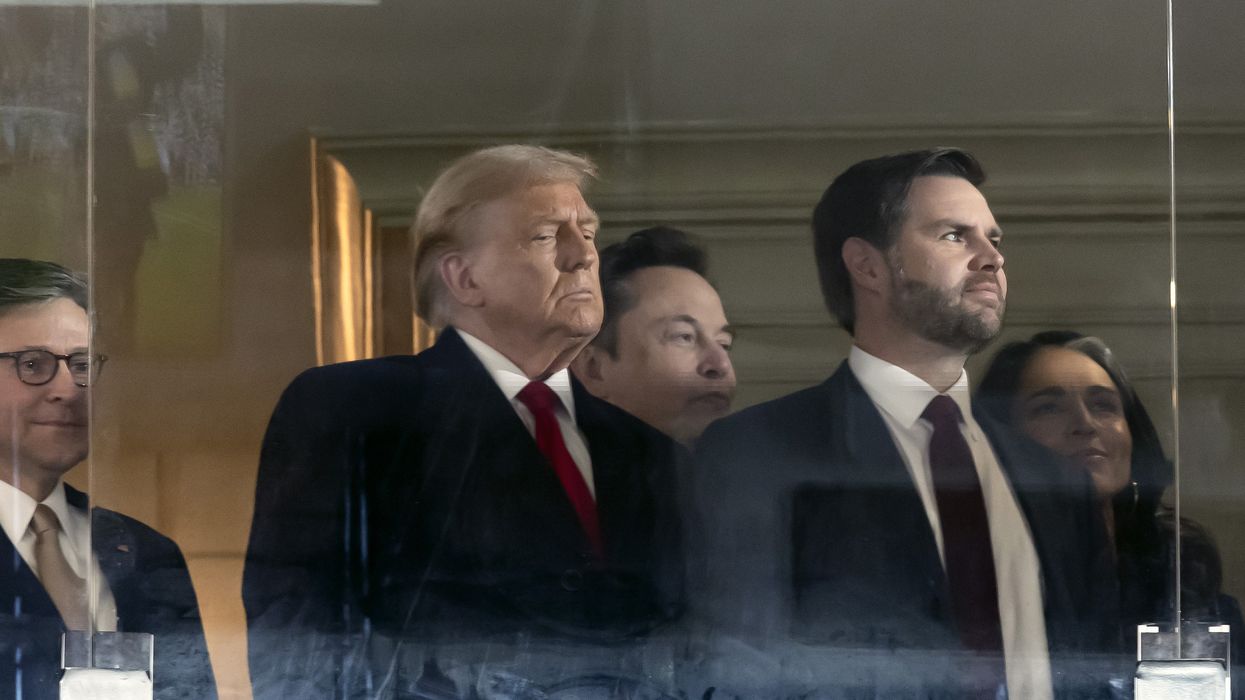
The watchdog group Accountable.US is sounding the alarm on reporting that President-elect Donald Trump's transition team is eschewing government issued email addresses and devices and instead conducting business using private emails—whipping up fears that sensitive government information could be exposed.
"Never mind the rank hypocrisy of the entire Trump transition team operating in the shadows with private servers and emails even after Donald Trump screamed from the hilltops at the very idea in the past," said Kayla Hancock, director of the Trump Accountability War Room for Accountable.US in a statement Thursday. "The real problem is how reckless and irresponsible the Trump team is treating serious national security risks so that they can conduct business and solicit donations without scrutiny."
Accountable.US also called the practice a "recipe for corruption."
Trump hammered then-presidential candidate Hillary Clinton on the campaign trail in 2016 over her use of a private email server when she was secretary of state.
New York Times opinion columnist Jamelle Bouie made a remark similar to that of Accountable.US, writing that "I recall a time when using a private email server was the single greatest scandal in American history."
Politico, which reported on the Trump team's use of private emails earlier this week, wrote that "the private emails have agency employees considering insisting on in-person meetings and document exchanges that they otherwise would have conducted electronically, according to two federal officials granted anonymity to discuss a sensitive situation."
Fears are high especially in light of recent hacking attempts from China and Iran that targeted Trump and other top officials, per Politico. Transition business is being handled using domains like "@transition47.com" and "@trumpvancetransition.com" as opposed to .gov accounts.
According to Politico, "this break with tradition stems from the Trump team forgoing federal funding and the ethics and transparency requirements that come with it."
The Trump transition team has declined to sign a memorandum of understanding with the General Services Administration that would provide federal funding for the transition in exchange for strict limits on donations. Without the agreement in place, "Trump can raise unlimited amounts of money from unknown donors to pay for the staff, travel and office space involved in preparing to take over the government," according to The New York Times.
The Trump transition team has signed other agreements that will help an already delayed transition process proceed—for example, an agreement to allow the Justice Department to conduct background checks on his nominees and appointees.
In their statement, Accountable.US also called out the transition team for not signing the agreement to cap donations.