SUBSCRIBE TO OUR FREE NEWSLETTER
Daily news & progressive opinion—funded by the people, not the corporations—delivered straight to your inbox.
5
#000000
#FFFFFF
To donate by check, phone, or other method, see our More Ways to Give page.
Daily news & progressive opinion—funded by the people, not the corporations—delivered straight to your inbox.
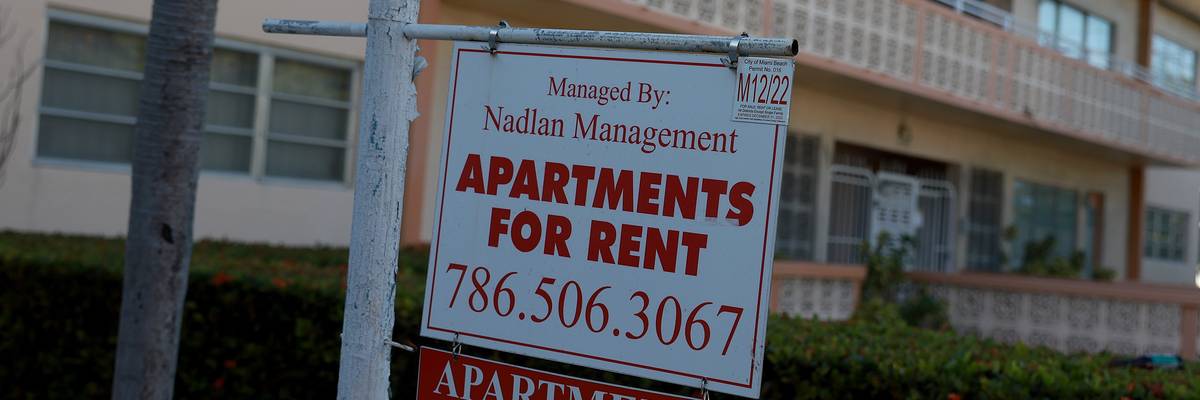
An "Apartments for Rent" sign hangs in front of a building on December 6, 2022 in Miami Beach, Florida.
The 21st Century ROAD to Housing Act relies too heavily on private-market principles to fix a housing crisis that was largely created by the private market itself.
On July 11, 2026, the 21st Century ROAD to Housing Act became law, making it the most significant federal housing package enacted in more than three decades. Many are celebrating the bill for “simply existing.” However, for many working-class tenants, the bill is not enough.
The 21st Century Renewing Opportunity in the American Dream, or ROAD, to Housing Act contains more than 60 provisions covering housing construction, manufactured and rural housing, homeownership, rental housing, veterans’ housing, federal program reform, and community banking. Its central strategy is to increase the housing supply by reducing regulatory barriers and encouraging state and local governments to allow more construction.
The problem is that the bill relies too heavily on private-market principles to fix a housing crisis that was largely created by the private market itself.
Where new housing construction has accelerated due to reforms like those in the bill, new development is overwhelmingly catering to the wealthy. This does little to prevent the displacement of working-class neighborhoods, as overall rents continue to climb to match what landlords hope to extract from newer residents.
“Tenants today are paying more rent than they’ve ever paid for the worst conditions they’ve ever endured, but our ultimate power is our rent.”
Everyday Americans are left facing the consequences. Rapidly rising rents, home prices, and other living expenses have made housing the single largest monthly expense for millions of American families.
These rising costs are compounded by a national shortage of 7.2 million affordable, available rental homes for extremely low-income renters. Not a single state has an adequate supply of affordable rental housing for its lowest-income renters.
Together, these conditions have created a nationwide housing crisis.
There are many reasons why this crisis persists. One is financial pressure on landlords, according to Ruthy Gourevitch, director of housing policy at Climate and Community Institute.
“In the current market context, where landlords are taking out large loans to acquire properties, they have to increase rents and cut back on maintenance to make those loan obligations,” she told Inequality.org in an interview.
Private landlords are buying and leasing in a highly speculative market. They must charge high rents to maximize profits on risky loans. The brunt of that risk is borne by tenants, according to Tara Raghuveer, director of the Tenants Union Federation.
“The tenant is also the one who suffers the most when the risk starts to fall apart,” Raghuveer told Inequality.org. “That’s what’s happening right now, and this bill has nothing to do with that reality.”
When examined more closely, the ROAD Act is timid in its approach to tackling the private power that prioritizes profit over affordability. Large institutional investors were banned from purchasing single-family homes under the bill, but dominant corporate landlords in the multifamily rental market remain untouched and are still driving up rents. This bill only continues to subsidize their dominance.
The bill contains provisions that boost programs like Community Development Block Grants, enabling municipalities to finance affordable housing construction. However, these programs still result in mostly privately owned housing.
Public funds provide subsidies that feed profits to private developers and landlords. While these subsidies may start off providing affordable housing, they do not remain so in the long term, perpetuating rent instability and poor tenant protections for low-income tenants.
“Currently, the public sector plays a massive role in subsidizing private profits,” says Raghuveer. “We propose an alternative, which is that the public sector actually reclaims and owns responsibility for delivering housing.”
Profit is priority for private developers and landlords. To fight this, tenant advocates are fighting for policies that decommodify housing. Investment in publicly-owned housing can build a large supply of environmentally sustainable, high-quality housing that everyone can access, regardless of wealth or market forces.
The HOMES Act proposes one such vision for bold and broad social housing investment. It would establish a federal Social Housing Development Authority (SHDA) to build, acquire, and upgrade millions of green, affordable, publicly held housing units with permanent capped rents for mixed-income tenants.
An SHDA would allow the public to buy housing from those who took out risky loans. It also ensures that public investment and rental income result in long-term, lower, capped rents and builds a revolving loan fund for further upgrades and social housing construction.
Gourevitch, along with other housing researchers and progressive organizers, has found social housing investment consistently contributes to racial and economic housing equity, while public management allows democratic control over tenant protections, rents, and amenities.
Social housing investment can also create more climate-resilient infrastructure without relying on climate-myopic private developers.
“What we see in other countries with governments that have more agency over their housing is the ability to move at the speed and scale that the crises we face demand. In Singapore or Vienna, you see the government innovating on questions of decarbonization, energy efficiency, and resilience as different climate shocks and stressors come their way,” Gourevitch explains.
Climate resiliency upgrades under private landlords may lead to rent hikes or property flipping. Instead, Gourevitch’s research has found that, “with green social housing, what we see is that because rents are capped and stay affordable over a long period of time, those energy efficiency and decarbonization investments do not translate into displacement.”
Achieving this policy vision across the United States, under these political conditions, may seem far off. Still, tenants across the country are organizing for a different vision. Tenants are fighting for immediate rights to stay in their homes. For emergency rent caps to protect tenants’ housing stability. For broader power over their homes from their landlords.
“Tenants today are paying more rent than they’ve ever paid for the worst conditions they’ve ever endured, but our ultimate power is our rent,” as Raghuveer says. “When we organize tenants as collectives, we articulate a vision for the world that looks very different from the one we live in today.”
Dear Common Dreams reader, It’s been nearly 30 years since I co-founded Common Dreams with my late wife, Lina Newhouser. We had the radical notion that journalism should serve the public good, not corporate profits. It was clear to us from the outset what it would take to build such a project. No paid advertisements. No corporate sponsors. No millionaire publisher telling us what to think or do. Many people said we wouldn't last a year, but we proved those doubters wrong. Together with a tremendous team of journalists and dedicated staff, we built an independent media outlet free from the constraints of profits and corporate control. Our mission has always been simple: To inform. To inspire. To ignite change for the common good. Building Common Dreams was not easy. Our survival was never guaranteed. When you take on the most powerful forces—Wall Street greed, fossil fuel industry destruction, Big Tech lobbyists, and uber-rich oligarchs who have spent billions upon billions rigging the economy and democracy in their favor—the only bulwark you have is supporters who believe in your work. But here’s the urgent message from me today. It's never been this bad out there. And it's never been this hard to keep us going. At the very moment Common Dreams is most needed, the threats we face are intensifying. We need your support now more than ever. We don't accept corporate advertising and never will. We don't have a paywall because we don't think people should be blocked from critical news based on their ability to pay. Everything we do is funded by the donations of readers like you. When everyone does the little they can afford, we are strong. But if that support retreats or dries up, so do we. Will you donate now to make sure Common Dreams not only survives but thrives? —Craig Brown, Co-founder |
On July 11, 2026, the 21st Century ROAD to Housing Act became law, making it the most significant federal housing package enacted in more than three decades. Many are celebrating the bill for “simply existing.” However, for many working-class tenants, the bill is not enough.
The 21st Century Renewing Opportunity in the American Dream, or ROAD, to Housing Act contains more than 60 provisions covering housing construction, manufactured and rural housing, homeownership, rental housing, veterans’ housing, federal program reform, and community banking. Its central strategy is to increase the housing supply by reducing regulatory barriers and encouraging state and local governments to allow more construction.
The problem is that the bill relies too heavily on private-market principles to fix a housing crisis that was largely created by the private market itself.
Where new housing construction has accelerated due to reforms like those in the bill, new development is overwhelmingly catering to the wealthy. This does little to prevent the displacement of working-class neighborhoods, as overall rents continue to climb to match what landlords hope to extract from newer residents.
“Tenants today are paying more rent than they’ve ever paid for the worst conditions they’ve ever endured, but our ultimate power is our rent.”
Everyday Americans are left facing the consequences. Rapidly rising rents, home prices, and other living expenses have made housing the single largest monthly expense for millions of American families.
These rising costs are compounded by a national shortage of 7.2 million affordable, available rental homes for extremely low-income renters. Not a single state has an adequate supply of affordable rental housing for its lowest-income renters.
Together, these conditions have created a nationwide housing crisis.
There are many reasons why this crisis persists. One is financial pressure on landlords, according to Ruthy Gourevitch, director of housing policy at Climate and Community Institute.
“In the current market context, where landlords are taking out large loans to acquire properties, they have to increase rents and cut back on maintenance to make those loan obligations,” she told Inequality.org in an interview.
Private landlords are buying and leasing in a highly speculative market. They must charge high rents to maximize profits on risky loans. The brunt of that risk is borne by tenants, according to Tara Raghuveer, director of the Tenants Union Federation.
“The tenant is also the one who suffers the most when the risk starts to fall apart,” Raghuveer told Inequality.org. “That’s what’s happening right now, and this bill has nothing to do with that reality.”
When examined more closely, the ROAD Act is timid in its approach to tackling the private power that prioritizes profit over affordability. Large institutional investors were banned from purchasing single-family homes under the bill, but dominant corporate landlords in the multifamily rental market remain untouched and are still driving up rents. This bill only continues to subsidize their dominance.
The bill contains provisions that boost programs like Community Development Block Grants, enabling municipalities to finance affordable housing construction. However, these programs still result in mostly privately owned housing.
Public funds provide subsidies that feed profits to private developers and landlords. While these subsidies may start off providing affordable housing, they do not remain so in the long term, perpetuating rent instability and poor tenant protections for low-income tenants.
“Currently, the public sector plays a massive role in subsidizing private profits,” says Raghuveer. “We propose an alternative, which is that the public sector actually reclaims and owns responsibility for delivering housing.”
Profit is priority for private developers and landlords. To fight this, tenant advocates are fighting for policies that decommodify housing. Investment in publicly-owned housing can build a large supply of environmentally sustainable, high-quality housing that everyone can access, regardless of wealth or market forces.
The HOMES Act proposes one such vision for bold and broad social housing investment. It would establish a federal Social Housing Development Authority (SHDA) to build, acquire, and upgrade millions of green, affordable, publicly held housing units with permanent capped rents for mixed-income tenants.
An SHDA would allow the public to buy housing from those who took out risky loans. It also ensures that public investment and rental income result in long-term, lower, capped rents and builds a revolving loan fund for further upgrades and social housing construction.
Gourevitch, along with other housing researchers and progressive organizers, has found social housing investment consistently contributes to racial and economic housing equity, while public management allows democratic control over tenant protections, rents, and amenities.
Social housing investment can also create more climate-resilient infrastructure without relying on climate-myopic private developers.
“What we see in other countries with governments that have more agency over their housing is the ability to move at the speed and scale that the crises we face demand. In Singapore or Vienna, you see the government innovating on questions of decarbonization, energy efficiency, and resilience as different climate shocks and stressors come their way,” Gourevitch explains.
Climate resiliency upgrades under private landlords may lead to rent hikes or property flipping. Instead, Gourevitch’s research has found that, “with green social housing, what we see is that because rents are capped and stay affordable over a long period of time, those energy efficiency and decarbonization investments do not translate into displacement.”
Achieving this policy vision across the United States, under these political conditions, may seem far off. Still, tenants across the country are organizing for a different vision. Tenants are fighting for immediate rights to stay in their homes. For emergency rent caps to protect tenants’ housing stability. For broader power over their homes from their landlords.
“Tenants today are paying more rent than they’ve ever paid for the worst conditions they’ve ever endured, but our ultimate power is our rent,” as Raghuveer says. “When we organize tenants as collectives, we articulate a vision for the world that looks very different from the one we live in today.”
On July 11, 2026, the 21st Century ROAD to Housing Act became law, making it the most significant federal housing package enacted in more than three decades. Many are celebrating the bill for “simply existing.” However, for many working-class tenants, the bill is not enough.
The 21st Century Renewing Opportunity in the American Dream, or ROAD, to Housing Act contains more than 60 provisions covering housing construction, manufactured and rural housing, homeownership, rental housing, veterans’ housing, federal program reform, and community banking. Its central strategy is to increase the housing supply by reducing regulatory barriers and encouraging state and local governments to allow more construction.
The problem is that the bill relies too heavily on private-market principles to fix a housing crisis that was largely created by the private market itself.
Where new housing construction has accelerated due to reforms like those in the bill, new development is overwhelmingly catering to the wealthy. This does little to prevent the displacement of working-class neighborhoods, as overall rents continue to climb to match what landlords hope to extract from newer residents.
“Tenants today are paying more rent than they’ve ever paid for the worst conditions they’ve ever endured, but our ultimate power is our rent.”
Everyday Americans are left facing the consequences. Rapidly rising rents, home prices, and other living expenses have made housing the single largest monthly expense for millions of American families.
These rising costs are compounded by a national shortage of 7.2 million affordable, available rental homes for extremely low-income renters. Not a single state has an adequate supply of affordable rental housing for its lowest-income renters.
Together, these conditions have created a nationwide housing crisis.
There are many reasons why this crisis persists. One is financial pressure on landlords, according to Ruthy Gourevitch, director of housing policy at Climate and Community Institute.
“In the current market context, where landlords are taking out large loans to acquire properties, they have to increase rents and cut back on maintenance to make those loan obligations,” she told Inequality.org in an interview.
Private landlords are buying and leasing in a highly speculative market. They must charge high rents to maximize profits on risky loans. The brunt of that risk is borne by tenants, according to Tara Raghuveer, director of the Tenants Union Federation.
“The tenant is also the one who suffers the most when the risk starts to fall apart,” Raghuveer told Inequality.org. “That’s what’s happening right now, and this bill has nothing to do with that reality.”
When examined more closely, the ROAD Act is timid in its approach to tackling the private power that prioritizes profit over affordability. Large institutional investors were banned from purchasing single-family homes under the bill, but dominant corporate landlords in the multifamily rental market remain untouched and are still driving up rents. This bill only continues to subsidize their dominance.
The bill contains provisions that boost programs like Community Development Block Grants, enabling municipalities to finance affordable housing construction. However, these programs still result in mostly privately owned housing.
Public funds provide subsidies that feed profits to private developers and landlords. While these subsidies may start off providing affordable housing, they do not remain so in the long term, perpetuating rent instability and poor tenant protections for low-income tenants.
“Currently, the public sector plays a massive role in subsidizing private profits,” says Raghuveer. “We propose an alternative, which is that the public sector actually reclaims and owns responsibility for delivering housing.”
Profit is priority for private developers and landlords. To fight this, tenant advocates are fighting for policies that decommodify housing. Investment in publicly-owned housing can build a large supply of environmentally sustainable, high-quality housing that everyone can access, regardless of wealth or market forces.
The HOMES Act proposes one such vision for bold and broad social housing investment. It would establish a federal Social Housing Development Authority (SHDA) to build, acquire, and upgrade millions of green, affordable, publicly held housing units with permanent capped rents for mixed-income tenants.
An SHDA would allow the public to buy housing from those who took out risky loans. It also ensures that public investment and rental income result in long-term, lower, capped rents and builds a revolving loan fund for further upgrades and social housing construction.
Gourevitch, along with other housing researchers and progressive organizers, has found social housing investment consistently contributes to racial and economic housing equity, while public management allows democratic control over tenant protections, rents, and amenities.
Social housing investment can also create more climate-resilient infrastructure without relying on climate-myopic private developers.
“What we see in other countries with governments that have more agency over their housing is the ability to move at the speed and scale that the crises we face demand. In Singapore or Vienna, you see the government innovating on questions of decarbonization, energy efficiency, and resilience as different climate shocks and stressors come their way,” Gourevitch explains.
Climate resiliency upgrades under private landlords may lead to rent hikes or property flipping. Instead, Gourevitch’s research has found that, “with green social housing, what we see is that because rents are capped and stay affordable over a long period of time, those energy efficiency and decarbonization investments do not translate into displacement.”
Achieving this policy vision across the United States, under these political conditions, may seem far off. Still, tenants across the country are organizing for a different vision. Tenants are fighting for immediate rights to stay in their homes. For emergency rent caps to protect tenants’ housing stability. For broader power over their homes from their landlords.
“Tenants today are paying more rent than they’ve ever paid for the worst conditions they’ve ever endured, but our ultimate power is our rent,” as Raghuveer says. “When we organize tenants as collectives, we articulate a vision for the world that looks very different from the one we live in today.”