
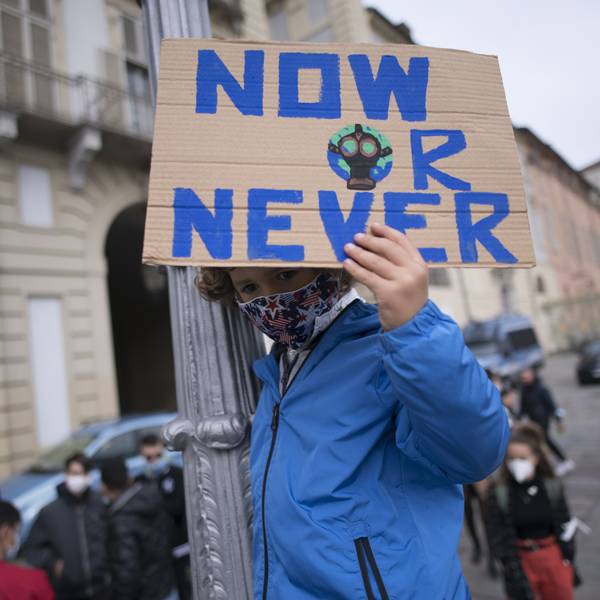
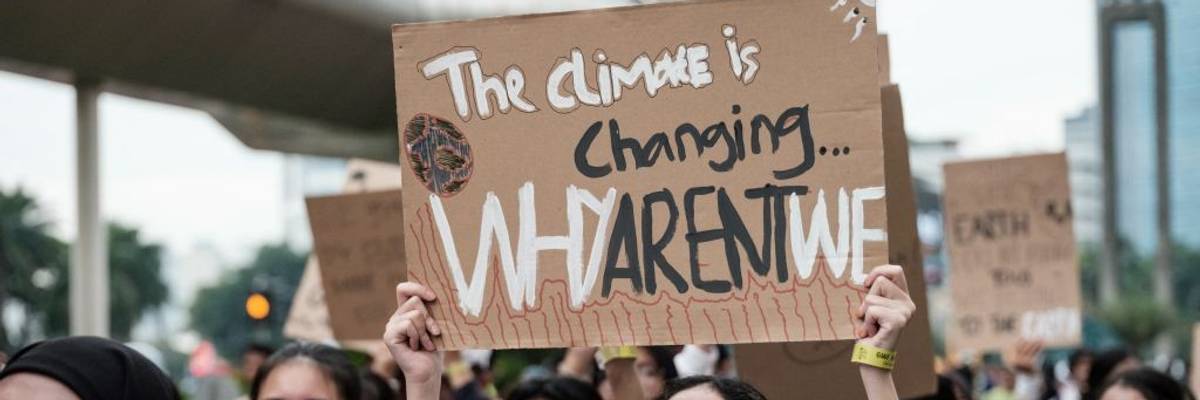
Participants hold placards as they march on a street ahead of Earth Day on April 22, the annual environmental awareness day, in Jakarta on April 21, 2024.
Why Earth Day Matters More Than Ever
The environmental movement has already shown what collective action can achieve. The question now is whether we are prepared to use that power again.
Fifty-seven years ago, Earth Day changed American politics. On April 22, 1970, 20 million American, about 10% of the entire US population, took to the streets, campuses, and town squares in a single day to demand action after 150 years of uncontrolled industrial pollution. The demonstrations were so large and bipartisan that Washington responded almost immediately, probably out of fear but also respect for the intensity and size of the demonstrations. Within just a few years, President Richard Nixon created the Environmental Protection Agency and Congress passed 20 landmark laws including the Clean Air Act, Clean Water Act, and Endangered Species Act. Americans and their environment enjoyed that nonpartisan honeymoon for over a decade.
Again in the early 1990s, cooperation between Democrats and Republicans produced significant environmental progress, including the Clean Air Act Amendments of 1990, which addressed acid rain, smog, and toxics, and the Pollution Prevention Act of 1990, which stopped pollutants at their source. Were they costly? Initially to the polluters yes, but the health and safety results, estimated to be close to $2 trillion in health-cost savings, have been stunning. And eventually industry investment in clean technologies led to efficiency, profits, and innovation. These laws and others demonstrated that bipartisan cooperation could deliver both environmental and economic results.
What is often forgotten today is how broad that political coalition once was. Environmental protection was not a partisan cause. Republicans and Democrats almost competed to be seen as environmental champions. Conservative lawmakers voted for pollution limits, and no wonder: 75% of Americans supported increased government spending to reduce air and water pollution, and large majorities said they were willing to pay higher costs for clean air and water.
For a time, that public pressure worked.
When citizens demonstrate that protecting the planet matters—to their communities, their votes, and their future—leaders respond.
But the momentum that first Earth Day created has slowed and increasingly reversed. Why? One major turning point came in 2010, when the Supreme Court’s Citizens United decision allowed corporations and outside groups to spend unlimited money in elections. In the years since, political spending by all groups has surged but particularly by polluting industries, which outspent health and environmental groups 20 to 1. According to Climate Power, the fossil fuel industry spent $450 million during the 2024 election cycle.
In the past year, 425 environmental and health and safety laws and regulations have been rolled back or crippled, many of which, including all climate change related policies and laws, were promised during the election. The quid pro quo for donations was pretty straightforward—denial that climate change exists or is harmful.
Citizens United opened the spigot for anti-environmental spending, and what is coming out of those spigots is hurting our children, our health, and American innovation and economic leadership.
The influence of that spending has helped transform environmental policy from a bipartisan priority into one of the most polarized issues in Washington. In the years before the ruling, bipartisan climate legislation was still possible. In the years after Citizens United, cooperation largely collapsed. The result has been legislative gridlock at precisely the moment scientists and many economists say immediate action will both reduce or even solve the climate crisis and keep America from losing its place in the impossible to stop green economy.
Ironically, this reversal of environmental policy has occurred even as public concern has remained high. Surveys consistently show that large majorities of Americans believe climate change is real and more than 70% of Americans support stronger measures to address climate change. This disconnect between public concern and political action is the defining challenge of this Earth Day and the environmental movement itself.
That is why the theme of this year’s Earth Day, Our Power, Our Planet, is more than a slogan. It is a reminder of a fundamental truth that shaped the first Earth Day: Political power ultimately flows from citizens—real people—to Congress and the White House.
The environmental breakthroughs of the 1970s and 1990s did not happen because leaders suddenly discovered science. They happened because millions of people made environmental protection politically unavoidable. Citizens marched, organized, voted, and demanded action. They made it clear that protecting the planet was not optional. Today, that same civic power and engagement is needed again.
If governments believe environmental protection is a low priority for voters, progress will stall. If they believe the public is divided or disengaged, short-term political pressure and massive corporate dollars will always win. But when citizens demonstrate that protecting the planet matters—to their communities, their votes, and their future—leaders respond.
That is the real meaning of Our Power, Our Planet. The environmental movement has already shown what collective action can achieve. The question now is whether we are prepared to use that power again. Because the progress of the past half-century was never guaranteed; without sustained public engagement, it could easily erode.
Earth Day was never meant to be a celebration. It was designed as a demonstration of public will. Fifty-seven years later, the challenge is the same: to show governments, once again, that the power to protect our planet ultimately belongs to the people.
This piece was distributed by American Forum.
We are at a crossroads
This country and this world are at a monumental crossroads. In a few short weeks, US voters will have an opportunity to beat back the forces of fascism and confront the billionaires who are rigging the economy, our media system, and our democracy, making it increasingly impossible for ordinary people to get by. We’re not just talking about the election. We’re talking about what must be done once these fascist elements are vanquished from power. We need a bolder set of solutions than what either major party has so far been willing to offer and a working-class movement ready to fight like hell for it. Trump didn't emerge from nowhere. The conditions that fueled MAGA authoritarianism were created by decades of radical neoliberal economic policies and a corrupt political system dominated by corporate interests. They slashed taxes on the super-rich, promising that the benefits would trickle down. They said giveaways to the corporate titans would make life more affordable for the rest of us. It was all bullshit. And when a bitter, betrayed populace searches for someone to blame, right-wing demagogues have little trouble finding scapegoats. People know when they're being lied to, but you won't hear any of this from the corporate media. Only independent journalism—powered and funded by people who believe in building a better world—can deliver truly trustworthy daily news. Our Fall Campaign is underway, and we need your help. To power our newsroom through the rest of the year, we need to raise $125,000 by midnight on October 31. So if you share our vision, please contribute whatever you can to sustain our work. |
Fifty-seven years ago, Earth Day changed American politics. On April 22, 1970, 20 million American, about 10% of the entire US population, took to the streets, campuses, and town squares in a single day to demand action after 150 years of uncontrolled industrial pollution. The demonstrations were so large and bipartisan that Washington responded almost immediately, probably out of fear but also respect for the intensity and size of the demonstrations. Within just a few years, President Richard Nixon created the Environmental Protection Agency and Congress passed 20 landmark laws including the Clean Air Act, Clean Water Act, and Endangered Species Act. Americans and their environment enjoyed that nonpartisan honeymoon for over a decade.
Again in the early 1990s, cooperation between Democrats and Republicans produced significant environmental progress, including the Clean Air Act Amendments of 1990, which addressed acid rain, smog, and toxics, and the Pollution Prevention Act of 1990, which stopped pollutants at their source. Were they costly? Initially to the polluters yes, but the health and safety results, estimated to be close to $2 trillion in health-cost savings, have been stunning. And eventually industry investment in clean technologies led to efficiency, profits, and innovation. These laws and others demonstrated that bipartisan cooperation could deliver both environmental and economic results.
What is often forgotten today is how broad that political coalition once was. Environmental protection was not a partisan cause. Republicans and Democrats almost competed to be seen as environmental champions. Conservative lawmakers voted for pollution limits, and no wonder: 75% of Americans supported increased government spending to reduce air and water pollution, and large majorities said they were willing to pay higher costs for clean air and water.
For a time, that public pressure worked.
When citizens demonstrate that protecting the planet matters—to their communities, their votes, and their future—leaders respond.
But the momentum that first Earth Day created has slowed and increasingly reversed. Why? One major turning point came in 2010, when the Supreme Court’s Citizens United decision allowed corporations and outside groups to spend unlimited money in elections. In the years since, political spending by all groups has surged but particularly by polluting industries, which outspent health and environmental groups 20 to 1. According to Climate Power, the fossil fuel industry spent $450 million during the 2024 election cycle.
In the past year, 425 environmental and health and safety laws and regulations have been rolled back or crippled, many of which, including all climate change related policies and laws, were promised during the election. The quid pro quo for donations was pretty straightforward—denial that climate change exists or is harmful.
Citizens United opened the spigot for anti-environmental spending, and what is coming out of those spigots is hurting our children, our health, and American innovation and economic leadership.
The influence of that spending has helped transform environmental policy from a bipartisan priority into one of the most polarized issues in Washington. In the years before the ruling, bipartisan climate legislation was still possible. In the years after Citizens United, cooperation largely collapsed. The result has been legislative gridlock at precisely the moment scientists and many economists say immediate action will both reduce or even solve the climate crisis and keep America from losing its place in the impossible to stop green economy.
Ironically, this reversal of environmental policy has occurred even as public concern has remained high. Surveys consistently show that large majorities of Americans believe climate change is real and more than 70% of Americans support stronger measures to address climate change. This disconnect between public concern and political action is the defining challenge of this Earth Day and the environmental movement itself.
That is why the theme of this year’s Earth Day, Our Power, Our Planet, is more than a slogan. It is a reminder of a fundamental truth that shaped the first Earth Day: Political power ultimately flows from citizens—real people—to Congress and the White House.
The environmental breakthroughs of the 1970s and 1990s did not happen because leaders suddenly discovered science. They happened because millions of people made environmental protection politically unavoidable. Citizens marched, organized, voted, and demanded action. They made it clear that protecting the planet was not optional. Today, that same civic power and engagement is needed again.
If governments believe environmental protection is a low priority for voters, progress will stall. If they believe the public is divided or disengaged, short-term political pressure and massive corporate dollars will always win. But when citizens demonstrate that protecting the planet matters—to their communities, their votes, and their future—leaders respond.
That is the real meaning of Our Power, Our Planet. The environmental movement has already shown what collective action can achieve. The question now is whether we are prepared to use that power again. Because the progress of the past half-century was never guaranteed; without sustained public engagement, it could easily erode.
Earth Day was never meant to be a celebration. It was designed as a demonstration of public will. Fifty-seven years later, the challenge is the same: to show governments, once again, that the power to protect our planet ultimately belongs to the people.
This piece was distributed by American Forum.
- What The First Earth Day Can Teach Us About Sharing ›
- Don't Let Warmongers Greenwash Their Ecocide This Earth Day ›
- Transforming the Climate Conversation This Earth Day ›
- 'We Will Not Cooperate': Earth Day Puts Focus on Need to Resist Trump's Planet-Destroying Policies ›
- Green Groups Organizing 'All Out on Earth Day' Protests Against Trump Authoritarianism ›
- Earth Action Day: Unleashing Our Power for Our Planet ›
Fifty-seven years ago, Earth Day changed American politics. On April 22, 1970, 20 million American, about 10% of the entire US population, took to the streets, campuses, and town squares in a single day to demand action after 150 years of uncontrolled industrial pollution. The demonstrations were so large and bipartisan that Washington responded almost immediately, probably out of fear but also respect for the intensity and size of the demonstrations. Within just a few years, President Richard Nixon created the Environmental Protection Agency and Congress passed 20 landmark laws including the Clean Air Act, Clean Water Act, and Endangered Species Act. Americans and their environment enjoyed that nonpartisan honeymoon for over a decade.
Again in the early 1990s, cooperation between Democrats and Republicans produced significant environmental progress, including the Clean Air Act Amendments of 1990, which addressed acid rain, smog, and toxics, and the Pollution Prevention Act of 1990, which stopped pollutants at their source. Were they costly? Initially to the polluters yes, but the health and safety results, estimated to be close to $2 trillion in health-cost savings, have been stunning. And eventually industry investment in clean technologies led to efficiency, profits, and innovation. These laws and others demonstrated that bipartisan cooperation could deliver both environmental and economic results.
What is often forgotten today is how broad that political coalition once was. Environmental protection was not a partisan cause. Republicans and Democrats almost competed to be seen as environmental champions. Conservative lawmakers voted for pollution limits, and no wonder: 75% of Americans supported increased government spending to reduce air and water pollution, and large majorities said they were willing to pay higher costs for clean air and water.
For a time, that public pressure worked.
When citizens demonstrate that protecting the planet matters—to their communities, their votes, and their future—leaders respond.
But the momentum that first Earth Day created has slowed and increasingly reversed. Why? One major turning point came in 2010, when the Supreme Court’s Citizens United decision allowed corporations and outside groups to spend unlimited money in elections. In the years since, political spending by all groups has surged but particularly by polluting industries, which outspent health and environmental groups 20 to 1. According to Climate Power, the fossil fuel industry spent $450 million during the 2024 election cycle.
In the past year, 425 environmental and health and safety laws and regulations have been rolled back or crippled, many of which, including all climate change related policies and laws, were promised during the election. The quid pro quo for donations was pretty straightforward—denial that climate change exists or is harmful.
Citizens United opened the spigot for anti-environmental spending, and what is coming out of those spigots is hurting our children, our health, and American innovation and economic leadership.
The influence of that spending has helped transform environmental policy from a bipartisan priority into one of the most polarized issues in Washington. In the years before the ruling, bipartisan climate legislation was still possible. In the years after Citizens United, cooperation largely collapsed. The result has been legislative gridlock at precisely the moment scientists and many economists say immediate action will both reduce or even solve the climate crisis and keep America from losing its place in the impossible to stop green economy.
Ironically, this reversal of environmental policy has occurred even as public concern has remained high. Surveys consistently show that large majorities of Americans believe climate change is real and more than 70% of Americans support stronger measures to address climate change. This disconnect between public concern and political action is the defining challenge of this Earth Day and the environmental movement itself.
That is why the theme of this year’s Earth Day, Our Power, Our Planet, is more than a slogan. It is a reminder of a fundamental truth that shaped the first Earth Day: Political power ultimately flows from citizens—real people—to Congress and the White House.
The environmental breakthroughs of the 1970s and 1990s did not happen because leaders suddenly discovered science. They happened because millions of people made environmental protection politically unavoidable. Citizens marched, organized, voted, and demanded action. They made it clear that protecting the planet was not optional. Today, that same civic power and engagement is needed again.
If governments believe environmental protection is a low priority for voters, progress will stall. If they believe the public is divided or disengaged, short-term political pressure and massive corporate dollars will always win. But when citizens demonstrate that protecting the planet matters—to their communities, their votes, and their future—leaders respond.
That is the real meaning of Our Power, Our Planet. The environmental movement has already shown what collective action can achieve. The question now is whether we are prepared to use that power again. Because the progress of the past half-century was never guaranteed; without sustained public engagement, it could easily erode.
Earth Day was never meant to be a celebration. It was designed as a demonstration of public will. Fifty-seven years later, the challenge is the same: to show governments, once again, that the power to protect our planet ultimately belongs to the people.
This piece was distributed by American Forum.
- What The First Earth Day Can Teach Us About Sharing ›
- Don't Let Warmongers Greenwash Their Ecocide This Earth Day ›
- Transforming the Climate Conversation This Earth Day ›
- 'We Will Not Cooperate': Earth Day Puts Focus on Need to Resist Trump's Planet-Destroying Policies ›
- Green Groups Organizing 'All Out on Earth Day' Protests Against Trump Authoritarianism ›
- Earth Action Day: Unleashing Our Power for Our Planet ›