SUBSCRIBE TO OUR FREE NEWSLETTER
Daily news & progressive opinion—funded by the people, not the corporations—delivered straight to your inbox.
5
#000000
#FFFFFF
To donate by check, phone, or other method, see our More Ways to Give page.
Daily news & progressive opinion—funded by the people, not the corporations—delivered straight to your inbox.
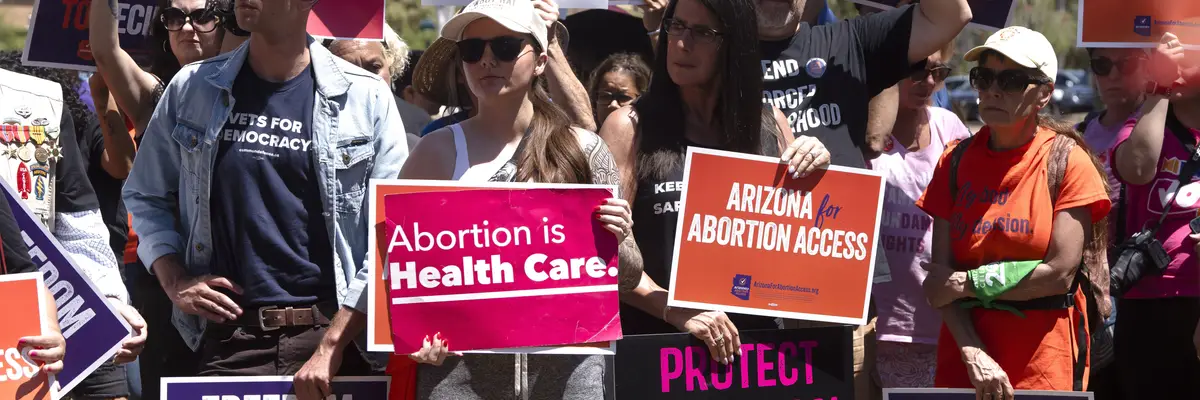
Members of Arizona for Abortion Access, the ballot initiative to enshrine abortion rights in the Arizona State Constitution, hold a press conference and protest condemning Arizona House Republicans and the 1864 abortion ban during a recess from a legislative session at the Arizona House of Representatives on April 17, 2024 in Phoenix, Arizona.
People living in states that have banned abortion are nearly twice as likely to die during pregnancy, childbirth, or soon after compared with those in states where abortion remains legal and accessible.
The maternal mortality crisis in the United States is a national embarrassment, and it’s unfolding in real time. The US continues to have one of the highest maternal death rates among high-income countries, and the situation is getting worse, not better. Behind this trend is a growing body of research showing that state abortion bans directly contribute to increased maternal mortality, especially in communities already burdened by systemic inequities.
Maternal mortality has traditionally reflected deep structural problems in a healthcare system that fails to serve all people equally. In 2024, the US maternal mortality rate ticked upward again, reversing a brief decline and demonstrating that the crisis is far from over. Experts point to a range of causes, including reduced access to prenatal care, maternity care deserts, and strained hospital systems, all problems intensified in states with abortion restrictions and in states with increased Immigration and Customs Enforcement (ICE) agents.
A comprehensive analysis from the most recent Centers for Disease Control and Prevention (CDC) mortality figures shows that people living in states that have banned abortion are nearly twice as likely to die during pregnancy, childbirth, or soon after compared with those in states where abortion remains legal and accessible. What’s more, in supportive states where abortion has remained legal, maternal mortality has declined by about 21% since 2022, suggesting that access to comprehensive reproductive care saves lives.
Restricting abortion does more than eliminate a medical procedure; it forces people to carry pregnancies that pose very real health risks. Childbirth has inherent dangers from hemorrhage and infection to hypertensive disorders and cardiac events, and the risk of death from pregnancy is at least 44 times higher than from abortion. When abortion is inaccessible, people are compelled to continue unwanted or medically unsafe pregnancies. That dynamic alone drives increased deaths that could otherwise have been prevented.
Bans do not reduce the prevalence of abortion; they reduce its safety, push people into riskier medical scenarios, and leave pregnant people with fewer options even when their health is at stake.
Racial and socioeconomic disparities in maternal mortality did not begin with the reversal of Roe v. Wade. Black birthing people in the US have long faced significantly higher death rates than white birthing people, a symptom of deep structural racism in healthcare, poverty, and chronic stress. But abortion bans have exacerbated these inequities.
In states with abortion bans, Black birthing people are more than three times as likely as white birthing people in those same states to die from pregnancy-related causes. Those figures make crystal clear that when we talk about maternal mortality, we are talking about a crisis of racial inequity, class inequity, and political neglect. States with the worst maternal health outcomes, including Louisiana, Mississippi, and Texas, are predominantly in the South and have enacted some of the most restrictive reproductive laws.
These disparities compound with other conditions such as limited access to early prenatal care—which the CDC reports has declined across the country, with the steepest drops among Black mothers. Delays in early care are associated with worse outcomes for both mother and baby and are worsened by the closure of maternity care facilities in rural and under-resourced areas.
For undocumented and immigrant communities, the maternal mortality crisis is layered with additional barriers. Fear of immigration enforcement, including ICE, deters people from seeking care, even in emergencies. Clinics in border states with large immigrant populations were already medically underserved before Dobbs, and abortion bans have deepened that inaccessibility. Many undocumented people lack insurance, fear reporting, or face economic barriers that make traveling for care impossible. These structural obstacles do not just delay care, they can literally cost lives.
Immigrant and mixed-status families are disproportionately concentrated in states with abortion bans, like Texas, Arizona, and Florida, meaning that people who already face the greatest systemic barriers to healthcare are also the most likely to lack access to safe abortion or comprehensive maternal services. This intersection of racist policy, reproductive restriction, and anti-immigrant enforcement creates a perfect storm that pushes already vulnerable people further to the margins and deeper toward harm.
Critics of abortion argue from moral or ideological positions, but the evidence shows that access to abortion care is fundamentally a matter of public health. Bans do not reduce the prevalence of abortion; they reduce its safety, push people into riskier medical scenarios, and leave pregnant people with fewer options even when their health is at stake.
We are now witnessing a preventable loss of life, and the window to act is closing.
We know how to prevent many maternal deaths: Expand access to comprehensive reproductive care (including abortion), strengthen prenatal and postpartum support, increase Medicaid coverage, invest in maternity care infrastructure, and dismantle the historic and systemic inequities that predict who lives and who dies. We know these interventions work because states that have protected reproductive rights are already seeing declines in maternal mortality.
To ignore this crisis is to ignore evidence, dignity, and the lives of pregnant people, especially those in Black, Indigenous, immigrant, and economically disadvantaged communities.
Dear Common Dreams reader, It’s been nearly 30 years since I co-founded Common Dreams with my late wife, Lina Newhouser. We had the radical notion that journalism should serve the public good, not corporate profits. It was clear to us from the outset what it would take to build such a project. No paid advertisements. No corporate sponsors. No millionaire publisher telling us what to think or do. Many people said we wouldn't last a year, but we proved those doubters wrong. Together with a tremendous team of journalists and dedicated staff, we built an independent media outlet free from the constraints of profits and corporate control. Our mission has always been simple: To inform. To inspire. To ignite change for the common good. Building Common Dreams was not easy. Our survival was never guaranteed. When you take on the most powerful forces—Wall Street greed, fossil fuel industry destruction, Big Tech lobbyists, and uber-rich oligarchs who have spent billions upon billions rigging the economy and democracy in their favor—the only bulwark you have is supporters who believe in your work. But here’s the urgent message from me today. It's never been this bad out there. And it's never been this hard to keep us going. At the very moment Common Dreams is most needed, the threats we face are intensifying. We need your support now more than ever. We don't accept corporate advertising and never will. We don't have a paywall because we don't think people should be blocked from critical news based on their ability to pay. Everything we do is funded by the donations of readers like you. When everyone does the little they can afford, we are strong. But if that support retreats or dries up, so do we. Will you donate now to make sure Common Dreams not only survives but thrives? —Craig Brown, Co-founder |
The maternal mortality crisis in the United States is a national embarrassment, and it’s unfolding in real time. The US continues to have one of the highest maternal death rates among high-income countries, and the situation is getting worse, not better. Behind this trend is a growing body of research showing that state abortion bans directly contribute to increased maternal mortality, especially in communities already burdened by systemic inequities.
Maternal mortality has traditionally reflected deep structural problems in a healthcare system that fails to serve all people equally. In 2024, the US maternal mortality rate ticked upward again, reversing a brief decline and demonstrating that the crisis is far from over. Experts point to a range of causes, including reduced access to prenatal care, maternity care deserts, and strained hospital systems, all problems intensified in states with abortion restrictions and in states with increased Immigration and Customs Enforcement (ICE) agents.
A comprehensive analysis from the most recent Centers for Disease Control and Prevention (CDC) mortality figures shows that people living in states that have banned abortion are nearly twice as likely to die during pregnancy, childbirth, or soon after compared with those in states where abortion remains legal and accessible. What’s more, in supportive states where abortion has remained legal, maternal mortality has declined by about 21% since 2022, suggesting that access to comprehensive reproductive care saves lives.
Restricting abortion does more than eliminate a medical procedure; it forces people to carry pregnancies that pose very real health risks. Childbirth has inherent dangers from hemorrhage and infection to hypertensive disorders and cardiac events, and the risk of death from pregnancy is at least 44 times higher than from abortion. When abortion is inaccessible, people are compelled to continue unwanted or medically unsafe pregnancies. That dynamic alone drives increased deaths that could otherwise have been prevented.
Bans do not reduce the prevalence of abortion; they reduce its safety, push people into riskier medical scenarios, and leave pregnant people with fewer options even when their health is at stake.
Racial and socioeconomic disparities in maternal mortality did not begin with the reversal of Roe v. Wade. Black birthing people in the US have long faced significantly higher death rates than white birthing people, a symptom of deep structural racism in healthcare, poverty, and chronic stress. But abortion bans have exacerbated these inequities.
In states with abortion bans, Black birthing people are more than three times as likely as white birthing people in those same states to die from pregnancy-related causes. Those figures make crystal clear that when we talk about maternal mortality, we are talking about a crisis of racial inequity, class inequity, and political neglect. States with the worst maternal health outcomes, including Louisiana, Mississippi, and Texas, are predominantly in the South and have enacted some of the most restrictive reproductive laws.
These disparities compound with other conditions such as limited access to early prenatal care—which the CDC reports has declined across the country, with the steepest drops among Black mothers. Delays in early care are associated with worse outcomes for both mother and baby and are worsened by the closure of maternity care facilities in rural and under-resourced areas.
For undocumented and immigrant communities, the maternal mortality crisis is layered with additional barriers. Fear of immigration enforcement, including ICE, deters people from seeking care, even in emergencies. Clinics in border states with large immigrant populations were already medically underserved before Dobbs, and abortion bans have deepened that inaccessibility. Many undocumented people lack insurance, fear reporting, or face economic barriers that make traveling for care impossible. These structural obstacles do not just delay care, they can literally cost lives.
Immigrant and mixed-status families are disproportionately concentrated in states with abortion bans, like Texas, Arizona, and Florida, meaning that people who already face the greatest systemic barriers to healthcare are also the most likely to lack access to safe abortion or comprehensive maternal services. This intersection of racist policy, reproductive restriction, and anti-immigrant enforcement creates a perfect storm that pushes already vulnerable people further to the margins and deeper toward harm.
Critics of abortion argue from moral or ideological positions, but the evidence shows that access to abortion care is fundamentally a matter of public health. Bans do not reduce the prevalence of abortion; they reduce its safety, push people into riskier medical scenarios, and leave pregnant people with fewer options even when their health is at stake.
We are now witnessing a preventable loss of life, and the window to act is closing.
We know how to prevent many maternal deaths: Expand access to comprehensive reproductive care (including abortion), strengthen prenatal and postpartum support, increase Medicaid coverage, invest in maternity care infrastructure, and dismantle the historic and systemic inequities that predict who lives and who dies. We know these interventions work because states that have protected reproductive rights are already seeing declines in maternal mortality.
To ignore this crisis is to ignore evidence, dignity, and the lives of pregnant people, especially those in Black, Indigenous, immigrant, and economically disadvantaged communities.
The maternal mortality crisis in the United States is a national embarrassment, and it’s unfolding in real time. The US continues to have one of the highest maternal death rates among high-income countries, and the situation is getting worse, not better. Behind this trend is a growing body of research showing that state abortion bans directly contribute to increased maternal mortality, especially in communities already burdened by systemic inequities.
Maternal mortality has traditionally reflected deep structural problems in a healthcare system that fails to serve all people equally. In 2024, the US maternal mortality rate ticked upward again, reversing a brief decline and demonstrating that the crisis is far from over. Experts point to a range of causes, including reduced access to prenatal care, maternity care deserts, and strained hospital systems, all problems intensified in states with abortion restrictions and in states with increased Immigration and Customs Enforcement (ICE) agents.
A comprehensive analysis from the most recent Centers for Disease Control and Prevention (CDC) mortality figures shows that people living in states that have banned abortion are nearly twice as likely to die during pregnancy, childbirth, or soon after compared with those in states where abortion remains legal and accessible. What’s more, in supportive states where abortion has remained legal, maternal mortality has declined by about 21% since 2022, suggesting that access to comprehensive reproductive care saves lives.
Restricting abortion does more than eliminate a medical procedure; it forces people to carry pregnancies that pose very real health risks. Childbirth has inherent dangers from hemorrhage and infection to hypertensive disorders and cardiac events, and the risk of death from pregnancy is at least 44 times higher than from abortion. When abortion is inaccessible, people are compelled to continue unwanted or medically unsafe pregnancies. That dynamic alone drives increased deaths that could otherwise have been prevented.
Bans do not reduce the prevalence of abortion; they reduce its safety, push people into riskier medical scenarios, and leave pregnant people with fewer options even when their health is at stake.
Racial and socioeconomic disparities in maternal mortality did not begin with the reversal of Roe v. Wade. Black birthing people in the US have long faced significantly higher death rates than white birthing people, a symptom of deep structural racism in healthcare, poverty, and chronic stress. But abortion bans have exacerbated these inequities.
In states with abortion bans, Black birthing people are more than three times as likely as white birthing people in those same states to die from pregnancy-related causes. Those figures make crystal clear that when we talk about maternal mortality, we are talking about a crisis of racial inequity, class inequity, and political neglect. States with the worst maternal health outcomes, including Louisiana, Mississippi, and Texas, are predominantly in the South and have enacted some of the most restrictive reproductive laws.
These disparities compound with other conditions such as limited access to early prenatal care—which the CDC reports has declined across the country, with the steepest drops among Black mothers. Delays in early care are associated with worse outcomes for both mother and baby and are worsened by the closure of maternity care facilities in rural and under-resourced areas.
For undocumented and immigrant communities, the maternal mortality crisis is layered with additional barriers. Fear of immigration enforcement, including ICE, deters people from seeking care, even in emergencies. Clinics in border states with large immigrant populations were already medically underserved before Dobbs, and abortion bans have deepened that inaccessibility. Many undocumented people lack insurance, fear reporting, or face economic barriers that make traveling for care impossible. These structural obstacles do not just delay care, they can literally cost lives.
Immigrant and mixed-status families are disproportionately concentrated in states with abortion bans, like Texas, Arizona, and Florida, meaning that people who already face the greatest systemic barriers to healthcare are also the most likely to lack access to safe abortion or comprehensive maternal services. This intersection of racist policy, reproductive restriction, and anti-immigrant enforcement creates a perfect storm that pushes already vulnerable people further to the margins and deeper toward harm.
Critics of abortion argue from moral or ideological positions, but the evidence shows that access to abortion care is fundamentally a matter of public health. Bans do not reduce the prevalence of abortion; they reduce its safety, push people into riskier medical scenarios, and leave pregnant people with fewer options even when their health is at stake.
We are now witnessing a preventable loss of life, and the window to act is closing.
We know how to prevent many maternal deaths: Expand access to comprehensive reproductive care (including abortion), strengthen prenatal and postpartum support, increase Medicaid coverage, invest in maternity care infrastructure, and dismantle the historic and systemic inequities that predict who lives and who dies. We know these interventions work because states that have protected reproductive rights are already seeing declines in maternal mortality.
To ignore this crisis is to ignore evidence, dignity, and the lives of pregnant people, especially those in Black, Indigenous, immigrant, and economically disadvantaged communities.