SUBSCRIBE TO OUR FREE NEWSLETTER
Daily news & progressive opinion—funded by the people, not the corporations—delivered straight to your inbox.
5
#000000
#FFFFFF
To donate by check, phone, or other method, see our More Ways to Give page.
Daily news & progressive opinion—funded by the people, not the corporations—delivered straight to your inbox.

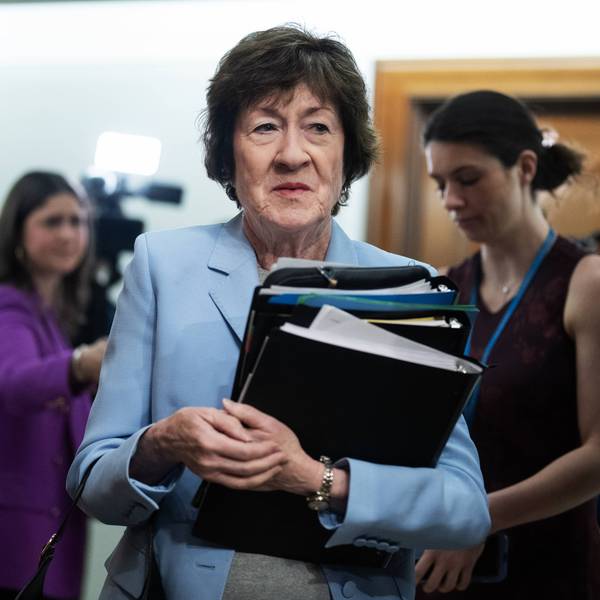
U.S. Senate Health, Education, Labor, and Pensions Committee Chair Bernie Sanders (I-Vt.) and Sen. Patty Murray (D-Wash.) arrive for a hearing in Washington, D.C. on March 22, 2023.
Sens. Bernie Sanders and Patty Murray stressed the need to show "how extreme right-wing abortion bans and restrictions on reproductive healthcare have endangered women, hurt families, and rolled back rights."
It's been nearly two years since the U.S. Supreme Court reversed Roe v. Wade, triggering a fresh wave of Republican restrictions on abortion at the state level—the topic of a Senate hearing that progressive leaders are planning for next week.
Senate Health, Education, Labor, and Pensions (HELP) Committee Chair Bernie Sanders (I-Vt.) and Sen. Patty Murray (D-Wash.), the panel's former leader, announced Wednesday that the hearing—titled, "The Assault on Women's Freedoms: How Abortion Bans Have Created a Healthcare Nightmare Across America"—will be held on June 4 at 10:00 am ET.
While the witness list has not been released yet, Sanders and Murray previewed the event in a joint statement, saying that "in the two years since Roe was overturned, Republican abortion bans have created a full-blown healthcare crisis—forcing providers to close their doors and shut down their practices, putting women's lives in danger, decimating access to maternal healthcare, and forcing women to remain pregnant, no matter their circumstances."
The June 2022 majority opinion in Dobbs v. Jackson Women's Health Organization and "Republican abortion bans have forced women to leave their states under duress or wait until they are near death to receive care," the pair noted. "Providers have been forced to make gut-wrenching decisions about whether to risk jail time to help a woman access the healthcare she needs."
As of May 1, just nine states and Washington, D.C. don't ban abortion or impose gestational limits, according to the Guttmacher Institute. That means 41 states have restrictions: 14 have total bans; seven ban abortion at or before 18 weeks; and 20 ban it after 18 weeks. Some states have exceptions for rape, incest, and the health of the pregnant person—though providers and patients have stressed that such policies often don't actually help those seeking care.
"The harm of Dobbs has extended far beyond states with extreme abortion bans" Sanders and Murray pointed out. "In places where abortion remains legal, women are waiting longer for care and providers are struggling to keep up with a dramatically increased patient load."
As Common Dreams reported last week, after Florida's six-week ban went into effect at the beginning of this month, wait times increased at 30% of the abortion clinics in the closest states and the driving distance for the average Floridian increased by nearly 30 times to 590 miles.
The influx of "healthcare refugees" is impacting places like Illinois, where Planned Parenthood saw its out-of-state patients jump from about 6% to nearly a third each month in the wake of Dobbs. Jennifer Welch, the provider's president and CEO, said in December 2022 that "the number of patients from other states forced to travel to our health centers is at a historic high."
As the GOP has worked to further restrict reproductive freedom since Dobbs, protecting and expanding such rights has become a top priority for voters across the country. For the 2024 cycle, campaigners in several states are focused on ballot measures affirming the right to abortion and other care, while Democratic President Joe Biden and the presumed Republican nominee, former President Donald Trump, have campaigned on their respective records.
Though some of Biden's public statements have frustrated rights advocates, the president supports access to abortion care. Trump, meanwhile, has both bragged about appointing three of the six justices who reversed Roe but also recognized the risks of openly backing the most extreme bans—as his allies plot major attacks on reproductive rights if he returns to office.
"The threats to a woman's right to make her own decisions about her body and her future keep coming—right now Republicans are working to rip away access to safe medication abortion, block women from receiving emergency abortion care that could save their lives, ban abortion nationwide, and restrict access to contraception," Sanders and Murray warned.
The U.S. Supreme Court is set to soon rule on one case that could restrict access to mifepristone, a medication commonly used for abortions, and another case about whether abortion care is included in the "necessary stabilizing treatment" that emergency healthcare departments are required to provide under federal law, as the Biden administration argues.
"And Republican attacks on basic healthcare are only escalating," Sanders and Murray said. "The anti-abortion movement has shown its cruelty and utter disregard for women's lives again and again, and it is essential that we use every opportunity to continue to make clear exactly how extreme right-wing abortion bans and restrictions on reproductive healthcare have endangered women, hurt families, and rolled back rights."
"We must continue to shine a light on the living nightmare extreme right-wing abortion bans and other healthcare restrictions have been for women across the country," they concluded, "and do everything we can to restore every woman's right to make her own healthcare decisions."
Dear Common Dreams reader, It’s been nearly 30 years since I co-founded Common Dreams with my late wife, Lina Newhouser. We had the radical notion that journalism should serve the public good, not corporate profits. It was clear to us from the outset what it would take to build such a project. No paid advertisements. No corporate sponsors. No millionaire publisher telling us what to think or do. Many people said we wouldn't last a year, but we proved those doubters wrong. Together with a tremendous team of journalists and dedicated staff, we built an independent media outlet free from the constraints of profits and corporate control. Our mission has always been simple: To inform. To inspire. To ignite change for the common good. Building Common Dreams was not easy. Our survival was never guaranteed. When you take on the most powerful forces—Wall Street greed, fossil fuel industry destruction, Big Tech lobbyists, and uber-rich oligarchs who have spent billions upon billions rigging the economy and democracy in their favor—the only bulwark you have is supporters who believe in your work. But here’s the urgent message from me today. It's never been this bad out there. And it's never been this hard to keep us going. At the very moment Common Dreams is most needed, the threats we face are intensifying. We need your support now more than ever. We don't accept corporate advertising and never will. We don't have a paywall because we don't think people should be blocked from critical news based on their ability to pay. Everything we do is funded by the donations of readers like you. When everyone does the little they can afford, we are strong. But if that support retreats or dries up, so do we. Will you donate now to make sure Common Dreams not only survives but thrives? —Craig Brown, Co-founder |
It's been nearly two years since the U.S. Supreme Court reversed Roe v. Wade, triggering a fresh wave of Republican restrictions on abortion at the state level—the topic of a Senate hearing that progressive leaders are planning for next week.
Senate Health, Education, Labor, and Pensions (HELP) Committee Chair Bernie Sanders (I-Vt.) and Sen. Patty Murray (D-Wash.), the panel's former leader, announced Wednesday that the hearing—titled, "The Assault on Women's Freedoms: How Abortion Bans Have Created a Healthcare Nightmare Across America"—will be held on June 4 at 10:00 am ET.
While the witness list has not been released yet, Sanders and Murray previewed the event in a joint statement, saying that "in the two years since Roe was overturned, Republican abortion bans have created a full-blown healthcare crisis—forcing providers to close their doors and shut down their practices, putting women's lives in danger, decimating access to maternal healthcare, and forcing women to remain pregnant, no matter their circumstances."
The June 2022 majority opinion in Dobbs v. Jackson Women's Health Organization and "Republican abortion bans have forced women to leave their states under duress or wait until they are near death to receive care," the pair noted. "Providers have been forced to make gut-wrenching decisions about whether to risk jail time to help a woman access the healthcare she needs."
As of May 1, just nine states and Washington, D.C. don't ban abortion or impose gestational limits, according to the Guttmacher Institute. That means 41 states have restrictions: 14 have total bans; seven ban abortion at or before 18 weeks; and 20 ban it after 18 weeks. Some states have exceptions for rape, incest, and the health of the pregnant person—though providers and patients have stressed that such policies often don't actually help those seeking care.
"The harm of Dobbs has extended far beyond states with extreme abortion bans" Sanders and Murray pointed out. "In places where abortion remains legal, women are waiting longer for care and providers are struggling to keep up with a dramatically increased patient load."
As Common Dreams reported last week, after Florida's six-week ban went into effect at the beginning of this month, wait times increased at 30% of the abortion clinics in the closest states and the driving distance for the average Floridian increased by nearly 30 times to 590 miles.
The influx of "healthcare refugees" is impacting places like Illinois, where Planned Parenthood saw its out-of-state patients jump from about 6% to nearly a third each month in the wake of Dobbs. Jennifer Welch, the provider's president and CEO, said in December 2022 that "the number of patients from other states forced to travel to our health centers is at a historic high."
As the GOP has worked to further restrict reproductive freedom since Dobbs, protecting and expanding such rights has become a top priority for voters across the country. For the 2024 cycle, campaigners in several states are focused on ballot measures affirming the right to abortion and other care, while Democratic President Joe Biden and the presumed Republican nominee, former President Donald Trump, have campaigned on their respective records.
Though some of Biden's public statements have frustrated rights advocates, the president supports access to abortion care. Trump, meanwhile, has both bragged about appointing three of the six justices who reversed Roe but also recognized the risks of openly backing the most extreme bans—as his allies plot major attacks on reproductive rights if he returns to office.
"The threats to a woman's right to make her own decisions about her body and her future keep coming—right now Republicans are working to rip away access to safe medication abortion, block women from receiving emergency abortion care that could save their lives, ban abortion nationwide, and restrict access to contraception," Sanders and Murray warned.
The U.S. Supreme Court is set to soon rule on one case that could restrict access to mifepristone, a medication commonly used for abortions, and another case about whether abortion care is included in the "necessary stabilizing treatment" that emergency healthcare departments are required to provide under federal law, as the Biden administration argues.
"And Republican attacks on basic healthcare are only escalating," Sanders and Murray said. "The anti-abortion movement has shown its cruelty and utter disregard for women's lives again and again, and it is essential that we use every opportunity to continue to make clear exactly how extreme right-wing abortion bans and restrictions on reproductive healthcare have endangered women, hurt families, and rolled back rights."
"We must continue to shine a light on the living nightmare extreme right-wing abortion bans and other healthcare restrictions have been for women across the country," they concluded, "and do everything we can to restore every woman's right to make her own healthcare decisions."
It's been nearly two years since the U.S. Supreme Court reversed Roe v. Wade, triggering a fresh wave of Republican restrictions on abortion at the state level—the topic of a Senate hearing that progressive leaders are planning for next week.
Senate Health, Education, Labor, and Pensions (HELP) Committee Chair Bernie Sanders (I-Vt.) and Sen. Patty Murray (D-Wash.), the panel's former leader, announced Wednesday that the hearing—titled, "The Assault on Women's Freedoms: How Abortion Bans Have Created a Healthcare Nightmare Across America"—will be held on June 4 at 10:00 am ET.
While the witness list has not been released yet, Sanders and Murray previewed the event in a joint statement, saying that "in the two years since Roe was overturned, Republican abortion bans have created a full-blown healthcare crisis—forcing providers to close their doors and shut down their practices, putting women's lives in danger, decimating access to maternal healthcare, and forcing women to remain pregnant, no matter their circumstances."
The June 2022 majority opinion in Dobbs v. Jackson Women's Health Organization and "Republican abortion bans have forced women to leave their states under duress or wait until they are near death to receive care," the pair noted. "Providers have been forced to make gut-wrenching decisions about whether to risk jail time to help a woman access the healthcare she needs."
As of May 1, just nine states and Washington, D.C. don't ban abortion or impose gestational limits, according to the Guttmacher Institute. That means 41 states have restrictions: 14 have total bans; seven ban abortion at or before 18 weeks; and 20 ban it after 18 weeks. Some states have exceptions for rape, incest, and the health of the pregnant person—though providers and patients have stressed that such policies often don't actually help those seeking care.
"The harm of Dobbs has extended far beyond states with extreme abortion bans" Sanders and Murray pointed out. "In places where abortion remains legal, women are waiting longer for care and providers are struggling to keep up with a dramatically increased patient load."
As Common Dreams reported last week, after Florida's six-week ban went into effect at the beginning of this month, wait times increased at 30% of the abortion clinics in the closest states and the driving distance for the average Floridian increased by nearly 30 times to 590 miles.
The influx of "healthcare refugees" is impacting places like Illinois, where Planned Parenthood saw its out-of-state patients jump from about 6% to nearly a third each month in the wake of Dobbs. Jennifer Welch, the provider's president and CEO, said in December 2022 that "the number of patients from other states forced to travel to our health centers is at a historic high."
As the GOP has worked to further restrict reproductive freedom since Dobbs, protecting and expanding such rights has become a top priority for voters across the country. For the 2024 cycle, campaigners in several states are focused on ballot measures affirming the right to abortion and other care, while Democratic President Joe Biden and the presumed Republican nominee, former President Donald Trump, have campaigned on their respective records.
Though some of Biden's public statements have frustrated rights advocates, the president supports access to abortion care. Trump, meanwhile, has both bragged about appointing three of the six justices who reversed Roe but also recognized the risks of openly backing the most extreme bans—as his allies plot major attacks on reproductive rights if he returns to office.
"The threats to a woman's right to make her own decisions about her body and her future keep coming—right now Republicans are working to rip away access to safe medication abortion, block women from receiving emergency abortion care that could save their lives, ban abortion nationwide, and restrict access to contraception," Sanders and Murray warned.
The U.S. Supreme Court is set to soon rule on one case that could restrict access to mifepristone, a medication commonly used for abortions, and another case about whether abortion care is included in the "necessary stabilizing treatment" that emergency healthcare departments are required to provide under federal law, as the Biden administration argues.
"And Republican attacks on basic healthcare are only escalating," Sanders and Murray said. "The anti-abortion movement has shown its cruelty and utter disregard for women's lives again and again, and it is essential that we use every opportunity to continue to make clear exactly how extreme right-wing abortion bans and restrictions on reproductive healthcare have endangered women, hurt families, and rolled back rights."
"We must continue to shine a light on the living nightmare extreme right-wing abortion bans and other healthcare restrictions have been for women across the country," they concluded, "and do everything we can to restore every woman's right to make her own healthcare decisions."