

SUBSCRIBE TO OUR FREE NEWSLETTER
Daily news & progressive opinion—funded by the people, not the corporations—delivered straight to your inbox.
5
#000000
#FFFFFF
To donate by check, phone, or other method, see our More Ways to Give page.

Free Press was created to give people a voice in the crucial decisions that shape our media. We believe that positive social change, racial justice and meaningful engagement in public life require equitable access to technology, diverse and independent ownership of media platforms, and journalism that holds leaders accountable and tells people what's actually happening in their communities.
(202) 265-1490



"It's really beyond what words can say, and it gives the sense that the destruction of Gaza is not over," the 49-year-old Italian jurist continued. "Seventy percent of the strip is under the control of the [Israeli] army, which is leveling as much as it can. There is an environmental catastrophe, a humanitarian catastrophe."
Israel's assault on Gaza began in the immediate aftermath of the Hamas-led attack of October 7, 2023, in which more than 1,100 Israelis and others were killed—at least some by so-called “friendly fire” and under the fratricidal Hannibal Directive—and over 240 people were abducted.
Prime Minister Benjamin Netanyahu and other Israeli officials soon began calling for the genocidal destruction of Gaza and its 2.2 million people. Netanyahu declared it a "holy mission" for Israel to fulfill a divine command to the Israelites to exterminate every man, woman, child, and animal in Amalek, the fictional archenemy of the ancient Jews.
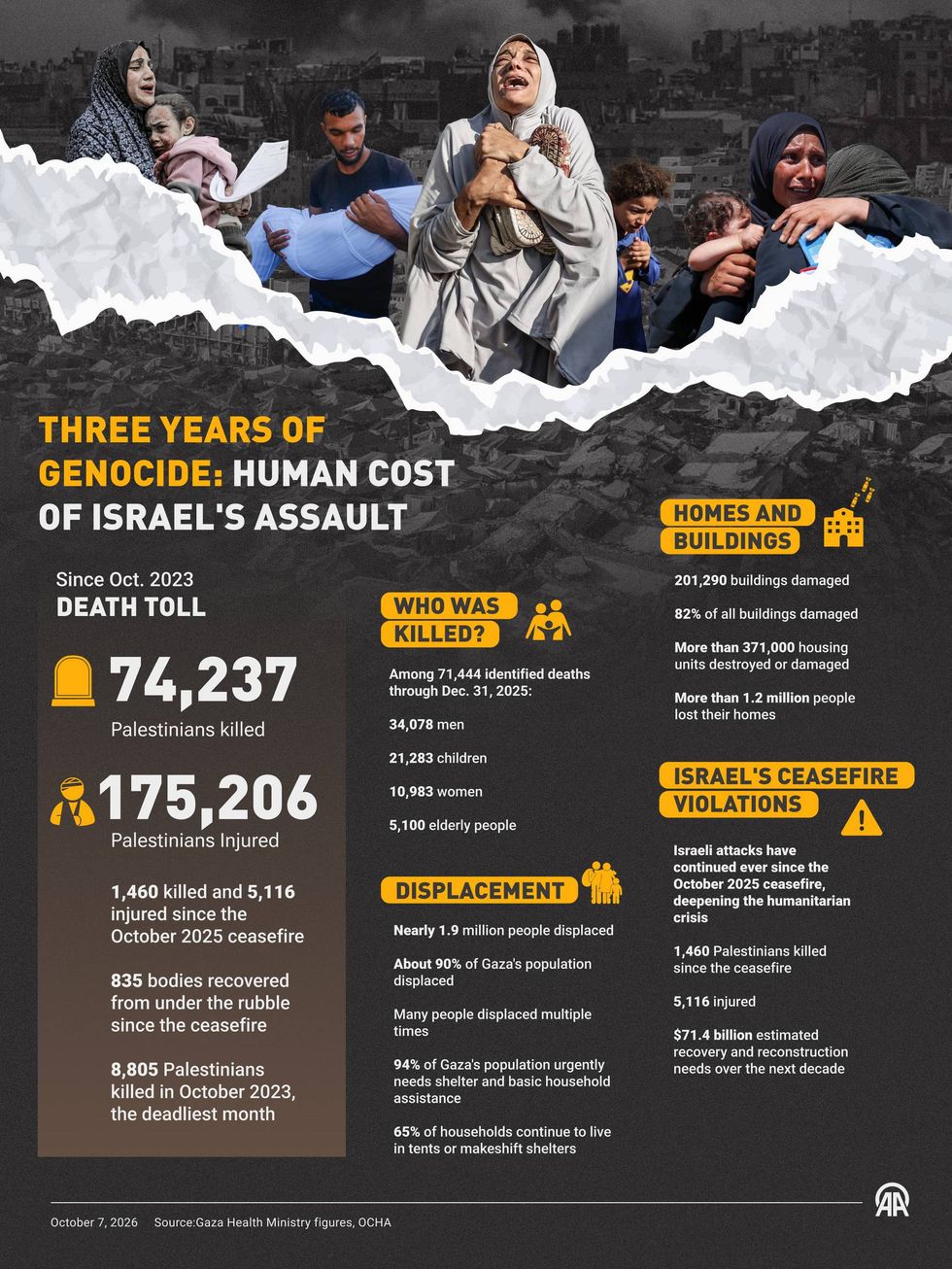
Over the past three years, Israeli forces have killed at least 74,237 Palestinians and wounded at least 175,206 others in Gaza, according to Gaza Health Ministry figures—which not only have been affirmed by senior Israeli military and intelligence officials, but are believed by the authors of multiple peer-reviewed scientific studies to be a significant undercount.
Tens of thousands of those injuries are classified as "life-altering," including thousands of amputations performed on adults and children, sometimes without anesthesia.
The Gaza Health Ministry says more than 10,000 of those killed were women, over 5,100 were elderly, and upward of 21,000 were children—figures supported by classified Israel Defense Forces intelligence data suggesting that 5 in 6 Palestinians killed by the IDF through the first 19 months of the onslaught were civilians.
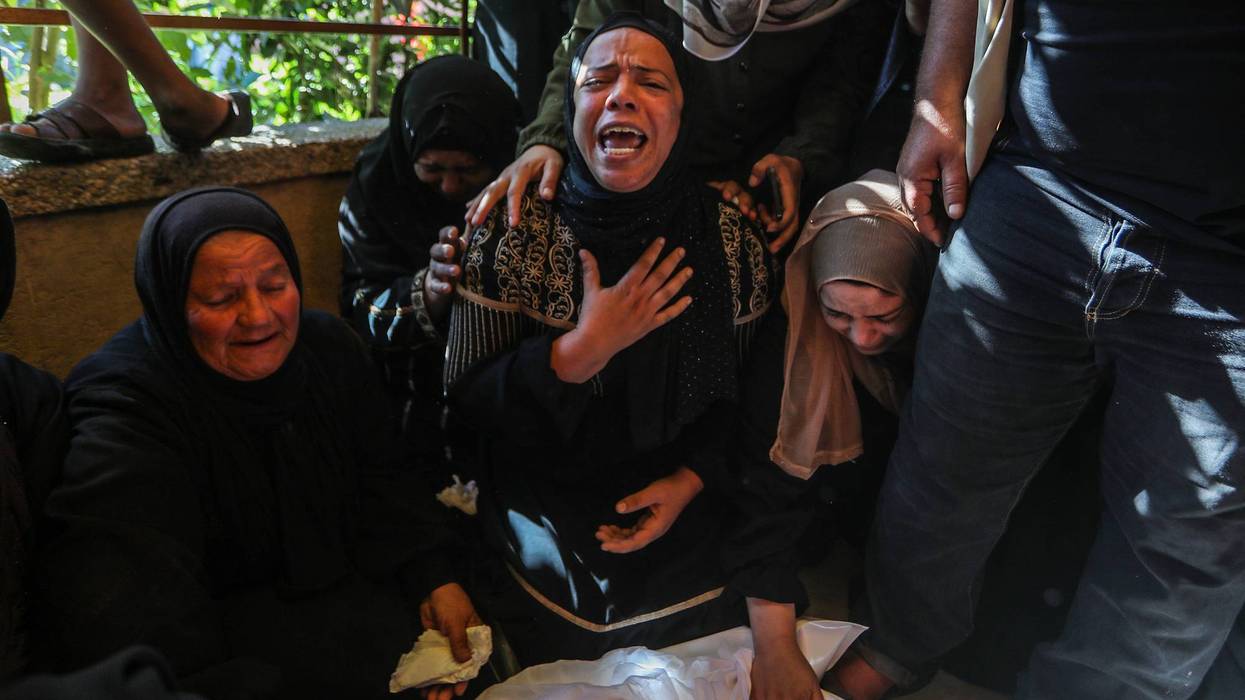
Tens of thousands of children have also been left without one or both parents, with more than 2,700 families suffering so many deaths that they were erased from the civil registry in Gaza. The UN Children's Fund called the strip the "world's most dangerous place to be a child."
In the wake of the October 7 attack, the IDF dramatically loosened rules of engagement, effectively allowing an unlimited number of civilians to be killed when targeting a single Hamas member, no matter how low-ranking. The IDF’s use of massive ordnance, including US-supplied 1,000- and 2,000-pound “bunker buster” bombs, and the utilization of artificial intelligence to select targets, have resulted in staggering numbers of civilian deaths, including numerous instances of dozens or more people being massacred in single strikes.
At closer range, current and former IDF troops have accused their own of deliberately shooting Palestinian civilians, including children, sometimes out of sheer boredom. Palestinian medical professionals—who, like journalists and aid workers, have suffered hundreds of their ranks killed by Israeli bombs and bullets—have also described what they say is the deliberate shooting of Gazans, including children.
On October 8, 2023, then-Israeli Defense Minister Yoav Gallant ordered the "complete siege" of Gaza, explaining that "we are fighting human animals, and we are acting accordingly." The siege, which is actually a tightening of a decadeslong blockade of Gaza, fueled famine and disease that killed many of the most vulnerable people in the strip. Nothing was spared, including hospitals and other medical facilities, whose staff members were sometimes abducted and tortured—allegedly to death in at least one case—by their Israeli captors.
Around 90% of Gaza's population—around 1.9 million people—has been forcibly displaced, most of them multiple times. With the vast bulk of Gaza's buildings damaged or destroyed, nearly two-thirds of Gazans continue to live in tents or makeshift shelters as the war's fourth winter, and with it the prospect of more infants and newborns dying of hypothermia, approaches.
Despite a purported year-old ceasefire, Israeli forces continue to kill, wound, and displace Palestinians in Gaza to this day. Gaza officials say that at least 1,460 people have been killed and more than 5,100 others have been wounded since the ceasefire took effect. Israel is still blocking or delaying desperately needed humanitarian aid from entering Gaza, although there have been some improvements in delivery during the ceasefire period.
Meanwhile, Israeli calls for more ethnic cleansing, occupation, and possibly even the Jewish recolonization of Gaza continue. And while President Donald Trump no longer openly discusses a US takeover and redevelopment of the Mediterranean strip into the "Riviera of the Middle East," his administration is still trying to determine Gaza's future through vehicles like his widely derided "Board of Peace."
In November 2024, the International Criminal Court in The Hague, Netherlands issued arrest warrants for Netanyahu and Gallant for alleged war crimes and crimes against humanity in Gaza, including murder and forced starvation. The ICC simultaneously ordered the arrest of three senior Hamas officials, but Israel has since assassinated them.
The International Court of Justice (ICJ), also in The Hague, is currently in the written stage of a genocide case against Israel brought by South Africa and formally supported by more than 15 nations. While a ruling in the case isn't expected until at least the end of the decade, a UN commission of inquiry, the International Association of Genocide Scholars, and other experts—including many Israeli and international Jewish academics, jurists, human rights campaigners, and others—have already concluded that Israel is committing genocide in Gaza.
Yet genocide denial persists in Israel, the United States, and among supporters of Israel's destruction of Gaza around the world. And while numerous nations have severed diplomatic ties with Israel or imposed sanctions—sometimes both—the United States under both the Biden and Trump administrations has lavished the key Middle East ally with tens of billions of dollars in armed aid, as well as diplomatic cover including a string of vetoes of UN Security Council ceasefire resolutions.
Furthermore, the Trump administration has moved to punish members of the ICC, ICJ, and UN, including Albanese—who has been relentlessly critical of both Israel's genocide and Western complicity, especially by the United States.
On the other hand, increasing diplomatic recognition of Palestine by even Israel's allies and a worldwide wave of protests against the Gaza genocide—including numerous demonstrations organized and led by Jewish groups—has shown Palestinians that much of the world stands in solidarity with them.
"There are really these two forces... symbolically, fighting against each other," Albanese told Anadolu during Wednesday's interview. "Those who want to continue the genocide, the exploitation, and the erasure of Palestine, and those who want to stop it."
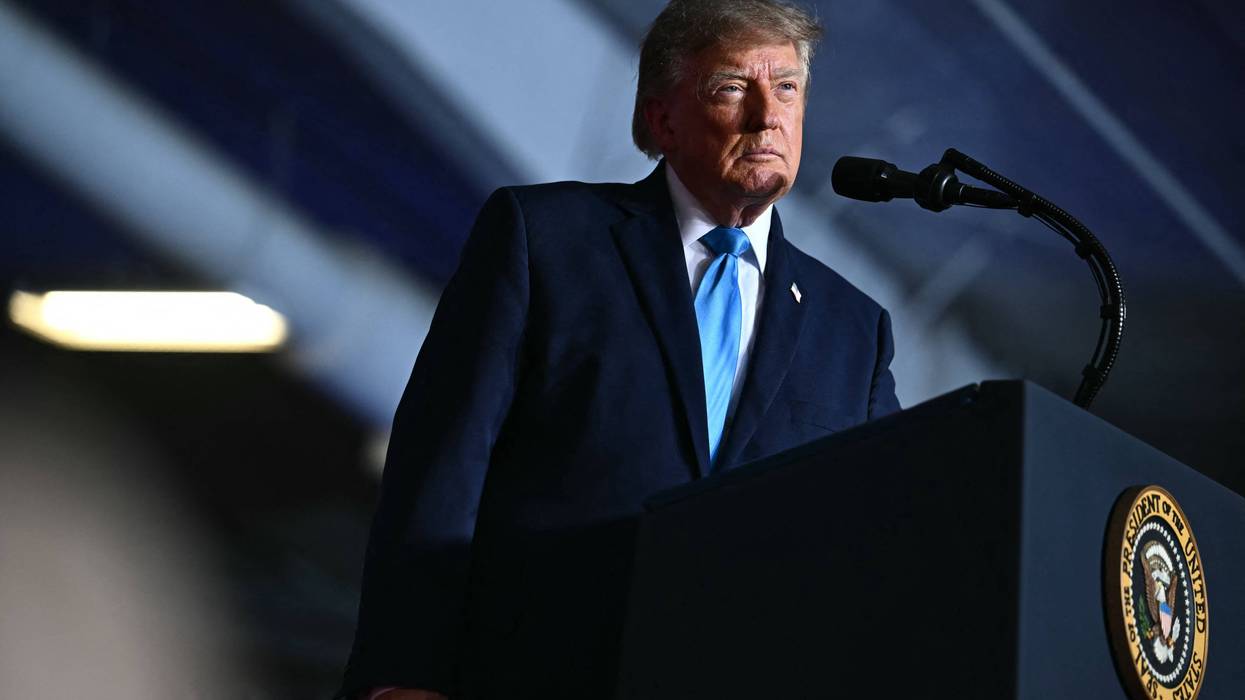
Hours later, during a rally in Maryland, he shouted out Russell Vought, the director of the White House Office of Management and Budget (OMB). Vought, a key architect of Project 2025, has been instrumental in Trump's second-term restructuring of the federal government and in weaponizing federal funding to exert leverage over states.
"We have some big surprises coming up in another few weeks, right, Russ?" Trump said. "He's going to be one of the very important people in the history of our country, in my opinion. He's got some great things happening.”
In light of Trump's suggestions that he could "nationalize" elections or outright "cancel" them, send immigration agents to polling places, seize voting machines, or use federal agencies to seek out "ineligible" voters, his unexplained intonations about a coming "surprise" immediately became the subject of rampant speculation.
"The time to prepare for him to try to steal an election is now," wrote Fox News anchor Jessica Tarlov. Former US Attorney Joyce Vance wrote that it signaled “election interference is in the offing.” Conservative Trump critic Pedro Gonzalez warned that it could signal a "repeat of 2020," when Trump attempted to overturn his loss to former President Joe Biden by pushing false claims of widespread voter fraud.
"Nothing this administration has done so far has come out of nowhere."
Common Dreams spoke with several voting rights and election security experts about what sorts of "surprises" Trump may have in store and what powers he may actually attempt to wield. They made one thing abundantly clear: Whatever he tries to do—legal or otherwise—they're ready.
"No one outside the administration knows what a 'Midterm Surprise' means, but nothing this administration has done so far has come out of nowhere," said Cerin Lindgrensavage, who serves as counsel for Protect Democracy. "They have been signaling their plans for months."
Lindgrensavage told Common Dreams that "one clue" was the administration's use of federal payouts to voters—which some critics have characterized as "bribes"—including Trump's promise to send each American adult a $5,000 check if Republicans emerge victorious. Last week, Trump announced that around 20 million Medicare recipients would receive $90 checks from a fund meant to improve the program.
"We've been paying attention to the accelerating pace at which federal money is being shipped out the door and heralded in big announcements, in ways that look more like popularity plays than what Congress intended the use of those funds for," Lindgrensavage said.
Michael McNulty, the senior policy director at Issue One, agreed that while we "can't know exactly" what Trump has in mind, "we can look at the pattern," which his organization has described as the "election takeover playbook."
"It starts with tired, recycled false election fraud narratives such as claims of foreign interference, noncitizen voting, mail-in voting problems—despite himself voting by mail in previous elections—or ‘corrupt’ election officials, even when the evidence contradicts them," McNulty explained. "He then uses that to justify trying to take control of election processes, whether through an emergency declaration, demands for state voter data and election materials, or federal agents near polling places."
"It ends," he said, "with efforts to undermine certification if the results aren't what the administration wants."
OMB has no formal authority over elections. But McNulty stressed that Vought could still use his office's powers to exert "indirect" influence over the states that run them.
"Withholding funds, imposing grant conditions, and coordination with other agencies," he said, "could be used to pressure states and localities."
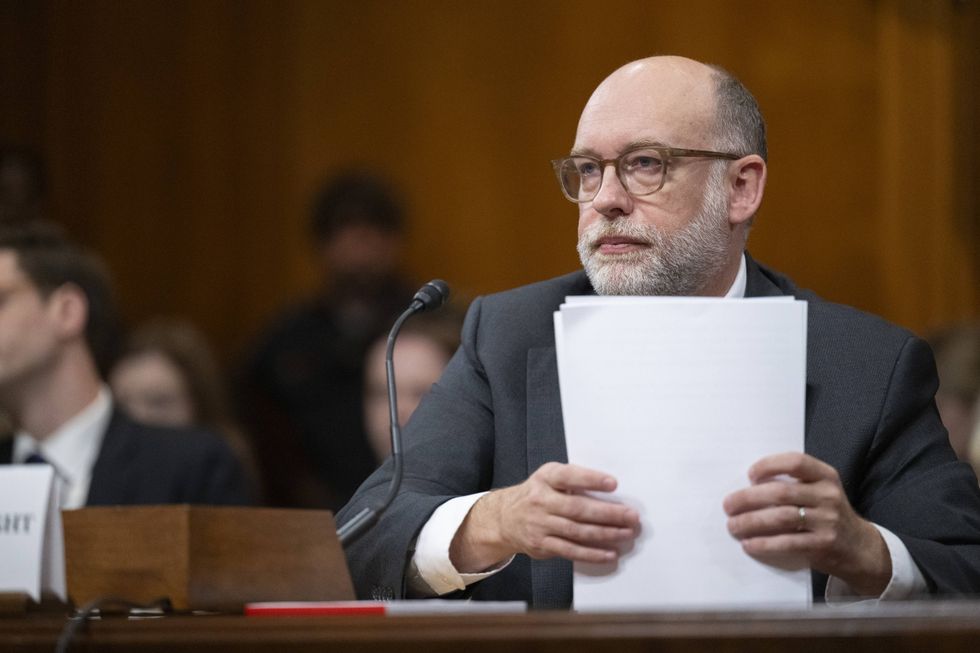 Russell Vought, the director of the Office of Management and Budget (OMB) for the second Trump administration, speaks during a Senate Committee on the Budget hearing to examine the president's fiscal year 2027 budget proposal on Capitol Hill on April 16, 2026, in Washington, DC. (Photo by Roberto Schmidt/Getty Images)
However, he said to "keep in mind those levers are limited by what Congress has authorized, and courts have repeatedly pushed back on funding conditions that go beyond the law."
McNulty told Common Dreams he is unaware of any specific effort directly tying OMB to election administration, but said there was a risk of possible coordination among OMB and the departments of Homeland Security and Justice "on voter data, security funding, and Election Day activity."
“We have strong protections in place, and we intend to use them."
Other experts suggested it was less useful to speculate on what Trump might do than to look at how he is already trying to exceed his legal authority.
Trump has repeatedly suggested that he should have had federal authorities seize voting machines in 2020. Democracy Docket reported on Tuesday that election denialist activists urged him to declare a "national emergency" to do just that while meeting with him in the White House recently.
Pamela Smith, the president and CEO of Verified Voting, said her organization was prepared in case Trump attempts to seize voting machines or other election materials.
“The states run elections, and the president has no authority to affect those processes, as courts have repeatedly shown," Smith told Common Dreams.
By preparing officials for what to do if chains of custody on ballots are broken, she said, "we are helping election offices prepare for any threats to ballots throughout the November 3 election and in the weeks that follow, so that every ballot can be tracked, secured, and accounted for."
John Cusick, assistant counsel for the NAACP Legal Defense Fund (LDF), told Common Dreams his group is preparing for threats ranging from federal interference in election administration to voter intimidation and mass voter challenges.
“We have strong protections in place, and we intend to use them,” Cusick said, pointing in particular to Section 11(b) of the Voting Rights Act, which prohibits voter intimidation.
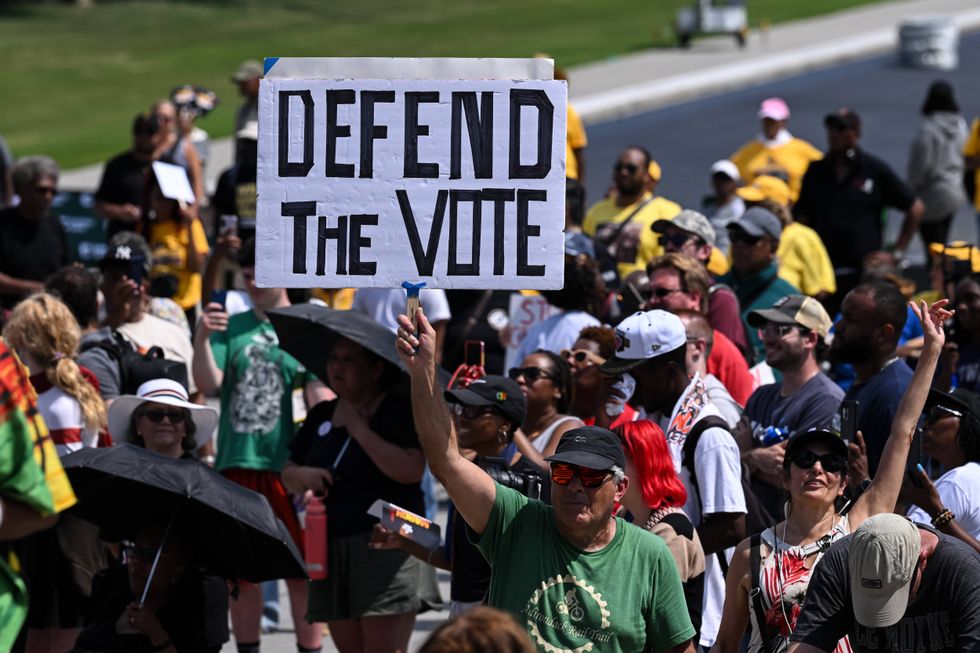 Demonstrators gather on the National Mall during a 'Defend the Vote' rally marking the 63rd anniversary of the 1963 March on Washington in Washington, DC, on August 28, 2026. (Photo by Mehmet Eser/Anadolu via Getty Images)
He noted that LDF has already sued over the prospect of federal law enforcement at polling places.
“Let me be plain," he said, "a polling place is not a checkpoint.”
Cusick said LDF is also working with national, state, and local partners to identify problems ahead of election day and train volunteers to observe and report suppression efforts.
"We will protect this election," he said. "But it should not take such a herculean effort from the civil rights community to secure and protect voting rights. Congress must meet its constitutional responsibility to ensure every eligible voter can participate free from discrimination, no matter where they live."
He called on Congress to strengthen voting rights protections, establish national election administration standards, and provide more funding directly to local election officials.
Celina Stewart, the CEO of the League of Women Voters, told Common Dreams she would not speculate on what surprise attacks Trump may have in store or attempt to "assign meaning where no evidence exists."
"What we do know is that election administration in the United States is governed by law, distributed across states and local jurisdictions, and constrained by constitutional checks and balances," she said. "No president has unilateral authority to control election administration, determine election outcomes, or override the lawful counting and certification of ballots."
"Any attempt by any federal official to exceed constitutional or statutory authority would be subject to legal challenge and public scrutiny," she said. "Our focus is not on political rhetoric but on ensuring that voters can cast ballots freely, that election officials can do their jobs without interference, and that the 2026 elections are administered according to law."