

5
#000000
#FFFFFF
To donate by check, phone, or other method, see our More Ways to Give page.
Daily news & progressive opinion—funded by the people, not the corporations—delivered straight to your inbox.
Mana Mostatabi, mmostatabi@niacouncil.org
In response to the act of sabotage against Iran's Natanz nuclear facility and Iran's announcement that it will start enriching uranium at the 60-percent level, the National Iranian American Council (NIAC) released the following statement:
In response to the act of sabotage against Iran's Natanz nuclear facility and Iran's announcement that it will start enriching uranium at the 60-percent level, the National Iranian American Council (NIAC) released the following statement:
"The attack on Natanz was a reckless provocation that has hampered prospects for a peaceful resolution of the Iran nuclear crisis. That very likely was the intent. Iran's decision to respond by enriching uranium to the 60-percent level -- for which it has no practical need -- is a counterproductive but unfortunately predictable outcome. NIAC calls on all sides to exercise restraint and for the U.S. and Iran to recommit themselves to a speedy return to JCPOA compliance at talks in Vienna this week.
The attack, which outlets such as the New York Times have attributed to Israel, came as diplomatic efforts were making progress on all sides returning to compliance with the JCPOA. If true, it is a remarkable assault by a U.S. partner and client against American interests and to subvert the prerogatives of our elected leadership. The Biden Administration should make clear to its partners and clients that there will be consequences for efforts to sabotage its agenda and put American lives at risk.
The track record of sabotaging Iran's nuclear activities is clear. Iran has consistently responded to attacks on its nuclear facilities and scientists by expanding its nuclear program. Iran doubles down, fortifies its nuclear program, and counter-escalates. This was the case last year, when after the assassination of scientist Mohsen Fakhrizadeh, Iran restarted 20-percent enrichment and installed far more advanced centrifuges at its enrichment sites. Each act of escalation raises the stakes, mandating bigger and bigger actions to salvage a diplomatic outcome.
In contrast, the diplomatic model offered by the JCPOA won sustainable, long-term limits on Iran's nuclear program. The JCPOA was working for years to block off Iran's pathways to nuclear weapons before the Trump administration reneged on the deal. Thankfully, the diplomatic breakthrough and window to return to the JCPOA has not been shut despite the best efforts of some, and the U.S., Iran, and international community should seek a swift return to full compliance with the accord."
The National Iranian American Council (NIAC) is a nonpartisan, nonprofit organization founded in 2002 to give voice to the Iranian-American community. From being the trusted voice on U.S.- Iran relations, to pushing forth legislation that protects individuals of Iranian heritage from systematic discrimination, to celebrating our cultural heritage, NIAC creates a lasting impact in the lives of the members of our community.
(202) 386-6325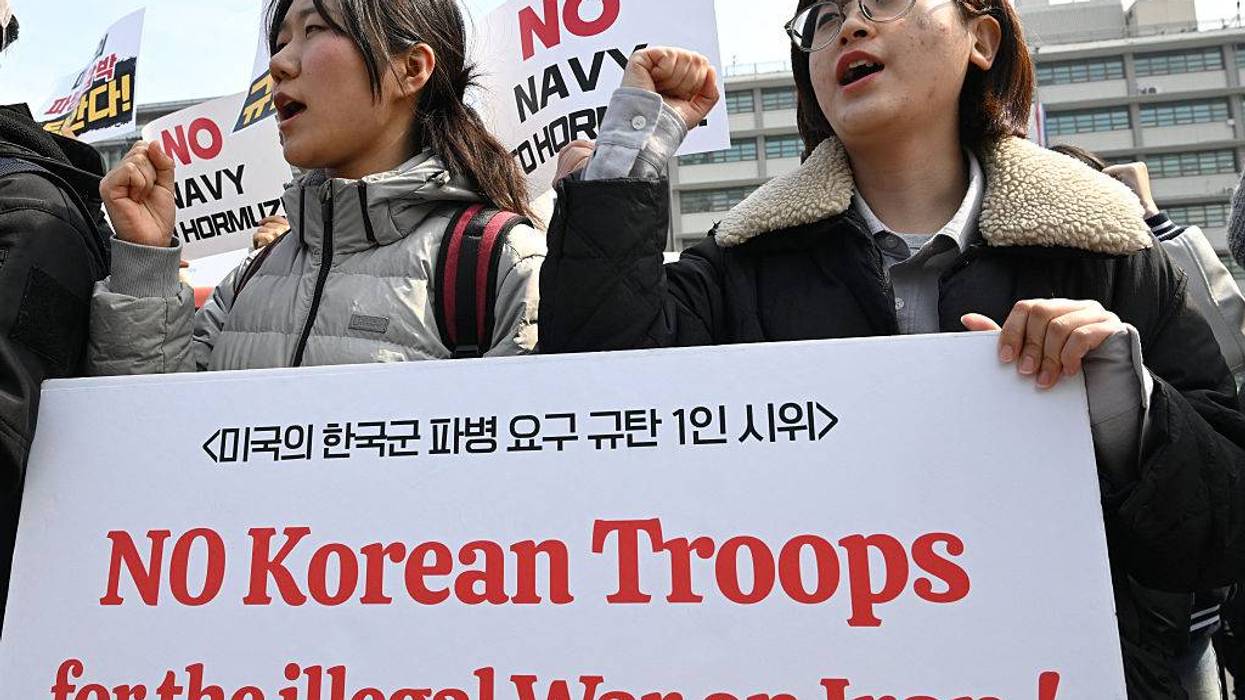
"What does Trump expect from a handful of European frigates that the powerful US Navy cannot do?" said one German official.
US allies are giving President Donald Trump the cold shoulder after he demanded that they send their militaries to help him reopen and secure the Strait of Hormuz, which has been shut down by the Iranian government in response to US and Israeli attacks.
Reuters chief national security correspondent Phil Stewart collected reactions from several US allies to Trump's demands in a Monday social media post, and they show little appetite for helping the president out of the jam he created when he launched an unprovoked and unconstitutional war with Iran more than two weeks ago.
German Defense Minister Boris Pistorius spoke bluntly about his country's unwillingness to get involved in what has become a regional conflict in the Middle East that has sent global energy prices soaring and is threatening to upend the global economy.
"What does Trump expect from a handful of European frigates that the powerful US Navy cannot do?" Pistorius asked. "This is not our war, we have not started it."
UK Prime Minister Keir Starmer stated flatly that his nation would not be "drawn into the wider Iran war," and insisted that only a diplomatic solution could ease the crisis.
"We are working with others to come up with a credible plan for the Strait of Hormuz to ensure that we can reopen shipping and passage through the Strait," he said. "Let me be clear, that won't be and it's never been envisioned to be a NATO mission."
Catherine King, a member of Australian Prime Minister Anthony Albanese's cabinet, said there were no plans to have the Australian military participate in Trump's efforts to reopen the strait.
"We won't be sending a ship to the Strait of Hormuz," King said. "We know how incredibly important that is, but that's not something that we've been asked or that we're contributing to."
Japanese Prime Minister Sanae Takaichi didn't completely rule out sending escort ships to help oil tankers navigate the strait, but she emphasized there are no plans to do so at the moment.
"We have not made any decisions whatsoever about dispatching escort ships," said Takaichi. "We are continuing to examine what Japan can do independently and what can be done within the legal framework."
Trump started publicly calling on US allies to assist in reopening the strait in a Saturday Truth Social post, in which he said "hopefully China, France, Japan, South Korea, the UK, and others, that are affected by this artificial constraint, will send Ships to the area so that the Hormuz Strait will no longer be a threat by a Nation that has been totally decapitated."
Trump repeated his demands to US allies while talking with reporters on Air Force One on Sunday, arguing that getting the strait reopened was in the interest of all nations.
"Really, I'm demanding that these countries come in and protect their own territory, because it is their territory," Trump said. "You could make the case that maybe we shouldn't be there at all, because we don't need it. We have a lot of oil."

US Sen. Ed Markey warned that the Trump administration is engaged in a "blatant attempt to muzzle the free press."
US President Donald Trump late Sunday floated "treason" charges against media outlets that he accused of reporting false information about the Iran war as the human and economic costs of his illegal military assault continued to mount.
In a tirade posted to his Truth Social platform, Trump wrote that media outlets he accused of circulating "fake news" should "be brought up on Charges for TREASON for the dissemination of false information." The maximum penalty for treason in the US is death.
Trump specifically called out the Rupert Murdoch-owned Wall Street Journal for reporting over the weekend that "five US Air Force refueling planes were struck and damaged on the ground at Prince Sultan air base in Saudi Arabia." Citing two unnamed US officials, the Journal noted that "the tankers were hit during an Iranian missile strike on the Saudi base," and that the planes were "damaged but not fully destroyed and are being repaired."
The US president called the story "false reporting" without substantively refuting its content. Trump wrote that four of the refueling planes are "in service" and one "will soon be flying the skies"—none of which is inconsistent with the Journal's reporting.
Trump, who regularly uses his social media platform to circulate AI-generated videos and photos, also complained about an AI video purportedly showing the USS Abraham Lincoln on fire. The president claimed the video was "distributed by Corrupt Media Outlets," without offering any examples. AFP published a fact-check of the video last week, deeming it "fabricated footage."
Trump's latest attack on the US media came after his Federal Communications Commission chair, Brendan Carr, threatened Saturday to pull the broadcasting licenses of media outlets he accused of "running hoaxes and news distortions." Carr did not provide specific examples.
The US president said Sunday that he was "thrilled to see" Carr's threat, railing against "Corrupt and Highly Unpatriotic" news organizations.
Trump and other administration officials, including Pentagon Secretary Pete Hegseth, have openly whined in recent days about what they've deemed negative coverage of the Iran assault, now in its third week with no end in sight.
Aboard Air Force One on Sunday, Trump attacked a reporter as "a very obnoxious person" after she asked the president why he's sending 5,000 US Marines and sailors to the Middle East.
US Sen. Ed Markey (D-Mass.) warned in a letter to Carr on Sunday that the Trump administration is engaged in a "blatant attempt to muzzle the free press" if outlets don't align their coverage of the Iran war "with Trump's preferred narrative."
"Your Saturday post follows that same logic but extends it to the coverage of an active military conflict, where the chilling effect on journalists and the damage to the public’s right to know are most severe," Markey wrote to Carr.
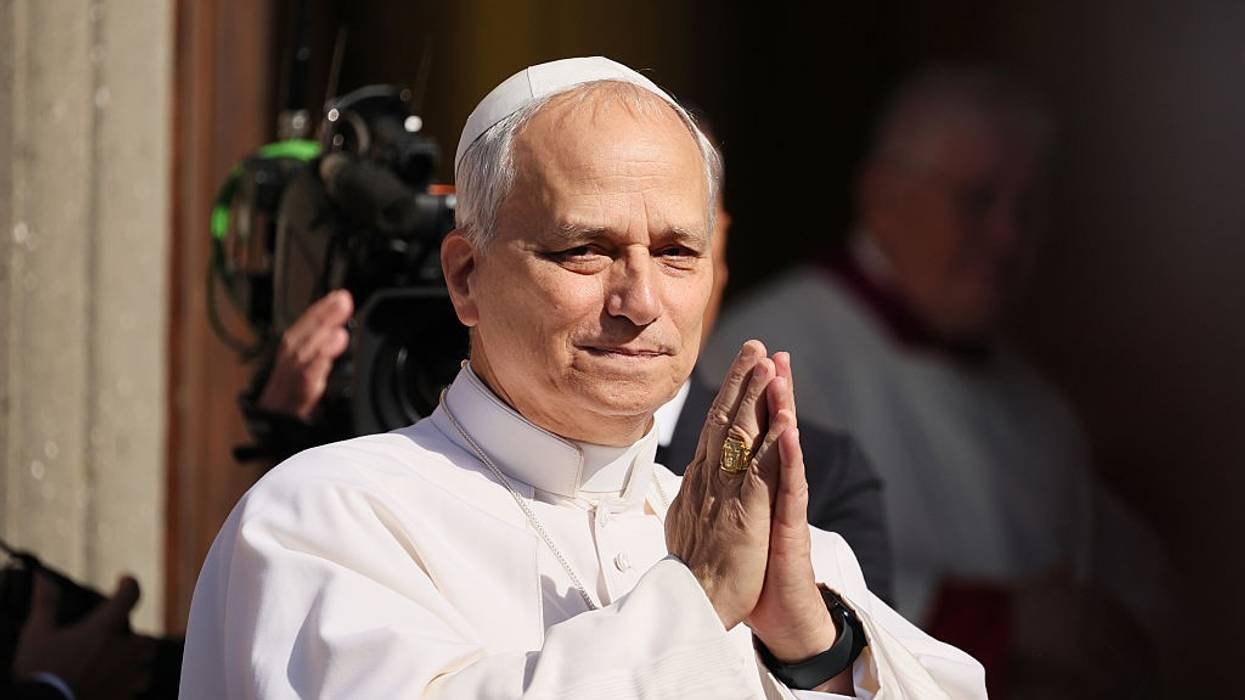
"Violence can never lead to the justice, stability, and peace that the people are waiting for,” the pope said during a prayer.
Pope Leo XIV called for a ceasefire in the Middle East on Sunday, in his most direct appeal for peace since the US and Israel launched a war on Iran on February 28.
While the pope did not mention either US President Donald Trump or Israeli Prime Minister Benjamin Netanyahu by name, he directly addressed those driving hostilities.
“On behalf of the Christians of the Middle East and all women and men of good will, I appeal to those responsible for this conflict,” Leo said, according to The Associated Press. “Cease fire so that avenues for dialogue may be reopened. Violence can never lead to the justice, stability, and peace that the people are waiting for.”
The remarks came following his recital of the Angelus Prayer from the Vatican at 12:00 pm local time.
“Some claim to involve the name of God in these deadly decisions, but God cannot be enlisted by darkness."
"The people of the Middle East for two weeks have been suffering the atrocious violence of war," he began.
He continued: “Thousands of innocent people have been killed, and many others have been forced to abandon their homes. I renew my prayerful closeness to all those who have lost their loved ones in the attacks that have struck schools, hospitals, and residential areas."
According to AP, the mentioned school strike likely referred to the US bombing of an elementary school in Minab, Iran on the first day of the war, which killed at least 175 people, the majority of whom were children.
Pope Leo also repeated concerns about the situation in Lebanon, and called for "paths of dialogue that can support the country’s authorities in implementing lasting solutions to the serious crisis underway."
Israeli attacks on that country have forced about 1 million people to abandon their homes and killed more than 800, The Guardian reported.
The pope's remarks came two days after a Israeli strikes killed 12 healthcare workers at the primary healthcare facility in Burj Qalaouiyah, Lebanon, an attack that the country's health ministry said "violated all international humanitarian laws.”
Director-General of the World Health Organization Tedros Adhanom Ghebreyesus said in a statement Saturday: "WHO condemns this tragic loss of life and emphasizes that health workers must always be protected. According to international humanitarian law, medical personnel and facilities should never be attacked or militarized."
He continued: "The intensification of conflict in Lebanon and the broader Middle East increases the likelihood of such tragedies. Urgent action is required to de-escalate the crisis and protect the health of people throughout the region."
In Iran, meanwhile, US and Israeli attacks on the city of Isfahan killed at least 15 people Sunday morning, and the total death toll for the country is around 1,400, according to Al Jazeera.
Following his remarks during the Angelus Prayer, Pope Leo also addressed the war while conducting a pastoral visit to a suburb of Rome.
“Currently, many of our brothers and sisters in the world are suffering from violent conflicts, caused by the absurd claim that problems and differences can be resolved through war,” he said, as Agence France-Presse reported.
He also criticized those who use religion to justify violence: “Some claim to involve the name of God in these deadly decisions, but God cannot be enlisted by darkness. It is peace that those who invoke him must seek.”