March, 03 2014, 10:12am EDT
Ukraine: Exploding the Myths, Outlining Solutions
The following may be available for comment regarding the ongoing situation in Ukraine.
STEPHEN COHEN, sfc1 at nyu.edu
Available for a very limited number of interviews, Cohen is professor emeritus at New York University and Princeton University. His books include Soviet Fates and Lost Alternatives: From Stalinism to the New Cold War. He recently wrote the piece "Distorting Russia: How the American Media Misrepresent Putin, Sochi and Ukraine" for The Nation.
WASHINGTON
The following may be available for comment regarding the ongoing situation in Ukraine.
STEPHEN COHEN, sfc1 at nyu.edu
Available for a very limited number of interviews, Cohen is professor emeritus at New York University and Princeton University. His books include Soviet Fates and Lost Alternatives: From Stalinism to the New Cold War. He recently wrote the piece "Distorting Russia: How the American Media Misrepresent Putin, Sochi and Ukraine" for The Nation.
Cohen said on CNN this weekend: "That so-called economic partnership that Yanukovych, the elected president of Ukraine did not sign, and that set off the streets -- the protests in the streets in November, which led to this violence ... that so-called economic agreement included military clauses which said that Ukraine, by signing this so-called civilization agreement had to abide by NATO military policy. This is what this is about from the Russian point of view, the ongoing western march towards post Soviet Russia. Putin had no choice, and he has no choice, and if you put him in the corner, you are going to see worse." Also see second interview.
FRANCIS BOYLE, fboyle at illinois.edu
Boyle is a professor at the University of Illinois College of Law. His books include Foundations of World Order (Duke University Press: 1999). He said today: "John Kerry is claiming to stand for international law and invokes the 1994 Budapest Agreement. Of course the U.S. has repeatedly violated international law, with the Iraq invasion (which Kerry voted for) and numerous other instances. But even in this case, if you examine the Victoria Nuland [assistant secretary of state] tape, it's clear that the U.S. was plotting a coup in the Ukraine and a coup is what happened. So Russia is only the second country guilty of violating Ukrainian sovereignty and the Budapest Agreement in response to the previous violations by the Obama administration."
[Audio on YouTube of Nuland with Geoffrey R. Pyatt, U.S. ambassador to Ukraine, determining which Ukrainian politicians should and should not be in government. At one point, Nuland talks about using UN Secretary General Ban Ki Moon for her purposes rather than the EU, saying "fuck the EU." Transcript.]
JOHN QUIGLEY, Quigley.2 at osu.edu
Professor emeritus of international law at Ohio State University, Quigley dealt with conflicts between Ukraine and Russia arising from the breakup of the USSR on behalf of the Organization for Security and Cooperation in Europe. He recently wrote the piece "Let Ukrainians Determine Their Own Fate." He said today: "Crimea has a plausible claim to self-determination. U.S. Ambassador Samantha Power has suggested that the OSCE might play a monitoring role in Crimea. The OSCE, which is presently holding consultations about the situation in Ukraine, might be able to play a role in convincing the domestic parties at odds within Ukraine to arrive at a mutually acceptable resolution of their differences. In particular, the OSCE might be able to oversee a process whereby Crimea's status can be resolved."
MIKHAIL BEZNOSOV, [in Kharkiv, Ukraine] mikhailb at email.arizona.edu
Beznosov received his PhD in political science from the University of Arizona, where he is an adjunct professor. Head of the governing board of the East-Ukrainian Society for International Studies, Beznosov is now an associate professor in sociology at Kharkiv National University. On an IPA news release last week, he raised concerns about Kiev revoking a language law and other moves seen as threatening to Russian speakers in the Ukraine.
NICOLAI PETRO, [in Ukraine] nnpetro at gmail.com, Skype: nicolaipetro
Professor of politics at the University of Rhode Island, Petro is currently a Fulbright research scholar in Ukraine. He recently wrote the piece "Ukraine's Culture War" for the National Interest. Petro pointed to two additional myths: "Myth #1 -- The East and South of Ukraine want to secede: The regions in the South and East that oppose the Maidan are not demanding to leave Ukraine. Faced with turmoil in Kiev, they seek a more formal recognition of their rights. A popular slogan at a recent anti-Maidan meeting in Kharkiv was 'We are not separatists. We are federalists.'
"Even in Crimea, the government recently put in place by local 'self-defense forces' has asked only for a referendum, citing the need to guarantee its autonomy 'under any changes in central authority or the Constitution of Ukraine.' The referendum question in fact stipulates that Crimea 'is part of Ukraine on the basis of agreements and accords.'
"In this context being 'pro-Russian' does not mean joining Russia. It means speaking, worshiping, and going to school in your own language, in your own country -- Ukraine.
"Myth # 2 -- Key posts in the new government have gone to pro-Western liberals and moderates: The new government does indeed contain several ministers without party affiliation. Of nineteen ministerial appointments, however, only two hail from the East and none from the South. This severely limits the government's geographic appeal.
"A key ally of the government is the Svoboda party which the European Parliament condemned for its 'racist, anti-Semitic and xenophobic views' (resolution of 13 December 2012). Today Svoboda holds key leadership positions in the parliament and law enforcement, four ministerial portfolios in the new government, and several appointed governorships."
A nationwide consortium, the Institute for Public Accuracy (IPA) represents an unprecedented effort to bring other voices to the mass-media table often dominated by a few major think tanks. IPA works to broaden public discourse in mainstream media, while building communication with alternative media outlets and grassroots activists.
LATEST NEWS
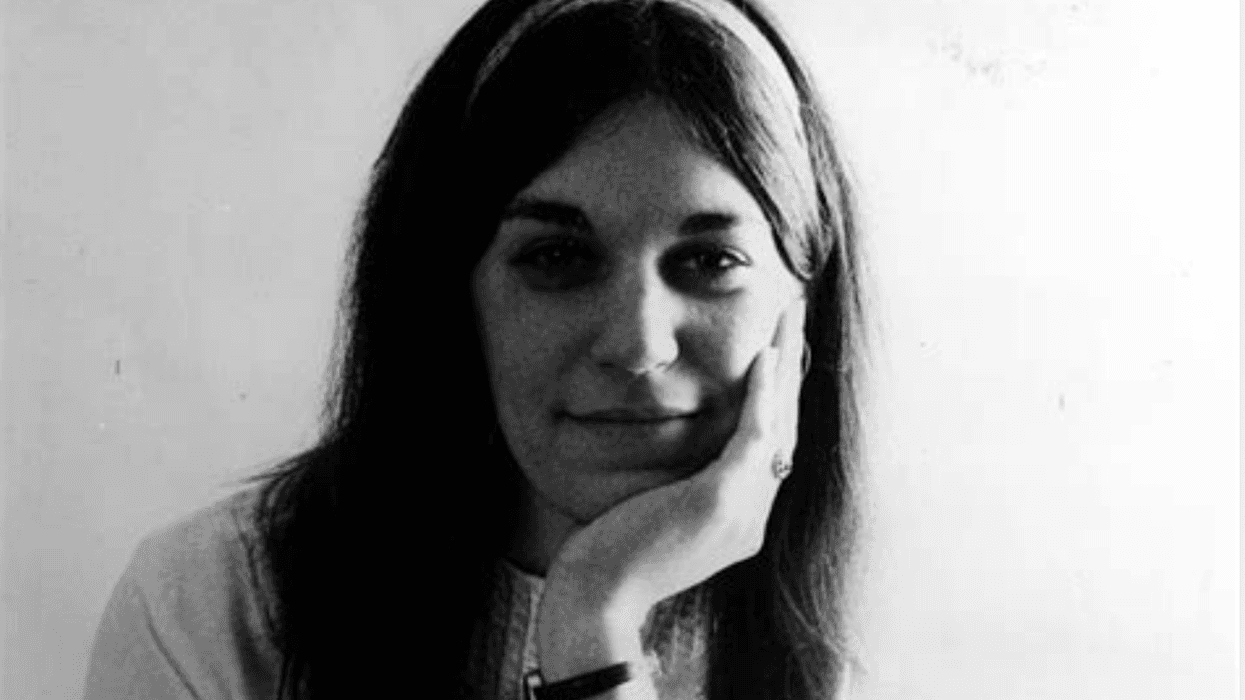
ICE Goons Pepper Spray Congresswoman Adelita Grijalva During Tucson Raid
"If federal agents are brazen enough to fire pellets directly at a member of Congress, imagine how they behave when encountering defenseless members of our community," Grijalva said.
Dec 05, 2025
In what Arizona's attorney general slammed as an "unacceptable and outrageous" act of "unchecked aggression," a federal immigration officer fired pepper spray toward recently sworn-in Congresswoman Adelita Grijalva during a Friday raid on a Tucson restaurant.
Grijalva (D-Ariz.) wrote on social media that US Immigration and Customs Enforcement (ICE) officers "just conducted a raid by Taco Giro in Tucson—a small mom-and-pop restaurant that has served our community for years."
"When I presented myself as a member of Congress asking for more information, I was pushed aside and pepper sprayed," she added.
Grijalva said in a video uploaded to the post that she was "sprayed in the face by a very aggressive agent, pushed around by others, when I literally was not being aggressive, I was asking for clarification, which is my right as a member of Congress."
The video shows Grijalva among a group of protesters who verbally confronted federal agents over the raid. Following an order to "clear," an agent is seen firing what appears to be a pepper ball at the ground very near the congresswoman's feet. Video footage also shows agents deploying gas against the crowd.
"They're targeting small mom-and-pop businesses that don't have the financial resources to fight back," Grijalva told reporters after the incident. "They're targeting small businesses and people that are helping in our communities in order to try to fill the quota that [President Donald] Trump has given them."
Mocking the incident on social media, Department of Homeland Security spokesperson Tricia McLaughlin contended that Grijalva "wasn’t pepper sprayed."
"She was in the vicinity of someone who *was* pepper sprayed as they were obstructing and assaulting law enforcement," she added. "In fact, two law enforcement officers were seriously injured by this mob that [Grijalva] joined."
McLaughlin provided no further details regarding the nature of those injuries.
Democrats in Arizona and beyond condemned Friday's incident, with US Sen. Ruben Gallego writing on social media that Grijalva "was doing her job, standing up for her community."
"Pepper spraying a sitting member of Congress is disgraceful, unacceptable, and absolutely not what we voted for," he added. "Period."
Democratic Arizona Attorney General Kris Mayes said on social media: "This is unacceptable and outrageous. Enforcing the rule of law does not mean pepper spraying a member of Congress for simply asking questions. Effective law enforcement requires restraint and accountability, not unchecked aggression."
Congresswoman Pramila Jayapal (D-Wash.) also weighed in on social media, calling the incident "outrageous."
"Rep. Grijalva was completely within her rights to stand up for her constituents," she added. "ICE is completely lawless."
Friday's incident follows federal agents' violent removal of Sen. Alexa Padilla (D-Calif.) from a June press conference held by Homeland Security Secretary Kristi Noem.
Congresswoman LaMonica McIver (D-NJ) was federally indicted in June for allegedly “forcibly impeding and interfering with federal officers" during an oversight visit at a privately operated migrant detention center in Newark, New Jersey and subsequent confrontation with ICE agents outside of the lockup in which US Reps. Bonnie Watson Coleman and Rob Menendez, both New Jersey Democrats, were also involved.
Violent assaults by federal agents on suspected undocumented immigrants—including US citizens—protesters, journalists, and others are a regular occurrence amid the Trump administration's mass deportation campaign.
"If federal agents are brazen enough to fire pellets directly at a member of Congress, imagine how they behave when encountering defenseless members of our community," Grijalva said late Friday on social media. "It’s time for Congress to rein in this rogue agency NOW."
Keep ReadingShow Less
Gavin Newsom Wants a 'Big Tent Party,' But Opposes Wealth Tax Supported by Large Majority of Americans
"A wealth tax is a big tent policy unless the only people you care about are billionaires," said one progressive organizer.
Dec 05, 2025
California Gov. Gavin Newsom, considered by some to be the frontrunner to be the next Democratic presidential nominee, said during a panel on Wednesday that he wants his party to be a “big tent” that welcomes large numbers of people into the fold. But he’s “adamantly against” one of the most popular proposals Democrats have to offer: a wealth tax.
In October, progressive economists Emmanuel Saez and Robert Reich joined forces with one of California's most powerful unions, the Service Employees International Union's (SEIU) United Healthcare Workers West, to propose that California put the nation’s first-ever wealth tax on the ballot in November 2026.
They described the measure as an "emergency billionaires tax" aimed at recouping the tens of billions of dollars that will be stripped from California's 15 million Medicaid recipients over the next five years, after Republicans enacted historic cuts to the program in July with President Donald Trump's One Big Beautiful Bill Act, which dramatically reduced taxes for the wealthiest Americans.
Among those beneficiaries were the approximately 200 billionaires living in California, whose average annual income, Saez pointed out, has risen by 7.5% per year, compared with 1.5% for median-income residents.
Under the proposal, they would pay a one-time 5% tax on their total net worth, which is estimated to raise $100 billion. The vast majority of the funds, about 90%, would be used to restore Medicaid funding, while the rest would go towards funding K-12 education, which the GOP has also slashed.
The proposal in California has strong support from unions and healthcare groups. But Newsom has called it “bad policy” and “another attempt to grab money for special purposes.”
Meanwhile, several of his longtime consultants, including Dan Newman and Brian Brokaw, have launched a campaign alongside “business and tech leaders” to kill the measure, which they’ve dubbed “Stop the Squeeze." They've issued familiar warnings that pinching the wealthy too hard will drive them from the state, along with the critical tax base they provide.
At Wednesday's New York Times DealBook Summit, Andrew Ross Sorkin asked Newsom about his opposition to the wealth tax idea, comparing it to a proposal by recent New York City Mayor-elect Zohran Mamdani, who pledged to increase the income taxes of New Yorkers who earn more than $1 million per year by 2% in order to fund his city-wide free buses, universal childcare, and city-owned grocery store programs.
Mamdani's proposal was met with a litany of similar warnings from Big Apple bigwigs who threatened to flee the city and others around the country who said they'd never move in.
But as Robin Kaiser-Schatzlein explained in October for the American Prospect: "The evidence for this is thin: mostly memes shared by tech and finance people... Research shows that the truth of the matter is closer to the opposite. Wealthy individuals and their income move at lower rates than other income brackets, even in response to an increase of personal income tax." Many of those who sulked about Mamdani's victory have notably begun making amends with the incoming mayor.
Moreover, the comparison between Mamdani's plan and the one proposed in California is faulty to begin with. As Harold Meyerson explained, also for the Prospect: "It is a one-time-only tax, to be levied exclusively on billionaires’ current (i.e., 2025) net worth. Even if they move to Tasmania, they will still be liable for 5% of this year’s net worth."
"Crucially, the tax won’t crimp the fortunes of any billionaire who moves into the state next year or any later year, as it only applies to the billionaires living in the state this year," he added. "Therefore... the horrific specter of billionaire flight can’t be levied against the California proposal."
Nevertheless, Sorkin framed Newsom as being in an existential battle of ideas with Mamdani, asking how the two could both represent the Democratic Party when they are so "diametrically opposed."
"Well, I want to be a big-tent party," Newsom replied. "It's about addition, not subtraction."
Pushed on the question of whether there should be a "unifying theory of the case," Newsom responded that “we all want to be protected, we all want to be respected, we all want to be connected to something bigger than ourselves. We have fundamental values that I think define our party, about social justice, economic justice.”
"We have pre-distribution Democrats, and we have re-distribution Democrats," he continued. "Therein lies the dialectic and therein lies the debate."
Polling is scarce so far on the likelihood of such a measure passing in California. But nationally, polls suggest that the vast majority of Democrats fall on the "re-distribution" side of Newsom's "dialectic." In fact, the majority of all Americans do, regardless of party affiliation.
Last year, Inequality.org examined 55 national and state polls about a number of different taxation policies and found:
A billionaire income tax garnered the most support across party identification. On average, two out of three (67%) of Americans supported the tax including 84% of Democrats, 64% of Independents, and 51% of Republicans.
In national polls, a wealth tax had similarly high levels of support. More than three out of five Americans supported the tax including 78% of Democrats, 62% of Independents, and 51% of Republicans.
That sentiment only seems to have grown since the return of President Donald Trump. An Economist/YouGov poll released in early November found that 72% of Americans said that taxes on billionaires should be raised—including 95% of Democrats, 75% of independents, and 48% of Republicans. Across the board, just 15% said they should not be raised.
Support remains high when the proposal is more specific as well. On the eve of Mamdani's election, despitre months of fearmongering, 64% of New Yorkers said they backed his proposal, including a slight plurality of self-identified conservatives, according to a Siena College poll.
Many observers were perplexed by how Newsom proposes to maintain a “big tent” while opposing policies supported by most of the people inside it.
"A wealth tax is a big tent policy unless the only people you care about are billionaires," wrote Jonathan Cohn, the political director for Progressive Mass, a grassroots organization in Massachusetts, on social media.
"Gavin Newsom—estimated net worth between $20 and $30 million—says he's opposed to a billionaire wealth tax. Color me shocked," wrote the Columbia University lecturer Anthony Zenkus. "Democrats holding him up as a potential savior for 2028 is a clear example of not reading the room."
Keep ReadingShow Less
Supreme Court Agrees to Hear Case That Could Bless Trump's Bid to End Birthright Citizenship
"That the Supreme Court is actually entertaining Trump’s unconstitutional attack on birthright citizenship is the clearest example yet that the Roberts Court is broken beyond repair," said one critic.
Dec 05, 2025
The United States Supreme Court on Friday agreed to decide whether US President Donald Trump's executive order ending birthright citizenship—as guaranteed under the 14th Amendment for more than 150 years—is constitutional.
Next spring, the justices will hear oral arguments in Trump's appeal of a lower court ruling that struck down parts of an executive order—titled Protecting the Meaning and Value of American Citizenship—signed on the first day of the president's second term. Under the directive, which has not taken effect due to legal challenges, people born in the United States would not be automatically entitled to US citizenship if their parents are in the country temporarily or without legal authorization.
Enacted in 1868, the 14th Amendment affirms that "all persons born or naturalized in the United States, and subject to the jurisdiction thereof, are citizens of the United States and of the state wherein they reside."
While the Trump administration argues that the 14th Amendment was adopted to grant US citizenship to freed slaves, not travelers or undocumented immigrants, two key Supreme Court cases have affirmed birthright citizenship under the Constitution—United States v. Wong Kim Ark (1898) and Afroyim v. Rusk (1967).
Here is the question presented. It's a relatively clean vehicle for the Supreme Court to finally decide whether it is lawful for the president to deny birthright citizenship to the children of immigrants. www.supremecourt.gov/DocketPDF/25...
[image or embed]
— Mark Joseph Stern (@mjsdc.bsky.social) December 5, 2025 at 10:55 AM
Several district court judges have issued universal preliminary injunctions to block Trump's order. However, the Supreme Court's right-wing supermajority found in June that “universal injunctions likely exceed the equitable authority that Congress has given to federal courts."
In July, a three-judge panel of the US Court of Appeals for the 9th Circuit unanimously ruled that executive order is an unconstitutional violation of the plain language of the 14th Amendment. In total, four federal courts and two appellate courts have blocked Trump's order.
“No president can change the 14th Amendment’s fundamental promise of citizenship,” Cecillia Wang, national legal director at the ACLU—which is leading the nationwide class action challenge to Trump's order—said in a statement Friday. “We look forward to putting this issue to rest once and for all in the Supreme Court this term.”
Brett Edkins, managing director of policy and political affairs at the advocacy group Stand Up America, was among those who suggested that the high court justices should have refused to hear the case given the long-settled precedent regarding the 14th Amendment.
“This case is a right-wing fantasy, full stop. That the Supreme Court is actually entertaining Trump’s unconstitutional attack on birthright citizenship is the clearest example yet that the Roberts Court is broken beyond repair," Edkins continued, referring to Chief Justice John Roberts.
"Even if the court ultimately rules against Trump, in a laughable display of its supposed independence, the fact that fringe attacks on our most basic rights as citizens are being seriously considered is outrageous and alarming," he added.
Aarti Kohli, executive director of the Asian Law Caucus, said that “it’s deeply troubling that we must waste precious judicial resources relitigating what has been settled constitutional law for over a century," adding that "every federal judge who has considered this executive order has found it unconstitutional."
Tianna Mays, legal director for Democracy Defenders Fund, asserted, “The attack on the fundamental right of birthright citizenship is an attack on the 14th Amendment and our Constitution."
"We are confident the court will affirm this basic right, which has stood for over a century," Mays added. "Millions of families across the country deserve and require that clarity and stability.”
Keep ReadingShow Less
Most Popular