SUBSCRIBE TO OUR FREE NEWSLETTER
Daily news & progressive opinion—funded by the people, not the corporations—delivered straight to your inbox.
5
#000000
#FFFFFF
To donate by check, phone, or other method, see our More Ways to Give page.
Daily news & progressive opinion—funded by the people, not the corporations—delivered straight to your inbox.
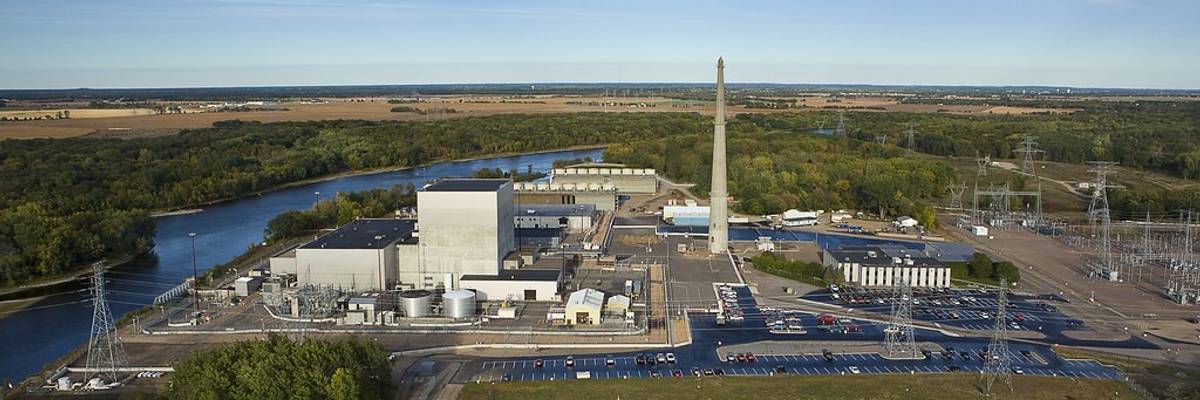
Xcel Energy's Monticello nuclear power plant is seen in Monticello, Minnesota on September 30, 2009.
Xcel Energy reported a leak of tritium-contaminated water at its Monticello nuclear power plant on November 22. State authorities just acknowledged they're monitoring the ongoing cleanup effort.
Xcel Energy in late November told Minnesota and federal officials about a leak of 400,000 gallons of water contaminated with radioactive tritium at its Monticello nuclear power plant, but it wasn't until Thursday that the incident and ongoing cleanup effort were made public.
In a statement, Xcel said Thursday that it "took swift action to contain the leak to the plant site, which poses no health and safety risk to the local community or the environment."
"Ongoing monitoring from over two dozen on-site monitoring wells confirms that the leaked water is fully contained on-site and has not been detected beyond the facility or in any local drinking water," the company added.
The Monticello plant, adjacent to the Mississippi River, is roughly 35 miles northwest of Minneapolis.
Asked why it didn't notify the public sooner, the Minneapolis-based utility giant said: "We understand the importance of quickly informing the communities we serve if a situation poses an immediate threat to health and safety. In this case, there was no such threat."
But Excel wasn't the only entity with knowledge of the situation. The company said it alerted the U.S. Nuclear Regulatory Commission (NRC) and state authorities on November 22, the day the leak was confirmed.
According to The Star Tribune: "A high level of tritium in groundwater was reported to the Nuclear Regulatory Commission when first discovered, which published the 'nonemergency' report in its public list of nuclear events the next day. The listing said the source of the tritium was being investigated."
As Minnesota Public Radio explained, "The NRC's November public notice was not in a news release" and was only visible "online at the bottom of a list of 'non-emergency' event notification reports."
Asked why they waited four months to inform residents, state regulators who are monitoring the cleanup said they were waiting for more information.
"We knew there was a presence of tritium in one monitoring well, however Xcel had not yet identified the source of the leak and its location," Minnesota Pollution Control Agency (MPCA) spokesperson Michael Rafferty said Thursday.
The source of the leak—a broken pipe connecting two buildings—was detected on December 19 and quickly patched.
"Now that we have all the information about where the leak occurred, how much was released into groundwater, and that contaminated groundwater had moved beyond the original location, we are sharing this information," said Rafferty.
Dan Huff, assistant commissioner of the Minnesota Department of Health (MDH), said, "If at any time someone's health is at risk, we would notify folks immediately." However, he continued, "this is a contained site underneath the Xcel plant and it has not threatened any Minnesotans' health."
Echoing Xcel and MDH officials, MPCA said in a statement: "The leak has been stopped and has not reached the Mississippi River or contaminated drinking water sources. There is no evidence at this time to indicate a risk to any drinking water wells in the vicinity of the plant."
Kirk Koudelka, MPCA assistant commissioner for land and strategic initiatives, declared that "our top priority is protecting residents and the environment."
"The MPCA is working closely with other state agencies to oversee Xcel Energy's monitoring data and cleanup activities," said Koudelka. "We are working to ensure this cleanup is concluded as thoroughly as possible with minimal or no risk to drinking water supplies."
Since reporting the leak, Xcel has been pumping, storing, and processing contaminated groundwater, which "contains tritium levels below federal thresholds," according to The Associated Press.
As the news outlet reported:
Tritium is a radioactive isotope of hydrogen that occurs naturally in the environment and is a common by-product of nuclear plant operations. It emits a weak form of beta radiation that does not travel very far and cannot penetrate human skin, according to the NRC. A person who drank water from a spill would get only a low dose, the NRC says.
The NRC says tritium spills happen from time to time at nuclear plants, but that it has repeatedly determined that they've either remained limited to the plant property or involved such low offsite levels that they didn't affect public health or safety. Xcel reported a small tritium leak at Monticello in 2009.
Xcel said it has recovered about 25% of the spilled tritium so far, that recovery efforts will continue and that it will install a permanent solution this spring.
"Xcel Energy is considering building above-ground storage tanks to store the contaminated water it recovers, and is considering options for the treatment, reuse, or final disposal of the collected tritium and water," AP noted. "State regulators will review the options the company selects."
As MPR reported, news of the leak "comes as Xcel is asking federal regulators to extend Monticello's operating license through 2050—when the plant will be nearly 80 years old."
The company says that doing so "is critical to meeting a new state law mandating fully carbon-free electricity by 2040," The Star Tribune reported.
But on social media, commentators pointed out that such pollution "doesn't happen with solar and wind."
"Building more nuclear power plants is a bad solution to the climate crisis," one user from Minnesota tweeted. "A good solution is more wind turbines and solar panels."
Dear Common Dreams reader, It’s been nearly 30 years since I co-founded Common Dreams with my late wife, Lina Newhouser. We had the radical notion that journalism should serve the public good, not corporate profits. It was clear to us from the outset what it would take to build such a project. No paid advertisements. No corporate sponsors. No millionaire publisher telling us what to think or do. Many people said we wouldn't last a year, but we proved those doubters wrong. Together with a tremendous team of journalists and dedicated staff, we built an independent media outlet free from the constraints of profits and corporate control. Our mission has always been simple: To inform. To inspire. To ignite change for the common good. Building Common Dreams was not easy. Our survival was never guaranteed. When you take on the most powerful forces—Wall Street greed, fossil fuel industry destruction, Big Tech lobbyists, and uber-rich oligarchs who have spent billions upon billions rigging the economy and democracy in their favor—the only bulwark you have is supporters who believe in your work. But here’s the urgent message from me today. It's never been this bad out there. And it's never been this hard to keep us going. At the very moment Common Dreams is most needed, the threats we face are intensifying. We need your support now more than ever. We don't accept corporate advertising and never will. We don't have a paywall because we don't think people should be blocked from critical news based on their ability to pay. Everything we do is funded by the donations of readers like you. When everyone does the little they can afford, we are strong. But if that support retreats or dries up, so do we. Will you donate now to make sure Common Dreams not only survives but thrives? —Craig Brown, Co-founder |
Xcel Energy in late November told Minnesota and federal officials about a leak of 400,000 gallons of water contaminated with radioactive tritium at its Monticello nuclear power plant, but it wasn't until Thursday that the incident and ongoing cleanup effort were made public.
In a statement, Xcel said Thursday that it "took swift action to contain the leak to the plant site, which poses no health and safety risk to the local community or the environment."
"Ongoing monitoring from over two dozen on-site monitoring wells confirms that the leaked water is fully contained on-site and has not been detected beyond the facility or in any local drinking water," the company added.
The Monticello plant, adjacent to the Mississippi River, is roughly 35 miles northwest of Minneapolis.
Asked why it didn't notify the public sooner, the Minneapolis-based utility giant said: "We understand the importance of quickly informing the communities we serve if a situation poses an immediate threat to health and safety. In this case, there was no such threat."
But Excel wasn't the only entity with knowledge of the situation. The company said it alerted the U.S. Nuclear Regulatory Commission (NRC) and state authorities on November 22, the day the leak was confirmed.
According to The Star Tribune: "A high level of tritium in groundwater was reported to the Nuclear Regulatory Commission when first discovered, which published the 'nonemergency' report in its public list of nuclear events the next day. The listing said the source of the tritium was being investigated."
As Minnesota Public Radio explained, "The NRC's November public notice was not in a news release" and was only visible "online at the bottom of a list of 'non-emergency' event notification reports."
Asked why they waited four months to inform residents, state regulators who are monitoring the cleanup said they were waiting for more information.
"We knew there was a presence of tritium in one monitoring well, however Xcel had not yet identified the source of the leak and its location," Minnesota Pollution Control Agency (MPCA) spokesperson Michael Rafferty said Thursday.
The source of the leak—a broken pipe connecting two buildings—was detected on December 19 and quickly patched.
"Now that we have all the information about where the leak occurred, how much was released into groundwater, and that contaminated groundwater had moved beyond the original location, we are sharing this information," said Rafferty.
Dan Huff, assistant commissioner of the Minnesota Department of Health (MDH), said, "If at any time someone's health is at risk, we would notify folks immediately." However, he continued, "this is a contained site underneath the Xcel plant and it has not threatened any Minnesotans' health."
Echoing Xcel and MDH officials, MPCA said in a statement: "The leak has been stopped and has not reached the Mississippi River or contaminated drinking water sources. There is no evidence at this time to indicate a risk to any drinking water wells in the vicinity of the plant."
Kirk Koudelka, MPCA assistant commissioner for land and strategic initiatives, declared that "our top priority is protecting residents and the environment."
"The MPCA is working closely with other state agencies to oversee Xcel Energy's monitoring data and cleanup activities," said Koudelka. "We are working to ensure this cleanup is concluded as thoroughly as possible with minimal or no risk to drinking water supplies."
Since reporting the leak, Xcel has been pumping, storing, and processing contaminated groundwater, which "contains tritium levels below federal thresholds," according to The Associated Press.
As the news outlet reported:
Tritium is a radioactive isotope of hydrogen that occurs naturally in the environment and is a common by-product of nuclear plant operations. It emits a weak form of beta radiation that does not travel very far and cannot penetrate human skin, according to the NRC. A person who drank water from a spill would get only a low dose, the NRC says.
The NRC says tritium spills happen from time to time at nuclear plants, but that it has repeatedly determined that they've either remained limited to the plant property or involved such low offsite levels that they didn't affect public health or safety. Xcel reported a small tritium leak at Monticello in 2009.
Xcel said it has recovered about 25% of the spilled tritium so far, that recovery efforts will continue and that it will install a permanent solution this spring.
"Xcel Energy is considering building above-ground storage tanks to store the contaminated water it recovers, and is considering options for the treatment, reuse, or final disposal of the collected tritium and water," AP noted. "State regulators will review the options the company selects."
As MPR reported, news of the leak "comes as Xcel is asking federal regulators to extend Monticello's operating license through 2050—when the plant will be nearly 80 years old."
The company says that doing so "is critical to meeting a new state law mandating fully carbon-free electricity by 2040," The Star Tribune reported.
But on social media, commentators pointed out that such pollution "doesn't happen with solar and wind."
"Building more nuclear power plants is a bad solution to the climate crisis," one user from Minnesota tweeted. "A good solution is more wind turbines and solar panels."
Xcel Energy in late November told Minnesota and federal officials about a leak of 400,000 gallons of water contaminated with radioactive tritium at its Monticello nuclear power plant, but it wasn't until Thursday that the incident and ongoing cleanup effort were made public.
In a statement, Xcel said Thursday that it "took swift action to contain the leak to the plant site, which poses no health and safety risk to the local community or the environment."
"Ongoing monitoring from over two dozen on-site monitoring wells confirms that the leaked water is fully contained on-site and has not been detected beyond the facility or in any local drinking water," the company added.
The Monticello plant, adjacent to the Mississippi River, is roughly 35 miles northwest of Minneapolis.
Asked why it didn't notify the public sooner, the Minneapolis-based utility giant said: "We understand the importance of quickly informing the communities we serve if a situation poses an immediate threat to health and safety. In this case, there was no such threat."
But Excel wasn't the only entity with knowledge of the situation. The company said it alerted the U.S. Nuclear Regulatory Commission (NRC) and state authorities on November 22, the day the leak was confirmed.
According to The Star Tribune: "A high level of tritium in groundwater was reported to the Nuclear Regulatory Commission when first discovered, which published the 'nonemergency' report in its public list of nuclear events the next day. The listing said the source of the tritium was being investigated."
As Minnesota Public Radio explained, "The NRC's November public notice was not in a news release" and was only visible "online at the bottom of a list of 'non-emergency' event notification reports."
Asked why they waited four months to inform residents, state regulators who are monitoring the cleanup said they were waiting for more information.
"We knew there was a presence of tritium in one monitoring well, however Xcel had not yet identified the source of the leak and its location," Minnesota Pollution Control Agency (MPCA) spokesperson Michael Rafferty said Thursday.
The source of the leak—a broken pipe connecting two buildings—was detected on December 19 and quickly patched.
"Now that we have all the information about where the leak occurred, how much was released into groundwater, and that contaminated groundwater had moved beyond the original location, we are sharing this information," said Rafferty.
Dan Huff, assistant commissioner of the Minnesota Department of Health (MDH), said, "If at any time someone's health is at risk, we would notify folks immediately." However, he continued, "this is a contained site underneath the Xcel plant and it has not threatened any Minnesotans' health."
Echoing Xcel and MDH officials, MPCA said in a statement: "The leak has been stopped and has not reached the Mississippi River or contaminated drinking water sources. There is no evidence at this time to indicate a risk to any drinking water wells in the vicinity of the plant."
Kirk Koudelka, MPCA assistant commissioner for land and strategic initiatives, declared that "our top priority is protecting residents and the environment."
"The MPCA is working closely with other state agencies to oversee Xcel Energy's monitoring data and cleanup activities," said Koudelka. "We are working to ensure this cleanup is concluded as thoroughly as possible with minimal or no risk to drinking water supplies."
Since reporting the leak, Xcel has been pumping, storing, and processing contaminated groundwater, which "contains tritium levels below federal thresholds," according to The Associated Press.
As the news outlet reported:
Tritium is a radioactive isotope of hydrogen that occurs naturally in the environment and is a common by-product of nuclear plant operations. It emits a weak form of beta radiation that does not travel very far and cannot penetrate human skin, according to the NRC. A person who drank water from a spill would get only a low dose, the NRC says.
The NRC says tritium spills happen from time to time at nuclear plants, but that it has repeatedly determined that they've either remained limited to the plant property or involved such low offsite levels that they didn't affect public health or safety. Xcel reported a small tritium leak at Monticello in 2009.
Xcel said it has recovered about 25% of the spilled tritium so far, that recovery efforts will continue and that it will install a permanent solution this spring.
"Xcel Energy is considering building above-ground storage tanks to store the contaminated water it recovers, and is considering options for the treatment, reuse, or final disposal of the collected tritium and water," AP noted. "State regulators will review the options the company selects."
As MPR reported, news of the leak "comes as Xcel is asking federal regulators to extend Monticello's operating license through 2050—when the plant will be nearly 80 years old."
The company says that doing so "is critical to meeting a new state law mandating fully carbon-free electricity by 2040," The Star Tribune reported.
But on social media, commentators pointed out that such pollution "doesn't happen with solar and wind."
"Building more nuclear power plants is a bad solution to the climate crisis," one user from Minnesota tweeted. "A good solution is more wind turbines and solar panels."